You know those places that feel like they belong in a storybook, but nobody seems to know about them? This is one of them.
A tiny village set deep in the mountains where Swiss flags still fly and alphorns still echo through the hills.
Settled by immigrants over a century ago, it has somehow kept its old-world soul intact.
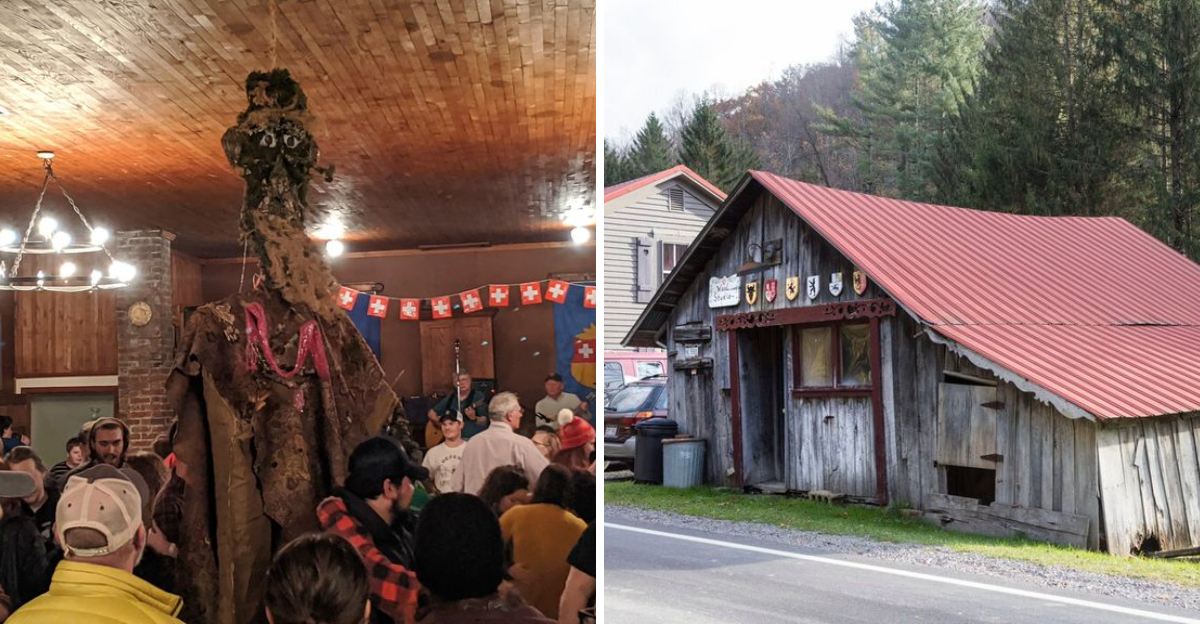
They still celebrate a festival called Fasnacht, complete with parades and masks and a whole lot of laughter.
There is a restaurant that serves rösti and sausage like you wandered into a mountain lodge.
It is the kind of place where you stop for lunch and stay for the stories. Most people drive right past the winding road that leads here.
That is exactly why you should not. This is West Virginia hiding a little piece of Europe.
A Swiss Village Born in the Appalachian Hills
Back in 1869, a group of Swiss and German immigrants who had been living in Brooklyn after the Civil War went looking for somewhere they could farm, worship, and keep their own customs without anyone telling them otherwise.
A member of their mutual aid society, the Grütliverein, traveled south and came back with reports of tall mountains and endless forests. Affordable land waited in a high valley along the Buckhannon River.
They named the settlement Helvetia, the old Latin word for Switzerland, and got to work with axes and hand tools.
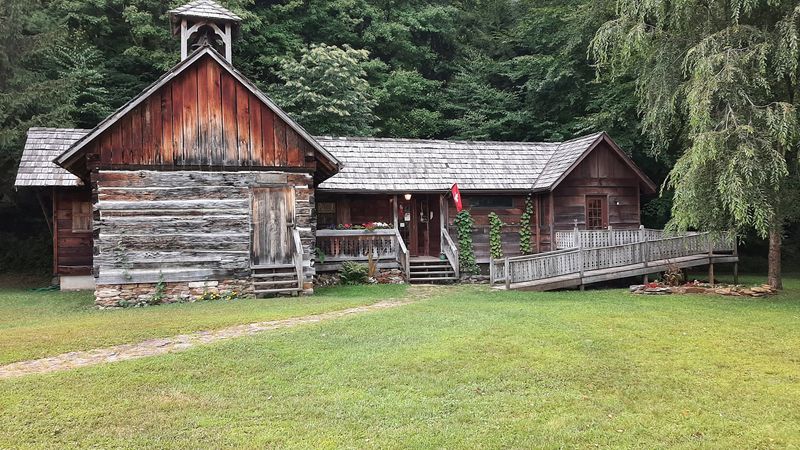
The first houses, built in 1869 and 1870, were log construction, simple and sturdy. Later buildings went up as frame structures, and a few show off Carpenter Gothic trim that looks almost lacy against the hills.
What strikes me most is how the isolation, usually a hardship, ended up protecting something rare. Swiss dance, music, food, and holidays survived here while fading elsewhere.
In 1978 the Helvetia Village Historic District joined the National Register of Historic Places, which felt long overdue.
The Hütte Restaurant and Its Bright Gold Walls
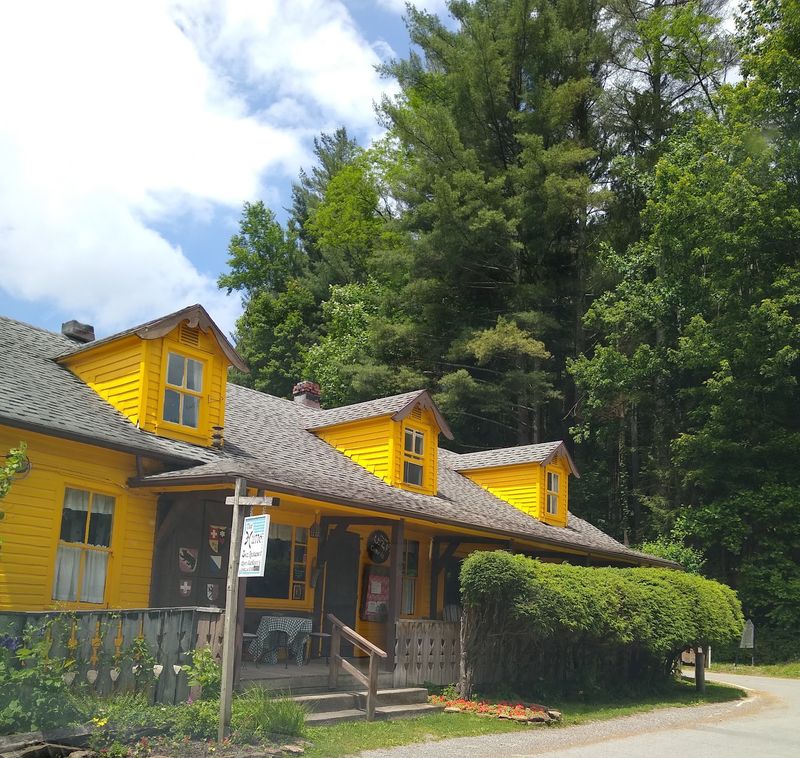
You spot it before anything else, that unmistakable gold paint sitting right along the main road like a lantern someone left on for you.
The Hütte has been serving since 1968, and the menu leans fully into Swiss tradition. Veal sausage with spicy mustard, Zurich sauerbraten, and rösti, the crisp shredded potato fritter that somehow tastes better at elevation.
Inside, the rooms feel more like a grandparent’s parlor than a dining room. Old furniture, patterned fabrics, framed odds and ends on the walls.
Nobody rushes you. Plates arrive when they arrive.
My honest advice is to come hungry and plan to linger, because this is the one sit-down meal in the village and it carries a lot of weight for such a tiny place.
Ask about the cheese if it’s on offer. The recipe traces back generations here.
Bring cash, since there are no ATMs in town, and check ahead on hours before you make the drive out.
Fasnacht, the Mardi Gras of Appalachia
Winter gets scared off here, literally.
Fasnacht lands on the Saturday before Fat Tuesday, and the name means fasting night in Swiss. The celebration blends old Fasnacht customs with Sechseläuten, a spring holiday from Zurich, which explains the fire at the end.
Villagers and visitors put on homemade masks, some goofy, some genuinely unsettling, then parade through the dark carrying lampions. The night finishes with an effigy of Old Man Winter going up in a bonfire.
There’s rich, fatty food and live traditional music, plus dancing that goes late.
People sometimes call it the Swiss Mardi Gras or the Mardi Gras of Appalachia, and attendance can push close to 2,000, which is wild in a village of under forty residents.
Practical note from someone who thinks about logistics: parking and lodging fill up fast, so sort those out well in advance.
Make your own mask if you have time. Half the fun is watching what everyone else came up with.
Swiss Roots Store and Inn, the Heart of Daily Life
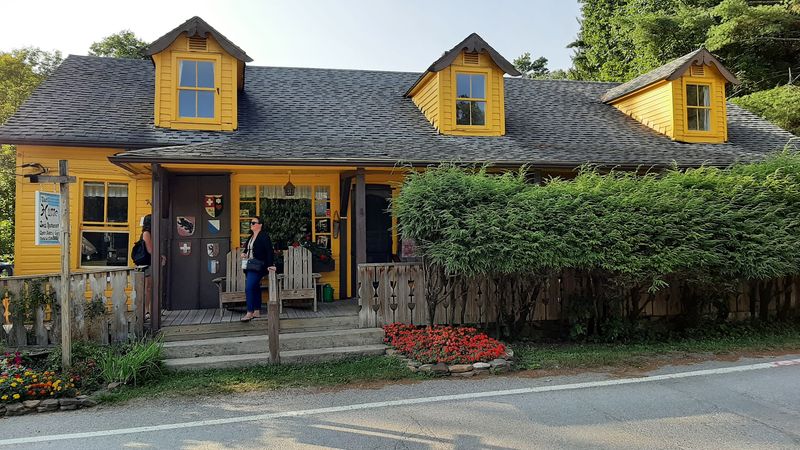
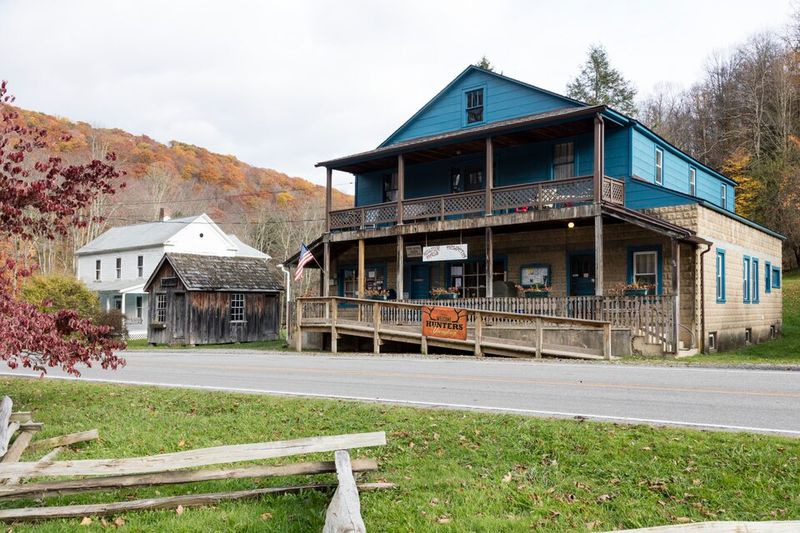
Every small town has a building that quietly does everything, and in Helvetia that’s the Swiss Roots Store and Inn, once known as the Kultur Haus.
It works as the village general store, holds the US Post Office, and houses the Fasnacht Mask Museum all under one roof.
Shelves carry locally made cheeses, coffee, apparel, souvenirs, and various products from around the area. Simple stuff, but useful when the nearest gas station is five miles south in Pickens.
The mask museum is the surprise. Rows of hand-built Fasnacht faces stare back at you, each one made by someone in the community for a specific year’s parade.
Guest rooms upstairs give travelers the option to actually sleep here instead of driving out at dusk, which I’d recommend if you want to hear how quiet the valley gets after dark.
Chat with whoever is behind the counter. Local advice on trails and event schedules beats anything your phone can pull up, especially since signal is unreliable.
Log Cabins Around the Historic Square
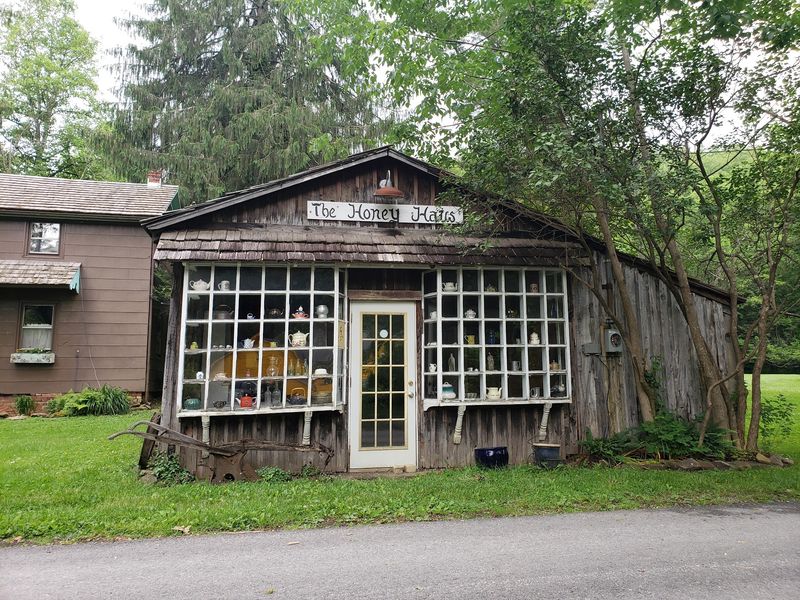
Picture a horseshoe of small log cabins with a wooden gazebo sitting in the middle, and you’ve got the center of the village.
One cabin holds the Helvetia Public Library, another the museum, and another the community archives. All modest, all photogenic, all still in use.
The museum is tiny, which works in its favor. Old tools, textiles, photographs, and household items tell the story of families who cleared this valley by hand.
I’d budget more time here than seems necessary. Details sneak up on you.
The library in a log cabin is one of those things that sounds made up until you’re standing at the door reading the posted hours.
Hand-painted signs appear throughout the square, decorated with coats of arms, Swiss phrases, and historical markers explaining who built what and when.
Come in early morning if you want the square to yourself. Mist tends to hang in the valley, and the whole scene looks like a page from an old storybook.
Music, Dancing, and the Red Hall
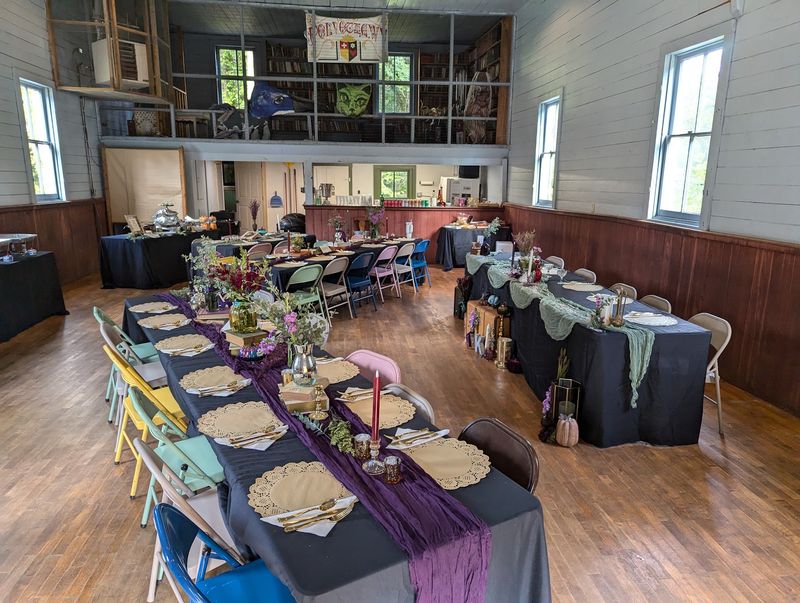
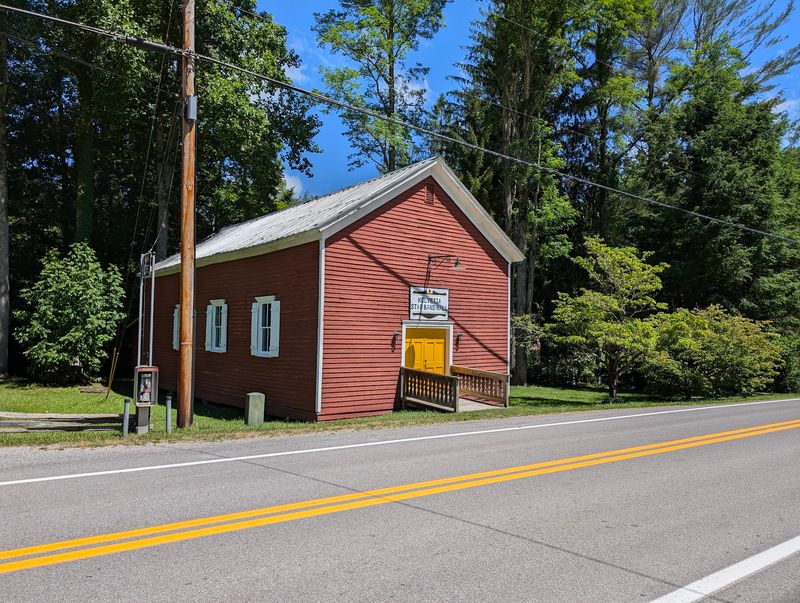
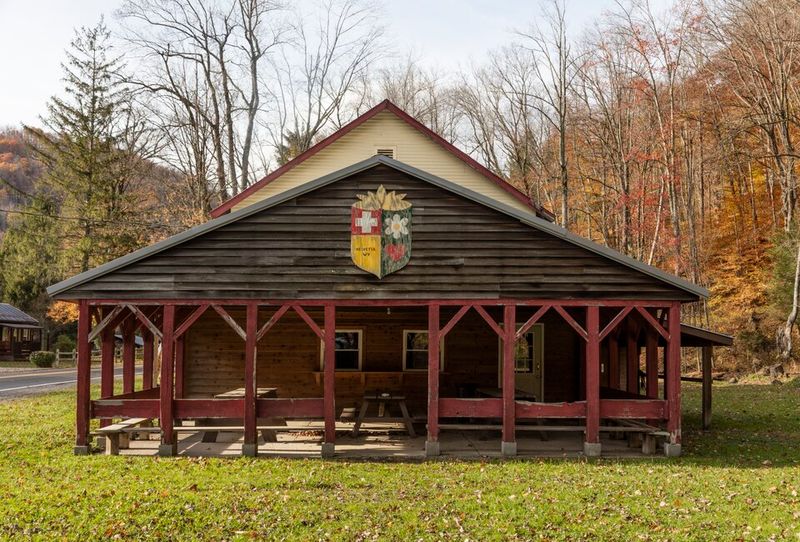
Mountain music has been bouncing off the walls of the Helvetia Star Band Hall, known locally as the Red Hall, for a very long time.
It’s a plain building with a serious reputation, hosting square dances and old-time music sessions that draw people down those winding roads.
The Helvetia Community Hall handles events too, including traditional square dances that happen monthly.
Monthly is the key word. These aren’t tourist performances, they’re how neighbors see each other.
Swiss folk dancing shows up at festivals alongside yodeling and Alphorn playing, which sounds unbelievable until you hear a horn echo across an Appalachian hollow.
Fahnenschwingen, Swiss flag swinging, also makes appearances during bigger celebrations.
Beginners get pulled onto the floor whether they know the steps or not, so wear shoes you can move in and let go of your dignity early.
Check the community calendar before you plan a trip. Landing on a dance night turns a pretty drive into something you’ll be talking about for months.
Ramp Suppers and Harvest Fair Traditions
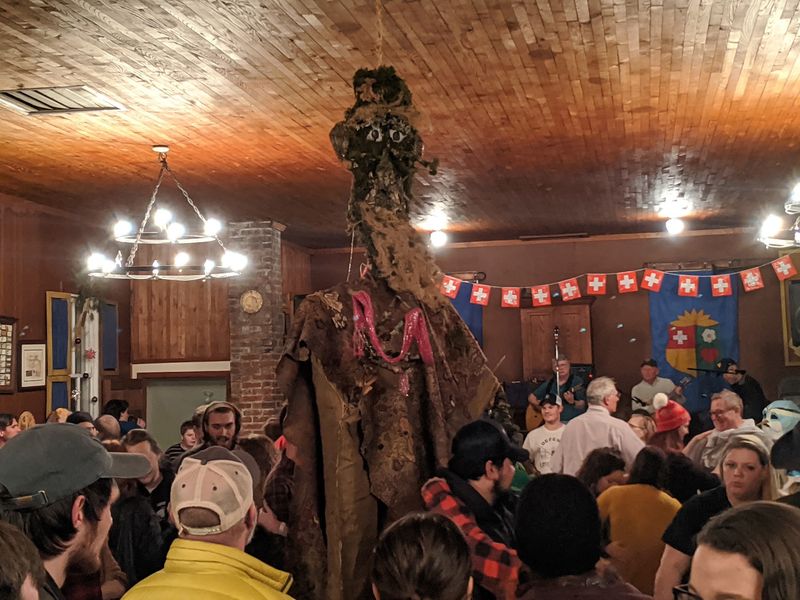
Spring announces itself with a smell, and in these mountains that smell is ramps.
The Helvetia Ramp Supper happens the last Saturday in April, celebrating the wild leeks that pop up across the surrounding hillsides. Pungent, garlicky, and beloved throughout Appalachia.
September brings the Helvetia Community Fair on the second full weekend, and it dates all the way back to 1917, making it one of the oldest agricultural fairs in West Virginia.
That weekend packs in a parade, Swiss folk dancing, flag swinging, Alphorn playing, yodeling, field games, arts and crafts, and a square dance to close things out.
Other dates fill the calendar too. The Swiss National Holiday falls on the Saturday closest to August 1st, the Follow Your Bliss Music Festival runs the weekend after Father’s Day, and the Feast of Saint Nicholas Day lands near December 5th.
A community Thanksgiving dinner happens on the fourth Thursday in November.
Pick a festival weekend and the village shows you its full personality.
Old Buildings With Flowers on the Shutters
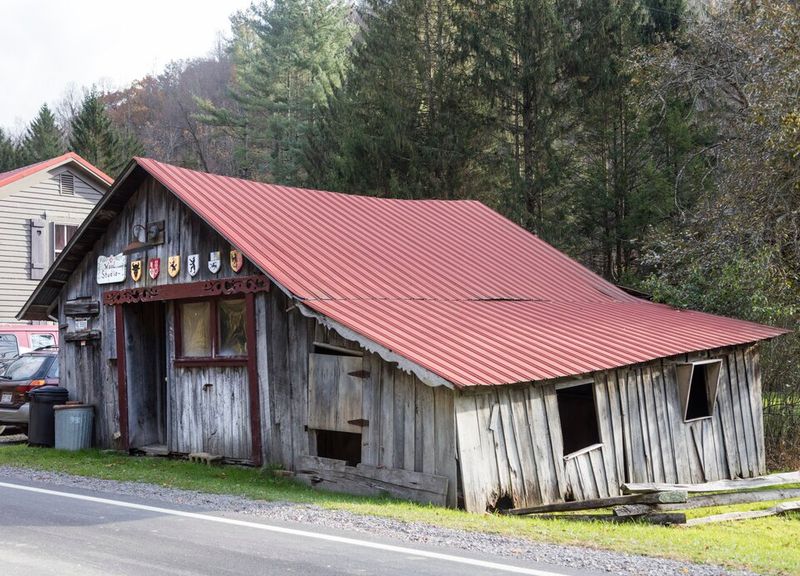
Alpine gingerbread trim in West Virginia sounds like a mix-up, but the buildings here wear it proudly.
The Cheese Haus stands out with painted floral designs across its shutters. It once produced the village’s specialty cheese, and while production is contracted out now, the traditional recipe is still followed.
Helvetia Zion Presbyterian Church dates to 1882 and anchors the village with plain white lines and tall windows.
The Huber Inn goes back to roughly 1880.
Bright floral patterns and carved details show up on private homes too, which means walking slowly pays off more than driving through.
Swiss flags hang in yards and doorways, not as decoration for visitors but as a straightforward statement of where these families came from.
Be respectful about photographs since many of these are people’s houses, not exhibits.
What gets me is the upkeep. Paint stays fresh, gardens stay tended, and a village of thirty-eight residents somehow keeps a whole historic district looking cared for year after year.
Trails, Headstones, and the Buckhannon River Valley
Boots beat car keys here.
The self-guided Helvetia Historic Trail covers about 2.5 miles and links the village’s landmarks with stretches of forest and pasture. Gentler option available too, a half-mile Cemetery Stroll.
Helvetia Cemetery holds headstones going back to the late 1800s, many carved with Swiss surnames belonging to the original settler families. Reading them turns the village history from information into something you feel.
The valley itself sits high, wrapped around the Buckhannon River, with winding mountain roads threading through Appalachian forest to reach it.
Seasons hit hard out here. Deep snow in winter, slow reluctant springs, short lush summers, and autumns that seem to stretch on with leaves crackling underfoot.
Fall is the showstopper for leaf-peeping, and I’d argue it’s the single best time to visit.
Bring layers, water, and a paper map, because the weather shifts fast and your phone will not save you.
Nearby you’ll find Holly River State Park, Kumbrabow State Forest, and the Monongahela National Forest.
Practical Tips for an Hour From Anywhere
Locals describe Helvetia as an hour from anywhere, and that’s not marketing, it’s a warning worth heeding.
Cell service is patchy at best and often nonexistent, while GPS has a habit of losing the thread on these back roads. Download your maps before you leave pavement you recognize.
No ATMs exist in town. The closest gas station sits five miles south in Pickens, so top off the tank earlier than you think you need to.
Verify hours for the restaurant, store, museum, and library ahead of time, because a village this small runs on real human schedules rather than fixed tourist ones.
Overnight stays are possible through the inn, and honestly the evening quiet is worth arranging.
Beyond the village, day trips reach the West Virginia State Wildlife Center and the Cass Scenic Railroad.
Come with patience and curiosity and you’ll get the version of this place that sticks with people. Rushed visitors miss it entirely.
Address: Helvetia, Randolph County, West Virginia 26234
