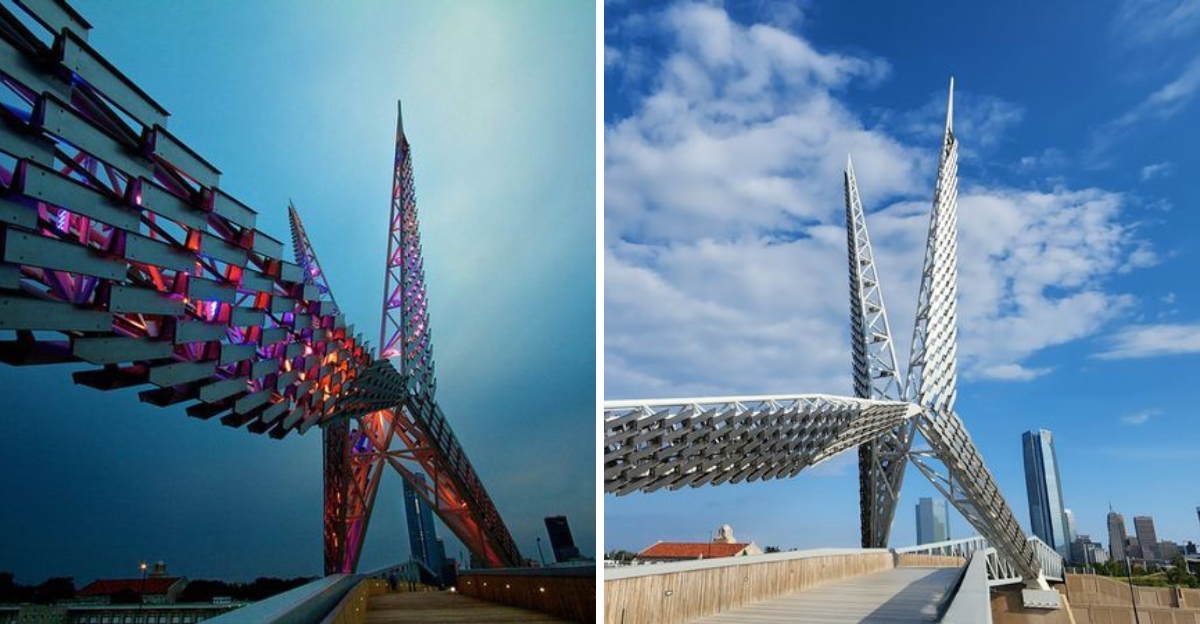
The first time I saw it, I had to slow down just to take it in. A massive bird frozen mid flight, wings stretched wide, rising above the roar of an interstate highway.
Then the colors started shifting against the dark Oklahoma sky, and it stopped feeling like something you just drive past. This is not a movie set or some digital display.
It is a real, walkable landmark sitting right in the middle of Oklahoma City. The kind of place that makes you pause, look up, and stay longer than you planned.
Once you see it in person, it is hard to forget. It sticks with you in that way only the most unexpected places can.
The Bird-Shaped Bridge Nobody Expected
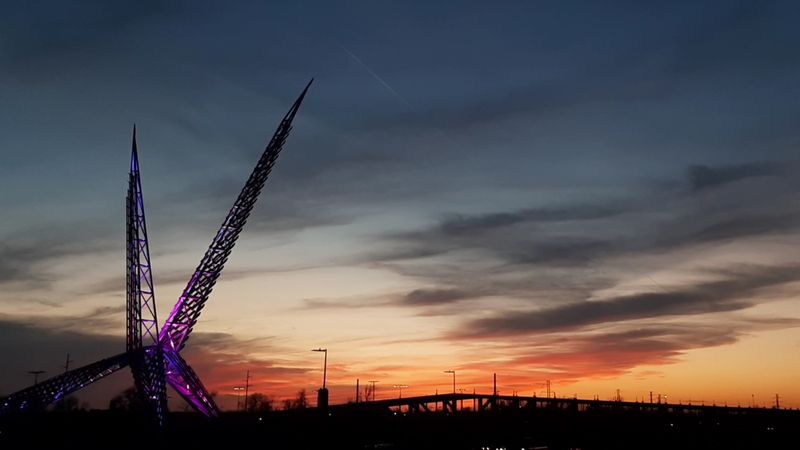
Nobody warned me. One moment you are driving through Oklahoma City, half-zoned out, and then this enormous bird-shaped structure rises above the highway like it owns the sky.
It stops you cold.
The bridge was designed to represent the Scissor-tailed Flycatcher, Oklahoma’s official state bird. The artist named the piece “Skydance Bridge,” and the city officially adopted that name too.
So yes, it has two names floating around, and both of them fit perfectly.
What makes this design so striking is the sheer boldness of it. Most bridges are functional and forgettable.
This one is a conversation starter, a postcard, and a piece of public art all at once.
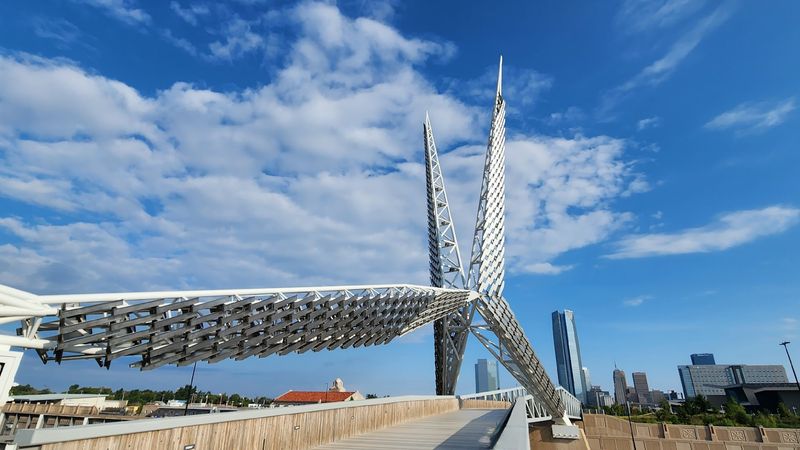
The steel structure stretches dramatically over Interstate 40, connecting the upper and lower sections of Scissortail Park. From below, the wingspan looks almost surreal.
From above, walking across it, you feel like you are standing on something that should not exist but absolutely does.
Oklahoma does not always get credit for bold design choices. This bridge changes that story in one sweeping gesture.
It is proof a city can build infrastructure and also build something deeply meaningful at the same time. First-time visitors often do a double take.
Long-time residents still slow down when they pass it.
Lights Change Every Thirty Seconds After Dark
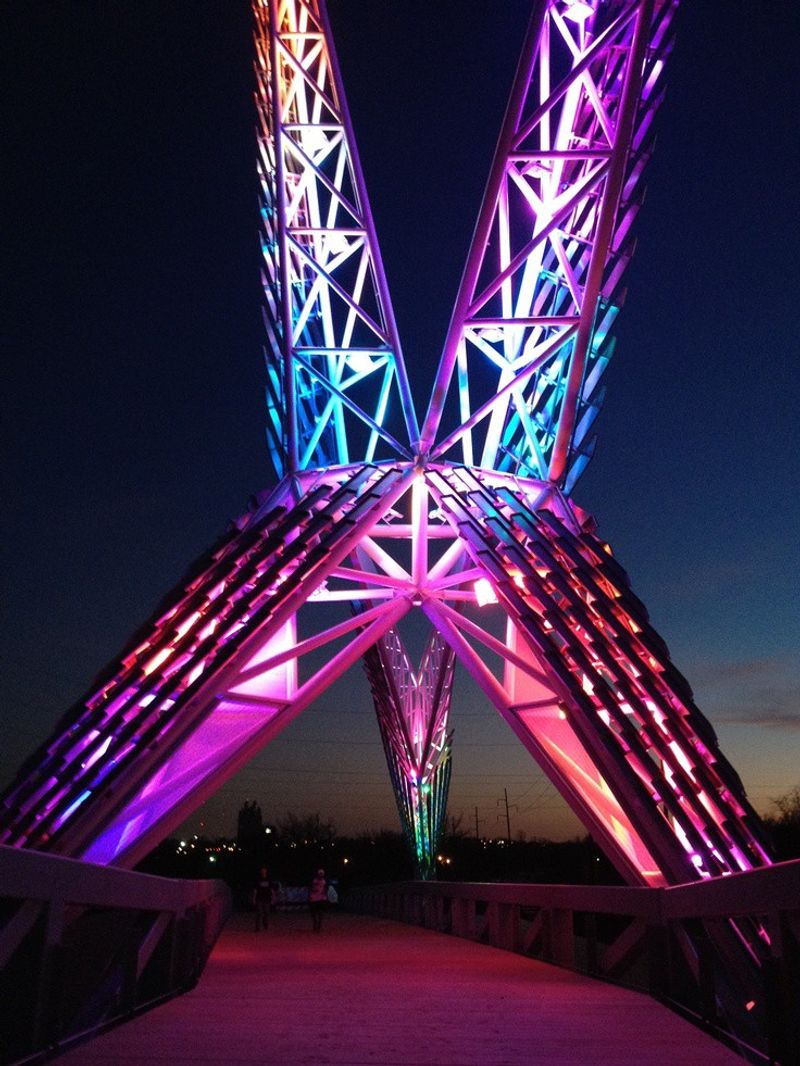
Here is something nobody puts in the headline: the bridge does not just look good at night. It performs.
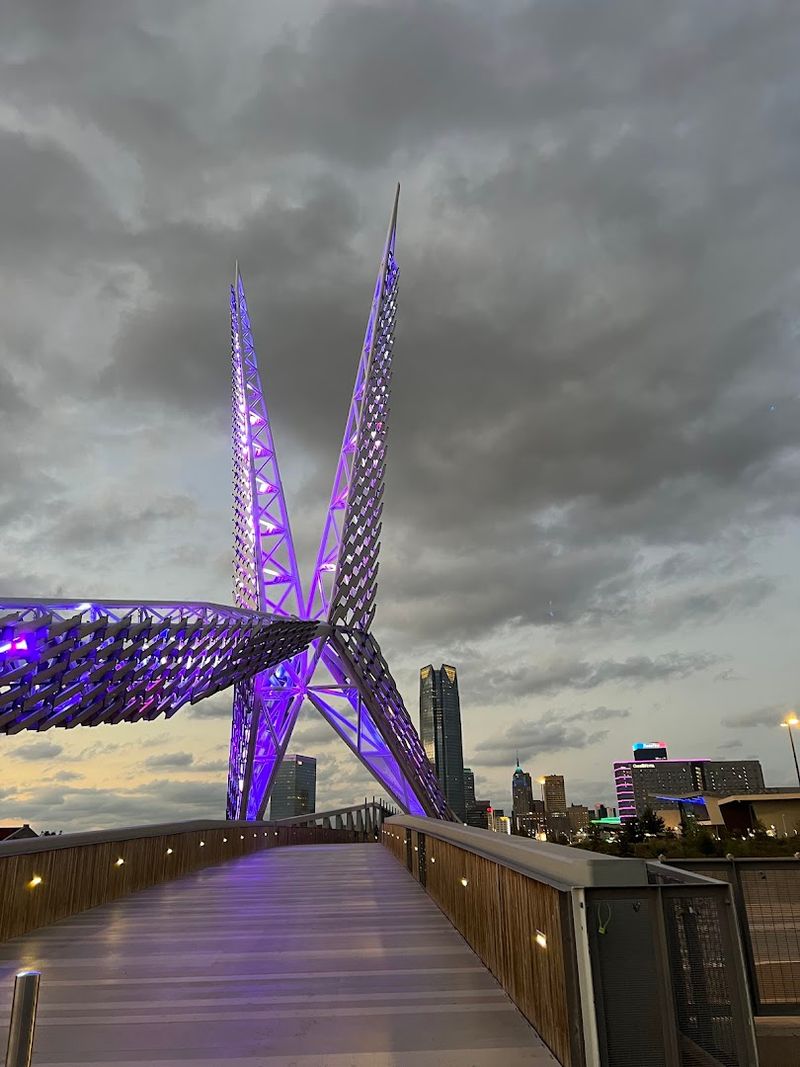
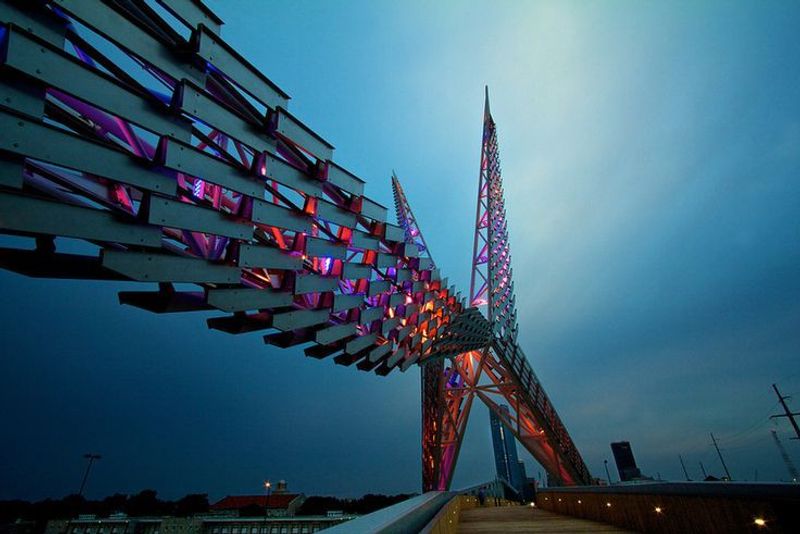
The lights shift color roughly every thirty seconds, cycling through hues that paint the steel frame in blues, purples, greens, and warm golds.
Standing beneath it while the colors change feels oddly cinematic. The highway hums below, cars streak past, and above all of that, this glowing bird keeps shifting its mood like it has somewhere to be.
The light show is not random. The design was intentional, meant to animate the structure after sundown and give it a second life once the sun drops.
It works remarkably well. Daytime visitors see the architecture.
Nighttime visitors see something closer to a spectacle.
Photographers absolutely love this spot after dark. The reflections, the color contrast against the Oklahoma sky, and the movement of traffic below create layers of visual interest.
You do not need a fancy camera to walk away with something worth keeping.
If you can only visit once, go at night. Seriously.
The daytime version is impressive. The nighttime version is the one that sticks with you for days afterward.
Bring a friend, find a spot on the bridge or in the park below, and just watch it shift. It is one of those rare free experiences that feels expensive.
Walking Across Feels Surprisingly Emotional
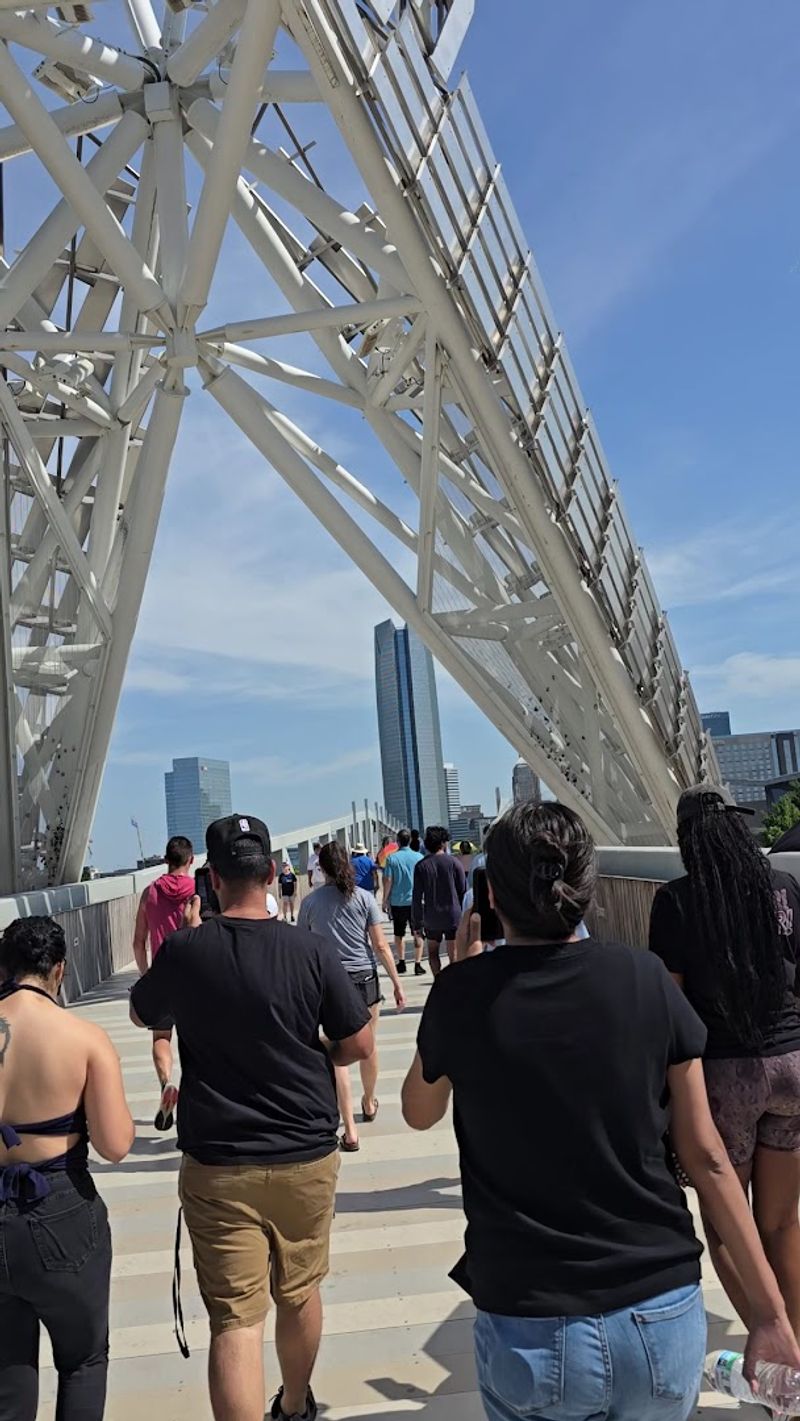
There is something unexpectedly moving about crossing this bridge on foot. You step onto it and the city opens up around you.
The Oklahoma City skyline sits to the north, wide and low against the horizon, looking almost humble from up here.
The walkway is open to pedestrians and cyclists. Today, the bridge serves as the direct pedestrian link between the 36-acre Upper Park and the 34-acre Lower Park.
Below you, traffic moves constantly. Above you, steel wings arc overhead.
The whole experience feels suspended between two worlds.
One section of the bridge has an open grate underfoot. If heights make you nervous, this part will test your nerve.
You can see straight down to the highway below. Most people pause there for a second, laugh nervously, and keep walking.
It is one of those small physical challenges that makes an experience feel real.
The views from the top are genuinely worth the walk. On a clear day, you can see far across the city in multiple directions.
The park spreads out below on both sides, green and well-kept, and the scale of everything suddenly makes sense.
Walking this bridge is not just getting from one side to the other. It is a small moment of perspective.
You feel the city differently from up there. Smaller problems, bigger sky.
Oklahoma does that to you.
Love Locks Have Found a Home Here
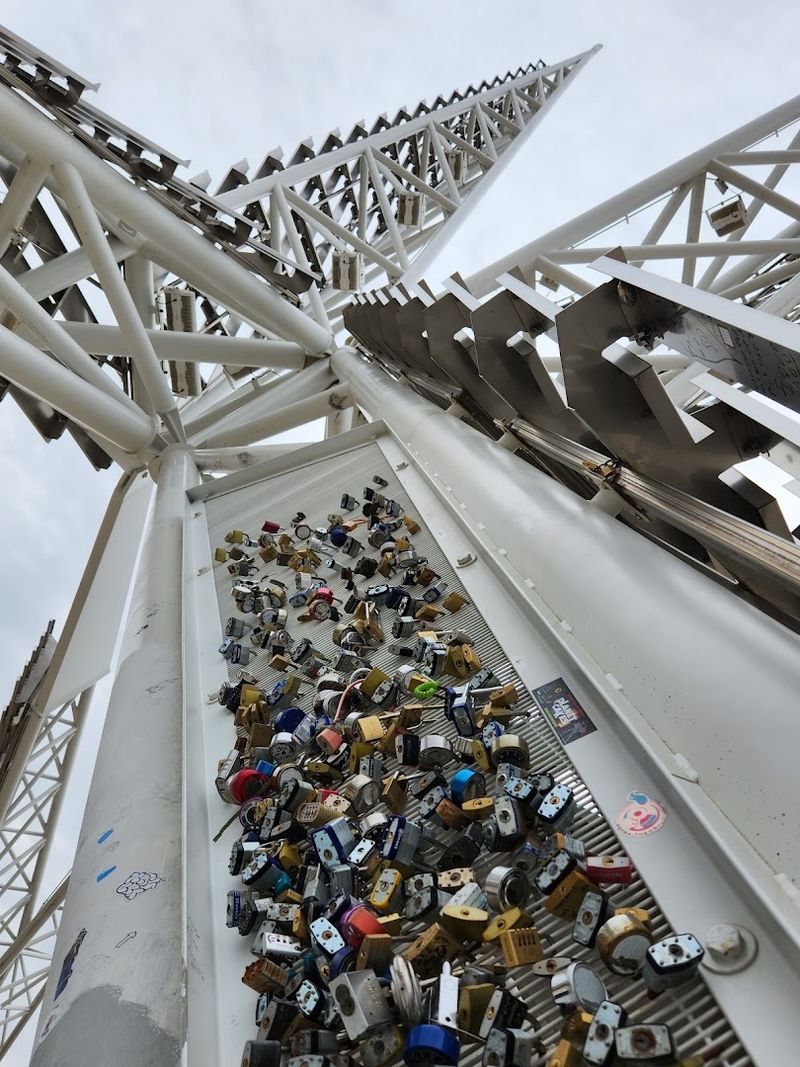
Love locks showed up here and nobody seems to mind. Scattered along sections of the bridge railing, padlocks of every size and color have been attached by couples, friends, and families over the years.
Some have names scratched into them. Others have dates, symbols, or just a small heart.
It is a tradition borrowed from bridges around the world, but it feels right here. There is something fitting about attaching a token of permanence to a structure built to look like a bird in flight.
Motion and stillness coexisting in the same place.
The collection has grown steadily. First-time visitors often spot the locks before they notice anything else about the railing.
They lean in, read a few, and suddenly the bridge feels personal rather than just architectural. That shift happens fast.
You do not need to bring a lock to appreciate them. Just reading the little messages left by strangers is oddly touching.
People mark moments here, big ones and small ones alike. A wedding anniversary.
A first trip together. A name someone wanted to remember.
Skydance Bridge was built to connect two parts of a park, but the love locks turned it into something more layered. It became a place where people leave small pieces of their stories.
That kind of accidental meaning is hard to manufacture and impossible to ignore once you see it.
The Park on Both Sides Is Worth Your Time
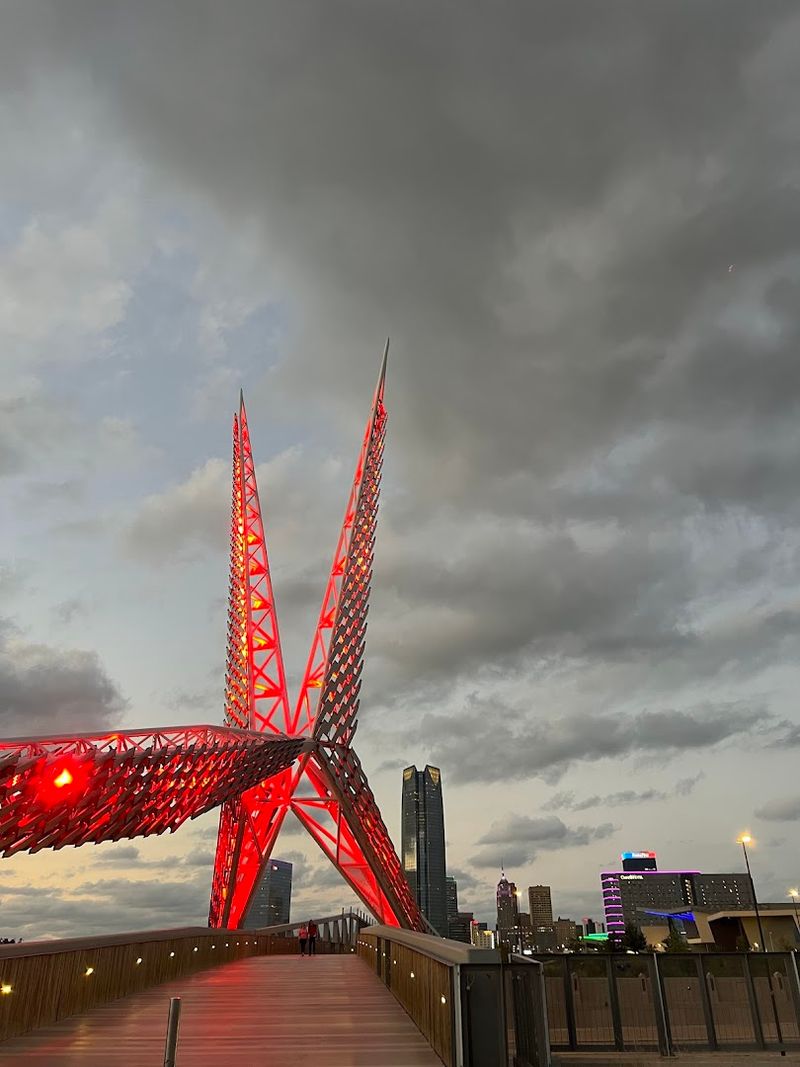
The bridge does not exist in isolation. On both ends, Scissortail Park sprawls out in ways that keep surprising you.
The upper section has a lake, a boathouse, an interactive fountain area, a dog park, a children’s playground, and a restaurant. That is a lot packed into one end of a pedestrian bridge.
The lower section feels different. It leans quieter and more natural, with wooded paths, biking trails, a large open lawn, and an event pavilion.
The contrast between the two halves is part of what makes the whole park feel alive. Each side has its own personality.
Both sections are consistently well-maintained. The paths are clean, the landscaping is cared for, and there is almost always something happening.
Families bring kids. Runners use the trails.
Dog owners let their pets roam the off-leash area. The energy shifts depending on the time of day, but it never feels dead.
What ties it all together is the bridge itself. Without it, the two park sections would just be two separate green spaces on opposite sides of a noisy highway.
With it, they become one continuous experience. The bridge earns its place by making the whole park work as a single destination.
Plan to spend at least two hours here. One hour feels rushed.
The park rewards slow wandering far more than a quick pass-through.
The Architecture Tells Oklahoma’s Story
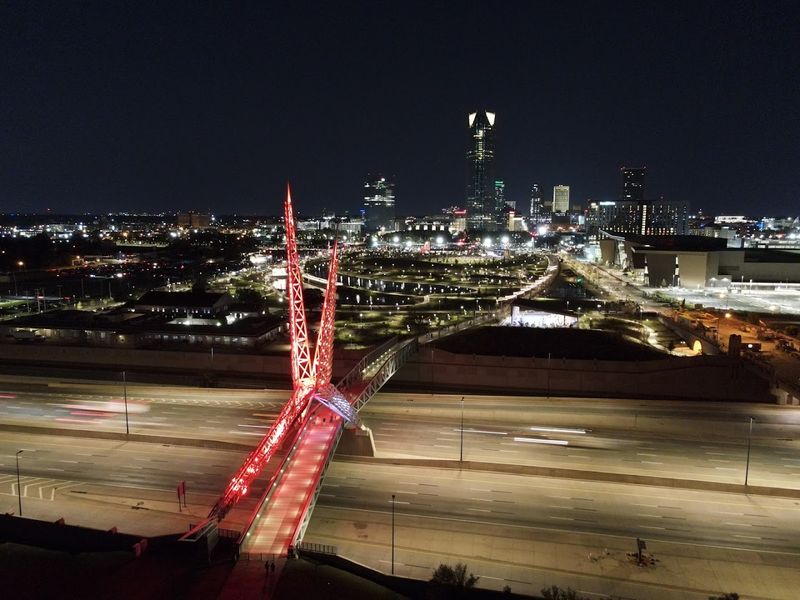
Every state has symbols, but not every state turns those symbols into steel and hangs them over a major highway. Oklahoma did.
The Scissor-tailed Flycatcher is the state bird, a long-tailed, graceful creature known for its aerial acrobatics. Translating that into a bridge required serious imagination.
The design captures the bird mid-flight, wings arched upward in that dramatic V-shape the flycatcher is known for. The tail of the bird sweeps into the bridge structure itself, blending form and function in a way that feels seamless rather than forced.
Two engineers designed this structure, and the technical achievement behind it is easy to overlook when you are busy being dazzled by the visuals. Holding that shape stable over a busy interstate, while also making it walkable and safe, is no small feat.
The engineering is as bold as the concept.
What strikes you most is how specifically Oklahoman it feels. This was not a generic design dropped into any city.
It was built for this place, this state, this identity. You could not transplant it somewhere else and have it make the same kind of sense.
Public art often feels decorative. This bridge feels declarative.
It says something about where you are without using a single word. Oklahoma built this, and Oklahoma meant it.
Getting There Is Easier Now Than It Used to Be
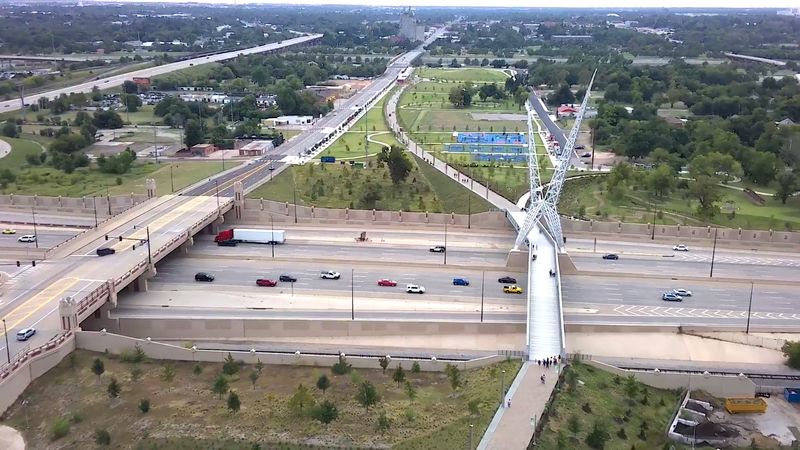
Early visitors had to work a little harder to reach the bridge. Access involved a small side road off the freeway, and the south side of the park was still under construction for some time.
Getting oriented took a moment of patience.
The situation has improved significantly. Now the park is fully connected on both ends of the highway.
You can access the bridge from either the upper or lower park sections, and the paths are clearly marked. The whole experience flows much more naturally than it did a few years back.
Parking is available near the upper park section. From there, the walk to the bridge is short and pleasant.
The path winds past the fountain area and past the lake before bringing you up to the bridge entrance. It is a warm-up that gets you in the right headspace before you step onto the structure itself.
Cyclists have good access too. The bridge accommodates both foot traffic and bikes, which makes it part of a longer recreational loop for people who want to cover more ground.
One practical note: the bridge is worth visiting more than once. A daytime visit and a nighttime visit feel like two completely different experiences.
If you can manage both, do it. The bridge earns repeat trips in a way most landmarks simply do not.
City Views From the Top Catch You Off Guard
Most people come for the bridge. They leave talking about the view.
Standing at the highest point of the crossing, the Oklahoma City skyline spreads out to the north in a way that feels unexpectedly generous. The city is not enormous, but from up here it has a quiet confidence to it.
The low, flat Oklahoma landscape means you can see far in multiple directions. To the south, the lower park stretches into woodlands.
To the north, downtown OKC sits close enough to feel connected but far enough to look complete. The highway below moves constantly, a reminder that regular life is happening right underneath something extraordinary.
Sunrise visits offer a different quality of light. The sky over Oklahoma turns dramatic shades of orange and pink in the early morning, and the bridge catches that light in interesting ways.
Late afternoon has its own golden warmth that makes the steel glow softly without needing the LED lights.
Photographers treat this spot seriously. The combination of architecture, cityscape, sky, and movement below gives you multiple compositional options within a few steps.
You do not have to be a professional to feel inspired here.
The view is free, always available, and completely underrated. Oklahoma City does not always make national lists of scenic destinations.
This bridge and this view make a quiet argument for why it should.
Locals Claim It With Real Pride
There is a specific kind of civic pride that shows up when a city builds something genuinely worth being proud of. You feel it around this bridge.
Locals bring out-of-town guests here the same way people bring visitors to famous landmarks anywhere else. It has earned that status.
People who have lived in Oklahoma City for decades describe the bridge as something that changed how they see their own city. Before it, this part of town was mostly a highway corridor.
After it, the whole area became a destination. That kind of transformation is rare and worth noticing.
Kids grow up visiting the park and the bridge becomes part of their mental map of the city. Families return for seasons, for events, for the simple pleasure of walking somewhere beautiful that belongs to everyone.
The park and bridge together feel like a shared living room for the city.
Out-of-state visitors sometimes arrive skeptical. Oklahoma is not always the first place people imagine when they think of striking architecture or public art.
The bridge has a habit of changing that assumption quickly and permanently.
The pride here is not loud or performative. It is the quieter kind, the type where someone just smiles when they see you looking up at it and says, yeah, we built that.
And they mean every word of it.
Find It in Oklahoma City Before Everyone Else Does
Word is spreading slowly but steadily. More road-trippers are adding this stop to their I-40 routes.
More travel writers are mentioning it. More photos are appearing online from people who stumbled onto it and could not believe what they found.
Right now, it still feels like something you discover rather than something you are sent to. The crowds are manageable.
The park is peaceful on weekday mornings. You can stand on the bridge and take your time without feeling rushed or shoulder-to-shoulder with strangers.
That window will not last forever. Once a place earns the kind of reputation this bridge is quietly building, the experience changes.
Not worse, necessarily, but different. More scheduled, more curated, less serendipitous.
So go now, while it still feels like a find. Walk the full length of the bridge.
Sit in the park on both sides. Come back after dark and watch the colors shift.
Let the city surprise you in the way only honest, unbothered places can.
Skydance Bridge is located in Scissortail Park in Oklahoma City, Oklahoma, United States. The park address is 300 SW 7th Street, Oklahoma City, OK 73109.
It sits directly over Interstate 40, just south of downtown. Getting there is simple.
Leaving is the harder part.
Dear Reader: This page may contain affiliate links which may earn a commission if you click through and make a purchase. Our independent journalism is not influenced by any advertiser or commercial initiative unless it is clearly marked as sponsored content. As travel products change, please be sure to reconfirm all details and stay up to date with current events to ensure a safe and successful trip.
