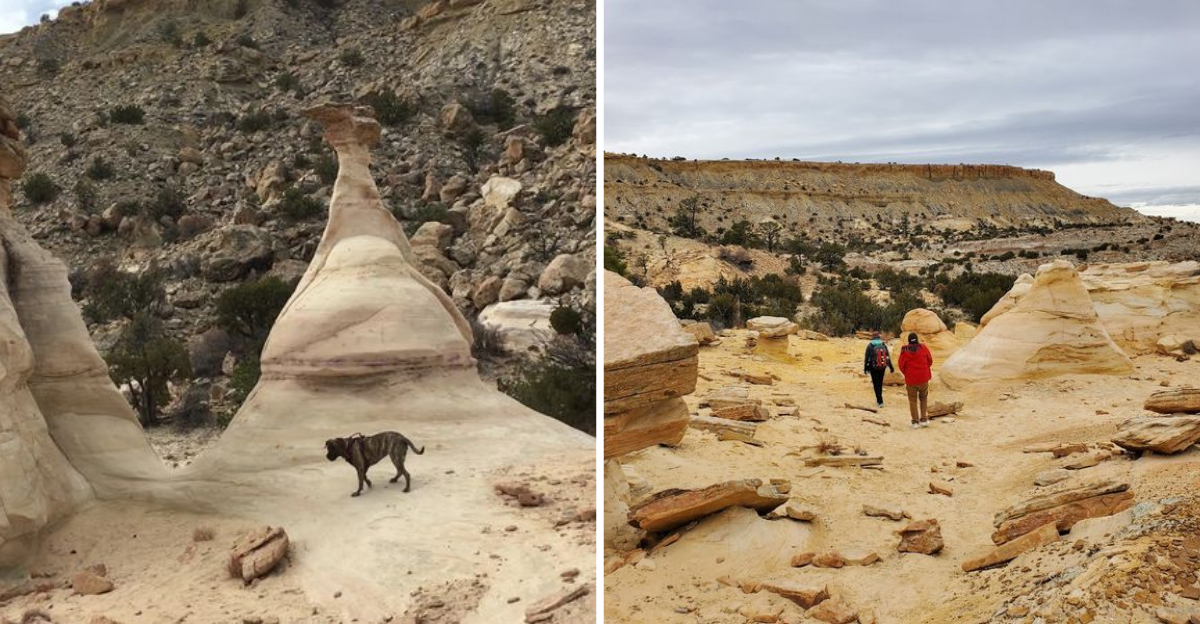
The ground in New Mexico looks like it was painted by someone who had no interest in being subtle. Layers of ancient rock, shaped by millions of years of wind and water, stack up in colors that seem too vivid for a desert. The first time I saw the ridges shift from deep brick red to pale yellow to soft teal, I actually stopped walking just to stare.
This is not a polished national park with paved walkways and visitor centers. It is raw, quiet, and genuinely one of the most visually stunning places I have ever stood in.
The Geology Behind the Colors That Seem Almost Impossible
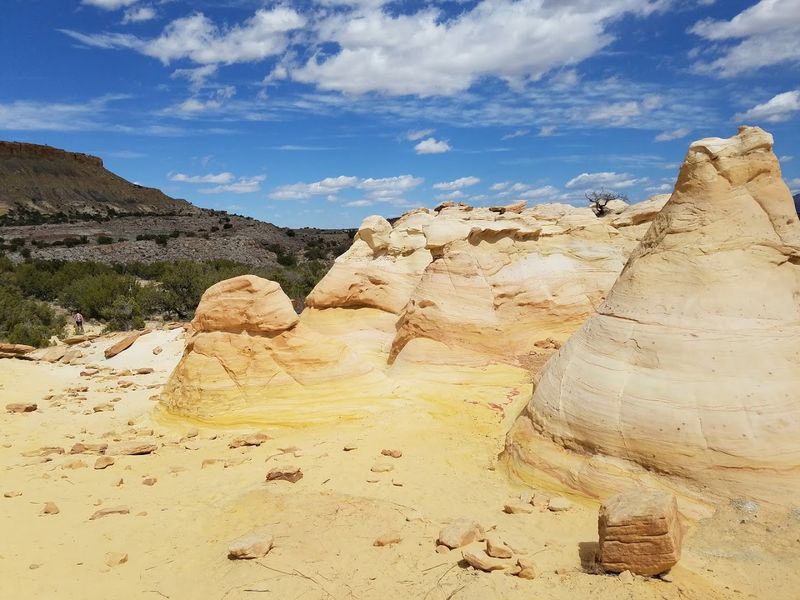
Geology is usually something you read about in a textbook, but at Ojito, you feel it under your boots. The ground shifts color with almost every step, and that is not an exaggeration.
What you are actually seeing is millions of years of Earth history stacked in thin, vivid bands across the desert floor and ridgelines.
The eastern valley holds red-brown Triassic period rocks, some of the oldest exposed material in the area. Above them sit gray-white Jurassic gypsum stones that almost glow on a sunny afternoon.
The contrast between those two layers alone is enough to make you stop and pull out your phone for a photo you will never fully do justice to.
The Morrison Formation, a Jurassic-age mix of mudstone and sandstone, adds muted peach and rosy pink tones across the western sections. Weathering pulls metals and minerals out of these soft layers over time, producing colors like stark white, bright yellow, and deep brick red.
The Painted Desert Member of the Petrified Forest Formation chips in with red-to-green siltstones near the core of the San Ysidro Anticline. It is a slow, ancient kind of art.
San Ysidro Anticline and What Makes It a Geological Wonder
Not everyone knows what an anticline is before visiting, and that is completely fine. Think of it as a massive arch of rock layers that got pushed upward over millions of years and then slowly worn down by erosion until the insides became exposed.
The San Ysidro Anticline, sitting between the Ojito Wilderness and the village of San Ysidro, is exactly that kind of geological spectacle.
What erosion left behind is a cross-section of Earth history that looks like something out of a science fiction landscape. Tilted layers of sandstone and mudstone lean at dramatic angles, stacked in colors that range from chalky white to deep rust.
The whole formation has a Grand Canyon quality to it, though far fewer crowds and no guardrails in sight.
Seeing those tilted layers up close gives you a real sense of how dynamic the ground beneath us actually is. The anticline is not a trail destination exactly, but it sits visibly from the surrounding roads and trailheads.
Early morning light hits the folded rock in a way that turns the whole ridge into something almost electric. It is the kind of view that makes you understand why geologists get genuinely excited about their work.
Hoodoos on the Hoodoo Trail Worth Every Step of the Bumpy Drive
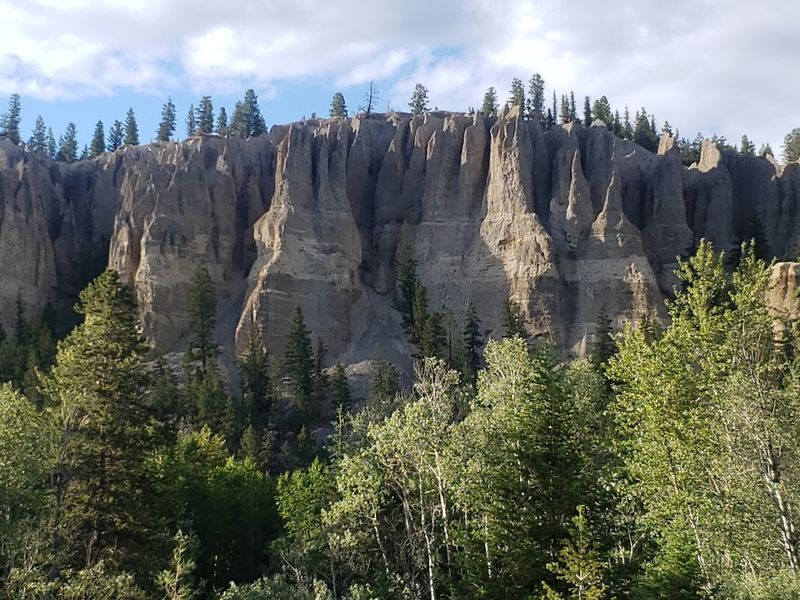
The drive out to Ojito on the washboard dirt road off Highway 550 is, to put it kindly, an experience. About ten miles of rattling, bouncing gravel road will test your vehicle and your patience in equal measure.
But the moment you step onto the Hoodoo Trail and see those formations rising out of the desert floor, the drive becomes completely irrelevant.
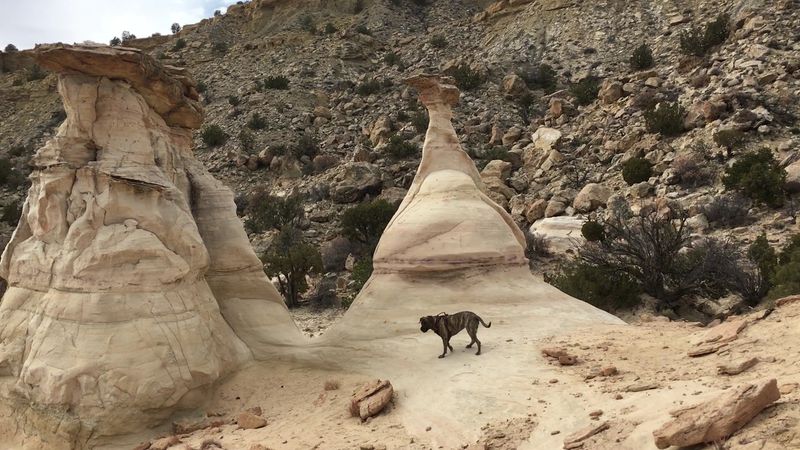
Hoodoos form when a harder cap of rock sits on top of softer material, protecting it from erosion while everything around it wears away. The result is tall, thin columns topped with larger rocks, almost like the desert decided to build its own sculptures.
At Ojito, those columns are wrapped in swirling layers of peach, pink, and pale yellow that shift as the light moves across them.
The trail itself is moderate in difficulty and ends at a viewpoint overlooking the badlands below. It is easy enough that families with kids have done it comfortably, but uneven enough that you want solid footwear.
Bring more water than you think you need because the desert heat is not forgiving. The hoodoos are most dramatic in late afternoon when the low sun turns every layer of color into something that genuinely makes you second-guess what you are seeing.
Dragon’s Back Trail and the Ridge Views That Open Up Suddenly
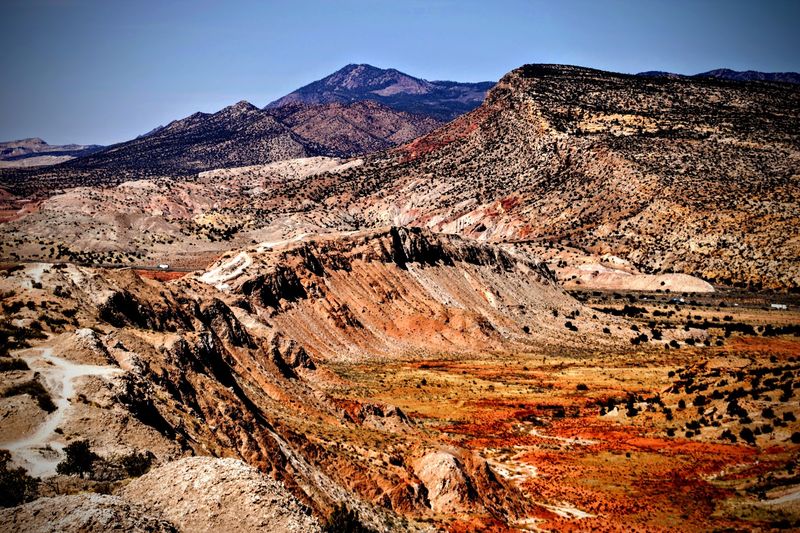
Some trails reveal themselves slowly, and the Dragon’s Back Trail is one of those. You hike through open desert scrub that feels ordinary at first, and then the ridge crests and the whole landscape unfolds below you in every direction.
It is the kind of moment that catches you off guard even when you were expecting something good.
The trail follows a narrow ridge spine, which is where the name comes from. Looking down from either side gives you views of the multicolored valleys and mesas that define this part of New Mexico.
The contrast between the pale sky, the rust-colored earth, and the white gypsum outcrops is the kind of combination that photographers specifically plan trips around.
Unlike the Hoodoo Trail, this one has a slightly more rugged feel underfoot. The terrain is uneven and the path is not always clearly marked, which is pretty standard for BLM wilderness land.
Going with a downloaded trail map is a smart move before heading out. The payoff is a perspective on the Ojito landscape that you simply cannot get from the valley floor, and those ridge views stick with you long after the drive home.
White Mesa Trail and the Gypsum Paths That Glow in the Sun
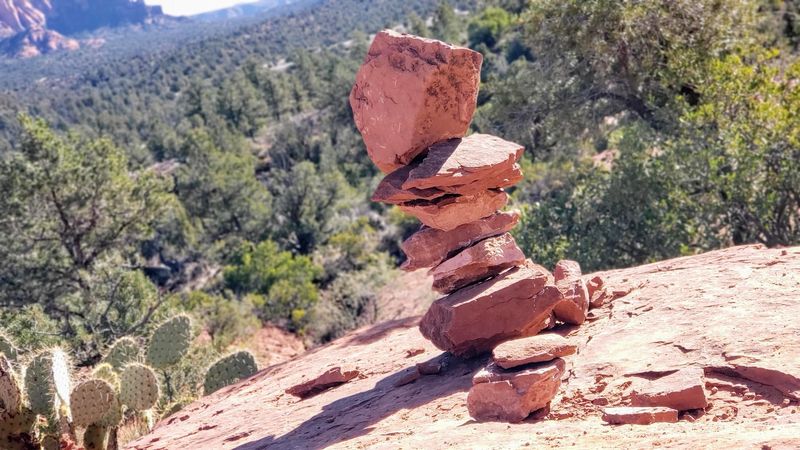
There is something almost surreal about a trail that looks like it is made of snow in the middle of a sun-baked desert. The White Mesa Trail at Ojito runs through areas of exposed gypsum, and that white mineral surface reflects sunlight in a way that makes the path almost luminous.
It is genuinely one of the more unusual sensory experiences the wilderness has to offer.
Gypsum forms in sedimentary environments and weathers into soft, pale material that crumbles easily underfoot. At Ojito, it creates a kind of otherworldly texture across the mesa surface, and some visitors have found large individual gypsum crystals along the route.
The White Mesa area sits at the eastern end of the wilderness, and the surrounding colored cliffs provide a vivid backdrop against all that white.
The trail is a good option if you want beautiful views without the same level of effort as the Dragon’s Back. Short but visually packed, it rewards even a quick visit.
No amenities exist out here, so self-sufficiency is the rule. Sunset light on the white gypsum turns the surface into something that almost looks like it is glowing from within, which makes an evening visit especially worth planning for.
What to Know Before You Head Out to Ojito Wilderness
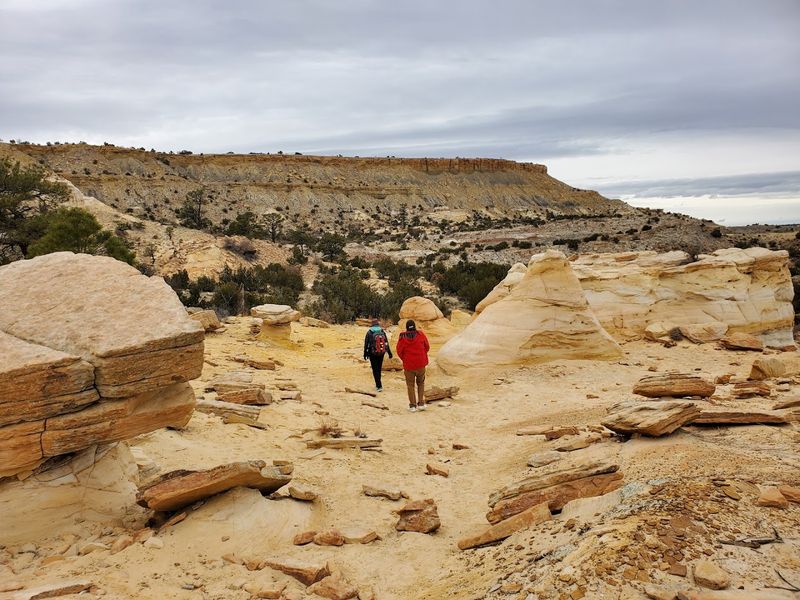
Ojito is not the kind of place that holds your hand. There are no paved paths, no visitor centers, no water fountains, and no cell service to speak of once you are deep in the terrain.
That is part of what makes it feel so genuinely wild, but it also means preparation is not optional.
The parking area sits on the south side of Cabezon Road, and trailheads for both the Hoodoo and Seismosaurus trails are accessed by crossing to the north side. Trail maps are available through the Bureau of Land Management website and on apps like AllTrails, and downloading them before you leave home is a very good idea.
The dirt roads leading in can get rough after rain or snow, so checking conditions ahead of time saves a lot of trouble.
Water is the most important thing to pack, especially from late spring through early fall when temperatures climb fast. Sun protection matters too, since shade is scarce across most of the terrain.
Dogs are welcome as long as they stay on trail. The wilderness is open 24 hours a day, which means sunrise and sunset visits are completely possible and honestly some of the most rewarding times to be there.
Why Ojito Feels Like a Secret That New Mexico Has Been Keeping
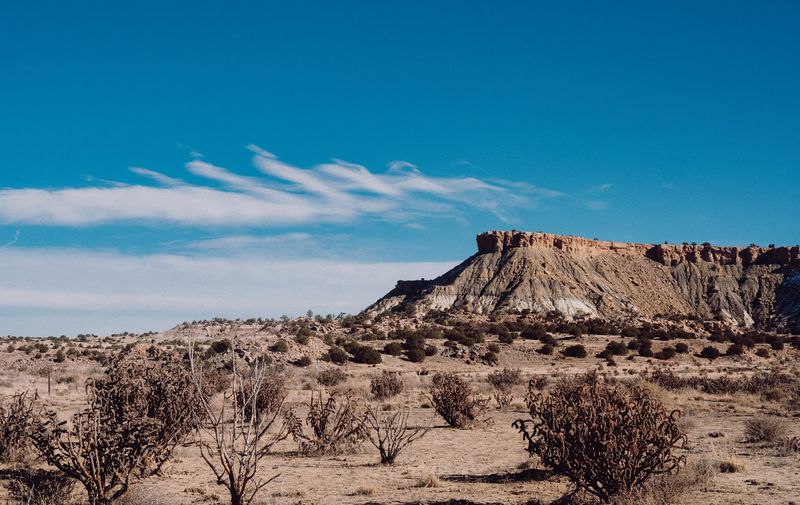
Most people driving along Highway 550 toward Albuquerque have no idea that a place like Ojito exists just off the road. It is not heavily advertised and it does not show up on the usual lists of New Mexico tourist destinations.
That relative obscurity is a big part of what makes it special.
Established as a protected wilderness in 2005, Ojito covers 11,823 acres managed by the Bureau of Land Management. No motorized vehicles are allowed inside, which keeps the atmosphere genuinely quiet.
Out here, the sounds are wind, your own footsteps, and maybe a hawk somewhere overhead.
Visitors from Albuquerque make the roughly one-hour drive and consistently describe it as one of the best day trips available in the region. It gets compared to Bisti Badlands, another famous New Mexico geological destination, but Ojito has its own distinct personality and color palette.
The rainbow ridges here are not a backdrop you admire from a distance. They are something you walk through, touch, and stand inside of.
That closeness to the color and the rock and the ancient quiet is what keeps people coming back, and what makes the bumpy drive feel like an easy trade every single time.
