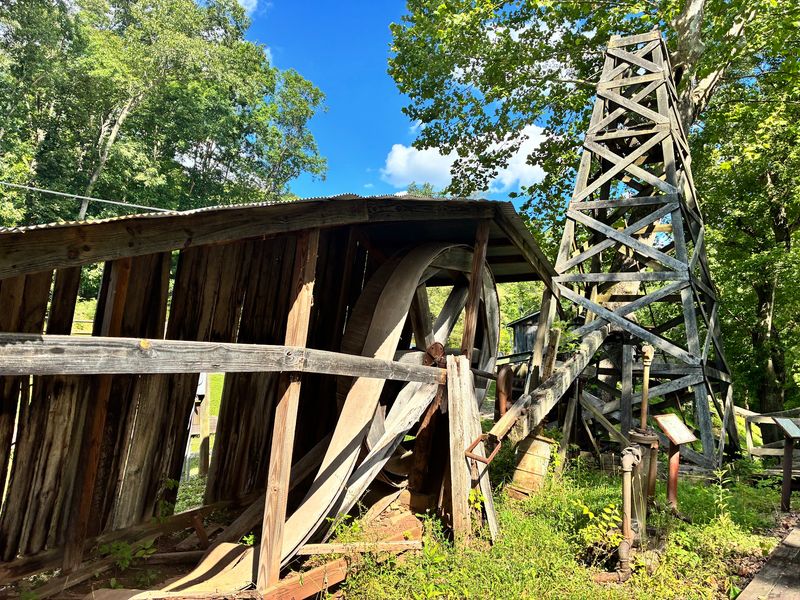
Tucked along a quiet stretch of country road in West Virginia sits a spot that most travelers zip right past without a second glance. Yet this humble roadside marker points to a moment that helped change the whole world, back when folks first pulled black gold out of the ground here.
Once you learn the story, you can’t help but slow down and picture the derricks that once crowded these hills. It’s the kind of overlooked place that turns out to be far bigger than it looks.
A Quiet Marker Along the Little Kanawha
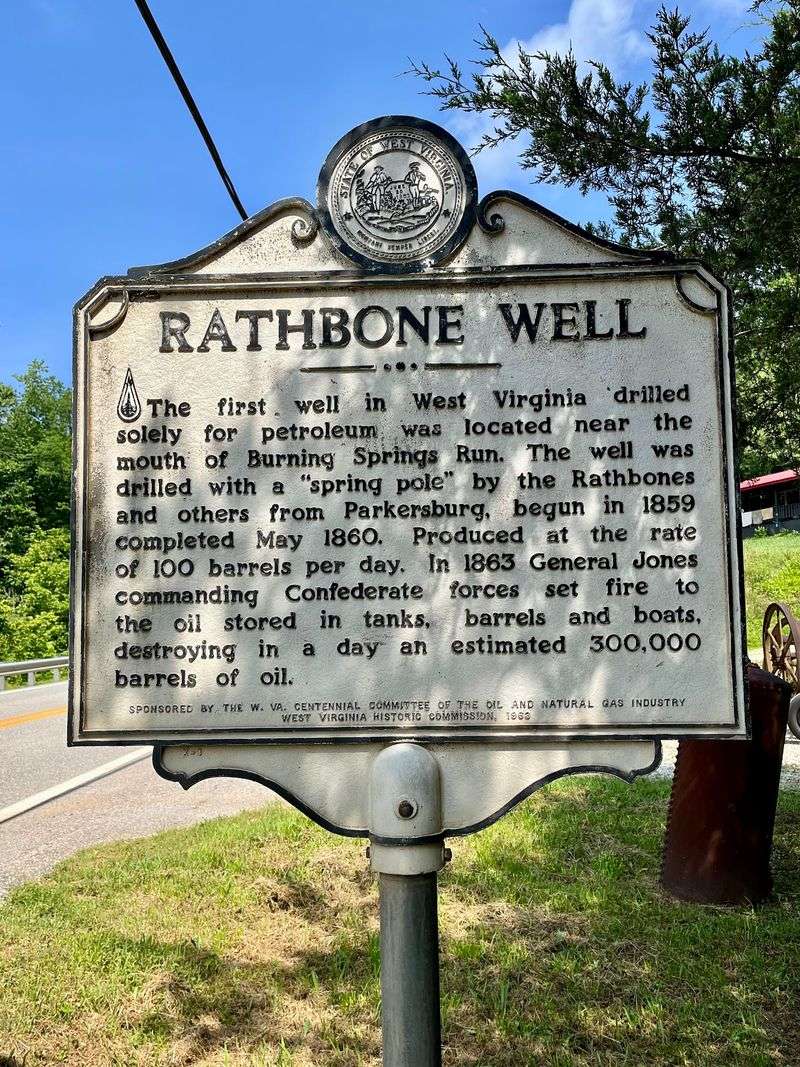
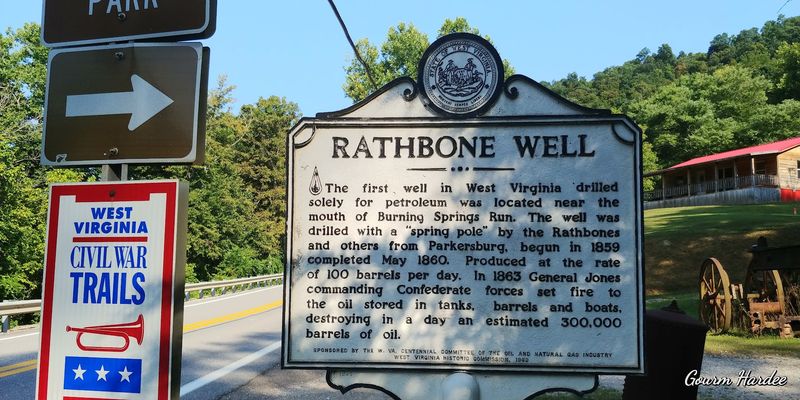
Roll along West Virginia Route 5 through the countryside and you’ll eventually spot a modest historical marker standing where one of the biggest stories in oil history began. The Rathbone Well site sits near Creston, close to the mouth of Burning Springs Run, where the land dips toward the Little Kanawha River.
There’s no flashy welcome center or crowded parking lot here. What you get instead is a plain sign and a stretch of ground that once buzzed with derricks, barrels, and busy workers chasing petroleum from the earth.
Folks who stop by say the setting feels peaceful, almost too quiet for a place that mattered so much. That contrast is part of the charm, honestly.
You stand there reading the marker, glance at the hills, and try to imagine the noise and grit of a boomtown that once filled this valley. For history lovers and curious road-trippers alike, it’s a small pin on the map that carries an outsized weight in the story of American energy.
The Rathbone Family and Their 12,000 Acres
Every big story has a family behind it, and here that family was the Rathbones. Back in 1840, William P.
Rathbone and his sons, John Castelli “Cass” and John Valleau “Val,” picked up around 12,000 acres at Burning Springs Run in Wirt County.
They weren’t chasing oil at first. Like many settlers of that era, they were drilling for salt brine, a valuable commodity used to preserve food and trade for goods.
What they found instead flipped their fortunes upside down. In 1859, their drilling struck petroleum at about 200 feet, and the ground started giving up something the world would soon crave.
The Rathbones proved to be clever businesspeople, too. They leased small one-acre tracts of their land to other prospectors, spreading the risk while collecting steady returns as the field grew.
Picture a family sitting on thousands of acres, watching neighbors and newcomers pour in to sink wells on their property. That kind of foresight helped turn a sleepy patch of West Virginia into a place people traveled far to reach.
Salt Brine That Turned Into Petroleum
Talk about a happy accident. When crews here first sank their tools into the earth in 1859, they were hunting salt brine, not oil.
The petroleum they hit reportedly gushed out at a rate that stunned everyone, producing around 200 barrels a day from a depth of roughly 200 feet. That was a staggering amount for the time, and word spread fast.
By 1860, the story kicked into high gear. Cass Rathbone drilled his own well and struck a gusher at about 140 feet, one that produced roughly 100 barrels a day.
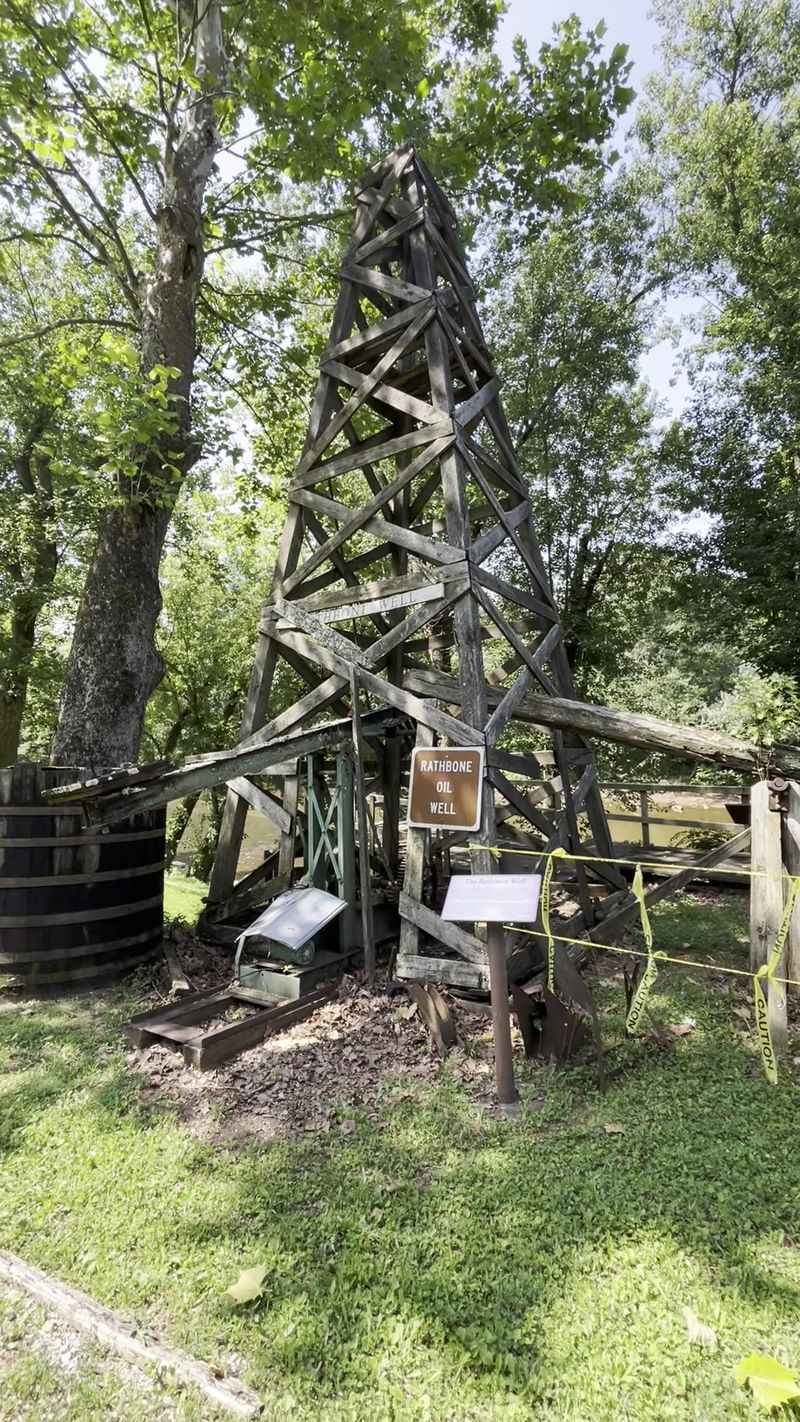
Completed in May of 1860, that well is recognized as the first in West Virginia drilled solely for petroleum. It marked a shift from oil being a lucky surprise to being the whole point of the operation.
Standing near the site today, it’s fun to think about how a search for salt water accidentally helped launch a global industry. Sometimes the biggest doors open when you’re knocking on a completely different one, and the folks here happened to be in exactly the right valley.
A Claim on Being the World’s Oldest Oil Well
Here’s where things get delightfully debatable. Most history books hand the “first commercial oil well” title to Pennsylvania’s Drake Well, finished in August 1859 with a steam-powered drill.
The Rathbones, though, were pulling oil out of West Virginia around the same window, just without that heavy-duty steam equipment. More recent scholarship suggests the Burning Springs field may actually predate the Drake Well.
Some accounts go a step further and consider the Rathbone well the world’s oldest oil-producing well. That’s a bold claim, and it stirs up plenty of friendly argument among history buffs.
By 1860, the Rathbone wells collectively produced over 1,400 barrels of oil per day, an eye-popping figure that shows just how serious this operation had become.
Whether or not it wins the official crown, the site sits right at the beginning of a story that reshaped the modern world. For West Virginians, there’s real pride in knowing their state played a founding role, and this quiet marker lets you brush up against that debate in person.
Rathbone’s Rock Oil, Nature’s Wonder Cure
Long before oil powered cars and factories, folks tried selling it as medicine. The early oil pulled from this site was marketed as a remedy called “Rathbone’s Rock Oil, Nature’s Wonder Cure.”
Back then, bottled tonics promising to fix nearly any ailment were everywhere, and petroleum got roped right into that trend. Sellers pitched the dark liquid as a cure-all, and curious buyers were happy to give it a try.
It sounds strange to modern ears, doesn’t it? The same substance that would later run engines was once poured into little bottles and sold as a health elixir.
That quirky chapter tells you something about the times. People knew oil was valuable but hadn’t yet figured out its full potential, so they reached for the marketing angle they understood best.
Learning this little detail at the site adds a grin to the visit. It’s a reminder that every world-changing discovery starts out a bit misunderstood, with someone trying to turn it into a quick sale before the bigger picture comes into focus.
The Boomtown Lit Entirely by Natural Gas
Imagine a whole town glowing without a single electric bulb. As the oil field grew, a community sprang up around it, and natural gas provided all of its lighting.
That was a remarkable thing for the era. While other towns leaned on candles and oil lamps, this little settlement in West Virginia was already tapping the gas bubbling up alongside the petroleum.
Historians point to this as the start of significant gas development in the state. What began as a happy byproduct became a resource in its own right.
Picture the scene at night: derricks silhouetted against a valley, streets and buildings softly lit by gas, and the constant hum of an industry in full swing. It must have felt almost futuristic to travelers passing through.
That glow tells a bigger story about how quickly people learned to use every bit of what the ground offered. The town didn’t just pump oil; it pioneered a way of living that hinted at the energy-powered future waiting for the rest of the country to catch up.
The 1863 Raid That Set the Valley Ablaze
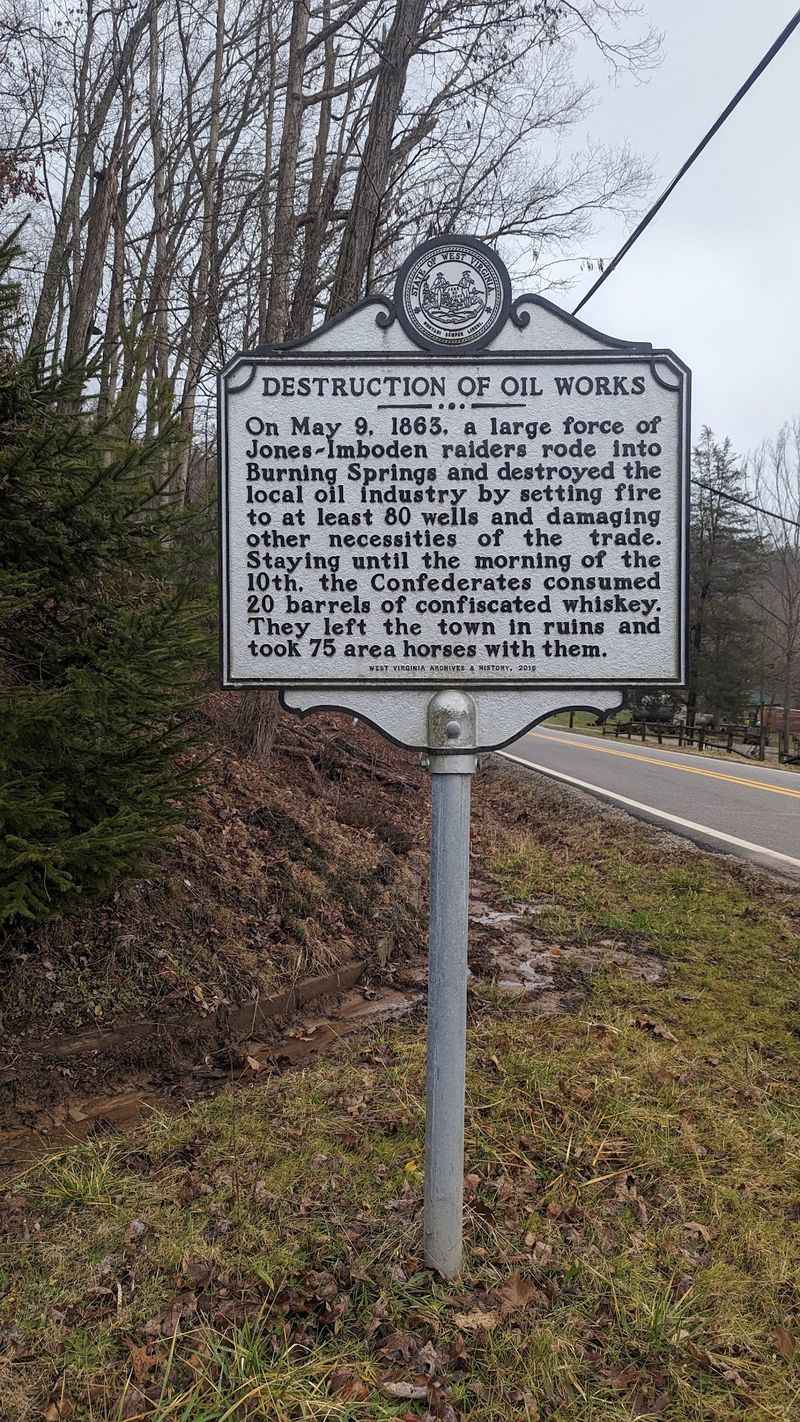
The oil boom here didn’t last forever, and its darkest turn came during the Civil War. On May 9, 1863, Confederate Brigadier General William E.
Jones led a raid straight into Burning Springs.
His forces set fire to the oil derricks and enormous stores of crude kept in tanks, barrels, and boats. In a single day, an estimated 300,000 barrels of oil went up in flames.
The fire was so massive that its glow could reportedly be seen 40 miles away in Parkersburg. It’s hard to imagine the sheer scale of a blaze like that rolling across the valley.
According to the marker on site, the raiders struck at least 80 wells, damaged the tools of the trade, and left the town in ruins before riding off with dozens of area horses.
That day earned Burning Springs a grim place in the history books as the first military oil objective in the history of warfare. It shows how quickly oil became so valuable that armies were willing to target it directly.
What Visitors Find Waiting Today
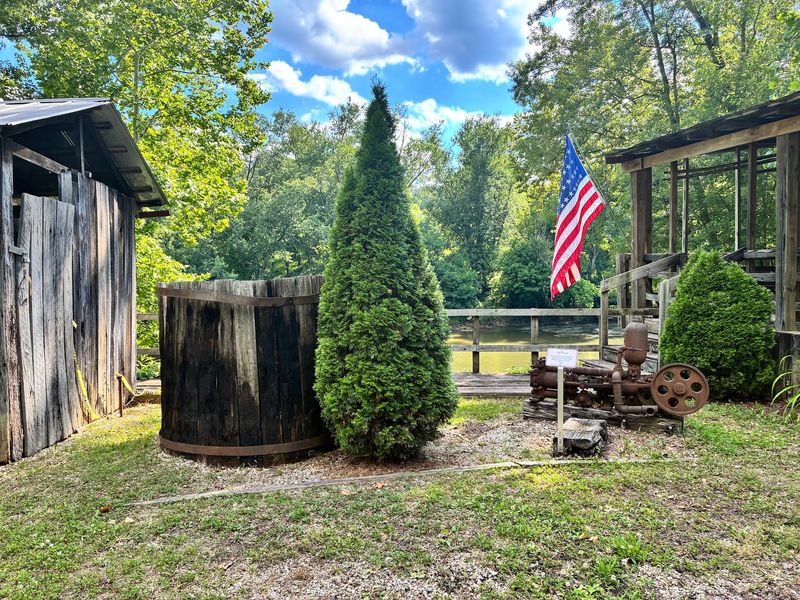
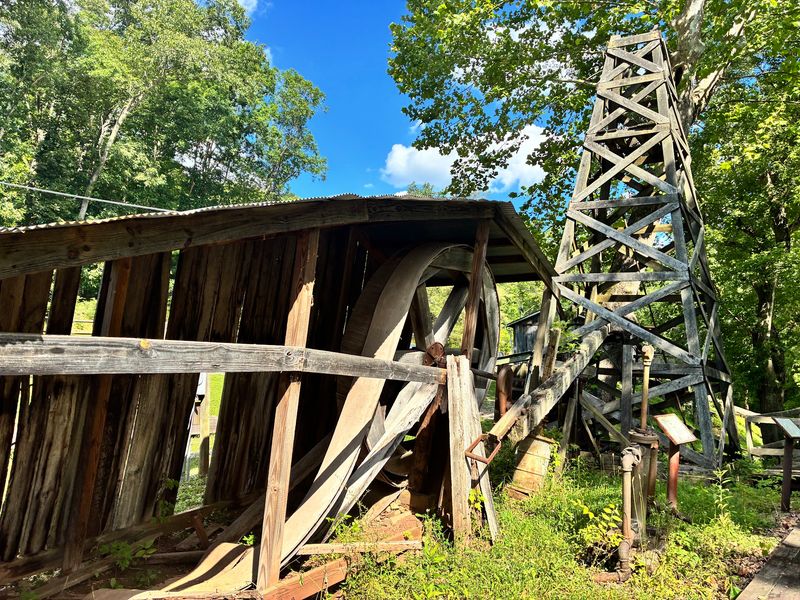
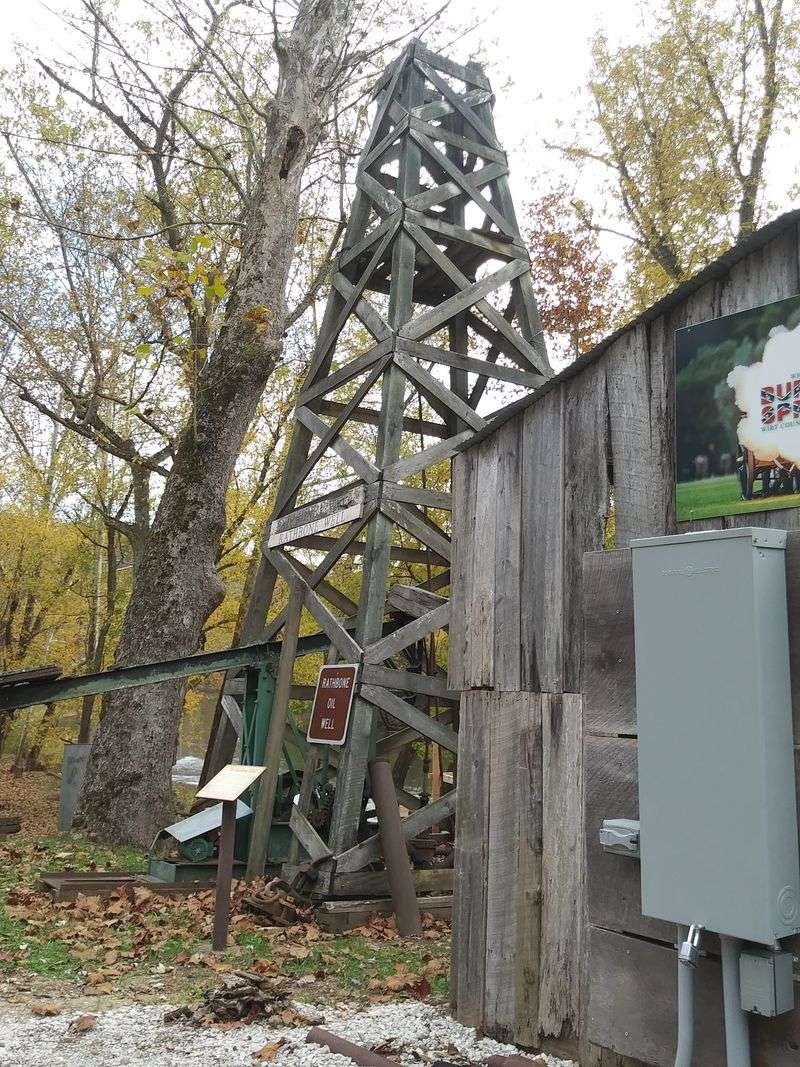
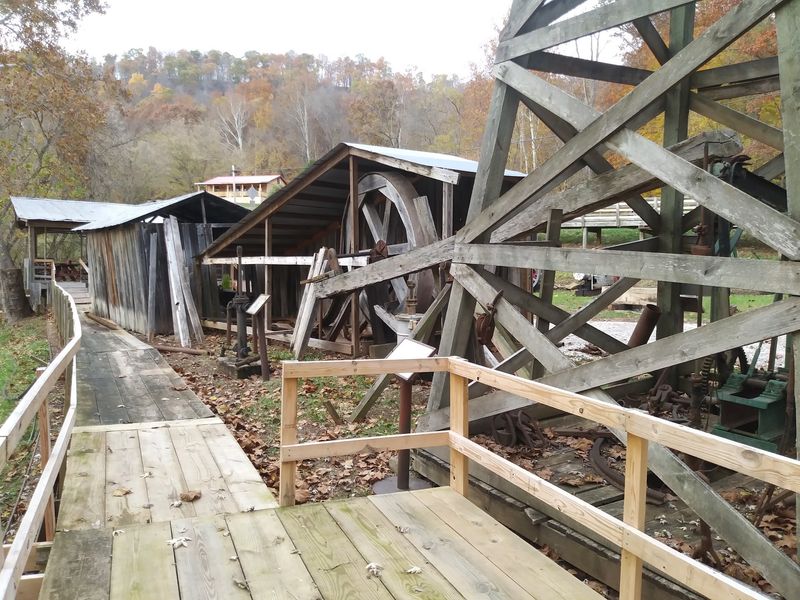
Set your expectations for a peaceful, low-key stop rather than a polished tourist attraction. Visitors describe the Rathbone Well as a genuinely interesting place, with historical artifacts tied to the early oil rush in West Virginia.
Several folks who’ve stopped by call it a cool historic site and a nice area to explore, especially if you enjoy standing where big history actually happened. The marker inscriptions do a lot of the storytelling for you.
One traveler passing through on the way back to Ohio noted the spot felt a little run down, so don’t arrive expecting manicured grounds. Part of its appeal is that raw, unpolished feel.
Reading the two markers, one on the Rathbone Well itself and one on the destruction of the oil works, gives you a surprisingly full picture in just a few minutes. It rewards the reader who lingers.
For anyone who loves oil heritage, small-town West Virginia history, or simply an offbeat roadside discovery, this quiet pull-off delivers more meaning per minute than its plain appearance would ever suggest.
Finding Your Way to This Roadside Landmark
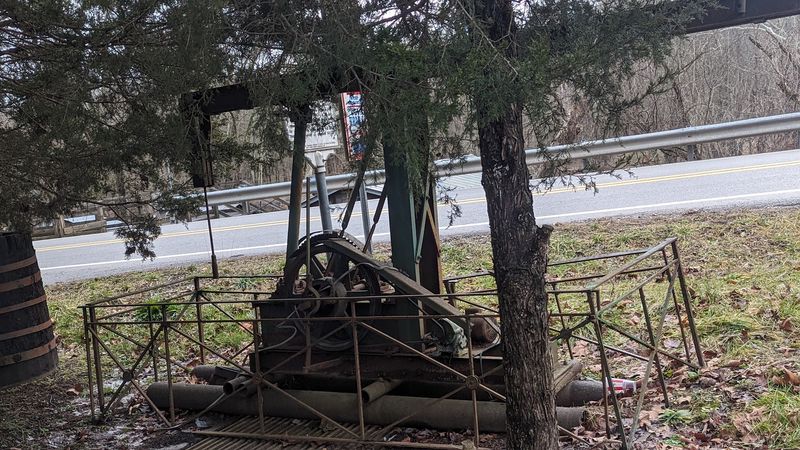
Ready to see it for yourself? The Rathbone Well sits at 7480 WV-5, Creston, WV 26141, along the Little Kanawha Parkway in the countryside of Wirt County.
The historical marker stands on West Virginia Route 5, roughly 0.9 miles north of the intersection with Straight Creek-Burning Spring Road, in the Burning Springs area near the 26143 zip. It’s about eight miles east of Elizabeth, West Virginia, following WV-5.
As an open-air historical landmark, there’s no ticket booth or admission cost to worry about, which makes it easy to fold into a scenic drive. Bring your curiosity and maybe a camera.
Because it’s a rural pull-off, plan to keep an eye out so you don’t breeze right past the sign. Good tires and a full tank never hurt on these winding country roads either.
Standing here, you close the loop on a story that stretches from a salt-brine accident to a world-altering industry. For a spot most folks overlook, the Rathbone Well leaves you with plenty to think about on the ride home.
