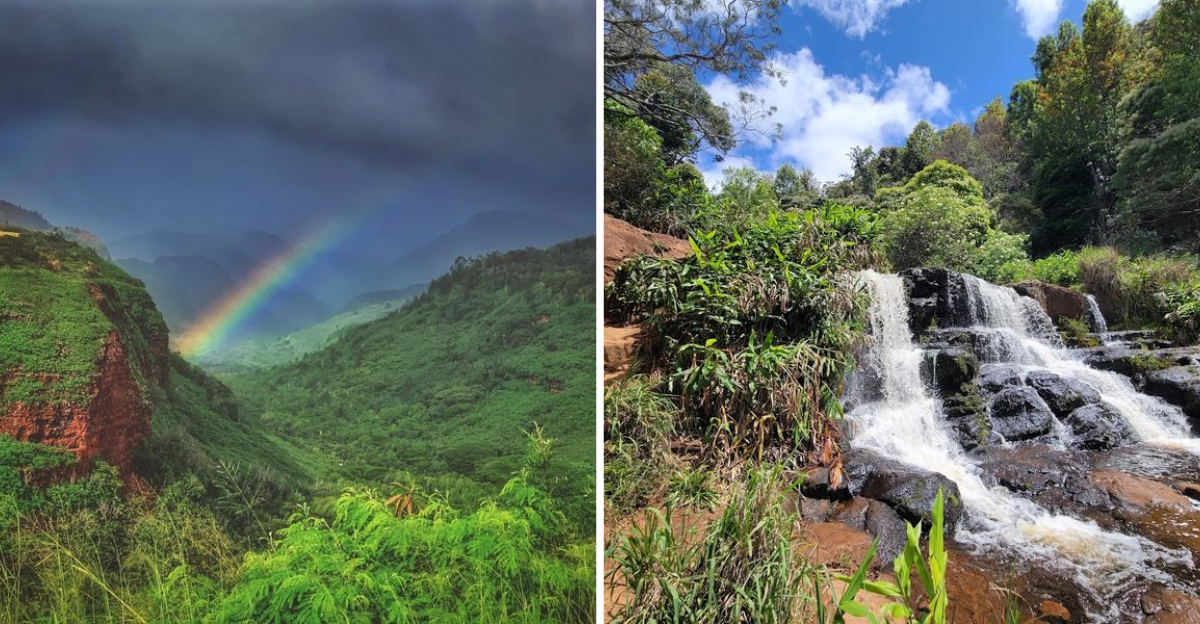
Hawaii has a way of surprising you with scale you do not expect from a chain of islands. On one of the western edges, the land suddenly fractures into something immense, dropping thousands of feet into layers of jungle, volcanic rock, and moving water that disappears into the distance. I remember arriving at the rim and instinctively stepping closer, then stopping just to take it all in.
The air felt thinner somehow, as if the landscape itself was pulling attention downward. Deep reds and burnt oranges cut through the greenery below, shifting as clouds drifted overhead and reshaped the light every few seconds. A river winds far beneath, carrying traces of iron-rich soil that tint everything it touches.
It is the kind of place that makes the idea of a canyon in Hawaii feel almost understated, like no name could fully match the scale of what is standing in front of you.
The Red River That Gave the Canyon Its Name
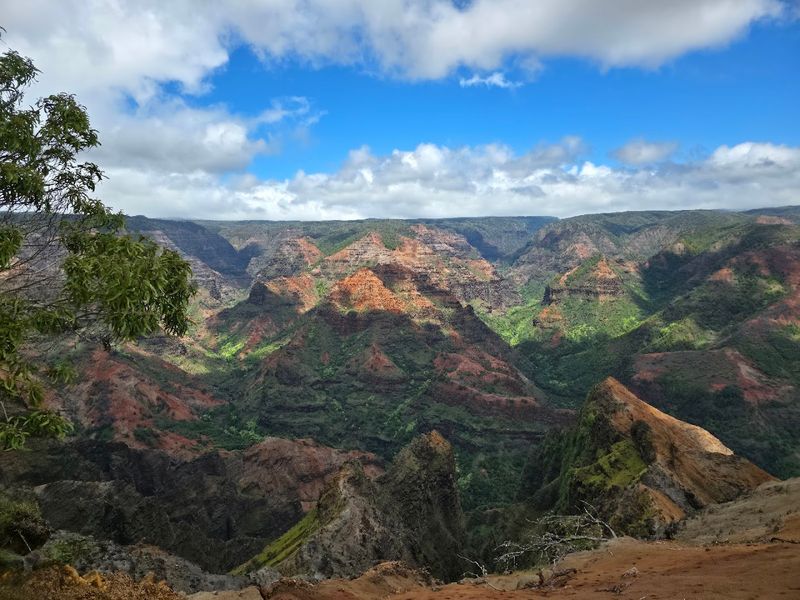
Most rivers get their color from algae or sediment, but the Waimea River earns its striking reddish hue from something far more ancient. The word “Waimea” in Hawaiian literally translates to “reddish water,” and the river has been living up to that name for millions of years.
The canyon walls are made of basaltic volcanic rock that has slowly weathered from black to vivid shades of red and orange. As rain falls and the river flows, it picks up iron-rich particles from that eroded soil and carries them downstream, staining the water a deep rusty tone that is unlike almost anything else you will see in nature.
After heavy rainfall, the color intensifies dramatically. The river almost seems to bleed into the canyon floor, and the contrast against the surrounding green jungle is something you have to see to fully appreciate.
It does not look real at first glance. If you visit after a storm, keep an eye on the river from the lookout points above.
The color shifts and deepens depending on how much rain has fallen on Mount Waialeale, one of the wettest spots on Earth, which feeds this entire watershed.
Canyon Walls That Drop Nearly 3,600 Feet
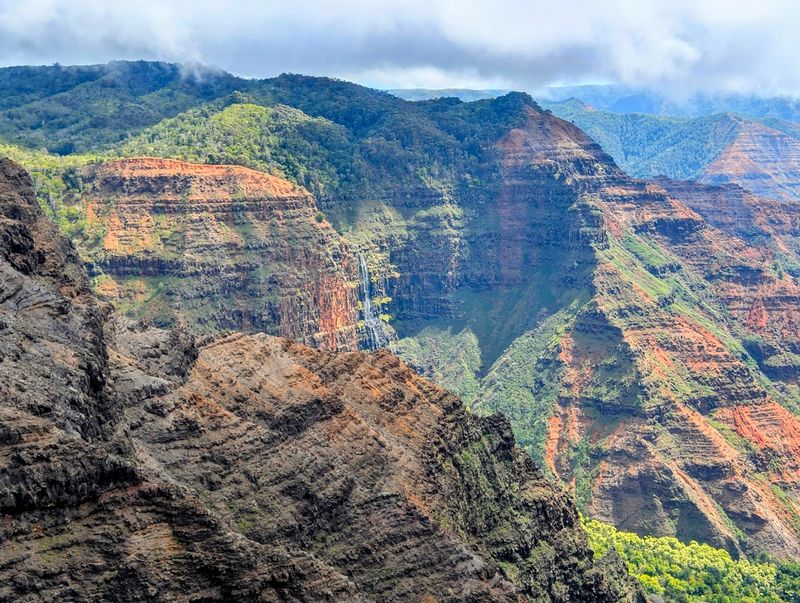
The numbers alone are staggering. Waimea Canyon stretches roughly 10 to 14 miles long, about a mile wide, and plunges up to 3,600 feet at its deepest points.
That is not a gentle slope either. These are sheer, dramatic cliff faces layered in volcanic rock that shift in color from deep burgundy to rust orange depending on the light.
What makes it feel different from places like the Grand Canyon in Arizona is the greenery. Every ledge, every crack, every narrow shelf of rock is covered in something growing.
Native Hawaiian plants like ohia lehua, koa, and kukui cling to the walls at impossible angles. The canyon does not feel barren.
It feels alive in a way that catches you off guard.
From the main lookout points along Kokee Road, the scale really hits you. You are standing at elevation looking across a void so wide and deep that the far wall almost disappears into haze.
The trails that descend into the canyon give you a completely different perspective. Down there, the walls tower above you and the jungle closes in.
It is humbling in the best possible way, and honestly a little hard to capture in a photo.
The Volcanic History Beneath Your Feet
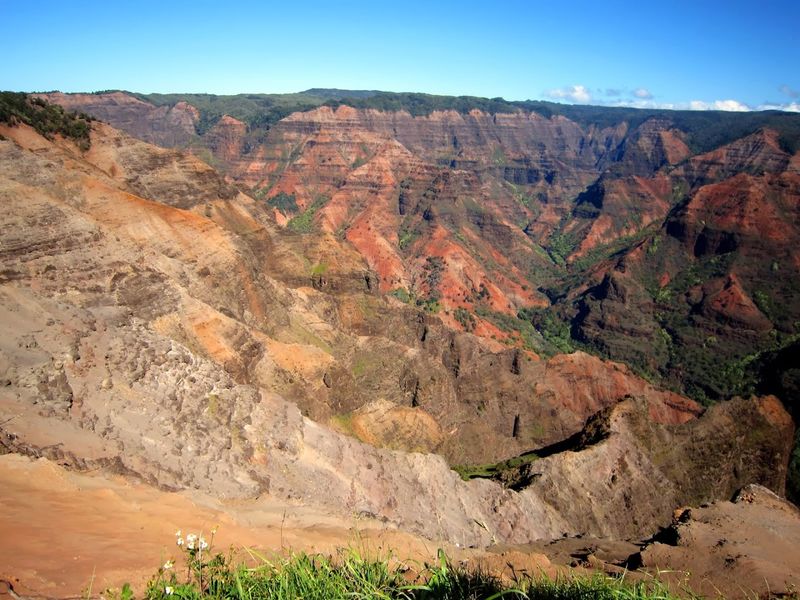
Kauai is the oldest of the main Hawaiian Islands, and Waimea Canyon is basically its geological resume laid bare for anyone willing to look. The canyon formed through a combination of two massive forces: the catastrophic collapse of the ancient shield volcano that originally built this island, and millions of years of steady erosion from the Waimea River and relentless rainfall.
The exposed rock you see in those canyon walls is basalt, the same volcanic material that built the island from the ocean floor up. Over roughly five million years, that black lava weathered into the brilliant reds and oranges that make the canyon so visually striking.
Iron in the rock oxidized over time, essentially rusting, and that process is responsible for the whole color palette you see today.
Signs along the park road explain some of the geology, and they are genuinely worth reading. One National Park Service sign near a lookout breaks down how the lava layers correspond to different volcanic eruptions.
Each stripe of color in the canyon wall represents a distinct moment in the island’s fiery past. Geology rarely feels this personal or this vivid.
You are not just looking at pretty colors. You are reading a timeline that stretches back five million years.
Lush Jungle Vegetation That Defies Expectation
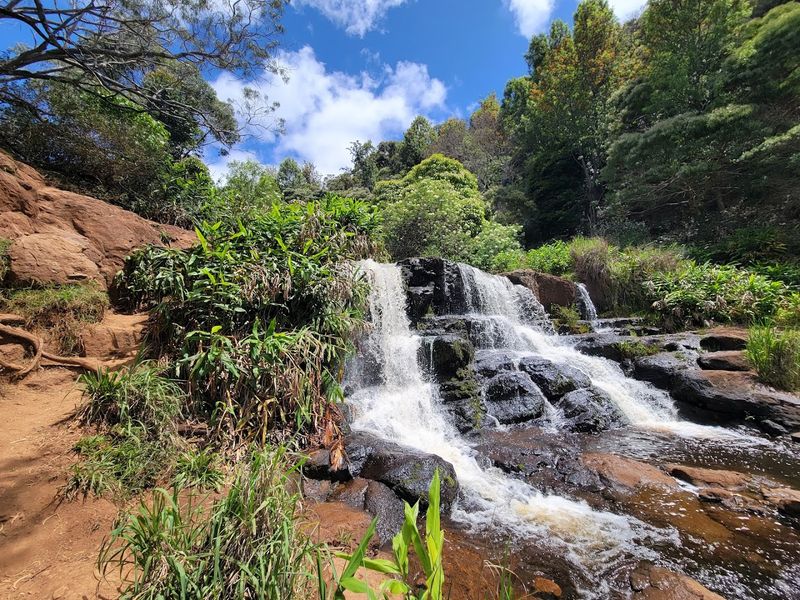
People who have only seen photos of Waimea Canyon sometimes expect something dry and dusty, similar to the American Southwest. The reality is almost the opposite.
The canyon floor and lower walls are draped in some of the most lush, dense tropical vegetation you will find anywhere in Hawaii.
Native plants like ohia lehua, with their brilliant red brush-like flowers, grow alongside koa hardwoods and kukui trees. There is also a plant called iliau that grows nowhere else on Earth except the dry ridges of western Kauai.
It looks a little like a yucca and blooms with clusters of small yellow flowers before dying, which gives it a kind of dramatic life cycle that feels appropriate for such a dramatic landscape.
The adjacent Kokee State Park sits at higher elevation and adds a completely different layer to the experience. Up there, you find high-altitude rainforest with Norfolk pines and native birds moving through the canopy overhead.
The transition from the red, rocky canyon walls to the emerald green of the surrounding forest happens fast, and it is one of those visual contrasts that makes this place feel genuinely surreal. Bring good shoes because the trails get muddy quickly, especially after rain.
The Lookout Points That Stop You Cold
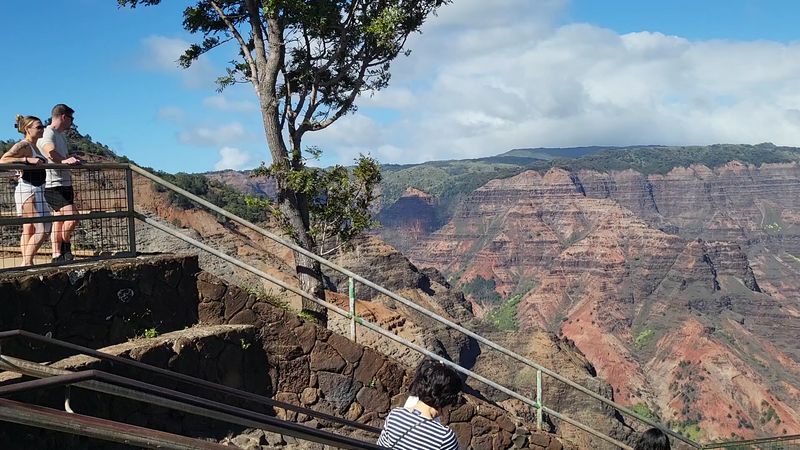
There are several official lookout points along the road that winds up through the park, and each one gives you a slightly different angle on the canyon. The main Waimea Canyon Lookout is where most people stop first, and honestly, it earns that reputation without any effort.
You pull into the small parking lot, walk maybe thirty feet to the railing, and suddenly the ground just disappears in front of you. The canyon opens up wide and deep, layers of red and green stacked against each other with waterfalls threading down the distant walls.
On clear days, you can see all the way across to ridgelines that look like they belong in a painting. When clouds move through, the whole scene shifts and changes every few minutes.
The Kalalau Lookout, further up the road at higher elevation, adds ocean views to the mix on clear days. You can sometimes see the Na Pali Coast from up there, which is the kind of view that makes you feel genuinely lucky to be standing in that exact spot.
Go in the afternoon if you want fewer crowds. The light in the late afternoon turns the red canyon walls an even deeper, warmer shade that photographs absolutely beautifully.
Hiking Trails That Take You Into the Canyon
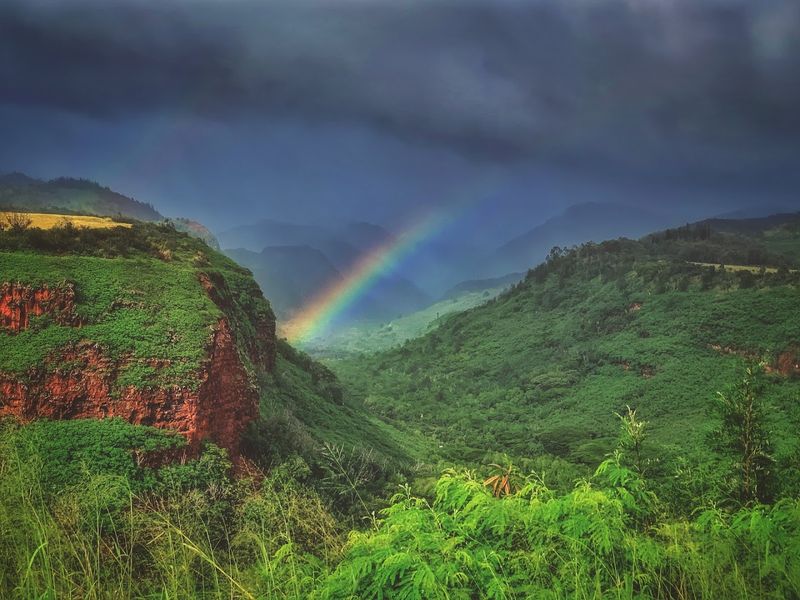
Driving the road and stopping at lookouts is genuinely rewarding, but getting down into the canyon on foot is a completely different kind of experience. The Waimea Canyon Trail descends from the rim into the canyon floor, and once you are down there, the scale of the walls around you is almost disorienting in the best way.
The Nualolo Trail is another popular route that covers serious mileage but rewards hikers with views of the Na Pali Coast that you simply cannot get any other way. One visitor mentioned doing the full ten-mile out-and-back with a pulled hamstring and said it was worth every step.
That kind of dedication tells you something about what waits at the end of that trail.
A fair warning though: the trails get muddy. Trail signs that say muddy are not exaggerating.
Bring waterproof boots or at least shoes you do not mind getting thoroughly coated in red clay. The mud is that specific volcanic red, and it stains.
Some fallen trees occasionally block paths after storms, so check conditions before heading out. The park phone number is listed on the official Hawaii DLNR website if you want to call ahead.
The effort is always worth it, and the canyon rewards anyone willing to get a little dirty.
Planning Your Visit to Waimea Canyon State Park
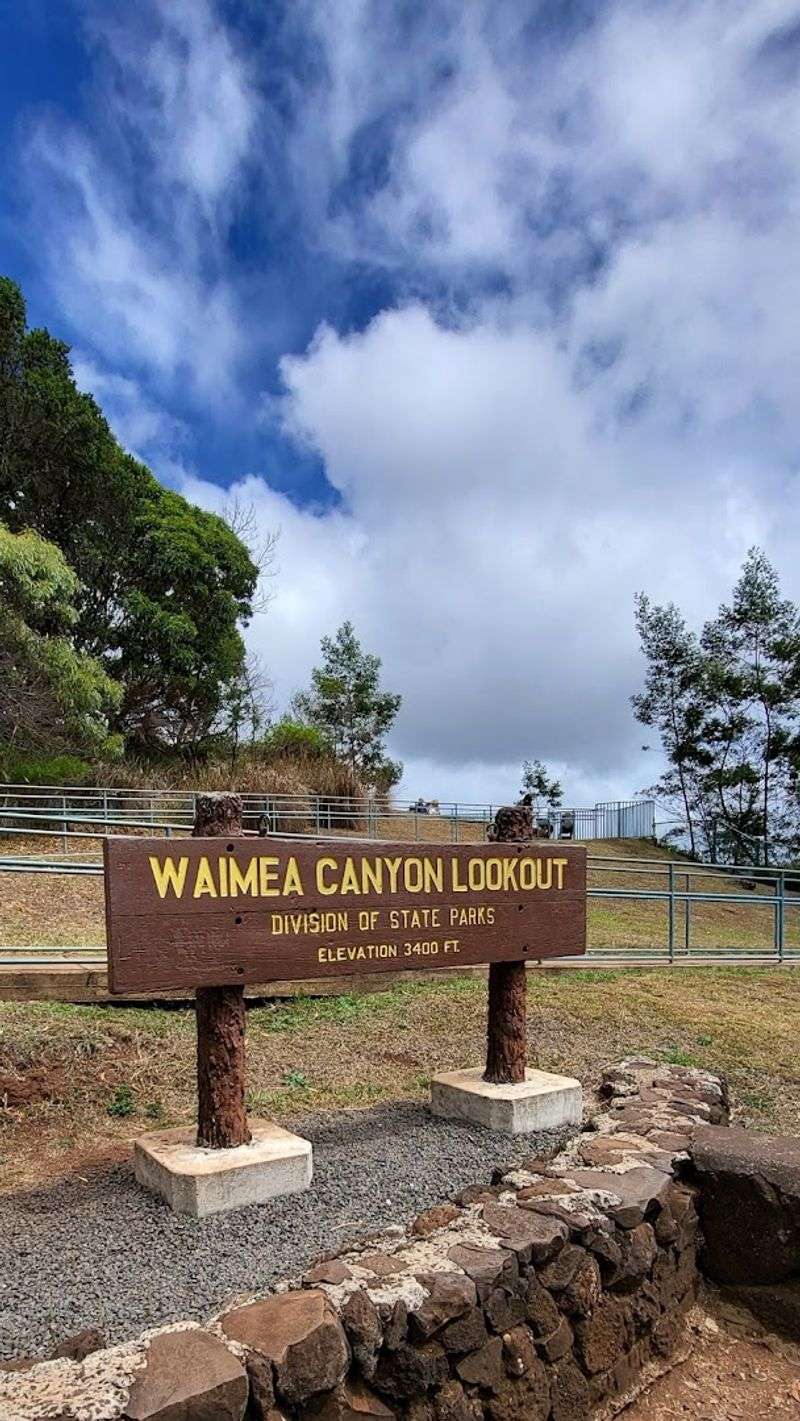
Getting to Waimea Canyon State Park means driving up the western side of Kauai along a road that winds steeply through small towns before climbing into the mountains. The road is narrow in places and curvy, but it is paved and manageable for most vehicles.
Budget enough time to actually stop and breathe at the lookouts rather than rushing through.
Parking at the main lookout requires a fee paid through a touchscreen machine that takes credit and debit cards. You enter your license plate number and pay per vehicle plus per person.
One receipt covers multiple lookouts for the day, so keep it on your dashboard. The facilities at the main lookout include public restrooms, which is genuinely appreciated after a long drive up.
The park is open year-round, but weather changes fast at elevation. Mornings can be crystal clear and afternoons can bring clouds and rain, especially near Kokee State Park further up the road.
Layers are a good idea even in summer. There is a visitor center with exhibits about the park’s natural and cultural history, a small gift shop, and a restaurant nearby.
The experience is best when you give it most of a day rather than treating it as a quick stop. Waimea Canyon rewards patience.
Address: Waimea, HI 96796
