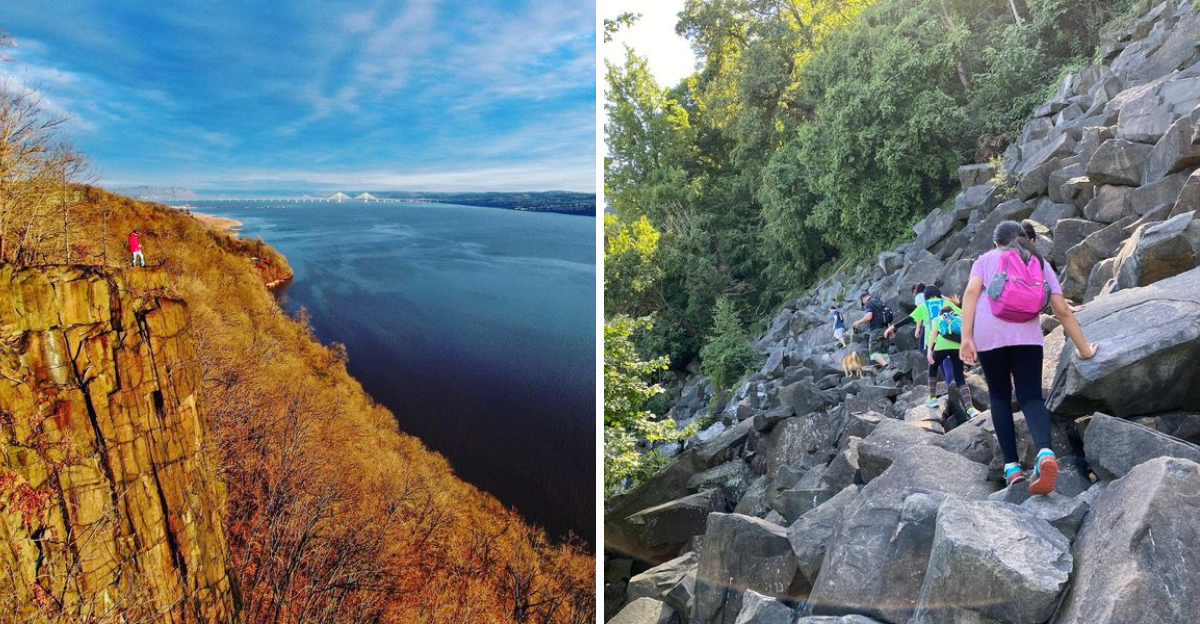
I’ll admit I had my doubts when I first heard about the Giant Stairs Palisades.
How could a trail so close to the city offer anything more than a crowded woodland path and maybe a decent view if you were lucky?
But the moment I started my descent from the State Line Lookout and caught my first glimpse of the Hudson River shimmering through the trees, I realized I had seriously underestimated this place.
The trail winds down from towering cliffs, passes a hidden waterfall, and then challenges you with a rock scramble that feels more like an adventure playground than a typical hike.
Every turn brought something new, from massive boulders that required actual climbing to quiet riverside moments where the only sound was water lapping against the shore.
What started as a casual morning outing turned into nearly four hours of pure exploration, and by the time I hauled myself back up to the lookout, sweaty and a little scraped up, I couldn’t stop grinning.
This isn’t your average stroll through the woods, and that’s exactly what makes it so memorable.
The Descent That Sets the Tone
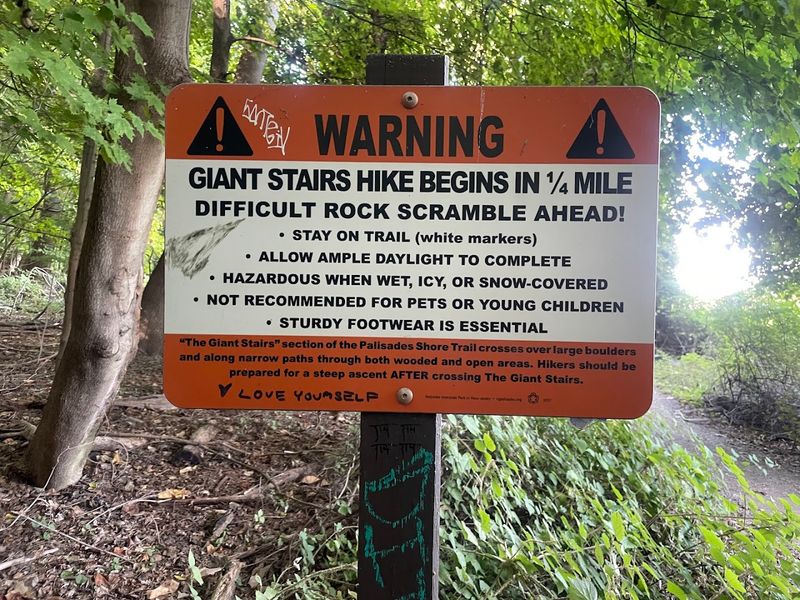
Right from the start, the trail lets you know this won’t be an ordinary walk. I began at the State Line Lookout, where the parking lot sits high on the cliffs, and immediately started heading downward on a path that felt deceptively easy.
The descent is gradual at first, winding through dense forest with the kind of quiet that makes you forget you’re just minutes from major highways.
What surprised me most was how quickly the landscape changed. One moment I was walking on packed dirt surrounded by oaks and maples, and the next I was navigating around exposed roots and rocky outcrops that hinted at the terrain ahead.
The aqua trail markers became my guide, and I found myself checking for them more often than I expected, especially as side paths branched off in different directions.
About twenty minutes in, I reached a small pond with two wooden bridges crossing it, and that’s when I knew the real adventure was about to begin. The air felt cooler down here, damper, and I could hear the faint rush of water somewhere ahead.
My legs felt fresh, my pack was light, and I was genuinely excited about what lay beyond those bridges.
Looking back, this descent was the perfect warm-up. It gave my muscles time to loosen, my mind time to settle into the rhythm of the hike, and my expectations time to shift from casual stroll to genuine outdoor challenge.
The Waterfall That Marks the Turning Point
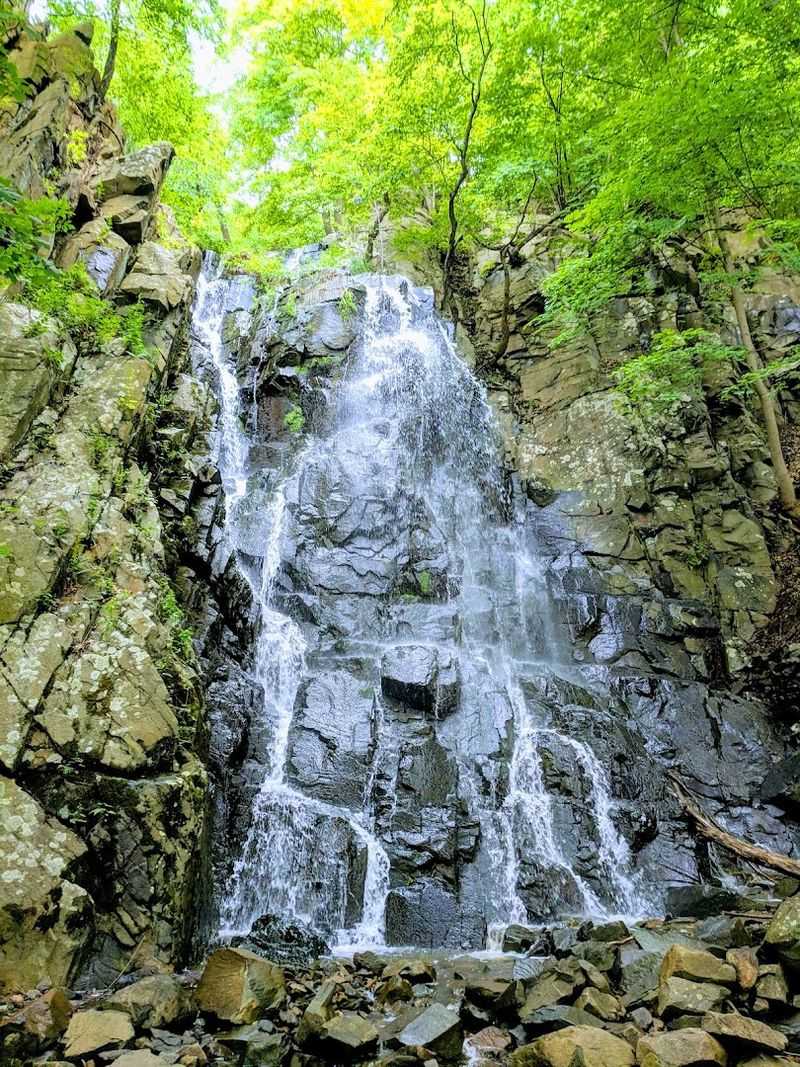
After crossing those bridges, the trail narrows and the sound of rushing water grows louder with every step. Then, suddenly, there it is: a modest but beautiful waterfall tumbling over dark rocks into a shallow pool below.
I’m not talking Niagara Falls here, but in the context of this hike, it felt like discovering a secret.
I stopped here for a good ten minutes, partly to catch my breath and partly because the spot was just too pretty to rush past. A few other hikers were doing the same, snapping photos and refilling water bottles from the cool stream.
The rocks around the falls were slick with spray, and I noticed a sign warning about the difficult scramble ahead, which only made me more curious.
This waterfall serves as a natural checkpoint. If you’re having second thoughts about the rock scramble, this is your moment to turn back.
But standing there, watching the water cascade down while sunlight filtered through the canopy above, I felt ready for whatever came next.
The area around the falls is also where rangers have reported seeing copperheads during summer months, so I kept my eyes open and my steps deliberate. I didn’t see any snakes that day, but the reminder to stay alert added a little extra edge to the experience.
From here, the trail veers right, and the real Giant Stairs begin.
The Rock Scramble That Tests Your Limits
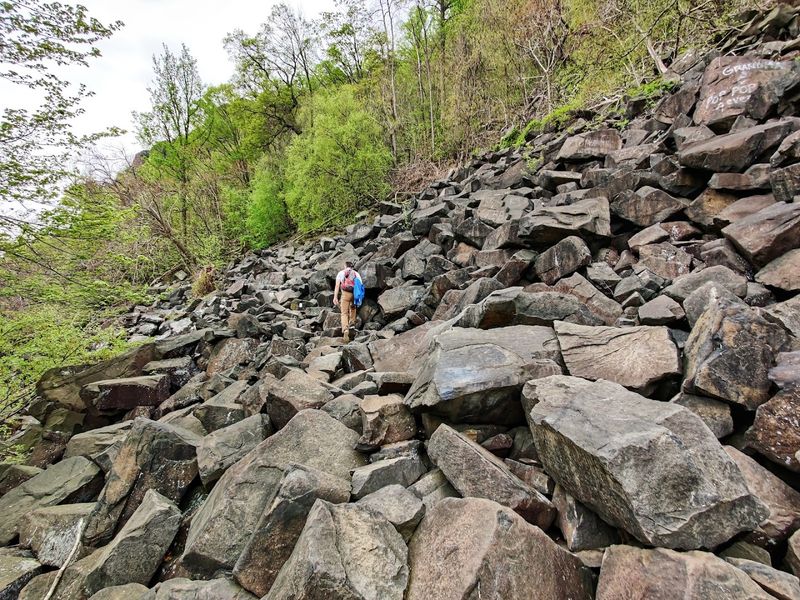
This is the section everyone talks about, and for good reason. The Giant Stairs aren’t stairs in any traditional sense.
They’re enormous boulders, some as big as cars, that you have to climb over, around, and sometimes under. White trail markers painted on the rocks guide you, but figuring out the best route is half the challenge.
I loved every minute of it, even when my legs were shaking and I had to pause to plan my next move. The scramble demands your full attention.
You’re constantly looking for handholds, testing footholds, and adjusting your balance as you work your way along the shoreline. The Hudson River flows just feet away, and the views are absolutely worth the effort.
What makes this scramble unique is how interactive it feels. You’re not just walking through nature; you’re engaging with it directly.
Every rock requires a decision, every climb requires effort, and every successful move feels like a small victory. I passed families with kids, solo hikers, and groups of friends all tackling the same challenge, and there was this unspoken camaraderie in the shared struggle.
The scramble took me about an hour and a half, though I stopped frequently to take in the scenery and catch my breath. By the end, my hands were dirty, my knees were sore, and I was grinning like an idiot.
This is the heart of the hike, the part that makes it memorable.
The Hudson River Views You Won’t Forget
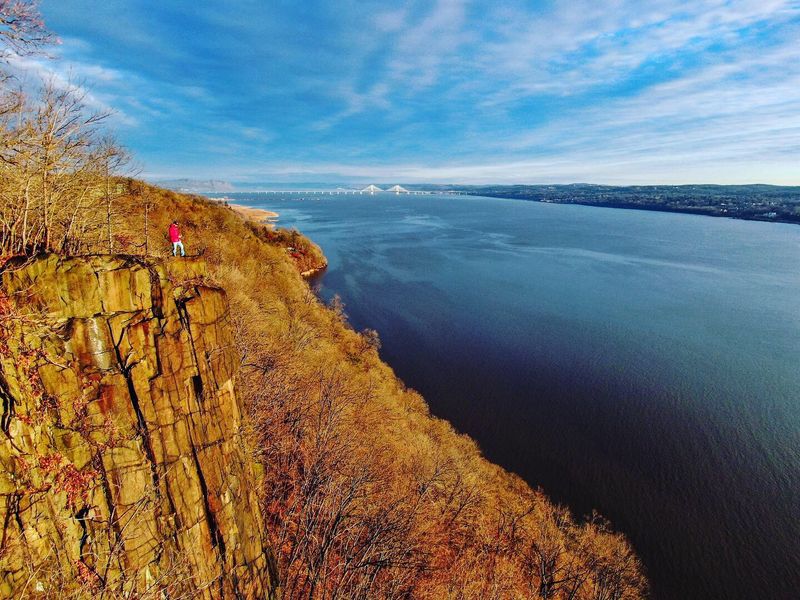
One of the unexpected bonuses of the rock scramble is how close you get to the Hudson River. At certain points, you’re scrambling along boulders just a few feet above the water, and the views are spectacular.
The river stretches wide here, with the opposite shore lined with trees and the occasional building peeking through.
I found myself stopping more for the views than for rest. There’s something mesmerizing about being at water level on such a massive river, especially when you’re surrounded by towering cliffs on one side and open water on the other.
A few boats passed by while I was there, and I wondered what the hikers looked like from their perspective, tiny figures clambering over giant rocks.
The best part is that these views keep changing as you move along the scramble. Sometimes you’re tucked into a rocky corridor where the cliffs block everything else out, and then suddenly you’ll round a boulder and the entire river opens up before you.
It’s dramatic in a way that feels almost cinematic.
I recommend bringing a camera, though be careful about where you stop to take photos. The rocks can be slippery, and it’s easy to get distracted by the scenery and lose your footing.
I saw more than one person nearly drop their phone while trying to capture the perfect shot. Still, the memories are worth the risk.
The Steep Ascent Back to Civilization
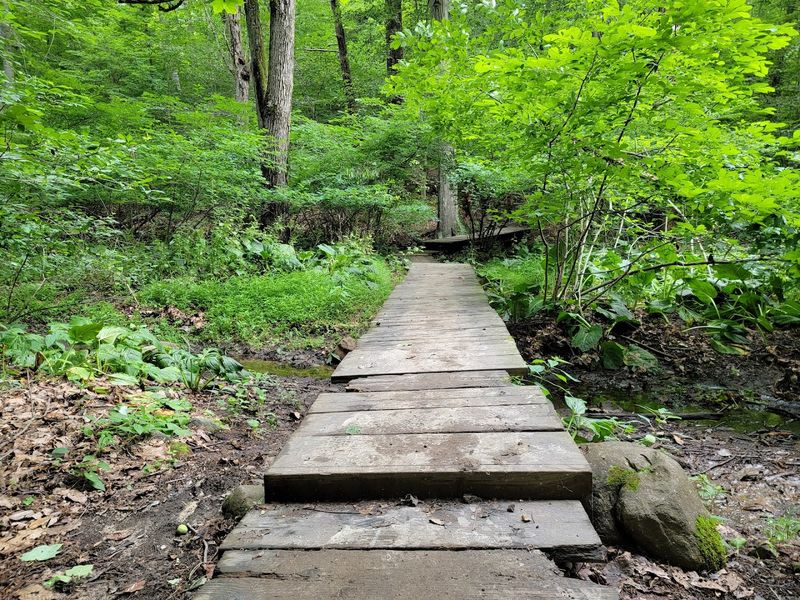
After you finish the rock scramble, the trail doesn’t let you off easy. The next section involves a steep, relentless climb back up to the ridge, and this is where tired legs really start to protest.
I’m talking about a 500-foot ascent that feels like it goes on forever, especially after spending so much energy on the scramble.
The trail here follows a small creek for part of the way, which at least gives you something pleasant to focus on besides your burning quads. I stopped multiple times, not even pretending it was for photos but simply because I needed to breathe.
Other hikers passed me, some looking fresh and energetic, others looking as wrecked as I felt, and we all exchanged those knowing nods that say, “Yeah, this is tough.”
What kept me going was knowing that every step up brought me closer to the top and, more importantly, closer to the end of the hike. The forest here is beautiful, with tall trees providing shade and the occasional break in the canopy offering glimpses of the cliffs above.
But honestly, I was too focused on putting one foot in front of the other to appreciate it fully in the moment.
By the time I finally reached the top and rejoined the upper trail, my legs were jelly and my shirt was soaked with sweat. But there’s something deeply satisfying about conquering a climb like that, and I felt genuinely accomplished when I finally made it.
The Loop That Brings You Home
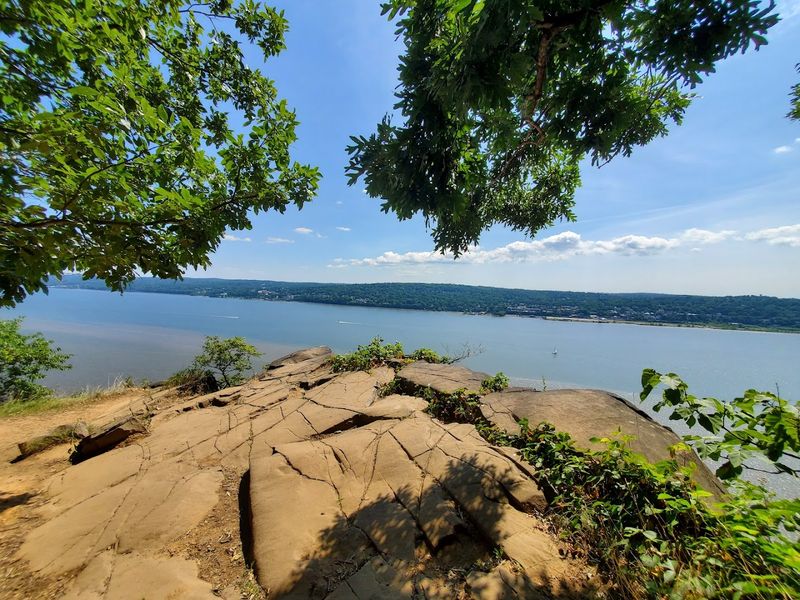
Once you’re back on the upper trail, the rest of the hike is relatively straightforward. The loop design means you’re heading back toward the State Line Lookout, and the terrain here is mostly flat or gently rolling.
After the intensity of the scramble and the climb, this section felt almost meditative.
I took my time here, enjoying the chance to walk without constantly watching my footing. The trail winds through mature forest, and depending on the season, you might see wildflowers, migrating birds, or brilliant fall foliage.
I visited in late spring, and the forest was lush and green, with ferns covering the ground and birds calling from the canopy.
What I appreciated most about this final stretch was how it gave me time to reflect on the hike. The loop design is smart because it takes you through completely different terrain on the way back, so you’re not just retracing your steps.
You get a fuller sense of the park and the variety of landscapes it contains.
The last ten minutes or so bring you back to the parking area near the lookout, and there’s a small cafe there where you can grab a snack or drink. I didn’t stop, but I saw plenty of other hikers rewarding themselves with sandwiches and cold beverages, and I can’t say I blamed them.
The loop took me just under four hours total, which felt about right for the distance and difficulty.
The Gear That Makes the Difference
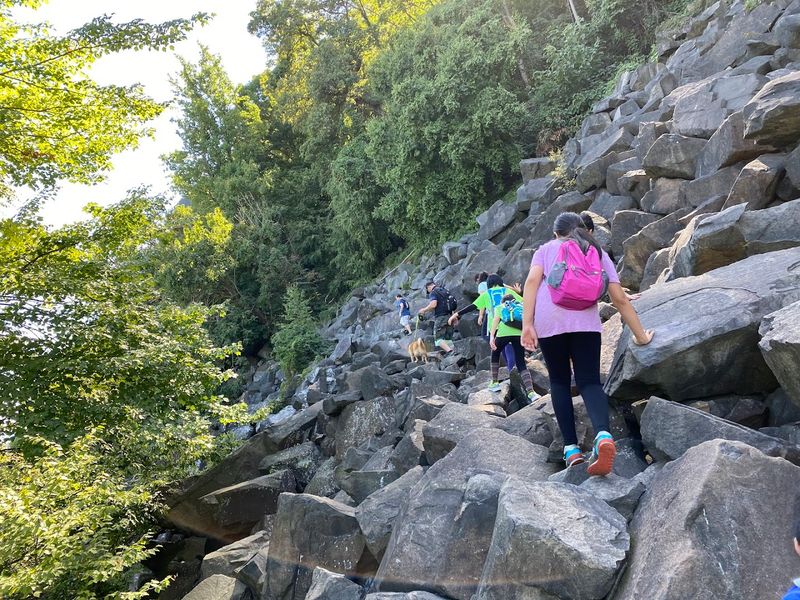
One thing became crystal clear during this hike: proper footwear is non-negotiable. I wore my most supportive hiking boots, the ones with thick soles and good ankle support, and I was grateful for them every single step of the way.
The rocks on the scramble are uneven, often slippery, and sometimes sharp, and I saw more than one person struggling in sneakers or trail runners.
Beyond boots, I’d recommend bringing plenty of water. I carried two bottles and finished both, plus I refilled once at the waterfall.
The combination of physical exertion and exposure to sun during parts of the scramble means you’ll be sweating more than you might expect. Snacks are also a good idea, especially something with quick energy like trail mix or energy bars.
I also brought a small first aid kit, which turned out to be smart when another hiker scraped their hand on a rock and I was able to offer a bandage. Sunscreen and bug spray are seasonal considerations, but both are worth having depending on when you visit.
A hat can help with sun exposure during the scramble, and gloves aren’t a bad idea if you’re worried about scraping your hands on rocks.
Finally, I’d say leave the fancy camera at home unless you’re really committed to photography. A smartphone is easier to manage on the scramble, and you’re less likely to drop it or damage it while climbing.
Whatever you bring, make sure it fits securely in your pack so your hands are free.
The Timing That Makes or Breaks Your Experience
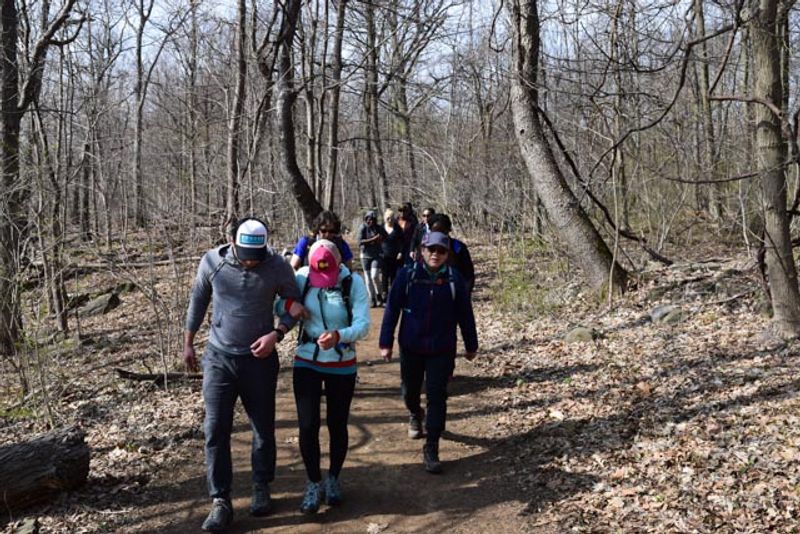
When you tackle this hike matters more than you might think. I started around 9 a.m., which turned out to be perfect.
The morning was cool, the trail wasn’t crowded yet, and I had plenty of daylight ahead of me. By the time I finished around 1 p.m., the parking lot was packed and I saw groups still heading down as I was leaving.
Several reviews I read mentioned the importance of good daylight, and I completely agree. The rock scramble requires you to see where you’re placing your hands and feet, and doing it in dim light would be genuinely dangerous.
If you’re hiking in fall or winter when days are shorter, start early enough to finish with at least an hour of daylight to spare.
Weather is another crucial factor. I was lucky to have a dry, clear day, but I can imagine how treacherous those rocks would be after rain.
The reviews warning against wet conditions are absolutely right. Even morning dew made some rocks slippery; actual rain would make the scramble downright hazardous.
Check the forecast and be willing to postpone if conditions aren’t ideal.
Weekday visits tend to be less crowded than weekends, if you can swing it. I hiked on a Saturday and still found it manageable, but I passed quite a few groups and had to wait occasionally for slower hikers ahead of me on narrow sections.
If solitude is important to you, aim for a weekday morning.
The Challenge That Rewards Preparation
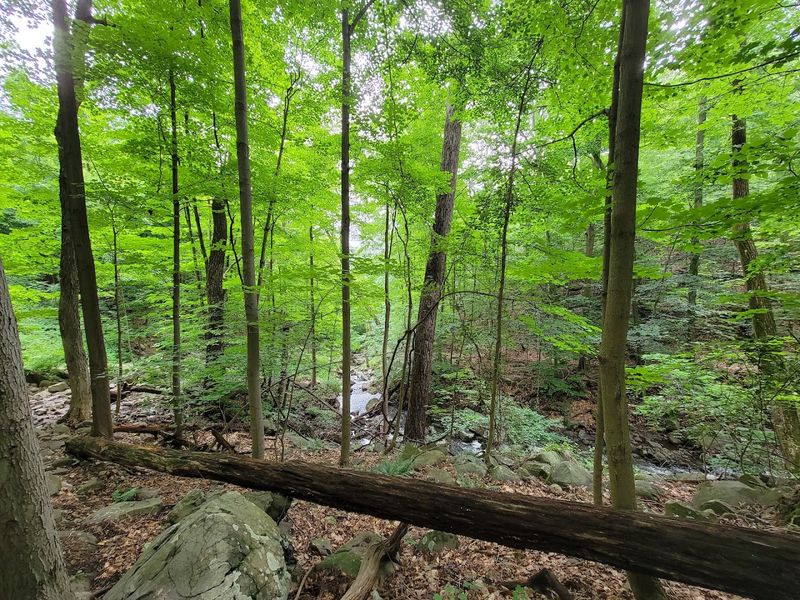
I went into this hike with moderate hiking experience and a decent fitness level, and I found it challenging but manageable. However, I watched several people struggle significantly, and it was clear that preparation matters.
This isn’t a trail for beginners or anyone who hasn’t done much physical activity recently.
The rock scramble demands upper body strength, core stability, and leg power. You’re constantly pulling yourself up, balancing on uneven surfaces, and controlling your descent over drops.
If you’re not used to that kind of movement, you’ll feel it quickly. I do regular strength training and still felt sore the next day, particularly in my thighs and forearms.
That said, I saw people of various ages and fitness levels completing the hike successfully. The key seemed to be taking it at your own pace, not rushing, and being honest about your abilities.
I passed one older couple who were moving slowly but steadily, clearly experienced hikers who knew how to conserve energy. I also saw younger people struggling because they attacked the scramble too aggressively and burned out.
If you’re considering this hike but aren’t sure you’re ready, I’d suggest building up with some easier scrambles first or at least doing some strength training focused on legs and core. The hike is absolutely worth doing, but you’ll enjoy it so much more if you’re physically prepared for what it demands.
The Memory That Stays With You
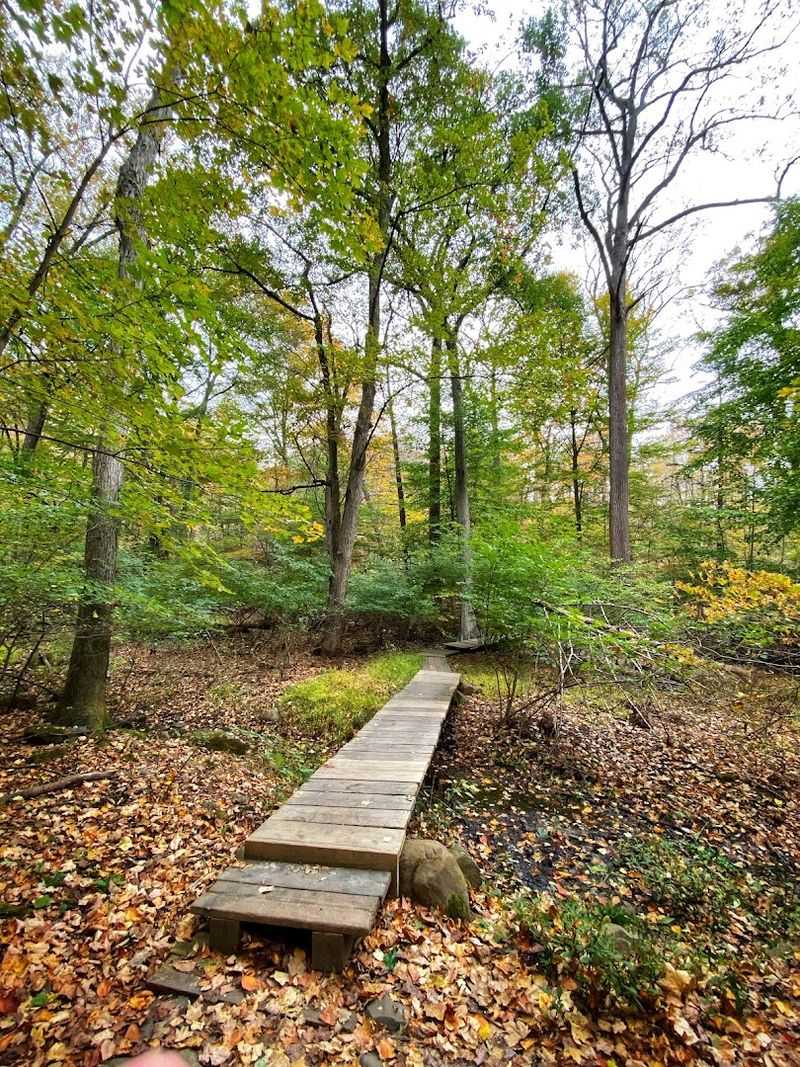
Standing back at the State Line Lookout after finishing the loop, sweaty and tired and completely satisfied, I understood why this hike has such devoted fans. It’s not the easiest trail in New Jersey, and it’s definitely not the most accessible, but it offers something genuinely special: a real adventure that feels earned.
The combination of diverse terrain, physical challenge, and stunning scenery creates an experience that sticks with you. Days later, I was still thinking about certain moments from the hike: the way the waterfall looked in the dappled sunlight, the satisfaction of finding the perfect foothold on a tricky boulder, the vast expanse of the Hudson spreading out before me.
These aren’t the kind of memories you get from a casual walk.
What impressed me most was how the trail manages to feel remote and wild despite being so close to urban areas. For a few hours, I was completely immersed in the natural world, focused entirely on the physical challenge and the beauty around me.
That kind of escape is rare and valuable, especially when you can access it without driving hours into the wilderness.
Would I do this hike again? Absolutely.
Would I recommend it to others? Without hesitation, as long as they understand what they’re getting into.
The Giant Stairs Palisades isn’t for everyone, but for those willing to put in the effort, it delivers an experience that far exceeds expectations.
Address: Shore Trail, Closter, NJ 07624
Dear Reader: This page may contain affiliate links which may earn a commission if you click through and make a purchase. Our independent journalism is not influenced by any advertiser or commercial initiative unless it is clearly marked as sponsored content. As travel products change, please be sure to reconfirm all details and stay up to date with current events to ensure a safe and successful trip.
