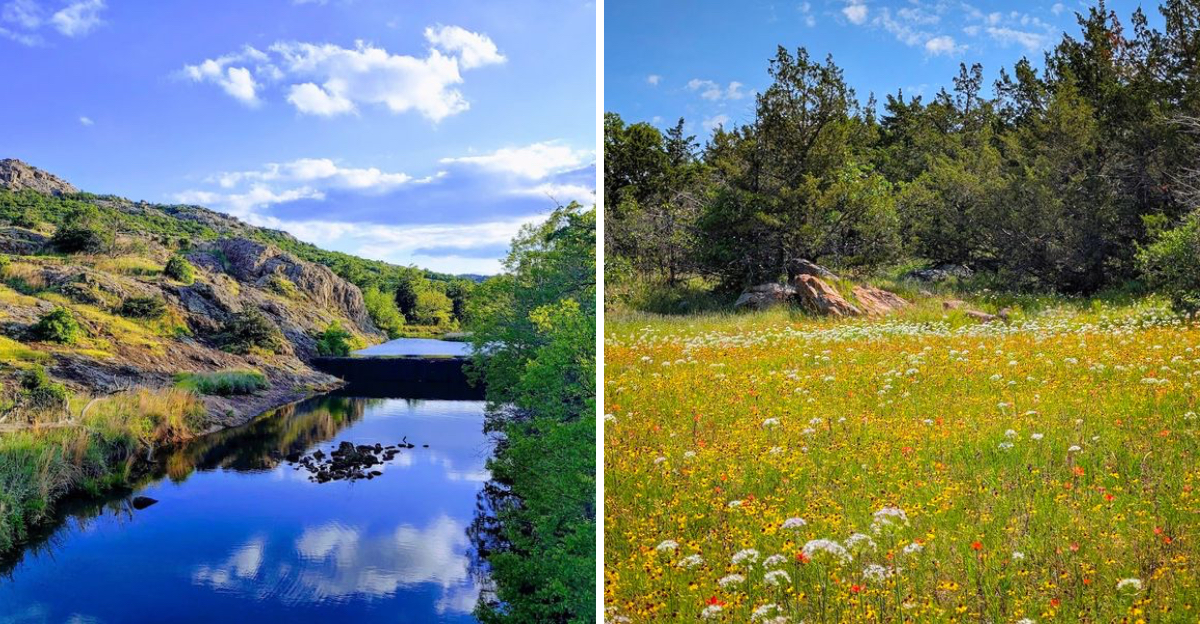
Oklahoma doesn’t exactly come up in hiking conversations. Most people picture flat plains, red dirt roads, and maybe a few tumbleweeds rolling by.
But there’s a corner of southwest Oklahoma that will make you question everything you thought you knew about this state. The Wichita Mountains rise out of the earth like ancient fists, and one trail in particular cuts straight to the heart of what makes this place so surprisingly jaw-dropping.
Elk Mountain Trail sits inside the Wichita Mountains Wildlife Refuge near Indiahoma, and it punches way above its weight. The summit stands at 2,270 feet, making it one of the more prominent granite summits in this part of the refuge.
These mountains are among the oldest in the continental United States, which means every boulder you scramble over has been sitting there longer than most things you can imagine. The trail is short enough to feel approachable, but wild enough to feel like a real adventure.
Wildflowers pop up between the rocks, bison roam the refuge below, and the views from the top stretch out in every direction. If you’ve been sleeping on Oklahoma as a hiking destination, this is your wake-up call.
The Ancient Granite That Puts Other Trails to Shame
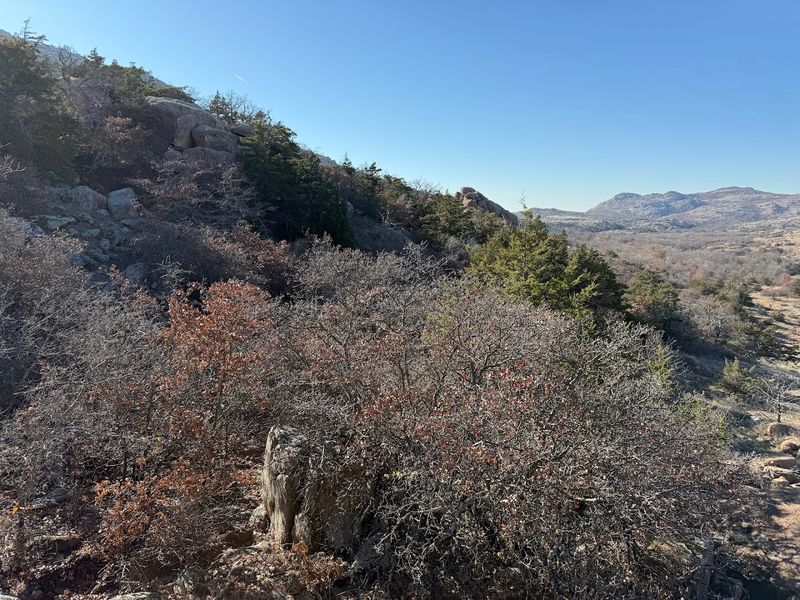
Before you even take your first step upward, the rock underfoot tells a story millions of years in the making. The granite here is some of the oldest exposed rock in the entire continental United States.
That’s not a small detail. You’re literally walking on earth’s ancient skeleton.
The boulders on Elk Mountain Trail are enormous, jagged, and stacked in ways that look almost deliberate. Some are the size of small cars.
Others are flat slabs perfect for sitting and catching your breath while pretending you planned that stop. The rock surface changes color depending on the light.
In the morning, it looks almost pink. By midday, it shifts to a warm grey-orange that photographs beautifully.
Rock hopping is a big part of this trail experience. There are no smooth, paved paths here.
You’re navigating over and around boulders constantly, which keeps your brain fully engaged the whole time. Loose rocks do appear in spots, so watching your footing matters.
Wear trail shoes or hiking boots with solid grip. The scrambling sections are not technical, but they’re not casual either.
There’s a satisfying physicality to this trail that makes reaching the summit feel genuinely earned. The rock is the star here, and it knows it.
The Summit Views Nobody Warned You About
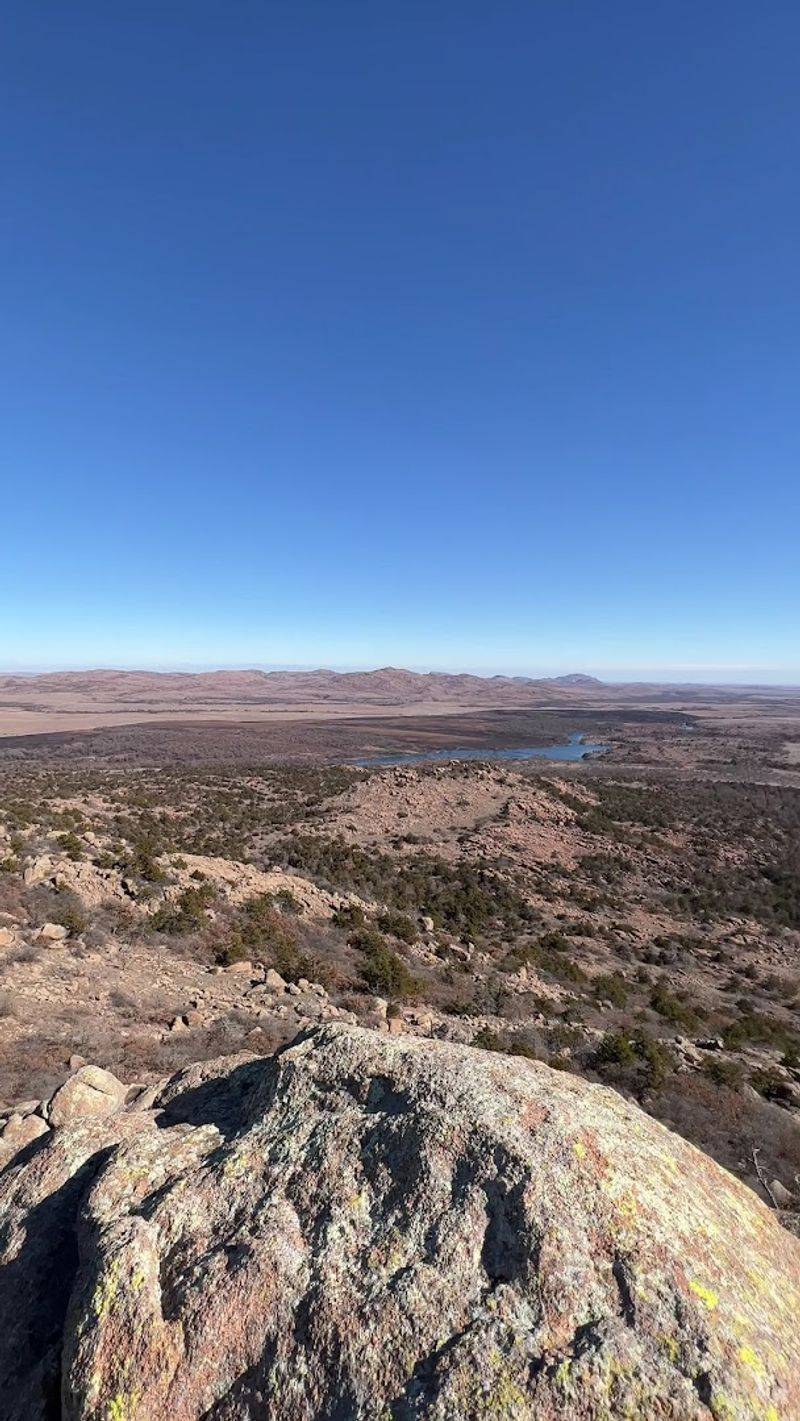
Reaching the top of Elk Mountain feels like the landscape suddenly exhales. One moment you’re weaving through boulders and brush, and then the world opens up completely.
The views from the summit stretch in every direction with nothing blocking the horizon.
The Charon’s Garden Wilderness Area spreads out below in a way that stops you mid-step. Rolling granite hills, scattered trees, and the wide refuge floor all blur together into something that looks more like a painting than Oklahoma.
On clear days, the visibility is remarkable. You can trace the ridgelines of other peaks across the refuge and feel the full scale of this wild place.
One thing worth knowing: once you hit the summit plateau, there are no marked trails leading to specific viewpoints. The top is wide open and requires some navigation.
Downloading a map on your phone before you go is a smart move. Orange trail ribbons help guide you on the way up, but the summit itself is a choose-your-own-adventure situation.
Take your time up there. Bring snacks.
Sit on a boulder and just look. The views are the kind that make you forget what day it is, and honestly, that feels like exactly the point of coming here.
Wildflowers Covering the Mountain in Unexpected Color
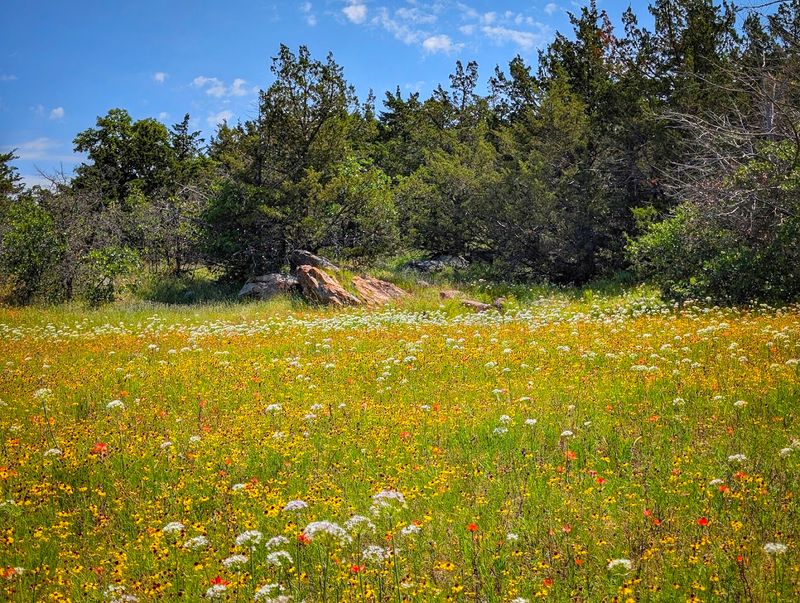
Nobody tells you about the flowers. You expect rocks.
You expect sweat. You don’t expect the mountain to be absolutely covered in wildflowers that make the whole climb feel like a celebration.
But there they are, pushing up between boulders and spilling across ledges like the mountain decided to dress up for company.
In late spring and through summer, the wildflower display on Elk Mountain Trail is genuinely impressive. Visitors who hike in July have described the blooms as abundant and vibrant, dotting the rocky terrain with color that feels almost defiant.
The contrast between rough granite and delicate petals is one of those visual moments that doesn’t fully register until you’re standing right in the middle of it.
Bring a camera with a decent close-up setting because the detail in these flowers against the rock is worth capturing. Early morning light makes the colors pop even more.
The flowers also attract butterflies and other pollinators, so if you slow down and pay attention, there’s a whole quiet ecosystem happening around your boots. This trail rewards the patient hiker who pauses often.
The wildflowers are a reminder that wild places don’t need to be manicured to be beautiful. Sometimes the most stunning things grow exactly where you least expect them.
Wildlife Roaming Free Just Below Your Boots
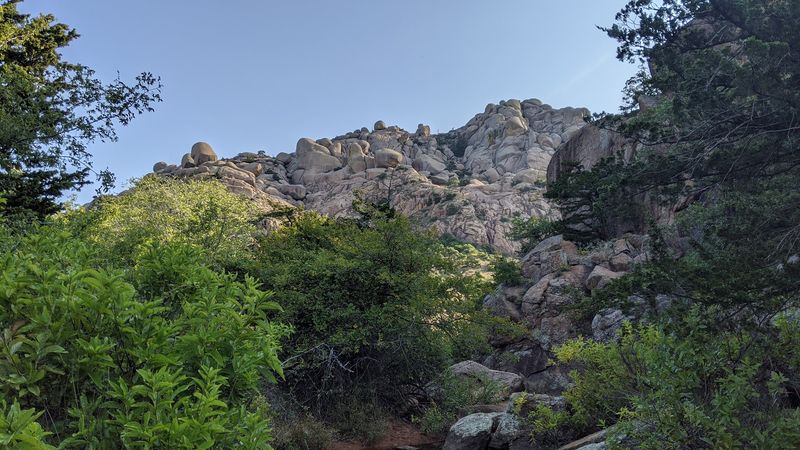
Elk Mountain Trail sits inside the Wichita Mountains Wildlife Refuge, and that means the wildlife situation here is not what you’d expect from a typical state park hike. This is a federal refuge, and the animals here live on their own terms.
Bison roam the refuge floor below the mountain in herds that look straight out of a history book.
From the upper portions of the trail, you can sometimes spot bison grazing far below in the open grasslands. There’s something about seeing wild bison from above that shifts your perspective on the landscape entirely.
Deer move through the brush with casual confidence. Roadrunners dart across rocky paths.
The refuge is also home to longhorn cattle, prairie dogs, and a variety of bird species that make birders very happy.
Snake awareness is worth mentioning here. The Wichita Mountains are rattlesnake territory, and hikers should watch where they step, especially around boulders and in tall grass.
This isn’t a reason to stay home, it’s just a reason to stay alert. The wildlife presence on this trail adds a layer of excitement that most hikes simply don’t have.
Every trip up feels a little different depending on what’s moving through the refuge that day. Keep your eyes open and your steps deliberate.
The Trail Difficulty Keeps You Honest
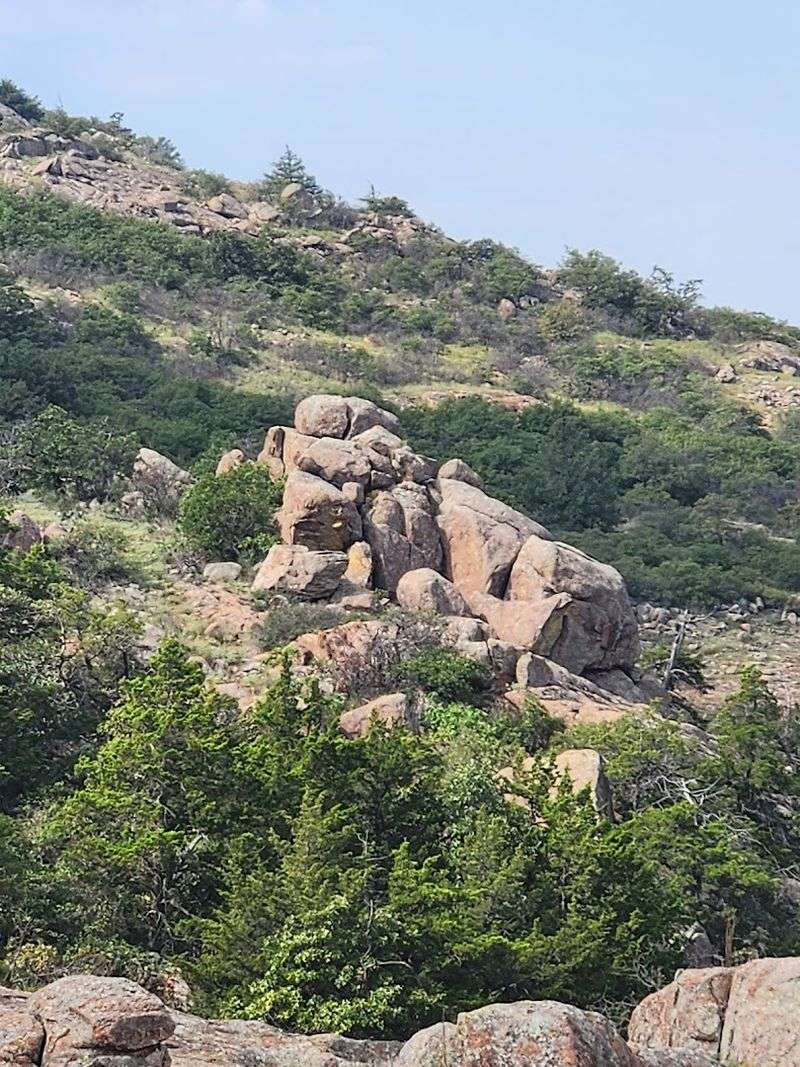
Let’s be straightforward about this: Elk Mountain Trail is rated moderate, but it has moments that lean toward difficult. The rocky terrain demands constant attention.
You’re not strolling through a flat forest path. You’re scrambling, stepping, and sometimes hauling yourself up over boulders.
The trail is about 2.3 to 2.4 miles round trip, short enough to feel approachable but rugged enough to keep you working the whole way. Stone steps appear throughout the climb, which helps with footing, but plenty of sections require real boulder navigation.
The incline is steady rather than brutal. There are flat stretches where you can catch your breath and reset before the next rocky push.
Most reasonably fit hikers can complete the round trip without drama, but don’t underestimate the terrain.
Water is non-negotiable here. The sun hits the open granite hard, and there’s no shade on the upper sections.
Bring more water than you think you need. Sturdy footwear makes a significant difference on the loose and uneven rock.
Trekking poles help on the descent, which can be trickier than the climb up. The trail can also be slippery after rain, with muddy patches in low sections.
The challenge is part of what makes this trail satisfying. You work for the views, and that work makes every step at the top feel worth it.
The Stream Sound Following You Up the Mountain
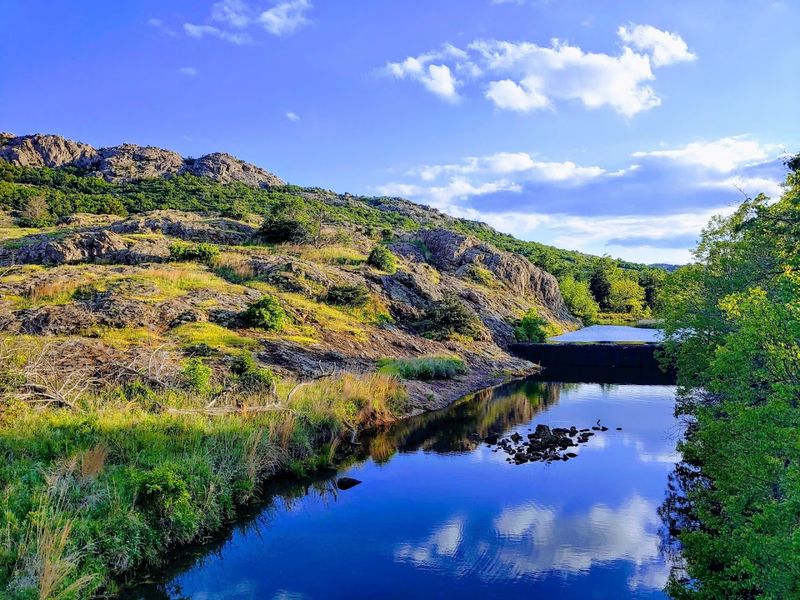
There’s a sound on the lower section of Elk Mountain Trail that catches you off guard in the best way. A stream runs through the base of the mountain, and depending on recent rainfall, you can hear it clearly as you start your climb.
The sound of moving water in the middle of dry Oklahoma is unexpectedly soothing.
The stream adds a sensory layer to the hike that most people don’t anticipate. The air near the water feels cooler and smells earthy and green.
It’s a brief but memorable part of the experience before the trail opens up onto the drier, rockier upper sections. After rain, the stream runs with more energy and the lower trail gets muddy in patches, so be ready to navigate around wet spots.
This lower section of the trail also tends to be shadier and more lush than the exposed upper mountain. Native grasses, shrubs, and small trees line the path here.
It’s a nice contrast to the stark granite summit above. Hikers who rush past this section miss one of the quieter pleasures of the trail.
Slow down at the bottom. Let the sound of the stream settle you before the real climbing begins.
The mountain will still be there waiting. Take a moment to appreciate the water before it disappears behind you.
Parking and Timing Tips Worth Knowing Before You Go
Elk Mountain Trail is popular. That’s not a warning to avoid it, but it is a reason to plan ahead.
The parking lot at the trailhead fills up fast on weekends, especially during spring and fall when the weather is ideal. Arriving early is the single most effective strategy for securing a spot close to the trailhead.
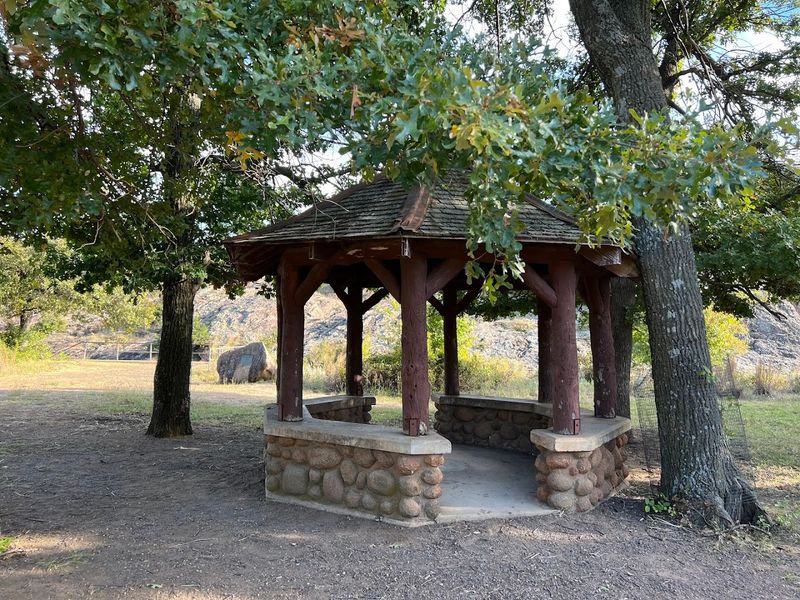
The trailhead area includes picnic tables and basic bathroom facilities, which is worth knowing before you pack. The bathrooms are described charitably as functional, so set your expectations accordingly.
There’s a certain rustic honesty to the facilities here. This is a wildlife refuge, not a resort, and the infrastructure reflects that.
Pit toilets and a parking lot are about as fancy as it gets.
If the lot is full, parking further down the road and walking in is a real option. The extra distance isn’t significant, but it does add steps to an already full day.
Weekday visits tend to be much quieter, and the early morning light on the granite is spectacular anyway. Bring a downloaded offline map because cell service inside the refuge can be inconsistent.
Orange trail ribbons mark the path, but having a backup navigation option makes the whole experience less stressful. A little preparation here goes a long way toward making the day smooth from start to finish.
What the Charon’s Garden Wilderness Looks Like From Above
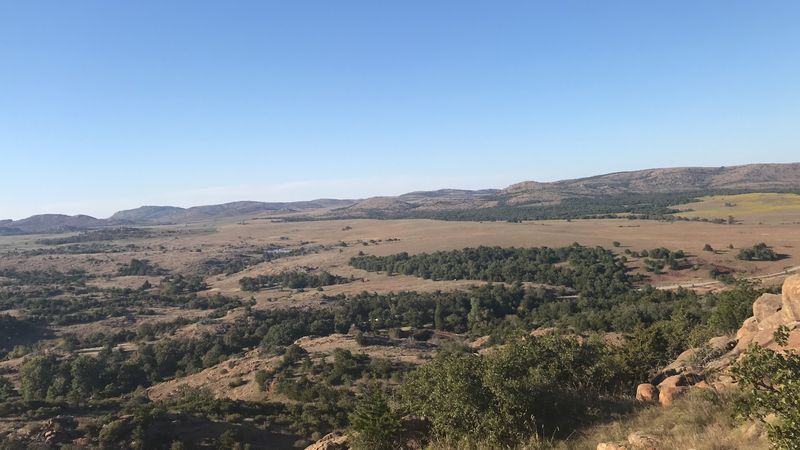
Most hikers come for the summit, but the real reward is looking down into Charon’s Garden Wilderness. From the top of Elk Mountain, the wilderness area spreads out below in a way that makes you feel like you’re seeing something few people bother to look for.
It’s wild, boulder-strewn, and beautifully untamed.
Charon’s Garden is one of the most rugged sections of the Wichita Mountains Wildlife Refuge. Massive granite formations jut out of the earth in chaotic arrangements.
The trees are sparse and wind-shaped. From above, the whole area looks ancient and undisturbed, which it largely is.
The scale of what you’re looking at doesn’t fully register until you realize just how far the wilderness extends in every direction.
The view into Charon’s Garden from Elk Mountain is one of those moments where you pull out your phone to take a photo and immediately realize the photo won’t do it justice. Take the photo anyway.
But also just stand there for a minute and look without a screen between you and the landscape. The combination of the rocky summit beneath your feet and the sprawling wilderness below creates a feeling of total immersion in a place that hasn’t changed much in a very long time.
That feeling is hard to find, and this trail delivers it reliably.
Getting There and What to Know Before You Leave Home
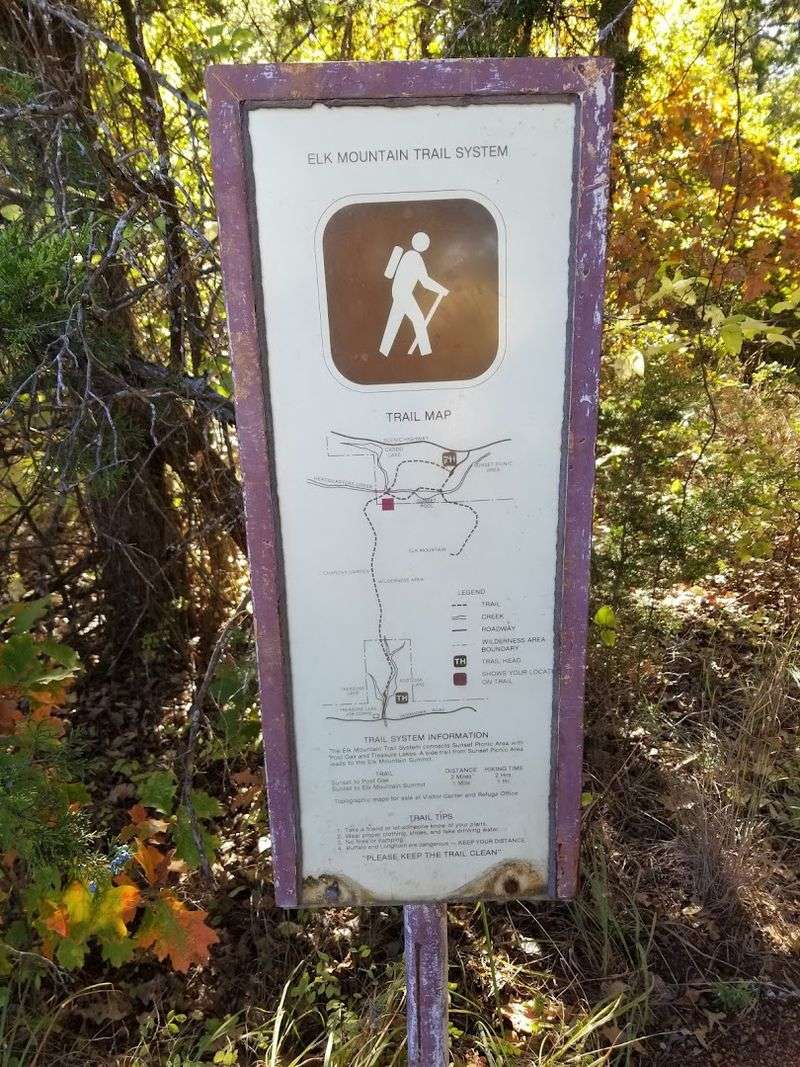
Elk Mountain Trail is located inside the Wichita Mountains Wildlife Refuge near Indiahoma, Oklahoma. The full address is Elk Mountain Trail, Indiahoma, OK 73552.
The refuge sits in southwest Oklahoma, roughly an hour and a half from Oklahoma City, making it a very doable day trip from the city.
The trail is open daily from sunrise to sunset, so early starts are the smartest move, especially in warmer months. There’s no admission fee to access the Elk Mountain trailhead specifically, though the refuge itself is managed by the U.S.
Fish and Wildlife Service. Signal can be weak inside the refuge, so downloading the trail map before you leave home is strongly recommended.
The official trail information is available through the U.S. Fish and Wildlife Service website for the Wichita Mountains Wildlife Refuge.
Wear layers if you’re going in cooler months because the exposed summit gets windy. In summer, sun protection and extra water are essential.
Bug spray and long pants are wise choices in warmer seasons when vegetation on the trail gets thick. The hike is open to all fitness levels willing to take their time with the rocky terrain.
Kids have completed this trail, and so have first-time hikers. The key is pacing yourself, staying aware of your surroundings, and not rushing the experience.
This trail rewards the unhurried and punishes the impatient.
Dear Reader: This page may contain affiliate links which may earn a commission if you click through and make a purchase. Our independent journalism is not influenced by any advertiser or commercial initiative unless it is clearly marked as sponsored content. As travel products change, please be sure to reconfirm all details and stay up to date with current events to ensure a safe and successful trip.
