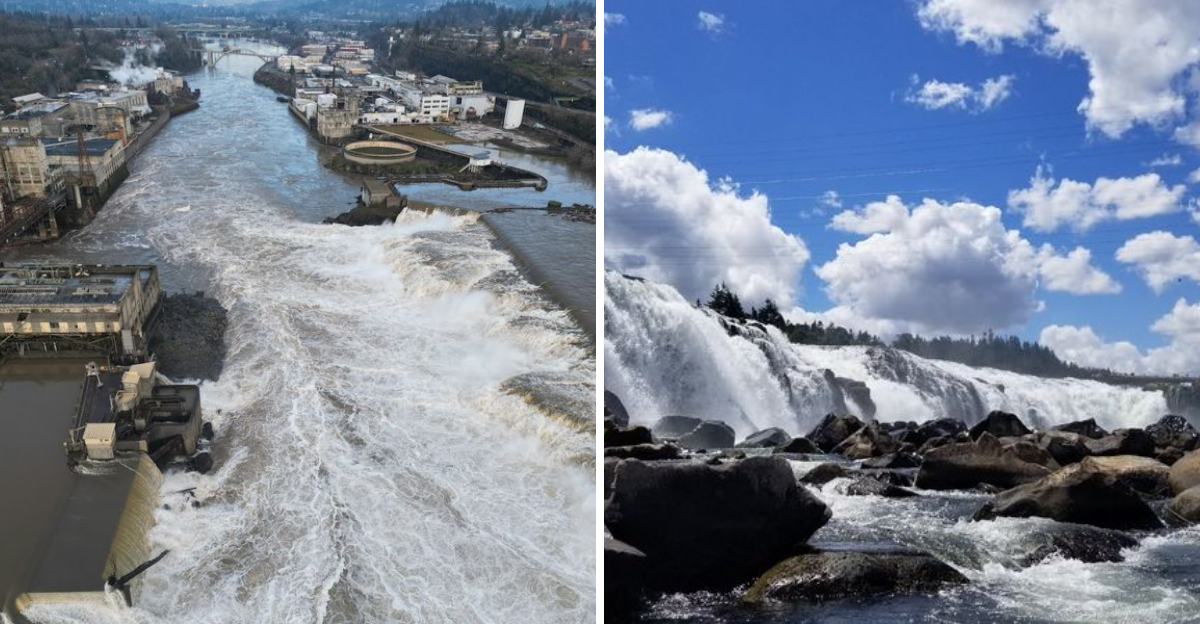
A powerful waterfall in Oregon crashes through the landscape with a force that immediately commands attention. This happens long before you learn anything about its history.
This is more than just a scenic stop – it’s a place that has held deep cultural significance for Indigenous tribes who have fished here for thousands of years. The sense of presence here runs deeper than the view itself, settling in as soon as you arrive.
The sound of rushing water mixes with the weight of history that still feels alive in the surroundings. There’s a natural rhythm here that goes beyond the scenery, shaped by generations who lived in connection with this place.
I kept pausing just to take it all in, realizing how much meaning can exist in a single location. It’s the kind of site that turns a waterfall into something far greater than just a natural wonder.
The Sheer Scale of Willamette Falls
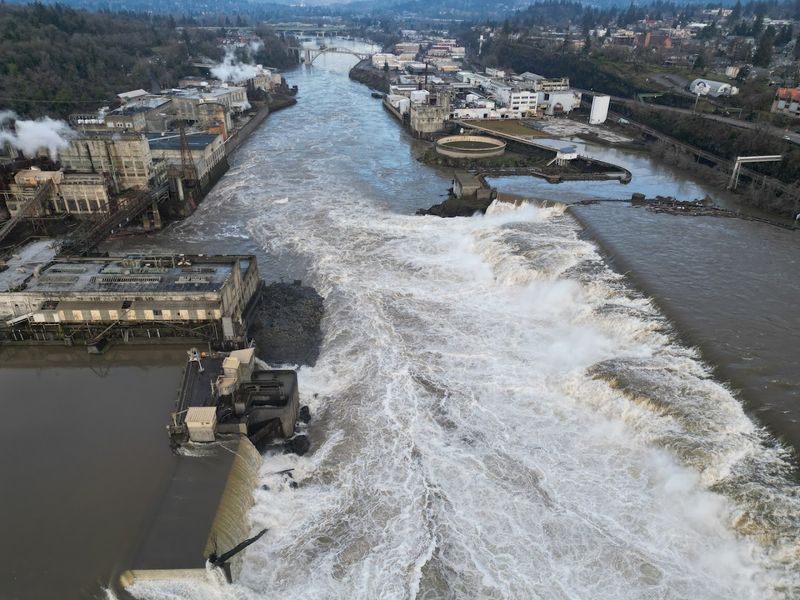
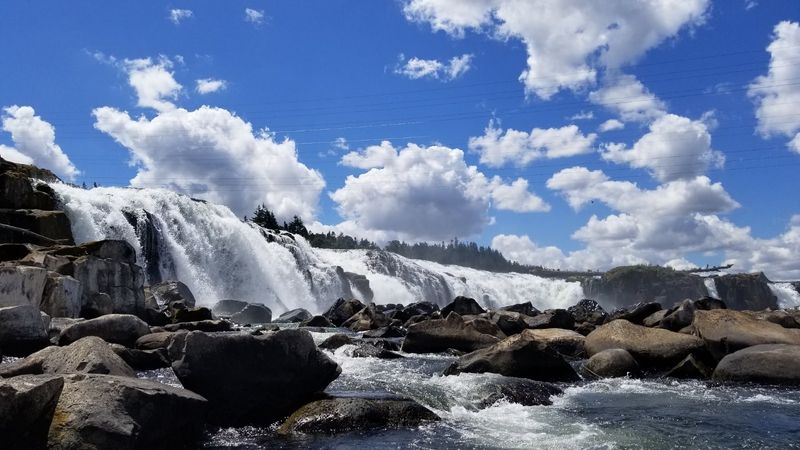
Nothing quite prepares you for the size of this waterfall. Willamette Falls is the second largest waterfall in North America by water volume.
That fact alone stopped me cold when I first read it.
The falls stretch 1,500 feet wide. They drop about 40 feet into the river below.
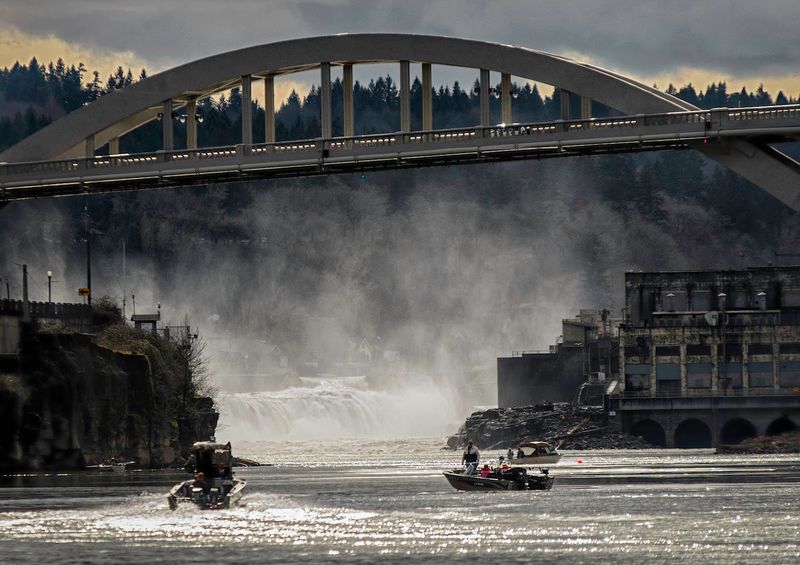
The sheer force of the water creates a constant mist you can feel from the roadside viewpoint.
During high water seasons, the volume averages around 30,849 cubic feet per second. That number is hard to picture until you are standing there.
The sound alone is something you carry home with you.
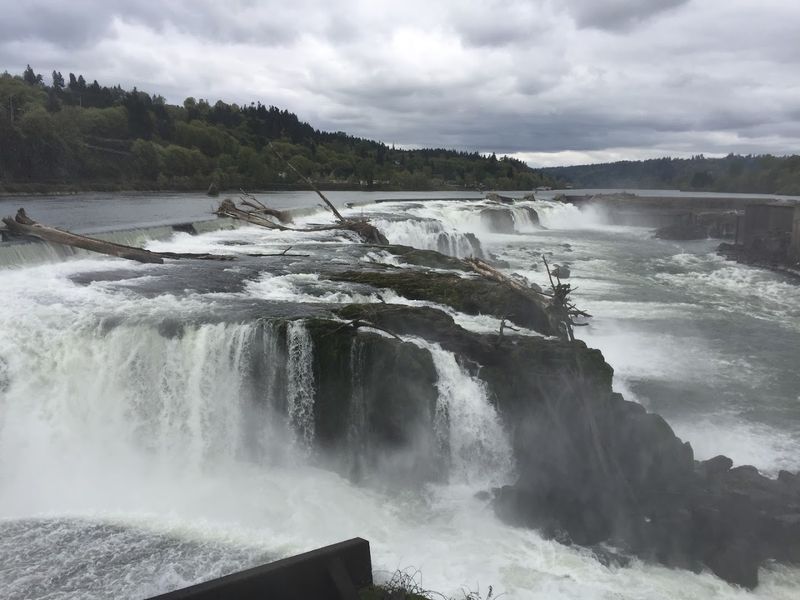
The horseshoe shape makes it unlike most waterfalls you have seen. Water curves and crashes from multiple angles at once.
It feels less like one waterfall and more like a living wall of movement.
Visitors often underestimate it from the road. Getting closer by kayak or canoe changes everything.
The Ancient Connection to Indigenous Tribes
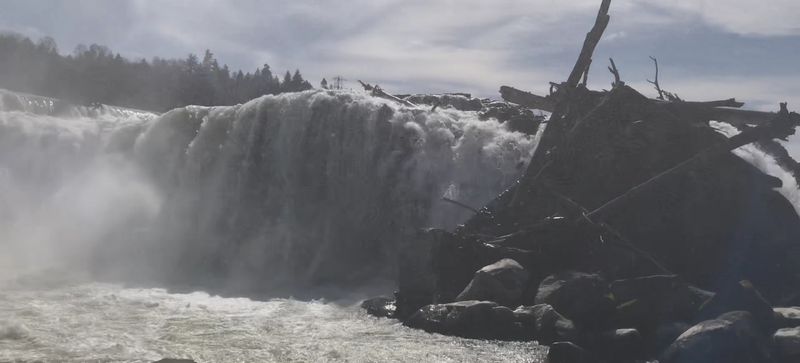
Long before any mill was built, this waterfall belonged to the people who called the Willamette Valley home. The Clackamas, Kalapuya, Mollala, and other tribes gathered here every year.
Fishing at the falls was not just survival. It was ceremony.
Willamette Falls sits at a natural fish ladder point. Salmon and lamprey travel upriver and pause at the falls.
Tribes used that pause to harvest fish in enormous quantities using traditional methods passed down for generations.
The falls were a meeting place too. Different tribes would come together here for trade, ceremony, and community.
It was one of the most important cultural gathering sites in the entire Pacific Northwest.
That history still lives in the land and the water. Tribal nations continue to advocate for access and recognition at this site.
Their connection to these falls did not end when settlers arrived.
Learning this context changes how you look at the waterfall. It stops being just scenery.
The Roadside Viewpoint on Highway 99E
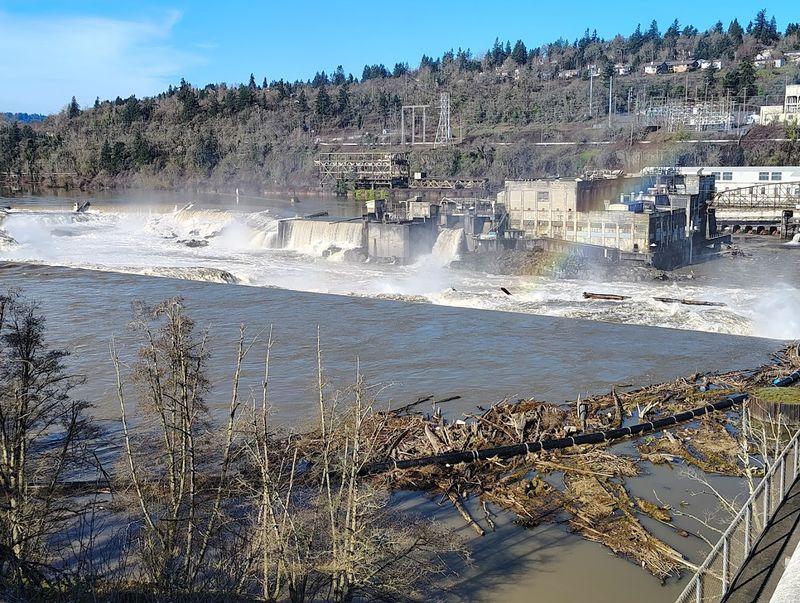
The most accessible way to see Willamette Falls is from the pull-out on Highway 99E. It is a simple stop, nothing fancy.
But the view it gives you is worth every second.
You park along the road and walk to a railing overlooking the river. The falls spread out below and across from you.
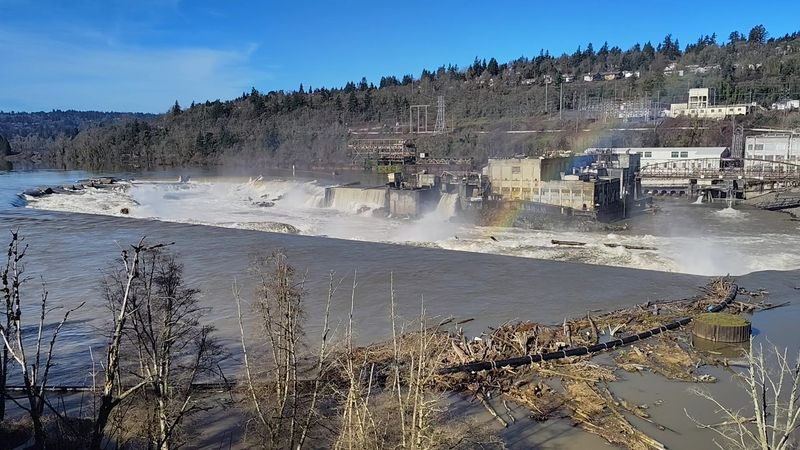
Old industrial buildings frame the scene in a way that feels both strange and oddly beautiful.
The contrast is real. A waterfall this ancient sitting next to abandoned paper mills creates a mood that is hard to describe.
Eerie and calm at the same time, like stumbling onto a forgotten world.
Some visitors feel the industrial backdrop takes away from the natural beauty. Others find it adds a layer of history.
Either way, the waterfall itself never disappoints.
Sunsets from this viewpoint are genuinely spectacular.
Kayaking and Canoeing to the Falls
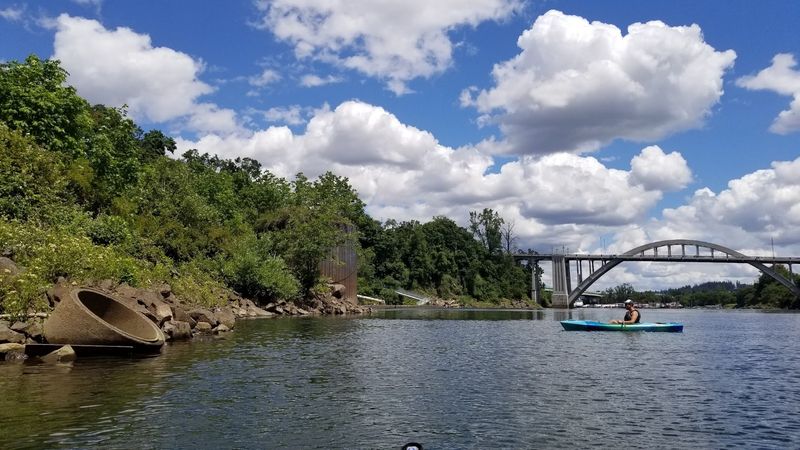
Paddling toward Willamette Falls is a completely different experience from watching it from shore. The closer you get, the louder and more powerful it becomes.
Your whole body feels the vibration.
Kayaks and canoes are a popular way to approach the falls from the water. The current gets strong as you near the base.
You cannot get directly underneath, but hovering near the edge gives you a view that no road pullout ever could.
The mist settles on your face and arms. The sound drowns out everything else.
It is the kind of moment that feels genuinely unreal while it is happening.
Several visitors have described kayaking here at sunset as one of the most breathtaking experiences of their lives. The light changes fast out on the water.
You want to stay longer than is probably wise.
If you are planning a paddle, check water levels and conditions before you go. High water seasons can make the approach more intense.
The Abandoned Paper Mills and Industrial History
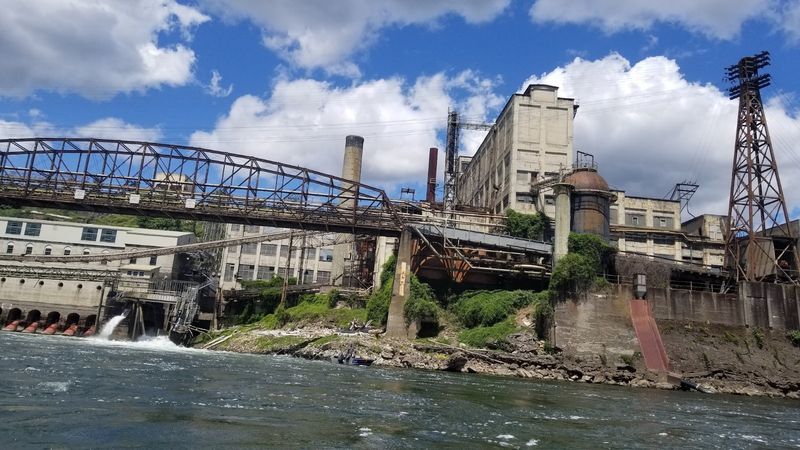
The paper mills sitting next to Willamette Falls tell their own story. They are empty now, weathered and quiet.
But for over a century, they hummed with industrial activity fueled by the power of the falls.
The waterfall’s location made it ideal for industry. Early settlers recognized the hydropower potential quickly.
Mills, factories, and power infrastructure were built along the banks starting in the 1800s.
Crown Zellerbach and other paper companies operated here for decades. The mills produced paper that was shipped across the country.
When they finally closed, they left behind a haunting industrial skeleton.
Walking near the site now, you get a strange feeling. The buildings are enormous and silent.
Rust, overgrown plants, and broken windows create a scene that feels frozen in time.
Many visitors describe the mills as creepy in the best possible way. They add a layer of complexity to the falls.
This is not just a natural wonder.
The Hydroelectric Power Story
Willamette Falls made history in a way that changed how the entire world uses electricity. In 1889, the falls became the site of one of the first long-distance electrical transmission projects in the United States.
Power generated here was sent all the way to Portland.
That was a massive deal at the time. Nobody had transmitted electricity over that kind of distance before.
The success at Willamette Falls helped prove that hydroelectric power could work on a large scale.
Portland General Electric still operates a power plant at the falls today. The infrastructure sits right alongside the waterfall, which is part of why public access to the site has been so limited.
The energy generated here still serves real communities.
It is a strange thing to stand near a waterfall and realize it is actively powering a city. The falls have been doing that work for over 130 years.
That is a legacy most landmarks cannot claim.
The tension between public access and private energy operations has sparked ongoing debate.
Salmon and Lamprey Migration at the Falls
Every year, fish make one of the most remarkable journeys in nature right here at Willamette Falls. Chinook salmon and Pacific lamprey travel upriver and reach the falls as part of their annual migration.
Watching them attempt the climb is something you do not forget.
The falls act as a natural barrier. Fish must find ways to get over or around the drop.
Some leap. Some find channels along the edges.
The effort is extraordinary to witness.
Tribal nations have relied on this migration for thousands of years. The falls concentrate the fish in a way that made traditional harvesting possible.
That relationship between people, fish, and water is ancient and ongoing.
Conservation efforts in recent decades have focused on improving fish passage at the falls. Restoration projects aim to help more salmon and lamprey complete their migration successfully.
The health of the river depends on it.
Visiting during migration season adds a whole new dimension to the experience. The falls are already impressive on their own.
The Willamette Falls Legacy Project
There is a serious effort underway to transform the land around Willamette Falls into a public destination. The Willamette Falls Legacy Project is a long-term initiative involving multiple partners.
The goal is to restore public access to a site that has been off-limits for generations.
The project involves cleaning up the former mill property. Plans include public trails, viewpoints, and cultural spaces that honor Indigenous history.
It is one of the most ambitious urban waterfront projects in Oregon’s recent history.
Progress has been slow but steady. Funding, planning, and coordination between government agencies, tribes, and developers takes time.
The vision is genuinely exciting for anyone who cares about this place.
The Clackamas River Basin tribes have been central to the planning process. Their input shapes how the cultural significance of the site is honored.
That collaboration feels meaningful and necessary.
When it is complete, visitors will be able to walk right up to the falls. They will learn the history, feel the mist, and understand what this place has meant to people for thousands of years.
Oregon City as a Historic Destination
Oregon City is not just the home of Willamette Falls. It is the oldest incorporated city west of the Rocky Mountains.
That title comes with a lot of interesting history packed into a small, walkable downtown.
The city sits at the end of the Oregon Trail. Thousands of settlers completed their cross-country journey right here in the mid-1800s.
The End of the Oregon Trail Interpretive Center is nearby and worth a visit.
Walking through the historic district feels layered. Old buildings stand next to newer shops and cafes.
The Willamette River runs alongside it all, connecting the town to its industrial and natural past.
The Municipal Elevator is a quirky local landmark. It connects the lower riverside area to the upper part of town and has been doing so since 1915.
Riding it up gives you a nice view and a small dose of local personality.
Oregon City rewards slow exploration.
Tips for Visiting Willamette Falls Today
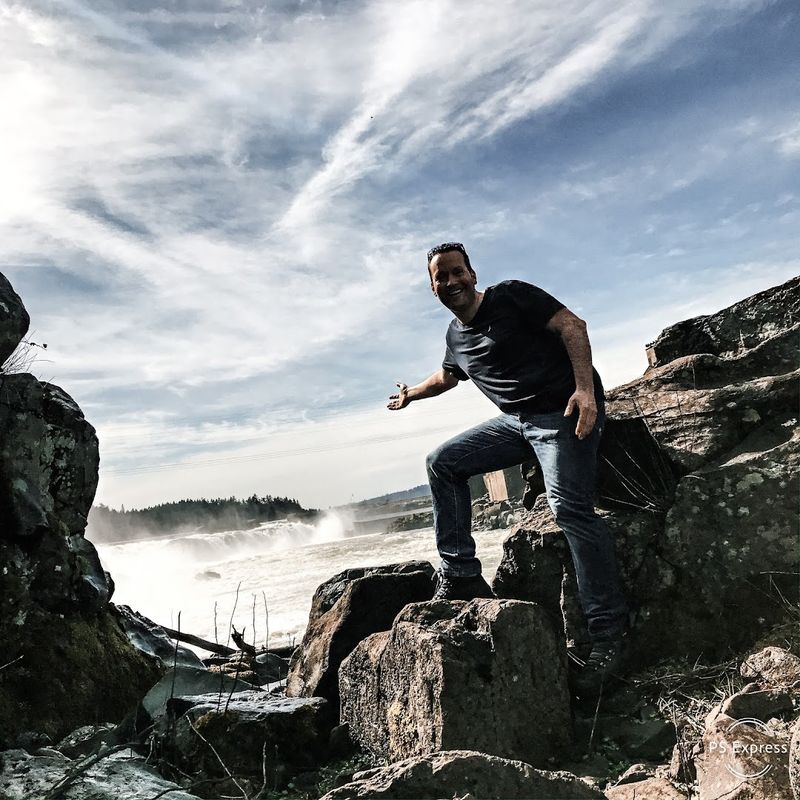
Visiting Willamette Falls takes a little planning since direct access to the water is still limited. The roadside pullout on Highway 99E is the easiest starting point.
It is free, accessible, and gives you a solid first look at the falls.
Bring binoculars if you have them. The falls are wide and spread out, so closer details are easier to appreciate with a little magnification.
A good camera helps too, especially around golden hour.
For a water-level experience, look into kayak or canoe rentals in the Oregon City and West Linn area. Paddling toward the falls from the river gives you a perspective that no viewpoint can match.
Plan ahead and check conditions before you go.
The area around the falls can be busy on weekends. Weekday mornings tend to be quieter.
That is when the light is softer and the mist hangs longer over the water.
Take time to read about the Indigenous history before your visit. Arriving with that knowledge changes the experience completely.
You stop seeing a waterfall and start seeing a living, breathing piece of human history.
