You are not dressed for a fancy dinner. Good.
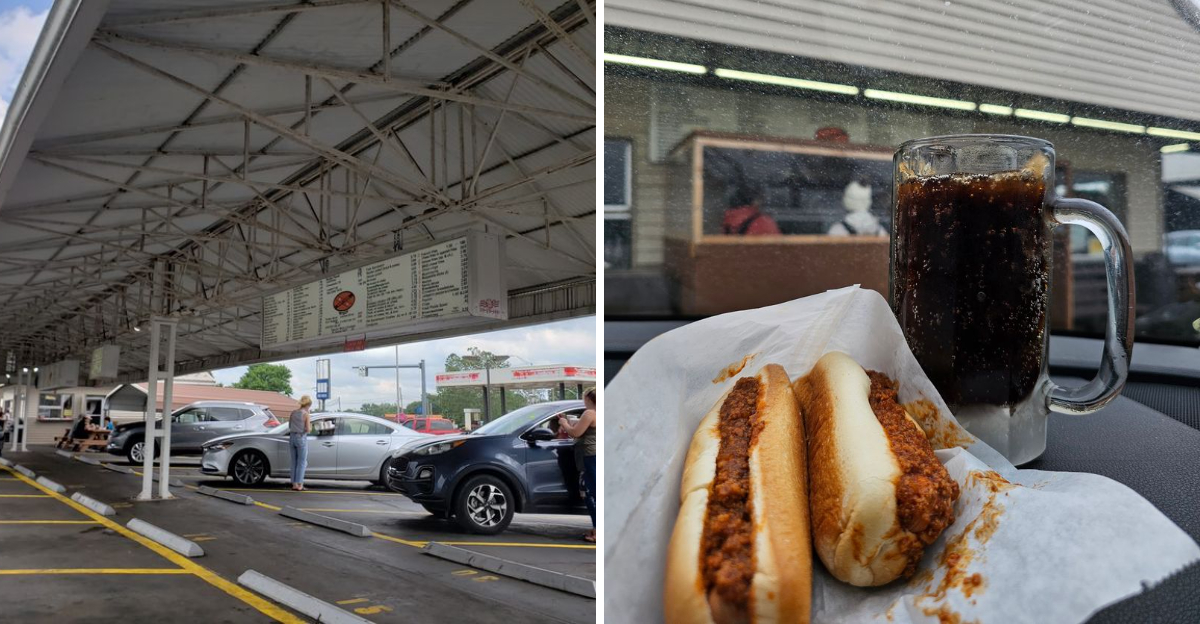
Neither is the food. This Indiana drive-in has been serving the same kind of unfussy meal since 1948, with griddled onions, frosted root beer mugs, and hot dogs covered in a savory sauce that has developed a reputation far beyond the parking lot.
The whole experience feels gloriously casual, the sort of place where dinner happens beside the car rather than beneath a chandelier. That is probably why the locals are so protective of it.
They do not need a trendy restaurant to impress them. They have this.
And they would probably prefer fewer outsiders figuring that out.
Car-Side Service That Never Went Out Of Style
Pull into a stall, roll down the window, and the whole rhythm of the meal changes. There is no host stand, no buzzer, no app.
Orders arrive on a metal tray that hooks right onto the car door, which is exactly how drive-ins operated across the Midwest decades ago.
That tray does something funny to a meal. Suddenly the front seat becomes a dining room, the dashboard becomes a shelf, and everyone in the car is part of the same small event.
Kids tend to love it immediately. Adults usually take a few seconds longer, mostly because they are trying to remember the last time food came to them this way.
Practical tip for first-timers: park with the driver side facing the building so the tray sits where it should, and keep napkins within reach because the sauce has opinions about clean shirts.
The service style is not a gimmick added later for tourists. B&K stands built their reputation on this format during the peak of American car culture, when the chain grew to roughly 238 drive-ins across Indiana, Michigan, and Ohio.
Only about 35 independently run locations remain today, each one shaped by its own town. Logansport kept the tradition intact, and eating in the car here feels less like nostalgia theater and more like a routine that simply never stopped.
Draft Root Beer Poured Into A Frosted Mug
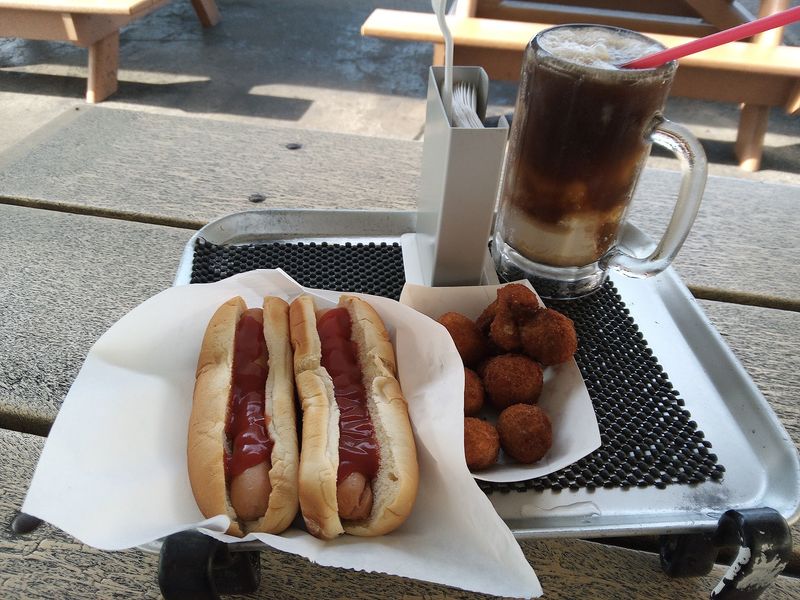
The mug arrives cloudy with frost, so cold that fingerprints show up on the glass within seconds. Inside sits draft root beer with a thick collar of foam that hangs on longer than the bottled stuff ever manages.
Flavor-wise, expect something earthy and sweet, with a rooty depth that tastes closer to a soda fountain recipe than anything from a grocery aisle. Many B&K stands make their root beer in house, which is why the taste can shift slightly from town to town.
Order a float if the day is warm. Ice cream meeting draft root beer creates that soft foam layer on top, the kind that needs a spoon before a straw stands a chance.
Refills, mugs, and the sound of the tap filling glass behind the window all add to the appeal. Half the fun is watching the pour.
A small heads-up worth knowing: the frosted mugs are heavy, so set them down on the tray rather than balancing one on a knee.
Root beer built this entire chain, and it remains the anchor of the menu. Skipping it here would be a little like visiting the coast and never looking at the water, since everything else on the tray was designed to be eaten alongside that glass.
The Spanish Dog, Logansport’s Claim To Fame
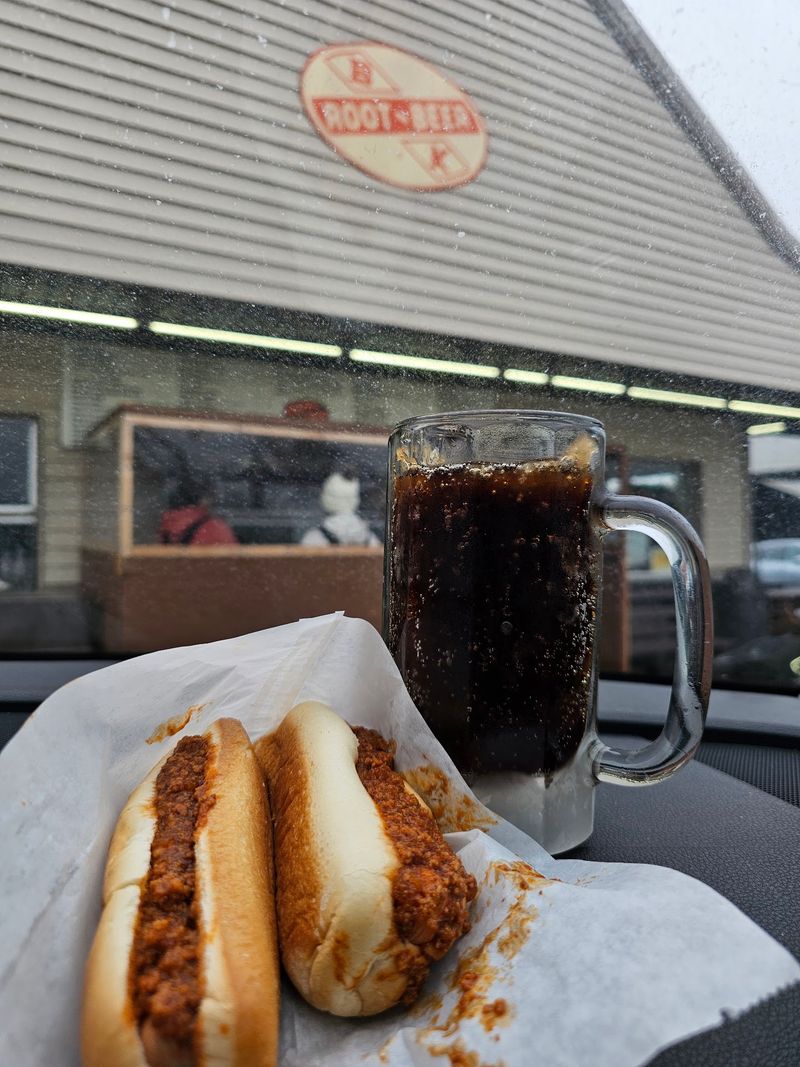
Ask anyone in Cass County what to order and the answer comes back fast. Spanish Dog.
Two words, no hesitation.
What lands in the paper boat looks simple: a hot dog in a soft bun, blanketed in a reddish-brown meat sauce and nothing else. No cheese, no mustard, no relish, no chopped onion.
That restraint is the whole point. Traditional Spanish sauce carries the flavor by itself, built from ground beef, tomato sauce or ketchup, onions, and a spice blend that lands somewhere between coney sauce and a mild sloppy joe.
Comparisons get made constantly, though none quite fit. The sauce is savory and slightly sweet, loose enough to soak into the bun, and gentle rather than fiery.
History adds a nice layer here. Mary Bergerson, who founded the B-K chain with her husband Melvin in the 1940s, is credited with developing a milder version of the Spanish sauce for the original Wabash location.
Logansport took the idea and ran with it, to the point that the town gets called the Spanish Dog Capital of the World by people who take these things seriously.
Order two. One tends to disappear before the root beer foam has settled, and regrets over ordering just a single dog are common among first-time visitors.
A Living Piece Of Midcentury Road Culture
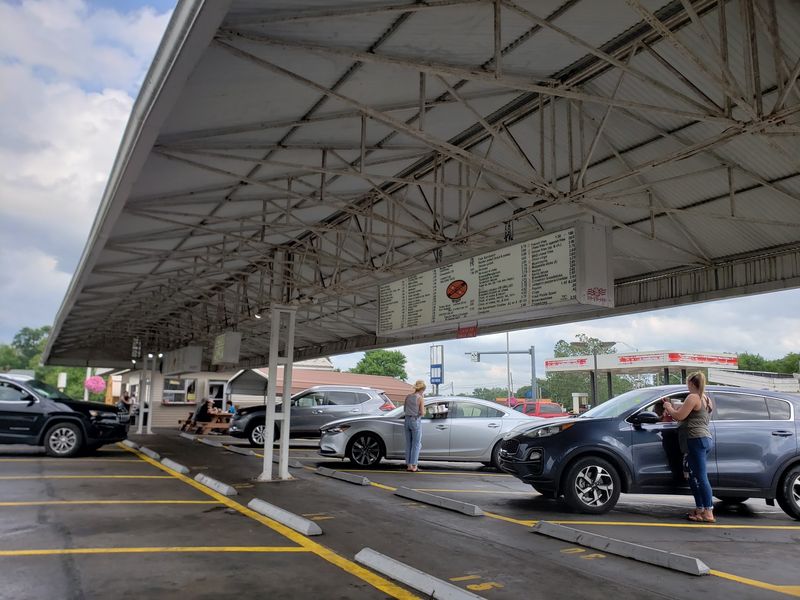
Buildings like this one used to line highways all over the Midwest. Low roofline, big painted sign, walk-up window, gravel-edged lot built for fins and chrome.
Most of them are gone now, replaced by drive-thru lanes and glowing menu boards.
Logansport’s stand has been in business since 1948, which means it predates interstate highways, fast food franchising as most people know it, and just about every chain competitor in town.
The first B-K opened in 1940 in Wabash, Indiana, though some accounts point to Michigan City as the starting point. Either way, the roots run deep in this part of the state.
Standing in the lot, the details do the storytelling. Hand-lettered signage, a service window worn smooth by decades of elbows, cars nosed into stalls facing the building.
Photographers love the place for exactly that reason. Late afternoon light hits the sign well, and the whole scene reads like a snapshot from another era without anyone staging it.
Preservation here happened by accident, not design. The stand survived because people kept showing up, generation after generation, ordering the same things their parents ordered.
That kind of continuity is rare on American roads now. Visiting feels less like a museum stop and more like catching a piece of history still doing its job.
Where Logansport Actually Eats
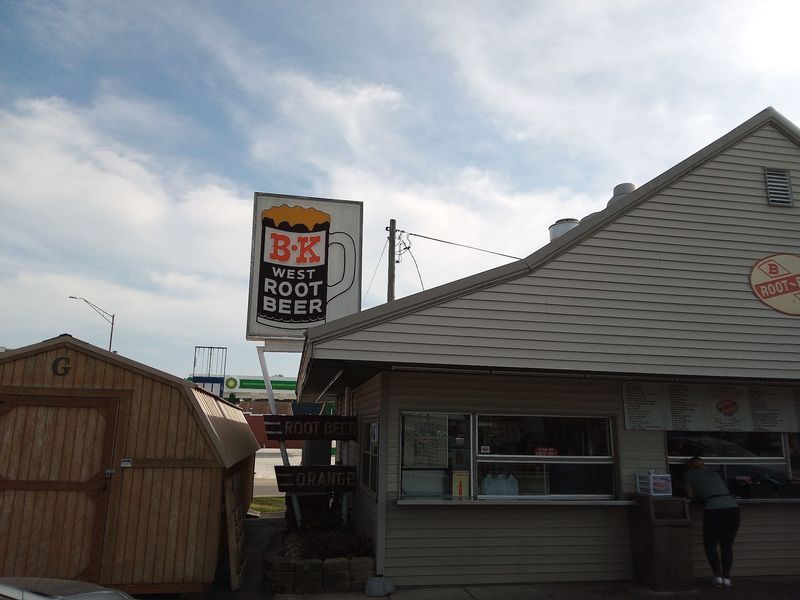
Travel guides rarely mention this corner of Indiana, and locals seem perfectly content with that arrangement. The lot fills with pickup trucks, minivans, and teenagers on their first solo drive, all there for the same reason.
Logansport actually supports more than one B&K, with residents sorting them into East and West. The West stand sits at 1101 W Market St, and asking someone which one they prefer is a reliable way to start a friendly debate.
Regulars order without looking at the board. Staff often know cars before they know names.
Ball games, graduations, county fair weeks, and ordinary Tuesday evenings all end up here at some point. It functions as a community gathering spot that happens to sell food.
Visitors who chat a bit tend to leave with recommendations for other stops around town, from the Eel River bridges to the historic carousel a few minutes away.
Nothing about the experience is curated for outsiders, which is precisely what makes it worth seeking out. There is no gift shop, no branded merchandise wall, no photo backdrop.
Show up, order, eat in the car, and the town welcomes you into a routine it has kept going for more than seventy-five years. That access is the real souvenir.
A Menu Built For Hungry People
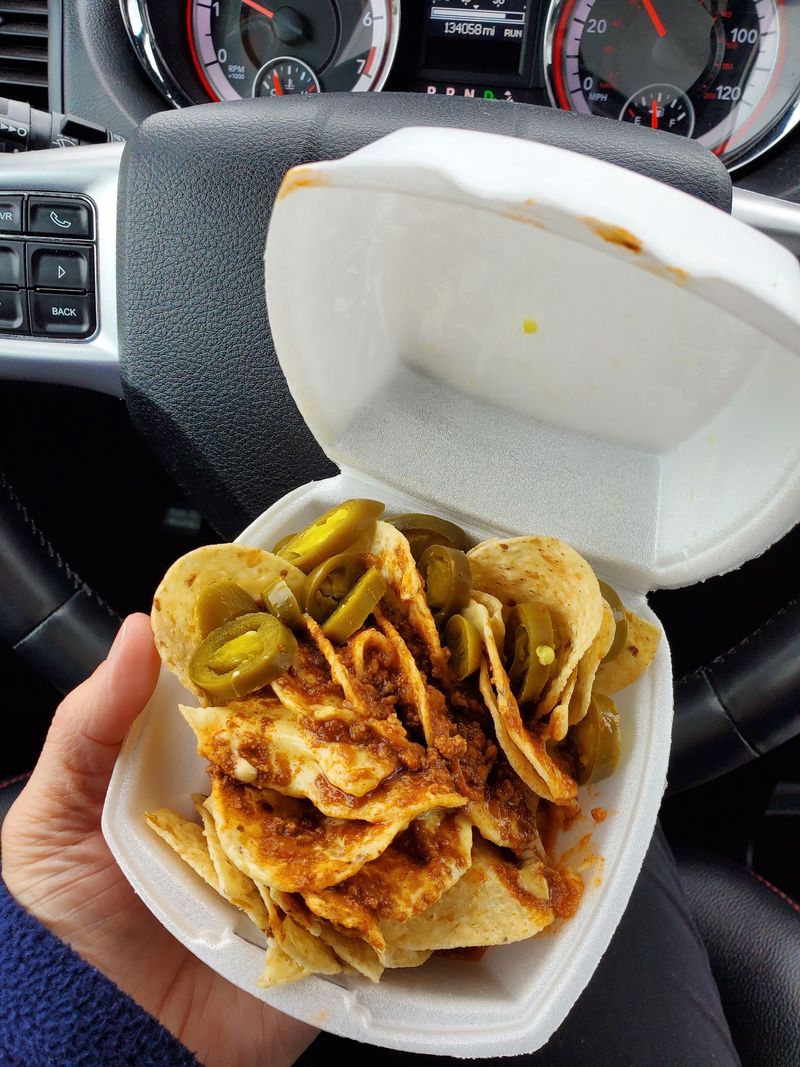
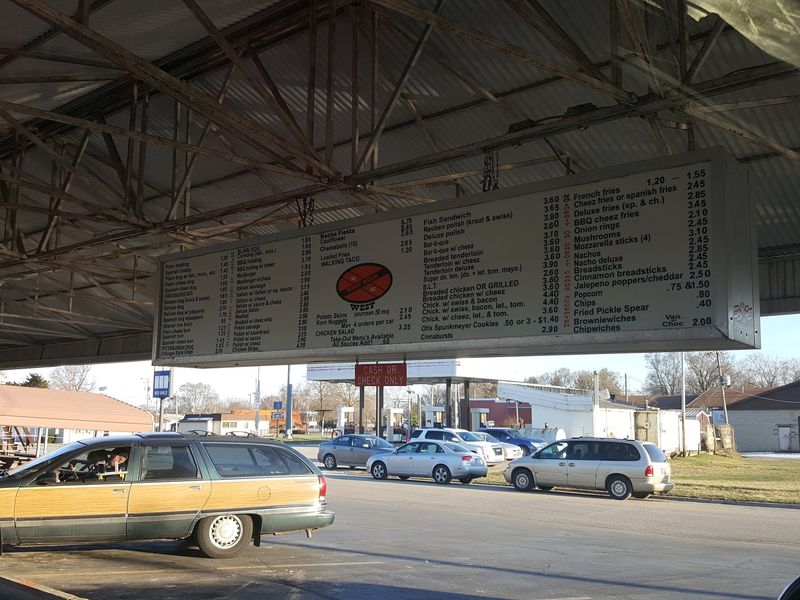
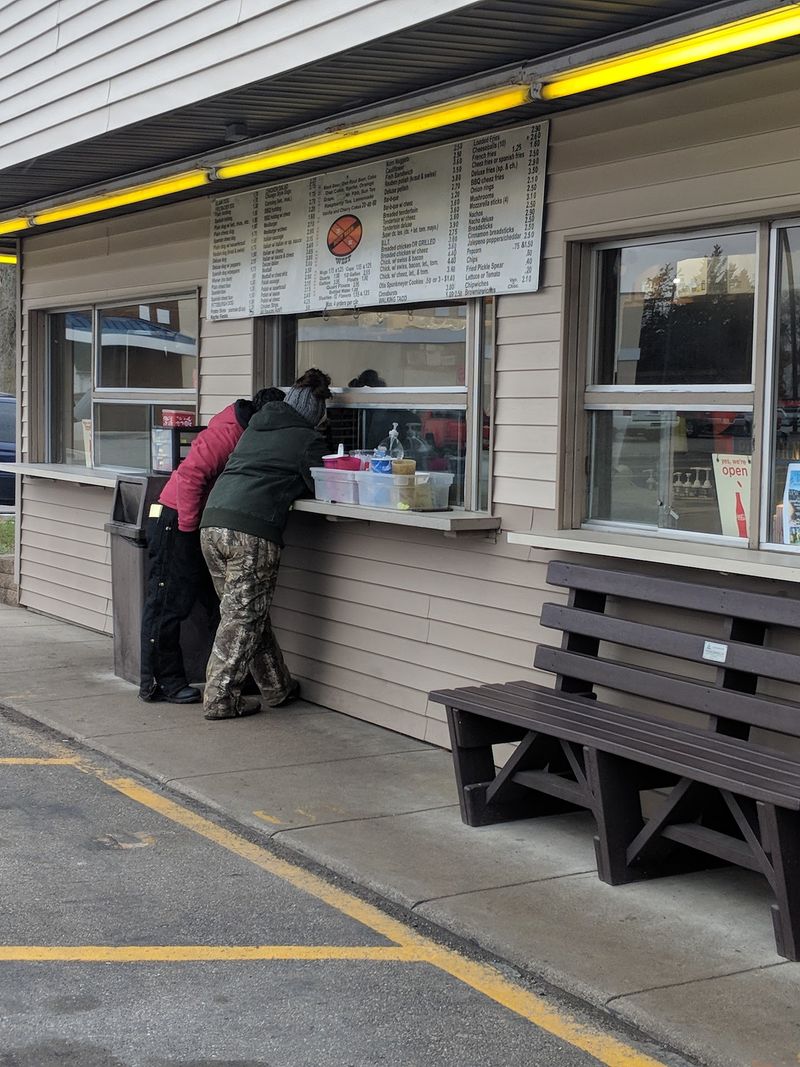
Root beer and Spanish Dogs get the headlines, but the rest of the board deserves a look. Burgers run from a plain hamburger up through double cheeseburgers and bacon cheeseburgers, all cooked on a flat griddle behind the window.
Hot dog variations get genuinely creative. Coney dogs, cheese dogs, kraut dogs, beanie dogs, slaw dogs, corn dogs, jumbo beef dogs, and Italian sausage all share the same lineup.
The Kitchen Sink Dog earns its name by piling on coney sauce, kraut, cheese, and baked beans at once. Bring an appetite and a plan.
Sandwich seekers can find grilled cheese, BLTs, grilled chicken, and at the West location, Reuben sandwiches and Philly cheesesteaks show up too.
Sides lean happily toward the fryer. Onion rings, tater tots, sweet potato fries, chili or cheese fries, cheese curds, mushrooms, mozzarella sticks, mac and cheese bites, poppers, potato teezers, and kraut balls fill out the list.
Kraut balls deserve special attention from anyone who has never tried them. Crispy outside, tangy inside, and oddly addictive.
Soft pretzels and chicken strips round things out for pickier eaters in the group. Ordering strategy matters here, so consider sharing a couple of sides across the car rather than everyone claiming their own.
Seasonal Hours That Make Every Visit Count
Winter closes the shutters here, and that changes everything about how the town relates to the place. Opening day in spring gets talked about the way other communities talk about a holiday.
Warm months bring the lot back to life, with cars circling for a spot and the griddle running steady from afternoon into evening. Cold months bring silence and an empty parking area.
Anticipation does wonders for flavor. A Spanish Dog in April, after months without one, tastes noticeably better than the same food would if it were available year-round.
Plan accordingly. Travelers passing through Logansport in December will find the stand shuttered, so timing a visit between spring and early fall is the safe approach.
Checking current hours before driving over is smart, since small independent stands adjust schedules based on weather and staffing.
Evenings tend to be the sweet spot. Cooler air, longer light, and a steady flow of locals give the lot an easy energy that midday visits sometimes miss.
Seasonal operation is part of why this drive-in still feels special after all these decades. Nothing about it is convenient or constant, and that scarcity keeps a plain hot dog and a frosted mug of root beer firmly in the category of small-town events worth driving for.
