Imagine a cave that has witnessed centuries of quiet history.
Long before tourists wandered through with flashlights and cameras, the Seneca people used this very space for something essential, preserving meat over slow-burning fires.
The smoke rose through natural chimneys, and the walls absorbed the scent of survival and tradition.
Today, you can walk the same paths, marvel at the sparkling formations, and feel the weight of those ancient hands at work.
The caverns opened to the public in 1940, but their real story stretches back much further.
It is not just a geological wonder, it is a cultural time capsule.
West Virginia, how many secrets are you still keeping underground?
Echoes of Ancient Feasts
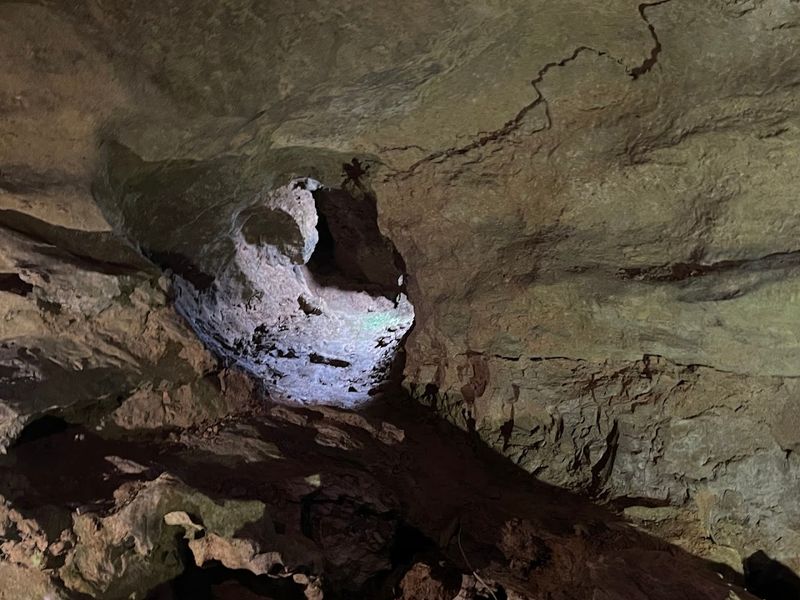
Long before any tourist ever set foot inside, the front chambers of Smoke Hole Caverns were alive with purposeful activity.
The Seneca people had discovered something extraordinary here: a naturally ventilated, consistently cool underground space that was practically built for food preservation.
They used it, and they used it well.
Wild game was abundant in the surrounding West Virginia mountains. Venison, bear, and fish were brought here and carefully prepared for the smoking process.
Thin strips of meat were arranged over slow-burning hardwood fires, and the smoke curled upward and outward through the cave opening in long, visible plumes.
Those plumes became so familiar to the landscape that early settlers took notice. The valley, the gorge, and eventually the entire region earned the name “Smoke Hole” because of those rising wisps from this underground kitchen.
It is a remarkable thing when a food tradition becomes so embedded in a place that it literally names the land around it.
Nature’s Own Smokehouse
Choosing this cavern for smoking meat was not random luck. The Seneca people understood their environment with a precision that modern food scientists would genuinely respect.
The cave’s natural architecture created airflow patterns that kept smoke moving steadily, which is exactly what you need for effective curing.
The geological layout offered natural ledges and recesses that functioned like built-in shelving. Green wood racks could be positioned to take full advantage of the rising smoke, ensuring even coverage across every strip of meat.
Nothing about this process was haphazard; it was a system refined over generations.
The cave also stayed naturally protected from rain, wind, and direct sun, all factors that could ruin a slow-smoke session. Every element of this underground space worked in harmony with the preservation process.
It is genuinely impressive that a natural formation could so perfectly match the requirements of what is essentially a specialized cooking technique, one that modern pitmasters still chase today.
The Cavern’s Enduring Cool
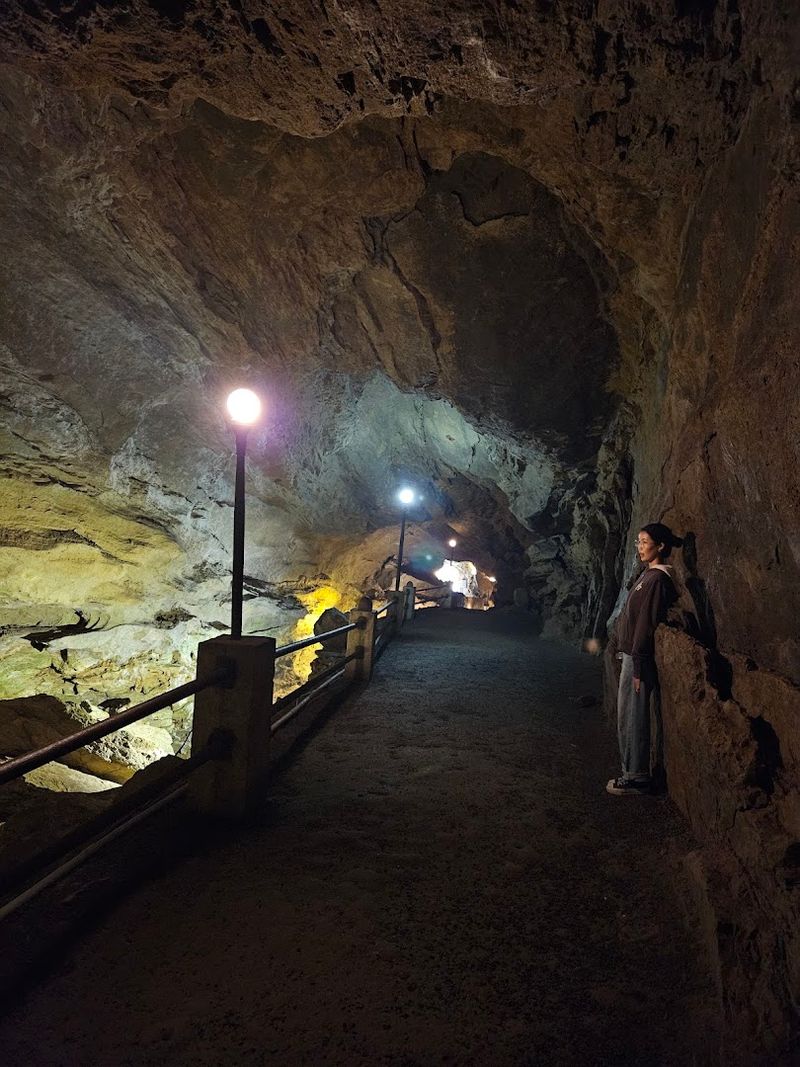
Step inside the caverns today and the temperature shift is immediate. A steady 56 degrees Fahrenheit greets you year-round, no matter how blazing the summer sun outside or how bitter the January wind.
That consistency is not a modern climate control trick; it is pure geology doing its job.
For the Seneca people, this reliable coolness was an asset that could not be overstated. Meat that had already been smoked and dried could be stored here with far less risk of spoilage than anywhere exposed to seasonal temperature swings.
The cave essentially acted as a long-term pantry that never needed maintenance.
Even now, standing in that cool air, there is something instinctively satisfying about it. Your body just knows this temperature feels right for keeping things fresh.
It is one of those moments where ancient practical wisdom and modern physical sensation line up perfectly, making the history feel less like a fact from a textbook and more like something you can actually feel.
A Culinary Tradition Forged in Stone
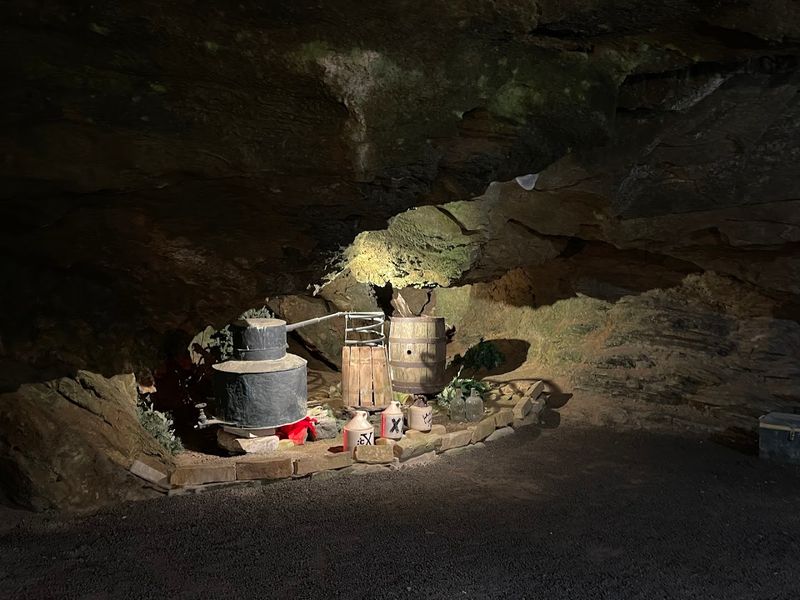
Smoking meat was never just a cooking method for the Seneca people. It was a form of food science, a way of extending the life of a successful hunt far beyond the day it happened.
Getting the process right meant the difference between a well-fed winter and a very difficult one.
Hardwoods like hickory and oak were likely the fuels of choice, selected because their dense smoke carries antimicrobial properties that actively inhibit spoilage. The slow, low heat dried the meat while the smoke formed a protective layer on the surface.
This combination could keep protein edible for weeks or even months without any modern refrigeration.
The flavor that resulted from this process was deep, complex, and unmistakably tied to the specific woods and environment of the Appalachian region. Every batch of smoked meat carried the character of this particular place.
That connection between food, technique, and landscape is something that the best food traditions always share, and this one started underground.
Formations and Functional Spaces
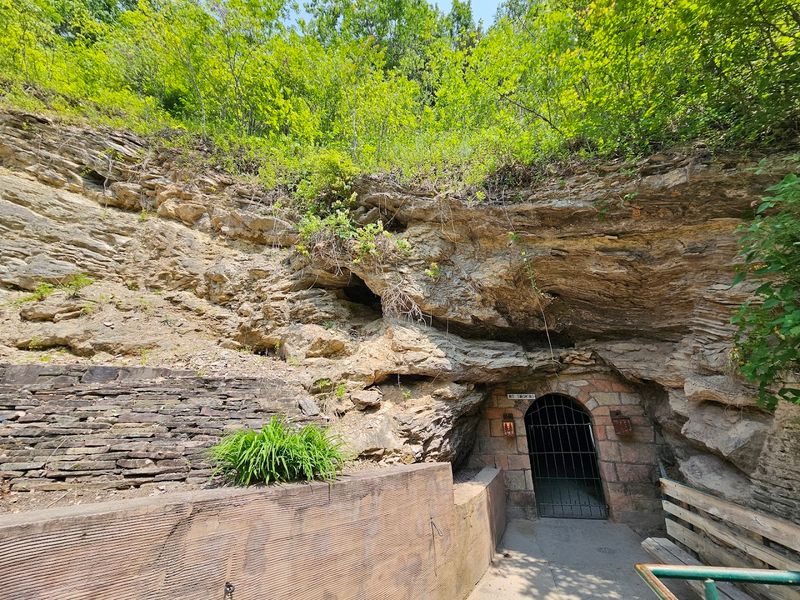
The main chamber inside the caverns carries the nickname the Room of a Million Stalactites, and spending even a few minutes inside tells you exactly why.
The ceiling soars to an extraordinary 274 feet, and from it hang formations of every size, from delicate soda straws to chunky, ancient stalactites that look like they belong in a fantasy novel.
The sheer scale of this space would have made it practical for communal use. A large group of people working together to process game after a successful hunt would have had more than enough room to spread out, build multiple fires, and work efficiently.
The cave was not just a convenient spot; it was a genuinely functional large-scale workspace.
Today, the formations are the main visual draw, and they are absolutely worth your full attention. The variety of shapes, textures, and sizes creates a constantly shifting landscape as you move through the tour path.
Every angle offers something new, and the scale of it all keeps catching you off guard in the best possible way.
A Stream of Life and Legacy
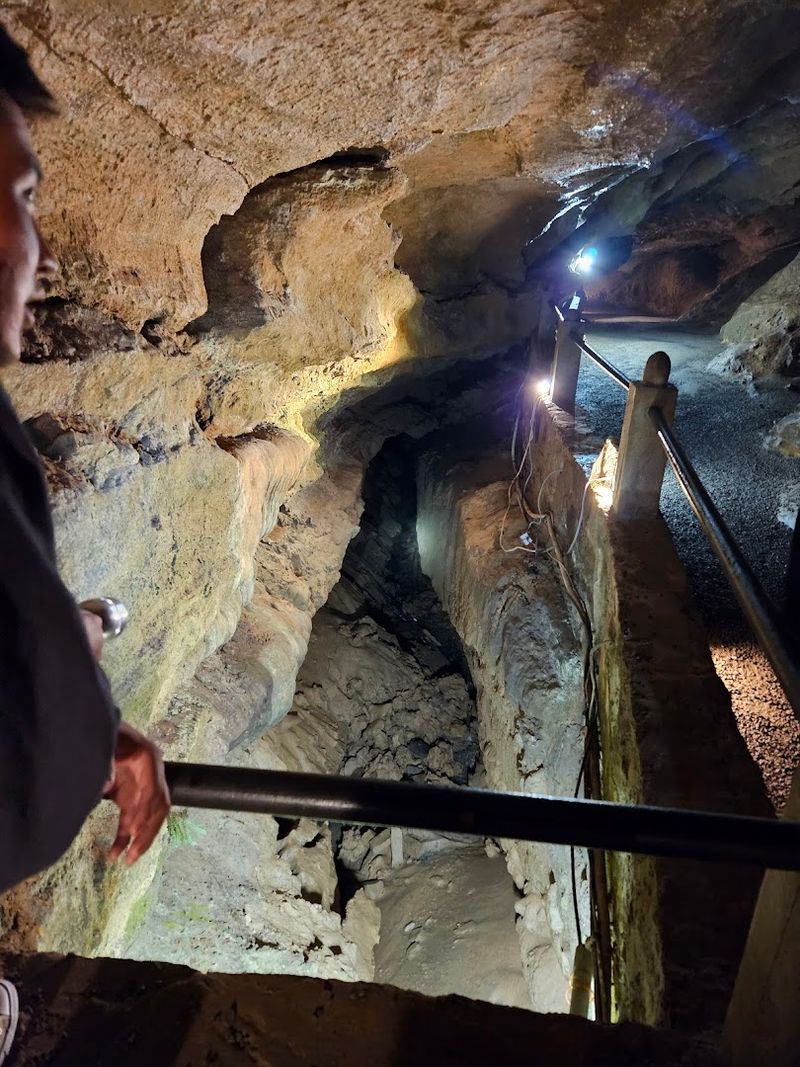
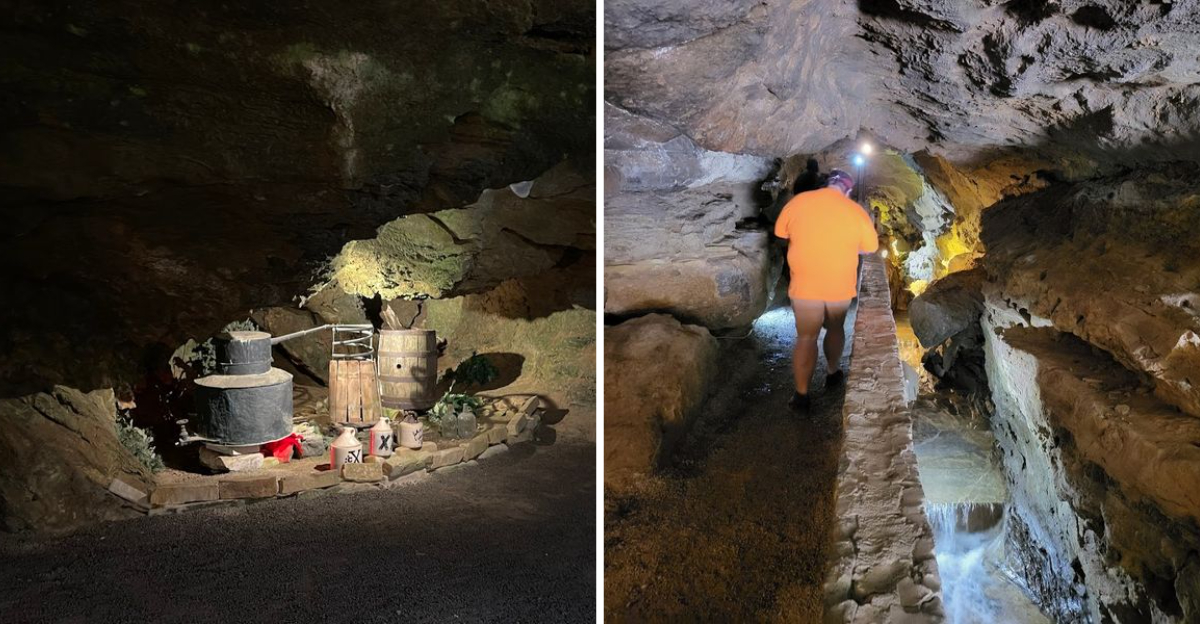
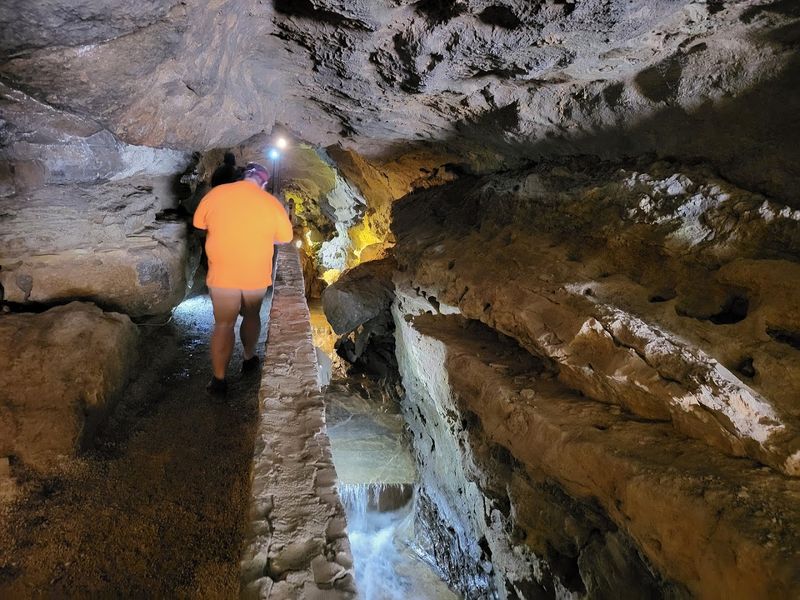
Water has a way of making underground spaces feel alive, and the small stream that runs through Smoke Hole Caverns does exactly that. It moves quietly through the cave, catching the light and adding a soft, constant sound that somehow makes the whole space feel more intimate.
Fresh, cold, and clear, it is easy to see why this feature mattered so much historically.
Access to clean water inside the cave itself would have been invaluable for the Seneca people during meat preparation. Rinsing, soaking, and general food handling all require water, and having it right there eliminated a significant logistical challenge.
The cave was not just a smokehouse; it was a fully equipped food processing environment.
The stream also supports a small ecosystem within the cave, a reminder that even in the dark, life finds a way. Seeing it today adds a layer of richness to the visit that goes beyond just looking at rock formations.
It connects the geological, the biological, and the human history of this place into one quietly flowing thread.
The Ribbon of Time
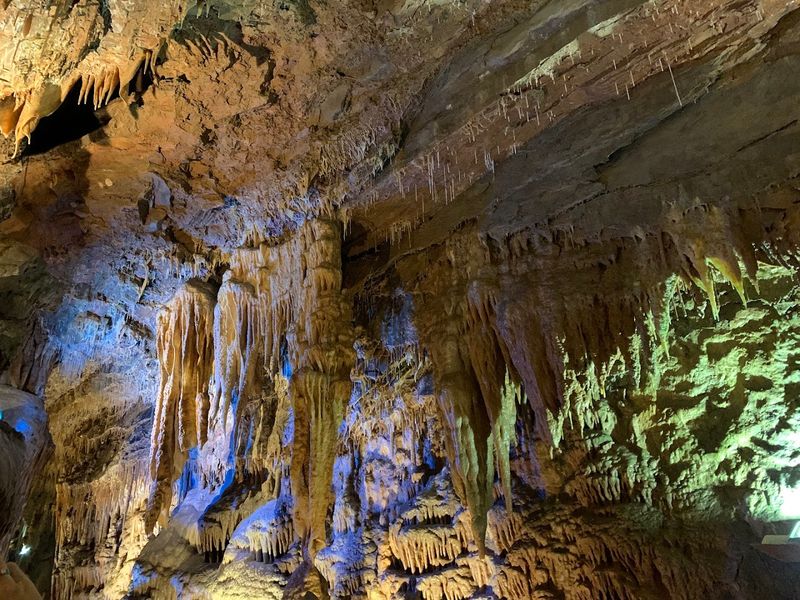
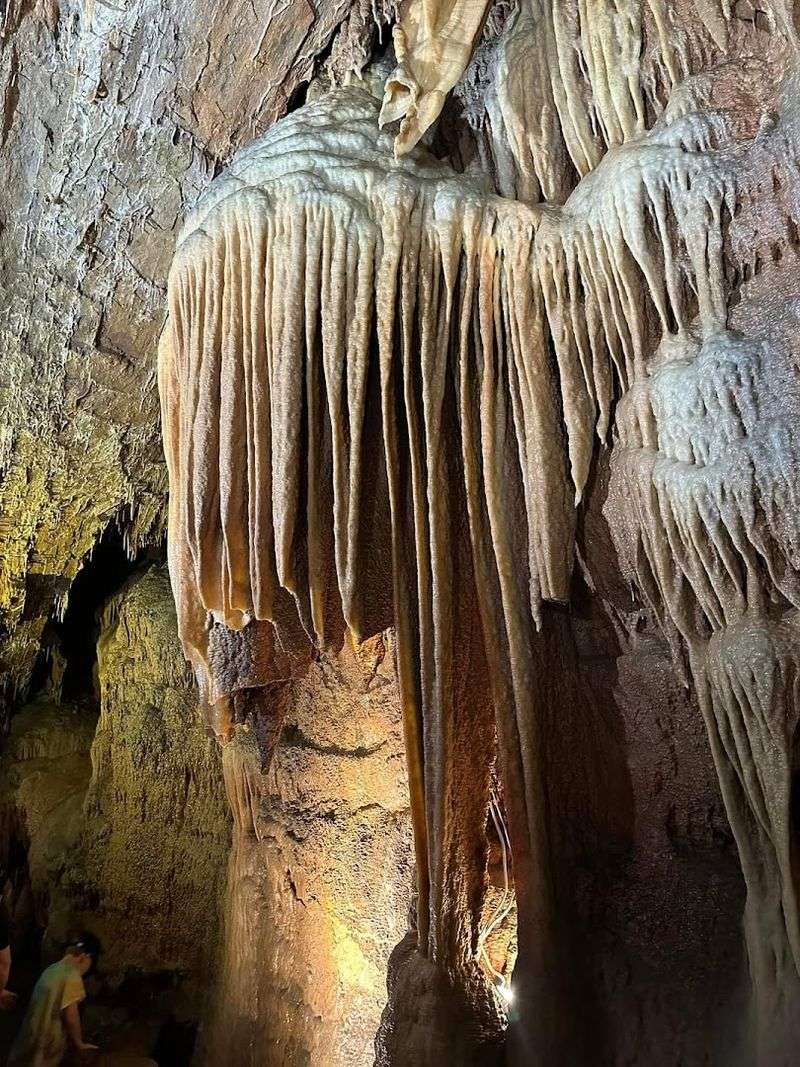
Few things in the natural world stop you mid-step quite like the World’s Largest Ribbon Stalactite. Hanging inside the caverns, this six-ton formation curves and flows in a way that seems physically impossible, like something a sculptor spent decades perfecting.
It is the kind of thing you photograph and then immediately doubt the photo will do it justice, because it won’t.
Ribbon stalactites form when water seeps along a slight draft, depositing minerals in a thin, curtain-like sheet over enormous spans of time. The result is a translucent, wavy formation that can look almost like frozen fabric.
This particular one has been growing, drip by mineral-rich drip, for longer than recorded human history in this region.
Standing beneath it, it is hard not to feel the weight of geological time pressing gently on your perspective. The Seneca people smoked meat beneath formations just like this one, and long before that, nothing but silence and slow mineral growth filled this space.
The ribbon stalactite is a timeline you can see, and it stretches back further than imagination comfortably reaches.
Discovery and Opening
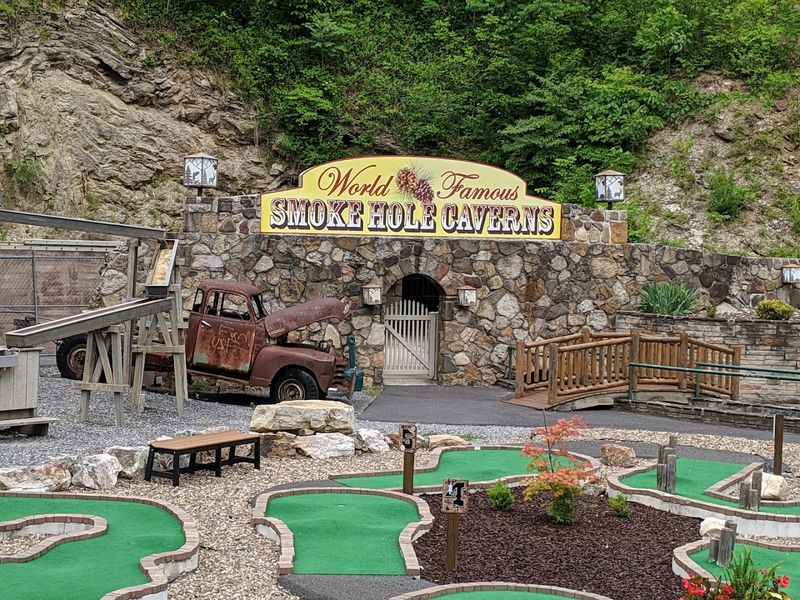
On May 30, 1940, the caverns officially opened to the public, and everything about this place shifted in one decisive moment.
What had been a private, functional space for indigenous communities and later a largely unknown geological feature became accessible to anyone curious enough to make the drive out to Cabins, West Virginia.
That opening date matters because it marks the point at which the ancient story of this cave began to be shared more broadly.
The history of the Seneca using this space for smoking meat did not disappear when the first tour groups arrived; instead, it became part of the narrative that guides pass on with every visit.
History and hospitality found a way to coexist here.
More than eight decades of public tours have passed since that first official opening, and the caverns have welcomed generations of visitors who came looking for cool air and left carrying a piece of a much older story.
That kind of continuity, from ancient food tradition to modern tourist attraction, is genuinely rare and worth celebrating.
Stepping Through Centuries
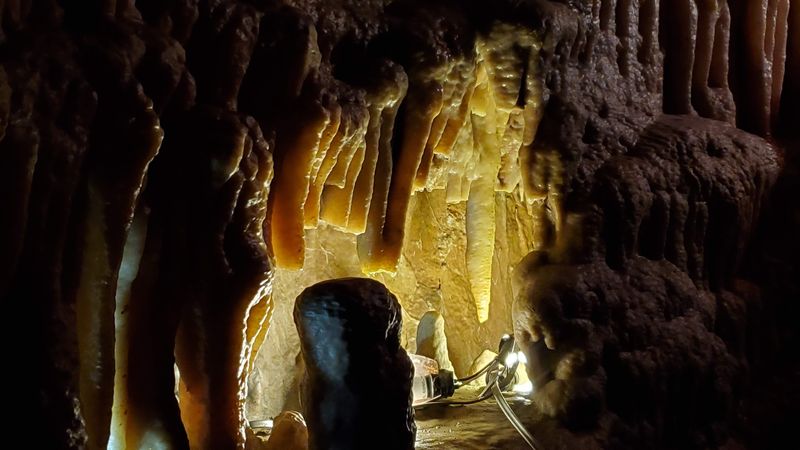
Walking the tour path today, the cave feels layered in a way that is hard to fully articulate. The geological formations are millions of years old.
The human history tied to this space goes back centuries. And yet the path beneath your feet is smooth, the lighting is thoughtful, and the whole experience feels remarkably accessible.
Tour guides carry the history well, weaving the story of the Seneca people and the smoking tradition into the broader narrative of the cave’s geology and formation. The result is a tour that satisfies both the science-minded visitor and the one who showed up mostly for the atmosphere and the stories.
Both leave with something worth keeping.
The air inside still carries that same coolness that made this cave so valuable to the people who used it centuries ago. It does not smell like smoke anymore, but there is still something ancient in the quality of that air.
Breathing it in while standing beneath formations that predate human memory is one of those small, unexpectedly moving travel moments.
A Lasting Impression
There are places you visit and forget by the time you hit the highway, and then there are places that quietly rearrange something in how you think. Smoke Hole Caverns falls firmly into the second category.
The combination of geological wonder and centuries-deep food history creates an experience that keeps surfacing in your memory long after you leave.
The idea that a cave could give a name to an entire region because of what people cooked inside it is the kind of origin story that deserves to be told more widely. Food shaped this landscape in a literal, lasting way.
The Seneca people left behind not just a technique but a legacy embedded in the very name of the place.
Coming here means connecting with that legacy in person, standing in the same cool air, looking at the same stone ceiling, and understanding just a little better how deeply food and place can become intertwined.
It is a history worth experiencing firsthand, and the caverns make it easy to do exactly that.
Address: 8290 N Fork Hwy, Cabins, WV
