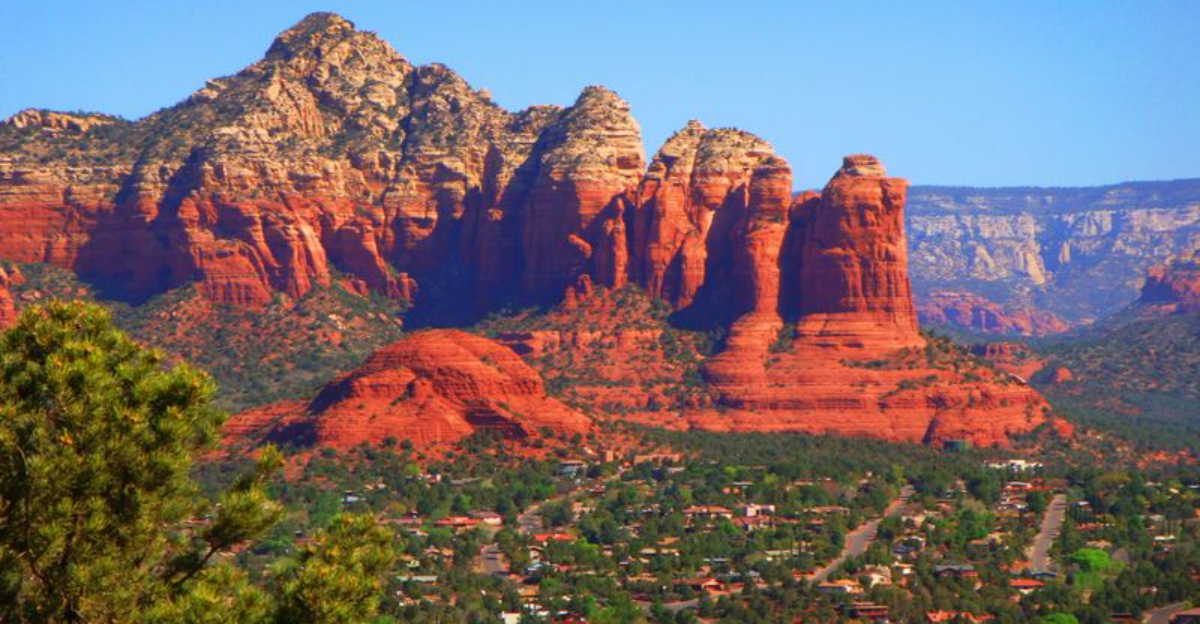
Sedona sits tucked between towering red rock formations in the high desert of northern Arizona, where the landscape looks like something borrowed from another planet.
For decades, this quiet town drew mostly artists and spiritual seekers, but Hollywood discovered its dramatic scenery early on and never quite let go.
Filmmakers found that Sedona’s crimson cliffs and endless blue skies could stand in for anywhere from the Old West to alien worlds, making it one of cinema’s best-kept secrets.
Today, visitors flock here not just to hike the trails and explore the galleries, but to walk through the same stunning landscapes that have appeared on the silver screen for generations.
Hollywood’s Desert Discovery
Back when movies were still finding their voice, directors started looking beyond studio backlots for authentic Western landscapes.
Sedona’s towering red rocks and wide-open desert offered exactly what they needed.
The town’s first brush with fame came in the 1920s, when a handful of adventurous filmmakers made the dusty journey north from Phoenix.
What they found was a cinematographer’s dream.
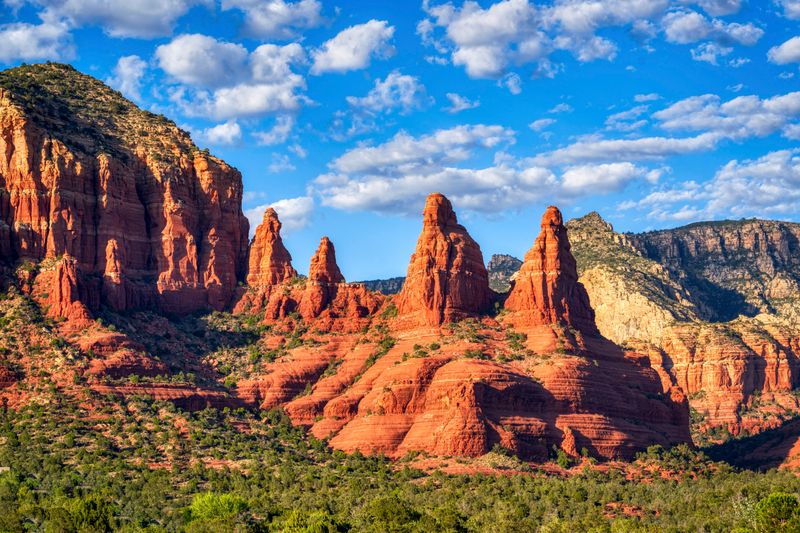
The rocks glowed orange at sunrise and turned deep crimson by sunset, creating natural drama that no studio could replicate.
By the 1940s and 1950s, Sedona had become a regular filming location for Western movies.
Stars like John Wayne, James Stewart, and Henry Fonda all worked here, riding horses through Oak Creek Canyon and staging shootouts beneath Cathedral Rock.
Local ranchers often rented their land to production companies, and some residents found work as extras or horse wranglers.
The town remained small and quiet between film shoots, which only added to its appeal for directors seeking unspoiled scenery.
Unlike busier Hollywood locations, Sedona offered privacy and natural beauty without the crowds.
This golden age of Western filmmaking put Sedona on the map, though most moviegoers had no idea where these stunning backdrops actually existed.
The rocks became silent movie stars themselves, appearing in dozens of films while the town below stayed peacefully tucked away from the spotlight.
Cathedral Rock’s Cinematic Legacy
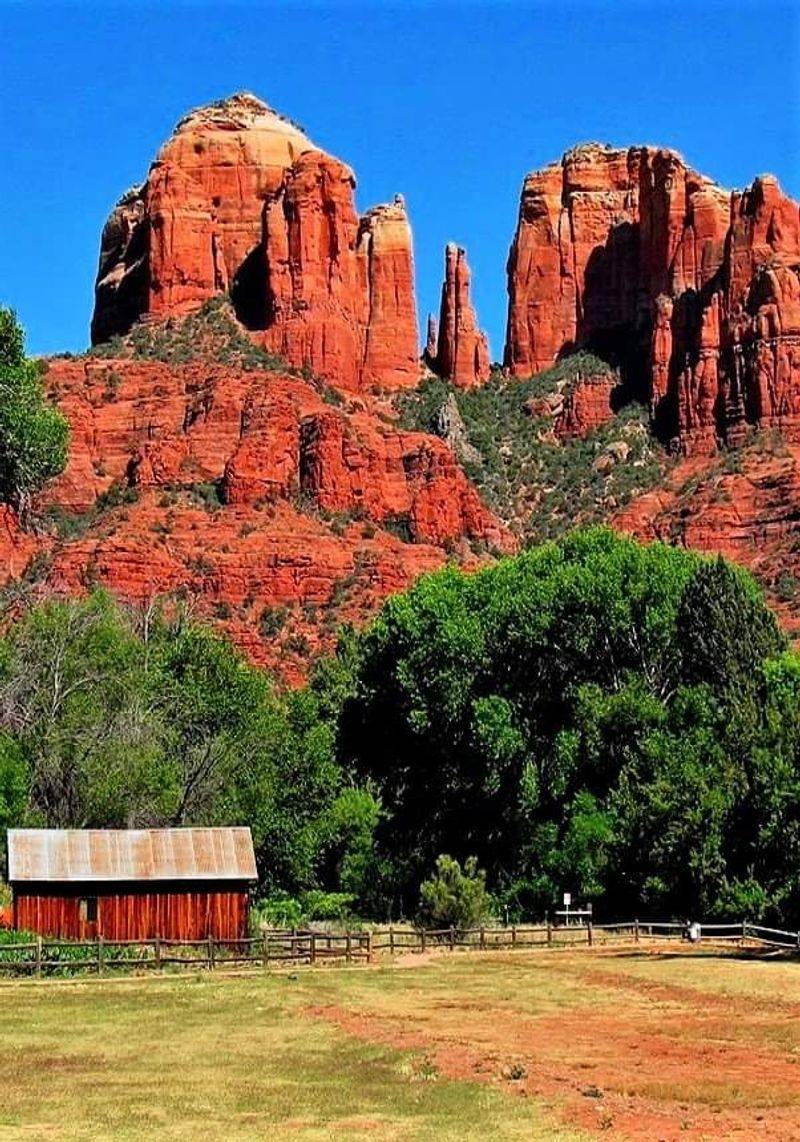
Cathedral Rock stands as Sedona’s most photographed landmark, and for good reason.
This massive formation rises nearly 1,500 feet above Oak Creek, its twin spires reaching toward the sky like the towers of a natural church.
Filmmakers have used it as a backdrop countless times, and it has appeared in everything from classic Westerns to modern commercials.
The rock’s distinctive shape makes it instantly recognizable, even to people who have never visited Sedona.
Getting close to Cathedral Rock means taking the Cathedral Rock Trail, which starts at Back O’ Beyond Road off State Route 179.
The hike is steep and involves some scrambling over rocks, but the views are worth every bit of effort.
Many visitors choose to photograph it from Red Rock Crossing at Crescent Moon Picnic Area instead, where Oak Creek flows past the formation’s base.
This spot offers calmer waters that reflect the rocks perfectly on still days, creating mirror images that photographers adore.
The formation changes character throughout the day as sunlight shifts across its face.
Morning light brings out subtle pink and orange tones, while late afternoon sun turns everything a deep, fiery red.
Clouds add extra drama, casting moving shadows that make the rocks seem alive.
Directors understood this natural lighting better than anyone, often scheduling shoots during golden hour to capture the most spectacular footage possible.
The Western Town That Never Was
Unlike some filming locations that built permanent Western towns, Sedona’s movie sets were mostly temporary.
Production crews would arrive, construct false-front buildings, shoot their scenes, and then dismantle everything before leaving.
This approach kept the landscape pristine, which meant future filmmakers always found it looking fresh and untouched.
A few semi-permanent structures did exist over the years, particularly during Sedona’s busiest filming decades.
Some ranches maintained corrals and simple buildings that could be dressed up for different productions.
These working ranches benefited from the extra income, and the filmmakers appreciated having basic infrastructure already in place.
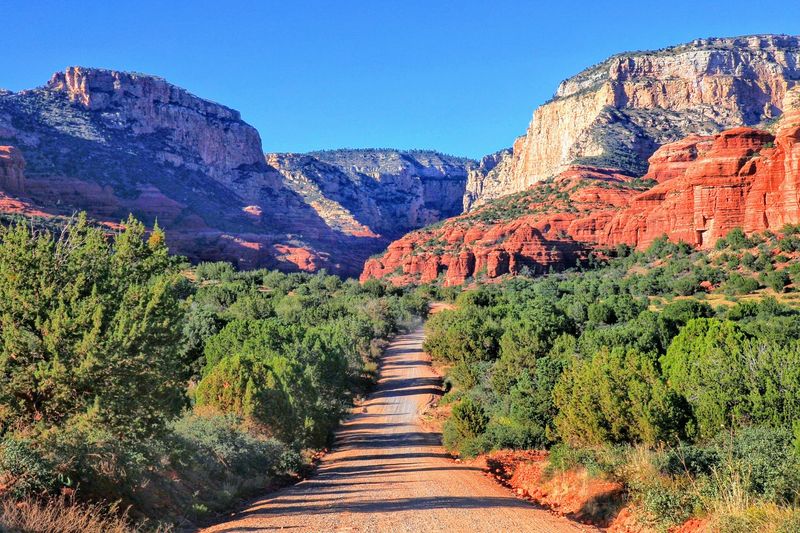
One famous location was Schnebly Hill Road, a rough dirt track that climbs east from Sedona into the high country.
Its dramatic switchbacks and stunning views made it perfect for chase scenes and dramatic confrontations.
The road still exists today, though it requires a high-clearance vehicle and closes during bad weather.
Another popular spot was Soldier Pass, where strange rock formations and hidden caves provided mysterious settings.
Directors loved finding natural features that added character to their scenes without requiring expensive set construction.
Today, visitors can explore these same areas and imagine what it must have been like when film crews descended on this quiet town.
The landscape remains largely unchanged, a living museum of cinematic history.
From Westerns to Sci-Fi Landscapes
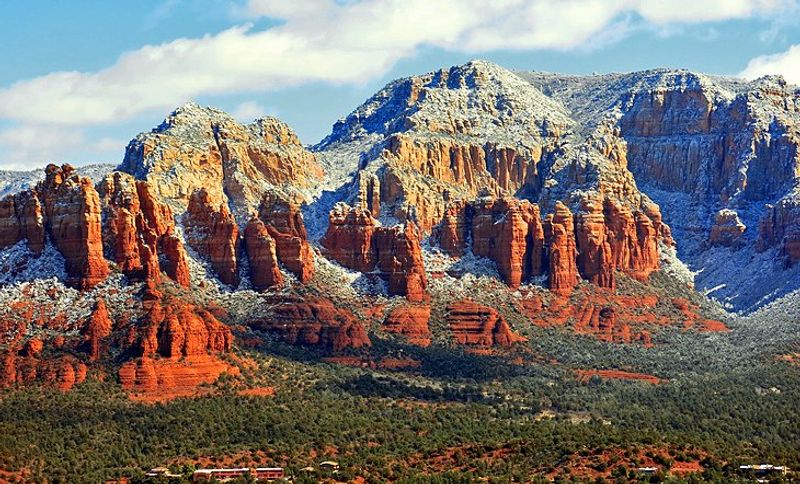
When Hollywood moved beyond cowboys and gunslingers, Sedona’s rocks proved surprisingly versatile.
Their unusual shapes and vivid colors made them perfect stand-ins for alien planets and fantasy worlds.
Directors discovered that with the right camera angles and lighting, these Arizona formations could look like they belonged on Mars or some distant moon.
Science fiction films of the 1960s and 1970s took advantage of this otherworldly quality.
The rocks needed little modification to appear extraterrestrial, saving production companies money on elaborate sets.
Some formations, like the rounded domes near Airport Mesa, look particularly alien when photographed against a clear blue sky.
Modern filmmakers still use Sedona for projects that need dramatic natural settings.
Music videos, commercials, and independent films all benefit from the area’s visual impact.
The town has learned to accommodate these productions while protecting its natural resources.
Permits are required for commercial filming, and certain sensitive areas are off-limits entirely.
This balance helps preserve Sedona’s beauty for future generations while allowing creative projects to continue.
Visitors hiking popular trails sometimes stumble upon small film crews at work, capturing footage for projects ranging from documentaries to fashion shoots.
The transition from Western filming location to multi-purpose cinematic backdrop shows how timeless these landscapes truly are.
Uptown Sedona’s Artistic Transformation
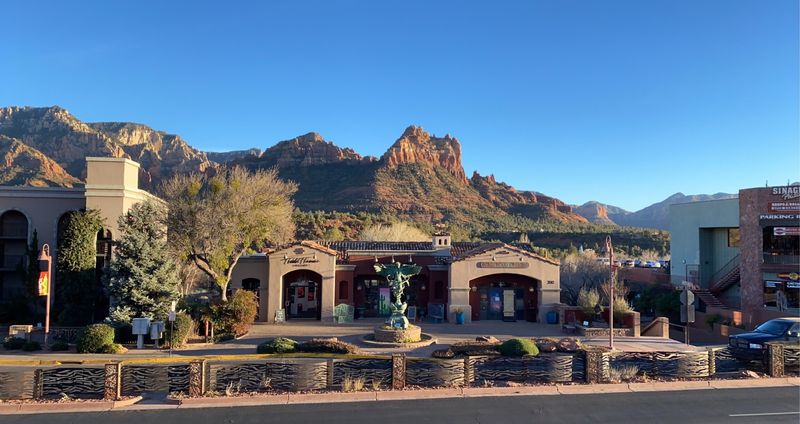
Uptown Sedona sits along State Route 89A, where the main commercial district clusters beneath towering cliffs.
This area has evolved dramatically from its sleepy film-era days into a bustling arts and tourism hub.
Galleries line the streets, showcasing everything from traditional Western paintings to contemporary sculpture and Native American jewelry.
Many artists moved to Sedona specifically because of its inspiring scenery and creative community.
The same dramatic landscapes that attracted filmmakers also drew painters, photographers, and craftspeople seeking natural beauty.
Over time, these artists opened studios and galleries, gradually transforming the town’s character.
Today, visitors can spend hours browsing through dozens of galleries, each offering unique perspectives on the surrounding environment.
Some galleries focus on realistic landscape paintings that capture the rocks in precise detail.
Others showcase more abstract interpretations or mixed-media pieces that use local materials.
The concentration of art spaces in such a small area makes Uptown Sedona feel like an open-air museum.
Beyond galleries, the district offers restaurants, cafes, and shops selling everything from crystals to outdoor gear.
The New Age movement found a home here too, adding metaphysical bookstores and healing centers to the mix.
This eclectic combination creates an atmosphere unlike anywhere else in Arizona, blending Old West heritage with contemporary spirituality and artistic expression.
Oak Creek Canyon’s Natural Drama
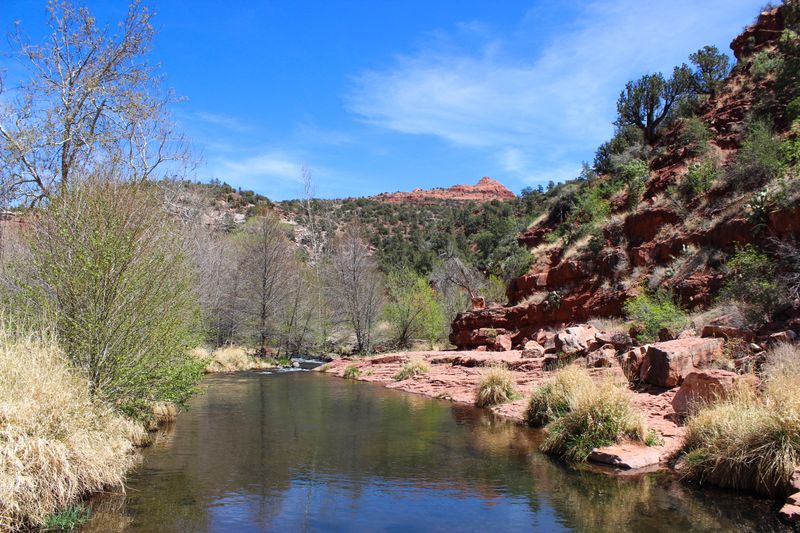
State Route 89A winds through Oak Creek Canyon as it climbs north from Sedona toward Flagstaff, following the creek through towering canyon walls.
This scenic drive has appeared in numerous films, its dramatic curves and steep cliffs providing perfect settings for car chases and dramatic reveals.
The canyon offers a stark contrast to Sedona’s drier areas, with cottonwood trees and sycamores lining the creek.
Water flows year-round here, creating a ribbon of green through the red rock landscape.
In fall, the trees turn brilliant yellow and gold, adding another layer of color to an already spectacular scene.
Several pullouts along the highway let drivers stop and admire the views safely.
Some of these spots have interpretive signs explaining the geology and ecology of the canyon.
Slide Rock State Park sits about seven miles north of Sedona, where Oak Creek has carved smooth chutes through the red sandstone.
Families come here to swim and slide down the natural water slides, especially during hot summer months.
The park’s address is 6871 North Highway 89A, and it gets crowded on weekends.
Filmmakers loved Oak Creek Canyon for its versatility.
Scenes could shift from dry desert to lush riparian habitat within minutes, all while staying in the same general area.
The sound of running water added authentic atmosphere to outdoor scenes, and the shade from canyon walls provided relief for cast and crew during long shooting days.
Red Rock State Park’s Protected Beauty
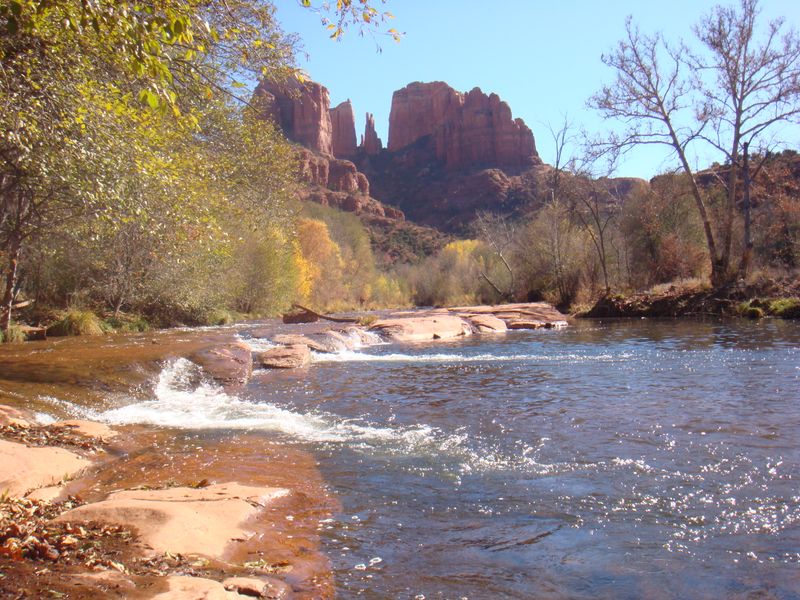
Red Rock State Park preserves 286 acres along Oak Creek, about five miles southwest of Sedona’s center.
Unlike some areas that allow unlimited access, this park maintains strict protections to preserve its natural and cultural resources.
The address is 4050 Red Rock Loop Road, and the park charges a modest entrance fee.
Visitors find well-maintained trails here that wind through riparian habitat and up onto higher ground for panoramic views.
The park’s mission focuses on environmental education and conservation, making it an ideal spot for families and nature enthusiasts.
Rangers lead guided walks that explain the area’s ecology, geology, and human history.
Bird watchers particularly love this park, as the creek habitat attracts over 200 species throughout the year.
Great blue herons, black hawks, and countless songbirds make their homes here.
Early morning offers the best viewing opportunities, when wildlife is most active and the light is perfect for photography.
The park’s protected status means it has avoided the development pressure affecting other parts of Sedona.
No commercial filming is allowed without special permits, which helps maintain the peaceful atmosphere.
Trails range from easy walks suitable for young children to more challenging routes that climb onto the surrounding hillsides.
The visitor center provides maps, educational displays, and information about current wildlife sightings and trail conditions.
Chapel of the Holy Cross Architecture
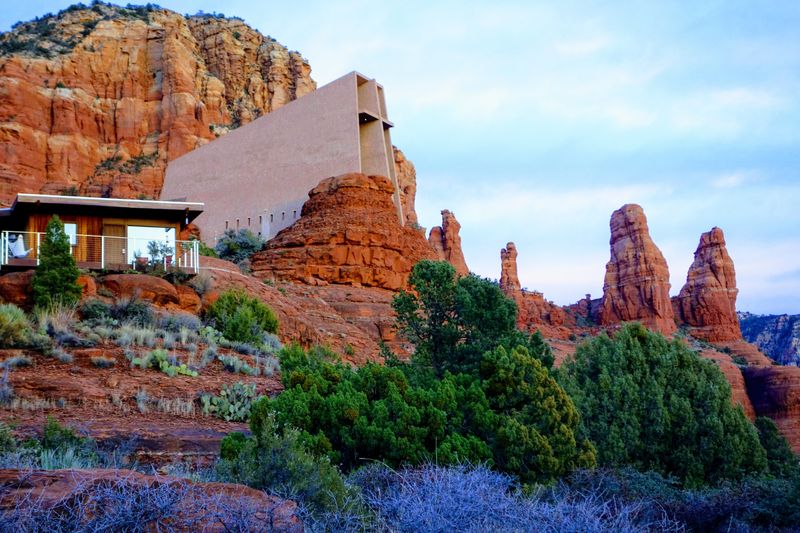
Rising from the red rocks themselves, the Chapel of the Holy Cross represents one of Sedona’s most striking architectural achievements.
Marguerite Brunswig Staude designed this Roman Catholic chapel, which was completed in 1956.
She wanted to create a spiritual space that honored both faith and the natural world, and the result is breathtaking.
The chapel sits 200 feet above the valley floor, built directly into the rock face between two massive red stone pinnacles.
A 90-foot cross forms the front facade, visible for miles around.
Inside, floor-to-ceiling windows frame views of the surrounding landscape, making the scenery an integral part of the worship experience.
The address is 780 Chapel Road, reached via a winding drive off State Route 179.
Parking can be challenging during busy times, as the small lot fills quickly.
Visitors of all faiths come here to admire the architecture and enjoy the peaceful atmosphere.
The chapel has appeared in films, documentaries, and countless photographs, becoming one of Sedona’s most recognizable landmarks.
Its dramatic setting and unusual design make it irresistible to photographers and filmmakers alike.
From the parking area, a short but steep path leads to the chapel entrance.
Once inside, the space feels both intimate and expansive, with the rocks pressing close while the windows open views to distant horizons.
Tlaquepaque Arts and Shopping Village
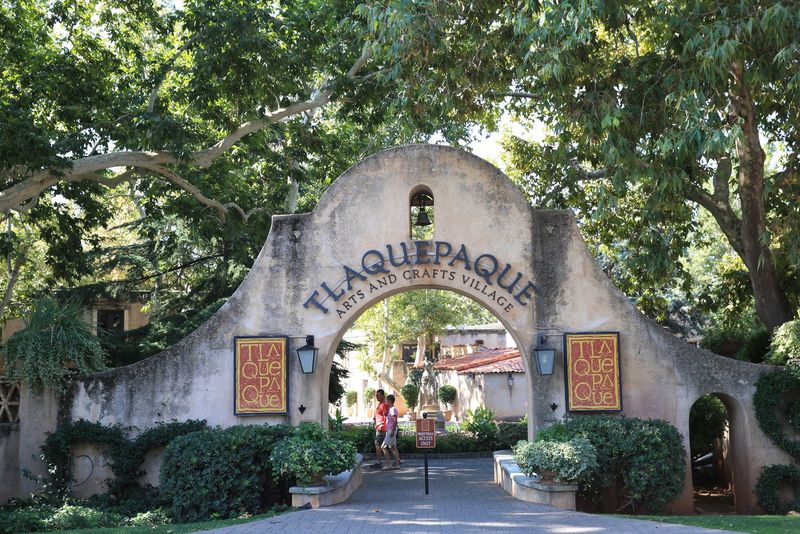
Tlaquepaque Arts and Shopping Village recreates the charm of a traditional Mexican village right in the heart of Sedona.
Located at 336 State Route 179, this complex features Spanish colonial architecture, shaded courtyards, and flowing fountains.
Developer Abe Miller created Tlaquepaque in the 1970s, naming it after a suburb of Guadalajara famous for its arts and crafts.
He wanted to build something that honored traditional craftsmanship while providing a beautiful setting for artists and shoppers.
The village contains over 40 galleries and shops, each occupying spaces designed to feel authentic and inviting.
Thick adobe-style walls, wooden beams, and tile work create an atmosphere that transports visitors far from typical shopping centers.
Sycamore trees provide shade in the courtyards, where benches invite people to rest and enjoy the surroundings.
Artists working in various media maintain studios here, and visitors can often watch them at work.
The complex hosts festivals and events throughout the year, including art shows and cultural celebrations.
Restaurants within Tlaquepaque offer outdoor dining with views of Oak Creek, which flows along the property’s edge.
The village’s careful design and quality offerings have made it a favorite destination for visitors seeking something beyond typical tourist shops.
Its photogenic architecture has also attracted filmmakers and photographers looking for authentic Southwestern settings without traveling to Mexico.
Airport Mesa’s Panoramic Views
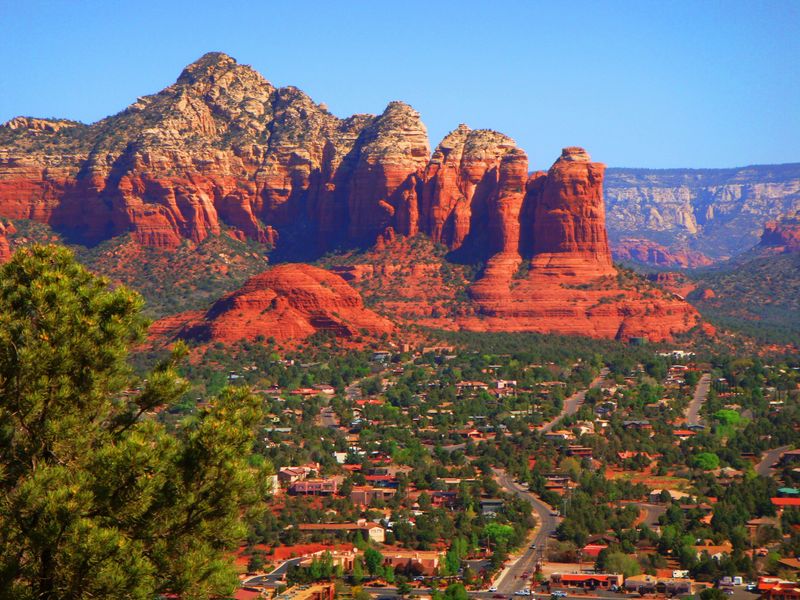
Airport Mesa sits on a high plateau west of downtown Sedona, offering 360-degree views that encompass nearly the entire area.
The Sedona Airport occupies the mesa’s top, serving small private planes and scenic flight tours.
A popular overlook sits just below the runway, accessible via Airport Road off State Route 89A.
This viewpoint has become one of Sedona’s most visited spots, particularly at sunset when the rocks glow their most intense colors.
Photographers and filmmakers have used this location countless times because it provides clear sightlines to so many of Sedona’s famous formations at once.
Cathedral Rock, Courthouse Butte, Bell Rock, and numerous other landmarks are all visible from here.
The mesa also offers views down into Oak Creek Canyon and across to the higher elevations near Flagstaff.
Several trails circle the mesa, with the Airport Loop Trail being most popular.
This moderate 3.3-mile path stays relatively level while providing constantly changing perspectives on the surrounding landscape.
Many consider Airport Mesa one of Sedona’s vortex sites, places where spiritual energy supposedly concentrates.
Whether or not you believe in such things, the views alone justify the visit.
The overlook gets crowded before sunset, with people jockeying for the best photo positions.
Arriving earlier in the afternoon ensures better parking and more relaxed viewing conditions.
Dear Reader: This page may contain affiliate links which may earn a commission if you click through and make a purchase. Our independent journalism is not influenced by any advertiser or commercial initiative unless it is clearly marked as sponsored content. As travel products change, please be sure to reconfirm all details and stay up to date with current events to ensure a safe and successful trip.
