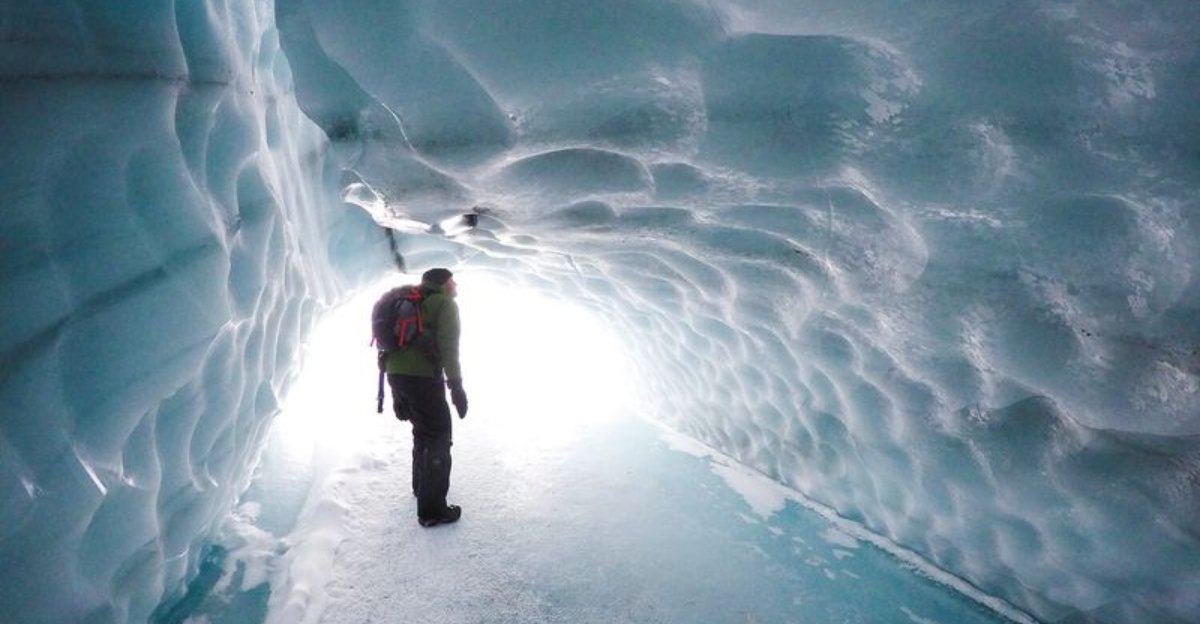
Alaska’s snow and ice caves are elusive, shifting cathedrals of blue that most visitors never see. Locals know the quiet pullouts, winter windows, and guide services that unlock these ephemeral chambers safely. If you crave adventure, natural beauty, and photographs that glow like sapphires, this guide reveals where to look near Anchorage, Fairbanks, and Juneau. Read on for insider routes, seasonal timing, and safety wisdom that can turn a cold day into a once-in-a-lifetime wonder.
Juneau’s Taku Driftways
When winter clamps down, locals with boats and big-water savvy eye Taku Glacier’s outflow for temporary ice passages and shoreline caves. Conditions vary wildly; tides, river ice, and calving risk demand professional guidance. On rare cold stretches, sheltered bays host blue grottos that mirror perfectly in black ice.
Juneau residents time departures with slack tides and clear forecasts, wearing drysuits and helmets. Inside, silt ribbons and bubble stacks create abstract compositions that print beautifully. Sound carries strangely – keep voices low to hear subtle cracking cues. Exit the moment drip rates increase or ice starts “singing.”
This is an advanced objective where weather windows slam shut fast. For most travelers, a reputable local operator transforms uncertainty into an unforgettable, safe glide through ethereal blue space.
Byron’s Short Hike, Big Payoff
Byron Glacier tempts with an easy trail but demands winter wisdom only locals heed. After fresh snow, the valley amplifies avalanche risk from surrounding slopes, so seasoned hikers check forecasts and stay out of the cave proper. In midwinter cold, ephemeral crawl-throughs appear near the snowfields, but they can thin overnight.
Photographers shoot from the mouth, framing powdery fans and blue portals without committing to collapse zones. Locals watch for hollow drum sounds underfoot – a red flag for voids. The best vantage points sit across the outwash, where a telephoto compresses scale and preserves safety margin. Microspikes may suffice on packed trail, but carry crampons if you plan icy stream crossings.
Park rangers post updates; smart visitors verify conditions before driving down Portage Valley. The rule here: admire the blue, respect the white above you.
Spencer by Rail Adventure
Locals love Spencer Glacier because the journey is half the magic: board the Glacier Discovery Train, then link a guided hike or kayak when conditions allow. Railroad access limits crowds, and guides track daily ice cave changes, steering you to safe portals with uniform ceilings and solid bridges.
In deep winter, frozen lagoons can open direct travel lines to ice walls; in shoulder seasons, kayaks thread past icebergs to radiant blue caverns. Expect windborne crystals, echoing drips, and striated walls that photograph beautifully at midday when light bounces through. Helmets and crampons are standard, with ice screws and ropes for teams probing deeper features.
Local timing tip: weekdays offer quieter platforms and clearer shots. Weather can swing quickly in the Kenai Mountains; layers and goggles help when spindrift whips down the valley.
Mendenhall’s Sapphire Maze
Near Juneau, Mendenhall’s ice caves are legendary – ephemeral tunnels that locals treat like tidal pools, different every week. Access can involve frozen approaches, rugged moraine hikes, or kayaking across Mendenhall Lake, depending on season and safety. The caves illuminate like stained glass when ambient light funnels through thin ice; photographers expose for highlights and bracket shadows.
Guides monitor calving risk and overhead melt, rerouting when ceilings spider with fractures. Winter cold stabilizes some features, but storm cycles reverse gains quickly. Locals carry drysuits for shoulder-season water travel, plus avalanche gear when snow loads hang above. Expect stunning blue scallops, trapped bubbles, and rivulets threading the floor.
The golden rule: never enter if you hear active dripping or popping overhead. A safe vantage from just inside the mouth can still deliver bucket-list images.
Castner’s Winter Window
Castner Glacier, a Fairbanks favorite, becomes accessible when the creek freezes and the approach hardens underfoot. Locals aim for deep-winter high-pressure spells – clear skies, stable temperatures, and low winds – to explore the broad entrance cave safely. Trails are unmaintained, so a GPS track and headlamps are essential, especially for early dusks.
The cave’s interior often features hoarfrost chandeliers and wind-carved scallops that look like marble. Weekdays bring quiet; weekends can crowd the narrow mouth. Respect fragile frost and avoid touching ceilings that shed with body heat. Stay alert for booming sounds that indicate shifting ice; step back to the entrance zone if you hear them.
Layer up for interior cold that bites harder than outside air. The reward is a serene, otherworldly blue amphitheater you’ll never forget.
Matanuska’s Moving Cathedral
Locals time Matanuska Glacier cave visits to cold snaps, when ceilings firm up and meltwater hushes. Look for guided access via the private park road, then weave between crevasse fields where guides know stable lines. The caves here aren’t permanent; they collapse, retreat, and reappear, so residents follow weekly guide reports rather than old pins.
Expect glassy blue vaults with embedded ash bands – Alaska’s volcanic past frozen into the walls. Photographers bring wide-angle lenses and diffusers to manage reflective glare. Early morning yields fewer people and crisp ice textures. Traction is mandatory; crampons bite better than microspikes on bubbly blue ice. Helmets protect from chandelier drips.
Local etiquette: step lightly, avoid touching delicate scallops, and never linger under sagging cornices. When katabatic winds rise, guides pivot to safer features, proving flexibility is the real key to seeing Matanuska’s best.
Portage Valley’s Hidden Tollos
Beyond Byron, locals scour Portage Valley for short-lived snow tunnels – tollos – formed by meltwater and wind under winter drifts. These are not the grand glacier caverns but delicate arches that photograph beautifully at dawn. They form after storms and vanish with the next warm gust. Safety first: never crawl deep; instead, shoot from the edges with a low angle to exaggerate curvature.
Bring avalanche-savvy friends and check the Turnagain forecast. Snowshoes help float over buried creeks that can suddenly punch through. The magic is in minimalism: blue-tinged snow, rippled textures, and alpenglow brushing the Chugach.
Local etiquette means leaving no posthole scars near entrances. If you find a fragile tunnel, mark a waypoint and return in colder light; you might catch it crystalline before it sags away.
Knik’s Private Gateways
Knik Glacier’s ice caves are a prize locals reach via fat bikes, airboats, or winter helicopter charters, depending on river conditions. Private land and braided channels complicate access, so residents book operators with current permissions and ice intel. The payoff: cathedral chambers with silt-striped ceilings and surreal blue curtains.
In strong cold, lake ice near the face hardens, opening walking routes to safe cave mouths. Guides probe for weak ice and steer clear of serac fall zones, especially on sunny days. Photographers bring ND filters to balance bright snowfields and glowing interiors. Expect solitude compared to road-access spots.
Layer for wind funneled down the valley, and pack extra batteries – they drain fast in the cold. Always defer to your pilot or guide; Knik rewards caution with world-class visuals.
Matanuska’s Back-Basin Blue Rooms
Veteran guides at Matanuska know back-basin alcoves that tourists miss – short approaches from the main routes where stable ceilings persist longer. These “blue rooms” glow when thin surface snow filters light, creating theater-like ambience. Locals schedule midday slots for optimal luminance and minimal frost smoke.
The trick is patience: wait for other groups to exit, then capture undisturbed floor textures. Helmets and crampons are non-negotiable; icy ramps can pitch abruptly toward hidden drain holes. Guides test overhead keystones before entry and keep groups tight for quick retreats. Bring a microfiber cloth to wipe lens condensate between shots.
If chinook winds kick up, expect rapid ceiling softening – your guide may pivot to surface features instead. These tucked-away chambers prove that small spaces can rival the grand halls for color and calm.
Fairbanks’ Aurora-Cave Combo
Locals near Fairbanks chase a rare pairing: a midwinter Castner visit followed by an aurora session under moonlit ridgelines. The trick is timing high-pressure nights with low wind and stable temperatures. Arrive before dusk, explore the ice cave responsibly, then relocate to a nearby pullout with southern sky exposure.
Pack a fast wide-angle lens, tripod, extra batteries, and hand warmers. Headlamps should use red mode to preserve night vision. Black ice on the highway is common – drive slow and carry a shovel. The payoff can be surreal: emerald curtains above a day of sapphire ice.
Always monitor forecasts for extreme cold that risks frostbite, and exit the cave well before nightfall to avoid route-finding errors. Locals swear it’s the most magical double-feature in Interior Alaska.
Dear Reader: This page may contain affiliate links which may earn a commission if you click through and make a purchase. Our independent journalism is not influenced by any advertiser or commercial initiative unless it is clearly marked as sponsored content. As travel products change, please be sure to reconfirm all details and stay up to date with current events to ensure a safe and successful trip.
