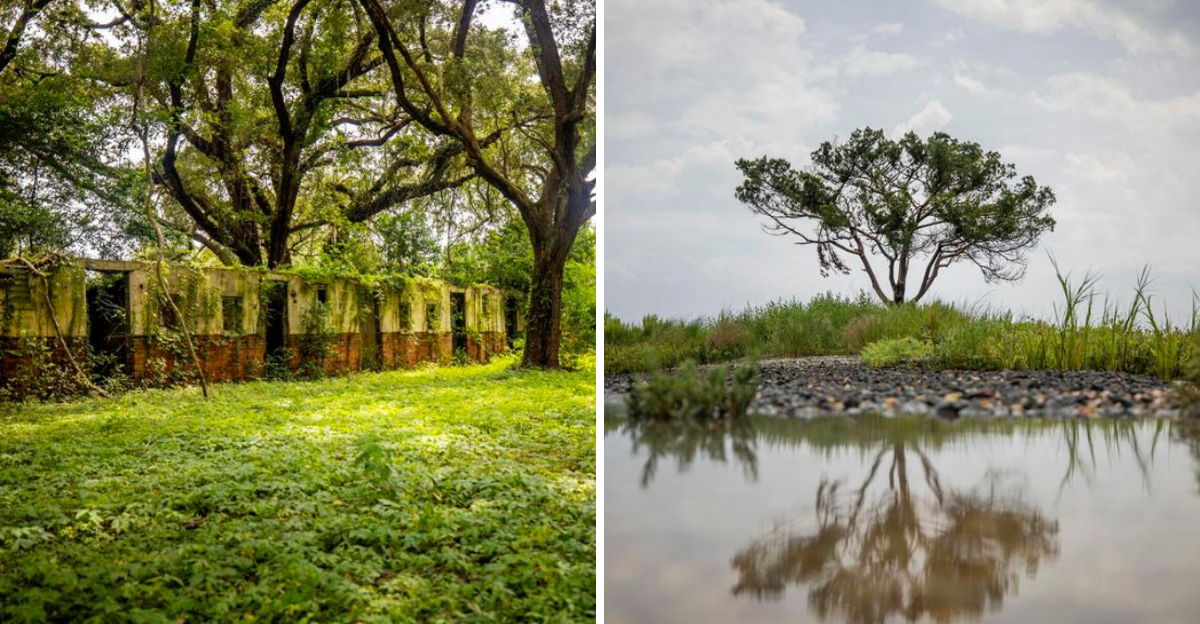
Along the sandy shores of Pawleys Island, South Carolina, there’s a story that has puzzled locals and historians for decades. McKenzie Beach, once a bustling island resort destination, is said to have disappeared from maps after a powerful storm swept through the area.
What really happened to this mysterious place, and why do so few records remain? Some say the storm not only destroyed buildings but erased an entire chapter of coastal history. Others believe the resort was quietly abandoned and forgotten, its legacy buried beneath shifting sands and rising tides.
Today, whispers of McKenzie Beach live on through family stories, faded photographs, and the haunting absence of a place that once thrived.
1. The Storm That Changed Everything
Hurricane Hazel roared through the Carolina coast in October 1954, bringing winds that topped 140 miles per hour. The storm surge reached heights nobody had seen before, swallowing entire sections of beachfront property. Buildings that had stood for decades simply vanished into the angry Atlantic waters.
Pawleys Island took a direct hit, and the damage was catastrophic. Homes, businesses, and entire stretches of beach were reshaped overnight. Local families huddled in shelters as the wind howled and the ocean claimed what it wanted.
McKenzie Beach, a small resort area near Pawleys Island, faced the storm’s full fury. When the waters finally receded and survivors ventured out to assess the damage, they found a landscape completely transformed.
The resort structures were gone, roads had disappeared, and the shoreline looked nothing like it had just days before. Recovery efforts focused on the main populated areas, and smaller spots like McKenzie Beach were sometimes left behind in the chaos.
2. Where McKenzie Beach Actually Was
Finding McKenzie Beach on modern maps is nearly impossible, but old-timers remember exactly where it used to be. The small resort sat just south of the main Pawleys Island development, tucked between the ocean and the salt marshes. Access came via a narrow sandy road that connected to the main island pathway.
Back in the 1940s and early 1950s, this stretch of beach attracted families looking for a quieter alternative to the busier resort areas. A handful of cottages dotted the dunes, along with a small general store and a boat dock. The area felt remote even then, separated from the main island by tidal creeks and marsh grass.
After the 1954 storm, the geography changed so dramatically that the old landmarks simply didn’t exist anymore. The narrow strip of land where cottages once stood had been washed away or buried under sand. Without the structures to mark the spot, McKenzie Beach faded from official records and newer maps.
3. The Resort That Time Forgot
McKenzie Beach Resort wasn’t fancy by any stretch of the imagination. Simple wooden cottages with screened porches faced the ocean, offering basic accommodations for summer visitors. Families would rent these cottages for weeks at a time, spending their days fishing, swimming, and enjoying the peaceful surroundings.
The resort catered to middle-class families from inland South Carolina and neighboring states. Parents appreciated the affordable rates and safe environment for children. Kids spent endless hours collecting shells, building sandcastles, and exploring the tidal pools at low tide.
A small pavilion served as the social center, where guests gathered in the evenings to share stories and plan the next day’s adventures. The owner operated the general store from the front room of his own cottage, selling basic supplies, fishing gear, and homemade treats.
Everything about McKenzie Beach was unpretentious and welcoming, a place where families could relax without worrying about fancy dress codes or expensive entertainment.
4. Local Legends and Eyewitness Accounts
Ask anyone over seventy in the Pawleys Island area about McKenzie Beach, and you might hear fascinating stories.
Some locals claim they visited the resort as children, remembering specific details about the cottages and the families who ran them. Others insist they’ve seen old photographs that prove the place existed, though tracking down those images today proves challenging.
One recurring story involves a family who barely escaped the storm, leaving everything behind as water rushed through their cottage. According to the tale, they grabbed their children and ran for higher ground, watching from a distance as the ocean swallowed their vacation home.
When they returned days later, not even the foundation remained.
Historians and researchers have tried to verify these accounts with mixed results. Some details check out, matching up with known facts about the 1954 hurricane. Other elements seem embellished or confused with memories from different locations.
The truth likely sits somewhere between documented history and community folklore.
5. Why Maps Stopped Showing It
Cartographers rely on physical landmarks and permanent structures when creating maps. When a storm wipes away buildings, roads, and recognizable features, mapmakers have little reason to include those locations in updated versions.
McKenzie Beach fell victim to this practical reality.
Before the storm, the resort appeared on some local maps and tourism brochures, though it was never prominently featured. The small size and limited facilities meant it didn’t warrant much attention compared to larger, more established destinations.
After Hurricane Hazel, surveyors found that the landscape had changed so drastically that old reference points no longer existed.
The process of updating maps took time and resources, which were focused on rebuilding major population centers. Smaller, destroyed areas like McKenzie Beach simply weren’t priorities. As years passed and new maps were published, the resort’s name disappeared completely.
Today’s digital mapping systems have no record of it because the databases were built from more recent surveys that never included the long-gone location.
6. The Environmental Impact That Reshaped Everything
Barrier islands like Pawleys Island are constantly shifting and changing. Storms accelerate this natural process dramatically, moving enormous amounts of sand and reshaping the coastline in just hours. Hurricane Hazel didn’t just damage buildings; it fundamentally altered the island’s geography.
The storm surge and powerful waves carved new channels through the island and filled in others. Sand that once formed protective dunes got swept out to sea or deposited miles away. The beach profile changed, with some areas losing dozens of feet of width while others gained new sand bars and shallow areas.
Where McKenzie Beach once stood, the combination of erosion and sand movement created an entirely different landscape. Some areas that were once dry land became permanent tidal zones. The natural recovery process continued for years after the storm, with each tide and seasonal weather pattern contributing to ongoing changes.
Understanding these environmental forces helps explain why a place can truly vanish from the physical landscape.
7. Efforts to Document What Was Lost
Several local historical societies have attempted to piece together the story of McKenzie Beach and other lost coastal locations.
Researchers have combed through old newspaper archives, property records, and personal collections looking for evidence. The work is painstaking and often frustrating, as many records were themselves destroyed in the storm or lost over time.
A few precious photographs have surfaced over the years, showing cottages and happy families at what locals identify as McKenzie Beach. These images provide valuable glimpses into the resort’s appearance and atmosphere.
Some families have donated old vacation snapshots to historical collections, helping to preserve visual memories of the place.
Oral history projects have recorded interviews with elderly residents who remember visiting or living near McKenzie Beach. These firsthand accounts add personal dimensions to the story, capturing details that official records never documented.
While some information remains uncertain or contradictory, the collective effort has created a more complete picture of this vanished destination and its place in local history.
8. Visiting the Area Today
Today’s visitors to Pawleys Island can still enjoy beautiful beaches and coastal charm, even if McKenzie Beach no longer exists as a distinct location. The island maintains its reputation as a laid-back, family-friendly destination where relaxation takes priority over flashy attractions.
Walking the beach, you might be standing near where the old resort once welcomed guests.
The southern end of Pawleys Island, where McKenzie Beach likely sat, remains less developed than other areas. Natural dunes covered in sea oats provide habitat for shorebirds and sea turtles. The marshes behind the beach teem with wildlife, offering excellent opportunities for kayaking and nature observation.
Local guides sometimes share stories about the island’s history, including tales of places that vanished in past storms. These narratives remind visitors that coastal landscapes are temporary and ever-changing.
While you can’t book a cottage at McKenzie Beach anymore, you can experience the same natural beauty and peaceful atmosphere that once drew families to this special corner of the South Carolina coast.
Dear Reader: This page may contain affiliate links which may earn a commission if you click through and make a purchase. Our independent journalism is not influenced by any advertiser or commercial initiative unless it is clearly marked as sponsored content. As travel products change, please be sure to reconfirm all details and stay up to date with current events to ensure a safe and successful trip.
