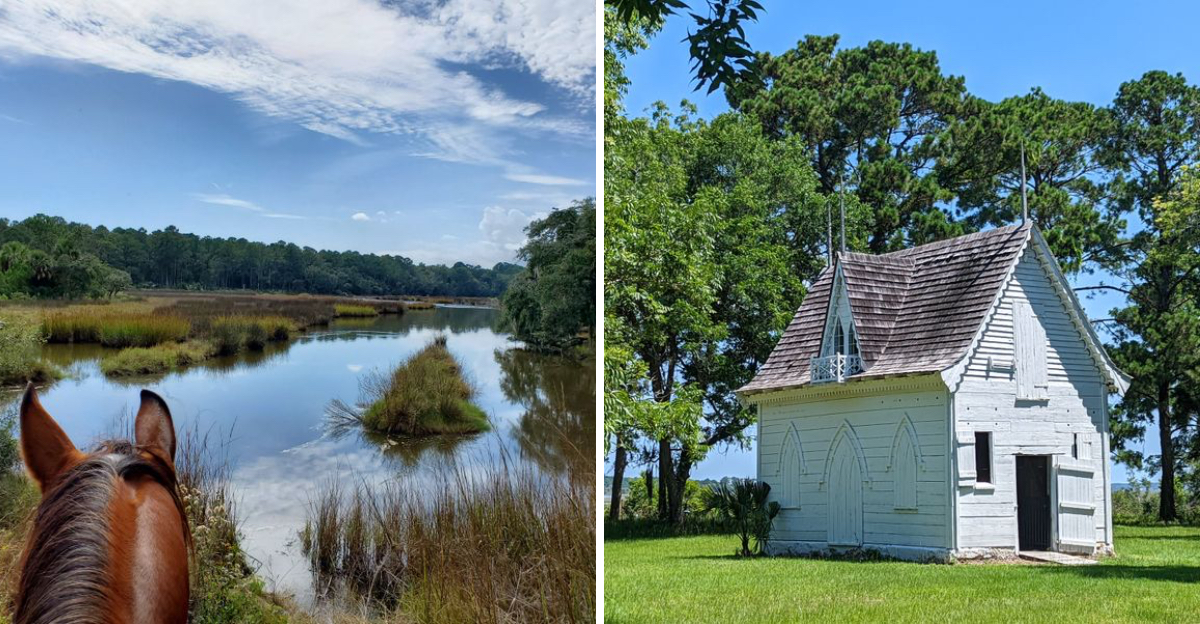
You are about to step into a Sea Island that prefers quiet mornings over headlines and soft marsh light over spectacle.
Edisto Island, South Carolina, welcomes curiosity that listens first, asks gently, and leaves no trace.
The beauty here lands slowly, then lingers, and the people who live here would like it to stay that way. If that sounds like your pace, this guide will help you move with care.
Salt air drifts through ancient live oaks, and the marshes glow with reflections that change with every passing cloud.
Small roads wind past cottages and quiet beaches, each turn offering a new scene framed by sand, sky, and water.
The hum of life here is subtle, a heron lifting from a shallow creek, the distant creak of a fishing dock, or the soft slap of waves against the shore.
Shops, cafes, and local markets exist in harmony with the landscape, never shouting, always welcoming.
On Edisto Island, time seems to slow, allowing you to notice the rustle of leaves, the shimmer of tide pools, and the way sunlight pools on wooden porches.
This is a place to wander lightly and return often in memory.
A Barrier Island That Never Chased Development
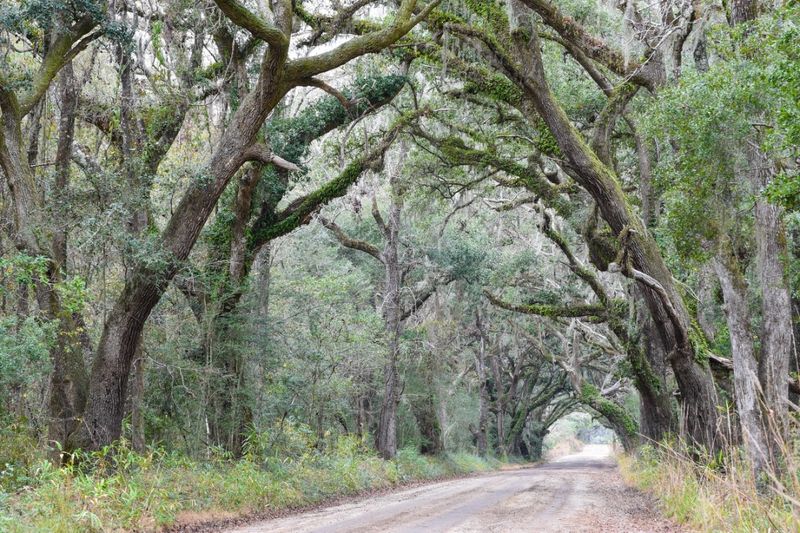
Edisto Island sits south of Charleston, buffered by creeks, marshes, and a long Atlantic edge that still feels unhurried.
The settlement pattern remains low, spread out, and tied to sandy lanes that slip between live oaks and palmettos.
The lack of large resorts keeps night skies dark and wind carrying the sound of water over grass.
Locals value a rural fabric where houses rest behind trees, not in front of views that belong to everyone.
You notice mailboxes, oyster shell drives, and porches angled to catch a breeze rather than a spotlight.
Services exist, but they stay tucked into existing clearings, with new work blending rather than declaring itself.
That choice shapes everything from lighting to traffic, which stays lighter than beach towns up the coast.
It feels like South Carolina heritage preserved in daily decisions, not just plaques or slogans.
Walking a quiet lane, you hear pluff mud, see fiddler crabs scatter, and sense why fewer signs work best.
Edisto Island, holds its line gently, and the restraint reads like a promise kept.
Zoning rules and informal norms often agree on keeping scale small and sky visible.
You sense that every avoided billboard and unused neon sign is a conscious decision.
Night falls with real darkness, making stars and fireflies easy to see from porches.
Morning arrives without the roar of heavy traffic or the glare of glass towers.
The island feels intact, not preserved in amber, but guided carefully away from hurry.
A Village Core That Moves at Its Own Rhythm
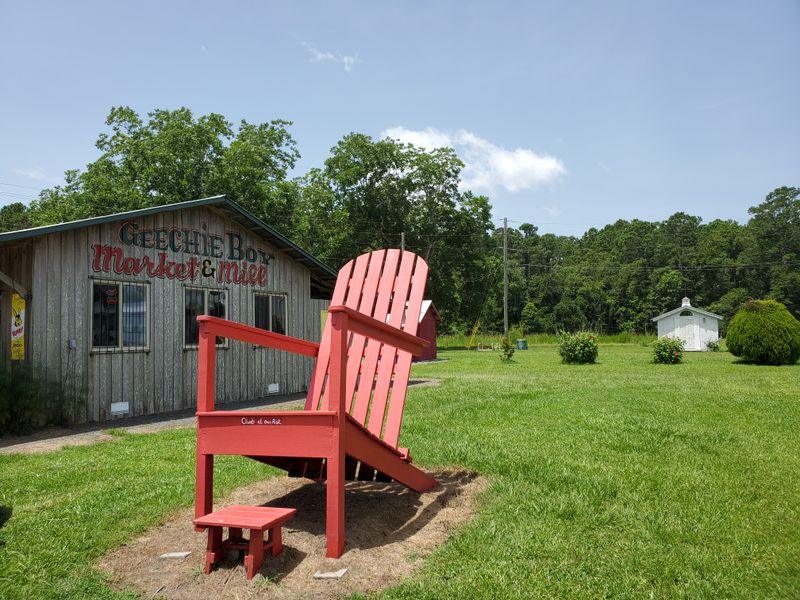
The island’s small commercial pockets sit close to the center, offering practical goods instead of spectacle.
Shops feel lived in, with painted wood, hand lettered details, and a scale that fits slower days.
Parking lots stay small, and shade keeps porches useful when summer air gets heavy.
You will find what you need, and you will likely chat with someone who already knows your question.
The tone signals community first, with visitors welcome if patience and kindness ride along.
Tour buses do not stack here, and storefronts do not chase flash or loud signage.
Many families know the shop hours by habit, and that rhythm sets expectations without a brochure.
Windows carry simple displays, with island crafts and coastal essentials rather than themed clutter.
The experience feels practical and grounded, which suits South Carolina small town traditions.
Errands can stretch into conversations about tides, gardens, or last week’s storm.
Owners often work the counters themselves, folding local history into everyday exchanges.
Seasonal changes show up in chalkboard signs and small adjustments, not grand reinventions.
You feel less like a customer passing through and more like a guest stepping into an ongoing story.
By the end of a few days, faces look familiar and greetings come easily.
Generational Families Who Hold Deep Ties to the Land
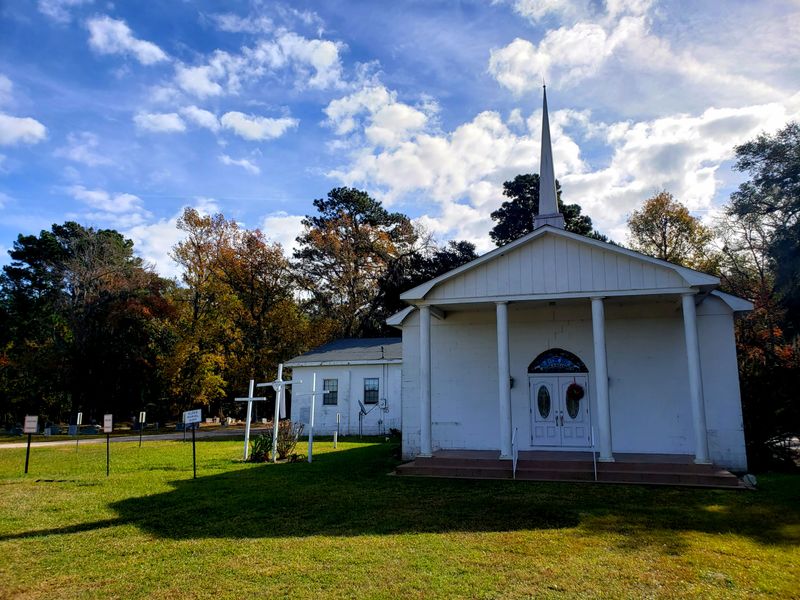
Many households here trace family ties across the island’s fields, creeks, and gravesites that tell long stories.
Stewardship shows up in how yards are kept, where paths run, and which trees stand untouched.
The landscape reads like lived memory rather than blank canvas for quick projects.
You notice how decisions about fencing, docks, and lighting lean toward preservation rather than novelty.
Neighbors often recognize the names on mailboxes and the histories behind them.
Continuity shapes opinions on growth, with careful change favored over dramatic arrivals.
When you move slowly, people open up about seasons, storms, and family gardens that still matter.
The result is an island that keeps roots visible while allowing thoughtful improvements.
This approach matches South Carolina coastal values that put place before promotion.
Family reunions, homecomings, and church gatherings reinforce those ties year after year.
Stories of past hurricanes and harvests sit beside current concerns about erosion and access.
You begin to see that every yard and field carries both memory and responsibility.
Conversations about change often circle back to what children and grandchildren will inherit.
The land feels less like property and more like a shared trust passed forward carefully.
A Gullah-Geechee Cultural Presence That Requires Respect
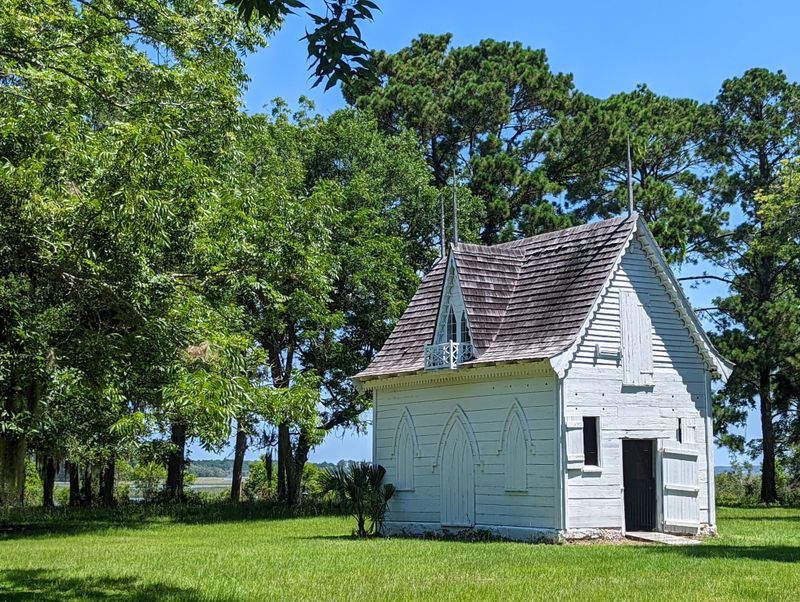
Edisto Island stands within the Gullah Geechee Cultural Heritage Corridor where living traditions still guide daily life.
Language, craft, and community customs here are not staged performances, they are family knowledge and practice.
Visitors do well to listen first, learn, and avoid turning culture into scenery.
Local events, church gatherings, and workshops can offer introductions when approached with humility.
Photography should be thoughtful, and consent matters more than any perfect frame.
Interpretive signs help, but conversations help more when invited.
You will encounter basket work, stories of land, and songs that hold history in rhythm.
That vitality is part of South Carolina coastal identity and deserves care.
Respect leaves the door open for understanding that lasts beyond a short stay.
Listening for cadence and word choice reveals layers you will not find in brochures.
Food traditions, church music, and speech patterns link present moments to ancestral lines.
Questions land best when they follow real connection rather than curiosity alone.
You learn quickly that presence and attention count more than photographs or souvenirs.
Handled well, brief encounters can carry a weight of insight that travels home with you.
A Marsh Network That Defines the Local Pace
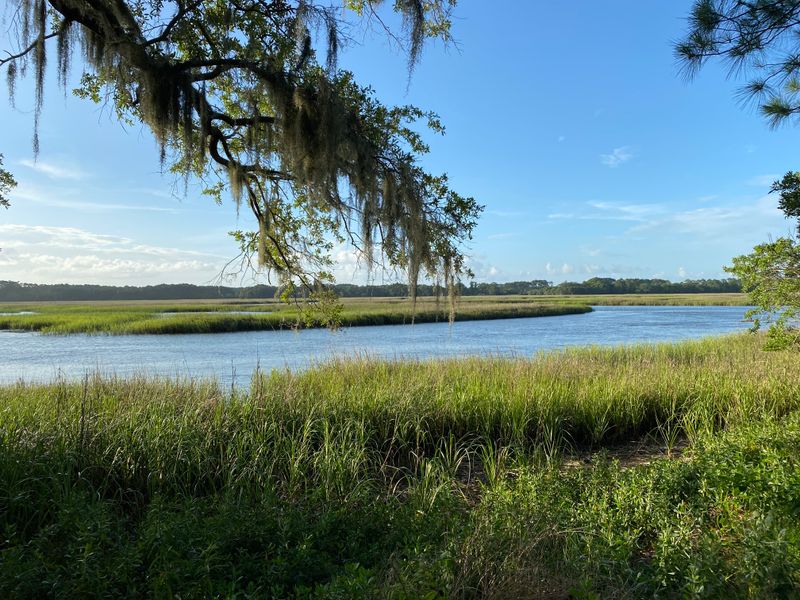
Salt marshes thread through the island, tracing silver paths that flicker with tide and wind.
Creeks set the clock, moving slowly in the morning and turning quick with evening pulls.
Bird calls and distant water slap become the island soundtrack.
You feel time stretch as grass shifts from green to amber in changing light.
Patience becomes natural when you match your steps to the tidal rhythm.
Oyster mounds and mud flats signal where life concentrates and where feet should not.
Observation replaces hurry, and stillness shows you more than motion.
It is a South Carolina estuary lesson written in color and tide lines.
Arriving with quiet makes the marsh show you its working parts.
Edisto Island, South Carolina 29438, lets creeks teach anyone willing to slow down.
Small ripples trace the passage of fish you never quite see.
Egrets, ibises, and marsh hens mark territories that shift with seasons and water depth.
Boats move at half speed, not just by rule, but by shared understanding of fragility.
The smell of salt, mud, and sun warmed grass forms its own kind of welcome.
You leave with the sense that the marsh keeps its own careful ledger of how people behave.
Beaches That Feel More Like Neighborhood Front Yards
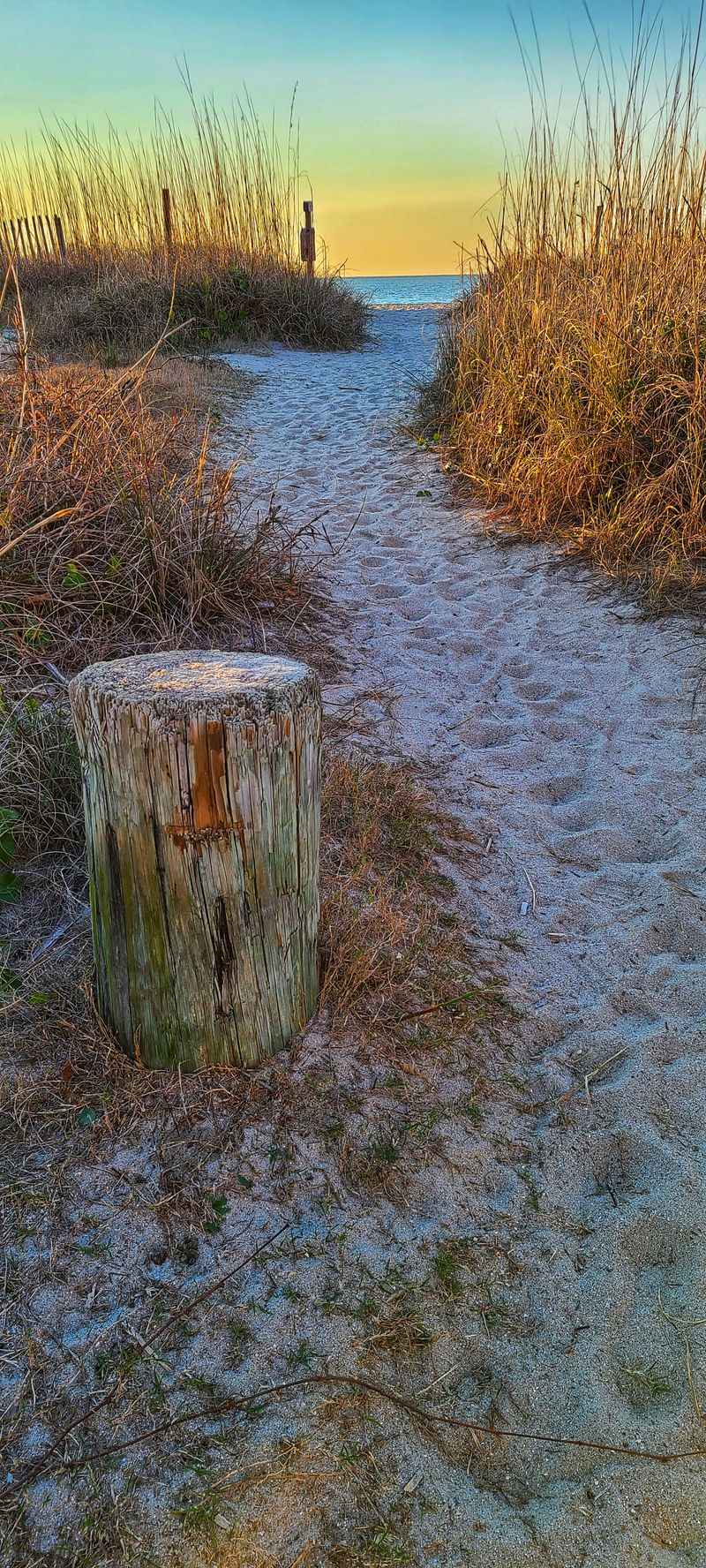
Edisto Beach holds a calm shoreline where houses sit behind dunes and paths stay modest.
The beach remains open and unadorned, with space to walk and think without noise.
Trash stays minimal because habits lean toward packing out and keeping views clean.
Neighbors wave, and conversations happen at a tide line rather than in a queue.
Chairs sit low, umbrellas stay simple, and the day finds its pace in the surf.
Public access exists, yet it blends into the residential character without heavy fixtures.
Street ends lead to sand in a way that feels like shared backyard logic.
This stretch reflects South Carolina coastal restraint where nature gets first billing.
Visitors who match that tone fit right into the rhythm.
Early morning walks pass joggers, dog walkers, and shell seekers moving without rush.
Kites, coolers, and beach games appear in moderation, never overwhelming the open sand.
Even on busy days, you can usually hear the steady hush of waves over conversation.
Sunsets feel like community events, quietly observed from porches and folding chairs.
When night arrives, the beach returns quickly to dark, guided by turtle friendly lights and local habit.
A Scenic Highway That Reveals the Island Slowly
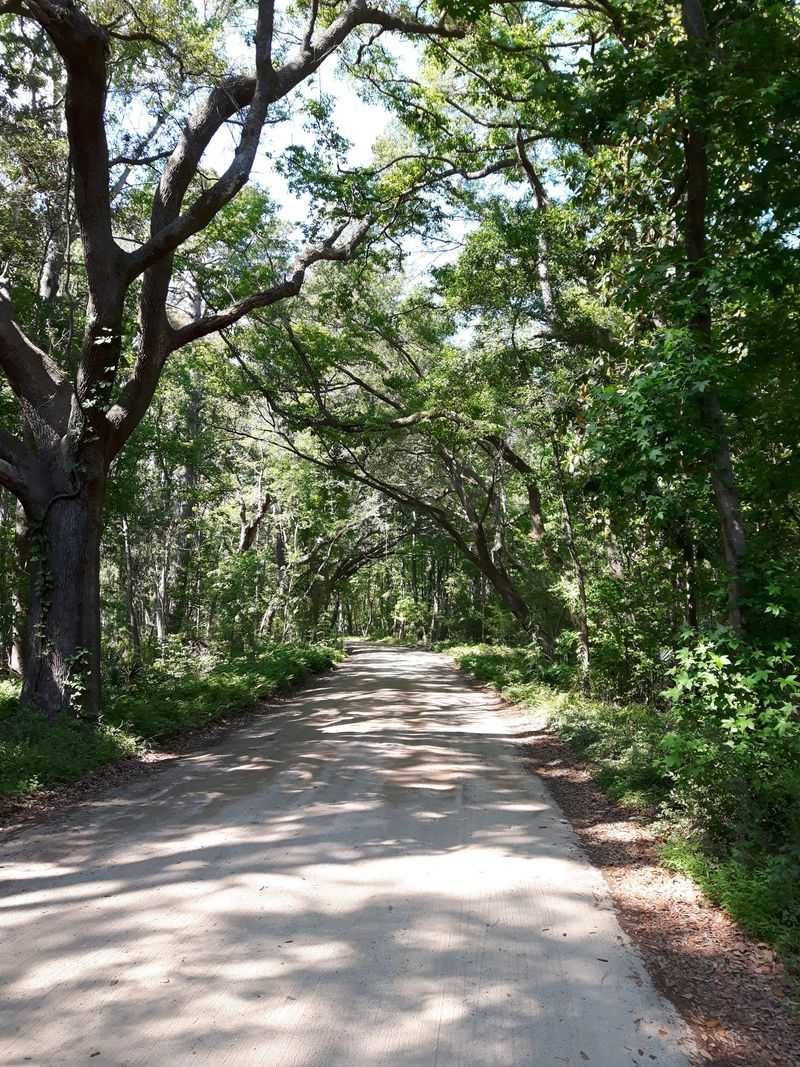
Highway 174 carries you onto the island under sweeping oaks that frame a natural gateway.
The road curves through farmland and marsh outlooks that hint at what waits ahead.
Every bend quiets conversation and resets your expectations.
Arriving this way means the island introduces itself before any sign can try.
Shoulders are narrow, and slowing down improves safety and the view.
Pull offs appear sparingly where sightlines widen without harming habitat.
Photography works best when traffic is clear and footing is secure.
The approach underlines a South Carolina tradition of scenic corridors that protect character.
Once you cross the final bridge, the pace has already shifted.
You drive beneath branches that knit together like a living tunnel.
Old farmhouses, fields, and roadside produce stands mark a landscape still working, not staged.
Glints of water appear between trees, offering brief previews of marsh and creek.
Radio volume often drops on its own as the setting takes over.
By the time the first beach sign appears, your mind has already left mainland speed behind.
A Wildlife Presence That Shapes Daily Life

Wildlife lives close here, and routine moments often include deer at dusk and birds along creeks.
Herons lift out of grass with steady wings while turtles mark seasons by where they cross.
Dolphins work the shoreline with gentle arcs that create small ripples of joy.
Residents behave like stewards, choosing lights, fences, and timing that accommodate movement.
Road caution signs exist for reasons that become clear in evening light.
Trash control and leash rules protect nests, burrows, and sensitive zones.
Watching from a respectful distance keeps animals wild and people safe.
It mirrors South Carolina conservation habits that value habitat over hurry.
Silence often delivers the closest look, especially along quiet creeks.
Seasonal patterns become familiar, from nesting periods to migration days.
You start planning walks and drives with sunrise, sunset, and high tide in mind.
Lights dimmed at night mean more stars overhead and fewer disoriented creatures below.
Sound carries far over water, so small choices like closing car doors gently matter.
The boundary between human space and wild space feels thinner here, and that is the point.
Historic Sites That Avoid Spotlight Treatment

The Hutchinson House stands as a significant Gullah Geechee landmark that rewards careful attention.
Its preservation story reflects community effort and a commitment to honest interpretation.
Other historic churches and cemeteries ask visitors to tread lightly and read the place.
You learn more by visiting during open hours and noting any guidance on site.
Photographs should frame context, not intrude on sacred spaces or private moments.
Small details reveal craft, from wood joinery to hand worked finishes that still breathe.
Volunteers often support upkeep, and gratitude goes a long way here.
The tone matches South Carolina heritage values that put respect before foot traffic.
History lives in stories that locals choose to tell when time feels right.
Hutchinson House, Point of Pines Rd, Edisto Island, South Carolina 29438, anchors this quiet narrative.
Weathering on boards and bricks reminds you how long these structures have stood against storms.
Interpretive materials focus on lived experience rather than polished myth.
You sense that honesty here matters more than comfort.
Stepping carefully and reading fully becomes a way of honoring the work behind preservation.
Leaving with more questions than answers can mean you were paying attention.
A Sea-Island Village That Values Quiet Over Crowds

Edisto Island prefers visitors who match the low volume and high awareness that locals practice.
Quiet travel fits the landscape, and it keeps stress off wildlife and neighbors.
Simple routines like packing out trash and dimming lights help the island breathe.
Walking or biking where safe replaces constant driving, and patience smooths every plan.
The beauty here hides in edges, like where shell paths meet wind shaped shrubs.
Small gatherings suit porches better than big events that strain capacity.
Maps help, yet listening on site works even better for finding your way.
That approach aligns with South Carolina coastal etiquette that values care over speed.
Come ready to notice more and talk less, and the island rewards that choice.
Meals linger longer, and plans shift easily with weather and tide.
You learn that not doing something can be as meaningful as adding another stop.
Quiet mornings and early nights feel natural rather than restrictive.
The island seems to respond to restraint by revealing more of its character.
In the end, the calm you practice here is what you carry away.
Dear Reader: This page may contain affiliate links which may earn a commission if you click through and make a purchase. Our independent journalism is not influenced by any advertiser or commercial initiative unless it is clearly marked as sponsored content. As travel products change, please be sure to reconfirm all details and stay up to date with current events to ensure a safe and successful trip.
