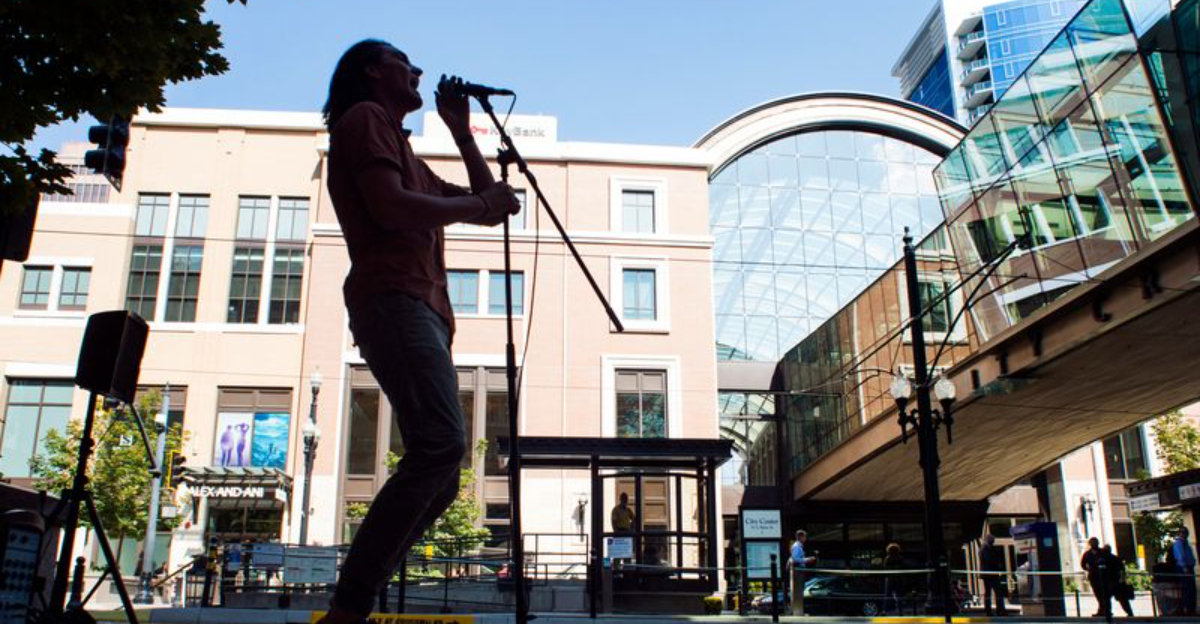
Travelers love discovering the stories behind a destination, and Utah delivers a gem that’s as baffling as it is delightful. Rumor has it that in Salt Lake City, walking down the street with a violin tucked inside a paper bag is illegal. Whether urban legend or relic of bygone ordinances, it’s the kind of oddity that sparks curiosity – and great conversation. Read on for the story behind the myth, travel tips, and nine more unbelievable Utah laws that reveal the state’s wonderfully eccentric side.
Travel Itinerary: Violin Lore Walk
Make the legend your guide with a playful downtown loop. Start at City Hall for a nod to civics, then stroll to Main Street for a “paper bag violin” photo. Pop into the Eccles Theater plaza, where street performance feels right at home, then detour to the Church History Museum for context on pioneer-era rules.
Wrap at Temple Square gardens or Capitol steps for skyline vistas. Along the way, ask locals for their favorite Utah law myths – you’ll collect tales about snowballs, bicycles, and cloud seeding.
Cap it off with gelato at City Creek or a craft soda on Broadway. It’s a culture crawl with a wink: history in your ears, humor in your pocket, and a city that happily plays along.
The Paper-Bag Violin Legend
Salt Lake City’s most eyebrow-raising tale claims it’s illegal to walk down the street carrying a violin in a paper bag. While few can locate an active, enforceable statute, the story persists in trivia books and walking tours, delighting visitors with its oddly specific imagery. Historians suspect it sprang from early efforts to curb concealed alcohol or regulate busking and street performances.
Either way, the legend has become part of the city’s folklore, a playful reminder of how laws evolve – and how myths cling. Travelers love recounting it at coffee shops near Temple Square or on Main Street. Don’t worry: you won’t be ticketed for protecting your Strad in kraft paper.
But the tale offers a perfect icebreaker with locals and a whimsical lens for exploring Utah’s past, where civic order met frontier creativity in amusingly precise ways.
Why This Myth Endures
Stories stick when they’re vivid, specific, and just plausible enough – and the violin-in-a-bag legend checks every box. Tour guides love it, trivia blogs reprint it, and visitors eagerly retell it, giving the myth a life beyond legal codes. The detail of “paper bag” feels comically exact, making it memorable and sharable.
Even if the ordinance no longer exists – or never quite did – the tale reflects real patterns in early Western cities: moral regulations, noise control, and public decency rules. Myths like this frame history in accessible ways, inviting travelers to ask better questions.
Next time you hear it, treat it like a treasure map pointing to museums, archives, and old city minutes. You’ll discover a city where culture, law, and folklore mingle, and where the strangest rules reveal the most about everyday life a century ago.
How To ‘Break’ It Safely (You Won’t)
Tourists often ask if they can stage a cheeky photo with a violin in a paper bag. Good news: you won’t get fined for a playful snapshot, and local officers have bigger fish to fry. That said, be respectful – don’t block sidewalks, disrupt traffic, or film on private property without permission. If you’re violin-less, any brown bag prop captures the joke.
Lean into the lore and pair your pic with nearby attractions: Gallivan Plaza murals, City Creek’s fountains, or the Capitol steps. It’s a lighthearted way to memorialize your visit while learning about the city’s evolving civic rules.
Consider a guided walking tour; many weave in legal oddities alongside architecture and pioneer stories. Humor is your passport here – pack curiosity, not contraband, and you’ll collect both laughs and local insights.
What It Says About Old Utah
The legend shines a spotlight on how early Utah balanced order and enterprise in bustling streets. Cities once crafted hyper-specific rules to curb nuisances: hawking wares too loudly, impromptu busking, or disguising alcohol during prohibition-era tensions. A “violin in a paper bag” captures all those anxieties – music as commerce, bags as concealment, sidewalks as contested space.
Today, these concerns survive in modern noise limits and permitting for performances, but the language is less colorful. For travelers, the myth acts as a portal: from sleek TRAX trains to horse-drawn wagons; from polished symphony halls to raucous saloons. Exploring that shift makes downtown wanderings richer. Look for historical plaques, peek into the Church History Museum, and read vintage newspapers online.
You’ll find a city whose laws mirror its maturation – from frontier improvisation to a cosmopolitan capital with a mischievous memory.
Cloud-Seeding? Get a Permit First
One Utah rule that sounds sci-fi: you need a state permit to attempt weather modification, like cloud seeding. While it’s not a joke, it does make visitors blink – imagine filling out paperwork to nudge a snowstorm. The law exists to coordinate water resources and ensure public safety, especially in a state where snowpack is life.
Skiers, photographers, and road-trippers often stumble on this tidbit while planning winter adventures. It highlights Utah’s pragmatic approach to an arid climate: innovation, but supervised. You won’t accidentally violate it unless you’re packing flares and aircraft, but it’s a great trivia nugget for après-ski conversation in Park City.
Think of it as the grown-up cousin of the violin myth – hyper-specific, a bit theatrical, and uniquely Western in its logic.
No Snowball Shenanigans in Provo
Provo’s ordinance against throwing snowballs “to frighten or annoy” travelers sounds like wintertime buzzkill – until you imagine icy projectiles flying near traffic. The rule aims to keep streets safe, not crush fun, and locals still enjoy robust snow days in parks and yards.
For visitors, it’s a reminder that Utah’s powdery magic comes with courtesy codes. Snap a snow angel selfie, build a small fort, but save the ambushes for open spaces. Pair a Provo stroll with hot cocoa on Center Street and a visit to nearby Provo City Center Temple grounds for a peaceful winter wander.
Laws like this echo a broader theme in the state’s codes: public right-of-way is sacred, and mischief goes best where it won’t rattle passersby. Snowball diplomacy, folks – it’s a thing.
Logan’s Rock-Throwing Ban
In Logan, tossing rocks with intent to annoy pedestrians is prohibited – another old-school safeguard that still makes travelers grin. Like many college towns, Logan balances lively sidewalks with safety expectations. The ordinance reads quaint, but it addresses real risks: broken windows, startled cyclists, and spooked dogs.
For road-trippers cruising US-89 to Bear Lake, it’s a funny footnote that underscores Utah’s pedestrian-first ethos. If you’re itching for projectile fun, take it to a supervised range or a skipping-stone session at a lake.
When seen alongside the violin legend, Logan’s rule fits a pattern: tight focus on behavior in public corridors, phrased with almost theatrical specificity. It’s civic poetry – clunky, charming, and unexpectedly memorable.
Hands On The Handlebars
Utah requires cyclists to keep at least one hand on the handlebars, a sensible rule that nonetheless surprises visitors renting bikes or e-scooters. It’s aimed at stability and quick braking – things you’ll appreciate when a sudden mountain breeze nudges you or a car door swings open.
Travelers pedaling Jordan River Parkway or downtown bike lanes should stash the selfie stick and steer steady. The law also pairs nicely with local culture: abundant trails, family riders, and a safety-forward vibe. Don’t worry – casual cruising is welcome, wheelies optional.
Just keep a hand ready, ring your bell, and soak in those Wasatch views without juggling coffee, camera, and map at once. Your photos – and collarbones – will thank you.
Fishing Without Dynamite, Please
Utah’s wildlife rules ban fishing with explosives, electricity, or poisons – an obvious safeguard that still reads like a wild-west screenplay. For anglers hitting the Provo River or Flaming Gorge, it’s about protecting ecosystems and ensuring fair sport. Rangers take these violations seriously, as reservoirs serve both recreation and drinking water.
Tourists should review seasonal limits, licenses, and gear rules before casting. The upside? Healthy fisheries, clear water, and better stories – because no vacation tale should include a citation for illegal blasting. Pair a dawn session with a scenic drive and a hearty diner breakfast, and you’ll understand why Utah anglers are protective of their playgrounds.
Conservation here isn’t a buzzword; it’s baked into the code.
A Milk Market With Rules
Hidden in Utah’s code is a consumer-protection twist: buyers of milk, cream, or butterfat can’t unfairly discriminate between communities. It’s not as flashy as snowball bans, but it reveals how the state nurtured rural economies and kept food markets fair.
Travelers exploring creameries on scenic byways can taste the legacy – consistent quality, stable suppliers, and a thriving dairy scene. Consider it the opposite of the violin myth: quietly impactful, rarely memed, and very real. For road-trippers, it’s a reminder that behind every scoop of ice cream sits decades of policy.
Try local dairies, chat with owners, and you’ll hear how regulations shape livelihoods as surely as climate shapes pastures.
Dear Reader: This page may contain affiliate links which may earn a commission if you click through and make a purchase. Our independent journalism is not influenced by any advertiser or commercial initiative unless it is clearly marked as sponsored content. As travel products change, please be sure to reconfirm all details and stay up to date with current events to ensure a safe and successful trip.
