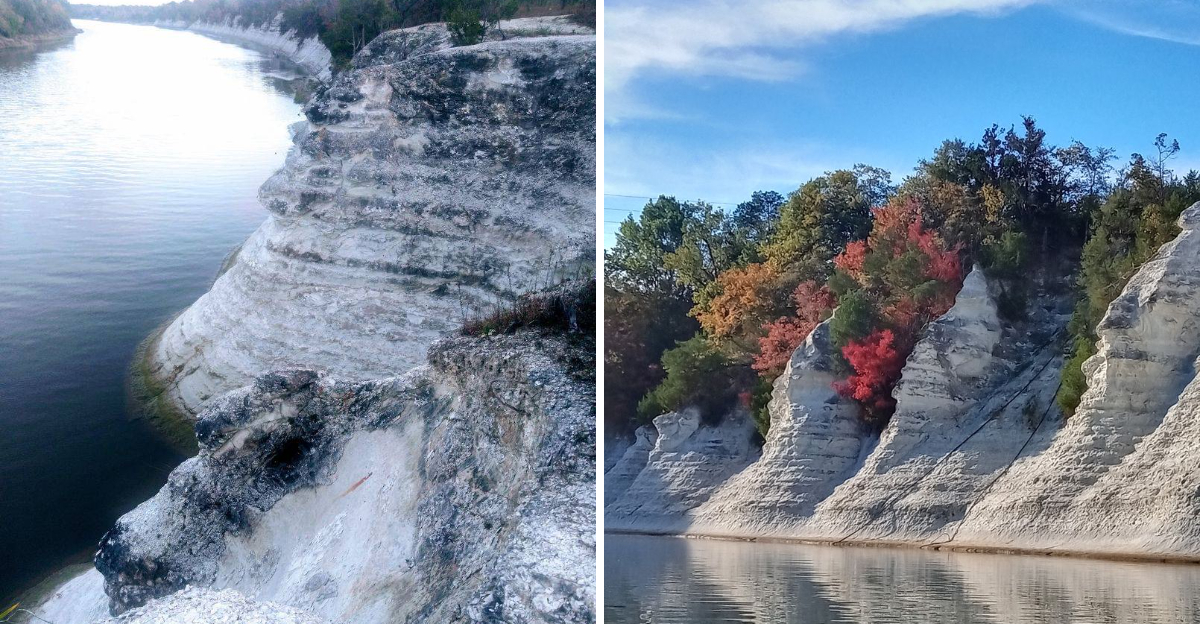
You round a bend on a quiet highway, and a wall of chalky white rock appears out of nowhere across the river. Pale cliffs glow above green water like something borrowed straight from the English coast.
Nothing about this stretch of rural Alabama prepares you for that first glimpse, and most people laugh out loud the way I did. There are no ticket booths here, no gift shop, not even a proper sign marking the spot.
That absence is part of what makes it work. What waits instead is 70 to 80 million years of geology, sitting quietly beside a country highway like it has nowhere else to be.
This corner of the state keeps surprising visitors who have driven past it a hundred times without knowing it was there.
A Slice Of Dover Sitting Above The Tombigbee River
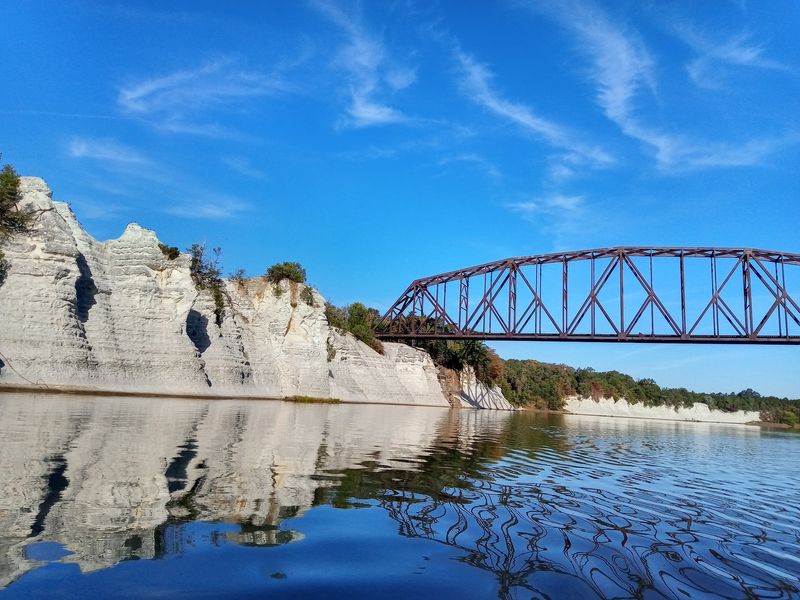
Comparisons to England usually make me roll my eyes, but this one holds up better than expected. The chalk here belongs to the Selma Chalk formation, and it was laid down during the Cretaceous period, roughly the same stretch of geologic time that produced the famous White Cliffs of Dover.
Same age, same ancient sea, same pale color. Different continent entirely.
What makes the resemblance work is the contrast. Bright white rock, deep green hardwoods crowding the bluff top, and the slow brown-green water of the Tombigbee River below.
The cliffs rise more than 80 feet above the waterline and stretch for something like one to two miles along the river, which is far longer than most people expect from a roadside stop.
I remember thinking the scale looked wrong at first, like a movie backdrop propped up in the wrong state. It takes a minute for your brain to accept that Alabama has this.
The chalk itself formed from the skeletal remains of microscopic marine organisms, mostly tiny algae shells that drifted down onto an ancient seabed. Every white streak you photograph is compressed sea life.
If you have ever wanted a European coastal view without leaving the Deep South, this is probably the closest you will get on a tank of gas and a back road.
The Bridge View That Everybody Talks About
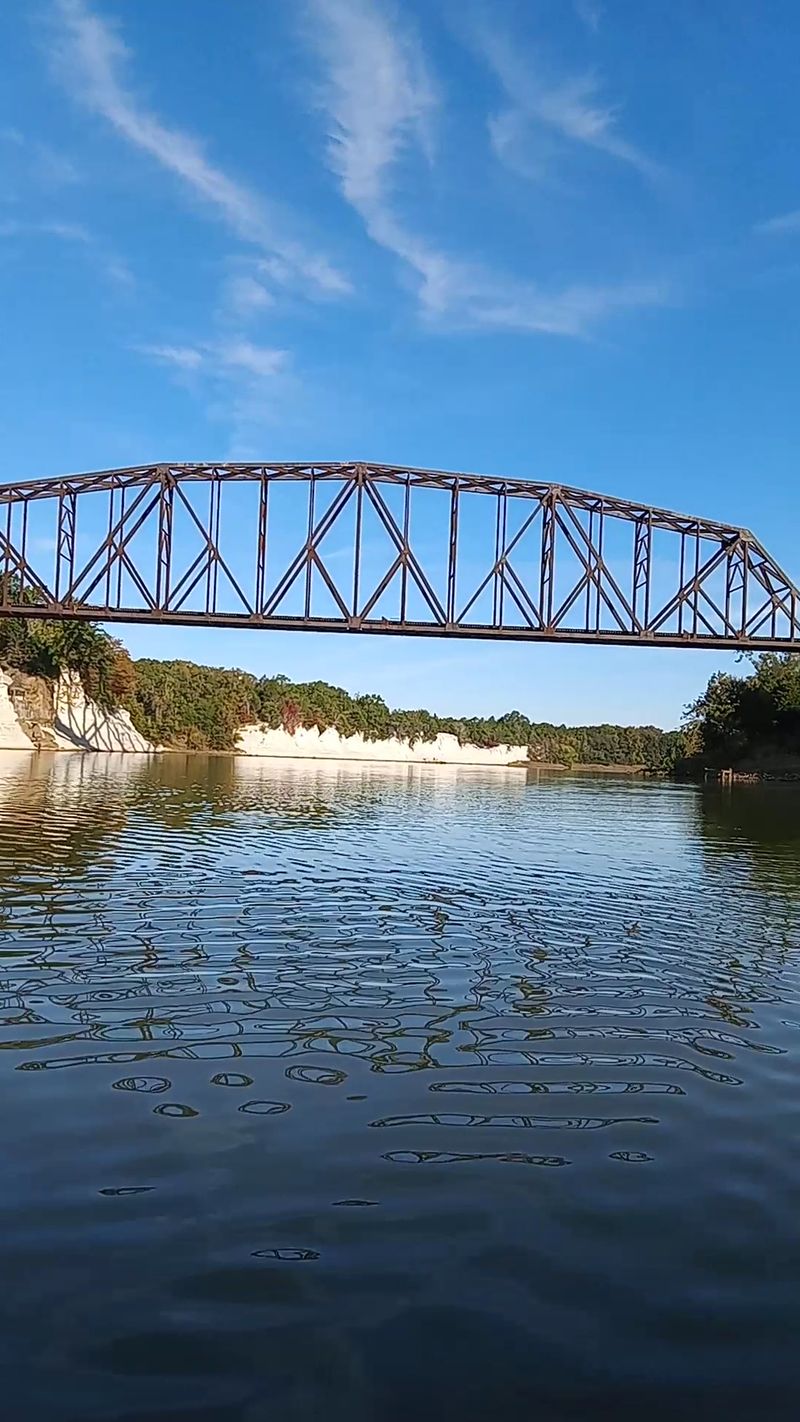
Most photos you have seen of these cliffs were taken from the William C. Gorgas Bridge on Highway 11, and there is a good reason for that.
From up there you get the full sweep of the formation, the river bending away, and the cliff face catching light without any trees in the way.
It is genuinely the best angle. It is also the trickiest.
Parking near the bridge is limited and the shoulder is thin to nonexistent, so stopping takes some planning and a lot of common sense. Most visitors pull off just past the bridge on the west side, where there is a small gravel turnoff and a bit of room to leave a vehicle.
From there you can walk back for the view rather than trying to stop mid-span.
Traffic on this stretch is light compared to a highway closer to a city, but log trucks do come through and they move quickly. Keep your car fully off the pavement and stay aware of what is behind you.
My advice is simple. Park first, walk second, and treat the whole thing as a fifteen or twenty minute stop rather than a leisurely afternoon.
Get your photos, take a long look, and enjoy the fact that a view like this exists on an ordinary Alabama road.
Paddling The Tombigbee For The Best Angle Of All
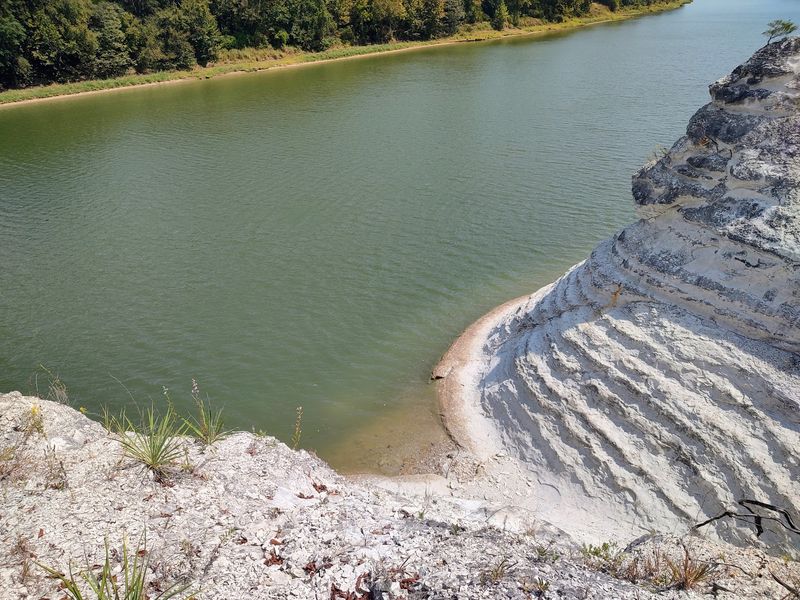
Ask anyone who has floated past these cliffs and they will tell you the water view wins. From a kayak or canoe you sit low, the chalk towers over you, and the whole formation unrolls slowly instead of flashing by at highway speed.
The Tombigbee moves gently through here, which makes for relaxed paddling rather than a workout.
Sound changes on the river too. Traffic noise disappears, and you start noticing water lapping against the hull, birds working the banks, and the occasional splash from a fish.
River birds are common along this stretch, and freshwater species move through the calmer pockets near the bank.
Planning matters more than skill for a trip like this. Check river conditions before you go, launch from an established access point, and give yourself plenty of daylight for the return.
Bring water, sun protection, and a dry bag for your phone, because you will absolutely want photos.
I would rank early morning as the ideal window. The air is cooler, the water tends to be glassier, and the low sun throws warm light straight onto the white rock.
Paddling here also gives you a better sense of the cliffs’ length, since you pass along them rather than glimpsing one section from above. It feels like a proper expedition on a modest budget of effort.
Fossils Hiding In Plain Sight
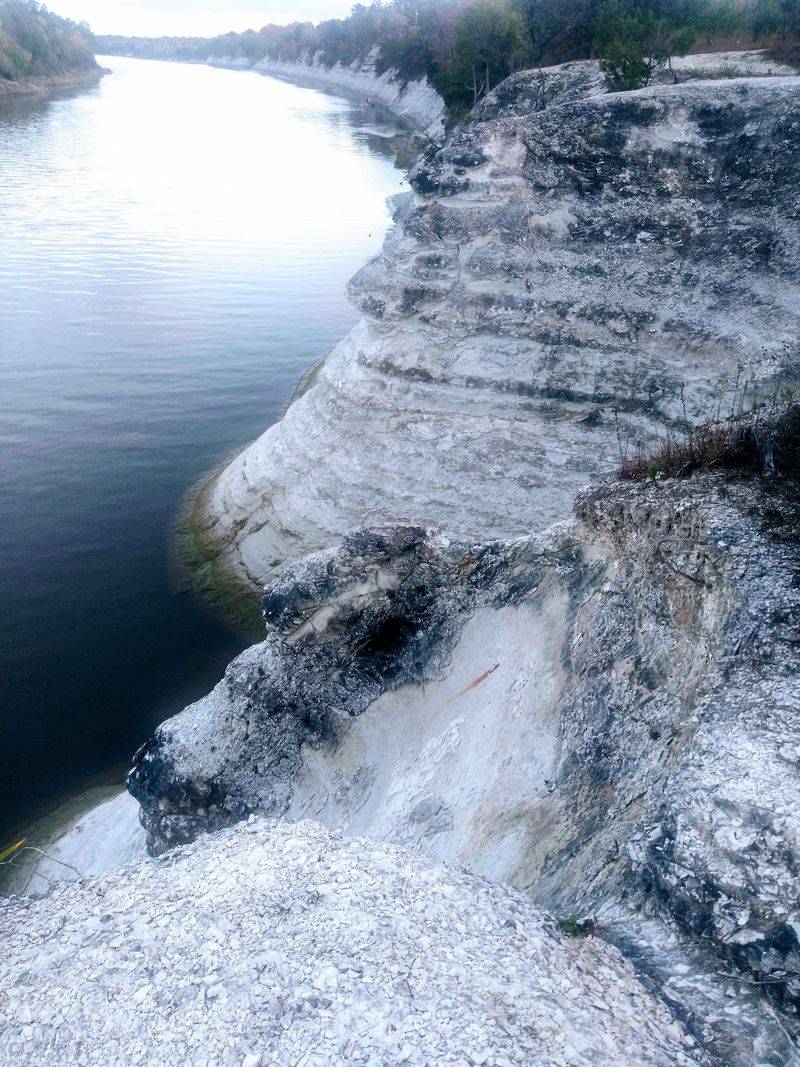
Here is the part that turns a scenic stop into something closer to a museum visit. The Selma Chalk is rich in marine fossils, and in places you can see the fossil layers right in the exposed rock face.
Prehistoric sea life, stacked and pressed into stone. No admission required.
Think about what that means for a second. West Alabama sat under a warm shallow ocean during the Cretaceous, and the creatures that lived and died in that sea built the cliffs you are standing near.
The white color comes from countless microscopic shells, so the whole formation is essentially fossil material at a scale too small to see individually.
Looking at the layers is fine. Taking a hammer to them is not, and climbing the cliffs is not permitted either, since the upper layer can be loose and unstable.
The rock is more fragile than it looks, and the site has no formal protections beyond common courtesy.
Bring a small pair of binoculars if you want to study the banding in the cliff face from a safe distance. Kids tend to get genuinely excited once they understand what they are looking at.
For me, that paleontological angle is what elevates the stop. Pretty views are everywhere in the South, but views made of ancient sea creatures are rare enough to be worth a detour.
Bluff Top Views From Fort Tombecbe
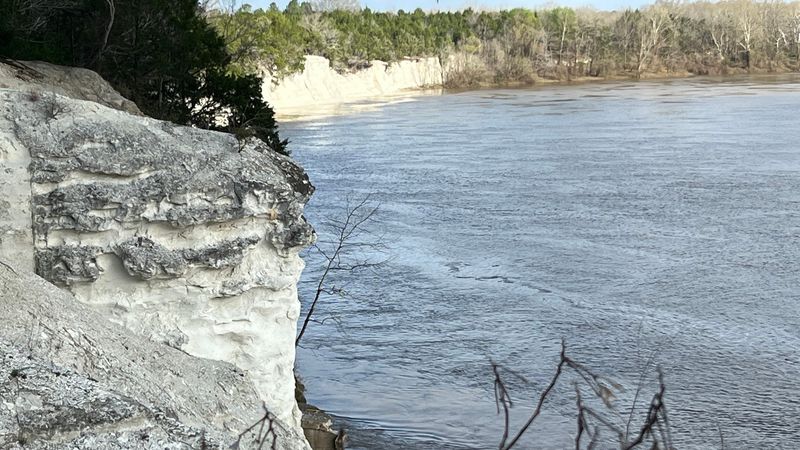
Not far from the cliffs sits the Fort Tombecbe archaeological site, and it gives you something the bridge cannot: a bluff top vantage point with history attached.
The French built Fort de Tombecbé here in the early 18th century, choosing the high ground above the river for exactly the reasons you will appreciate when you look out from it.
Strategic then. Scenic now.
Epes itself carries roots stretching back to that period, which is remarkable for a town most travelers have never heard of. Standing on the bluff, it becomes obvious why people kept coming back to this bend in the river century after century.
The elevation, the water access, the clear sightlines in both directions.
Access can vary at archaeological sites, so it is worth checking ahead on current visiting arrangements rather than assuming the gate is open. Sturdy shoes help, since the ground is natural and uneven rather than paved.
What I like about pairing the two stops is how they fill each other in. The cliffs give you deep geologic time, and the fort site gives you human history layered on top of the same landscape.
Together they turn a quick photo pull-off into an actual half-day outing worth planning around. Bring water and a hat, because shade comes and goes.
Spring And Fall Are The Sweet Spot
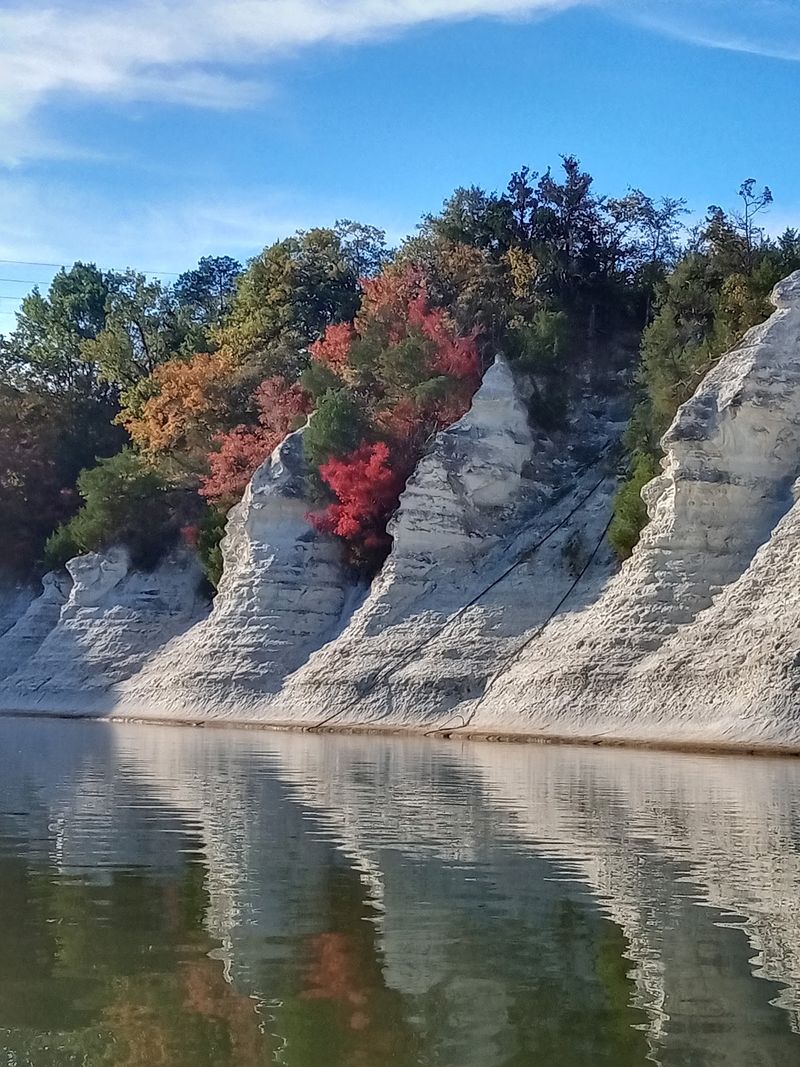
Timing changes this place more than you might guess. Spring and fall bring cooler temperatures, fewer insects, and light that flatters the chalk instead of washing it out, which makes them the easiest seasons to enjoy the stop.
Summer here is hot and buggy. That is just the honest truth.
Light is the other variable worth thinking about. Sunrise and sunset both throw a warm glow across the white rock and deepen the shadows in the cliff face, turning a flat wall into something with real texture and drama.
Midday sun tends to flatten everything into a bright blur.
Winter and late fall have their own quieter mood. The greens go muted, the foliage thins out, and you actually see more of the rock than you do when everything is leafed out.
It is a softer version of the same view rather than a lesser one.
Practical notes from people who have learned the hard way: the ground near the cliffs can turn slick and chalky after rain, so wear shoes you do not mind washing off. Bug spray earns its place in the car regardless of season.
Plan for a short visit and let the light do the heavy lifting. Show up at the right hour and you will walk away with photos that look nothing like Alabama.
An Unmarked Wonder You Get Almost To Yourself
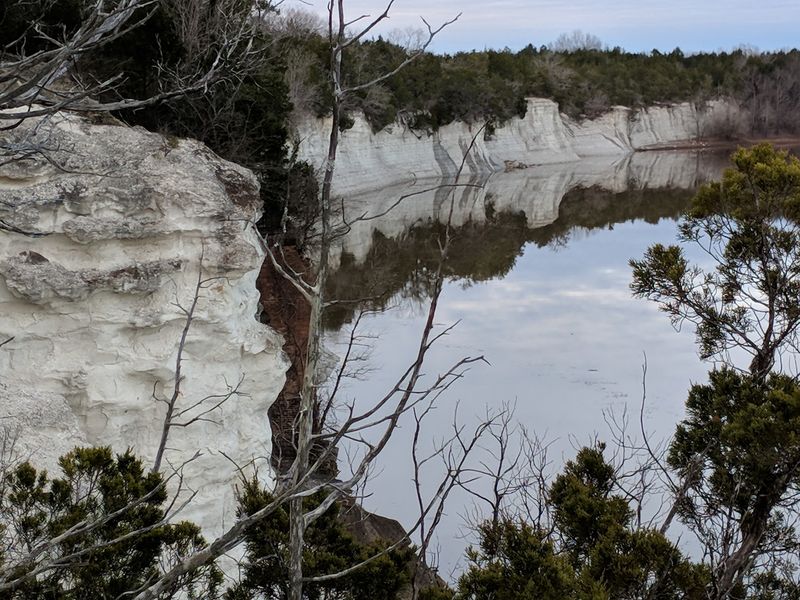
Something rare happens at a place with no visitor center, no trail map, and barely a sign. You get quiet.
On both of my visits I shared the spot with almost nobody, which is unheard of for a landmark this photogenic.
No crowds. No lines.
Just the river and the rock.
That lack of development cuts both ways, and it helps to know that going in. There are no formal trails at the site, no restrooms, and no interpretive displays explaining what you are looking at, so a little homework before you arrive makes the visit richer.
Come prepared and the roughness stops feeling like a drawback.
Native hardwoods and thick riverbank vegetation frame the whole scene, and the calm water below often holds birds working the shallows. Bring a trash bag and pack out anything you carry in, because this spot depends entirely on visitors treating it well.
Small gestures keep places like this worth visiting.
Set your expectations for a short, memorable stop rather than a full day of activities and you will love it. Pair it with the bluff views, a paddle, or a longer drive through Sumter County backroads.
Alabama has plenty of polished attractions, but few feel this genuinely undiscovered.
Address: 26867 US-11, Epes, Alabama, 35460
