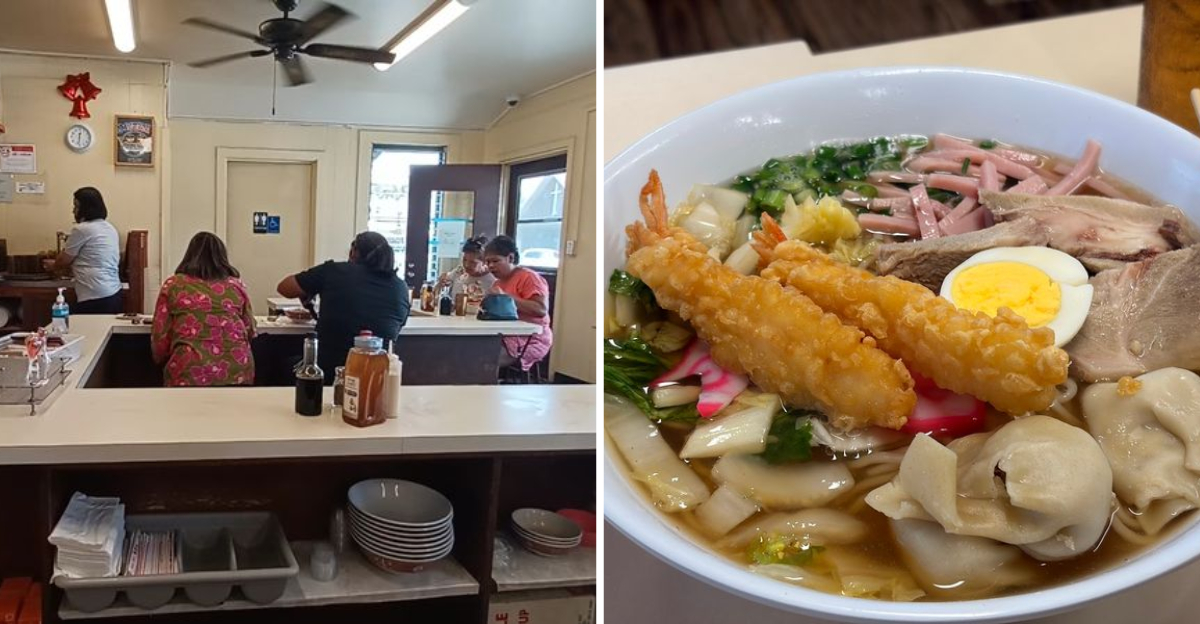
Steam rising from bowls of broth, a counter worn smooth by decades of use, stools that have held generations of hungry customers. This Hawaii spot has been family run since the nineteen fifties, still serving the same simple recipe. The menu is short because it does not need to be anything else.
You sit down, you order, you eat, and you understand why people keep coming back. No trends, no fuss.
Just a bowl of noodles that tastes like someone made it just for you. The broth is clear and savory, the noodles have that perfect chew, and the garnishes are simple but exactly right. You finish every drop and already want another bowl.
That is the power of a place that knows exactly what it is and has never tried to be anything else.
A Living Piece of Kauai History
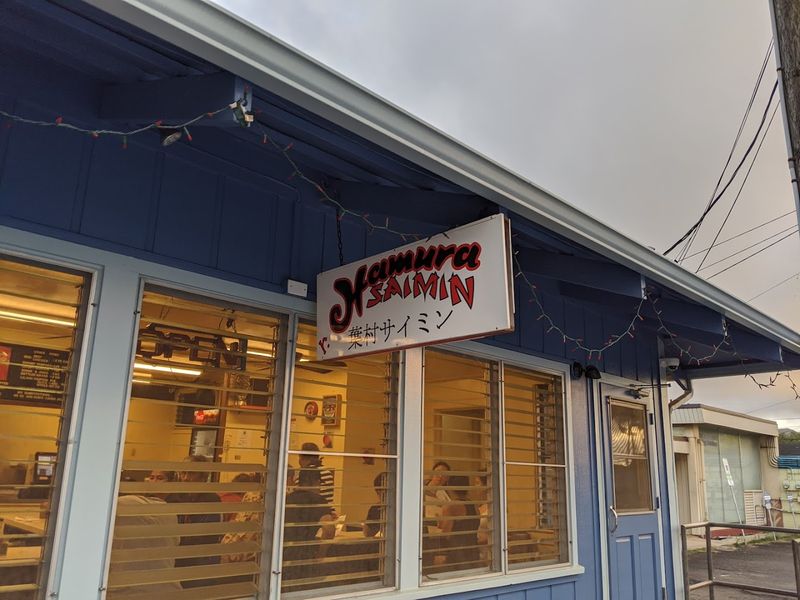
There are restaurants, and then there are landmarks that happen to serve food. Hamura Saimin Stand belongs firmly in the second category.
The building itself has a story before you even sit down. Originally an Army barracks, it was converted into a humble noodle stand sometime in the early 1950s, and the periwinkle paint job has become one of the most recognizable sights on Kress Street in Lihue.
What makes this place remarkable is not just its age but its consistency. Most businesses evolve dramatically over seven decades.
Hamura Saimin has stayed almost exactly the same, and that steadiness feels intentional rather than lazy. It is a quiet kind of pride, the sort that says the original vision was right from the start.
The James Beard Foundation recognized it as an American Classic in 2006, which is one of the most prestigious honors a restaurant can receive. For locals, that award confirmed what they already knew.
For visitors, it is a signal worth paying attention to. Getting here is easy since it is only about five minutes from the Lihue Airport, making it a perfect first stop on any Kauai trip.
The Atmosphere That Time Forgot
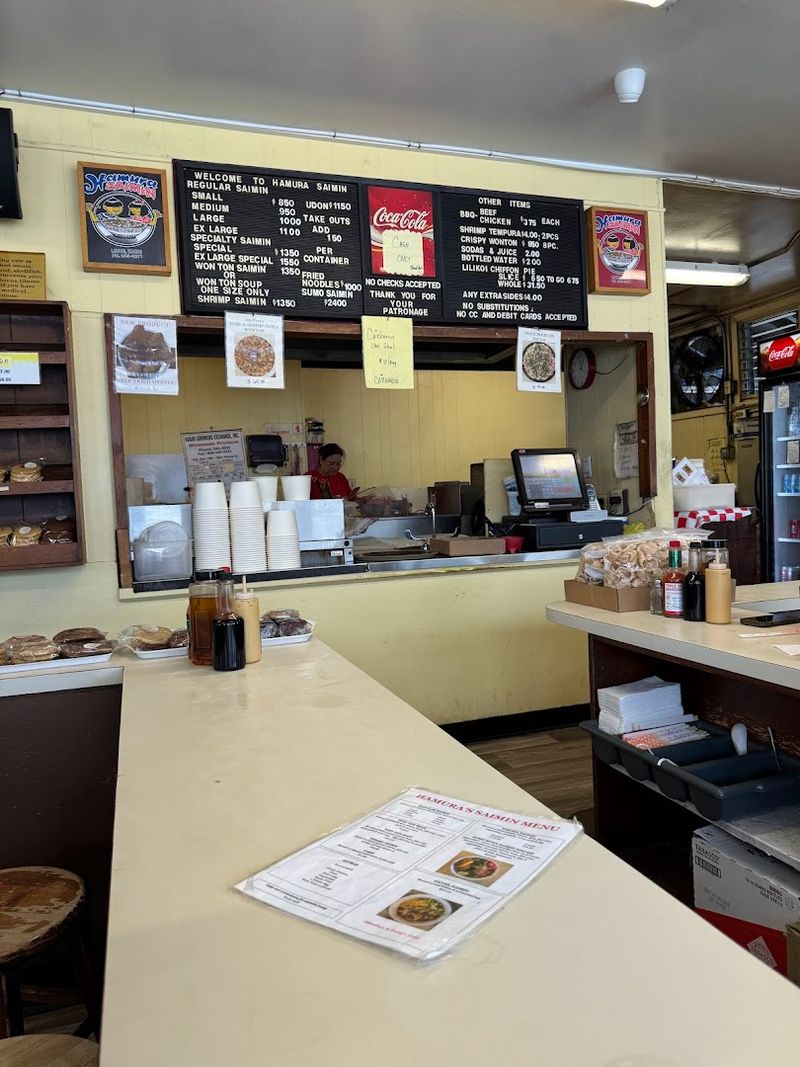
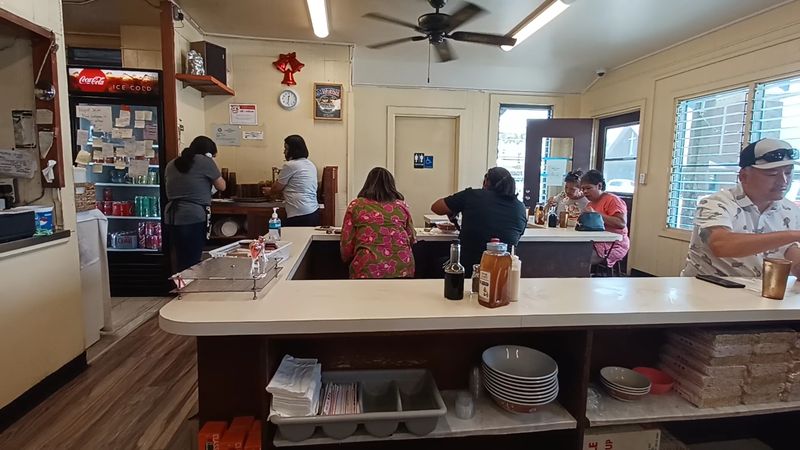
Stepping inside Hamura Saimin feels less like entering a restaurant and more like borrowing someone’s kitchen from 1958. The U-shaped Formica countertops stretch around the room, and the small wooden stools are the kind you would find in an old soda shop.
There is no air conditioning, just open jalousie windows that let in the Kauai breeze, which somehow makes the whole experience feel even more honest.
The setup is counter seating only, and you find your own spot rather than waiting to be seated. It holds around 35 people, which is a far cry from the original six stools the stand started with.
Even with that growth, the space still feels intimate and personal rather than crowded or commercial.
Everything about the atmosphere leans into that mom-and-pop feeling that so many restaurants try to fake and so few actually pull off. The walls, the layout, the pace of service, none of it has been modernized for the sake of appearances.
That authenticity is magnetic. People come back not just for the food but for the feeling of being somewhere that genuinely does not care about being trendy, and that is a rare thing to find anywhere.
Three Generations of Family Dedication
Family businesses are common enough, but ones that survive into a third generation with the original spirit fully intact are something else entirely. Charles and Aiko Hamura built this stand from scratch, and it was Aiko who perfected the saimin broth recipe that still anchors the menu today.
That kind of culinary dedication does not happen by accident.
Lori Tanigawa, their granddaughter, now runs the stand and has done so with clear respect for what her grandparents created. She also developed the lilikoi chiffon pie recipe about twenty years ago, adding her own chapter to the family story without overwriting the original.
That balance of preservation and personal contribution is genuinely impressive.
Running a place like this is not glamorous work. It means long hours, a cash-only operation, fresh noodles made daily at the family’s own factory, and a constant commitment to keeping quality steady.
The fact that the stand sells over 1,500 bowls of saimin every month says everything about how well that commitment has paid off. There is something deeply moving about a family that treats a noodle shop not as a business to optimize but as a tradition to protect.
What Saimin Actually Is and Why It Matters
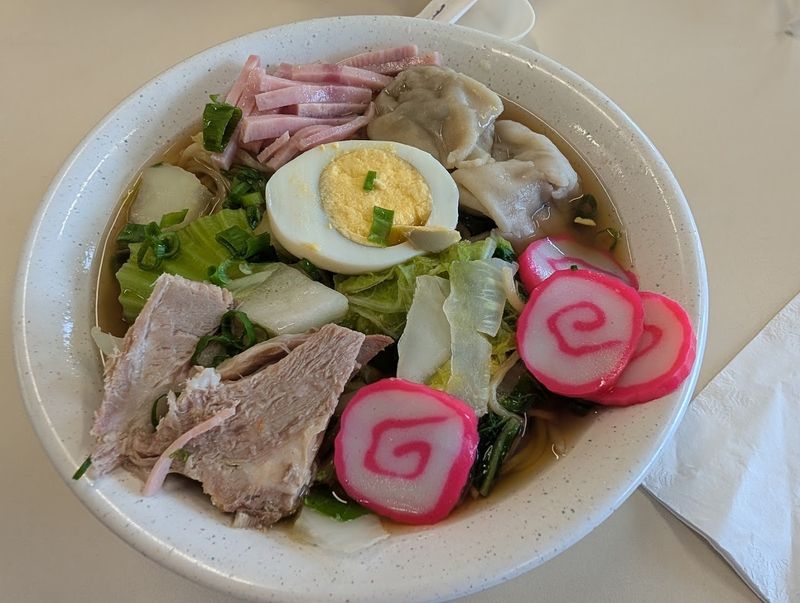
Saimin is one of those dishes that belongs entirely to Hawaii. It is not ramen, not pho, not any other noodle soup from somewhere else.
It grew out of the plantation era when workers from Japan, China, the Philippines, and Portugal all shared ingredients and cooking methods, creating something entirely new. The result is a bowl of curly egg noodles in a light, savory broth topped with ingredients like fish cake, green onions, and ham.
At Hamura Saimin, the noodles are made fresh every single day at the family’s own factory. That detail matters more than it might seem.
Fresh noodles have a completely different texture from dried ones, and in a dish this simple, texture is everything. The broth has evolved slightly over the years, moving from Hokkigai clams to a blend of chicken broth and dried shrimp, with scallops added around 2010 for extra depth.
Saimin is also deeply tied to local identity on Kauai. Locals grow up eating it at school cafeterias, at family gatherings, and at spots exactly like this one.
For a visitor, ordering a bowl here is less like trying a menu item and more like participating in something that has shaped the island’s culture for generations.
The Special Saimin and Why Everyone Orders It
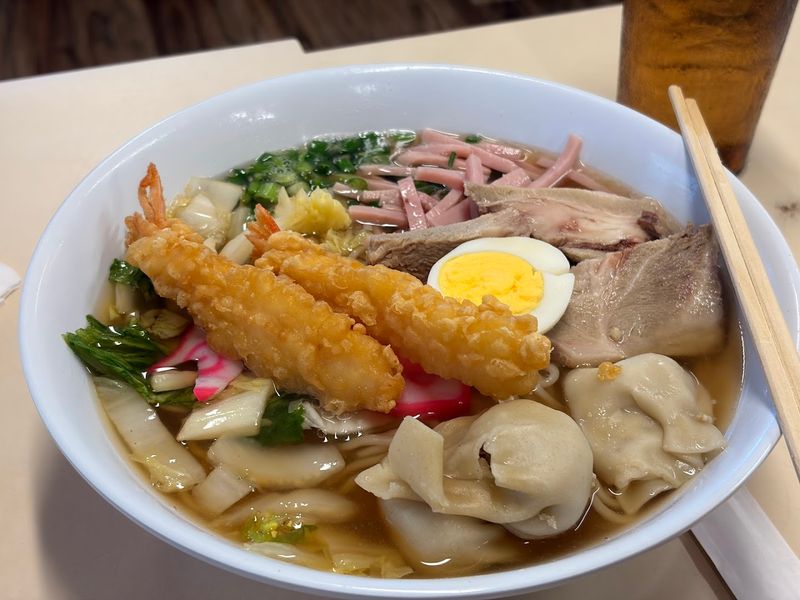
Ask anyone who has been to Hamura Saimin what they ordered, and the answer is almost always the same. The Special Saimin is the bowl that gets recommended most, and for good reason.
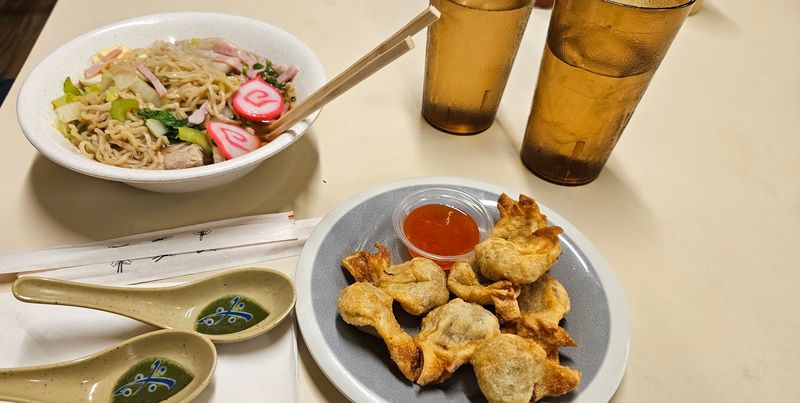
It comes loaded with ham, kamaboko fish cake, roast pork, won tons, green onions, vegetables, and an egg, all floating in that signature broth that has been refined over decades.
What makes it work is balance. Nothing in the bowl fights for attention.
The broth is smooth and savory without being aggressively salty. The noodles hold their texture without turning mushy.
The toppings each bring something distinct, but together they create a cohesive, comforting bowl that feels like it was made specifically for you.
Portion sizes are generous, which surprises a lot of first-time visitors. The pricing stays affordable, which is part of why locals return so consistently.
An extra-large is genuinely extra-large, so ordering thoughtfully is worth it. The Special comes in multiple sizes, making it easy to find the right fit whether you are eating alone after a long flight or sharing a meal with someone who is just as hungry.
It is the kind of bowl that makes you understand why this place has lasted so long.
The Lilikoi Chiffon Pie That Steals the Show
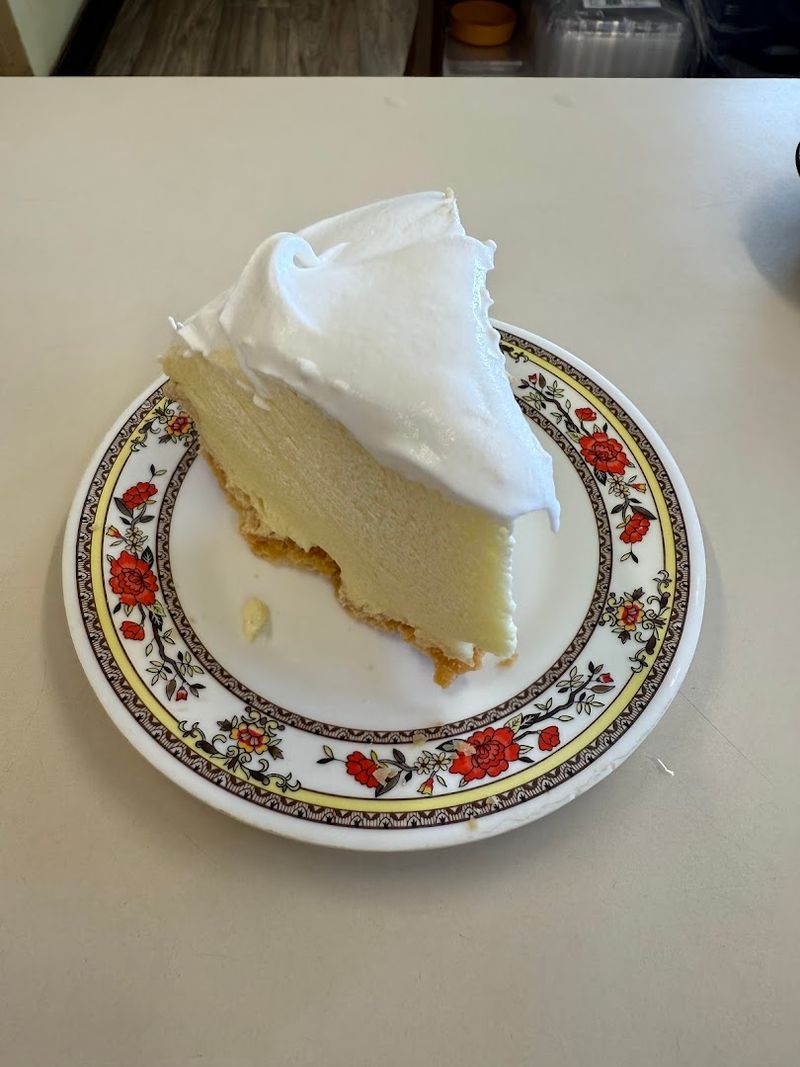
Nobody comes to a saimin stand expecting the dessert to be legendary. That is exactly what makes the lilikoi chiffon pie at Hamura Saimin such a delightful surprise.
Lilikoi is the Hawaiian word for passion fruit, and the flavor is bright, tangy, and floral in a way that cuts perfectly through the richness of a noodle soup meal.
Lori Tanigawa developed the recipe herself about twenty years ago, and it has since become one of the most talked-about items on the menu. The stand sells around 50 pies every single day, which is remarkable for a place that is primarily known for its noodles.
The texture is light and airy, somewhere between a chiffon cake and a meringue pie, and it collapses slightly after being moved, so eating it at the counter is the right call.
It is one of those desserts that is hard to describe accurately until you have actually tasted it. The balance of sweet and tart, combined with that cloud-like texture, makes it feel completely different from anything you would find at a standard diner.
Skipping it would be a genuine mistake. Order it last, eat it there, and take a moment to appreciate that something this good came from a family noodle stand in Lihue.
Planning Your Visit to Hamura Saimin Stand
Getting to Hamura Saimin is straightforward. The stand sits on Kress Street in Lihue, about five minutes from the airport, and parking is available in the slanted stalls right outside.
The ADA ramp near the entrance makes it accessible, and the open-air layout means the space stays comfortable even without air conditioning.
Hours run from 10 AM to 9:30 PM every day of the week, which gives plenty of flexibility for both early lunches and late dinners. That said, lunchtime draws the biggest crowds, and a wait of 30 to 50 minutes during peak hours is not unusual.
Arriving closer to opening or later in the afternoon tends to mean a shorter line without sacrificing any of the experience.
Cash only is the policy, so stopping at an ATM beforehand saves a headache. The menu is short and straightforward, with around a dozen options, which makes ordering easier than it might seem for first-timers.
The Special Saimin is the starting point most people recommend, and adding a BBQ stick or two alongside is a solid move. Ending with the lilikoi chiffon pie rounds out the meal in a way that is hard to top.
Address: 2956 Kress St, Lihue, Hawaii.
