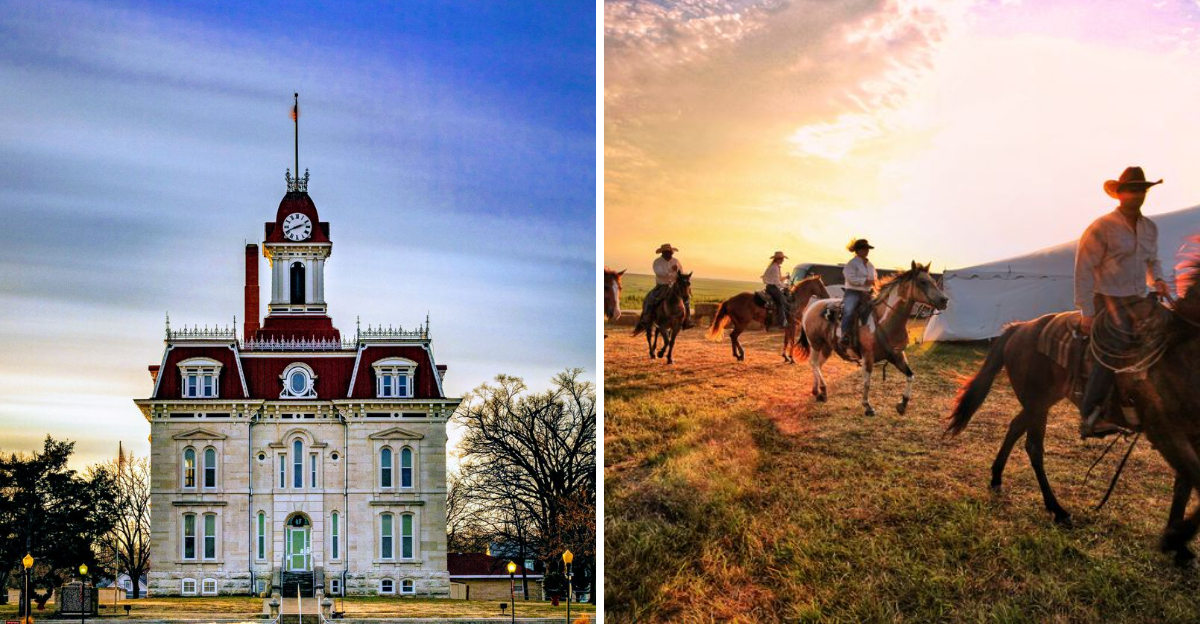
Cottonwood Falls sits quietly in the heart of Chase County, Kansas, along the south bank of the Cottonwood River, just a stone’s throw from Strong City.
With a population hovering around 851 residents, this small town might seem like just another dot on the map, but travelers who pause here discover something unexpected.
Rolling Flint Hills surround the community, offering sweeping prairie vistas that shift with the seasons, while historic limestone buildings anchor downtown streets with stories from another era.
Road trippers looking for an authentic slice of rural America find Cottonwood Falls delivers charm, history, and natural beauty without the tourist crowds.
Flint Hills Prairie Views That Never End
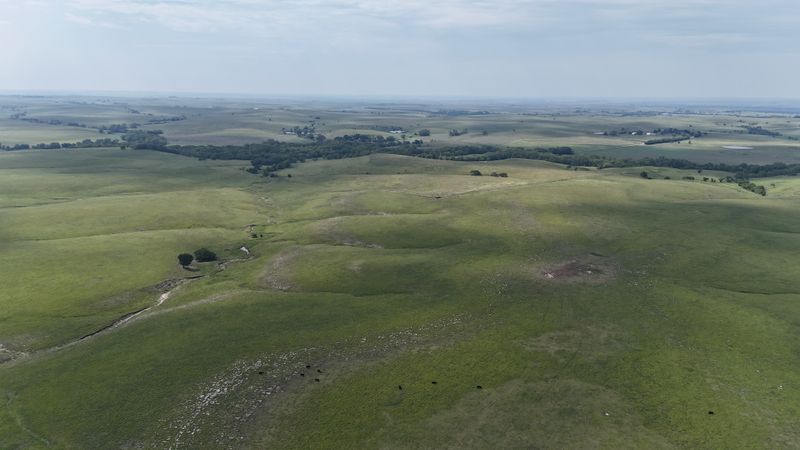
Vast tallgrass prairie stretches in every direction around Cottonwood Falls, creating a landscape that feels both ancient and alive.
The Flint Hills represent one of the last remaining tallgrass prairie ecosystems in North America, with grasses reaching heights of six to eight feet by late summer.
Spring brings an explosion of wildflowers, painting the hills with purple coneflowers, yellow black-eyed Susans, and delicate white prairie roses.
Early morning fog often settles in the valleys, creating mysterious, dreamlike scenes as the sun burns through the haze.
Controlled burns, typically conducted in spring, renew the prairie and create dramatic visual contrasts between blackened earth and bright green new growth.
The rolling topography creates constantly changing perspectives, with each hilltop offering new vistas of undulating grassland meeting endless sky.
Sunset transforms the prairie into a canvas of gold, orange, and purple, with long shadows emphasizing every contour and depression.
Wildlife thrives in this environment, with white-tailed deer, wild turkeys, and numerous bird species visible to patient observers.
Several county roads wind through the prairie, allowing travelers to experience the landscape up close without leaving their vehicles.
Photographers find the prairie irresistible, returning season after season to capture different moods and lighting conditions.
The sense of space and solitude appeals to travelers weary of crowded highways and commercial development.
Standing alone in the prairie, with grass rustling in the wind and meadowlarks singing, provides a connection to the natural world increasingly rare in modern life.
The Chase County Courthouse Standing Tall
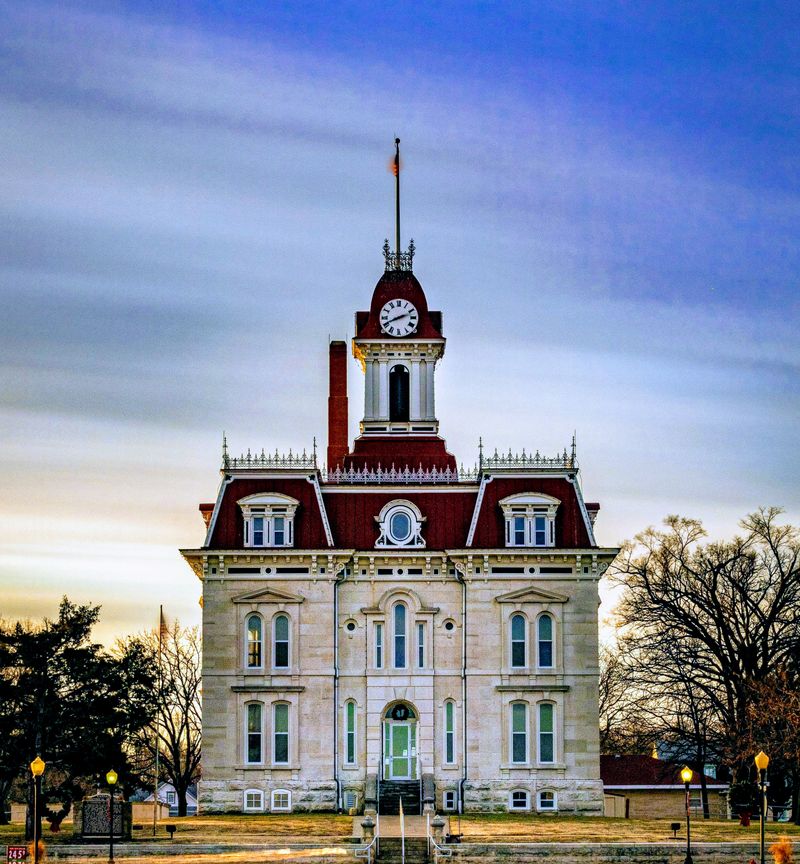
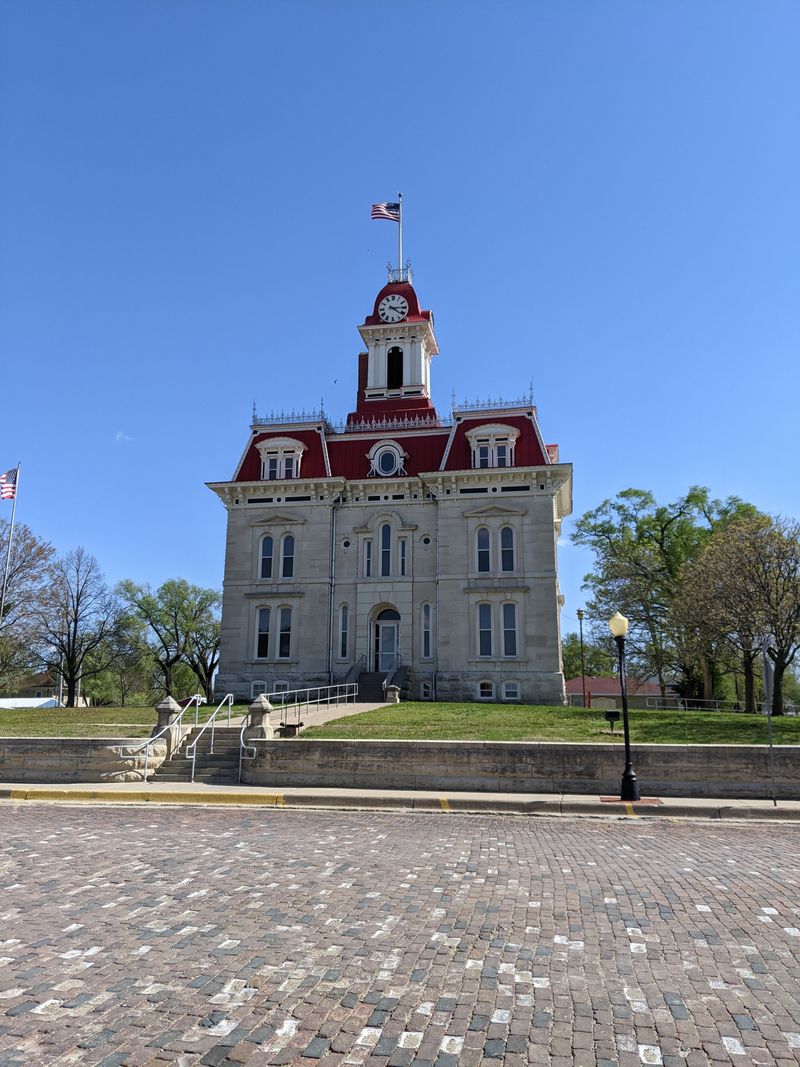
Built in 1873, the Chase County Courthouse commands attention with its French Renaissance Revival architecture, a style rarely seen in rural Kansas.
Massive limestone blocks form the exterior walls, quarried locally from the Flint Hills and hauled by wagon to the construction site.
Three stories high with a distinctive mansard roof and clock tower, the building remains the oldest courthouse still in operation in the state.
Inside, original woodwork, spiral staircases, and ornate details transport visitors back to the late 1800s when craftsmanship meant something entirely different.
The courtroom on the second floor retains its historic character, with tall windows flooding the space with natural light.
Local volunteers often offer informal tours during weekday business hours, sharing stories about famous trials and the building’s role in county history.
Photography enthusiasts appreciate the way afternoon sun hits the limestone facade, creating dramatic shadows and highlighting the texture of the stone.
The courthouse grounds feature mature trees and a small park area perfect for stretching legs after hours behind the wheel.
This National Historic Landmark stands as the centerpiece of downtown Cottonwood Falls, visible from multiple approach roads.
Architects and history buffs make special trips to study the building’s construction techniques and design elements.
Even travelers with no particular interest in government buildings find themselves drawn to the structure’s imposing presence and timeless beauty.
The courthouse represents more than just a functional building; it embodies the determination of early settlers to create something permanent and beautiful on the Kansas prairie.
Cottonwood River Flowing Through Town
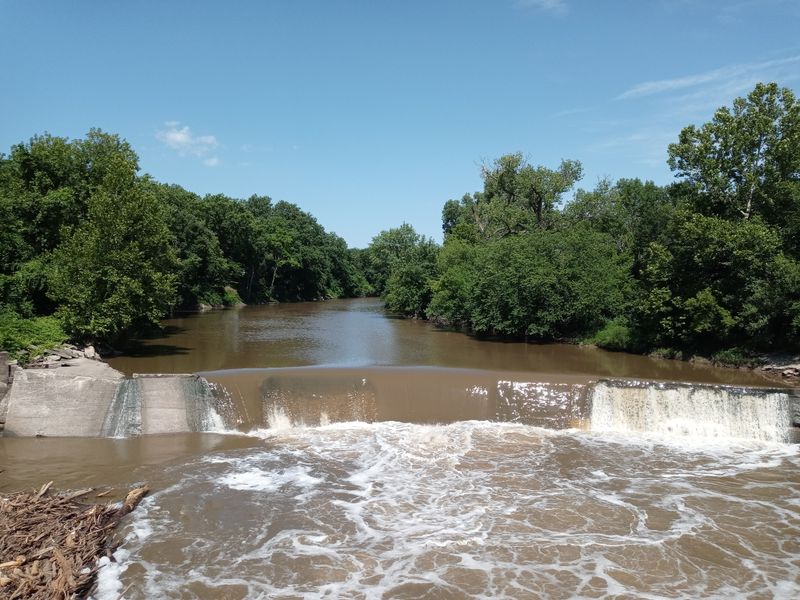
The Cottonwood River defines the northern edge of town, providing both scenic beauty and recreational opportunities for visitors.
Limestone ledges and rocky shallows create interesting textures and sounds as water flows over and around ancient stone formations.
Cottonwood trees, the town’s namesake, line the riverbanks with their distinctive heart-shaped leaves rustling in prairie breezes.
Summer finds local kids and adventurous travelers wading in shallow sections, cooling off during hot Kansas afternoons.
The river supports diverse wildlife, including great blue herons, kingfishers, and various turtle species visible from the banks.
Several informal access points allow visitors to approach the water, though no developed parks or facilities exist directly along the river in town.
Autumn transforms the riverside into a corridor of gold and yellow as cottonwood leaves change color before drifting into the current.
Spring rains occasionally swell the river, creating a more dramatic presence as water rushes over limestone shelves and around bends.
The sound of flowing water provides a peaceful soundtrack to walks through downtown, audible from several blocks away on quiet evenings.
Artists and photographers appreciate the interplay of water, stone, and vegetation, finding endless compositional possibilities.
The river represents continuity, flowing through the same channel it carved thousands of years ago, indifferent to human settlement or the passage of time.
For road-weary travelers, simply sitting beside the river and watching water move past offers a meditative break from miles of highway driving.
Historic Downtown Walking Streets
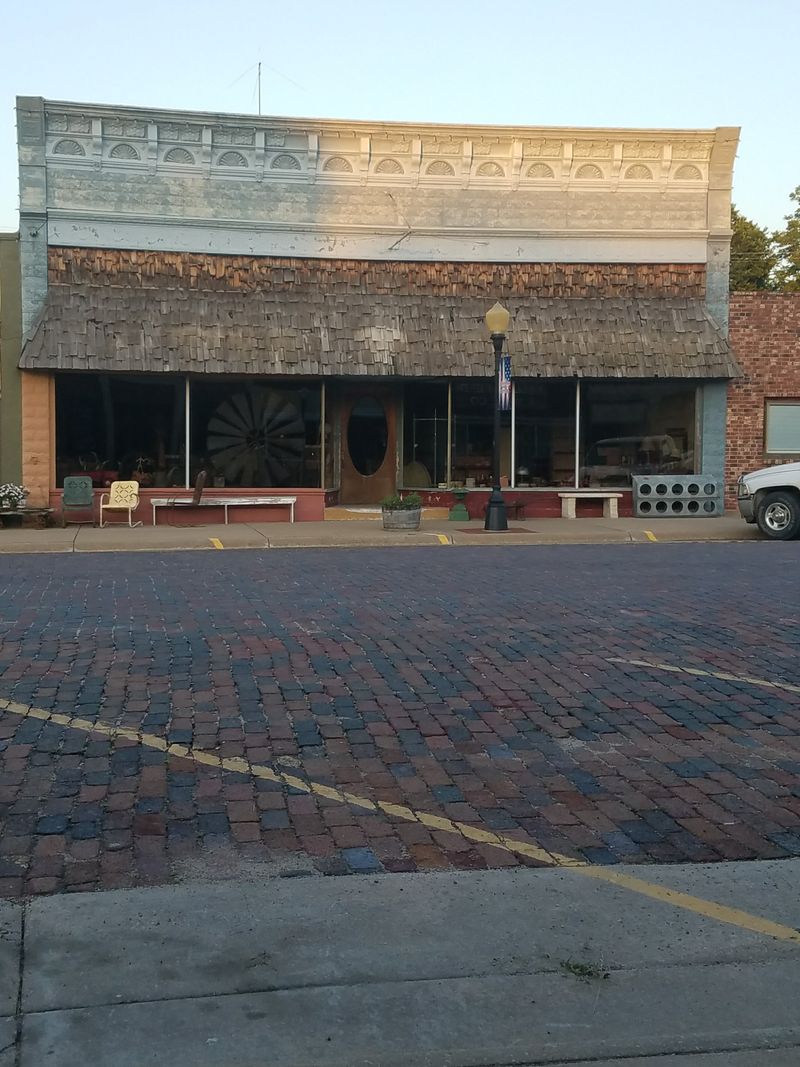
Downtown Cottonwood Falls occupies just a few blocks, but those blocks contain remarkable examples of 19th-century commercial architecture.
Two-story limestone buildings line Broadway, their thick walls and tall windows speaking to an era when construction meant permanence.
Many structures retain original storefronts with large display windows and recessed entryways designed to shelter shoppers from sun and rain.
Metal awnings and decorative cornices add architectural interest, while faded painted advertisements occasionally peek through later layers of paint on brick walls.
The scale feels entirely human, with narrow streets and buildings close together creating an intimate urban environment.
Several businesses still operate in these historic structures, including a bank, law offices, and small shops serving local residents.
Sidewalks remain mostly empty during weekday afternoons, allowing visitors to stroll and photograph without dodging crowds.
Interpretive markers provide historical context for some buildings, explaining their original uses and architectural significance.
The downtown’s compact nature makes exploration easy, with everything walkable within minutes.
Vintage light fixtures and period-appropriate street furniture contribute to the historic atmosphere without feeling like artificial theme park decoration.
This authentic small-town downtown represents something increasingly rare: a commercial district that evolved organically and survived without major modern alterations.
Walking these streets provides insight into how rural Kansas towns functioned during their peak population years in the late 1800s and early 1900s.
Symphony in the Flint Hills Annual Gathering
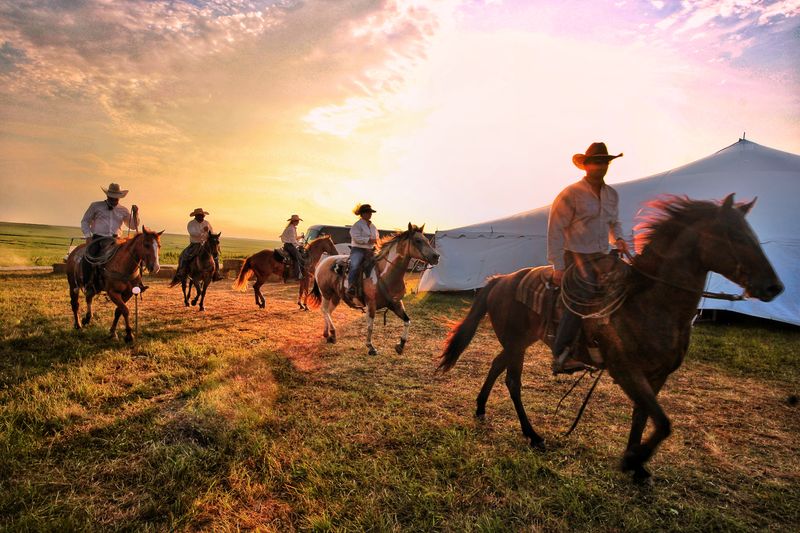
Each June, an extraordinary event transforms the prairie near Cottonwood Falls into an outdoor concert venue unlike any other in America.
Symphony in the Flint Hills brings a full orchestra to a different ranch location each year, with thousands of attendees gathering on private prairie land.
The event celebrates the tallgrass prairie ecosystem while raising awareness about its ecological importance and fragility.
Concertgoers arrive hours early to explore the host ranch, participate in educational programs, and enjoy the prairie landscape before the evening performance.
Local food vendors offer Kansas-inspired cuisine, and artisans sell crafts and artwork celebrating prairie themes.
As sunset approaches, attendees settle onto the grass with blankets and folding chairs, facing the stage with rolling prairie as backdrop.
The Kansas City Symphony performs a specially commissioned work alongside classical favorites, with prairie sounds providing natural accompaniment between movements.
Experiencing orchestral music under open sky, surrounded by endless grassland and fading light, creates a profound emotional impact.
The event requires advance tickets and typically sells out, with attendance capped to protect the prairie and maintain intimacy.
Cottonwood Falls serves as base camp for many attendees, with the small town swelling to accommodate visitors from across Kansas and beyond.
Even travelers who miss the actual event can appreciate the community’s commitment to celebrating and preserving its distinctive landscape.
Symphony in the Flint Hills demonstrates how rural communities can create world-class cultural experiences rooted in local identity and environment.
Roniger Memorial Library Preserving Stories
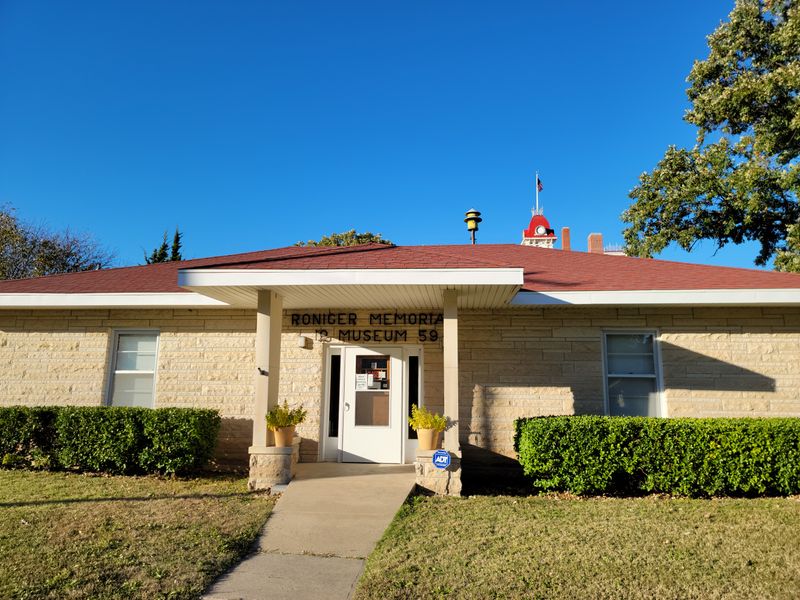
The Roniger Memorial Library sits in a modest building that serves as Cottonwood Falls’ public library and community gathering space.
Collections emphasize local history, with archives containing photographs, documents, and publications about Chase County and the Flint Hills region.
Genealogy researchers find valuable resources here, including county records, family histories, and cemetery documentation spanning generations.
The library maintains a surprisingly diverse collection for a town of fewer than 900 residents, with new releases alongside classic literature.
Large windows flood the reading areas with natural light, creating pleasant spaces for browsing or spending a quiet hour with a book.
Local volunteers supplement the small paid staff, reflecting the community investment in maintaining this cultural institution.
Bulletin boards display information about county events, community services, and local history presentations.
Travelers researching the Flint Hills or Kansas history will find knowledgeable staff willing to share information and recommend resources.
The library offers free internet access, a valuable service in a rural area where connectivity can be limited.
Special displays rotate throughout the year, highlighting different aspects of local history or featuring work by regional artists and photographers.
This small library represents the importance rural communities place on literacy, learning, and preserving their collective memory.
Spending time here provides deeper understanding of Cottonwood Falls beyond its physical appearance, revealing the values and interests of residents through the materials they choose to collect and preserve.
Strong City Neighborhood Connection
Strong City lies just two miles north of Cottonwood Falls, connected by Highway 177 and functioning as a sister community.
The two towns share schools, services, and identity despite maintaining separate municipal governments and historical origins.
Strong City developed as a railroad town, with the Santa Fe Railway establishing shops and facilities that employed hundreds of workers.
Historic railroad buildings still stand in Strong City, including the depot and former Harvey House hotel, now preserved as part of Tallgrass Prairie National Preserve.
Travelers exploring Cottonwood Falls should extend their visit to Strong City, experiencing both communities as complementary parts of a larger whole.
The drive between towns follows the Cottonwood River valley, offering pleasant views of riparian vegetation and prairie hillsides.
Strong City contains additional dining options, shops, and the preserve visitor center with exhibits about prairie ecology and ranching history.
The railroad heritage creates a different architectural character in Strong City, with workers’ cottages and commercial buildings reflecting early 20th-century railroad town planning.
Combined, the two towns provide a more complete picture of rural Kansas development, showing how geography and transportation shaped settlement patterns.
Residents move freely between communities, shopping, working, and socializing without regard for municipal boundaries.
This interconnection demonstrates how small towns survive by sharing resources and maintaining flexible, cooperative relationships.
Road trippers benefit from exploring both communities, discovering different aspects of Flint Hills culture and history within minutes of each other.
Tallgrass Prairie National Preserve Access
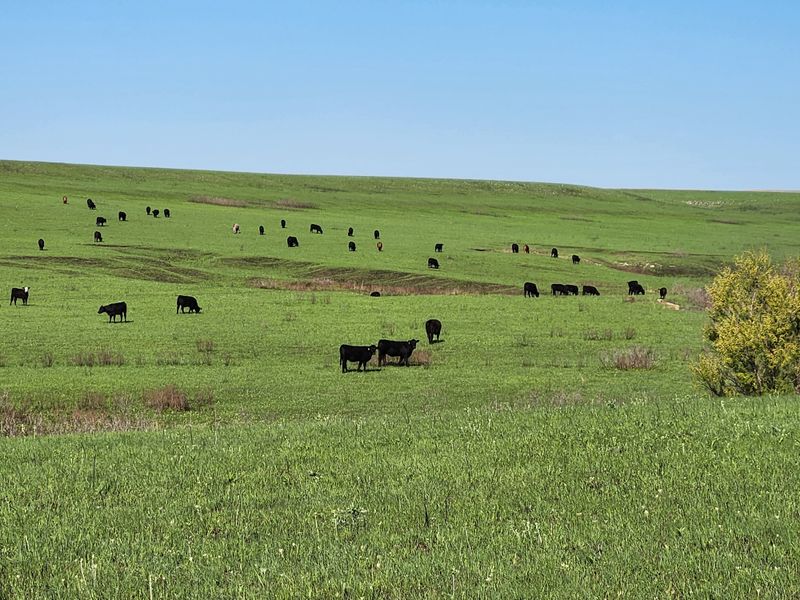
Although technically located near Strong City, Tallgrass Prairie National Preserve serves as the primary reason many travelers discover Cottonwood Falls.
The preserve protects nearly 11,000 acres of tallgrass prairie, offering hiking trails, historic ranch buildings, and educational programs.
Spring Creek Trail winds through prairie and riparian habitat, providing accessible walking for visitors of various fitness levels.
The historic Z Bar/Spring Hill Ranch headquarters includes a three-story limestone ranch house, barn, and outbuildings dating to the 1880s.
Rangers and volunteers offer guided tours of the ranch house, explaining the ranching lifestyle and the families who lived and worked here.
Bison were reintroduced to the preserve in 2009, and visitors sometimes spot the herd grazing in distant pastures.
The preserve visitor center in Strong City provides orientation, exhibits, and information about trail conditions and wildlife sightings.
Admission to the preserve remains free, though donations support educational programs and habitat restoration projects.
Photography opportunities abound, with prairie landscapes, historic structures, and wildlife providing endless subjects.
The preserve demonstrates what Kansas looked like before widespread agricultural development, offering perspective on environmental change and conservation.
Cottonwood Falls serves as the logical overnight base for preserve visitors, providing lodging and meals within minutes of the park entrance.
Exploring the preserve and the historic county seat together creates a comprehensive experience of Flint Hills natural and cultural heritage.
Seasonal Prairie Transformations Worth Timing
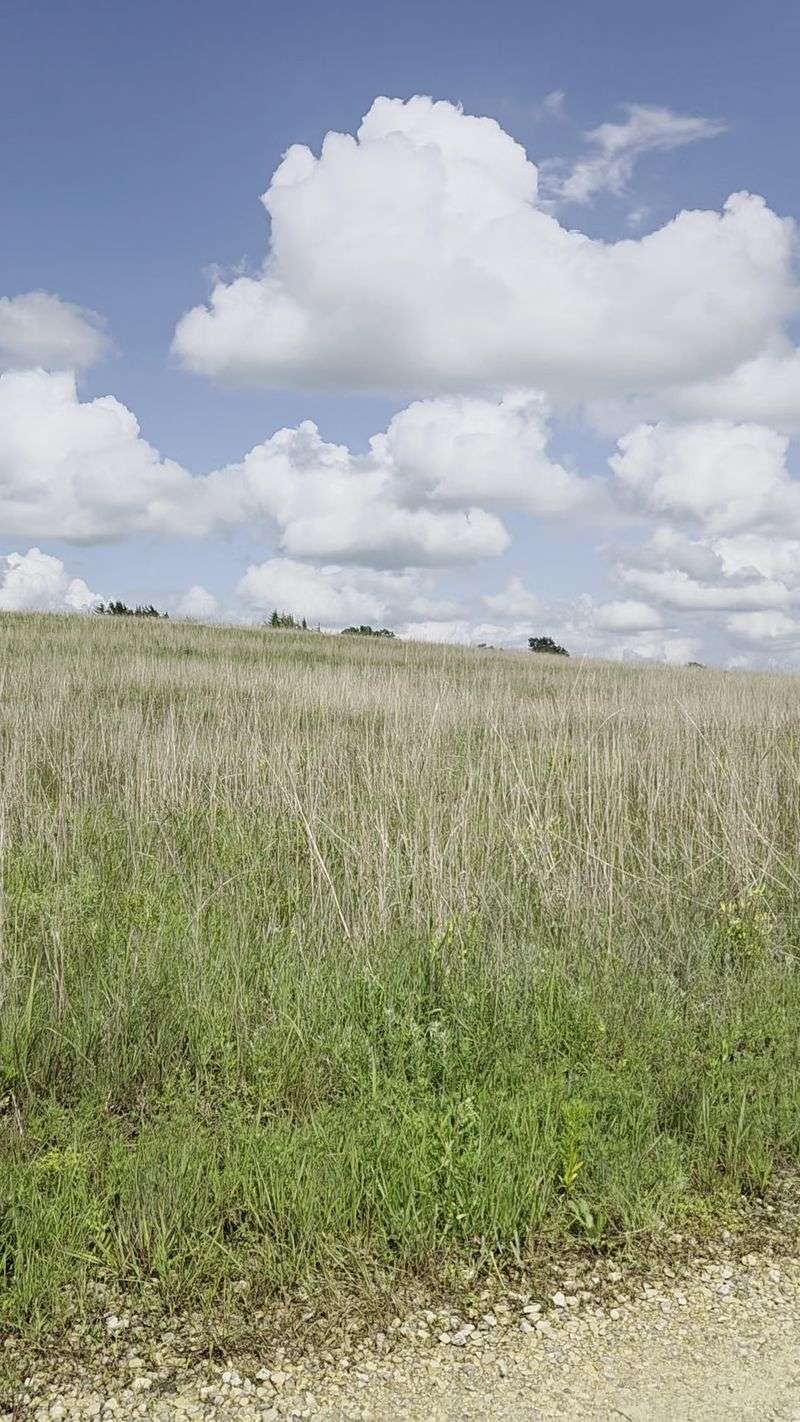
Visiting Cottonwood Falls during different seasons reveals dramatically different landscapes and experiences.
Spring arrives with controlled burns that blacken hillsides, followed within weeks by bright green new growth emerging from the scorched earth.
Wildflowers peak from April through June, creating waves of color across the prairie as different species bloom in succession.
Summer heat intensifies, with grasses reaching full height and the landscape taking on golden and bronze tones under relentless sun.
Thunderstorms build on summer afternoons, creating spectacular cloud formations and dramatic lighting conditions beloved by photographers.
Autumn brings cooler temperatures and changing colors as prairie grasses fade to russet, gold, and pale cream.
Migrating birds pass through in spring and fall, with thousands of waterfowl and songbirds stopping in the Flint Hills to rest and feed.
Winter transforms the prairie into subtle shades of tan and gray, with snow emphasizing the rolling topography and architectural details of historic buildings.
Each season offers unique beauty and different reasons to pause in Cottonwood Falls rather than rushing through on the way to somewhere else.
Locals develop deep appreciation for these seasonal changes, their conversations and activities revolving around weather, grass conditions, and wildlife movements.
Travelers who return multiple times gain richer understanding of the place, seeing beyond surface impressions to appreciate the dynamic relationship between land, climate, and community.
Timing a visit to coincide with personal interests, whether wildflowers, photography, or simply pleasant weather, enhances the experience and creates lasting memories of this supposedly dull Kansas town.
Dear Reader: This page may contain affiliate links which may earn a commission if you click through and make a purchase. Our independent journalism is not influenced by any advertiser or commercial initiative unless it is clearly marked as sponsored content. As travel products change, please be sure to reconfirm all details and stay up to date with current events to ensure a safe and successful trip.
