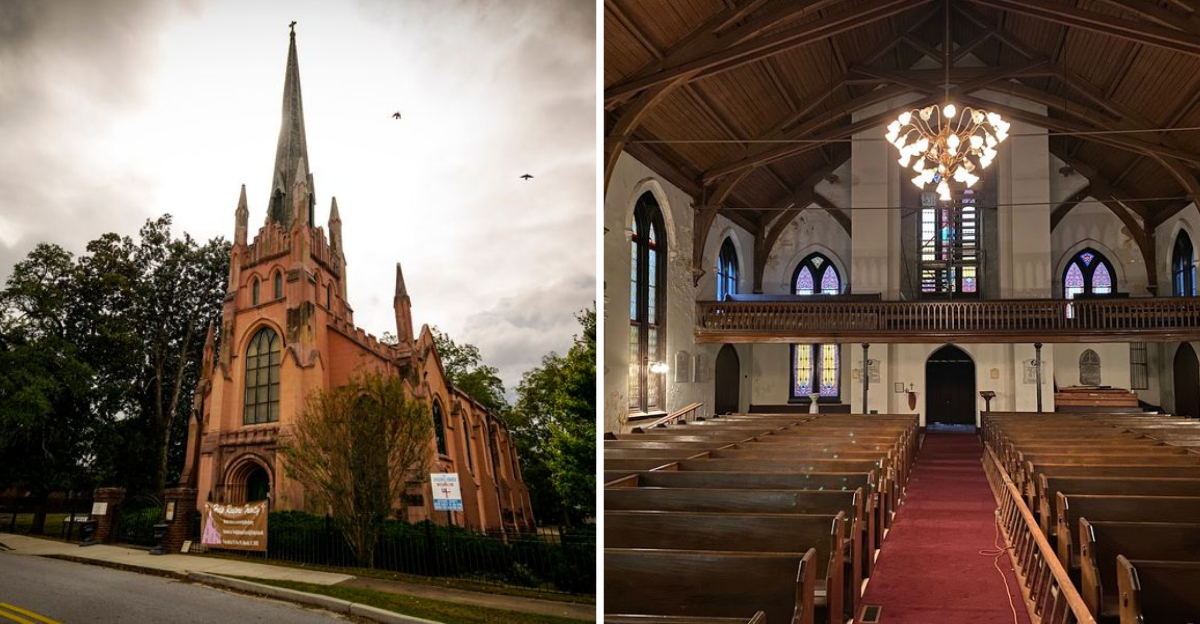
The tallest building in South Carolina was never in Columbia or Greenville or any of the big cities you would expect. It was a church in a tiny town, a Gothic Revival spire that shot into the air, visible from miles away across the cotton fields and pine forests.
The congregation that built it had wealth and ambition, hiring an architect to design something that would put their small town on the map. It worked. For years, nothing else in the state came close.
Modern skyscrapers have since taken the title, office buildings in Columbia and beachfront condos on the coast. But there is something humbling about driving through a quiet town and realizing you are looking at history. The building that once touched the sky, built by people who refused to think small just because they lived in a small place.
A Steeple That Once Touched the Sky Above All of South Carolina
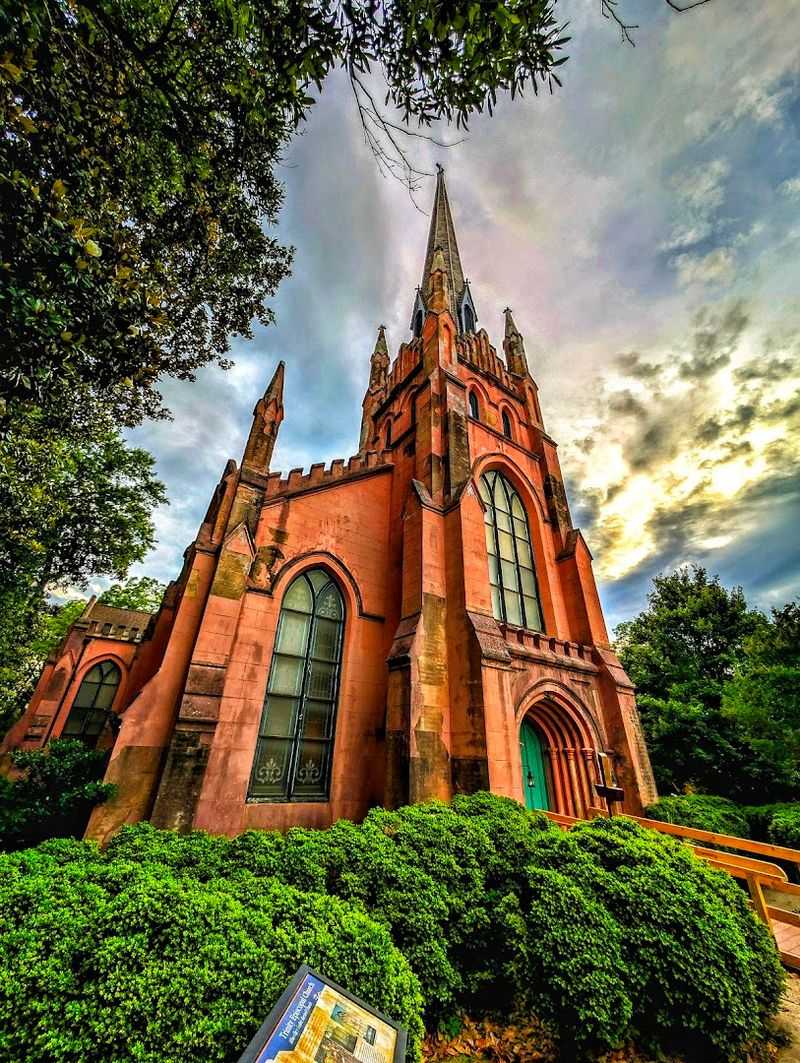
Long before glass towers and steel skyscrapers changed the American skyline, a small Episcopal congregation in Abbeville set out to build something extraordinary. When Trinity Episcopal Church was consecrated on November 4, 1860, its steeple reached approximately 125 feet into the South Carolina sky.
That height made it the tallest structure in the entire state outside of Columbia and Charleston.
Think about what that means for a moment. A rural town with a population that had barely cracked 600 people by the 1860 census had somehow constructed a building that outreached nearly every other structure in South Carolina.
The ambition behind that achievement is genuinely staggering.
The steeple is crowned with a gold cross that catches the afternoon light in a way that feels almost cinematic. Architect George E.
Walker designed the church in 1859, and the craftsmanship he brought to the project still shows clearly today. The corner pinnacles, the recessed entrance, and the sheer verticality of the tower create a silhouette that is unmistakable from blocks away.
For a building well over 160 years old, it carries itself with remarkable confidence and grace.
Gothic Revival Glory in the Middle of the Upstate
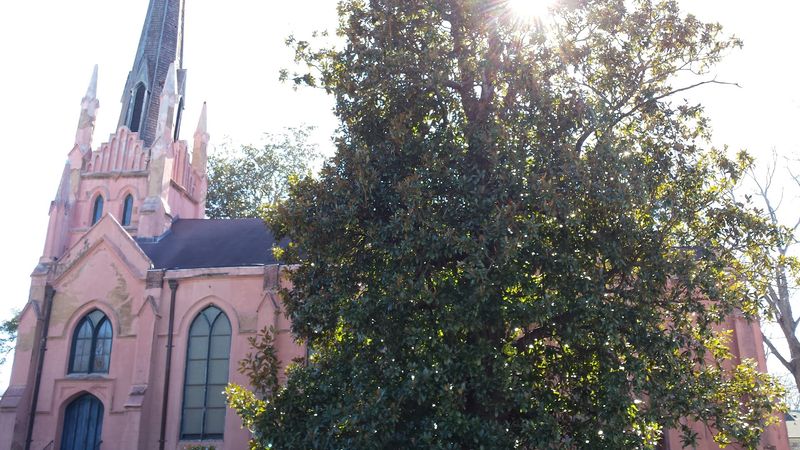
Gothic Revival architecture has a way of making you feel small in the best possible sense. The style was enormously popular in mid-19th century America, and Trinity Episcopal Church is one of its finest surviving examples in South Carolina.
The pointed arches, the vertical emphasis, the decorative stonework, all of it works together to create a building that feels genuinely otherworldly against the backdrop of a modest Southern town.
George E. Walker clearly understood what he was doing when he drew up the plans in 1859.
The tower is adorned with corner pinnacles that frame the steeple in a way that draws the eye upward naturally. The recessed front entrance and double doors add a sense of ceremony to even a casual visit.
What makes the design especially impressive is how it holds up without restoration tricks or modern additions softening the edges. The bones of this building are original and proud.
Trinity is listed on the National Register of Historic Places, a designation it earned through architectural merit as much as historical significance. Seeing it in person, you understand immediately why it carries that recognition.
It is the kind of church that makes you slow your pace without even realizing you have done it.
Stained Glass That Crossed a Blockade to Get Here
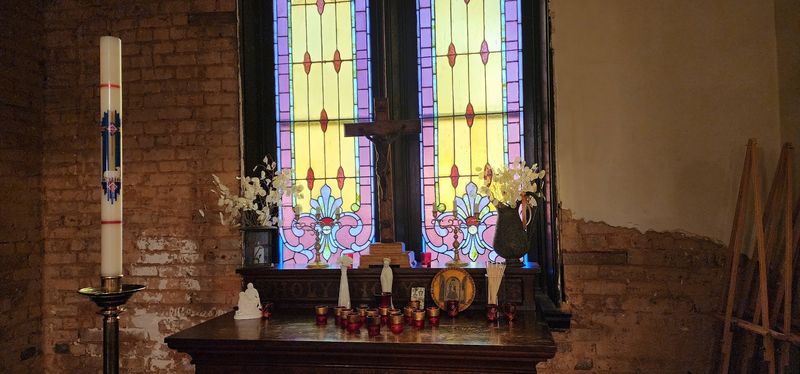
The stained glass windows inside Trinity Episcopal Church have a backstory that sounds almost too dramatic to be real. According to local history, the glass was brought in by blockade runners during the Civil War era, slipping past Union naval patrols to reach the congregation.
That is an extraordinary origin story for something as delicate and beautiful as decorative church glass.
Once you step inside the sanctuary, the windows immediately command your attention. The light filters through them in rich, layered colors that shift depending on the time of day and the angle of the sun.
There is a quality of stillness inside that feels amplified by those windows, like the light itself has been slowed down.
The pipe organ adds another dimension to the experience entirely. Visitors who have arrived while the organist was practicing describe the sound as filling every corner of the space in a way that is both powerful and deeply calming.
The combination of centuries-old stained glass and live organ music inside a Gothic Revival sanctuary is the kind of sensory moment that is hard to replicate anywhere. It is worth timing your visit around the possibility of catching that experience.
Saturday hours run from 12 to 4 PM, which gives you a real window of opportunity.
Abbeville, SC: The Small Town Behind a Very Big Building
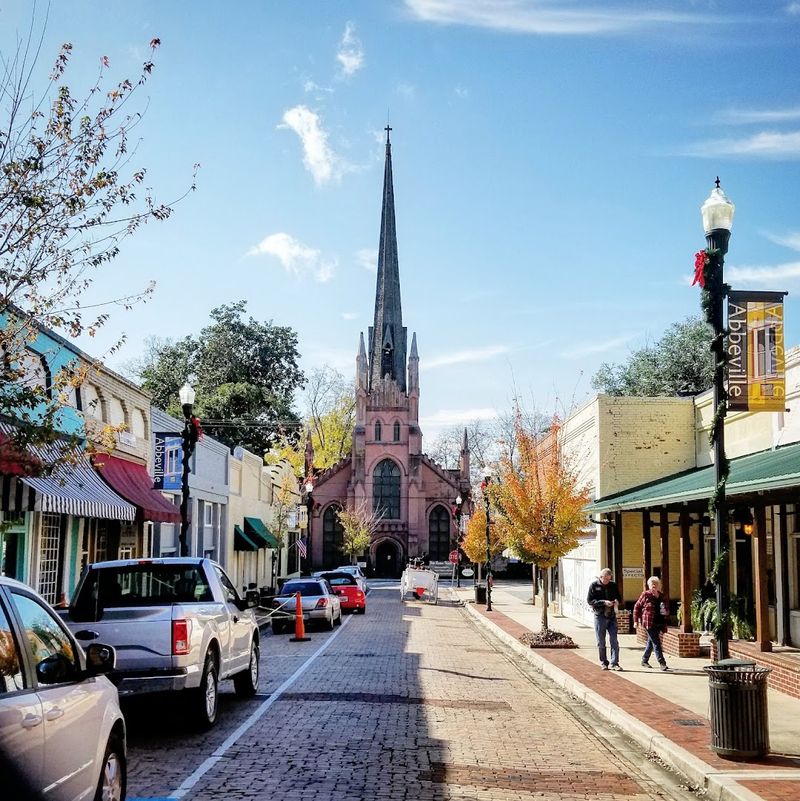
Abbeville is the kind of town that surprises you. It sits in the Upstate region of South Carolina, tucked away from the interstate corridors that most travelers use, and it wears its history openly.
The town square, the old opera house, the courthouse, they all contribute to a streetscape that feels genuinely preserved rather than artificially restored.
By the time Trinity Episcopal Church was consecrated in 1860, Abbeville’s population had actually dipped to around 592 residents. That makes the construction of a 125-foot steeple even more remarkable as a communal undertaking.
The town grew steadily in the decades that followed, reaching roughly 5,000 people by the mid-1920s, and Trinity remained a defining feature of the skyline throughout that growth.
Today, the 2020 census puts Abbeville at about 4,874 residents, meaning the town has held remarkably steady in size over the past century. Trinity Episcopal Church is just a short walk from the downtown core, making it easy to combine a visit with exploration of the surrounding historic district.
The neighborhood around Church Street is quiet and walkable, with the church sitting confidently at the center of it all. Small towns have big stories, and Abbeville proves that better than almost anywhere else in South Carolina.
How Trinity Stacks Up Against South Carolina’s Other Tall Steeples
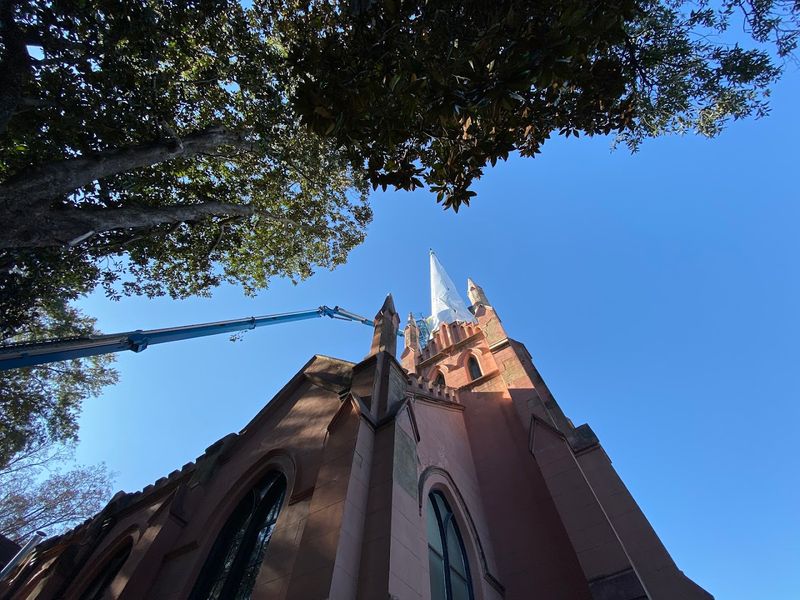
Context matters when you are talking about architectural records, and the story of Trinity’s height gets more interesting once you understand the broader competition. St. Michael’s Church in Charleston, built in 1761, stood 186 feet tall and held the record as the tallest structure in South Carolina until 1856.
Citadel Square Baptist Church then claimed the title with an original steeple of 224 feet. St. Philip’s Church in Charleston added its 200-foot steeple between 1848 and 1850.
So where does Trinity’s 125-foot steeple fit into all of that? The most accurate framing may be that Trinity was the tallest structure in rural South Carolina, and specifically the tallest outside of Columbia and Charleston.
One account from 2019 describes it as the fourth tallest structure in the state at the time of its construction.
St. Matthew’s German Evangelical Lutheran Church in Charleston, completed in 1872, eventually topped everything at 297 feet and held the record as the tallest building in South Carolina from 1872 to 1966. Trinity was never competing with Charleston’s grandest structures in pure height, but for a rural congregation in a town of a few hundred people, building a 125-foot steeple in 1860 was genuinely audacious.
The record claim, however you frame it, is still something worth celebrating.
Visiting Trinity Today: What to Expect When You Arrive
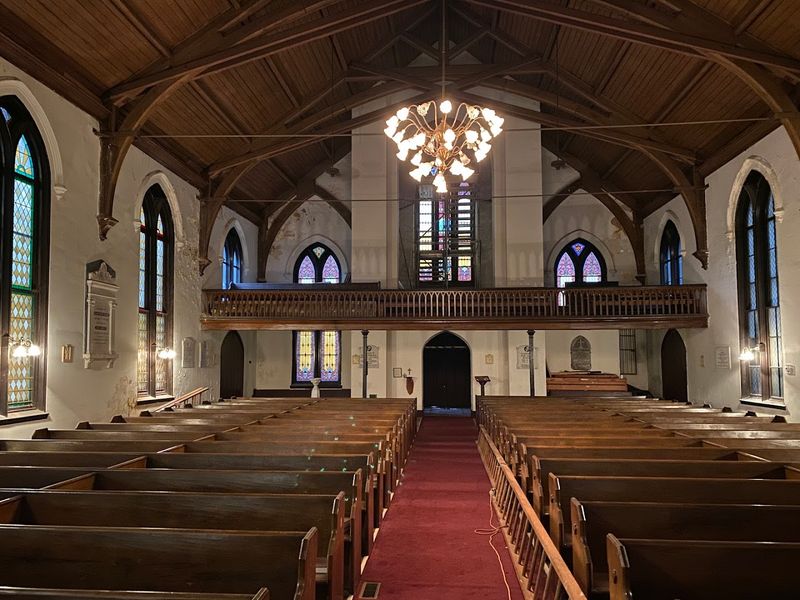
Arriving at Trinity Episcopal Church for the first time, you notice almost immediately that the building is not hidden or hard to find. It sits right on Church Street, just a minute or two on foot from Abbeville’s downtown square, and the steeple gives it away from a considerable distance.
The address is 200 Church Street, Abbeville, SC 29620, and the surrounding neighborhood is calm and easy to navigate.
Public visiting hours are currently limited, with Saturday access from 12 to 4 PM and Sunday from 11 AM to noon. It is worth calling ahead at 864-366-5186 or checking the church website at trinityabbeville.org before making a special trip, since hours can shift with seasons and events.
The church has undergone restoration work in recent years, and that effort shows in how well the building presents itself to visitors.
People who have visited consistently mention the warmth of the congregation alongside the architectural beauty of the space. The building earned a 4.7-star rating across its reviews, which for a historic church open only a few hours per week is genuinely telling.
You do not need to be Episcopalian or even particularly religious to appreciate what Trinity represents. It is a piece of South Carolina history that anyone with an interest in architecture, local culture, or American heritage will find deeply rewarding to experience.
Why a Church This Grand Belongs in a Town This Small
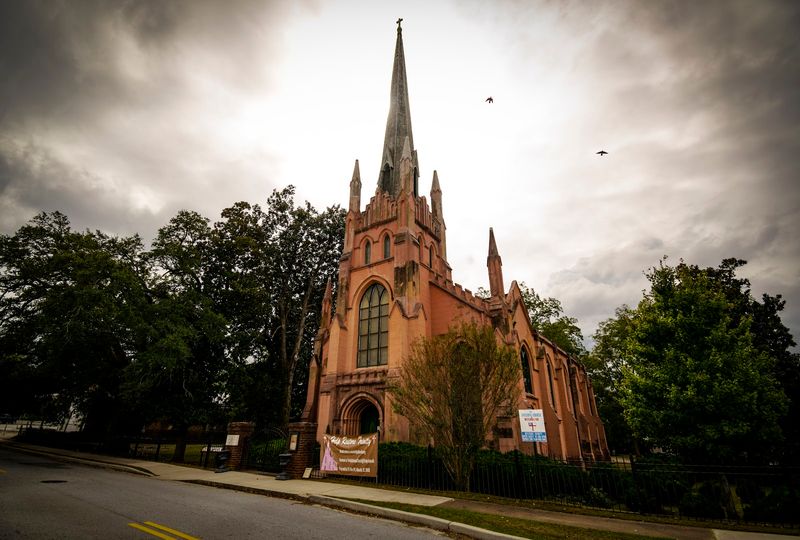
There is something quietly defiant about Trinity Episcopal Church. It did not rise in a major city with deep pockets and a large donor base.
It was built by a congregation in a small Southern town, in a state that was about to be torn apart by the Civil War, and it was built to last and to impress. That combination of ambition and faith is embedded in every stone of the facade.
The church was established in 1842, though the current building was designed in 1859 and consecrated in 1860. Nearly two centuries of community life have passed through those double doors.
Generations of Abbeville families have marked their most important moments inside that sanctuary, surrounded by blockade-runner glass and the resonance of a pipe organ that fills the room completely.
For travelers passing through the Upstate, Trinity is the kind of stop that reshapes how you think about a place. Small towns are often dismissed as stops between bigger destinations, but a building like this one insists on being taken seriously.
It reminds you that ambition and beauty are not exclusive to cities. Abbeville built something that once stood taller than almost everything else in South Carolina, and it has never stopped being worth the visit.
Address: 200 Church Street, Abbeville, South Carolina
