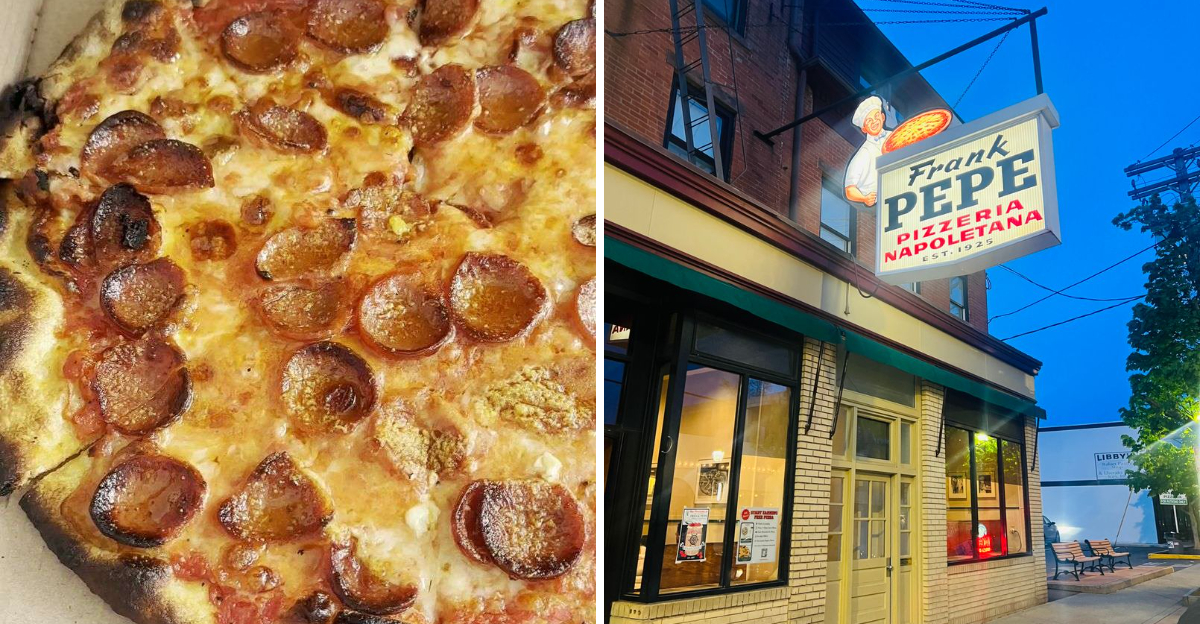
New Haven, Connecticut, might not be the first place that comes to mind when you think about legendary pizza, but locals know better.
Tucked away on Wooster Street in this historic college town sits Frank Pepe Pizzeria Napoletana, a coal-fired pizza institution that has been turning out impossibly thin, blistered pies since 1925.
Travelers from across the country make pilgrimages to this unassuming spot, waiting in lines that snake down the block just for a taste of what many consider the finest pizza in America.
The restaurant’s reputation isn’t built on fancy marketing or trendy toppings but on nearly a century of perfecting a craft that transforms simple ingredients into something extraordinary.
We’ve based this piece on enthusiastic local chatter, our own eating experiences, and how fiercely this spot gets defended in pizza conversations.
Taste is personal, loyalties run deep, and opinions can change one slice at a time.
This take is unavoidably subjective.
A Legacy Born from Coal and Dough
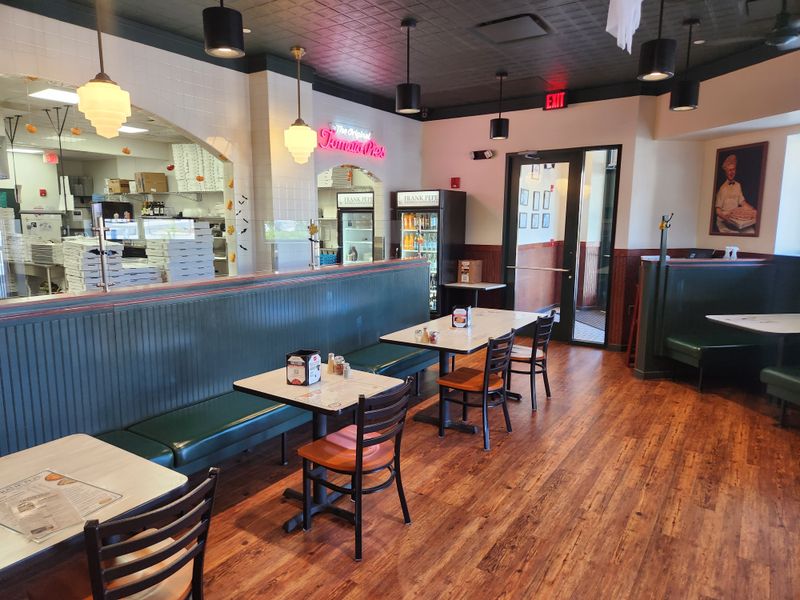
Frank Pepe arrived in America from Italy with dreams that would eventually reshape how a generation understood pizza.
Opening his pizzeria in 1925, he brought with him techniques from the old country but adapted them to the coal-fired ovens that would become his signature.
The original location on Wooster Street remains largely unchanged, with worn wooden booths and walls covered in photographs that tell decades of stories.
Walking through the front door feels like stepping back in time, where the aroma of burning coal and bubbling cheese creates an atmosphere that no modern restaurant can replicate.
Families return generation after generation, sitting in the same booths their grandparents once occupied, ordering the same pizzas that have barely changed in recipe or technique.
The restaurant’s commitment to tradition extends beyond nostalgia into a fierce dedication to quality and consistency.
Every pizza that emerges from those ancient ovens carries with it the weight of family pride and nearly a century of reputation.
Pepe’s success sparked what locals call the Wooster Street pizza wars, with other legendary pizzerias opening nearby, but Frank Pepe remains the original and, to many, the best.
The restaurant has expanded to other locations across Connecticut and beyond, yet the Wooster Street flagship holds a special place in the hearts of pizza pilgrims.
Understanding this history makes every bite taste richer, connecting diners to a lineage of craftsmanship that predates fast food and corporate chains by decades.
The White Clam Pizza That Changed Everything
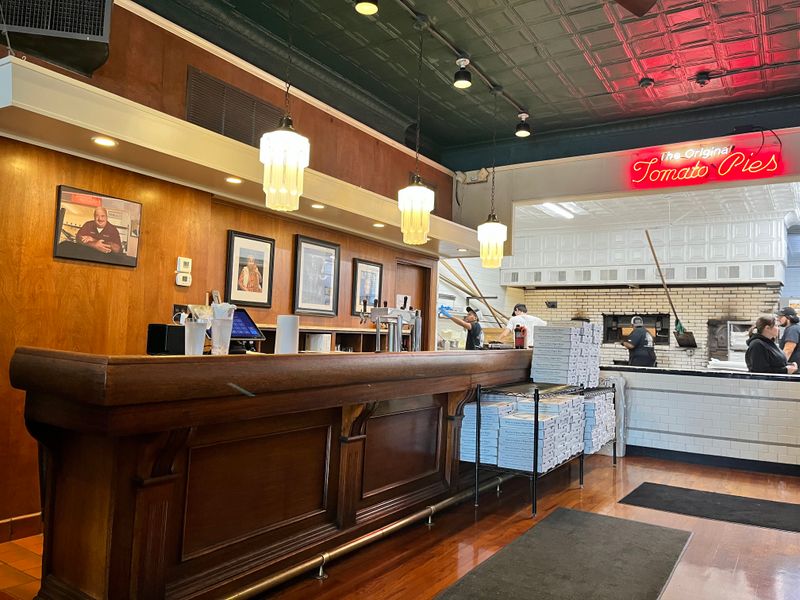
Most people think of tomato sauce and mozzarella when they picture pizza, but Pepe’s white clam pie rewrites those expectations entirely.
Fresh littleneck clams arrive daily, shucked by hand and scattered generously across a canvas of thin dough brushed with olive oil, garlic, and oregano.
No cheese competes with the briny sweetness of the clams, allowing the seafood to shine in a way that feels both simple and revolutionary.
The coal-fired oven works its magic at temperatures exceeding 650 degrees, creating a crust that bubbles and chars in irregular patterns, with some spots almost burnt while others remain pale and chewy.
This imperfection is actually perfection, giving each slice a unique texture that ranges from crispy to tender within a single bite.
The garlic infuses every corner of the pizza without overwhelming, while the oregano adds an earthy note that ties everything together.
Many first-time visitors arrive skeptical about a pizza without traditional toppings, but one taste usually converts even the most devoted marinara loyalists.
The white clam pizza has become so iconic that it appears on best-of lists nationwide, drawing seafood lovers and pizza purists alike.
Eating this pizza feels like experiencing something that shouldn’t work on paper but makes perfect sense on the palate.
It represents innovation rooted in tradition, a willingness to break rules while maintaining the highest standards of quality and technique that define everything Frank Pepe creates.
Coal-Fired Ovens That Time Forgot
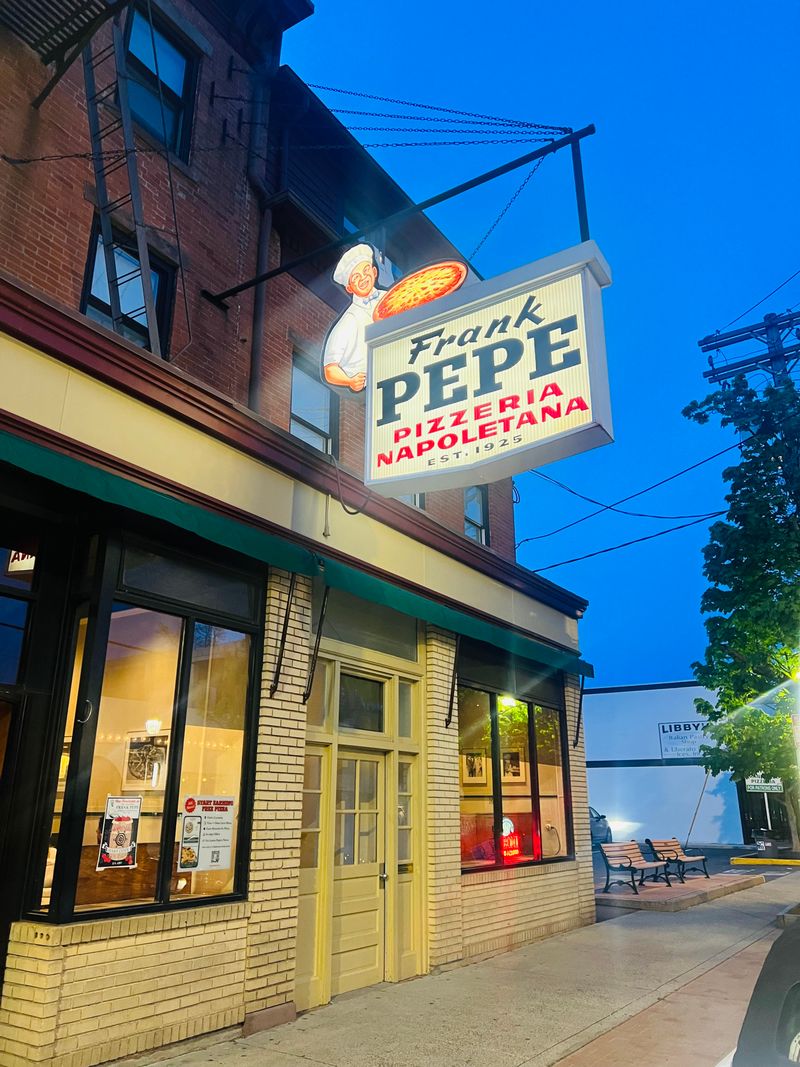
Most modern pizzerias use gas or electric ovens for convenience and consistency, but Pepe’s stubbornly clings to the coal-fired method that defined its beginning.
These massive brick ovens reach temperatures that would make most home cooks nervous, creating an environment where pizza cooks in just a few minutes.
The coal imparts a subtle smokiness that gas simply cannot replicate, adding depth to every bite without overpowering the fresh ingredients.
Watching the pizza makers work is like observing a carefully choreographed dance, where timing and instinct matter more than thermometers or timers.
They slide pizzas in and out with long wooden peels, rotating them constantly to achieve even cooking in an oven where hot spots shift and change.
The intense heat creates those signature char bubbles on the crust, pockets of air that puff up and blacken slightly, adding textural contrast and visual appeal.
Using coal has become increasingly rare due to regulations and the difficulty of sourcing quality fuel, making Pepe’s commitment even more remarkable.
The ovens themselves are treasures, built decades ago and maintained with the kind of care usually reserved for vintage cars or antique instruments.
Each oven has its own personality, with temperature variations and quirks that the pizza makers know intimately after years of experience.
This cooking method connects modern diners to pizza’s origins, offering an authenticity that feels increasingly precious in an age of shortcuts and mass production.
Wooster Street’s Italian Neighborhood Soul
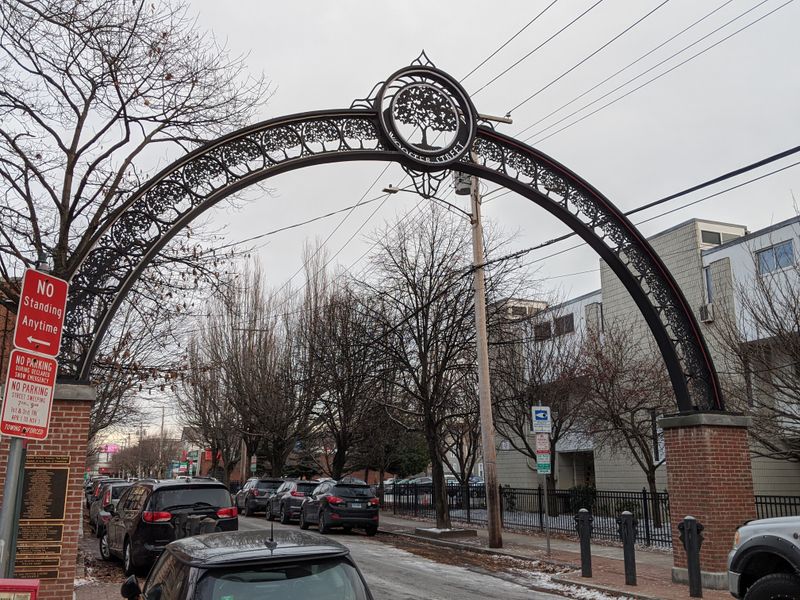
Wooster Street isn’t just an address but a living monument to New Haven’s Italian immigrant history and the vibrant community they built.
Walking this stretch feels like visiting a small Italian village transplanted to Connecticut, with family-owned restaurants, bakeries, and specialty shops lining both sides.
The neighborhood developed in the early 1900s as Italian families settled here, bringing their culinary traditions and establishing businesses that still thrive today.
Frank Pepe became the anchor of this community, but it shares the street with other legendary pizzerias and restaurants that create a unique concentration of excellent food.
On weekends, the sidewalks overflow with visitors from surrounding states, all drawn by the reputation of this tiny stretch of road.
The buildings themselves tell stories, with worn brick facades and hand-painted signs that have weathered decades of New England seasons.
Local residents still shop at the Italian markets here, buying imported olive oil, fresh pasta, and specialty ingredients that connect them to their heritage.
The atmosphere shifts throughout the day, from quiet mornings when restaurant workers prep ingredients to bustling evenings when lines form outside every popular spot.
Visiting Frank Pepe means experiencing not just a restaurant but an entire neighborhood culture built around food, family, and tradition.
The surrounding area invites exploration, with opportunities to sample pastries, grab espresso, or simply absorb the energy of a place where food culture runs deep and authentic.
Lines That Test Patience and Reward Persistence
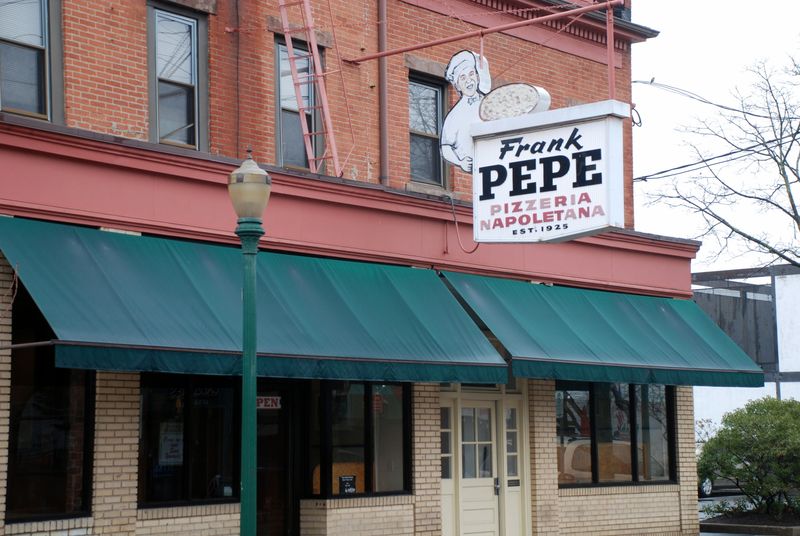
Arriving at Frank Pepe during peak hours means confronting a reality that shocks first-time visitors accustomed to making reservations or walking right in.
The line often extends down the block, with groups of friends, families with children, and solo travelers all willing to wait for their chance at pizza perfection.
On busy weekend evenings, waits can stretch to two hours or more, testing the commitment of even the most dedicated food enthusiasts.
The restaurant doesn’t take reservations for most parties, operating on a first-come, first-served basis that treats everyone equally regardless of status or connections.
This democratic approach feels refreshing in an era where money and influence often buy special treatment, but it also requires genuine patience.
Many visitors develop strategies, arriving right when the restaurant opens or choosing weekday afternoons when crowds thin slightly.
The wait itself becomes part of the experience, with strangers bonding over their shared anticipation and locals offering tips to out-of-towners.
Some use the time to explore the neighborhood, ducking into nearby shops or grabbing coffee while keeping an eye on the line’s progress.
Once inside, the wait evaporates quickly as the efficient staff moves diners through with practiced ease, taking orders and delivering pizzas at impressive speed.
The payoff justifies the patience, with that first bite delivering satisfaction amplified by the anticipation that preceded it, making the pizza taste even better than it might have otherwise.
Thin Crust Philosophy That Defies Trends

American pizza culture often celebrates thick, doughy crusts loaded with toppings until the structure barely holds together, but Pepe’s takes the opposite approach.
The crust here achieves a thinness that borders on cracker-like in spots, especially toward the center where toppings weigh it down slightly.
This deliberate choice puts the focus on quality rather than quantity, allowing the flavors of each ingredient to shine without getting lost in bread.
The dough recipe remains a closely guarded secret, passed down through family members and trusted employees who understand its importance to the restaurant’s identity.
Proper fermentation gives the dough flavor and structure, creating a foundation that can withstand the intense oven heat without burning or becoming tough.
Each pizza gets hand-stretched to order, with skilled pizzaiolos working the dough until it reaches the right thickness and shape.
The resulting texture offers complexity, with edges that puff up and crisp while the center remains just sturdy enough to support toppings without becoming soggy.
Eating this style of pizza requires a different technique than tackling thicker varieties, with some slices needing a fold for structural support.
The thinness also means pizzas cook incredibly fast, emerging from the oven in just a few minutes with dramatic char marks and bubbles.
This approach connects Pepe’s to Neapolitan traditions while creating something distinctly American, a style that influenced countless pizzerias but remains difficult to replicate perfectly outside these walls.
New Haven’s Unexpected Culinary Destination Status
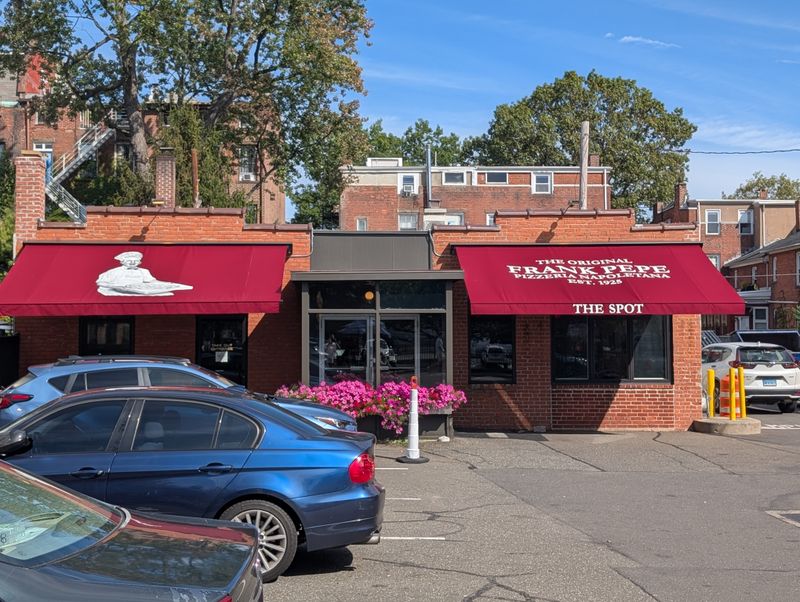
New Haven might be best known as home to Yale University, but its reputation as a serious food destination has grown steadily over decades.
Frank Pepe played a crucial role in establishing this identity, putting the city on the map for travelers who might otherwise have never considered visiting Connecticut.
The city’s location between New York and Boston makes it an easy stop for road trippers, and many plan entire trips around securing a table at Wooster Street’s famous pizzerias.
Beyond pizza, New Haven offers a surprising depth of culinary options, from seafood shacks along the harbor to innovative restaurants near the Yale campus.
The city’s compact size makes it easy to explore on foot, with historic architecture, museums, and green spaces providing plenty to do between meals.
Yale’s presence brings cultural attractions like world-class art galleries and theaters, adding sophistication to a city that maintains its working-class Italian roots.
Long Island Sound sits just minutes away, offering coastal scenery and seafood that rivals any New England destination.
Visitors often express surprise at how much the city offers, expecting a quick pizza stop and discovering a place worth spending an entire weekend exploring.
The combination of academic prestige, immigrant history, and coastal location creates a unique character that feels distinctly different from nearby cities.
Frank Pepe serves as the perfect introduction to New Haven’s personality, where tradition and quality matter more than flash, and where family businesses still thrive by simply doing one thing exceptionally well.
Simple Ingredients Elevated to Art Form
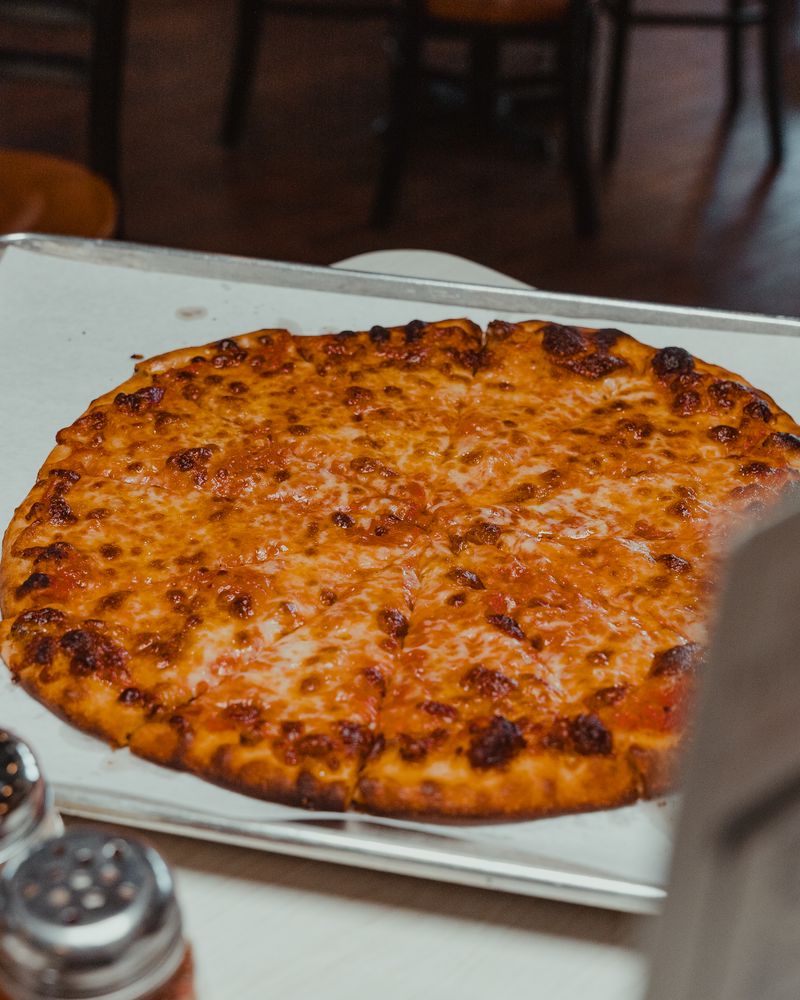
Walking into Frank Pepe reveals no molecular gastronomy equipment or exotic ingredients flown in from distant continents, just honest ingredients treated with respect.
The tomatoes come from carefully selected suppliers who understand that sauce quality determines whether a pizza succeeds or fails.
Fresh mozzarella arrives daily, never the pre-shredded bags that compromise texture and flavor at lesser establishments.
The clams for the signature white pie get shucked on-site, ensuring the freshness that makes such a simple preparation work so brilliantly.
Olive oil gets chosen for flavor rather than price, adding richness without greasiness to every pizza it touches.
Even the flour matters here, selected for protein content and behavior under high heat, contributing to that perfect crust texture.
This commitment to ingredient quality might seem obvious, but it sets Pepe’s apart from chains and imitators who cut corners to maximize profits.
The restaurant proves that you don’t need dozens of toppings or complicated preparations when you start with excellent raw materials.
Each ingredient plays a specific role, with nothing included merely for show or to justify higher prices.
Tasting a Pepe’s pizza educates the palate about what food can be when simplicity and quality combine, teaching a lesson that applies far beyond pizza to all cooking.
This philosophy of doing simple things exceptionally well has kept the restaurant relevant for nearly a century while trendier concepts come and go.
A Family Business That Honors Its Roots

Many restaurants claim family ownership but operate more like corporations, with distant relatives lending their names while professional managers make decisions.
Frank Pepe remains genuinely family-run, with descendants of the founder still involved in daily operations and major decisions about the business direction.
This continuity ensures that standards don’t slip and that expansion happens thoughtfully rather than recklessly chasing profits.
Family members can often be spotted working the floor, checking on customers, or even making pizzas during busy shifts when extra hands are needed.
The commitment to maintaining quality across new locations shows a family that values reputation over rapid growth, opening new restaurants only when they can ensure consistency.
Stories get passed down through generations, keeping alive the memory of Frank Pepe himself and the values he established when opening his first pizzeria.
This connection to history gives the restaurant an authenticity that cannot be manufactured or copied by corporate concepts trying to create artificial heritage.
Employees often stay for years or even decades, becoming part of an extended family that takes pride in the restaurant’s reputation.
The family’s stewardship has navigated changing tastes, economic challenges, and increased competition while staying true to the original vision.
Eating at Frank Pepe means supporting not just a business but a family legacy, where every pizza sold helps preserve a piece of culinary history for future generations to discover and enjoy.
Address: 157 Wooster St, New Haven, CT
Dear Reader: This page may contain affiliate links which may earn a commission if you click through and make a purchase. Our independent journalism is not influenced by any advertiser or commercial initiative unless it is clearly marked as sponsored content. As travel products change, please be sure to reconfirm all details and stay up to date with current events to ensure a safe and successful trip.
