Portland is a playground for photographers, with river reflections, forested hills, and skyline angles that change by the minute.
You are about to step into a curated path that finds light, texture, and character in places locals truly love.
Every stop is verified, current, and friendly to travelers who value both beauty and accuracy.
Bring comfortable shoes, charge your phone, and get ready to build a visual diary that feels like Oregon itself.
Expect surprises around every corner, with scenes that reward patience and curiosity.
1. Pittock Mansion

Set on a forested ridge above the city, Pittock Mansion carries a view that feels like a postcard you can walk into.
The grand facade frames a sweep of Portland rooftops with Mount Hood hovering on clear days.
Arrive near sunrise or golden hour, when guiding light cuts across the lawn and defines the stone textures.
The address is 3229 NW Pittock Dr, Portland, OR 97210, and the main terrace offers open sightlines that photographers appreciate.
Tripods are fine outside during normal hours, though staff may limit space during events.
If fog blankets the city, lean into mood by composing layers of silhouetted trees and muted skyline shapes.
Spring brings fresh greens that play nicely against the neutral mansion tones.
Autumn saturates the hillside with reds and golds that reward patient framing along the garden edges.
Winter can deliver crisp air and snow on Mount Hood, offering bright contrast for clean compositions.
Walk the looping paths to find lower angles that pull in foreground flowers, benches, and leading lines.
Wide lenses capture scale, while a short telephoto isolates peaks and bridges beyond the treetops.
Keep an eye on wind, because subtle breeze shifts can ruffle foliage and change bokeh highlights fast.
Restrooms and parking are on site, with posted hours that change seasonally.
The mansion museum has separate admission, but the grounds offer ample exterior scenes.
Pack a microfiber cloth since hillside mist can spot lenses quickly in Oregon weather.
For a steady skyline layer, place the horizon lower in frame and anchor with the balustrade curve.
A vertical composition emphasizes the climb from garden to sky.
Leave time to watch light evolve, because Portland’s glow often peaks just after the sun dips.
2. White Stag Sign
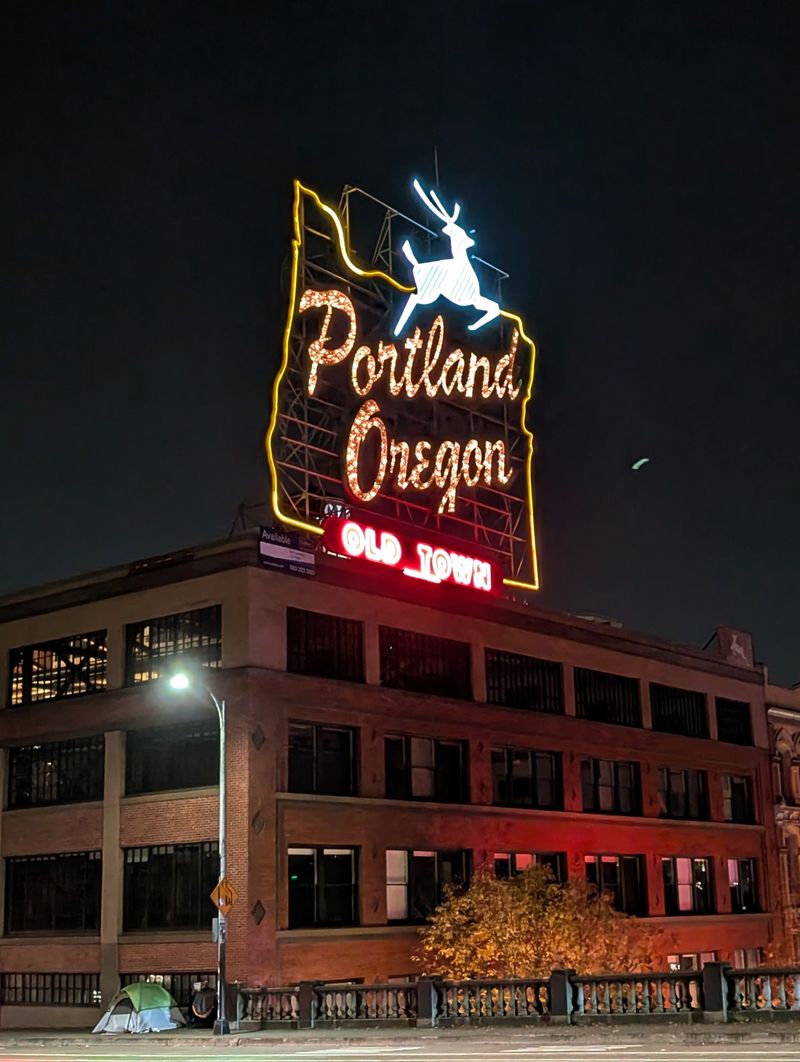
The White Stag Sign is a neon icon that lights up the Old Town skyline with a vintage glow.
Best results come at blue hour when the sky still holds color and the sign pops.
You can compose from the Burnside Bridge sidewalk or nearby corners for clean lines.
The official location is 70 NW Couch St, Portland, OR 97209, atop the historic White Stag building.
Bring a stable stance and a moderate focal length to avoid distortion from street level.
If rain has passed, look for puddles that mirror the sign in playful symmetry.
Traffic passes add gentle motion blur that frames the still neon letters.
Use a low ISO to keep noise in check while stretching your shutter slightly.
Stabilization helps, but a discreet mini tripod will keep things steady without drawing attention.
Composition works nicely when you anchor the sign in the upper third while balancing with street lamps.
Step a few feet either direction to dodge poles and wires for a cleaner background.
Brick textures complement the retro typography, creating a timeless mix of grit and glow.
Safety improves with awareness, so keep gear close and plan your path between vantage points.
Portland police patrol the area, and crowds ebb with events and weekend energy.
If conditions feel busy, shift to a nearby spot and wait for a gap in foot traffic.
On foggy nights the neon spills soft light that feels cinematic in Oregon mist.
Capture a sequence as the animations cycle for a dynamic set.
Leave room at the edges for cropping later, preserving flexibility when you share your final frame.
3. International Rose Test Garden
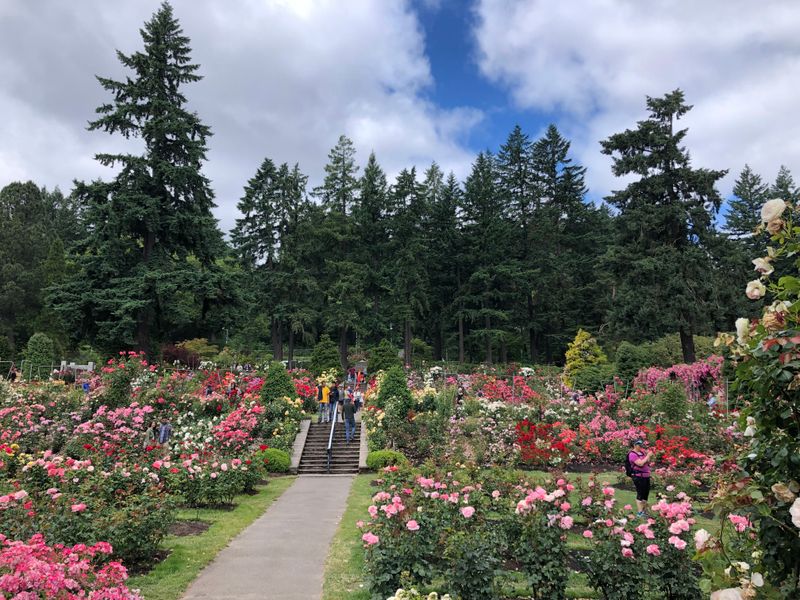
Color and fragrance set the tone at the International Rose Test Garden inside Washington Park.
Rows of cultivars lead the eye through terraces, steps, and framed views toward the city.
Early morning light softens petals and keeps crowds low for gentle compositions.
The garden address is 400 SW Kingston Ave, Portland, OR 97205, with multiple entrances and nearby parking lots.
Macro lenses shine here, but wider glass captures symmetric beds and pathways.
Overcast skies are allies since clouds produce even tones across complex hues.
Benches, pergolas, and hedges add human scale that tells a relaxing story.
Respect planting beds by staying on paths to preserve shapes and prevent damage.
Seasonal peak typically runs late May through June in Oregon, though blooms appear beyond that window.
Look for layered compositions with foreground roses that lead into distant evergreens.
A shallow depth of field isolates a single bloom while keeping context in the background.
For a sweeping scene, shoot slightly elevated near terraces to arrange lines cleanly.
Restrooms and signage help navigation, and garden volunteers can answer questions about featured varieties.
If rain moves in, water droplets turn petals into jewel surfaces that photograph beautifully.
Keep a lens hood ready to cut glare and maintain contrast between vivid tones.
Late light can backlight petals and produce translucent edges that glow.
Capture vertical frames along narrow paths to emphasize progression and depth.
Close the session with a wide shot that shows pathways, beds, and tree lines in soft balance.
4. Powell’s City of Books
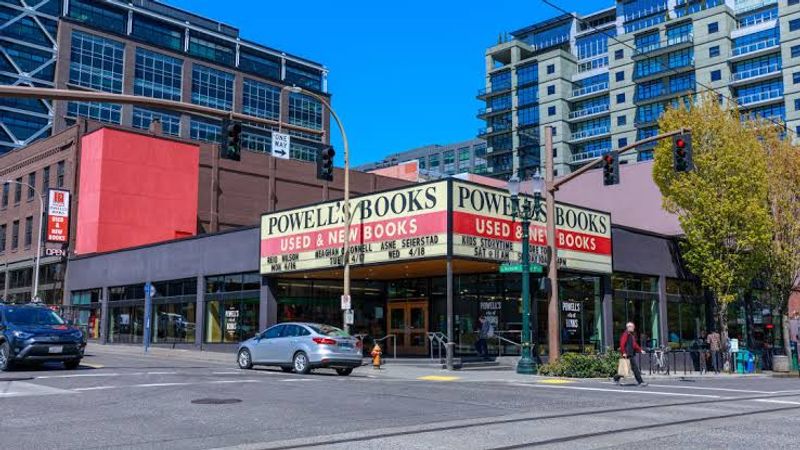
Powell’s City of Books is a multilevel maze that feels like a cathedral for readers and photographers.
Long aisles pull the eye into vanishing points with color from every spine.
Soft lighting creates a welcoming mood that suits slow shutter handhelds.
The flagship store stands at 1005 W Burnside St, Portland, OR 97209, covering an entire city block.
Interiors work well with a moderate wide lens to honor vertical lines.
Ask staff about photography guidelines and be respectful of patrons while you frame.
Look for staircases and cross aisles that form strong diagonals between floors.
Overhead signs and color-coded rooms add structure that guides visual flow.
If crowds form, compose tighter details of shelving and seating alcoves for quieter moments.
Windows on upper levels paint subtle highlights across the stacks during afternoon hours.
Reflections in glass panels can add depth if you adjust your angle carefully.
Steady your camera against a column to minimize motion without a tripod.
Exterior shots work too, especially during twilight when streetlights warm the facade.
Include the corner entrance to emphasize scale and sense of place in Oregon.
Rain gloss on the sidewalk gives you an extra layer for cinematic mood.
Plan a short route through the main halls to gather variety before fatigue sets in.
Capture one wide establishing frame, then a sequence of mid shots, then a single tight detail.
End with a quiet corner that shows chairs and shelves arranged like a cozy stage.
5. Tom McCall Waterfront Park
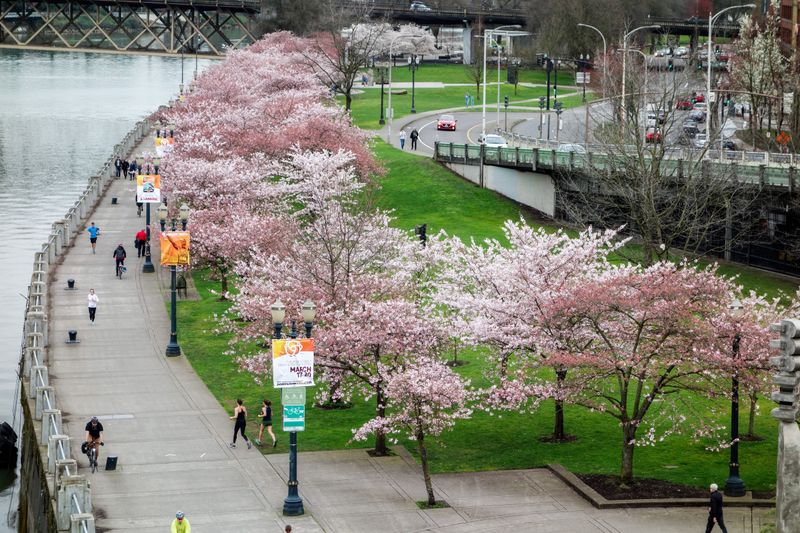
Tom McCall Waterfront Park stretches along the Willamette River with nonstop angles on bridges and skyline.
Morning brings calm water that doubles buildings in shimmering reflections.
Even on cloudy days the light is soft and steady, perfect for balanced exposures.
The official address is 98 SW Naito Pkwy, Portland, OR 97204, covering a ribbon of lawns and paths.
Move slowly between Salmon Street Springs and the Hawthorne Bridge for layered views.
Cyclists and joggers add friendly motion that anchors the city’s rhythm.
Frame the riverfront trees as a natural border that opens toward the towers.
A polarizer helps tame glare while deepening sky and water tones.
If wind picks up, use faster shutter speeds to freeze ripples without losing texture.
Spring cherry blossoms create a pastel tunnel that feels storybook.
Summer sunsets paint warm hues across glass and steel with gentle fade.
Winter scenes turn minimalist with bare branches and high contrast reflections common in Oregon.
A short telephoto compresses bridges for graphic patterns across the river.
Wide lenses capture sweeping lawns that lead into the skyline with elegant lines.
Try a low vantage for bold foreground grass blades that guide the viewer inward.
Restrooms and bike lanes make longer sessions comfortable between locations.
Keep an eye on the river’s surface for passing boats that create smooth wakes.
Finish with a blue hour panorama from the seawall when city lights settle into calm water.
6. Eastbank Esplanade
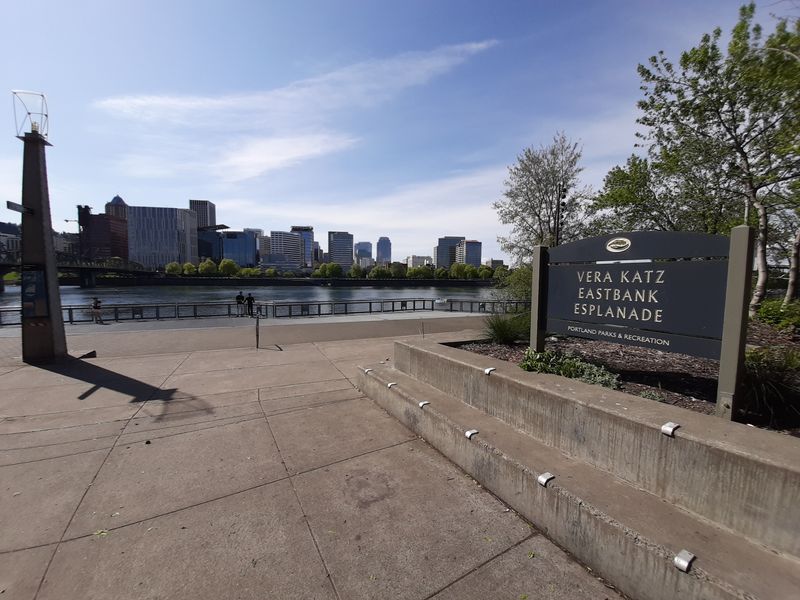
The Eastbank Esplanade floats along the river, giving low angles that make the skyline feel close.
Walk the ramps and platforms to find railings that lead the eye across water.
Twilight is superb here since bridge lights lace the scene with points of interest.
The access point at 100 SE Madison St, Portland, OR 97214 gets you onto the path quickly.
From there you can aim north toward the Burnside Bridge or south toward Tilikum Crossing.
The gentle movement of the floating sections adds subtle life to reflections.
Use a higher shutter speed if you want crisp edges with minimal sway.
A polarizer is handy but avoid over-darkening the surface when light fades.
Pack a microfiber cloth to wipe mist that drifts off the Willamette in Oregon evenings.
For variety, step back from the railing and include the walkway lights as foreground ornaments.
Adjust to a vertical frame to highlight height differences among downtown towers.
If boats pass, time a burst to capture wake trails that tug the eye forward.
Safety improves with a buddy or simple situational awareness, especially after dark.
Keep gear streamlined so you can move easily with changing light.
Public art along the route can fill a quick detail shot between wide frames.
Blue hour panorama stitches work nicely if you rotate slowly and overlap generously.
Lock exposure to keep tones even across the sequence.
End near the Hawthorne Bridge for symmetrical compositions that glow under city lights.
7. Pioneer Courthouse Square

Pioneer Courthouse Square is the living room of Portland with a classic amphitheater look.
The steps, bricks, and arches frame people-watching scenes that feel cinematic.
Midday light reflects off nearby glass and brightens textures without harsh contrast.
The plaza sits at 701 SW 6th Ave, Portland, OR 97204 with MAX lines and buses nearby.
Bring a moderate wide lens to balance the courthouse facade and open square.
If you want clean frames, wait for natural lulls between commuter surges.
Patterns pop when you climb the steps and face diagonally across the plaza.
The bricks create repeating lines that hold a composition from corner to corner.
Shadows from light poles sweep gracefully during late afternoon and add elegant geometry.
On drizzly days the surface gains a glossy sheen that photographs beautifully.
Reflections in storefront windows can double figures and add depth.
Keep compositions tidy by watching edges for stray bags or signs that distract.
Events are common, so check the calendar if you prefer an open plaza.
A quiet morning rewards patient framing and gentle portraits of the space itself.
The courthouse stone adds historic texture that pairs well with warm brick.
Finish with one wide establishing shot, then crop into a pattern study, and close on a simple staircase detail.
This sequence tells a calm urban story in Oregon without feeling rushed.
Your visual diary will thank you for the variety and clarity.
8. Ira Keller Fountain Park
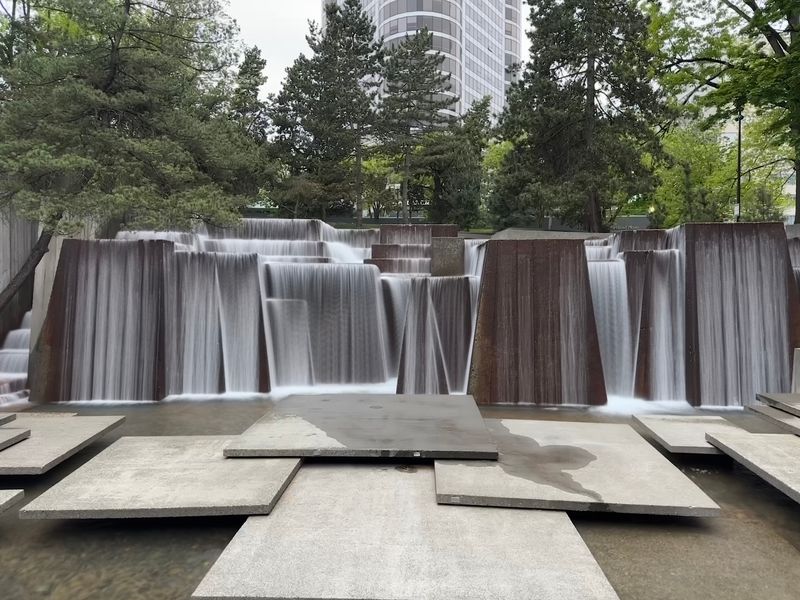
Ira Keller Fountain Park turns water and concrete into a sculptural stage for patient shooters.
Cascades pour through tiered forms that invite long exposures and careful footing.
The surrounding trees filter light and create shifting patterns across the surfaces.
The park is at SW 3rd Ave & Clay St, Portland, OR 97201, a short walk from downtown.
Use a small tripod if conditions allow and keep legs compact to stay discrete.
Neutral density filters help stretch shutter speeds for silky flows.
Move slowly and scout angles before setting up because steps can be slick. A
void leaning over edges and respect posted safety guidelines during heavy flow.
Textures come alive when side light brushes across the concrete planes in Oregon’s changing weather.
Compose from corners to emphasize depth between terraces and returns.
A mid focal length keeps lines straight and avoids exaggerated distortion.
If the sun breaks through, watch for hot spots on bright water that may clip highlights.
Reflections pool in calmer basins and can mirror the trees with gentle shimmer.
Dry days give crisp edges while misty hours soften contrast for dreamy scenes.
Sound from the falls adds to the experience, keeping the session focused and calm.
Close with a trio of frames that cover a wide establishing view, a leading line along a chute, and a tight detail of water merging with stone.
This structure produces a tidy set you can sequence later.
The design rewards revisits because light and flow shift daily.
9. Cathedral Park

Under the St. Johns Bridge, Cathedral Park gives you vaulted arches that feel like a grand nave.
Symmetry rules here, with pathways guiding your eye toward the river.
Early mist can drift through the spans and turn steel into a dreamy silhouette.
The park entrance is listed as 6635 N Baltimore Ave, Portland, OR 97203, near the boat ramp.
From the lower lawn, aim up to exaggerate height and rhythm across the piers.
Late-day sun sometimes skims the girders and highlights the green paint for drama.
A wide lens suits the arch alignment, but a telephoto compresses repeating forms nicely.
Step left or right to dodge lampposts so the pillars hold center stage.
If trains move across the deck, time a shot to match their lines with the truss.
Fog or low clouds are common in Oregon and add clean separation between layers.
After rains the grass glows and reflects light for gentle fill.
Use a small aperture to keep foreground steps and distant arches sharp in one frame.
For portraits, position subjects near the middle stair landing and keep them small for scale.
River access offers calm water for reflections when wind rests.
Watch tides and footing as surfaces near the shore can be slick.
Finish at blue hour when bridge lights glow and the sky turns deep cobalt.
Keep your horizon tight and anchor with the central stair axis.
The resulting frame feels serene and monumental without losing human warmth.
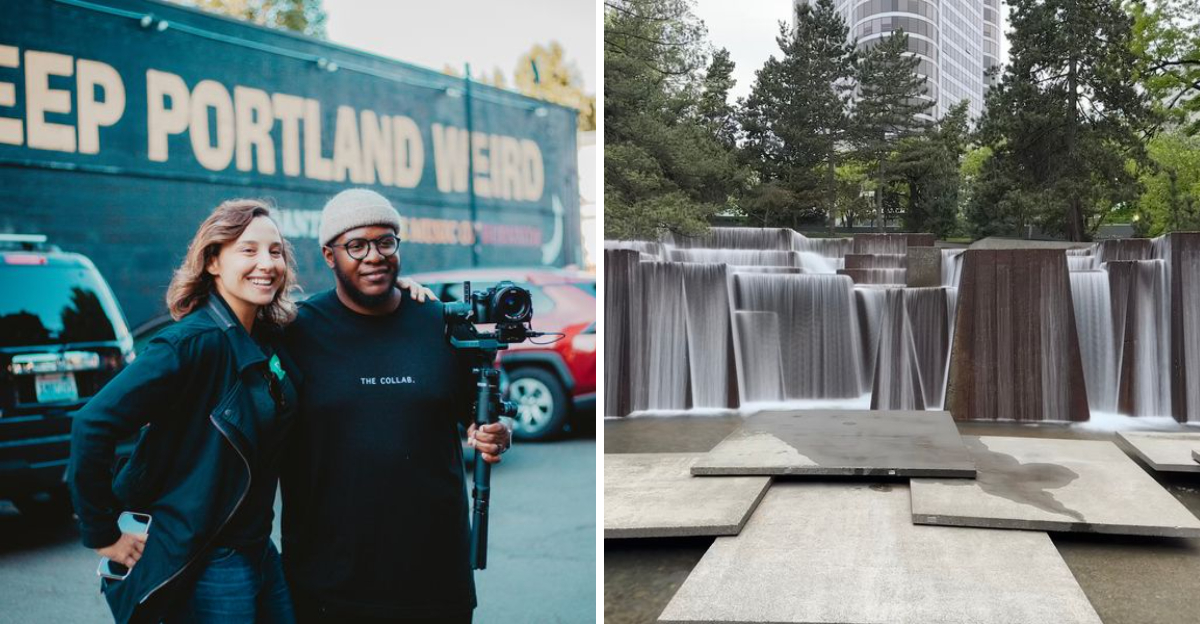
10. Keep Portland Weird Mural

The Keep Portland Weird mural is a quick hit that delivers bold letters and local character.
The wall sits across from a small parking area that often clears between rushes.
Overcast light works best here because colors stay true without glare.
The exact spot is 350 SW 3rd Ave, Portland, OR 97204 on the south wall facing the street.
Stand square to the mural for minimal distortion and clean lines.
Step back until the full phrase fits comfortably with room to crop later.
Consider a low angle to add sidewalk texture as a foreground element.
If people walk through, time a stride to freeze a leg mid-step for energy.
Keep shutter speeds high enough to avoid blur from passing cyclists.
For variety, frame a tight crop that focuses on the word Weird with chipped paint details.
A short telephoto will flatten perspective and punch contrast against the black field.
Evening light can rim the letters with warm reflections from nearby windows.
As with any street spot in Oregon cities, stay aware and keep gear simple.
Avoid blocking the sidewalk and give space to others taking their turn.
If cars park in front, wait a few minutes since turnover is frequent here.
Wrap with a wide establishing shot, a mid-composition that emphasizes texture, and a final minimal detail.
This trio tells a full story without endless repetition.
You will leave with a classic frame that fits any Portland visual diary.
Dear Reader: This page may contain affiliate links which may earn a commission if you click through and make a purchase. Our independent journalism is not influenced by any advertiser or commercial initiative unless it is clearly marked as sponsored content. As travel products change, please be sure to reconfirm all details and stay up to date with current events to ensure a safe and successful trip.
