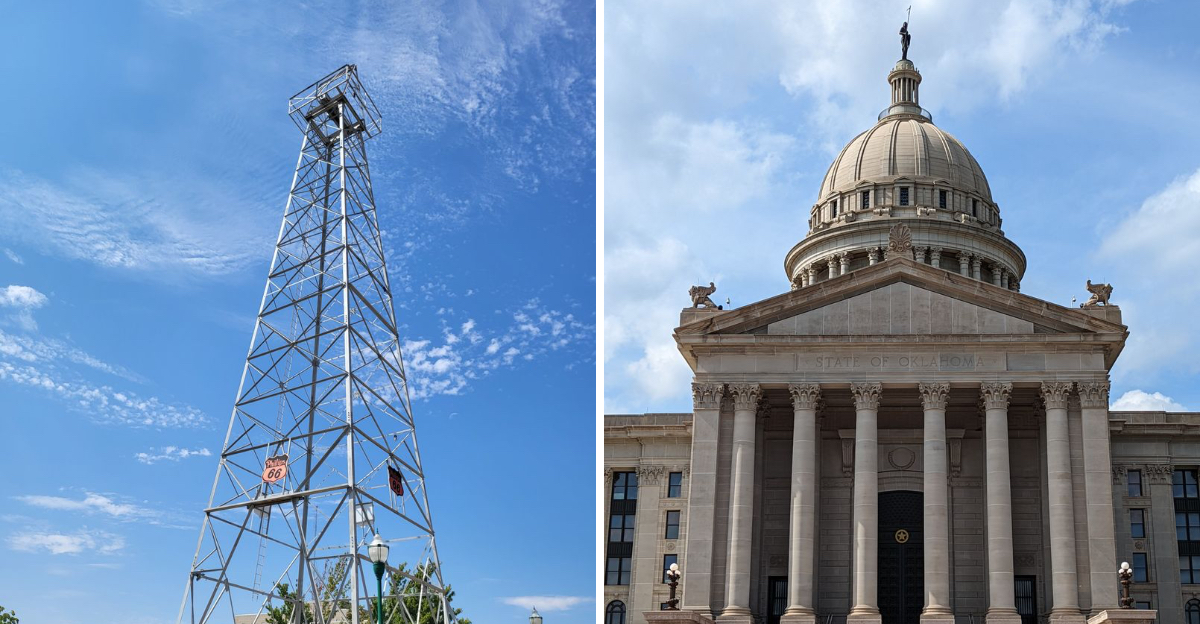
Oklahoma locals love to argue about what makes their state truly unique, but here’s something that’ll get everyone talking: imagine a government building so bold it drills for oil right on its own front lawn.
Most state capitols have monuments and fountains, but this one has an active petroleum operation pumping black gold just steps from where laws are made.
Is it a brilliant celebration of Oklahoma’s energy heritage, or the most awkward landmark placement you’ve ever seen?
A Working Oil Derrick Where You’d Least Expect It
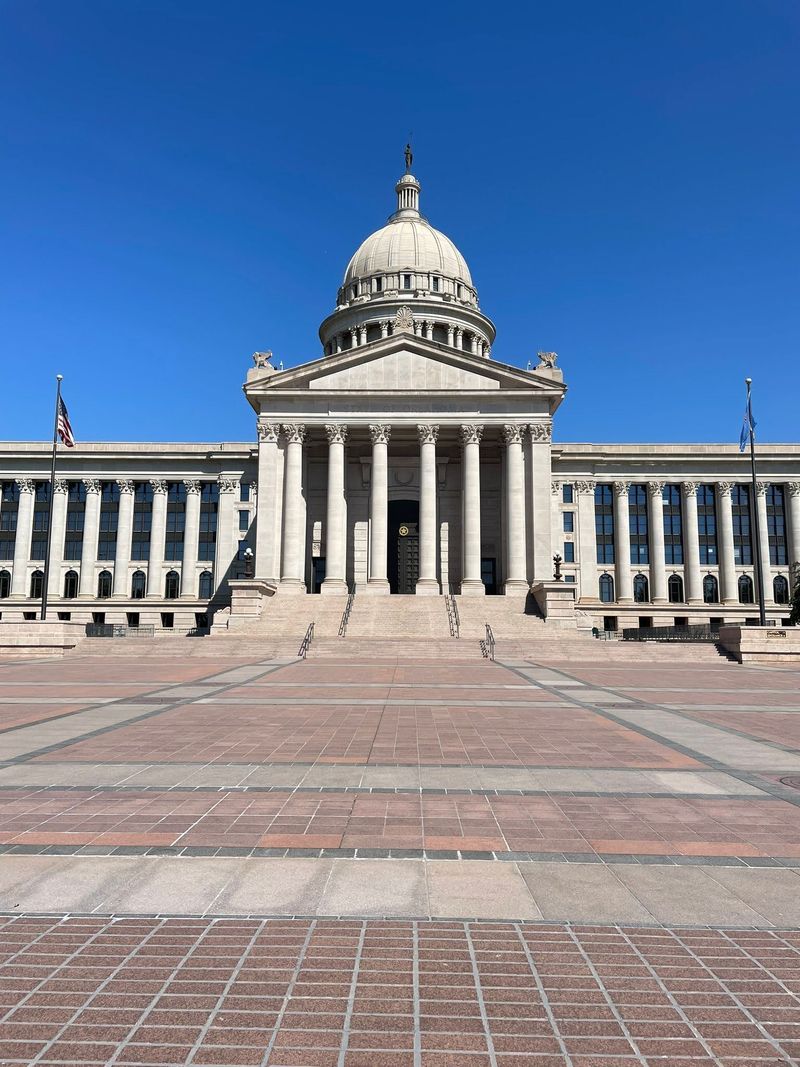
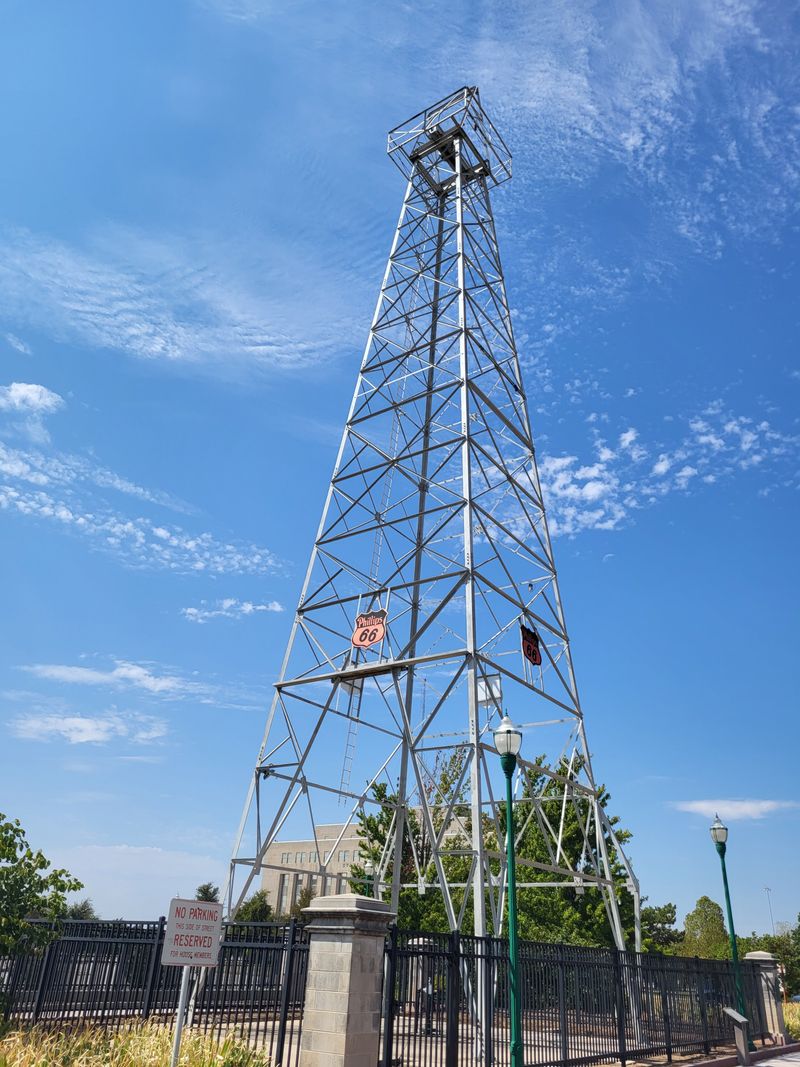
Picture this: you’re strolling toward one of the most important government buildings in Oklahoma, camera ready for some classic architectural shots, when suddenly you spot an oil well nodding away like it owns the place. Capitol Site Number One isn’t hiding in some industrial park across town.
It sits right there on the manicured lawn of the Oklahoma State Capitol, pumping crude oil while legislators debate policy just a few hundred feet away.
The well earned its name because it was literally the first one drilled on the capitol grounds back in 1941. Workers struck oil at 3,039 feet, and the discovery turned out to be more than just a lucky find.
This wasn’t some symbolic gesture or historical reenactment. The well produced actual petroleum for decades, contributing real revenue to state coffers while tourists scratched their heads in confusion.
Today, the derrick stands as both a working industrial site and an unofficial mascot for Oklahoma’s unapologetic embrace of its oil heritage. Security guards have seen every reaction imaginable, from delighted giggles to genuinely concerned questions about safety protocols.
Some visitors snap selfies with genuine enthusiasm, while others can’t quite process why anyone thought mixing government business with petroleum extraction was a good idea.
The Bold Statement of Oklahoma’s Energy Identity
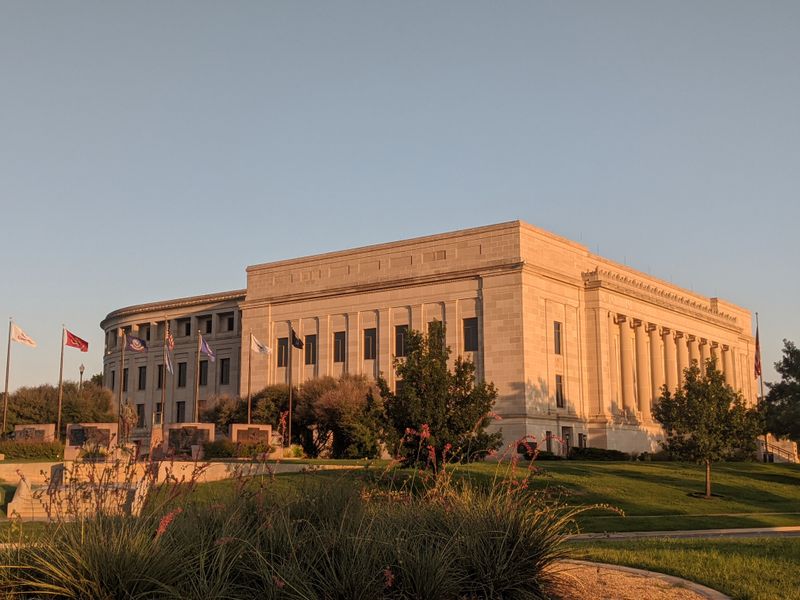
Oklahoma doesn’t do subtle when it comes to celebrating what built the state. While other regions might tuck their industrial past into museums or historical markers, this state planted an oil well smack in the middle of its most prestigious address.
The decision to drill on capitol grounds wasn’t made lightly, but it perfectly captured the spirit of a place where energy production isn’t just an industry but a cultural cornerstone.
Back when the well went operational in the 1940s, Oklahoma was riding high on oil wealth that transformed dusty prairie towns into booming cities practically overnight. Putting a derrick on the capitol lawn sent an unmistakable message: petroleum wasn’t something to be ashamed of or hidden away.
It was the lifeblood of the state economy, worthy of prime real estate next to marble columns and legislative chambers.
Fast forward to today, and that bold choice creates fascinating conversations among visitors from different backgrounds. Environmental advocates see it as tone deaf, while energy workers view it as a proud tribute to generations of roughnecks and wildcatters.
Local tour guides have perfected the art of presenting the well without taking sides, letting visitors form their own opinions about whether it’s brilliantly honest or hilariously inappropriate for such a formal setting.
The Technical Marvel Behind the Controversial Placement
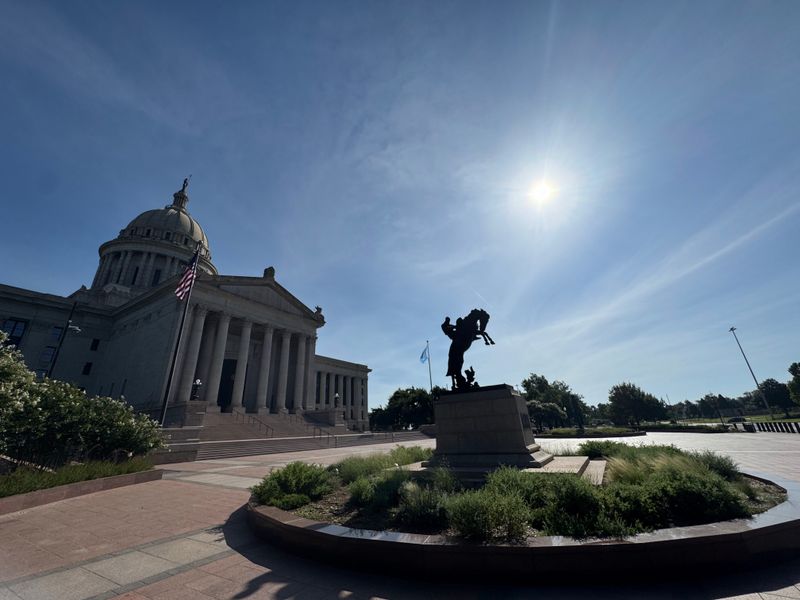
Drilling an oil well on government property requires more than just guts and a good story. Engineers had to navigate complex geological surveys, ensure the operation wouldn’t damage the capitol’s foundation, and design systems that could coexist with daily legislative business.
The technical challenges were substantial, but Oklahoma’s petroleum experts had decades of experience solving exactly these kinds of problems.
Capitol Site Number One reached productive depths using equipment that was cutting edge for the 1940s. The drilling operation had to work around legislative sessions, public events, and the constant foot traffic of a working government building.
Noise mitigation became crucial, as did managing the visual impact of industrial equipment in such a formal setting. The solution involved careful scheduling and design choices that minimized disruption while maximizing output.
The well’s production history reveals impressive engineering resilience. It pumped oil for many years before eventually being capped, though the derrick remains as a historical landmark.
Modern visitors often underestimate the complexity involved in maintaining such an operation. The site required constant monitoring, regular maintenance, and safety protocols that went far beyond typical drilling operations.
Today, petroleum engineering students sometimes visit to study how industrial and civic spaces were integrated during Oklahoma’s oil boom era, making it an unexpected educational resource.
Tourist Reactions That Range From Delight to Disbelief
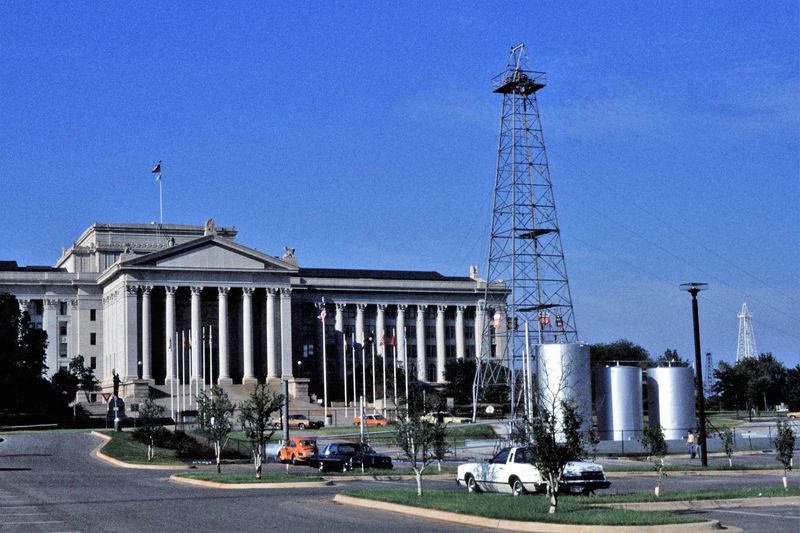
Capitol staff have witnessed some truly memorable reactions over the decades. International visitors often assume it’s a joke or art installation at first glance.
The concept of drilling for oil on government property strikes many as so outlandish that it must be satire. Then they learn it actually produced petroleum, and the expressions shift from amusement to genuine bewilderment about American priorities.
Domestic tourists split along predictable lines, though not always the ones you’d expect. Plenty of environmentally conscious visitors appreciate the historical honesty, viewing it as refreshingly transparent about where state wealth originated.
Others from oil country states feel right at home, joking that their own capitols should have followed Oklahoma’s lead. Photography enthusiasts love it because the juxtaposition creates striking compositions that tell complex stories in a single frame.
School groups provide the most entertaining commentary, with kids asking wonderfully blunt questions that adults only think quietly. Teachers use the well as a jumping off point for discussions about natural resources, economic history, and how communities decide what to celebrate publicly.
The educational value turns out to be substantial, even if the initial reaction is usually some variation of “Wait, is that a real oil well?” Security personnel have developed impressive patience for answering the same questions hundreds of times, always with good humor.
The Historical Context That Makes It All Make Sense
Understanding why Oklahoma put an oil well on the capitol grounds requires rewinding to the state’s dramatic transformation during the early 20th century. Before petroleum, this was hardscrabble territory where fortunes were scarce and opportunities scarcer.
The discovery of major oil fields changed everything virtually overnight, creating wealth that seemed almost magical to people who’d struggled through agricultural hardship.
When geologists suggested the capitol grounds might sit atop productive formations, the decision to drill wasn’t controversial locally. Oil money had funded the capitol’s construction and continued supporting state operations.
Refusing to tap resources directly beneath the building would have seemed wasteful to Depression era Oklahomans who understood the value of every barrel. The well represented practical resource management wrapped in symbolic pride.
The timing mattered too. By 1941, Oklahoma had established itself as an energy powerhouse, and the industry employed huge portions of the workforce.
Drilling on the capitol lawn reinforced the message that oil workers weren’t second class citizens whose messy jobs should be hidden away. They were essential contributors worthy of recognition at the state’s most prominent address.
That historical context doesn’t resolve modern debates about the well’s appropriateness, but it explains why locals at the time saw nothing strange about the decision.
The Ongoing Debate About Heritage Versus Optics
Few landmarks spark such divided opinions among Oklahomans themselves. Energy industry veterans tend to view the well with straightforward pride, seeing it as honest acknowledgment of what built their state.
They argue that sanitizing history by removing industrial symbols does nobody any favors. The oil derrick tells the truth about Oklahoma’s economic foundation, and truth shouldn’t be embarrassing regardless of current political fashions.
Critics counter that keeping the well prominent sends troubling messages about state priorities in an era of climate concern. They don’t necessarily want to erase history, but question whether the capitol grounds need to actively celebrate fossil fuel extraction.
Some suggest moving the derrick to a museum context where it could be appreciated as historical artifact rather than ongoing statement. The debate gets heated because both sides feel they’re defending important values.
What makes the situation fascinating is that neither perspective is obviously wrong. The well genuinely represents crucial Oklahoma history, and it also genuinely creates awkward optics for a state trying to diversify its economy.
Tour guides at the capitol have become skilled at presenting both viewpoints fairly, letting visitors wrestle with the complexity themselves.
That might be the well’s greatest value now: forcing honest conversations about how we honor the past while moving toward different futures, all sparked by one stubborn derrick that refuses to fade quietly away.
Planning Your Visit to This One of a Kind Landmark
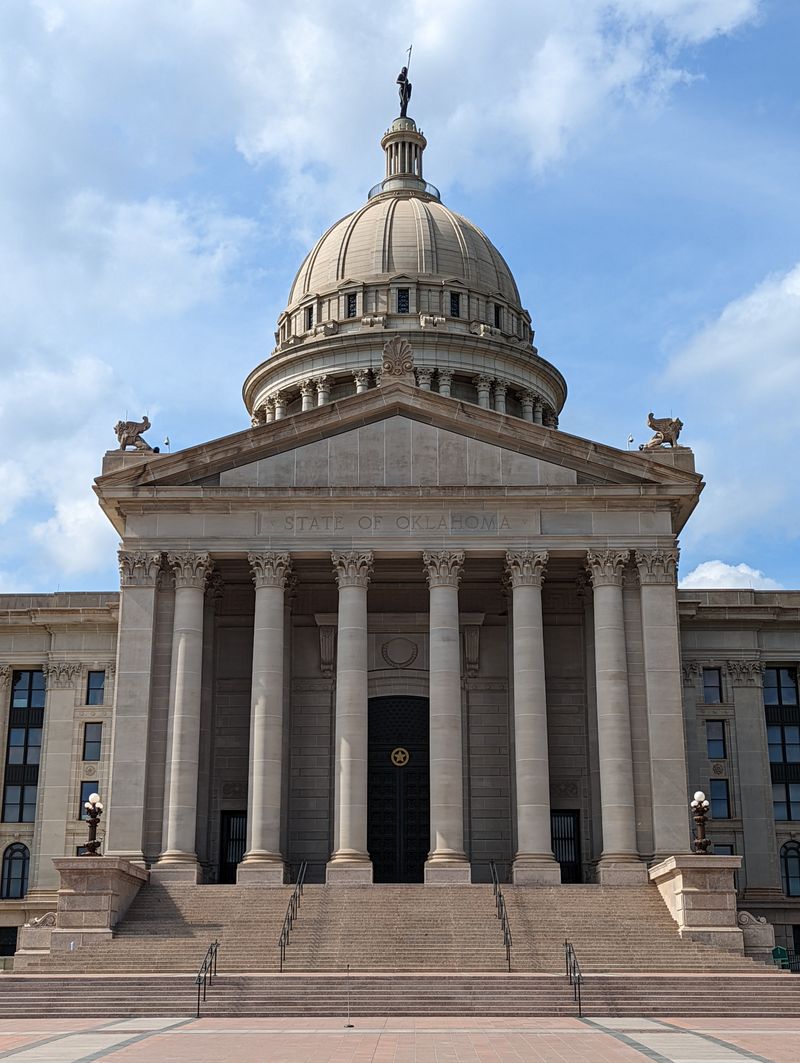
The oil well sits on the capitol grounds at 2300 N Lincoln Boulevard in Oklahoma City, making it incredibly easy to include in any visit to the building itself. Parking is straightforward, and you can walk right up to view the derrick from multiple angles.
The capitol is open weekdays from 7 AM to 7 PM and Saturdays from 9 AM to 4 PM, giving you plenty of flexibility for planning.
Photography is allowed and even encouraged, so bring your camera for shots that your friends back home definitely won’t expect. The contrast between formal government architecture and industrial petroleum equipment creates compositions you literally cannot find anywhere else.
Early morning and late afternoon light work particularly well for dramatic images that capture the surreal nature of the site.
Consider taking one of the free guided tours offered at 11 AM and 1 PM on weekdays. Tour guides provide context that helps the oil well make more sense as part of Oklahoma’s larger story.
They’ll explain the technical details, share visitor reactions over the years, and offer historical perspective that enriches the experience beyond just snapping a quick photo. Even if you think oil wells are boring, this one tells such a uniquely Oklahoma story that it’s worth your time.
Pack your curiosity along with your camera, and prepare for a landmark that’ll definitely spark some interesting conversations later.
Dear Reader: This page may contain affiliate links which may earn a commission if you click through and make a purchase. Our independent journalism is not influenced by any advertiser or commercial initiative unless it is clearly marked as sponsored content. As travel products change, please be sure to reconfirm all details and stay up to date with current events to ensure a safe and successful trip.
