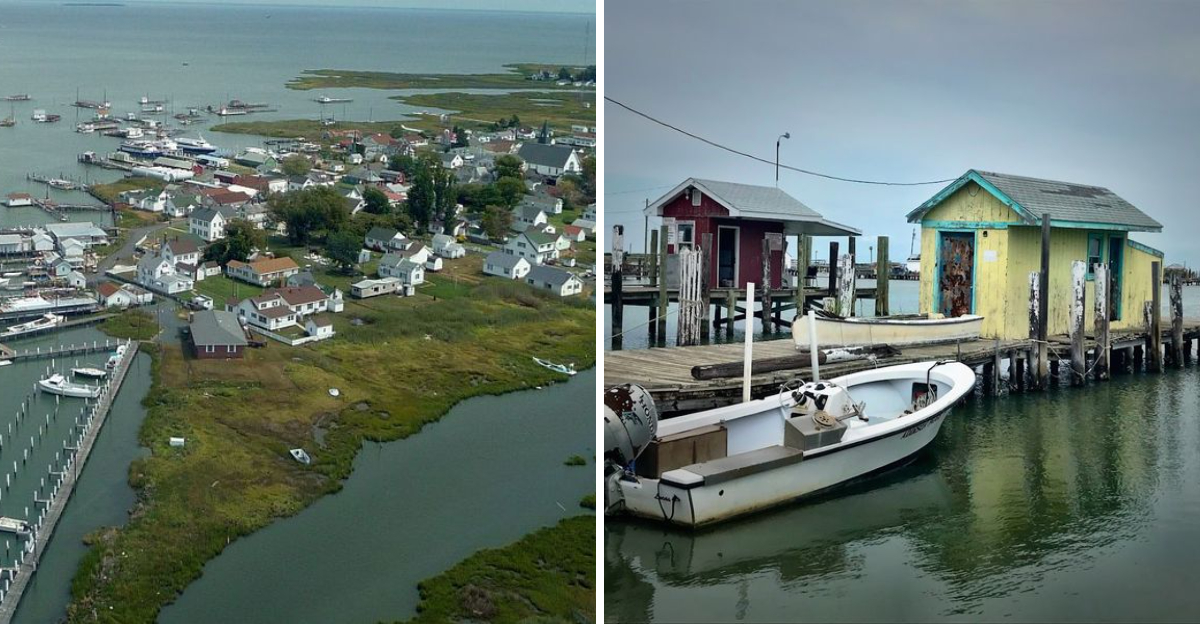
The ferry ride is the first hint that you are leaving the modern world behind. Then you step onto the dock and the quiet hits you.
No cars, no traffic lights, no chain stores. This Virginia coastal town has so few residents that you will feel like you stepped back in time.
I spent a day here, walking the narrow streets, watching the watermen work their crab pots, and eating a sandwich at a small cafe. The houses are weathered, the people are friendly, and the pace is slow enough to let you breathe.
The island is accessible only by boat or plane, which keeps the crowds away and the charm intact. Virginia has plenty of coastal towns, but this one is different.
It is a place that time forgot, and that is exactly why it is worth visiting.
An Island You Can Only Reach by Boat or Seaplane
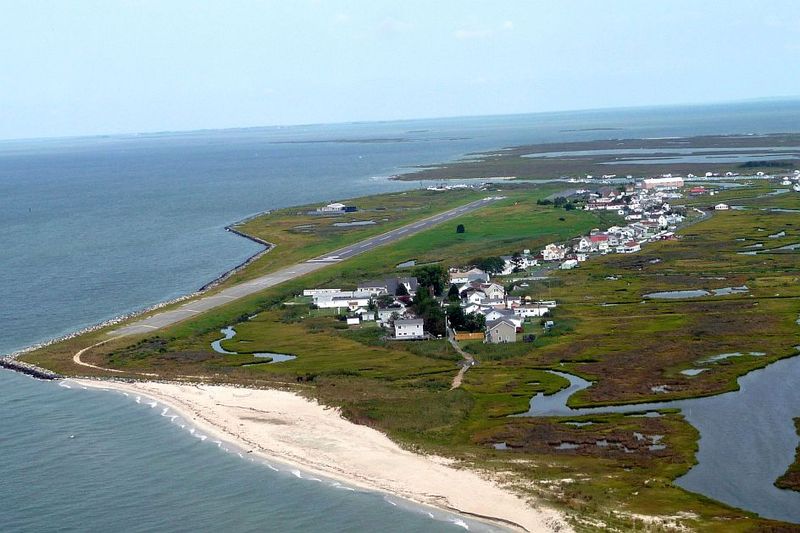
Getting to Tangier Island is half the adventure, and honestly, that is exactly how it should be. There are no bridges, no tunnels, and no roads connecting this tiny Virginia community to the mainland.
Your only options are a ferry ride across the Chesapeake Bay or, if you are feeling particularly bold, a seaplane.
The ferry journey takes roughly an hour from the mainland, and the views along the way are spectacular. Open water stretches in every direction, and the island slowly materializes on the horizon like something out of a storybook.
Seabirds glide alongside the boat, and the salty breeze hits your face in the most refreshing way imaginable.
That physical separation from the mainland is not just a logistical quirk. It is the very reason Tangier Island has managed to preserve its extraordinary way of life for so long.
No bridge means no casual drive-through tourism, no chain restaurants sneaking in, and no suburban sprawl creeping across the shoreline. Every visitor who steps onto this island has made a deliberate choice to be there, and the island rewards that effort generously.
Virginia does not have another place quite like this one.
Golf Carts, Bikes, and Absolutely No Traffic Jams
Pull up to Tangier Island and the first thing you notice is the blissful absence of roaring engines and honking horns. Personal automobiles are almost nonexistent here, and traffic lights are simply not a thing.
The roads, if you can even call them that, are narrow lanes barely wide enough for two golf carts to pass each other without a friendly wave and a slight swerve.
Golf carts are the primary mode of transportation for most residents, followed closely by bicycles and motorbikes. The pace this creates is wonderfully unhurried.
Nobody is rushing anywhere. Nobody is checking a GPS or cursing at a red light.
Life just moves at a gentler, more human speed.
For visitors, this quirky transportation culture is one of the most charming aspects of the island experience. You can rent a bike and pedal your way from one end of the island to the other without breaking much of a sweat.
The whole place feels like a neighborhood that time forgot to modernize, and that is absolutely a compliment. Tangier Island, Virginia, invites you to slow down in a way that feels genuinely therapeutic rather than forced.
A Dialect So Unique Linguists Come From Across the Country
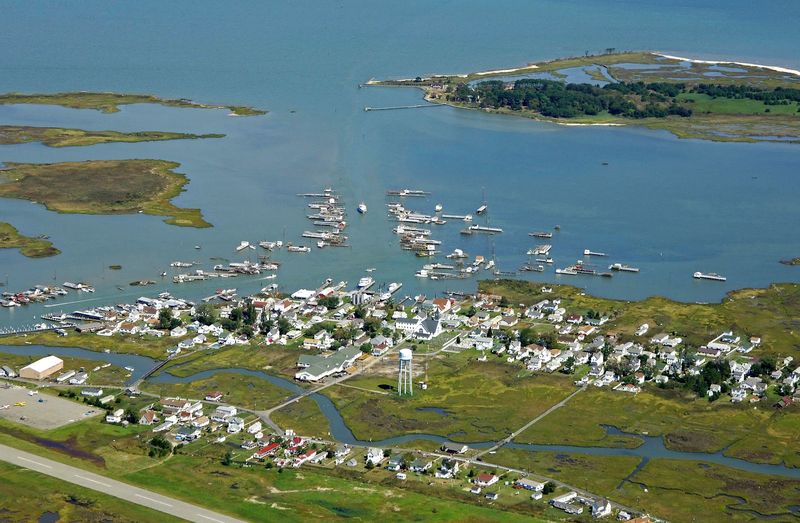
One of the most jaw-dropping surprises waiting for you on Tangier Island has nothing to do with scenery. Open your ears and listen closely, because the locals speak in a way you have almost certainly never heard before.
The Tangier dialect is a fascinating, distinctive form of English that has developed over centuries of isolation from the mainland.
Some linguists have described it as carrying traces of Elizabethan English, while others point to its roots in the speech patterns brought by 17th-century Cornish settlers. Whatever its precise origins, it sounds unlike anything else spoken in Virginia or anywhere else in the United States today.
Certain vowel sounds and phrases feel almost musical, pulling you back through centuries of history with every conversation.
Hearing a lifelong Tangier resident speak is genuinely one of the most culturally rich experiences this island offers. It is a living linguistic artifact, preserved naturally by the island’s geographic isolation rather than by any deliberate effort.
Researchers and documentary filmmakers have been drawn here specifically to study and record this remarkable speech pattern before it potentially fades. Spending time on Tangier Island means brushing up against a piece of American history that most people never even knew existed.
The Soft-Shell Crab Capital of the World
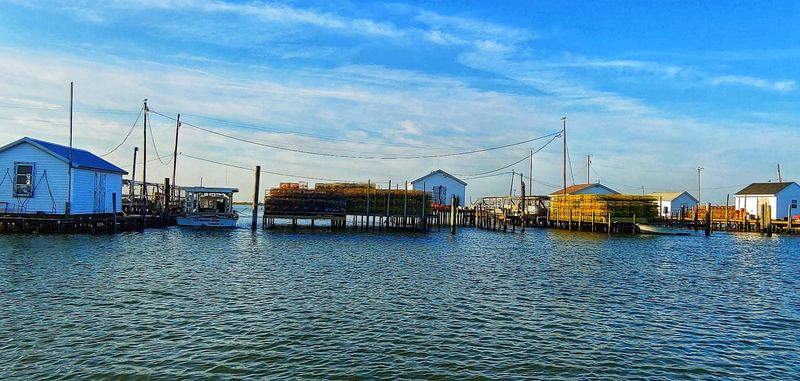
Tangier Island wears its most famous title with quiet pride. Known widely as the soft-shell crab capital of the world, this small Virginia community has built its identity around the Chesapeake Bay’s most celebrated crustacean.
Watermen here have been harvesting blue crabs for generations, developing techniques and knowledge passed down through families like precious heirlooms.
The crab shanties scattered along the waterfront are iconic. These small wooden structures perched on stilts over the water serve as the working heart of the island’s economy.
Inside them, watermen carefully monitor crabs through the molting process that transforms them into the tender, delicate soft-shell variety prized by seafood lovers everywhere.
Walking past these shanties early in the morning, you can hear the sounds of an industry that has barely changed in over a hundred years. The boats head out before dawn, the traps get pulled, and the day’s catch gets sorted with practiced efficiency.
It is a rhythm of life deeply tied to the natural cycles of the bay. For anyone curious about where their seafood actually comes from and what the hands look like that caught it, Tangier Island offers a rare and humbling window into that world.
The Swain Memorial United Methodist Church and Its Remarkable Legacy
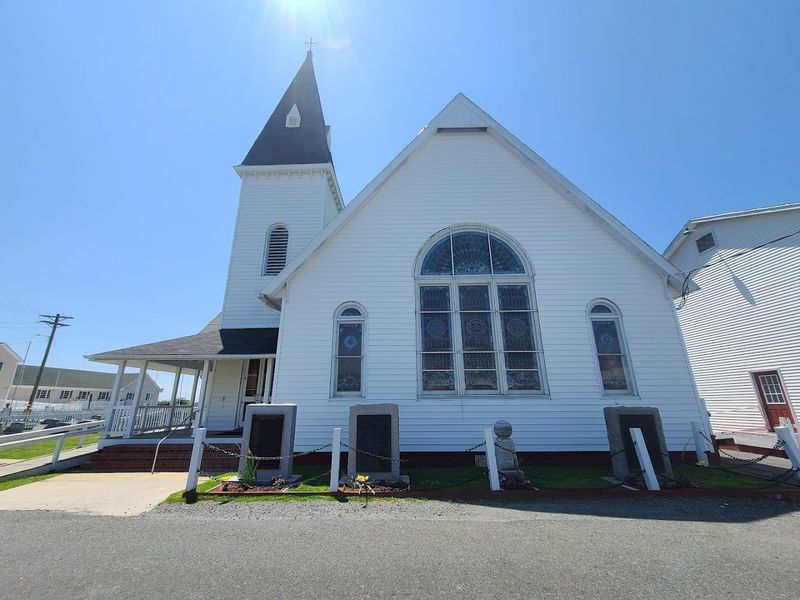
Faith runs deep on Tangier Island, and nowhere is that more visible than at the Swain Memorial United Methodist Church. This modest, white-painted church is the spiritual centerpiece of the community, and its influence on island life stretches back centuries.
The church is named in honor of a key figure in the island’s religious history, and its congregation has shaped the social fabric of Tangier in profound ways.
Methodist minister Joshua Thomas played a transformative role in the island’s spiritual development during the early 19th century, earning the nickname the Parson of the Islands.
His legacy is woven into daily life here, from the community’s famously conservative values to the island’s status as a dry community where no alcohol is sold.
Attending a Sunday service at this church, even as a curious outsider, is a genuinely moving experience. The congregation sings with real conviction, the building carries the weight of generations, and the sense of community is palpable.
Tangier Island, Virginia, is one of those rare places where religion is not performative but deeply lived. The church is not just a building here.
It is the beating heart of everything the community holds dear.
The Tangier Island History Museum and What It Reveals
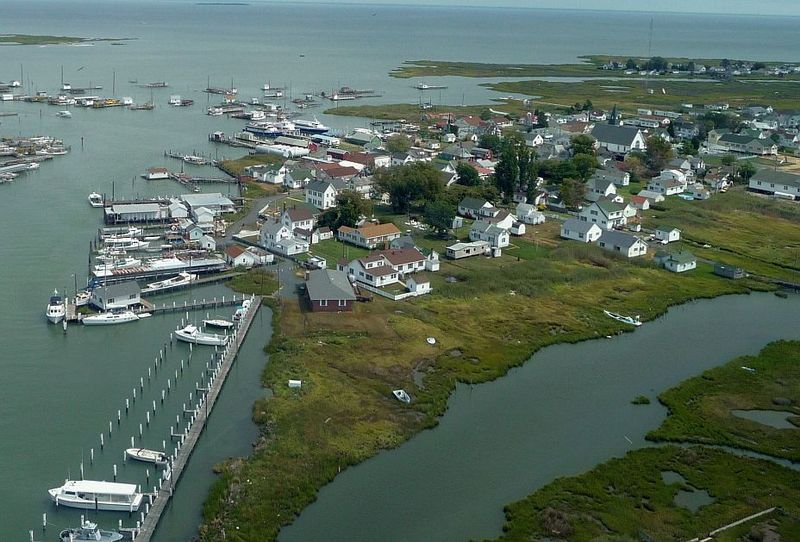
Compact in size but enormous in character, the Tangier Island History Museum packs a serious punch for such a small space. Nestled within the island community, this little museum tells the story of a place that has somehow managed to exist on its own terms for over three centuries.
Walking through its exhibits feels less like a history lesson and more like a conversation with the island itself.
Artifacts, photographs, and documents trace the arc of Tangier’s story, from its earliest colonial settlements to the watermen’s culture that defines it today. You get a real sense of how the community has adapted, survived, and persisted against odds that would have erased most places from the map.
The erosion data alone is sobering. Since 1850, the island has lost two-thirds of its landmass to rising seas and relentless erosion.
The museum also sheds light on the island’s linguistic heritage, its fishing traditions, and the tight-knit social structures that have kept residents connected across generations. For first-time visitors to Tangier Island, spending time here before exploring the rest of the community is genuinely worthwhile.
It gives context to everything you see outside, transforming a curious visit into something much more meaningful and memorable.
A Community Where Nobody Locks Their Doors
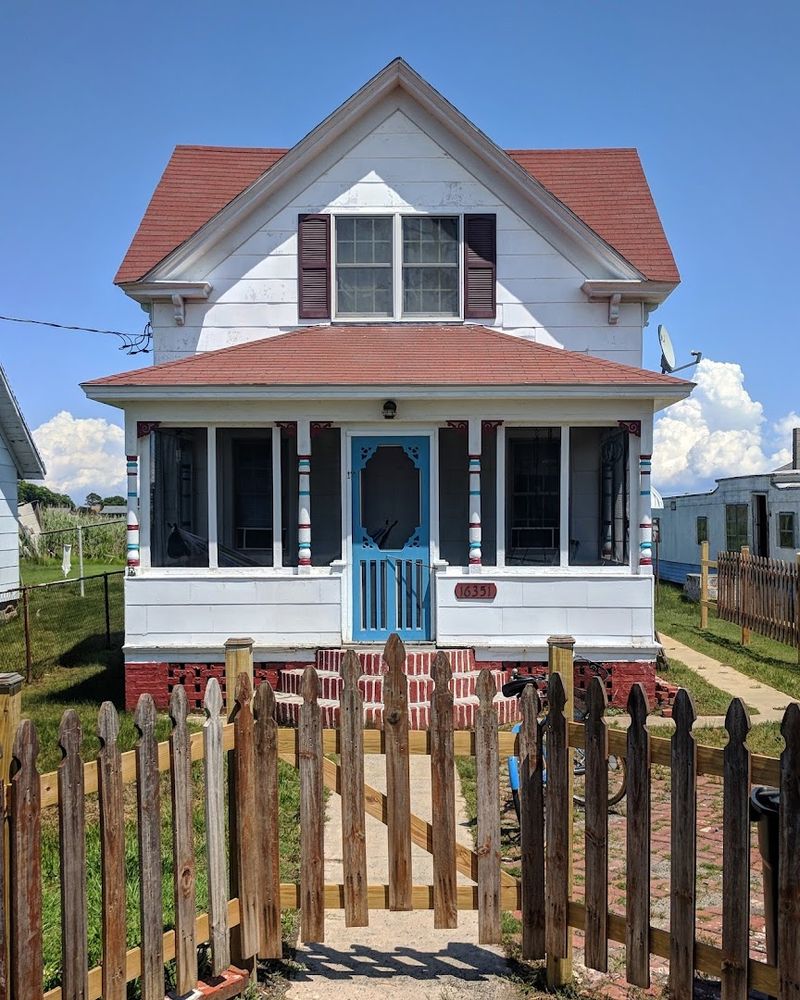
There is something almost mythological about a place where people genuinely do not lock their doors. Yet on Tangier Island, that is simply everyday reality.
Residents describe a level of trust and community cohesion that feels almost impossible to believe in the context of modern American life, but here it is completely ordinary.
The island has no police force. There are no patrol cars circling the neighborhood, no security cameras mounted on storefronts, and no late-night anxiety about strangers wandering through.
The community polices itself through something far more powerful than law enforcement, which is the simple, enduring power of knowing your neighbors and caring about them.
Strolling through the residential lanes of Tangier Island, you notice front doors left ajar, porches with chairs facing the street, and gardens tended with obvious love and pride. The atmosphere is one of complete ease, the kind that most people only experience on vacation in some idealized small-town fantasy.
Except here it is not a fantasy at all. Virginia has produced some genuinely extraordinary communities over the centuries, but Tangier Island’s culture of trust and mutual respect stands in a category entirely its own.
It is the kind of place that quietly restores your faith in people.
An Island That Is Slowly Disappearing Into the Bay
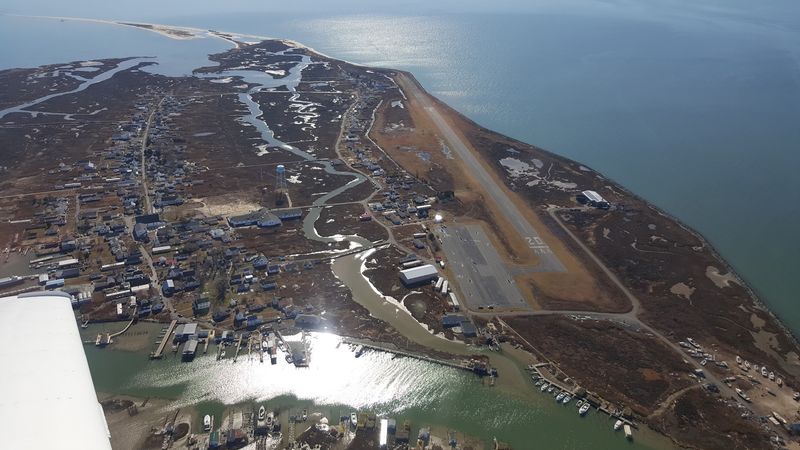
Tangier Island carries a bittersweet beauty that becomes more poignant the more you learn about its future. Sitting just four feet above sea level, this remarkable community is genuinely, measurably disappearing.
The numbers are stark. Since 1850, the island has lost roughly two-thirds of its original landmass to erosion and rising sea levels, and the process shows no sign of slowing.
Scientists and engineers have studied Tangier Island extensively, and the projections are sobering. Without significant intervention, the island’s long-term habitability is seriously in question.
Residents are aware of this reality and speak about it with a mix of resignation, defiance, and deep attachment to the only home most of them have ever known.
For visitors, this context adds a layer of emotional weight to every view of the shoreline. The sight of the Chesapeake Bay lapping at the edges of the island feels less like a postcard and more like a countdown.
Seeing Tangier Island now, while it still stands as a living community, feels genuinely urgent. Virginia is home to many beautiful and historically significant places, but few carry the particular fragile magnificence of this one.
Come soon, come respectfully, and let the place speak to you on its own terms.
Seafood Restaurants and the Freshest Catch You Will Ever Taste
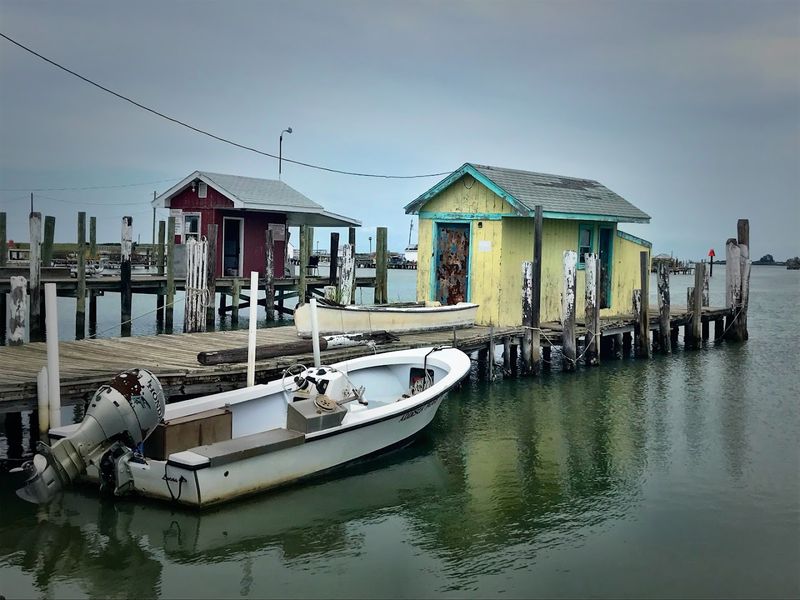
Eating on Tangier Island is one of those experiences that genuinely recalibrates your standards. When the people serving your meal are the same people who pulled it out of the Chesapeake Bay that very morning, the word fresh takes on a whole new meaning.
The island’s small collection of seafood restaurants operates with a farm-to-table philosophy that predates the trend by about two centuries.
The focus is squarely on local seafood, particularly the blue crabs that have made Tangier Island famous worldwide. Crab cakes here are not a menu gimmick.
They are a point of pride, made with meat so sweet and tender it barely needs seasoning. The dining rooms are unpretentious, the service is warm, and the portions are generous in the way that only small-town restaurants seem to manage.
Sitting down to eat on Tangier Island means participating in a food culture that is authentic to its core. There are no fusion experiments here, no trendy small plates, and no cocktail menus.
Just honest, expertly prepared seafood in a setting where the water that produced it is visible from your table. For food lovers traveling through Virginia, this island delivers a culinary experience that is completely impossible to replicate anywhere else.
How to Plan Your Visit to Tangier Island, Virginia
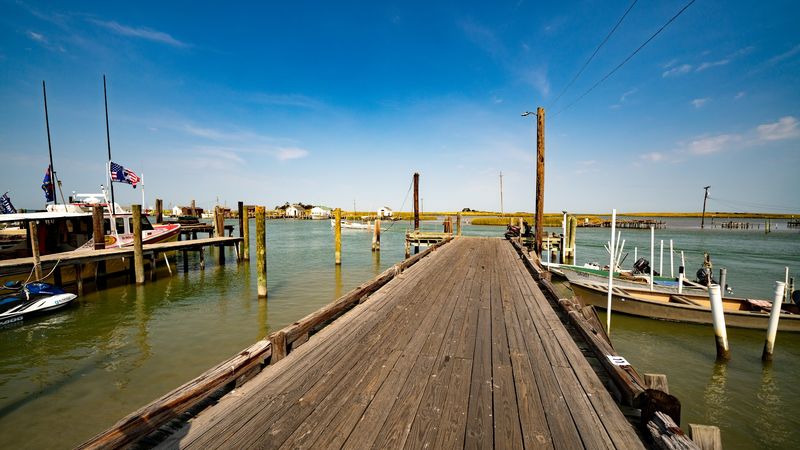
Planning a trip to Tangier Island requires a little more thought than your average weekend getaway, and that extra effort is absolutely worth it. The island is located in the Chesapeake Bay, roughly 12 to 18 miles from the Virginia mainland, and accessible only by ferry or seaplane.
Ferries operate seasonally, so checking schedules in advance is essential before you commit to a travel date.
Accommodation options on the island are limited but genuinely charming. Small guesthouses and bed-and-breakfast-style lodgings give visitors a real taste of island life rather than the sanitized comfort of a chain hotel.
Staying overnight is highly recommended because the island transforms after the day-trippers leave and the quiet settles in like a warm blanket.
Pack light, bring cash, and leave your expectations of modern convenience at the mainland dock. Mobile phone reception is famously unreliable, which most visitors quickly discover is a feature rather than a bug.
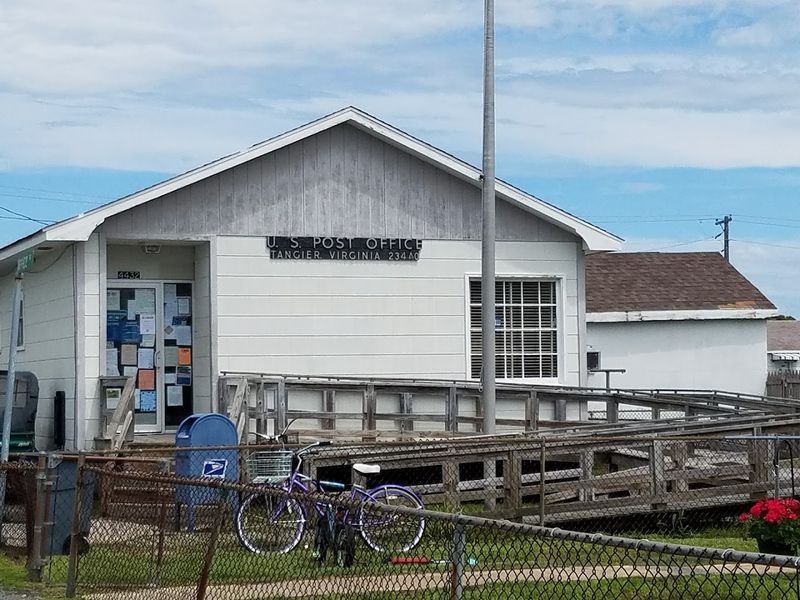
Gift shops offer locally made souvenirs, and the History Museum is a perfect first stop for orientation. The address for the town is Virginia 23440, placing it firmly in Accomack County.
Tangier Island is one of those rare Virginia destinations that genuinely earns every superlative thrown at it. Pack your bags and go.
