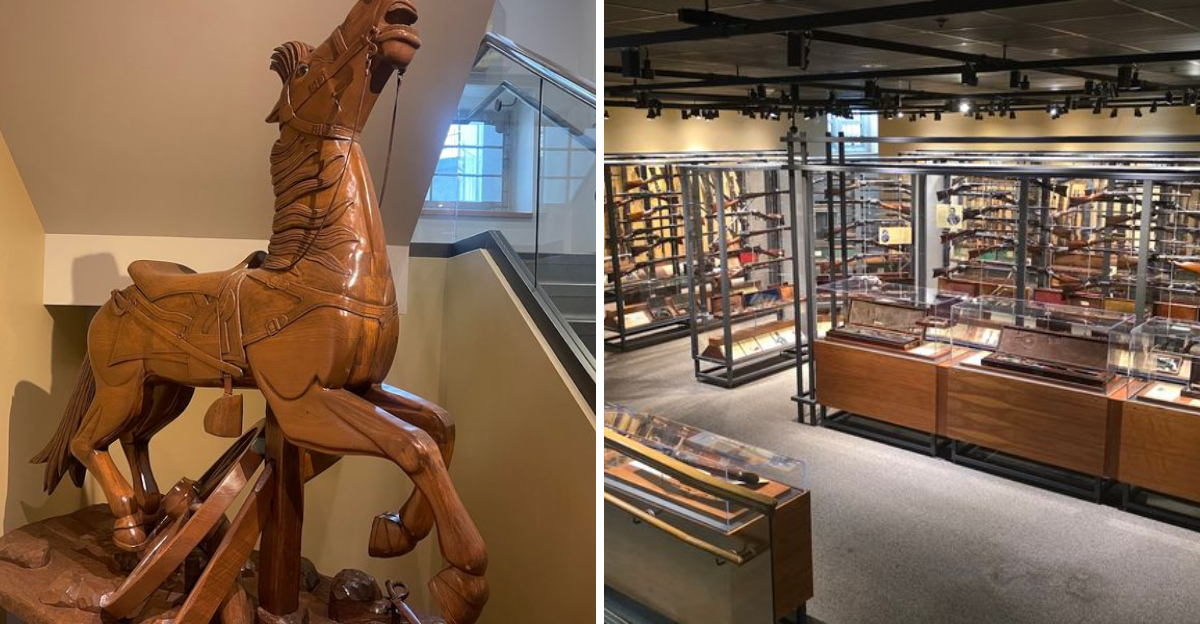
The horse stands motionless in its glass case, preserved for more than a century. It does not look real at first, the dark coat, the alert stance, the saddle still in place.
But this legendary Civil War warhorse is real, and it is frozen in time at this Virginia museum. The horse carried its rider into battle, survived the war, and became a symbol of the bond between soldier and animal.
Now it stands as a memorial, a quiet reminder of the lives that were lived and lost. I stood in front of the display, reading the plaque, and felt a strange connection to the animal.
The museum has other exhibits, but the horse is the one that stays with you. Virginia has plenty of war memorials, but this one is alive, even in death.
Little Sorrel, the Horse That Outlived the War
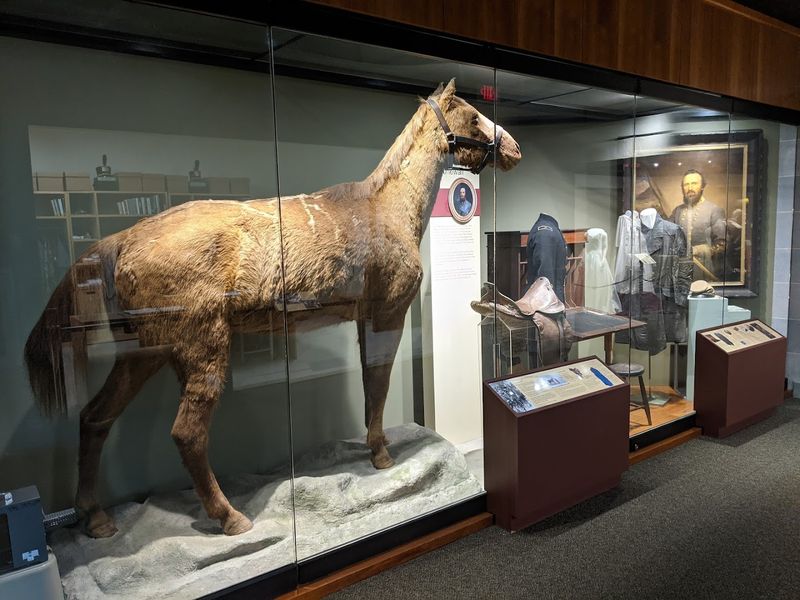
Some museum pieces make you pause. Little Sorrel makes you completely stop in your tracks.
This compact, medium-brown horse carried Confederate General Stonewall Jackson through some of the most intense battles of the Civil War, including Bull Run, Antietam, and Fredericksburg, and somehow lived to the remarkable age of 36.
After his death in March 1886, Little Sorrel was preserved through taxidermy and has been on permanent display at the Virginia Military Institute Museum since the late 1940s. Seeing him behind glass feels genuinely surreal, like shaking hands with history through a window.
A team of expert taxidermists, including technicians from the Smithsonian Institution, later restored the hide, shampooing and dyeing it back to its original color and repairing years of wear. The result is striking.
What stands before you is not just a curiosity but a living relic of American memory, a four-legged witness to one of the nation’s most defining conflicts. Little Sorrel is the undisputed star of the VMI Museum, and rightfully so.
The VMI Museum and Its Place in Virginia History
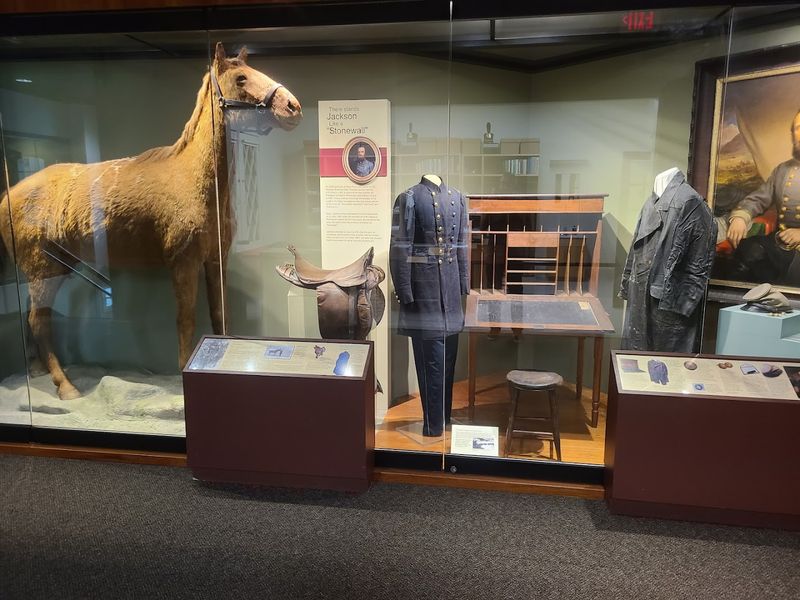
Founded in 1845, the Virginia Military Institute Museum holds the distinction of being the first public museum established in Virginia. That alone earns it a serious spot on any history lover’s itinerary.
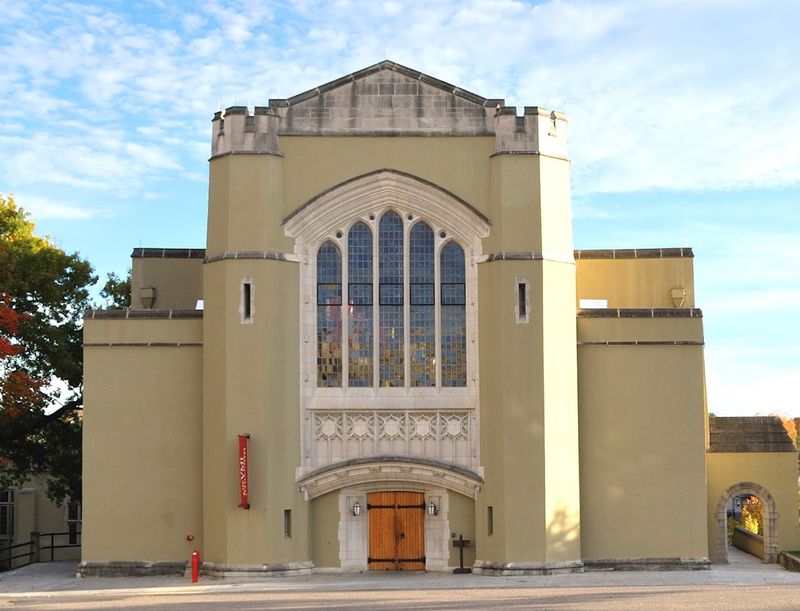
Housed in the lower level of Memorial Hall on the VMI campus, the museum chronicles the full arc of VMI’s story, from its earliest days through the modern era.
Memorial Hall itself is worth a slow, appreciative look. Over a century old, the upper level displays flags representing every state that was part of the United States at VMI’s founding.
A massive mural by artist Clinedinst dominates the space, depicting VMI cadets charging into battle at New Market on May 15, 1864.
The Virginia Military Institute Museum collects, preserves, interprets, and exhibits more than 15,000 artifacts tied to the heritage of VMI and its alumni. Walking through it feels like flipping through a very well-organized, visually stunning scrapbook of American military life.
For anyone exploring Virginia’s rich historical landscape, this museum is not just a detour. It is a destination that fully earns your afternoon.
Stonewall Jackson’s Personal Artifacts on Display
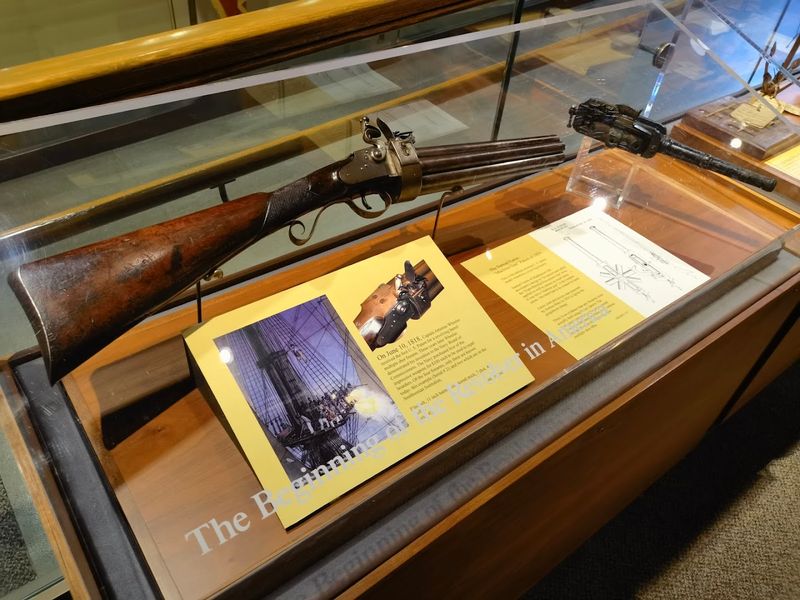
General Stonewall Jackson is everywhere in Lexington, Virginia, and the VMI Museum is his most concentrated shrine. Among the most compelling objects in the collection are the uniforms Jackson wore during key moments of the Civil War.
The coat he had on when he famously earned his nickname and, sobering to consider, the uniform he was wearing when he was accidentally shot by his own troops at Chancellorsville, are included.
These are not reproductions. Touching the glass case, knowing what these objects witnessed, carries a weight that photographs simply cannot replicate.
The museum serves as a major repository for Jackson-related artifacts, and the curators have done a thoughtful job contextualizing each piece without turning the exhibit into mere hero worship.
Jackson’s presence at VMI predates the Civil War. He taught here as a professor, and many of his former students later served under his command.
That personal connection between the man and the institution gives the artifacts extra resonance. Visiting this section of the VMI Museum feels less like a history lesson and more like a quiet, respectful conversation with the past.
The Legendary Firearms Collection You Did Not Expect
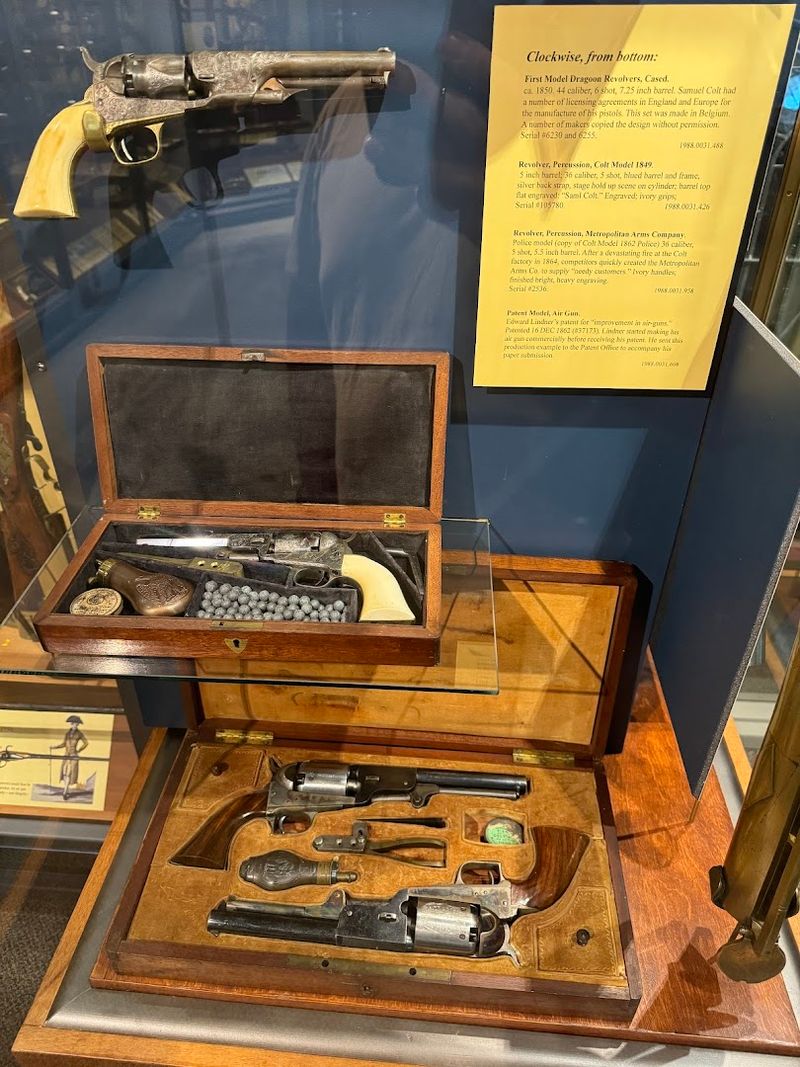
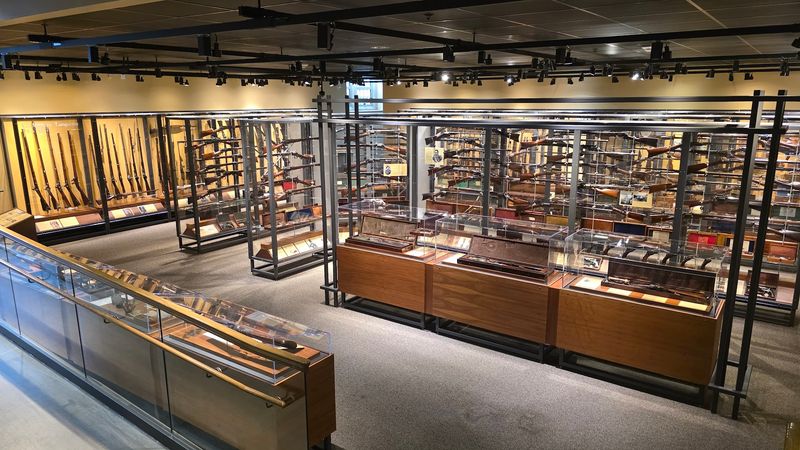
Nobody warns you about the guns. Walking into the VMI Museum expecting a straightforward military history experience, the sheer scope of the firearms collection genuinely catches you off guard.
The Stewart Collection, as it is known, features an extraordinary range of weapons spanning centuries of American and world history, including rare patent models with designs so unusual they look almost fictional.
Old flintlocks sit alongside percussion revolvers, early repeating rifles, and experimental designs that never quite made it into mass production. For anyone with even a passing interest in mechanical ingenuity, this section alone justifies the trip to Lexington.
Military history buffs will recognize many of the pieces instantly, while casual visitors will find themselves lingering far longer than expected, marveling at the craftsmanship and the stories embedded in each weapon.
The collection is organized thoughtfully, with context provided for each era and type.
It manages to be educational without feeling like a lecture. Gun enthusiast or not, this is one of those exhibits that leaves a lasting impression and sends you down a satisfying research rabbit hole afterward.
Cadet-Guided Tours That Bring the Campus Alive
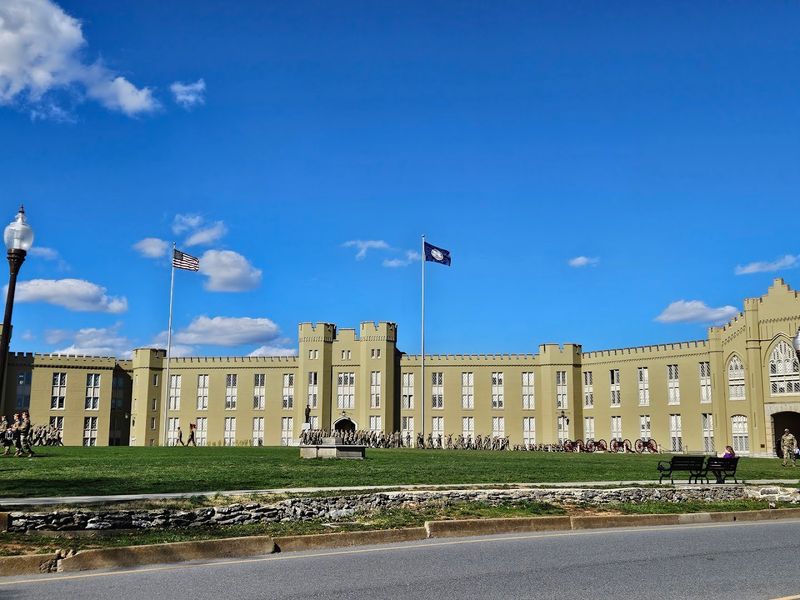
Most museums hand you a brochure and wish you luck. The Virginia Military Institute Museum does something far more interesting: it sends a current cadet to walk you through it.
Arriving around midday gives you the best chance of catching one of these tours, and the experience is genuinely unlike anything a standard audio guide can offer.
Cadets bring a living, breathing perspective to the history on display.
Hearing a current student explain what daily life at VMI looks like today, and how it connects to the stories behind the artifacts, creates a layered understanding that enriches every exhibit you see afterward.
The insights are personal, occasionally funny, and always informative.
Beyond the museum walls, cadet-guided tours often extend to the broader VMI campus, giving you a feel for the architecture, the traditions, and the distinct culture of America’s oldest public senior military college.
Virginia has no shortage of historic institutions, but very few offer this kind of direct, human connection between past and present.
Book the tour if you can. It transforms a good museum visit into a genuinely memorable afternoon.
The Battle of New Market and the Young Cadet Legacy
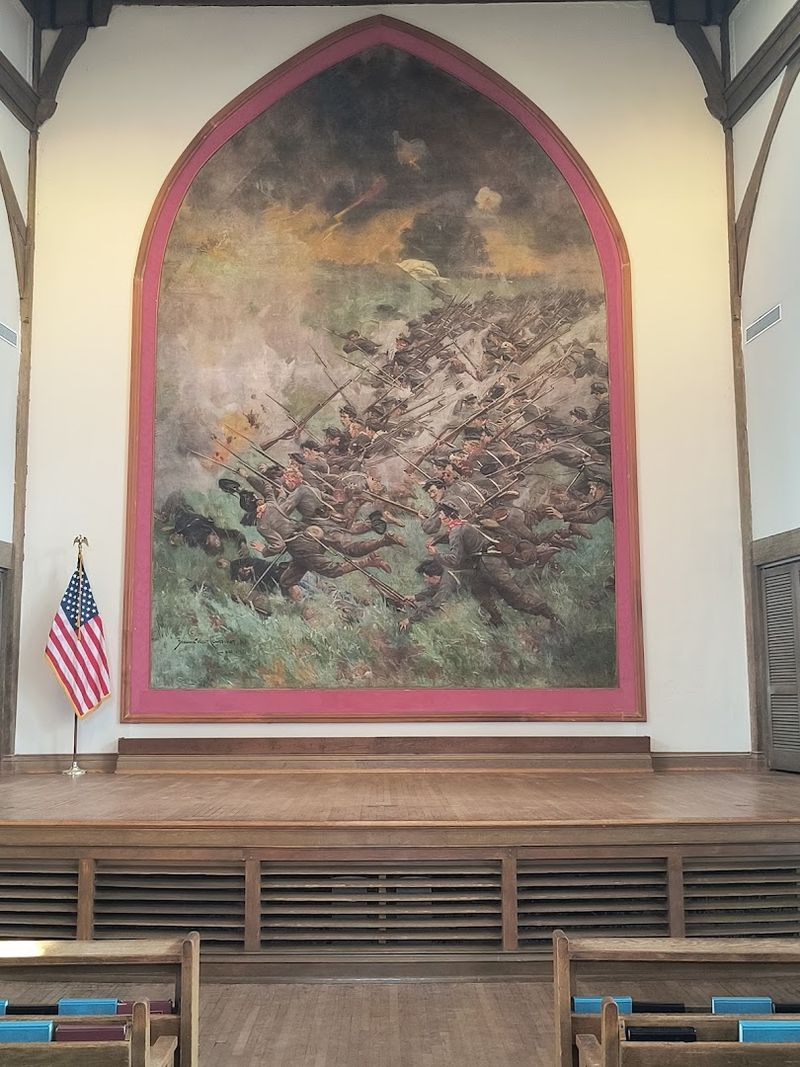
There is a story inside the VMI Museum that hits harder than most. During the Civil War’s Battle of New Market in May 1864, VMI cadets, some as young as fifteen, were called into active combat.
They fought alongside Confederate forces and played a pivotal role in a Confederate victory, but the cost was devastating. Several cadets lost their lives that day.
Clinedinst’s enormous mural in Memorial Hall captures this moment with raw, almost uncomfortable energy. Standing beneath it, you feel the weight of youth and sacrifice in a way that no text panel can fully convey.
The VMI Museum dedicates significant space to honoring these young men and contextualizing their decision to fight.
This chapter of Virginia’s history is one of the most emotionally complex in the museum. It asks visitors to hold multiple truths at once: admiration for courage, grief for lost youth, and honest reckoning with the war’s causes and consequences.
The museum handles it with care and nuance. Walking away from this exhibit, you carry something with you that is harder to name than information.
It feels closer to understanding.
Seven Medals of Honor and the Alumni Who Earned Them
VMI alumni have been awarded seven Medals of Honor across American military history, and the Virginia Military Institute Museum proudly displays these alongside the stories of the men who earned them.
Each medal represents an act of extraordinary courage, and the accompanying artifacts and citations make the human stakes achingly real.
What strikes you most is the range of conflicts represented. These decorations span different wars and different eras, a thread of exceptional service running through VMI’s history across generations.
The museum presents each recipient not as a distant hero but as a specific person with a specific story, which makes the collection deeply personal rather than abstractly patriotic.
Virginia has produced remarkable military figures throughout American history, and VMI has been a training ground for many of them. Seeing the Medals of Honor in person, reading the citations, and understanding the moments of decision that led to each award is a humbling experience.
It is the kind of exhibit that makes you stand a little straighter and think a little harder about what service and sacrifice actually mean in practice, beyond the bumper stickers and the speeches.
The Skeletal Burial Ceremony of Little Sorrel
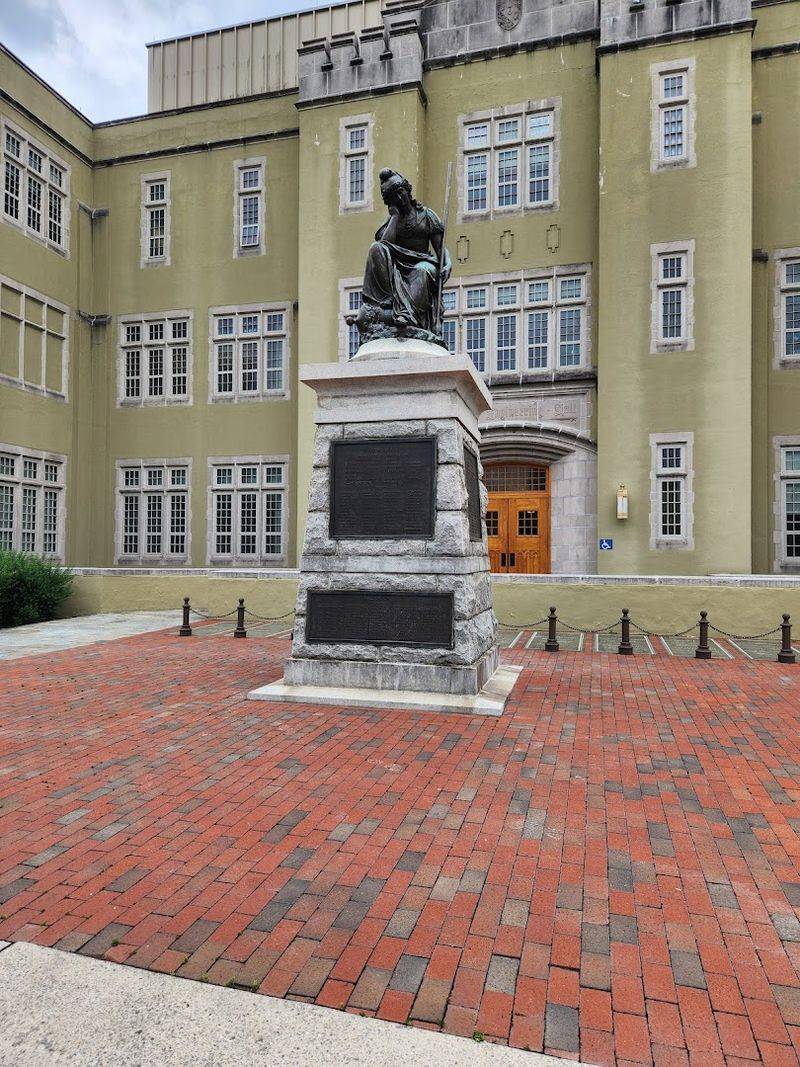
Little Sorrel’s story did not end with taxidermy. After his hide was preserved and put on display, his skeletal remains took a separate journey.
The bones were initially kept by the taxidermist and later transferred to VMI, where they were eventually cremated and given a formal burial ceremony on July 20, 1997.
The ashes were interred at the base of Stonewall Jackson’s statue on the VMI Parade Ground, reuniting horse and commander in a symbolic gesture that somehow manages to be both historically significant and genuinely touching.
The ceremony drew attention from military historians and Civil War enthusiasts across the country.
Standing at that statue today, knowing what lies beneath, adds a quiet layer of meaning to an already powerful monument. The VMI Museum provides full context for this unusual story, tracing Little Sorrel’s afterlife from death to restoration to final rest.
It is the kind of detail that transforms a museum visit from a passive experience into an active engagement with history. Virginia is full of monuments, but very few have a story this layered tucked beneath their foundations.
The Vietnam War Exhibit and Modern Military History
History at the VMI Museum does not freeze in 1865. One of the more affecting corners of the collection is the Vietnam War exhibit, which documents the service of VMI alumni during one of America’s most divisive conflicts.
Personal gear, photographs, and artifacts bring the human cost of that era into sharp focus.
Seeing Vietnam-era military equipment displayed alongside Civil War artifacts creates an unexpected and thought-provoking timeline. The museum does not editorialize heavily.
Instead, it lets the objects and the personal stories speak, which is often far more powerful than any written argument could be.
VMI graduates served in Vietnam in significant numbers, and the exhibit honors their experience with the same seriousness applied to earlier conflicts. For visitors who lived through that era, the exhibit carries obvious personal resonance.
For younger visitors, it offers a grounded, artifact-driven introduction to a war that still shapes American political and cultural conversation today.
The Virginia Military Institute Museum’s willingness to engage with all chapters of military history, not just the most celebrated ones, is one of the things that sets it apart from more selective collections.
Planning Your Visit to the VMI Museum in Lexington
Getting to the Virginia Military Institute Museum is straightforward, and the experience is accessible enough to suit a wide range of interests and ages. The museum is open every day of the week from 9 AM to 5 PM, which makes it easy to slot into almost any travel itinerary without much advance planning.
Parking can be tricky, especially during campus events, so arriving early or on a quieter weekday gives you the smoothest experience. The museum itself is located in the lower level of Memorial Hall at 415 Letcher Ave, Lexington, VA 24450.
The upper level chapel is also worth a look before or after you explore the exhibits below.
A gift shop rounds out the visit nicely, stocked with historically themed items that make for genuinely interesting souvenirs rather than the usual generic fare. Cadet-guided campus tours depart around midday, so timing your arrival accordingly is a smart move.
Lexington, Virginia is one of those rare towns where every block holds a story, and the VMI Museum is its most concentrated chapter. Do yourself a favor and put this one at the top of your Virginia itinerary.
You will not regret it.
