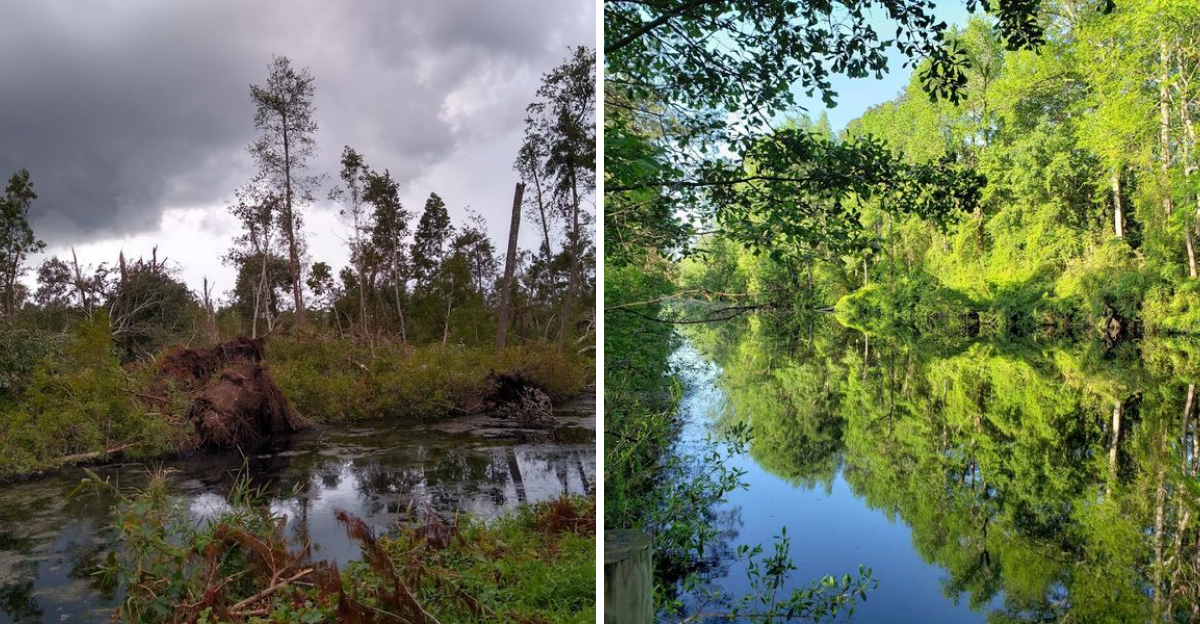
There is a place in Virginia where the trees grow close, the water is dark, and the silence feels heavy. The Great Dismal Swamp is not like other parks.
It is wild, mysterious, and full of stories. The most famous involves a lake hidden deep within the swamp, a body of water that Native Americans believed was created by a massive fire, or maybe by a meteor, or maybe by something else entirely.
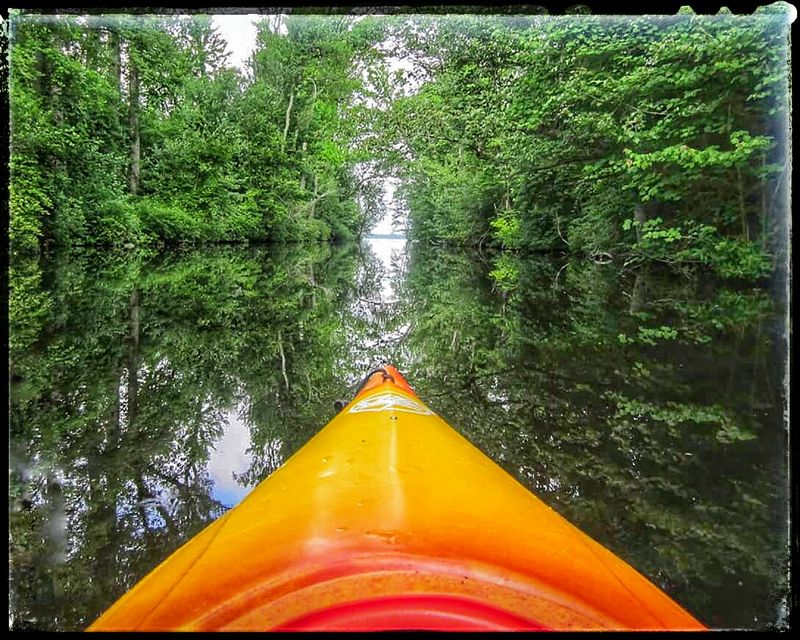
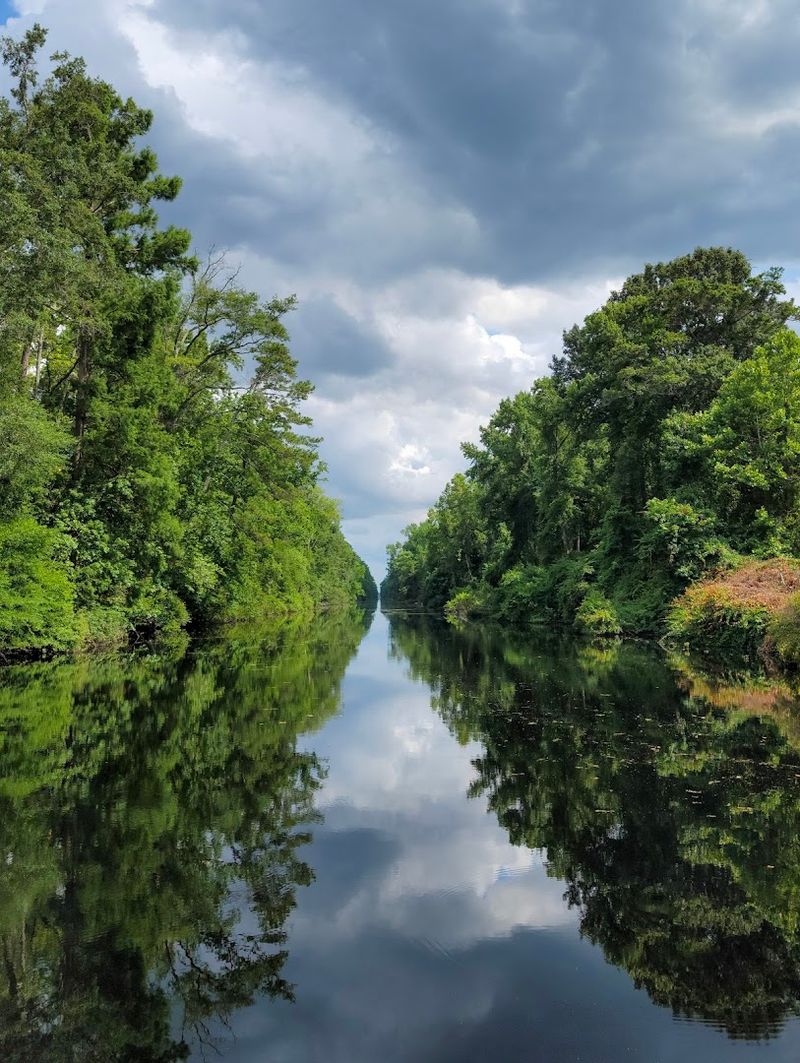
The legend shifts depending on who tells it. I paddled through the swamp, following a canal that cut through the dense forest, and tried to imagine what this place looked like centuries ago.
The lake is still there, quiet and deep. Virginia’s history is not always easy.
Sometimes it is dark and swampy.
The Firebird Legend That Gave Birth to Lake Drummond
Long before European explorers set foot in Virginia, the Nansemond Indian Nation carried a story that explained everything about this strange, dark lake. According to their oral tradition, a mythical firebird descended into a swampy basin roughly four thousand years ago.
A hunter killed its chicks, and when the enraged firebird finally flew away, the fire died out and left a smoldering hole where the chicks’ blood had pooled.
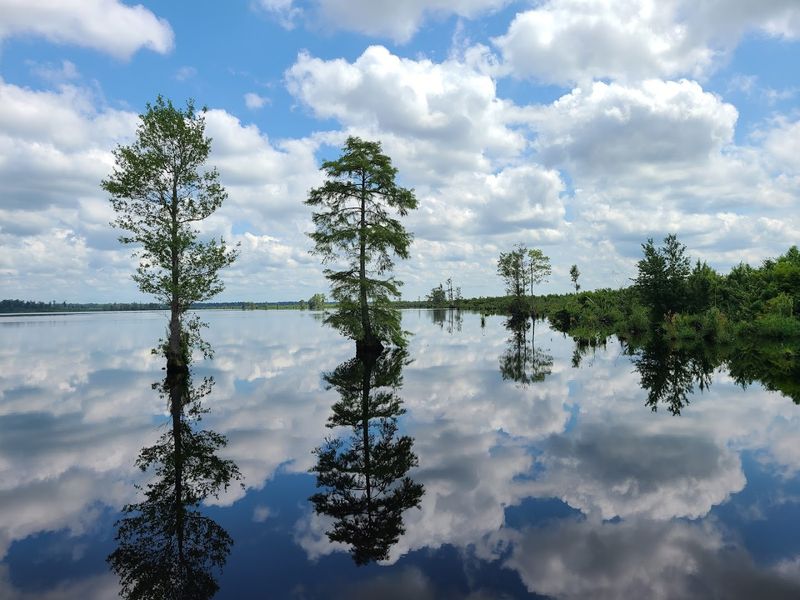
That hole became Lake Drummond, one of only two natural freshwater lakes in all of Virginia. The legend is not just poetic, it is surprisingly close to one of the leading scientific theories, which suggests the lake formed from an ancient underground peat fire.
Fact and folklore rarely agree this well.
Standing at the lake’s edge for the first time, staring into that dark, glassy water, the firebird story stops feeling like mythology and starts feeling like memory. The Great Dismal Swamp has a way of doing that to people.
It blurs the line between the ancient and the present until you genuinely cannot tell where one ends and the other begins.
The Phantom Lovers of Lake Drummond
Of all the ghost stories attached to the Great Dismal Swamp, this one hits the hardest. A young Native American woman died just before her wedding and was buried deep in the swamp.
Her heartbroken lover refused to accept the loss. He reportedly saw her spirit paddling a white canoe across Lake Drummond, rowed out to reach her, and drowned chasing a ghost.
The legend spread so powerfully that Irish poet Thomas Moore was moved to write about it in his 1806 poem called ‘A Ballad: The Lake of Dismal Swamp.’ Locals still claim the vision of two figures paddling a white canoe appears on the lake’s surface at dusk. Whether you believe that or not, the story carries a genuine emotional weight that sticks with you long after you leave.
What makes this legend so compelling is its universality. Grief, love, and loss are experiences every culture understands, and the swamp seems to hold those emotions like a sponge.
The Great Dismal Swamp in Virginia does not just preserve wildlife; it preserves stories that refuse to be forgotten.
Nine Thousand Years of Native American History Beneath Your Feet

Most people arrive at the Great Dismal Swamp expecting wildlife. What they do not expect is to be walking over nine thousand to thirteen thousand years of continuous human history.
Native American peoples inhabited this swamp and its surrounding region long before any European ever heard of it. That timeline is staggering when you stop to think about it.
Archaeological evidence scattered throughout the refuge tells a layered story of communities that understood this ecosystem deeply. They knew which plants healed, which waterways connected, and how to survive inside a landscape that most outsiders considered hostile and impenetrable.
The swamp was not a barrier to these communities; it was home.
Later, from the seventeenth through the nineteenth centuries, displaced Native Americans and self-emancipated Black people known as maroons built hidden settlements within the swamp’s depths. These were not temporary camps but multi-generational communities with their own social structures.
Walking the trails of the Great Dismal Swamp today means walking ground that generations of resilient people called sanctuary. That knowledge changes how the whole place feels underfoot, quieter, heavier, and far more significant.
The Maroon Communities and the Underground Railroad Connection
There is a chapter of American history buried inside this swamp that textbooks rarely cover with the depth it deserves. From the late seventeenth century onward, thousands of self-emancipated Black people found refuge inside the Great Dismal Swamp’s impenetrable interior.
These communities, known as maroons, built lives in a place most enslavers feared to enter.
Archaeological findings have confirmed multi-generational settlements with artifacts showing remarkable ingenuity and cultural continuity. People raised families here, developed trade networks, and maintained identities that the surrounding world tried to erase.
The swamp’s darkness and density were not obstacles; they were protection.
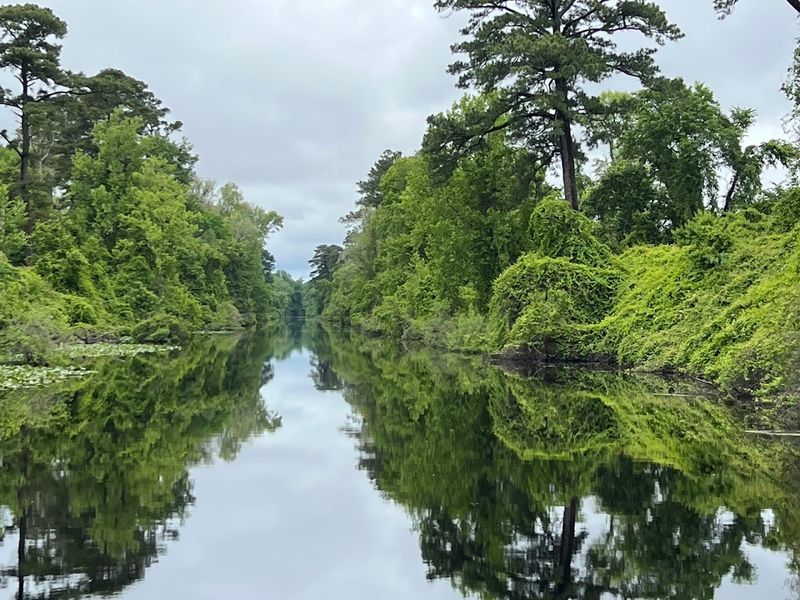
The Great Dismal Swamp also played a documented role in the Underground Railroad, serving as a passage point for freedom seekers moving toward the North. The Dismal Swamp Canal, which cuts through the refuge, was a known route.
Virginia holds many layers of painful and triumphant history, and this swamp holds some of the most profound. Visiting with that knowledge transforms the experience from a nature walk into something that feels closer to a pilgrimage.
Lake Drummond, a Natural Wonder with Unusually Pure Water
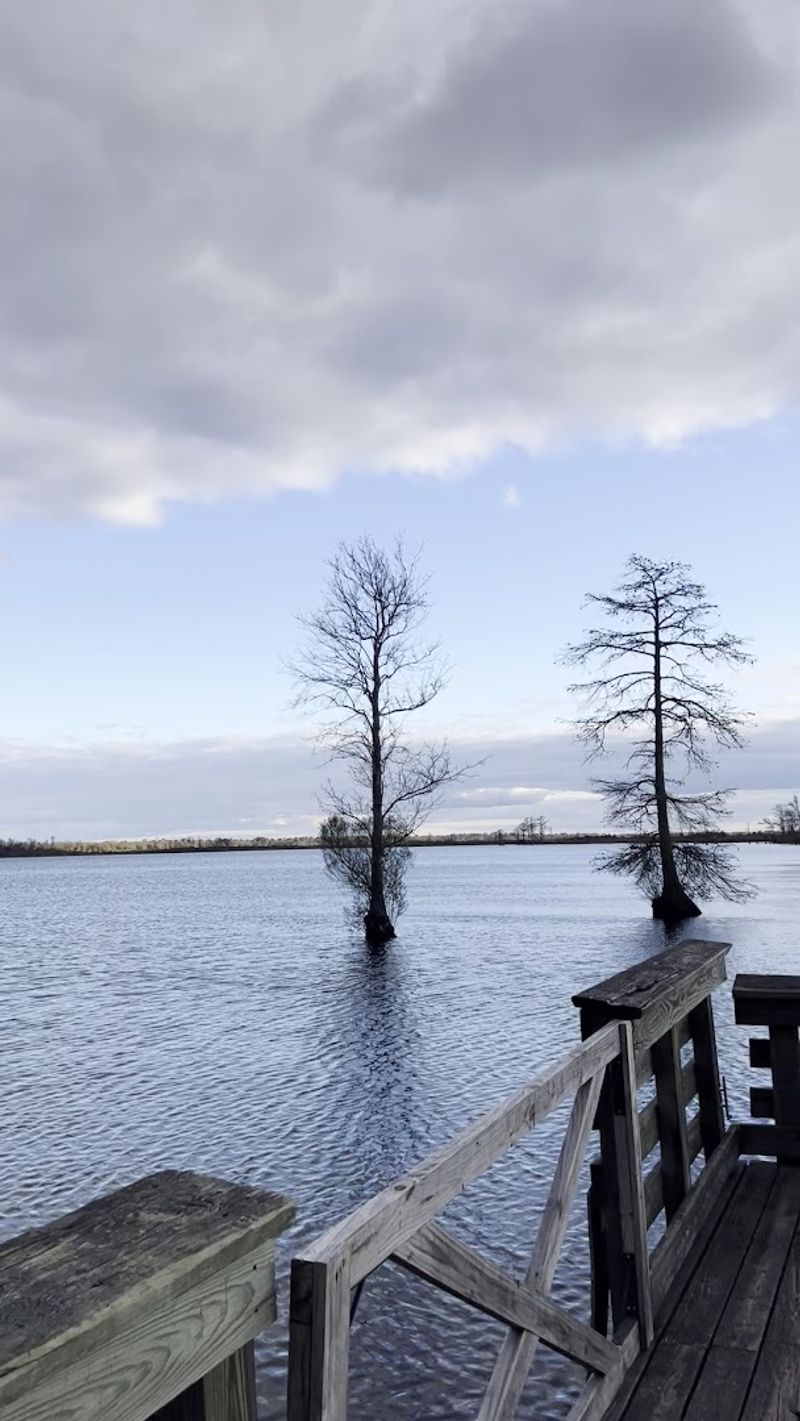
Lake Drummond looks like it should be murky and unsafe, but the science tells a completely different story. The dark brown color comes from tannic acid released by juniper, gum, and cypress trees as their organic matter decays.
That same tannic acid is what makes the water remarkably pure, actively inhibiting bacterial growth in a way that genuinely surprises researchers.
Sailors during the age of exploration actually stored Lake Drummond water aboard ships because it stayed fresh far longer than ordinary water. That is a real historical fact, not a legend, and it says something extraordinary about this modest, shallow lake sitting in the middle of a Virginia swamp.
At just five to six feet deep, it is easy to underestimate.
Kayaking across Lake Drummond at sunset is one of those experiences that rearranges your priorities. The reflection of the tree line in that dark, glassy water is so perfect it feels digital.
A boat tour out of Chesapeake, Virginia, is a great option for those who want a guided experience. Either way, the lake earns every bit of its legendary status.
Mysterious Lights and the Glowing Night Swamp
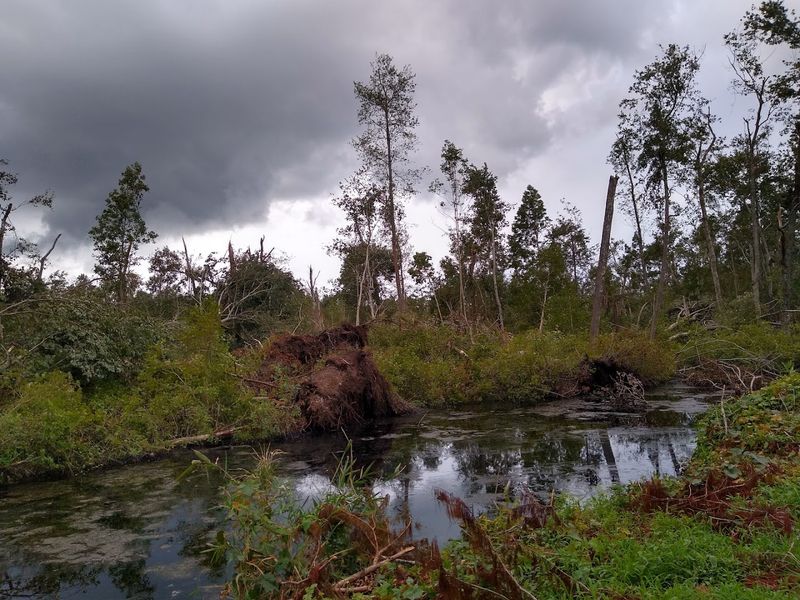
Ask anyone who has spent a night near the Great Dismal Swamp and the conversation will eventually land on the lights. Floating glows have been reported drifting above the water and through the trees for centuries, and explanations range from the scientific to the supernatural.
Most researchers point to foxfire, a bioluminescent glow produced by fungi growing on decaying wood, as one likely source.
Burning methane gas released by decomposing organic matter is another culprit. Smoldering peat deep underground can also produce faint surface glows in certain weather conditions.
Put all three together in a dark swamp at two in the morning, and the effect is genuinely unsettling in the best possible way.
The folklore took those lights and ran with them. One local legend describes a man so wicked that the devil sent him to the Great Dismal Swamp with a red-hot coal to create his own underworld.
He supposedly wanders the swamp at night, and that glowing coal is what you see flickering through the trees. Virginia has no shortage of colorful ghost stories, but this one, set inside an actual glowing swamp, feels almost too on-brand to dismiss.
Wildlife So Diverse It Feels Like a Different Planet
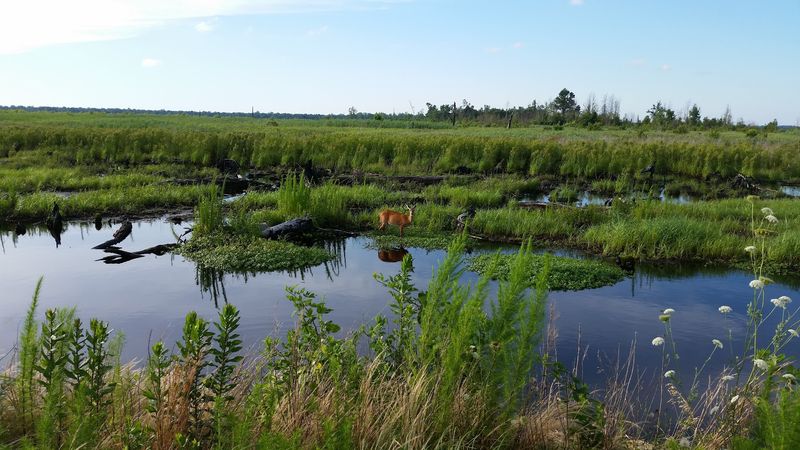
The Great Dismal Swamp is home to roughly forty-seven species of mammals, and that list includes black bears, bobcats, and river otters. Spotting an otter waddling across the road, which apparently happens regularly based on first-hand accounts from the wildlife drive, is the kind of moment that makes you forget every plan you had for the rest of the day.
Over two hundred bird species use the refuge, making it a serious destination for birdwatchers. The prothonotary warbler, a small but intensely golden songbird, is one of the most celebrated sightings.
Add ninety-six butterfly species to that count and you start to understand why naturalists treat this place like a pilgrimage site.
The wildlife drive is the most accessible way to experience the biodiversity without surrendering yourself entirely to the mosquitoes, which are legendarily aggressive during peak summer months. Visiting in early spring or late autumn dramatically improves the comfort level.
The Great Dismal Swamp National Wildlife Refuge earns its federal designation honestly; this is not a manicured park but a genuinely wild, functioning ecosystem that operates entirely on its own terms.
The Jericho Ditch Trail and the Art of Getting Beautifully Lost
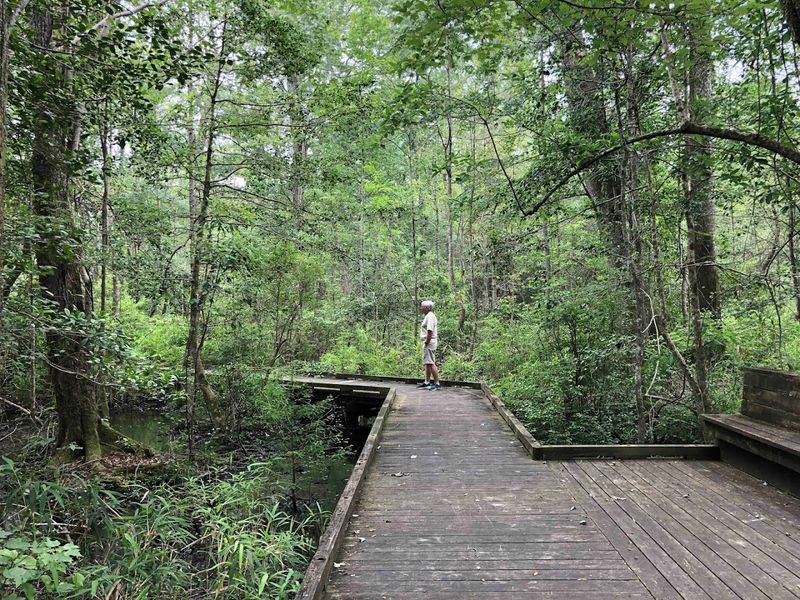
The Jericho Ditch Trail is one of the most accessible routes inside the refuge, and it delivers the full swamp experience without requiring any technical skill. The trail follows one of the old drainage ditches dug during the colonial era, which means you are literally walking along a channel of history.
The water running beside the path is that signature dark amber color, perfectly still and mirror-flat on calm days.
Families with strollers have navigated this trail successfully, and dogs apparently love it. The flatness makes it deceptively easy to extend your walk far beyond your original plan, which is exactly the kind of problem you want to have.
Just watch the wooden boardwalk sections, as some planks have gaps that deserve attention.
The surrounding forest on this trail has a cathedral quality that is hard to put into words. Tall trees close in overhead, filtering light into long, soft columns that hit the dark water at angles that beg to be photographed.
The Great Dismal Swamp has a gift for making even experienced hikers slow down and actually look at where they are standing. That slowness is the whole point.
George Washington, the Dismal Swamp Company, and a Colonial Gamble
Before he became the first president of the United States, George Washington had his eye on the Great Dismal Swamp as an investment opportunity. He was among the early backers of the Dismal Swamp Company, a colonial enterprise formed to drain the swamp, harvest its timber, and convert its land into productive farmland.
The ambition was enormous and the methods were brutal.
Enslaved people performed the exhausting labor of digging the drainage ditches that still crisscross the refuge today. Those ditches, now peaceful walking paths lined with dark reflective water, were carved by hand under conditions that defy easy description.
The Dismal Swamp Canal, completed in the early nineteenth century, became one of the oldest continually operating artificial waterways in the United States.
Washington’s drainage plan ultimately failed; the swamp resisted total conquest with admirable stubbornness. What remains is a refuge that carries both natural and human history in equal measure.
Virginia’s complicated colonial past is visible here not in plaques or monuments but in the very landscape, in the shape of every ditch and the depth of every canal. The swamp outlasted the company that tried to destroy it.
Planning Your Visit to Great Dismal Swamp National Wildlife Refuge
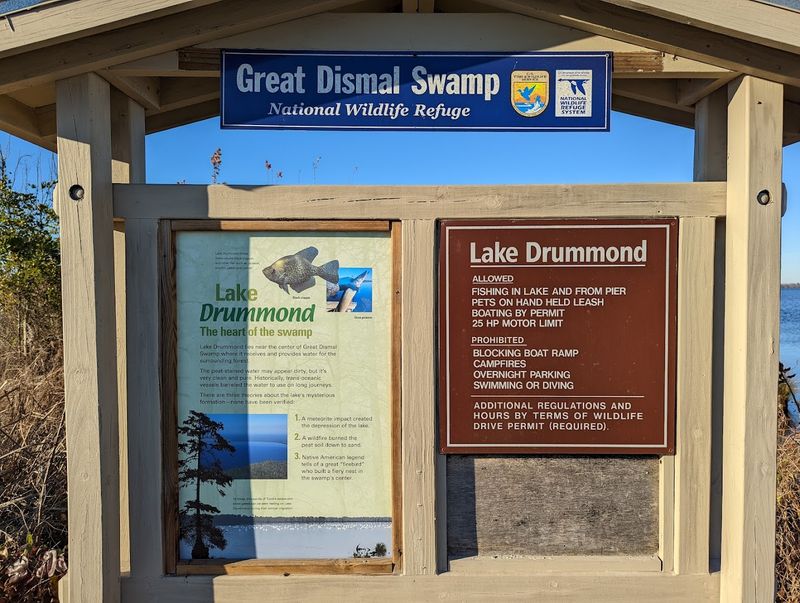
The Great Dismal Swamp National Wildlife Refuge sits at 3100 Desert Rd, Suffolk, VA 23434, and it is open year-round, though the experience changes dramatically with the seasons. Spring and autumn are the sweet spots, offering mild temperatures, active wildlife, and manageable insect populations.
Summer brings extraordinary greenery but also mosquitoes of near-mythological intensity, so pack repellent and pack it seriously.
The refuge offers multiple entry points and activity options. The wildlife drive takes you through the interior by car with stops at boardwalks and observation areas.
Hiking, biking, kayaking, and even horseback riding are all permitted on various sections of the trail system. Boat tours to Lake Drummond operate out of Chesapeake, Virginia, and are highly recommended for first-time visitors who want to reach the lake without a long hike.
Cell service inside the refuge is essentially nonexistent, which is either a dealbreaker or the best feature depending on your relationship with your phone. A small interpretive center near the main entrance offers exhibits, a gift shop, and knowledgeable staff.
The Great Dismal Swamp in Virginia rewards curious, unhurried visitors who arrive ready to listen to what a very old, very patient landscape has to say.
