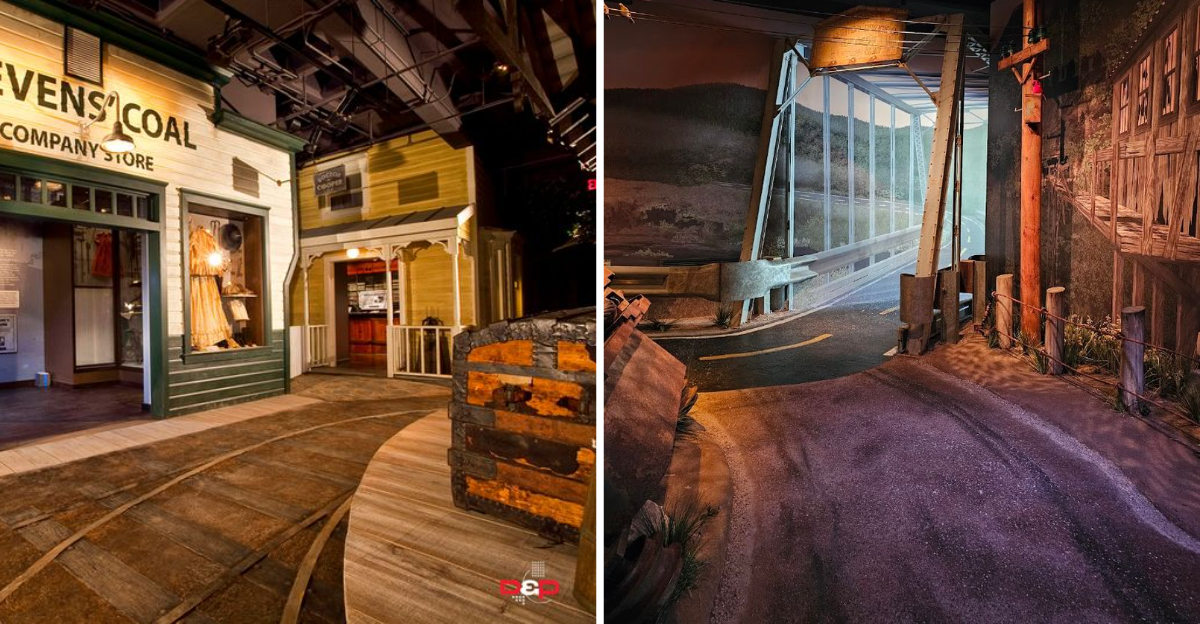
The floor literally changes beneath your feet as you walk, like some kind of history-themed magic carpet ride.
You start on stone, then dirt, then brick, then pavement, each step pulling you into a different era without you even noticing.
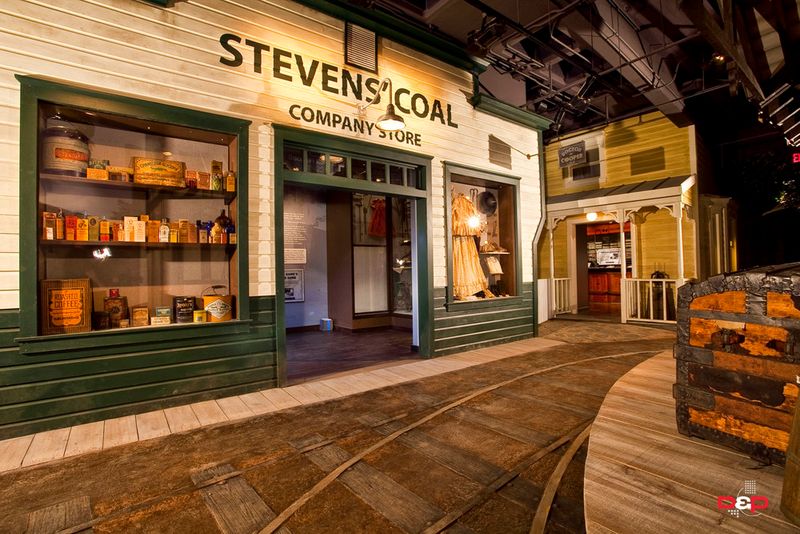
One minute you are in a prehistoric forest, the next you are in a coal town, and suddenly you are on a highway, all in one building.
It is the kind of place where you walk in thinking you will stay for an hour and leave three hours later wondering how time travel is legal.
West Virginia packed its entire story into one clever loop, and the transition is so smooth it will make your head spin.
And the best part?
It is absolutely free.
You will walk out with a head full of stories and a new appreciation for a state you thought you already knew.
A Museum That Lets You Step Across Centuries
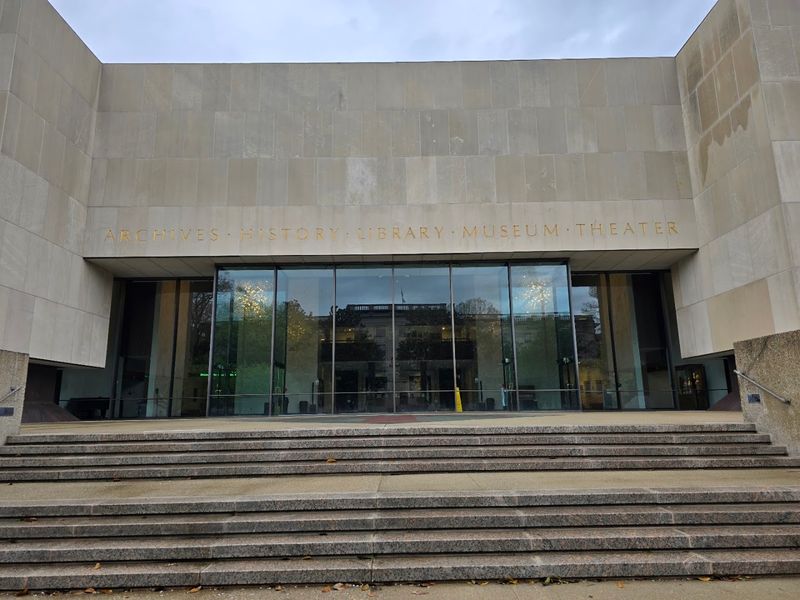
Walking the show path at the West Virginia State Museum feels less like a museum visit and more like a time machine with really good lighting.
The entire experience is designed as a self-guided chronological journey that stretches roughly 660 feet from one end to the other.
That might not sound like much, but every single foot of that path is packed with meaning. Floor plaques mark each new era, so you always know exactly where in history you are standing.
The exhibits span from the geological formation of the land itself all the way to West Virginia’s modern identity. Ancient earth, Native American culture, European settlement, industrial growth, all of it flows together without ever feeling rushed or cluttered.
Sound design and carefully placed lighting help each section feel alive rather than archived. You get the sense that the curators cared deeply about every single detail.
It is the kind of place that makes you slow down, look closer, and actually want to read every single sign on the wall.
Floors That Shift Like Time Travel Beneath Your Feet
The floor is not just something you walk on here. It is part of the story.
As you move through the West Virginia State Museum, the surface beneath your feet physically changes to reflect the historical period surrounding you.
Ancient stone gives way to packed earth, which eventually transitions into something resembling early road surfaces and then modern pavement. Each shift happens gradually, so you almost miss it until you glance down and realize something has changed.
It is a surprisingly powerful design choice. Rather than just reading about different eras, you are literally standing inside them.
Your feet register the difference before your brain fully processes what is happening.
Few museums think to use the floor as a storytelling tool, but this one does it brilliantly. The tactile change pulls you deeper into each section and makes the transition between time periods feel earned rather than abrupt.
It is one of those small details that sticks with you long after you have left the building.
From Stone Foundations to Dirt Roads in One Walk
Starting at the very beginning of West Virginia’s geological story, the museum grounds you in something ancient and solid. Stone formations, prehistoric landscapes, and the raw material of the earth itself set the tone for everything that follows.
Then the path shifts. The stone gives way to looser, earthier textures underfoot, and the exhibits around you start showing the first human marks on this land.
Native American history unfolds in carefully crafted displays that balance artifacts with recreated environments.
By the time you reach the frontier settlement section, the dirt road feeling is fully realized. The Discovery Rooms branching off the main path include things like a recreated log cabin, which makes the frontier era feel genuinely tactile rather than theoretical.
Moving from geological time into human history in a single unbroken walk is something that sounds simple but is actually hard to pull off well. This museum does it with a confidence that feels effortless.
Every step forward is a step deeper into a story that belongs to the entire state.
Highway History That Appears Right Under Your Shoes
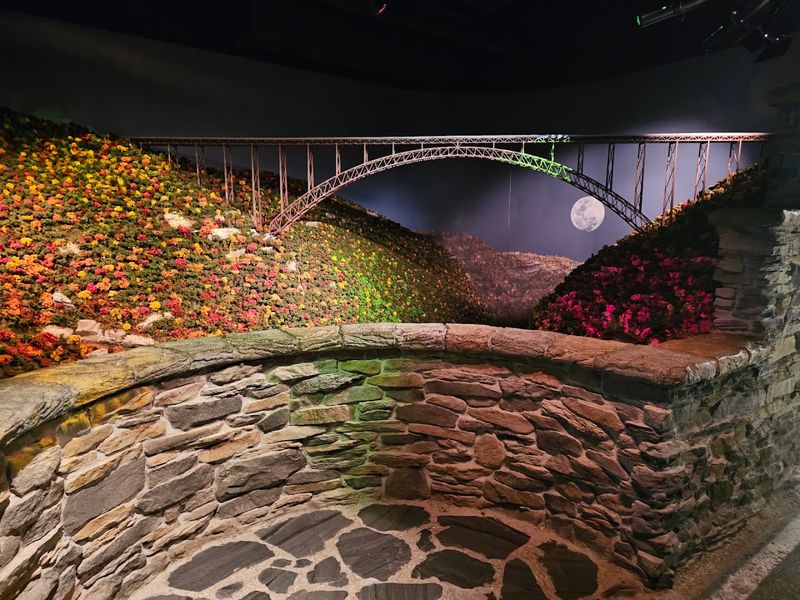
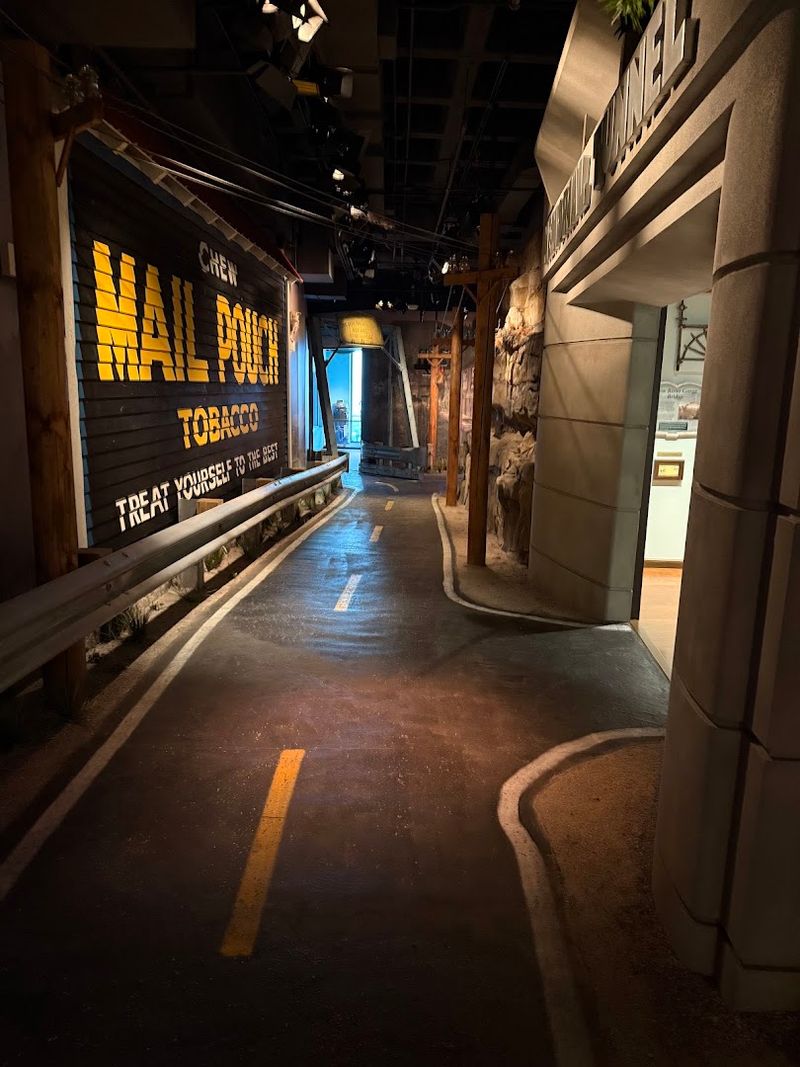
One of the most unexpected moments in the entire museum is when the floor transitions into something that resembles an actual highway.
You are walking through the evolution of West Virginia’s transportation history, and suddenly the surface under your feet matches the story being told around you.
The transportation exhibits cover how roads, railways, and eventually modern highways transformed the state. Coal had to move.
People had to move. And the infrastructure that made all of that possible grew from muddy wagon paths into paved corridors that connected communities.
Standing on what feels like a road surface while surrounded by exhibits about industrial-era transportation creates a genuinely immersive sensation. It is the kind of moment that makes you stop mid-step just to appreciate what the designers were going for.
The museum also features a walking roadway section that visitors consistently mention as a highlight. It captures the spirit of an era when movement itself became a symbol of progress.
Few exhibits manage to make infrastructure feel exciting, but this one earns it.
Can You Imagine History Changing With Every Step
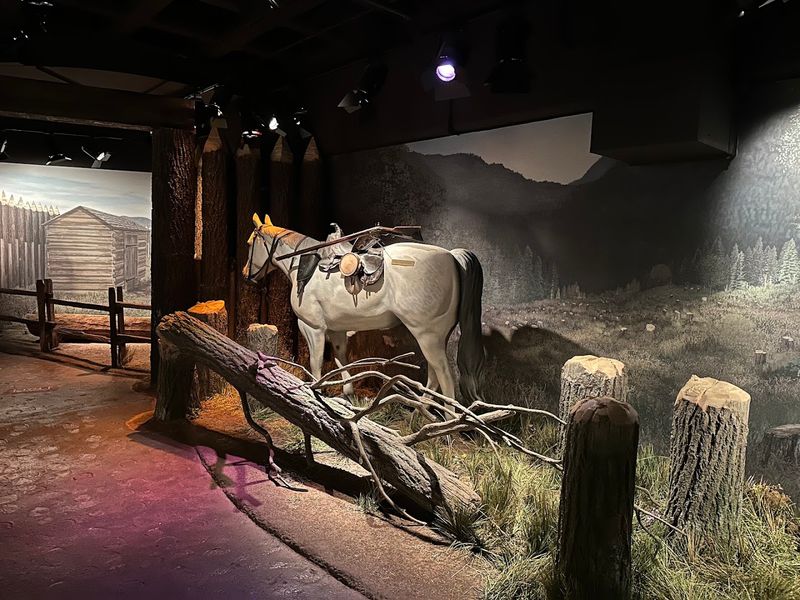
Picture taking a single step forward and moving from one century into the next. That is essentially what the show path at the West Virginia State Museum delivers across its entire 660-foot length.
Each section is calibrated so that the visual environment, the floor texture, the lighting, and the sound all shift together. Nothing feels isolated or out of place.
The transitions are smooth enough that you barely notice them happening until you look back and realize how far you have traveled through time.
The 26 Discovery Rooms and 2 Connections Rooms branching off the main path give you the option to go deeper into any era that captures your attention. Want to spend twenty minutes inside a recreated frontier log cabin?
You can. Want to linger over detailed agricultural exhibits from the Family Farm display?
That is there too.
The genius of the layout is that it rewards curiosity without punishing those who just want to keep moving forward. Every kind of visitor finds their own pace here, and that flexibility is rare in a museum of this scale.
Charleston’s Museum Where the Ground Tells the Story
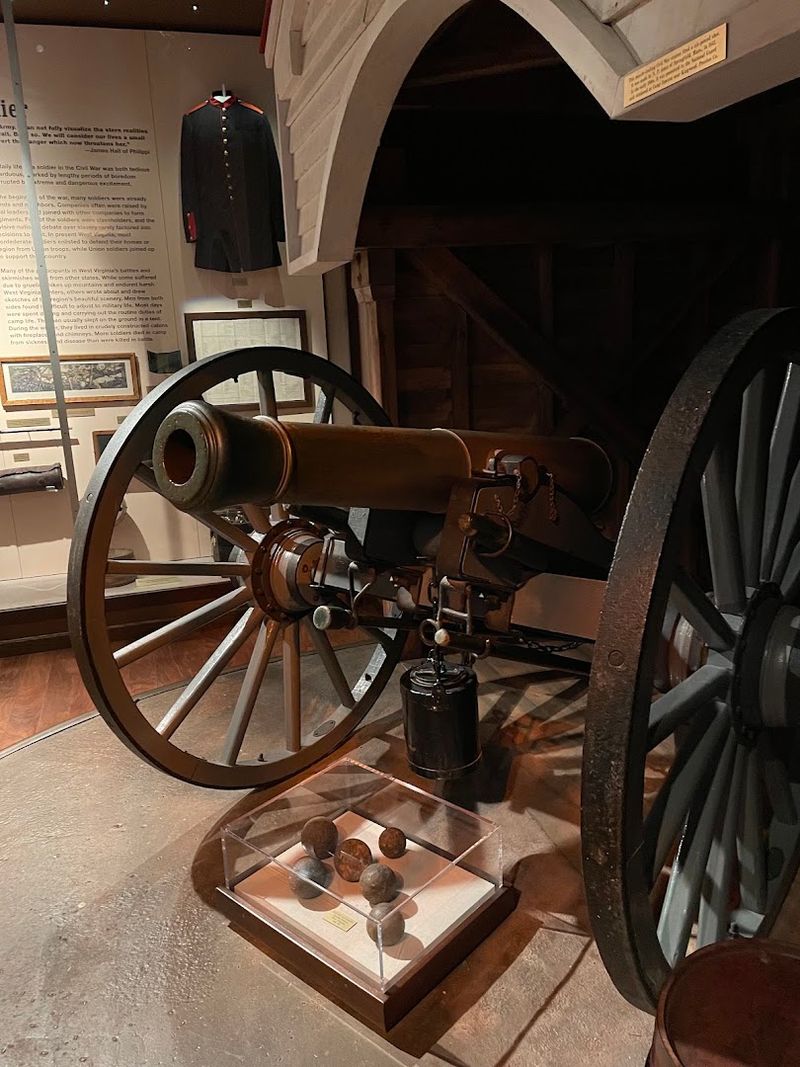
Located inside the cultural center complex in Charleston, the West Virginia State Museum uses its physical space in ways that most institutions simply do not attempt.
The ground itself becomes a narrative device, marking each era with a change in texture and material that you feel as much as see.
Floor plaques dot the show path, each one announcing a new chapter in the state’s history. They serve as quiet guides, keeping you oriented without interrupting the flow of the experience around you.
The museum covers an extraordinary range of topics within a single building. Coal mining, the Civil War, fiber craft, music, agriculture, and prehistoric geology all have dedicated space.
Nothing feels crammed or rushed.
What makes the ground-level storytelling so effective is that it keeps you physically engaged. You are not just reading about history on a wall.
You are moving through it, your feet registering each change as a physical reminder that time itself is something you can walk across. It is a quietly brilliant piece of design that elevates the entire visit.
Dirt Floors That Whisper Tales of Early Settlers
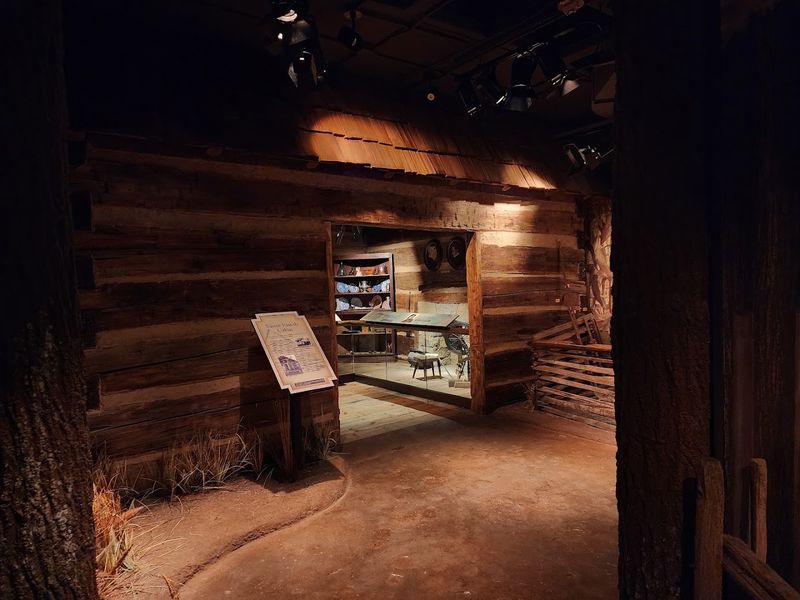
There is something deeply affecting about standing on a dirt surface inside a museum. It strips away the polish of modern life and puts you face to face with the raw reality of early settlement.
The West Virginia State Museum uses this effect deliberately in its frontier sections.
The Discovery Room featuring a recreated log cabin is one of the most memorable stops on the entire show path. Stepping inside feels like crossing a threshold into a different world, one where the floor is earth and the walls are rough-hewn timber.
Artifacts from early settler life surround you in these sections. Tools, household objects, and personal items give texture to lives that could easily feel abstract when read about in a textbook.
Here they feel immediate and human.
The dirt floor does something that no display case can fully replicate. It reminds you that the people who lived through this history stood on ground just like this, worried about the same basic things, and built something lasting from almost nothing.
That reminder lands quietly but stays with you.
Stone That Holds the Weight of Generations Past
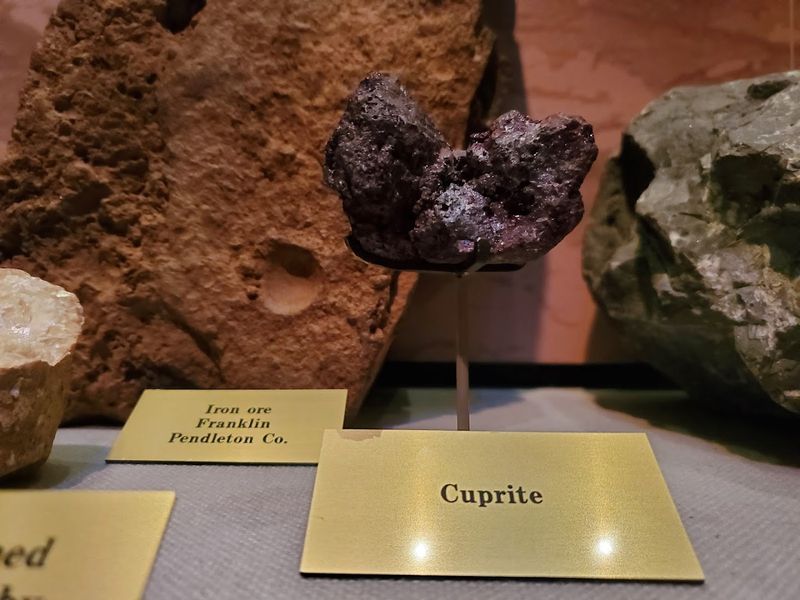
The museum begins where West Virginia itself begins, deep in geological time. The opening section of the show path places you in a world of ancient stone, coal forests, and prehistoric landscapes that predate human memory by hundreds of millions of years.
Standing on the stone-textured floor in these early sections, surrounded by exhibits on the geological formation of the land, creates a sense of scale that is genuinely humbling. The ground beneath your feet is not just decoration.
It is a physical echo of the real stone that underlies the entire state.
The exhibits here are dense with information but never overwhelming. The balance between artifacts, life-size displays, and written context keeps you engaged without drowning you in text.
You learn without feeling like you are being lectured.
Coal forest recreations and prehistoric era displays make this section feel like something from a different planet, which in geological terms it basically was.
West Virginia once sat 20 degrees below the equator, and the museum makes sure you feel the strangeness and wonder of that fact from the very first step.
A Museum Experience That Turns Walking Into Wonder
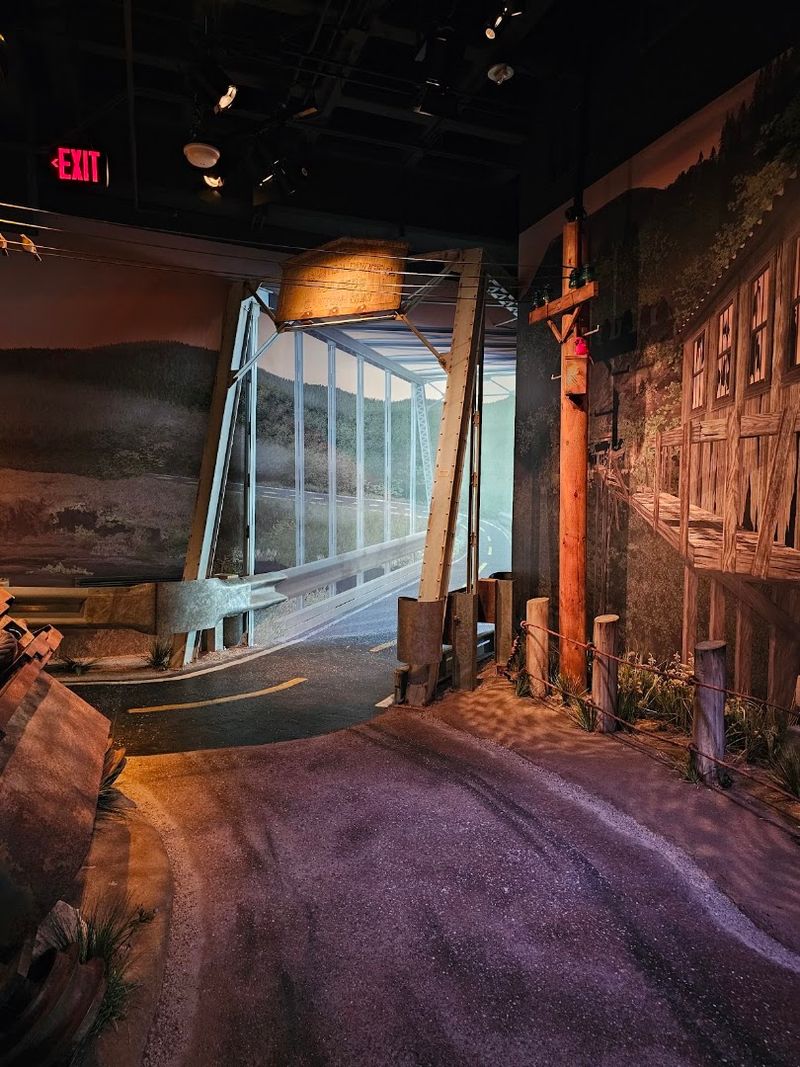
By the time you reach the final sections of the show path, something has shifted in how you experience the act of walking itself. Each step has carried meaning throughout the visit, and that awareness does not just disappear when you reach modern West Virginia.
The museum wraps up its chronological journey with exhibits on the state’s 20th century identity, its industrial peaks, its cultural contributions, and its evolving modern character.
The floor beneath you by this point is smooth and contemporary, a quiet signal that you have arrived in the present.
Visitors consistently spend well over two hours here without feeling like time was wasted. The combination of artifacts, recreated environments, sound design, and the floor-as-storytelling device creates an experience that engages every sense rather than just the eyes.
Free admission makes the whole thing feel almost unreasonably generous. A gift shop rounds out the visit for those who want to take a piece of the experience home.
Address: Building 9, 1900 Kanawha Blvd E, Charleston, WV.
