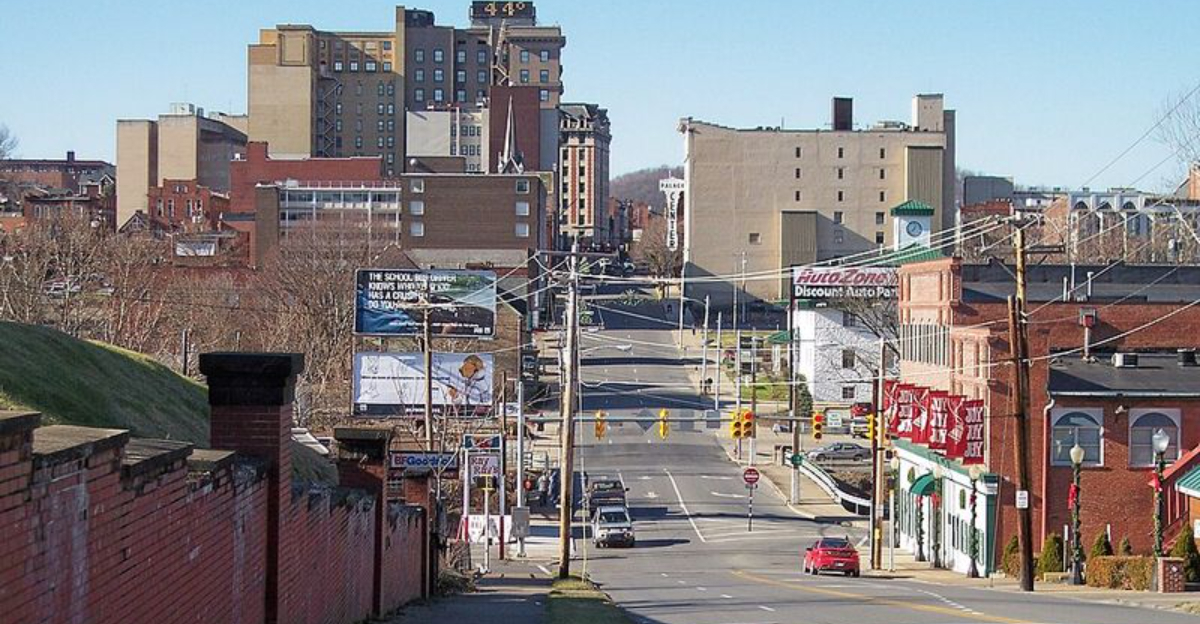
Let me take you to a place where the quiet streets and friendly nods hide a much wilder past.
I walked through this town on a sunny afternoon, and everything seemed perfectly ordinary.
Then a local leaned in and whispered a name that changed everything.
Big Joe.
For years, one man ran the show here with a grip so tight that businesses paid him before they paid their own bills.
Not with violence as much as with fear and favors.
The old timers still remember which door meant trouble and which corners were safe.
West Virginia has its share of colorful history, but this town’s story reads like a black and white movie you cannot stop watching.
The Famiglia Vagabonda and the Roots of Organized Crime in Clarksburg
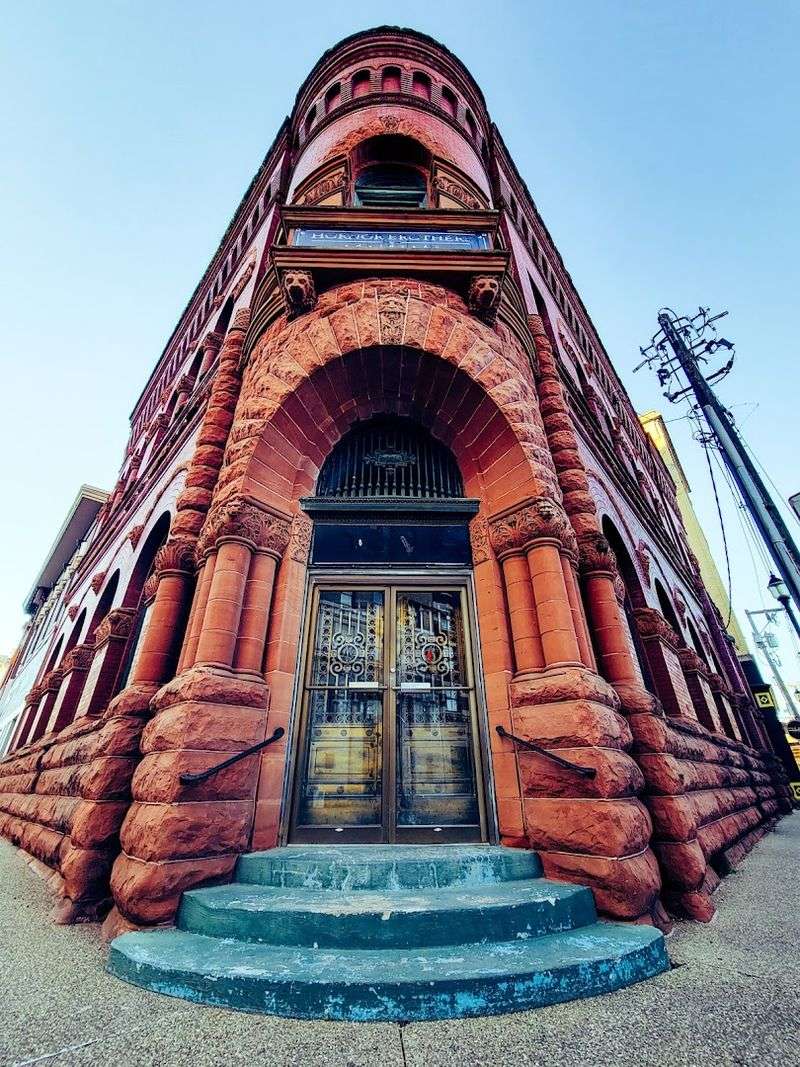
Few American cities carry a criminal legacy as layered and fascinating as Clarksburg.
Around 1908, a group calling itself the Famiglia Vagabonda, which translates loosely to “Wandering Family,” took shape in the hills of West Virginia, beginning what would become one of the most talked-about regional crime syndicates in the country.
Originally formed in Marion County by Frank Piscioneri, the organization quickly spread its reach into Harrison County, where Clarksburg sits as the county seat.
The group started with a stated purpose of protecting Italian immigrants who had flooded the region looking for work in coal mines and glass factories.
That protective mission did not last long. Within a few years, the Famiglia Vagabonda had shifted into extortion, racketeering, and far worse.
The fact that a small Appalachian city became home to a crime family with connections reaching Pittsburgh, New York, and Baltimore is genuinely remarkable. Clarksburg was no quiet backwater.
It was a real player in early American organized crime history.
The Man Behind the Clarksburg Faction
Born Giuseppe Cignetti, the man the streets came to know as “Big Joe” Cenetti was the undisputed head of the Clarksburg branch of the Famiglia Vagabonda. His nickname was not just about physical size.
It carried weight, authority, and a reputation that made even well-connected criminals think twice before crossing him.
Cenetti ran the Harrison County operation with a firm hand during some of the most turbulent years in American history.
The Prohibition era was just beginning to reshape underground economies, and Big Joe positioned himself right at the center of the action.
His reach extended far beyond Clarksburg’s city limits.
Reports from the time suggest that famous mobsters from larger cities were reportedly uneasy around the Famiglia Vagabonda, which says a great deal about how seriously Cenetti and his associates were taken.
His story ended violently on December 28, 1921, when he was shot dead in his automobile near Reynoldsville, a victim of conflict within his own organization.
His legacy, however, never really left Clarksburg.
Italian Immigration and the Cultural Heartbeat of Clarksburg
Understanding why organized crime took hold in Clarksburg requires understanding who built the city in the first place.
Waves of Italian immigrants arrived in north-central West Virginia during the late 1800s and early 1900s, drawn by booming industries that needed labor fast.
They came from Calabria, Sicily, and other regions of southern Italy, bringing their food, their customs, and their tight-knit family structures with them.
These communities settled close together, forming neighborhoods where the Italian language was spoken daily and traditional recipes were passed down through generations. The food culture they planted here grew deep roots.
Pepperoni rolls, a West Virginia staple that is now beloved across the state, were born directly from this Italian immigrant working class.
The same communities that became targets of the Famiglia Vagabonda’s extortion schemes were also the backbone of Clarksburg’s cultural identity. Their resilience shaped the city’s character in ways that outlasted any criminal organization.
Walking through Clarksburg today, you still feel that Italian-American warmth in the local food scene, the festivals, and the family-owned businesses that have endured for decades.
Clarksburg’s Most Beloved Culinary Export
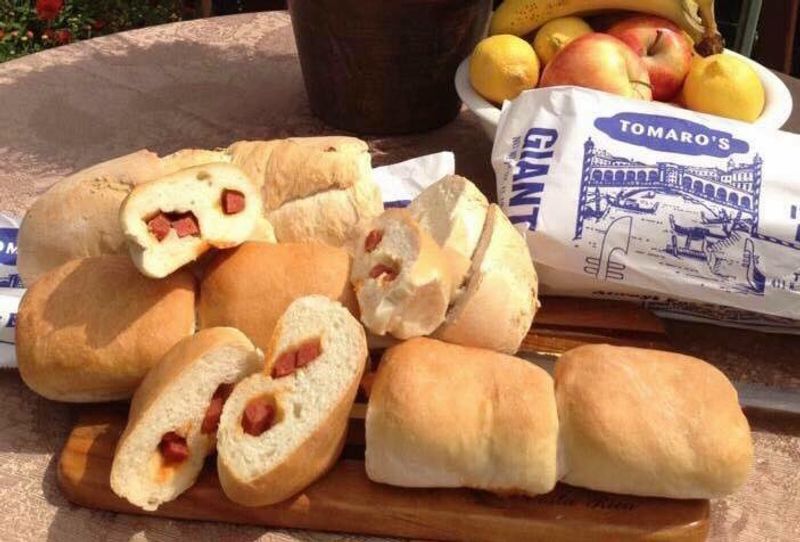
If there is one food that captures the spirit of Clarksburg and the Italian immigrant legacy all at once, it is the pepperoni roll.
Simple, portable, and deeply satisfying, this snack was originally created for coal miners who needed something easy to eat underground without utensils or a break long enough for a real meal.
The concept is straightforward: soft, slightly sweet bread dough wrapped around spicy cured pepperoni, baked until golden. But the result is something far greater than the sum of its parts.
Bite into a fresh one and the fat from the pepperoni has soaked into the bread, creating pockets of flavor that are hard to describe without actually tasting them.
Clarksburg bakeries and delis have been perfecting this recipe for over a century. Every shop has its own variation, some adding cheese, others keeping it strictly traditional.
The pepperoni roll has since become the unofficial food of West Virginia, but Clarksburg locals will be quick to remind you that this is where the whole tradition started. It is a point of genuine, well-earned pride.
The Prohibition Era and Underground Food Culture in Harrison County
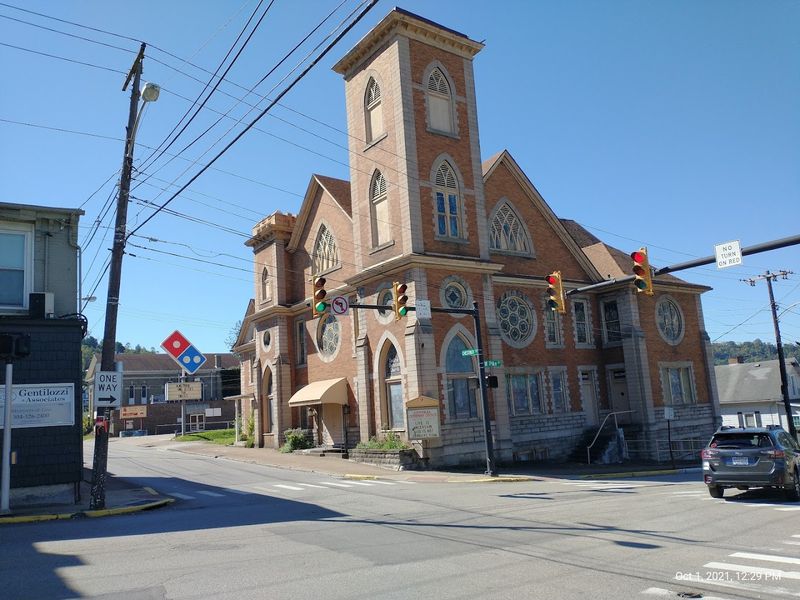
Prohibition changed everything for American cities, and Clarksburg was no exception. When the sale of certain goods became illegal nationwide, underground economies exploded in size and complexity.
The Famiglia Vagabonda was already well-positioned to take advantage of the chaos, supplying illicit products to speakeasies and coal mining communities throughout the region.
What often gets overlooked in these histories is how food and community gatherings became even more central during this period.
With public social life restricted in various ways, people retreated into homes and private spaces where meals became the main event.
Italian-American families in Clarksburg kept their culinary traditions alive through these gatherings, cooking enormous Sunday dinners that served as both nourishment and resistance to the instability around them.
The underground nature of social life during Prohibition also helped shape the city’s restaurant culture in unexpected ways. Small, family-run establishments learned to serve food that was hearty, comforting, and deeply tied to heritage.
That sensibility never fully disappeared. Even today, the best food in Clarksburg tends to come from places that feel personal, unpretentious, and rooted in something real.
Where History Meets the Plate
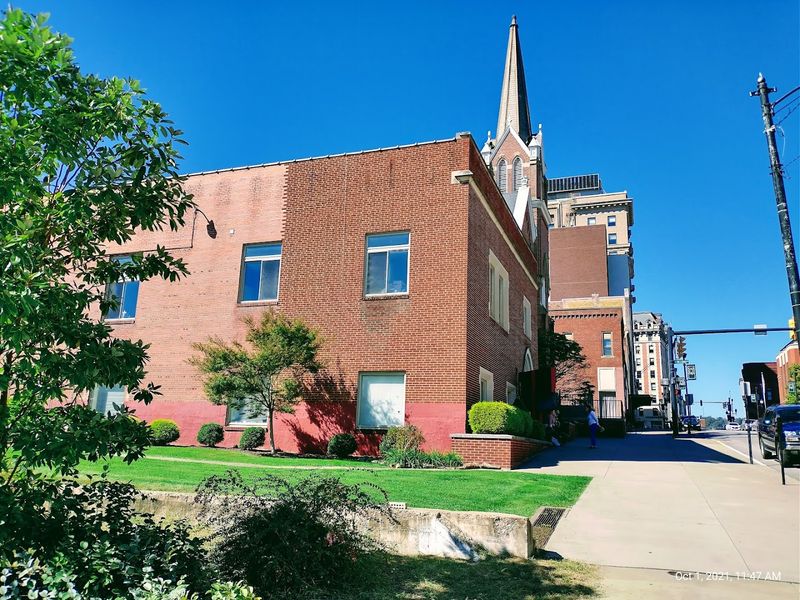
Spending time eating your way through Clarksburg feels like flipping through a living history book, except every chapter comes with something delicious. The city’s food scene is genuinely tied to its past in ways that feel organic rather than forced.
You are not eating at a theme restaurant. You are eating food that evolved from real necessity and real tradition.
Italian-American influence runs through the menus of countless local spots, from hand-rolled pasta to sauces that have been simmering on family stoves for generations.
Alongside these classics, you will find diners serving Appalachian comfort food that reflects the broader cultural mix of Harrison County.
Biscuits, gravy, beans, and cornbread sit comfortably next to marinara and meatballs.
The city’s size works in your favor as a food traveler. Nothing feels rushed or overcrowded.
You can take your time, linger over a meal, and actually talk to the people around you. Clarksburg rewards slow visitors who are willing to wander without a fixed agenda and follow their appetite wherever it leads them.
The Role of Coal Mining Communities in Shaping Local Cuisine
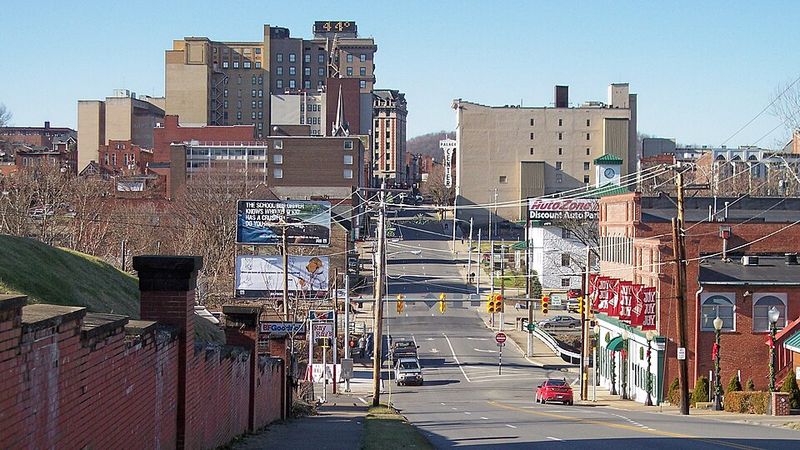
Coal mining was the engine that drove north-central West Virginia for decades, and it shaped the local food culture in ways that are still visible today.
Miners needed food that was calorie-dense, portable, and filling enough to sustain hours of hard physical labor underground.
That demand gave rise to a practical, no-nonsense food tradition built around convenience and sustenance.
The pepperoni roll is the most famous product of this environment, but it was far from the only one.
Miners’ wives packed lunches that reflected their heritage, whether Italian, Eastern European, or Appalachian, and those packed lunches eventually influenced what local bakeries and delis put on their shelves.
There is something deeply moving about food born from necessity becoming beloved tradition.
The meals that kept miners going through brutal shifts are now the meals that bring families together at festivals and Sunday tables.
Clarksburg has never forgotten where its food came from. The working-class roots of the local cuisine are worn openly, like a badge of honor that nobody needs to explain to anyone who grew up eating it.
The Downfall of the Famiglia Vagabonda and What It Meant for Clarksburg
By the early 1920s, the Famiglia Vagabonda was beginning to crack from within.
Internal conflicts, aggressive law enforcement, and a series of high-profile arrests brought the organization to its knees faster than most outside observers expected.
The murder of Big Joe Cenetti in December 1921 was both a symptom and a turning point.
In March 1923, Harrison County authorities arrested nine members of the syndicate in connection with twelve murders and a string of dynamite bombings that had rattled communities across West Virginia, Pennsylvania, and Maryland.
Prosecutions followed across multiple county courthouses, and by 1924 the organization had been largely dismantled.
For Clarksburg, the end of the Famiglia Vagabonda meant something important: the Italian-American community could begin rebuilding its public image and its relationship with the broader city without the shadow of criminal association hanging overhead.
The families who had been victimized by the syndicate could move forward.
What followed was a period of genuine community growth, and the city’s food culture, arts scene, and civic identity all deepened as a result of that hard-won stability.
Why Clarksburg Deserves a Spot on Every Food Traveler’s Map
Clarksburg does not shout for attention, and that is exactly what makes it worth seeking out.
The city has a quiet confidence that comes from knowing its own history, including the complicated parts, and choosing to move forward with honesty rather than embarrassment.
That same quality shows up in the food.
Everything here feels earned rather than performed. The bakeries that have been open for decades are not trying to be trendy.
The family restaurants serving Italian-American classics are not chasing food magazine coverage. They are just doing what they have always done, feeding people well with recipes that carry genuine meaning.
For anyone interested in the intersection of food, history, and place, Clarksburg offers something rare. You can eat a pepperoni roll and trace its origins directly back to immigrant coal miners.
You can walk streets where a notorious crime syndicate once operated and now find nothing but a friendly small city going about its day. That contrast is not uncomfortable.
It is honest. And honest places, in my experience, always have the best food.
Address: Clarksburg, West Virginia
