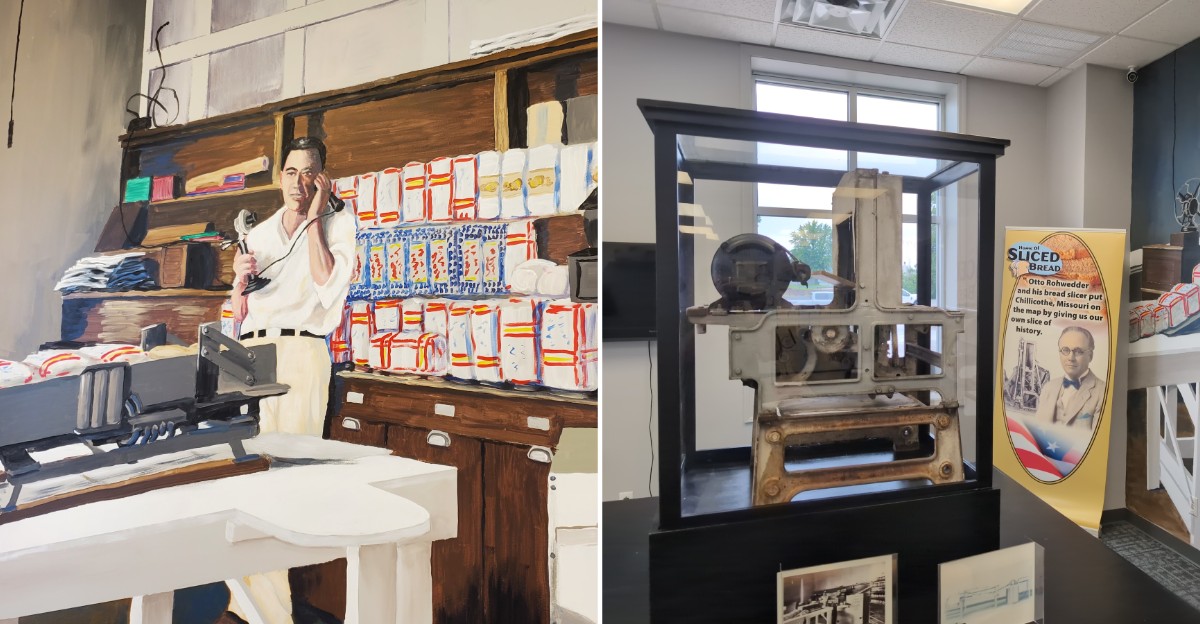
Turns out sliced bread really did have a first day on the job. This Missouri town became the first place in the world to sell machine-sliced loaves in 1928, and the story is much more fun than a simple bakery footnote.
The breakthrough happened in a local baking company, where new slicing technology turned an everyday loaf into something people had never seen before.
Today, visitors can explore the historic building tied to that moment and see original equipment, exhibits, and displays about how the idea caught on.
It is a wonderfully specific claim to fame, and one that somehow makes a basic sandwich ingredient feel surprisingly important. For a small town, Missouri ended up playing a very big role in breakfast history.
The Old Chillicothe Baking Company Building
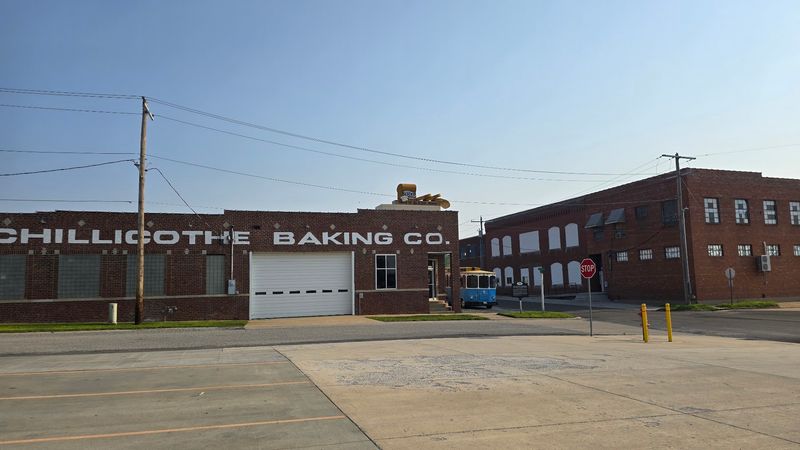
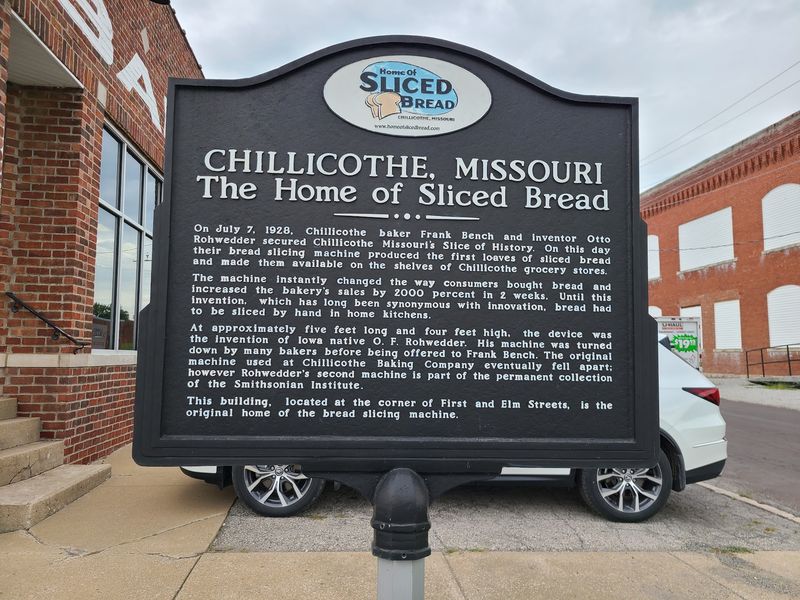
Picture a plain little brick building on a quiet street, and then picture the fact that modern grocery shopping basically started inside it. The Chillicothe Baking Company operated here, and this is where baker Frank Bench decided to take a gamble that most of his peers thought was ridiculous.
Nobody at the time believed customers wanted their bread cut for them before they bought it, because the assumption was that loaves would dry out and go stale on the shelf. Bench went ahead anyway, and the sales numbers climbed so fast that other bakeries across the country started paying attention.
The building has been given new life as a welcome center, so you can actually walk inside rather than just staring at a plaque from the sidewalk. There is something oddly moving about standing in a room where a small business owner in rural Missouri made a decision that reached every kitchen in America.
If you like the kind of history that connects to your everyday life, this beats a lot of grander landmarks. You open a bag of bread at home and the story started right here, which is a strange and wonderful thing to sit with for a minute.
The Inventor And The Baker Who Took The Risk
Here is the part of the story that gets me every time, because the man behind the bread slicer was a jeweler from Iowa. Otto Rohwedder was not a baker, not a food scientist, and not part of the industry he ended up reshaping, which tells you something about where good ideas actually come from.
He spent years tinkering, dealing with setbacks including a fire that destroyed early work, and kept refining the machine until it could slice a loaf and hold it together well enough to sell. The bakers he approached mostly passed on it, and you can understand why they were nervous about changing something people already knew how to buy.
Frank Bench was the one who said yes, and his bakery in Missouri became the testing ground for an idea everybody else had shrugged off. Their partnership is a reminder that an invention needs somebody willing to actually use it.
When you read about these two at the exhibits, the whole thing stops feeling like trivia and starts feeling like a real story about stubbornness paying off. That combination of persistence and trust is what makes the town worth stopping for.
Inside The Sliced Bread Innovation Center
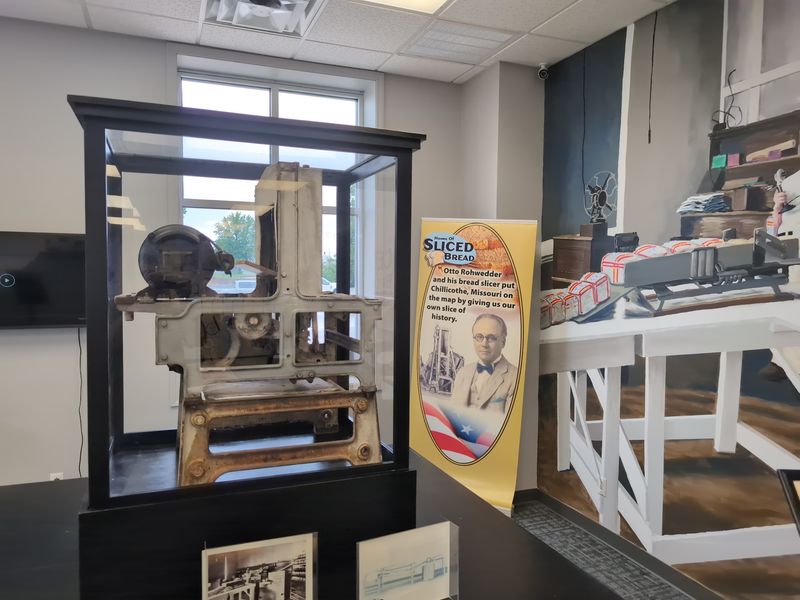
Head to the Sliced Bread Innovation Center at 100 Elm Street, Chillicothe, MO 64601, and you are stepping into the same historic bakery structure where the whole thing kicked off. It functions as both a welcome center and a genuine little museum, which is a smart use of the space.
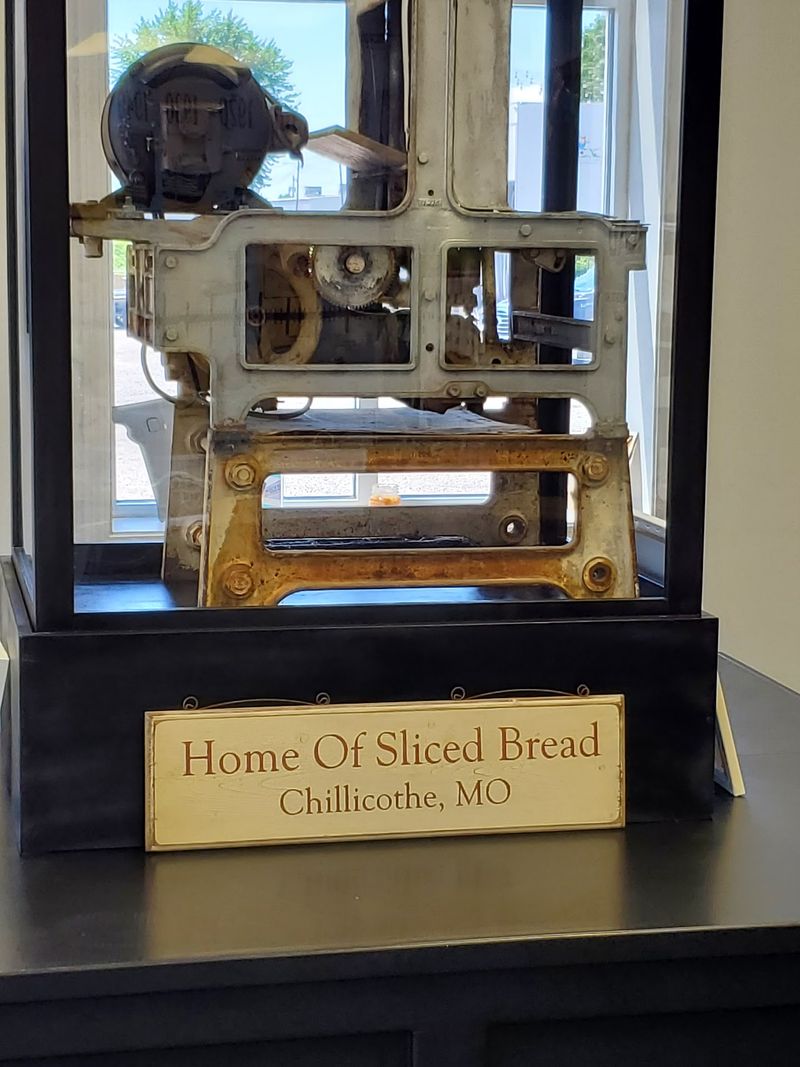
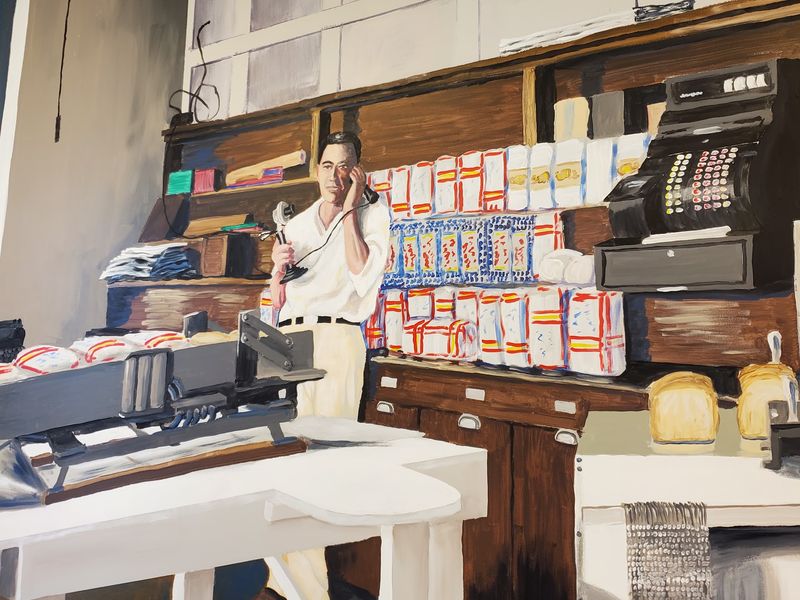
The exhibits walk you through how commercial bread slicing came together, from the mechanical problem of cutting a soft loaf evenly to the packaging puzzle that kept it fresh afterward. One of the original slicing machines sits on display, and seeing the actual metal and blades makes the story feel much more real than reading about it ever could.
Plan on a relaxed stop rather than a marathon visit, because the collection is focused and easy to absorb in one pass. Staff can also point you toward the rest of the town, which saves you from wandering around guessing.
What surprised me when I looked into it is how much detail they packed into a modest footprint. You leave knowing something you did not know before, and honestly, that is all I really want from a roadside museum in a small Missouri town.
Grand River Historical Society Museum
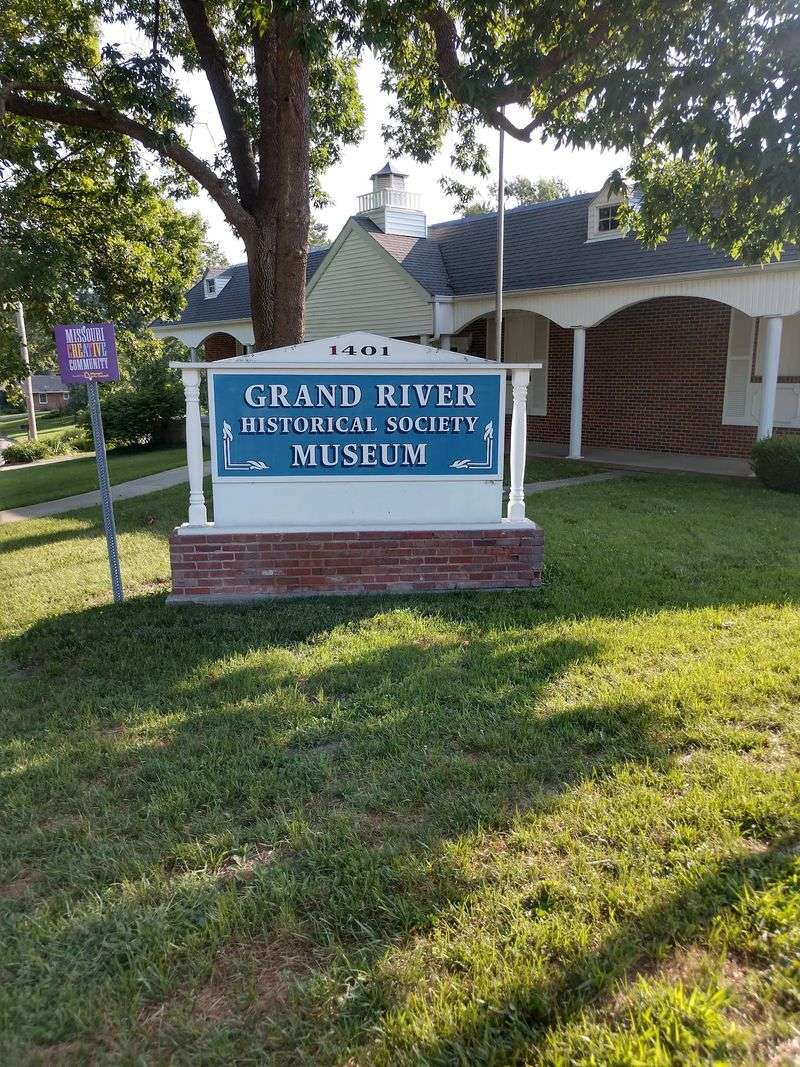
If the bread story leaves you curious about the rest of the town, the Grand River Historical Society Museum is where you go next. It holds additional bread slicing exhibits, including one of Rohwedder’s original machines, so the two stops really complement each other.
The building spreads across a serious amount of exhibit space, close to ten thousand square feet, filled with objects and displays covering Livingston County life going way back. You get farming, early commerce, household items, school memorabilia, and the kind of local odds and ends that never make it into state history books.
Volunteers who care deeply about the collection keep the place running, which you can usually sense from how carefully everything is labeled and arranged. Hours can be limited, so a quick check before you drive over is a genuinely useful move.
I always think regional museums like this one are underrated, because they show you how a community actually lived rather than just what it is famous for. You walk out with a much fuller picture of this corner of Missouri, and the sliced bread chapter makes more sense once you understand the town around it.
The Grand River Rolling South Of Town
Just south of the city the Grand River moves along quietly, and it played a much bigger role in this town’s story than its calm appearance suggests. Before highways and rail lines carved up the region, waterways decided which settlements grew and which ones faded.
Trade and travel moved along this river, and the early development of the surrounding area of Missouri followed that pattern closely. Knowing that gives the landscape a bit more weight when you pull over to look at it.
These days it is mostly a peaceful feature of Livingston County, bordered by farmland, woods, and the kind of open sky that makes you want to roll the window down. Birdlife along the banks is worth a slow look if you have binoculars in the car.
I would not build an entire trip around it, but pairing a river stop with your museum morning gives the day a nice rhythm. You spend a couple of hours indoors reading about machines and inventors, then step outside into the quiet countryside that shaped the town long before any of that happened.
Livingston County Courthouse On The Square
Anchoring the downtown square is a three-story courthouse that honestly looks like it belongs in a much larger city. Built in the early part of the twentieth century, it is a solid example of classical revival architecture, complete with columns and the kind of heavy stone presence that makes you slow your walk.
Courthouses in small Missouri towns often serve as the emotional center of the community, and this one is no exception. Events and gatherings happen on and around the grounds, so depending on when you visit you might catch something going on.
From a purely visual standpoint it is the best photo subject downtown, especially if you frame it with the surrounding storefronts. The square layout means you can circle the whole thing in a few minutes and see it from every angle.
Give yourself a moment to just sit on a bench nearby and watch normal small-town life happen around you. Between the courthouse, the murals, and the shops within a block or two, the downtown area turns out to be far more interesting to wander than you might expect from the map.
Bethel AME Black History Museum
There is more to this town’s past than bread, and the Bethel AME Black History Museum makes that clear in a thoughtful way. Housed in a historic church building, it preserves the story of Black citizens in this part of Missouri across generations.
Exhibits cover community life, churches, schools, families, and local figures whose contributions rarely get the attention they deserve. One display connects to the Underground Railroad, which adds a sobering and important layer to the visit.
Small museums like this one depend heavily on volunteers, so hours may vary and calling ahead is the practical thing to do. The scale is intimate, which actually works in its favor because nothing gets lost in a sea of glass cases.
I think stopping here reframes the whole trip in a useful way. A town known nationwide for one clever invention also carries a much longer and more complicated history, and taking the time to learn both sides makes you a better traveler.
Plan it alongside your other downtown stops since everything sits close together, and give yourself enough time to read rather than skim.
Sliced Bread Day And The Summer Celebration
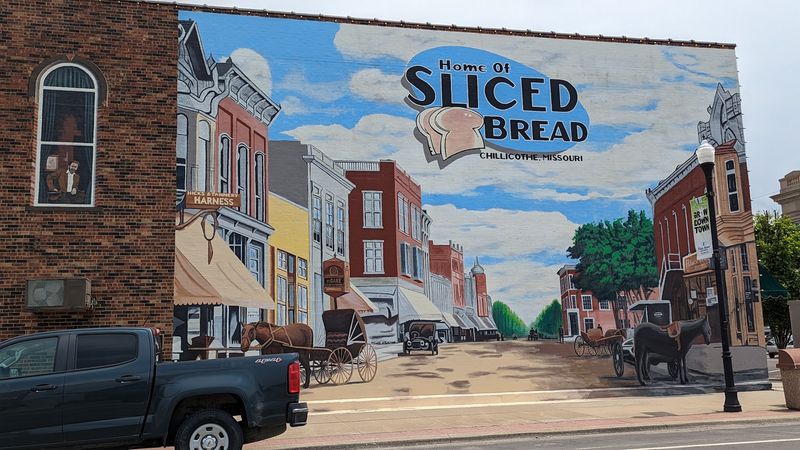
A whole holiday built around bread sounds like a joke until you realize the state of Missouri made it official. Sliced Bread Day lands in early July, marking the moment those first machine-cut loaves went on sale, and the town turns it into a full weekend.
There is a bread baking contest, which is exactly as charming as it sounds, plus a Sliced Bread Pageant that locals take seriously in the best possible way. Music, food, and downtown crowds fill out the rest of the schedule.
If you want to see the community at its most enthusiastic, timing your trip around the festival is the way to do it. Lodging in a town this size fills up when events happen, so booking early saves you a long drive back to your hotel.
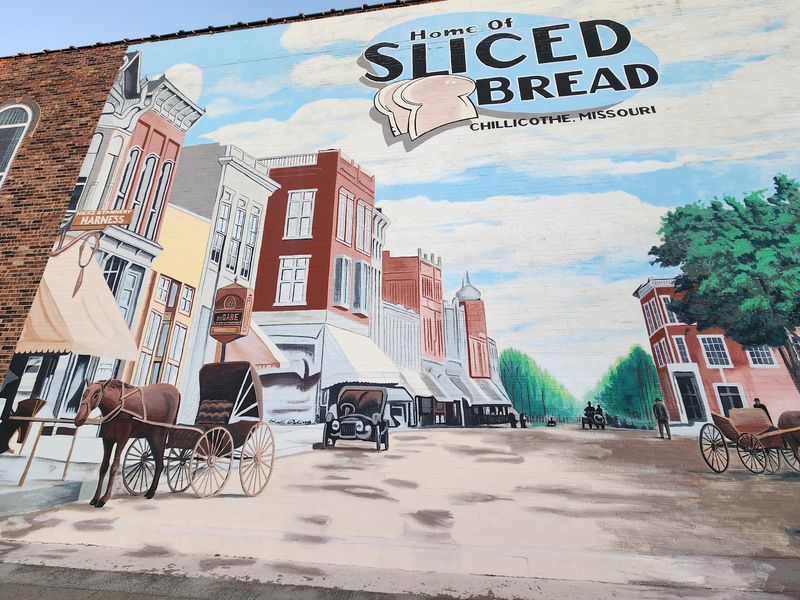
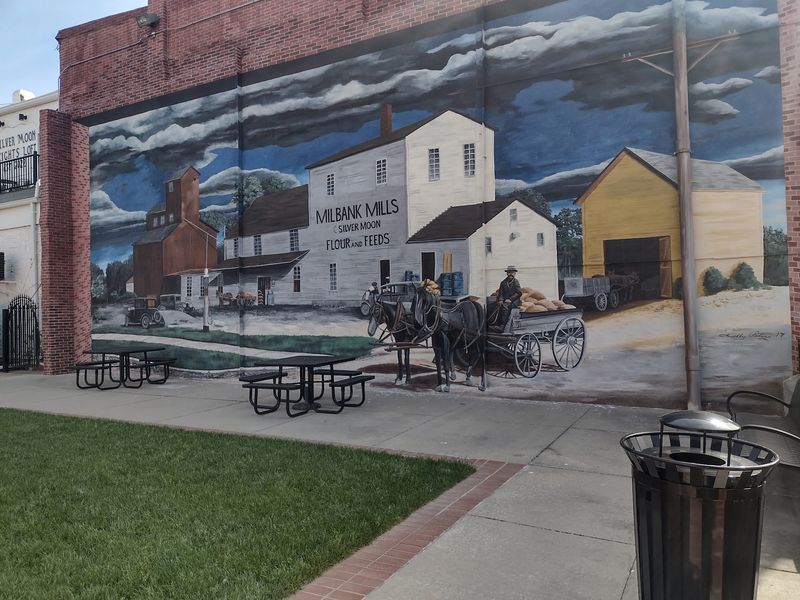
Even outside of festival weekend, the pride sticks around in the signage, the murals, and the way the story gets told at the museums. A town that throws a party for a loaf of bread is a town that knows exactly who it is, and that kind of confidence is fun to be around.
Easy Drives To Pershing And Marceline
Got an extra afternoon? The countryside around Chillicothe hides a couple of genuinely notable stops that pair well with the bread story.
Head over to Laclede and you will find the General John J. Pershing Boyhood Home State Historic Site, preserving the early years of one of the most significant military leaders in American history.
The house and grounds are modest, which is kind of the point, since it shows where he started rather than where he ended up.
Push a bit farther east, roughly forty miles, and you reach Marceline, the town Walt Disney grew up in and drew on for the look and feel of Main Street in his parks. Standing on that street is a strange experience once you realize how much of it you already recognize.
Both drives run through rolling farmland on quiet roads, so the travel itself is pleasant rather than something to endure. Filling the tank before you set out is smart because services get sparse between towns.
Strung together, these stops make for a satisfying loop through a part of the state that quietly produced a surprising number of world-changing ideas and people.
