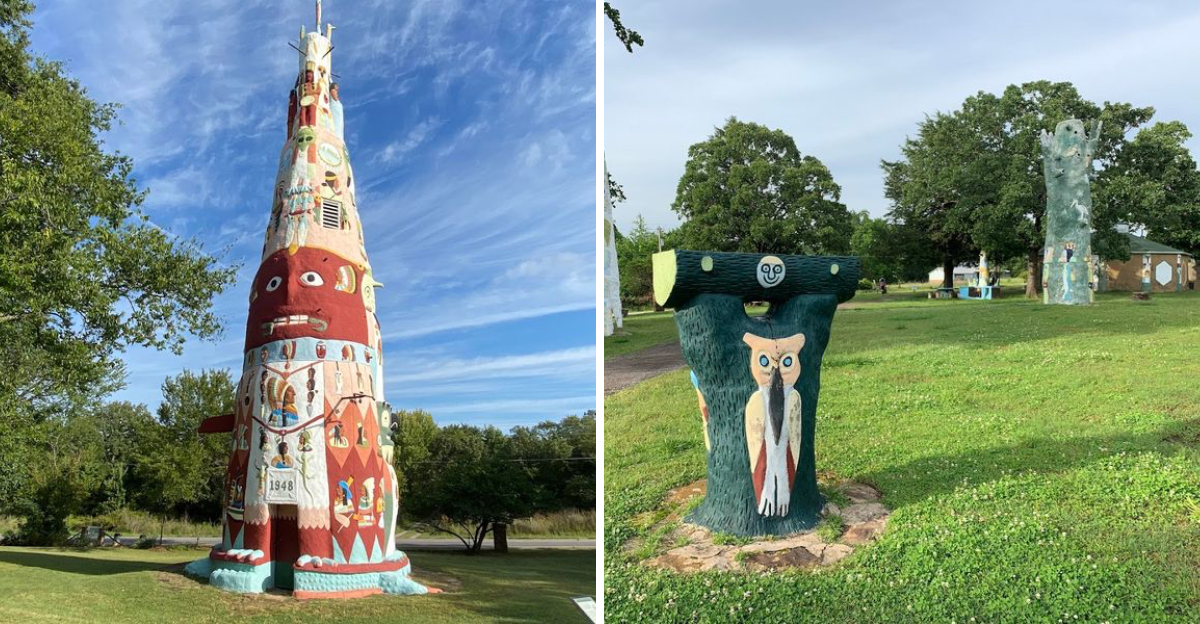
I was not prepared for the first glimpse of Ed Galloway’s Totem Pole Park. One minute I was cruising a quiet stretch of highway in northeast Oklahoma, the next I was pulling over because something towering above the trees demanded a second look.
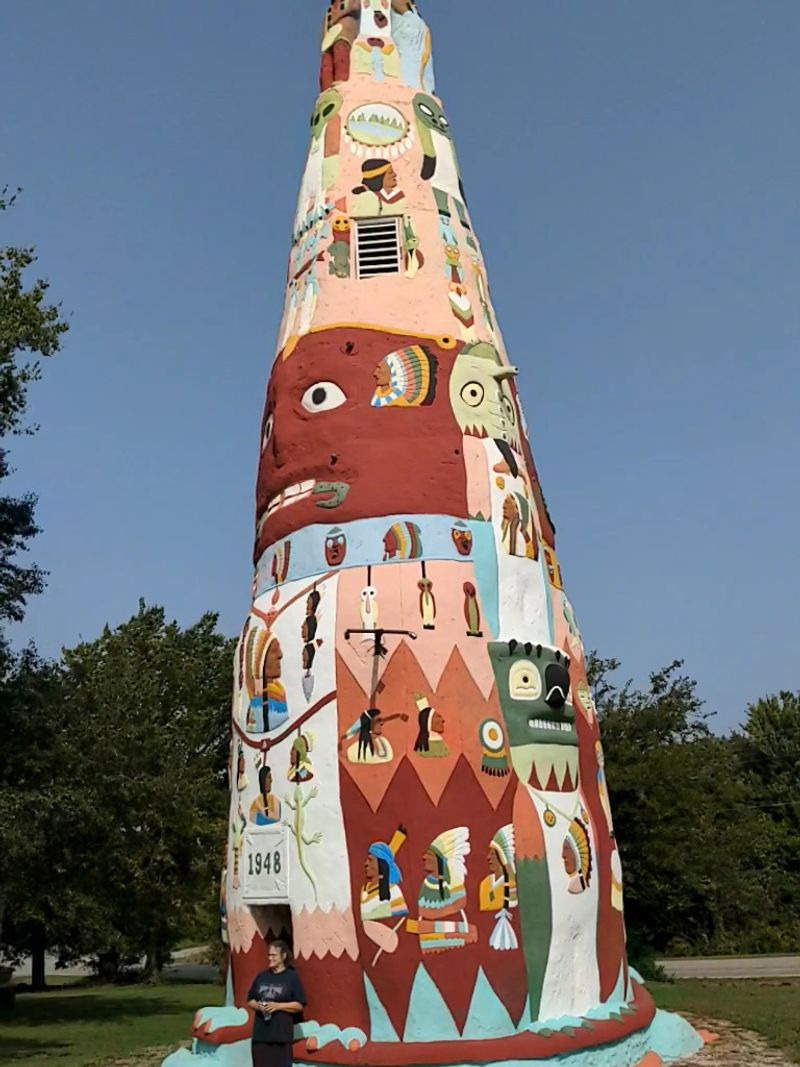
Standing 90 feet tall against the open sky, it doesn’t ease into your view. It owns it.
What makes it even better is knowing a retired woodshop teacher built this massive concrete totem pole by hand, hauling sand and rock from a nearby creek and shaping it piece by piece.
Walking around the grounds, past the collection of smaller totems, I kept thinking about the patience and vision it must have taken to bring something like this to life.
It’s bold, a little eccentric, and completely unforgettable. If you’re road tripping Route 66 or exploring this corner of the state, this is the kind of stop that turns a regular drive into a story worth telling.
Quick Snapshot: What You’re Actually Getting Into
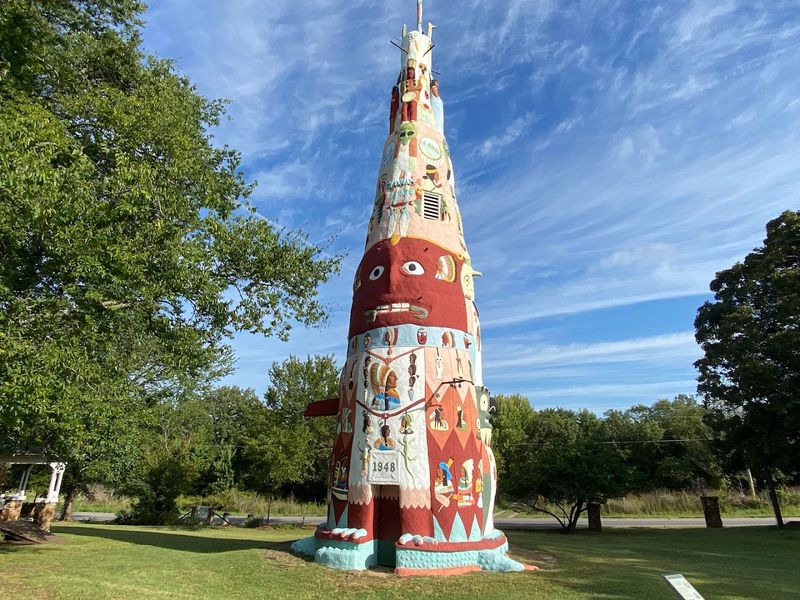
Before you gas up and point your car toward rural Oklahoma, here’s the honest rundown of what this place actually is. Ed Galloway’s Totem Pole Park is a free, open-air folk art park featuring the world’s largest concrete totem pole, standing 90 feet tall with an 18-foot diameter base.
It sits along Oklahoma Highway 28A, a couple of miles off historic Route 66, near the small town of Foyil.
Name: Ed Galloway’s Totem Pole
Park Type: Outdoor folk art park and historical site
Setting: Rural northeast Oklahoma countryside, open skies, gravel paths, peaceful surroundings
Location: 21300 OK-28A, Chelsea, OK 74016 (near Foyil, Oklahoma)
Arrival: Free admission, no tickets needed, parking available behind the park, gift shop and Fiddle House open during posted hours
The park is managed by the Rogers County Historical Society and has been rated 4.4 stars by over a thousand visitors. It’s open most days from 10 AM to 5 PM, with Sunday hours starting at 1 PM.
Come ready to walk, look up a lot, and feel genuinely amazed by what one determined human being built with his own hands.
Why This Is Worth the Drive
Let’s be straight with you: this park is not on the main highway. You will turn off Route 66, drive a few miles through rolling Oklahoma countryside, and wonder more than once if you made a wrong turn.
And then it appears, a towering concrete structure rising above the trees, painted in bold colors, carved with hundreds of figures, and absolutely unlike anything else you’ve ever seen.
People who visit often say they almost skipped it, and almost every single one of them is glad they didn’t.
The drive through the countryside is actually pretty beautiful, and the payoff when you arrive is immediate and real.
Who This Is For
Road trippers on Route 66 looking for authentic stops
Families with curious kids who love big, wild, colorful things
History lovers and folk art fans
Anyone who appreciates what one person can build with enough time and passion
Who This Is Not For
Travelers in a serious rush with zero flexibility
Anyone expecting a polished theme park experience
The detour takes maybe 20 minutes from either Route 66 or I-44. That’s a small ask for something this genuinely unforgettable.
Pack a picnic, bring your camera, and give yourself at least an hour.
The Man Behind the Monument: Ed Galloway’s Story
Here’s the part of the story that really gets you. Ed Galloway was a manual arts teacher at the Sand Springs Home, a facility that housed orphaned and disadvantaged children, where he taught woodworking and tool skills for over two decades.
When he retired, he and his wife Villie moved to a quiet piece of land near Foyil, Oklahoma, and Ed got to work.
He didn’t build a deck or plant a garden. He built a 90-foot concrete totem pole.
Starting in 1937, he hauled sand and rocks from a nearby creek in a wheelbarrow, mixed his own concrete, and carved and painted an entire park’s worth of folk art monuments by hand.
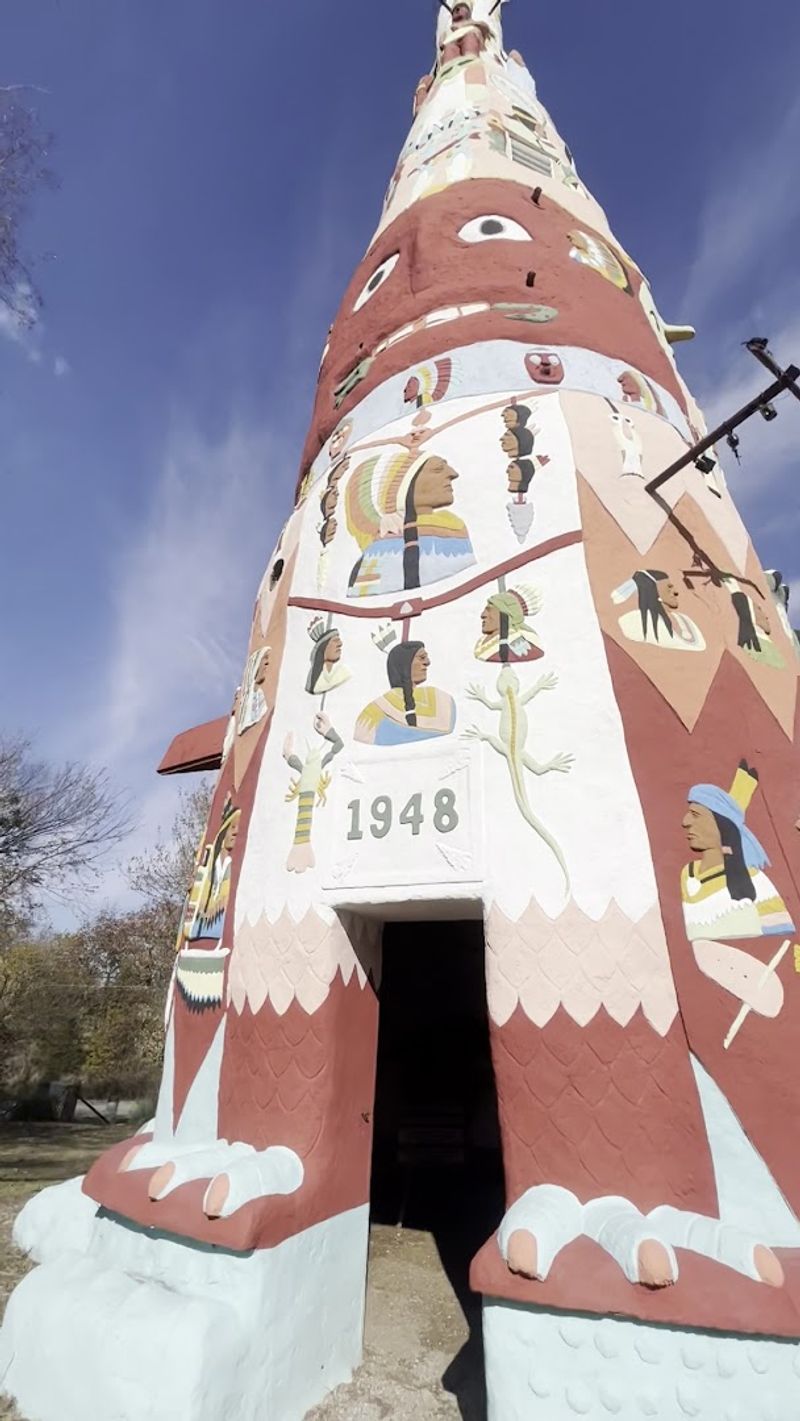
The main totem pole was completed in 1948 and features 200 different carved images, four nine-foot-tall Indian chiefs, and layer upon layer of painted detail.
Why It Matters
Galloway built these totems as a personal tribute to Native American culture and heritage, a deeply intentional act of respect from a man who clearly thought long and hard about what he wanted to leave behind.
He also handcrafted over 300 fiddles during his lifetime, many of which are still on display in the Fiddle House on the property. The man was not slowing down.
He was just getting started.
The 90-Foot Giant: Up Close and Personal
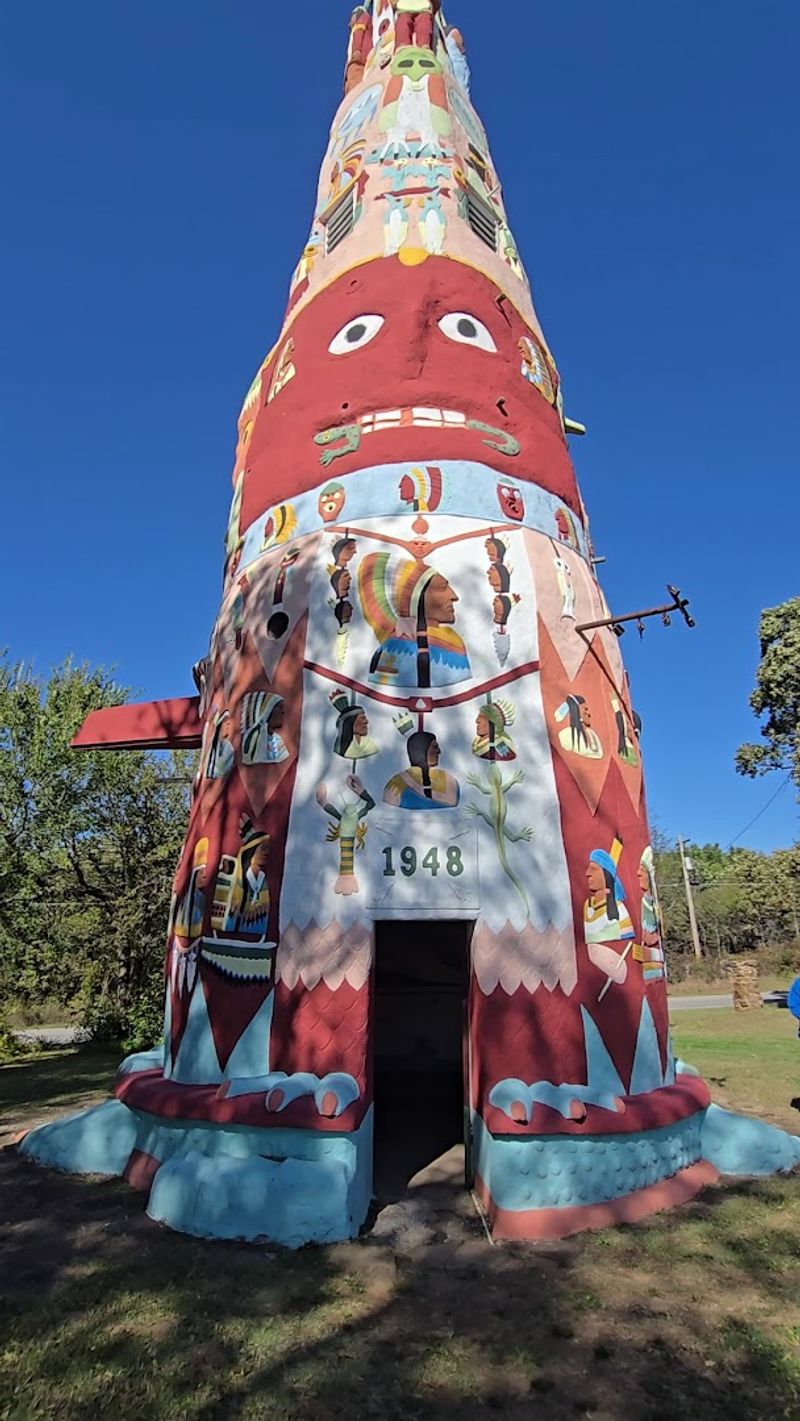
Standing at the base of this thing, your neck goes back and your jaw goes slack. The main totem pole at Ed Galloway’s park is 90 feet tall, 18 feet in diameter, and sits on a 54-foot wide base.
It took 100 tons of sand and rock, 28 tons of cement, and 6 tons of steel to build. Those numbers don’t fully hit you until you’re standing right there next to it.
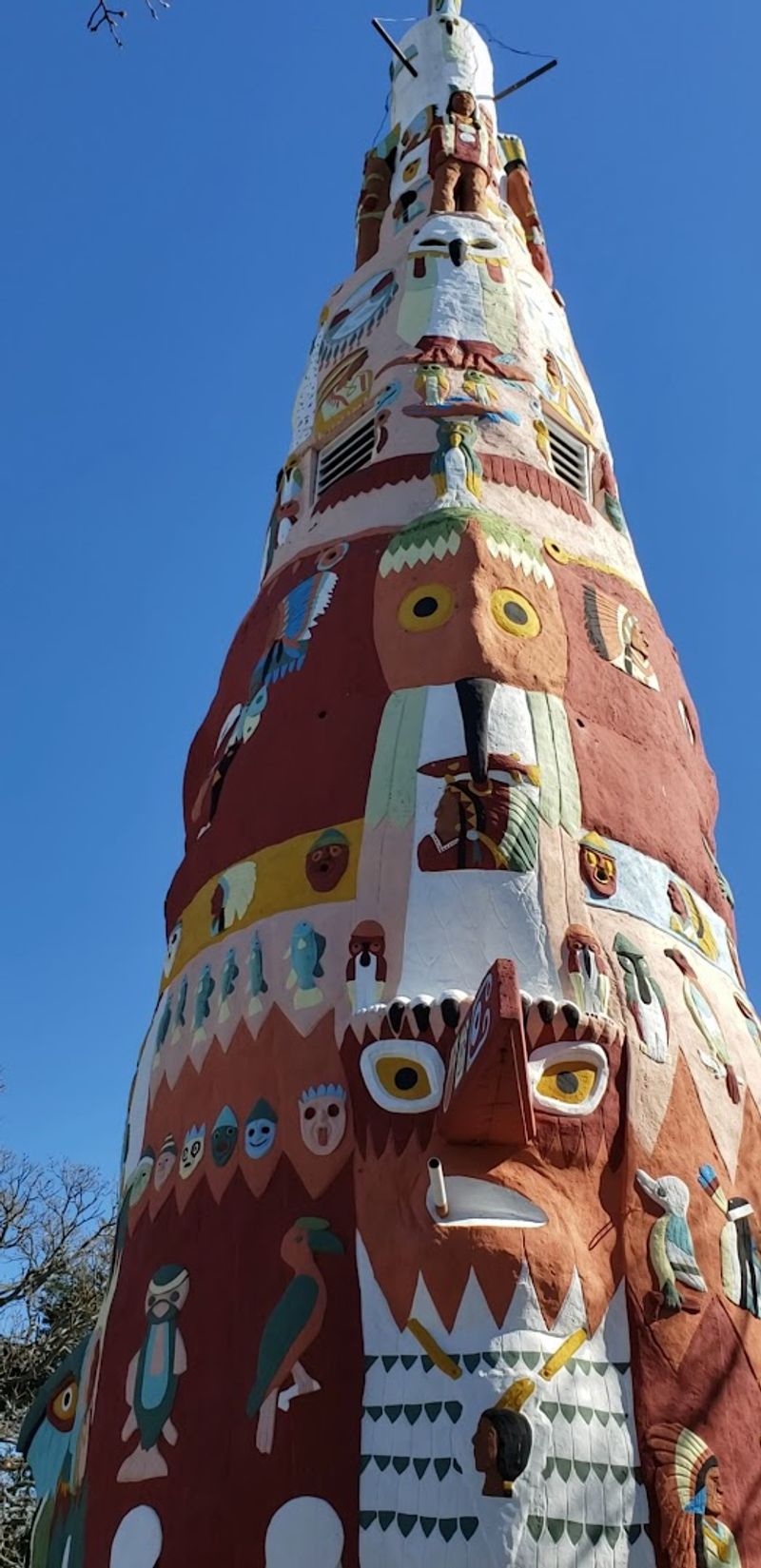
The surface is covered in 200 different carved images, animals, faces, geometric patterns, and four massive nine-foot Indian chiefs positioned around the structure.
The paint has been refreshed over the years, and as of recent visits, restoration work is actively ongoing, with many sections looking freshly vibrant and detailed.
Pro Tip
When you’re allowed inside the base, look straight up. There’s an old wooden staircase that once carried visitors to the top of the structure, and seeing it from below is a genuinely cool moment you won’t expect.
The scale of this thing is hard to photograph well. You kind of have to be there to feel it.
Visitors consistently mention being stunned by the level of detail, and honestly, that reaction makes complete sense once you’re standing in front of it. This is not a small curiosity.
It is a full-on monument.
The Smaller Totems and Grounds: More Than You Expect
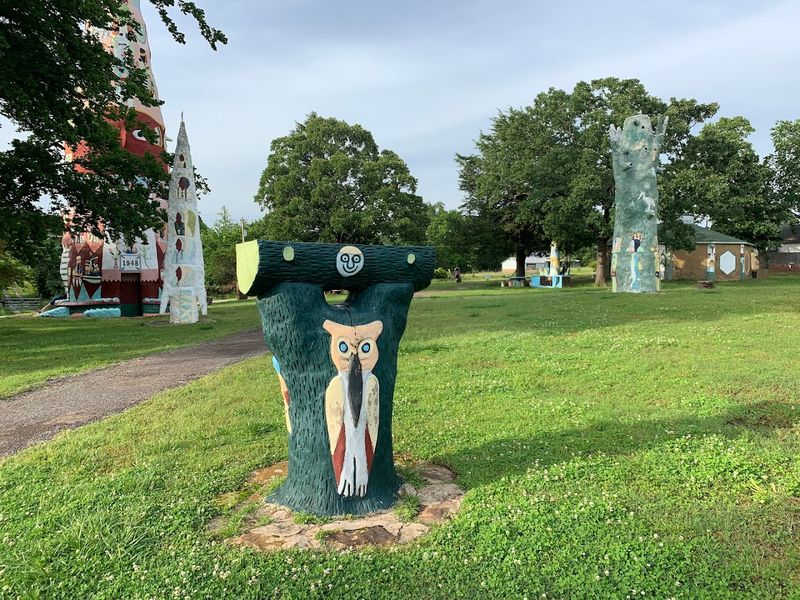
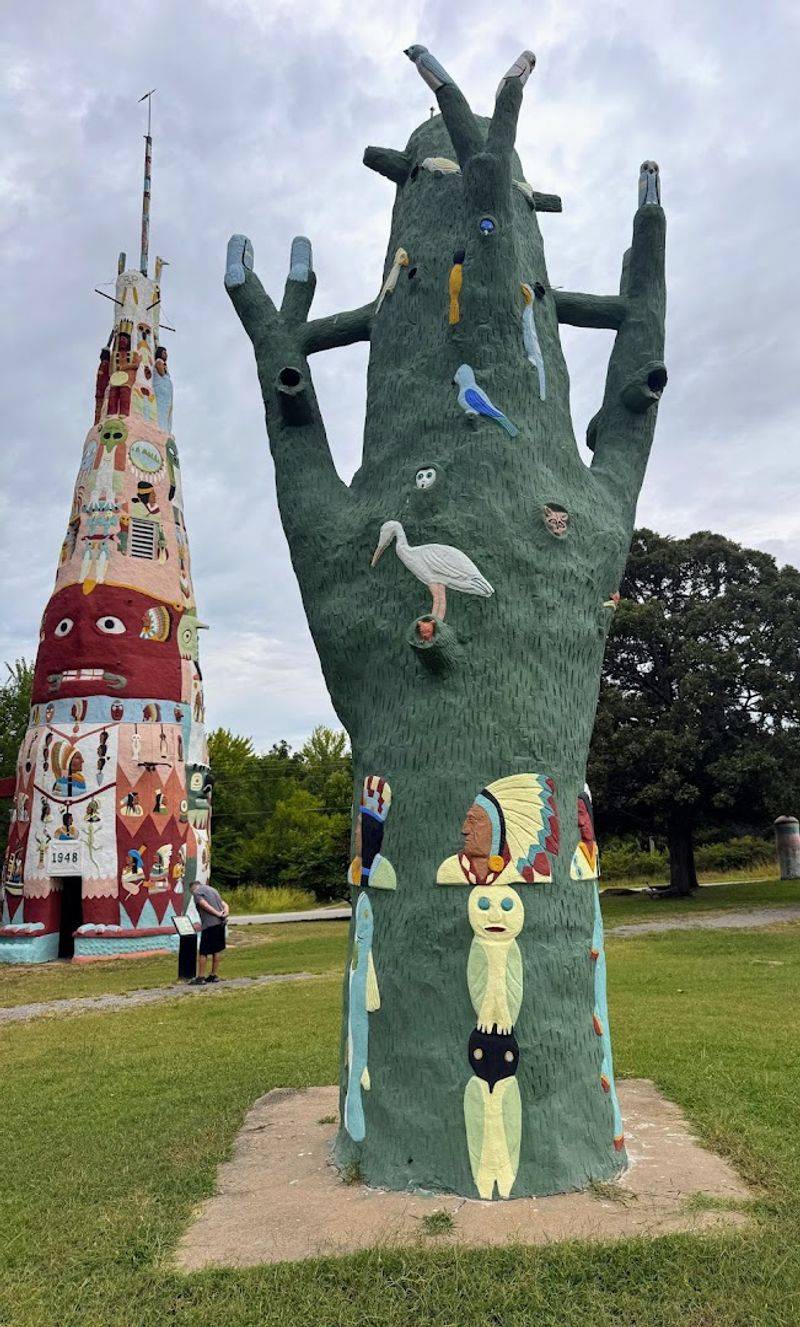
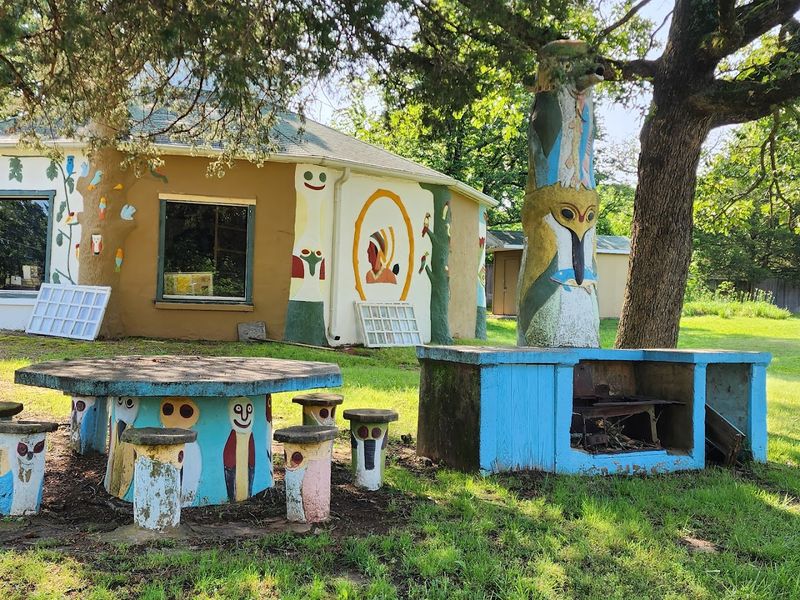
Most people come for the big one, but the rest of the park earns its own attention. Scattered across the grounds are several smaller totem poles, each one distinct in design, painted in different color combinations, and carved with its own set of figures and symbols.
No two are alike, and walking from one to the next feels like flipping through pages of a very unusual art book.
The grounds themselves are open, grassy, and easy to walk. There are informational placards placed around the park that explain the history of the totems and the story of Ed Galloway.
Reading them is genuinely worthwhile. They tell the story in a way that makes the whole place feel even more remarkable than it already looks.
Insider Tip
Across the gravel road from the main park, there’s a wooden gazebo pavilion with picnic tables and benches. It’s a solid spot to eat lunch, rest your feet, and take in the surroundings at a slower pace.
Dogs are welcome on that side of the road, though not in the park itself.
The countryside setting adds to the whole experience. Open skies, quiet roads, and the occasional bird call make this feel like a real escape.
It’s the kind of place where you slow down without even trying, which is exactly what a road trip stop should feel like.
The Fiddle House: A Surprise Inside a Surprise
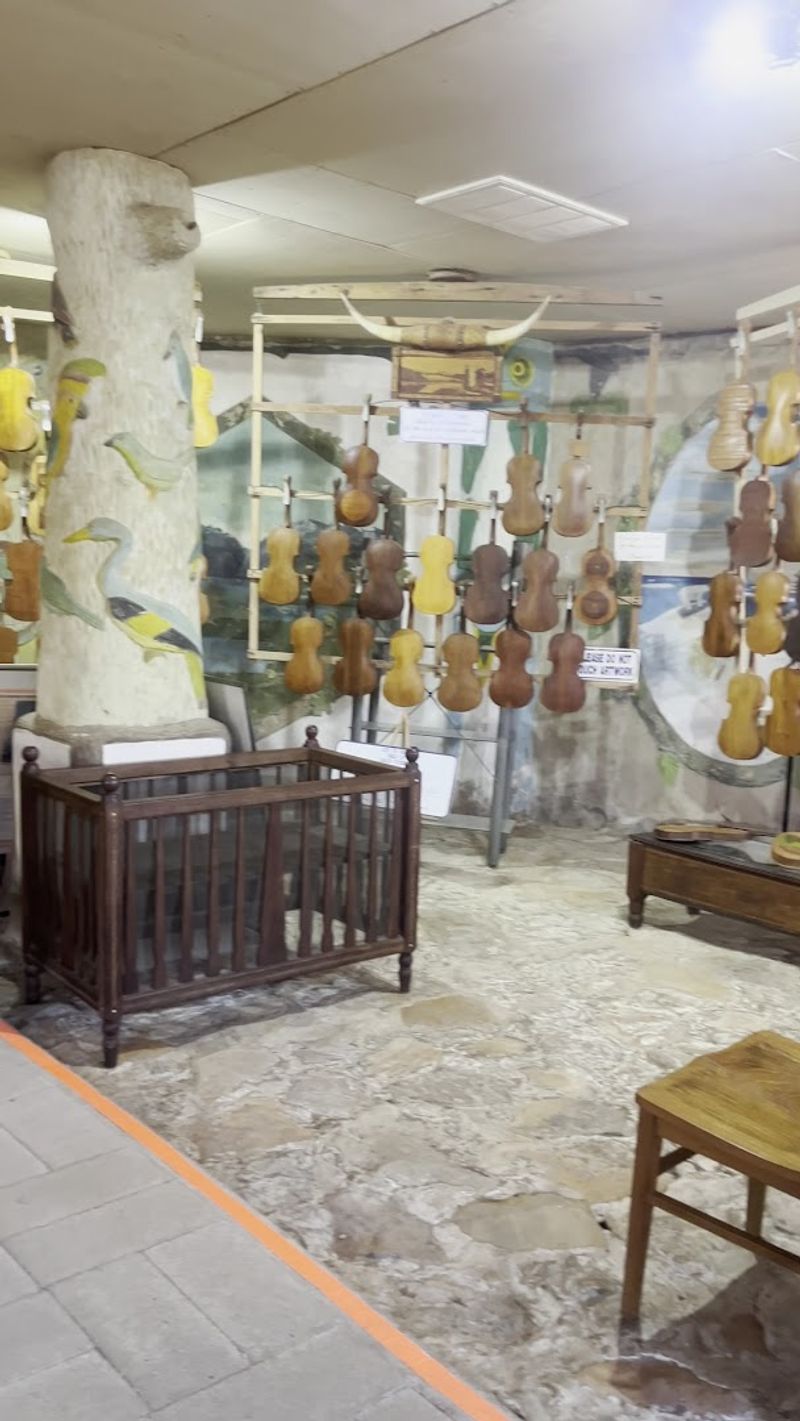
Nobody warned me about the fiddles. You walk into what looks like a modest gift shop and small museum, and then you look at the walls, and they are covered in handmade fiddles.
Over 300 of them, each crafted by Ed Galloway himself, each made from a different type of wood. It’s one of those moments where you stop mid-step and just look.
Galloway wasn’t only a concrete sculptor. He was also a skilled woodworker, which makes sense given his teaching background.
The fiddles are incredibly well-preserved and displayed with care. Some are simple and clean, others are ornately decorated.
All of them together create a wall of craftsmanship that feels almost impossible for one person to have produced.
Best For
Anyone who appreciates woodworking, handmade instruments, or just wants to understand the full scope of what Ed Galloway actually was as an artist and craftsman.
The staff in the Fiddle House are genuinely knowledgeable and enthusiastic. Several visitors have mentioned that the woman working the counter shared personal stories and historical details that you won’t find on any placard outside.
That kind of firsthand storytelling is rare and worth seeking out. Plan to spend at least 20 to 30 minutes in here.
It’s more than a gift shop. It’s a small museum with real character and real history on every wall.
Mid-Trip Reality Check: What to Know Before You Go
You’re about halfway through this article, and if you’re already mentally planning the visit, good. But let’s cover the practical stuff so nothing catches you off guard.
Ed Galloway’s Totem Pole Park is free to enter. There’s no admission fee, no ticket booth, and no reservation required.
The park is open most days from 10 AM to 5 PM, and on Sundays from 1 PM to 5 PM.
The Fiddle House and gift shop operate during those same hours, so if you show up outside of them, you can still walk the grounds and see the totem poles, but the interior experience won’t be available.
A few visitors have shown up on off-hours and found the grounds open to wander, which is still worthwhile, just plan accordingly if you want the full experience.
Common Mistakes to Avoid
Arriving on a Sunday morning before 1 PM and finding the shop closed
Not reading the informational placards outside because they genuinely add a lot
Skipping the Fiddle House because it looks like just a gift shop
Forgetting water or snacks since there are no food vendors on site
Planning Advice
Give yourself at least 60 to 90 minutes total. The grounds, the main totem, the smaller totems, and the Fiddle House each deserve real attention.
Rushing through this place would be a genuine waste of a great stop.
The Route 66 Connection: A Perfect Off-Highway Detour
Route 66 has no shortage of quirky roadside stops, but this one hits differently. Ed Galloway’s Totem Pole Park sits just a few miles off the historic highway, and it has become one of the most talked-about detours on the entire Oklahoma stretch of the Mother Road.
Travelers doing Route 66 passport adventures frequently list it as a highlight, and that’s saying something given the competition.
The park sits between Route 66 to the west and I-44 to the east, making it accessible from either direction without much backtracking. From either highway, you’re looking at less than 20 minutes of driving through genuinely pretty rural Oklahoma landscape to get there.
It’s the kind of side trip that improves a road trip rather than interrupting it.
Best Strategy
If you’re doing a Route 66 trip, build this stop into your day intentionally rather than treating it as an afterthought. Pair it with the nearby town of Claremore or Chelsea for a full afternoon in the area.
The countryside between these towns is quiet and scenic, and the slower pace of the drive fits perfectly with the spirit of the park itself.
Route 66 is all about discovering things that don’t exist anywhere else. This park is exactly that kind of discovery, specific to this land, this story, and this one remarkable man’s life work.
Final Verdict: Key Takeaways Before You Hit the Road
Some places look better in photos than they do in person. Ed Galloway’s Totem Pole Park is the exact opposite.
Photos give you a sense of the scale, but being there, standing at the base of a 90-foot concrete structure that one man built with a wheelbarrow and creek sand, is something photographs simply cannot replicate. It’s a place that earns its reputation honestly.
The fact that it’s free, well-maintained, and staffed by people who genuinely care about its history makes it even easier to recommend without hesitation. This is not a tourist trap.
It’s a real piece of American folk art history that happens to be sitting quietly off a rural Oklahoma highway, waiting for people to find it.
Key Takeaways:
Free admission, open most days 10 AM to 5 PM, Sundays 1 to 5 PM
The main totem pole is 90 feet tall, built between 1937 and 1948 by Ed Galloway
The Fiddle House contains over 300 handmade fiddles and a small museum
Located at 21300 OK-28A, Chelsea, OK 74016, near Foyil, northeast Oklahoma
A short detour from Route 66 or I-44, roughly 20 minutes from either
Plan at least 60 to 90 minutes for the full experience
Go. Seriously.
You will not regret it.
Dear Reader: This page may contain affiliate links which may earn a commission if you click through and make a purchase. Our independent journalism is not influenced by any advertiser or commercial initiative unless it is clearly marked as sponsored content. As travel products change, please be sure to reconfirm all details and stay up to date with current events to ensure a safe and successful trip.
