
Virginia is full of surprises, but nothing quite prepares you for this one. Tucked just outside Washington D.C., there sits a building so massive it has its very own zip codes, plural.
Most people drive past it or spot it from a plane window, never realizing just how jaw-dropping the story behind those five walls really is. I visited this spot, and trust me, it rewrites everything you thought you knew about big buildings and bold American history.
A Five-Sided Marvel That Defies Imagination

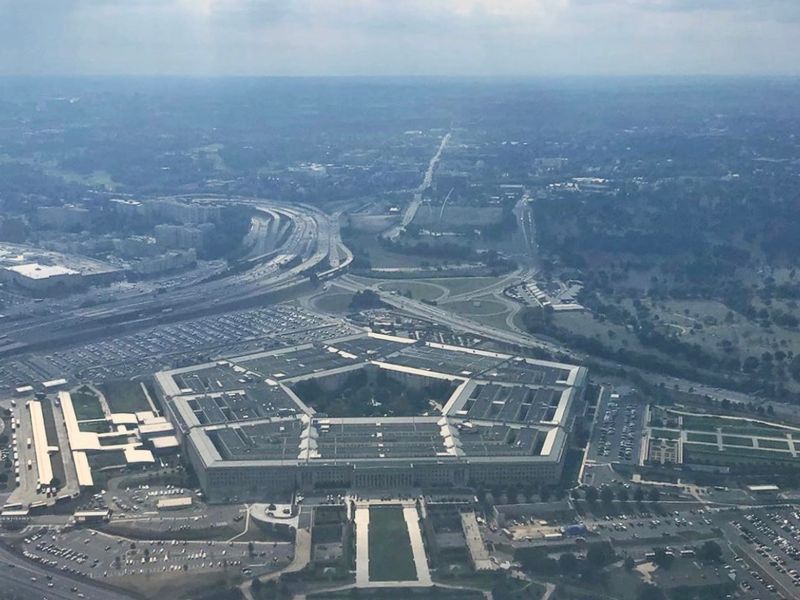
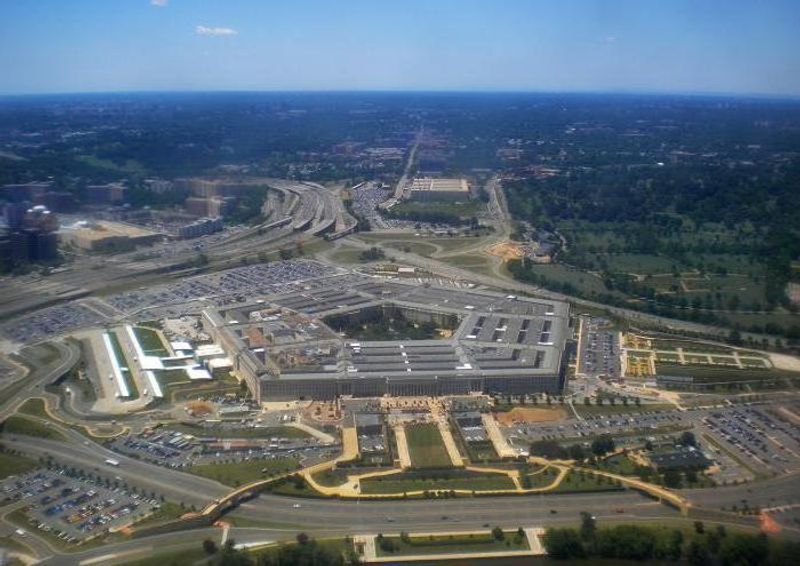
Geometry class never felt this exciting. Seen from above, the Pentagon in Arlington, Virginia looks like something an architect dreamed up after a very ambitious night.
Five sides, five concentric rings, and ten corridors connecting it all into one of the most recognizable structures on the planet.
What makes the shape so clever is that it actually solves a problem. The five-sided layout was originally designed to fit an awkward plot of land, and when the site changed, the design stayed because it was simply too brilliant to scrap.
Walking up to the building for the first time, the sheer scale hits you like a wall of warm Virginia air in July. The structure covers a staggering 29 acres of ground, and every angle you look at it from reveals something new.
Architects around the world still study this building as a masterpiece of practical design. Despite its enormous footprint, the layout is so efficient that any two points inside can be reached in under seven minutes on foot.
That is not just impressive architecture, that is pure engineering genius wrapped in concrete and history.
The Record-Breaking Size That Earned Its Own Zip Codes

Most famous buildings settle for one address. The Pentagon laughs at that idea and holds six zip codes all to itself.
That single fact alone tells you everything about the scale of this place before you even set foot inside.
The total floor space clocks in at approximately 6.5 million square feet, with around 3.7 million square feet dedicated purely to office use. To put that in perspective, you could fit the Empire State Building inside it and still have room left over for a very large parking lot.
Virginia is no stranger to grand landmarks, but this one genuinely stands apart from everything else in the state. The building houses roughly 23,000 military and civilian employees on any given workday, plus thousands more support staff buzzing through its corridors.
Getting your head around those numbers takes a moment. The Pentagon is not just a large office building, it is essentially a self-contained city operating within five walls.
It has its own shops, a food court, a post office, and yes, those famous zip codes that make mail carriers everywhere quietly impressed.
Built at Warp Speed During World War II
Speed records are usually reserved for cars and sprinters. The Pentagon broke one in construction instead.
Rising from bare ground to fully operational headquarters in just 16 months, the building was completed on January 15, 1943, a timeline that still stuns engineers today.
The urgency was real and the stakes were enormous. World War II was raging, and the United States military desperately needed a centralized command hub to coordinate operations across multiple theaters of war.
Scattered offices across Washington D.C. were simply not cutting it anymore.
Workers poured concrete around the clock, sometimes in multiple shifts, to keep pace with the aggressive schedule. At peak construction, tens of thousands of workers were on site simultaneously, making it one of the largest construction projects in American history up to that point.
Virginia became the chosen location partly because the land was available and the site sat just close enough to Washington D.C. to be functionally convenient. The speed of construction did not compromise the quality either.
Decades later, the building still stands as a symbol of what focused American determination can accomplish when the clock is ticking and the mission is clear.
Seventeen Miles of Hallways and Not One Wrong Turn
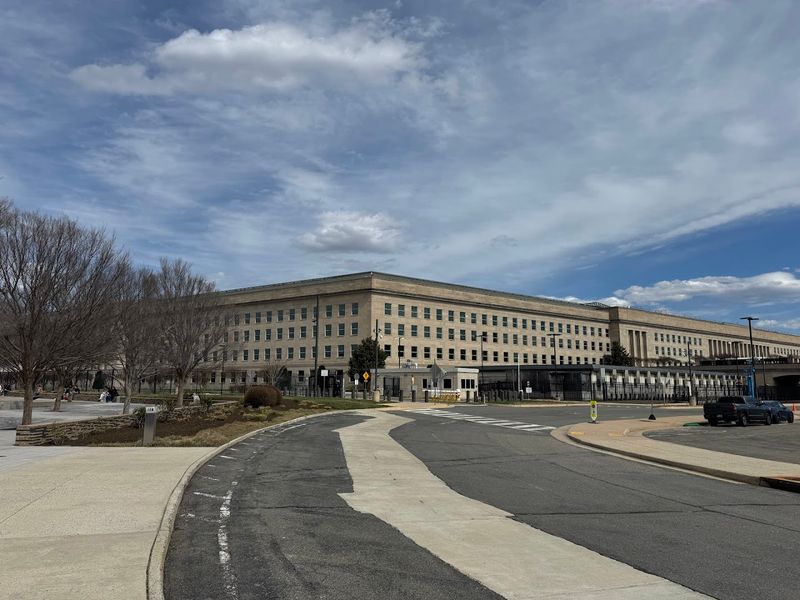
Seventeen and a half miles of corridors sound like a nightmare navigation challenge. Somehow, the Pentagon makes it work with an elegance that surprises every first-time visitor.
The layout is so logically organized that even newcomers rarely feel completely lost for long.
The building uses a ring-and-spoke system, with five rings labeled A through E from the innermost to the outermost. Ten corridors cut across those rings like spokes on a wheel, creating a grid that is surprisingly intuitive once you understand the pattern.
Walking those hallways is its own kind of history lesson. Display cases line the walls with military artifacts, portraits of past Secretaries of Defense, and photographs documenting decades of American military history.
My neck got a workout just trying to take it all in.
The seven-minute rule is real and genuinely impressive. No matter where you start inside the building, any destination within the Pentagon can be reached in roughly seven minutes on foot.
For a structure this enormous, that kind of efficiency is not accidental. It is the result of meticulous planning by people who understood that in a military headquarters, wasted time is never acceptable.
The September 11 Memorial That Stops You Cold

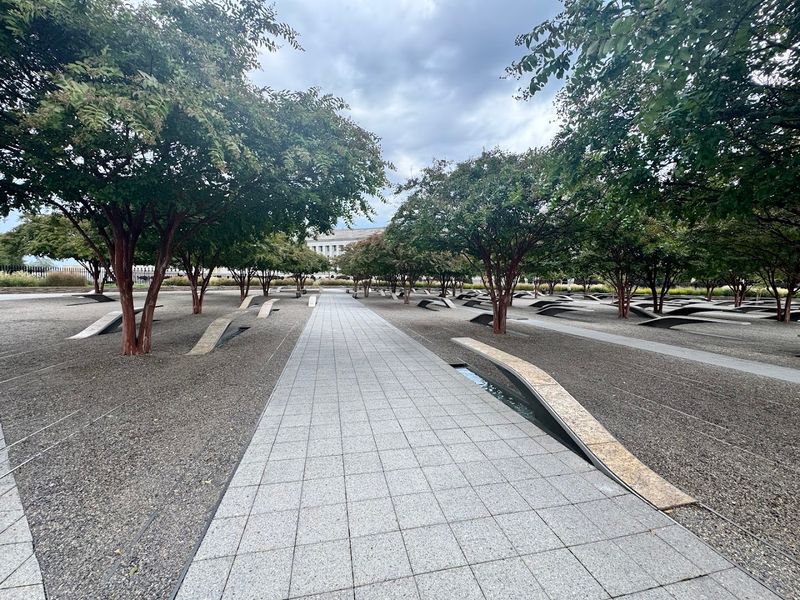
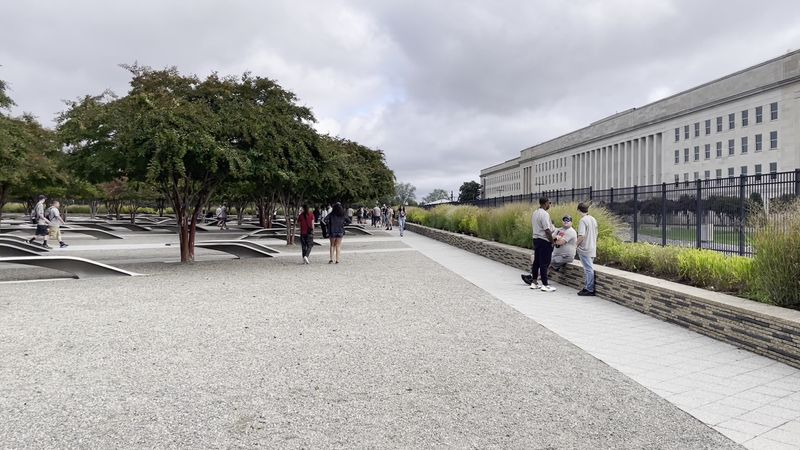
Some places carry a weight that you feel before you even arrive. The Pentagon Memorial, situated on the building’s northwest side, is one of those places.
Quiet, thoughtful, and profoundly moving, it honors the 184 lives lost when American Airlines Flight 77 struck the western side of the building on September 11, 2001.
The memorial design is both simple and deeply symbolic. Each of the 184 victims is represented by an illuminated bench positioned along a timeline of their birth years.
At night, the benches glow softly from beneath, creating a scene that is simultaneously peaceful and heartbreaking.
My visit on a sunny afternoon felt surreal. Families, veterans, and curious tourists all moved through the space in near silence, each person processing the same shared history in their own way.
Nobody needed to be told to be respectful. The atmosphere demanded it naturally.
Virginia has no shortage of war memorials and historical sites, but this one hits differently because it is so recent and so specific. The Pentagon itself was repaired remarkably quickly after the attack, a deliberate act of resilience.
Standing at the memorial, you feel both the weight of loss and the unmistakable pulse of American resolve still very much alive.
Guided Tours That Take You Behind the Famous Walls

Getting inside the Pentagon is not as simple as buying a ticket and strolling through the front door. Tours require advance booking through official channels, and security checks are thorough enough to make airport screening feel breezy by comparison.
All of that preparation, though, makes the experience feel genuinely special.
Once inside, a knowledgeable guide leads the group through carefully selected areas of the building. The corridors are lined with military art, historical photographs, and artifacts that turn the walk into an immersive timeline of American defense history spanning decades.
The guides answer questions with impressive depth and enthusiasm. My tour group peppered ours with everything from architectural queries to questions about daily life inside the building, and not a single one stumped him.
Bring your curiosity because there is plenty to feed it.
One practical tip worth knowing: the building runs cool even during Virginia’s blazing summers, so packing a light layer is genuinely useful advice. Tours run Monday through Friday and close at 4 PM, so planning ahead is essential.
The whole experience rewards patience and preparation with something most people never get to see up close: the actual beating heart of American military command.
The Central Courtyard That Hides in Plain Sight
Right in the dead center of all five rings sits a secret that most people never see from the ground: a five-acre open-air courtyard that Pentagon employees casually call home base during lunch breaks. From the outside, you would never guess this peaceful green space exists tucked inside all that concrete.
The courtyard has a small cafe at its center, and on sunny days the grassy areas fill up with employees grabbing fresh air between meetings. It is a genuinely charming contrast to the serious business happening on every floor surrounding it.
During the Cold War, Soviet satellites reportedly monitored the courtyard so closely that they assumed the small building at its center must be a top-secret command bunker. In reality, it was a hot dog stand.
That story alone is worth the price of a tour.
Standing in the courtyard and looking up at the five rings towering around you is one of those moments that reframes the entire scale of the Pentagon. Virginia has plenty of dramatic landscapes, from the Blue Ridge Mountains to the Chesapeake Bay, but this particular view, surrounded by walls of history on all sides, ranks among the most unexpectedly striking I have ever experienced.
A Self-Contained City With Its Own Everything
Forget stepping out for lunch. Inside the Pentagon, employees have access to a full food court, a post office, a bank, a pharmacy, a dry cleaner, and a florist.
The building operates less like an office and more like a small, highly classified town where everyone just happens to work in national defense.
The retail concourse inside the building is surprisingly lively. Military personnel, civilian staff, and authorized visitors move through the space with the kind of purposeful energy you find in a busy airport terminal, except everyone here is wearing considerably more impressive uniforms.
The gift shop deserves its own mention. Stocked with Pentagon-branded merchandise, military memorabilia, and patriotic keepsakes, it is one of the few parts of the building that feels genuinely accessible and fun.
I walked out with more souvenirs than I planned to buy, which probably says something about the quality of the merchandising.
Running a building this size requires logistics that rival a small municipality. The Pentagon has its own dedicated police force, the Pentagon Force Protection Agency, and its own transit infrastructure connecting it to the broader Washington D.C. metro system.
Virginia may be home to many impressive institutions, but none quite match this one for sheer operational complexity.
The Metro Stop That Puts History at Your Doorstep
Getting to the Pentagon is surprisingly straightforward for a place this significant. The building sits directly on the Washington Metropolitan Area Transit Authority rail network, with its very own dedicated Metro station called, fittingly, Pentagon.
A second station, Pentagon City, sits just a short walk away for those approaching from the south.
Arriving by Metro adds a layer of drama to the whole experience. Stepping off the train and ascending the escalators toward one of the most famous buildings on earth gives you a genuine rush that no Uber drop-off can replicate.
Security personnel are visible and alert from the moment you exit the station.
Photography rules around the Metro entrance are strict, and the security presence is immediately noticeable. Uniformed officers and plainclothes personnel keep things orderly without being aggressive, though it is very clear that this is not your average commuter stop.
Attempting a casual selfie with a guard is not recommended, as my fellow tour-goers quickly discovered.
Public transit access makes the Pentagon remarkably democratic for such a restricted facility. Anyone can ride the Metro to the station, visit the memorial, and experience the atmosphere of this landmark in Arlington, Virginia without needing special clearance.
That openness, within obvious limits, feels intentional and right.
Plan Your Visit: What You Need to Know Before You Go
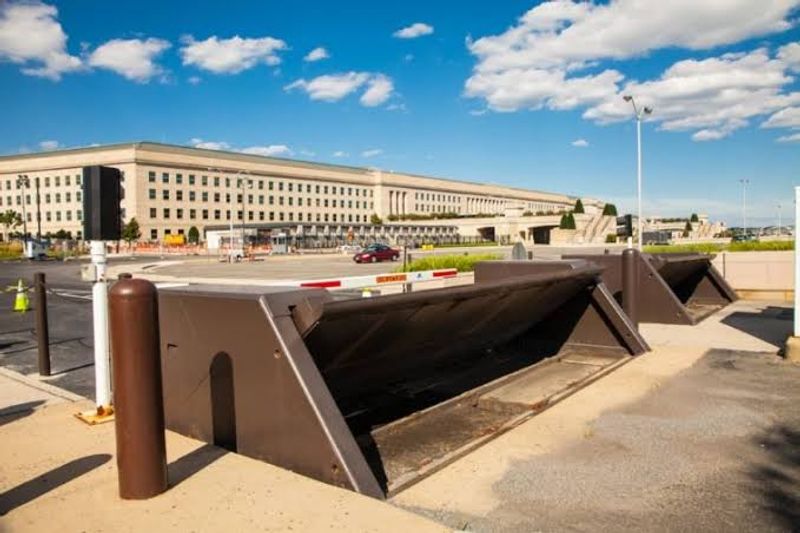
Showing up to the Pentagon without a plan is the fastest way to spend your afternoon staring at a very secure perimeter. Tours must be requested in advance through official Department of Defense channels, and the process requires some lead time, so spontaneous visits are simply not part of the equation here.
The building opens for tours Monday through Friday, with hours running from 9 AM to 4 PM. Weekends are a no-go for public access.
Arriving at least 40 minutes before your scheduled tour start time is the sweet spot, giving security checks enough room to breathe without unnecessary waiting.
Dress practically and comfortably. Those 17.5 miles of corridors will not all be covered in one tour, but you will still do a solid amount of walking on hard floors.
Comfortable shoes and a light jacket for the notoriously cool interior temperature are genuinely smart choices.
The Pentagon Memorial outside is accessible without a tour reservation and is open to the public year-round. The address is Washington, VA, and the phone number for inquiries is (703) 545-6700.
Virginia rewards curious travelers who do their homework, and the Pentagon in Arlington is living proof that the most extraordinary experiences often require just a little extra preparation to unlock.
Dear Reader: This page may contain affiliate links which may earn a commission if you click through and make a purchase. Our independent journalism is not influenced by any advertiser or commercial initiative unless it is clearly marked as sponsored content. As travel products change, please be sure to reconfirm all details and stay up to date with current events to ensure a safe and successful trip.
