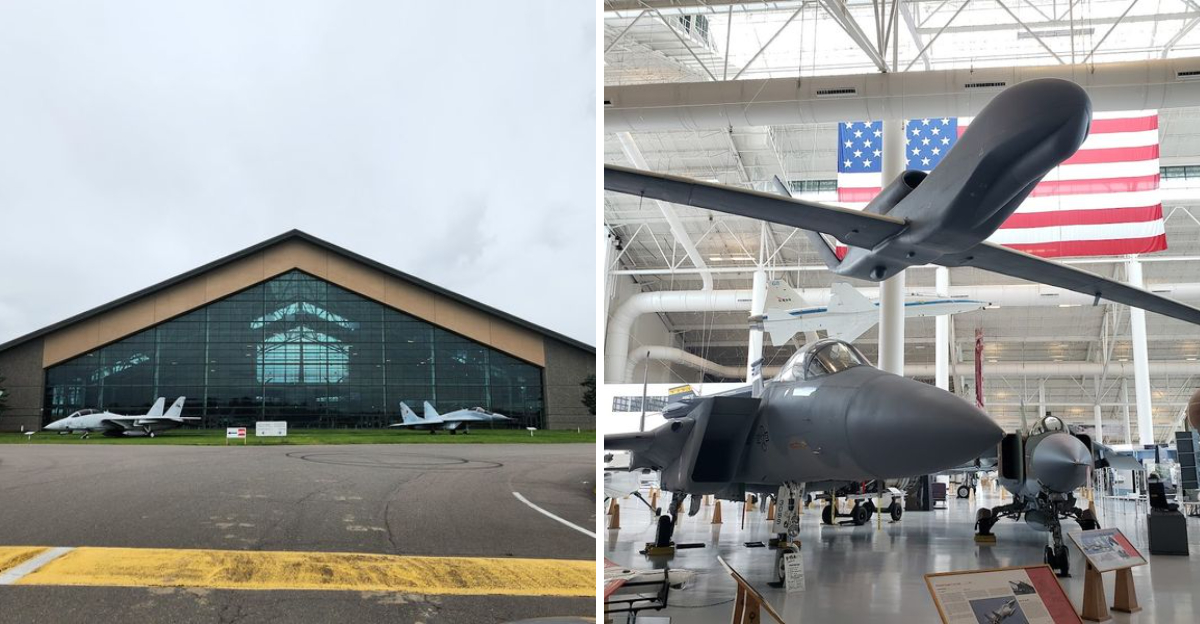
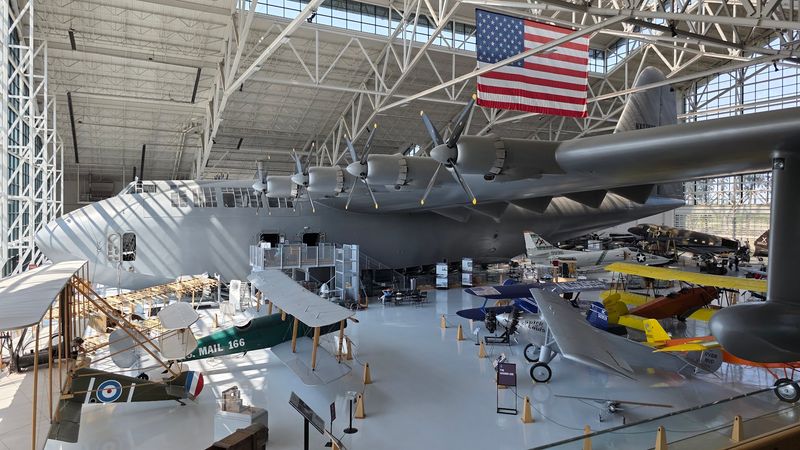
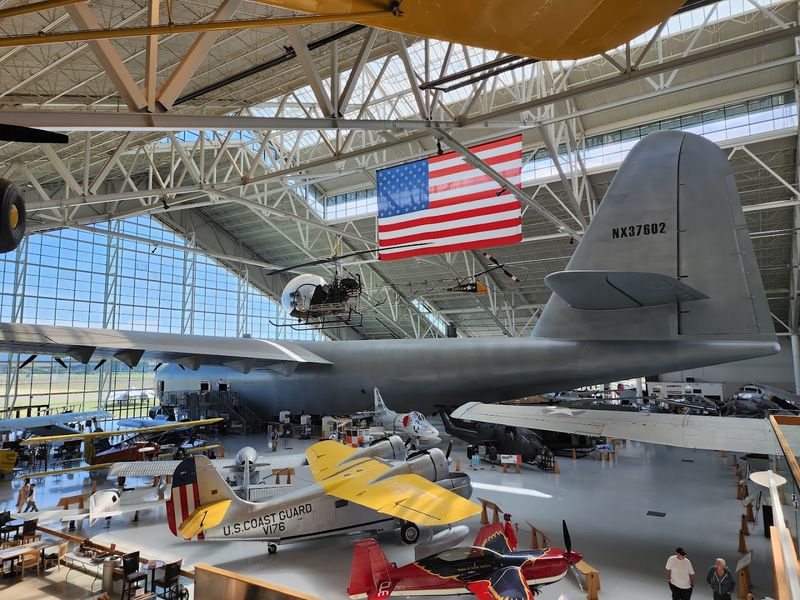
Stepping into this Oregon museum, it’s impossible to miss the sheer scale of what’s hanging overhead. The world’s largest wooden airplane dominates the space like something between engineering marvel and art piece, suspended in a way that makes you stop right where you are.
I found myself just staring at it for a while, trying to process how something made of wood can feel so massive and so precise at the same time. Every angle reveals new details – beams, curves, and craftsmanship that almost feel unreal up close.
The whole room feels quieter because of it, like even conversations naturally slow down beneath its presence. I kept circling around just to take it in from different perspectives, each one more impressive than the last.
Walking out, it’s the kind of image that doesn’t really leave your head anytime soon.
The Spruce Goose: The Wooden Giant That Defies Belief
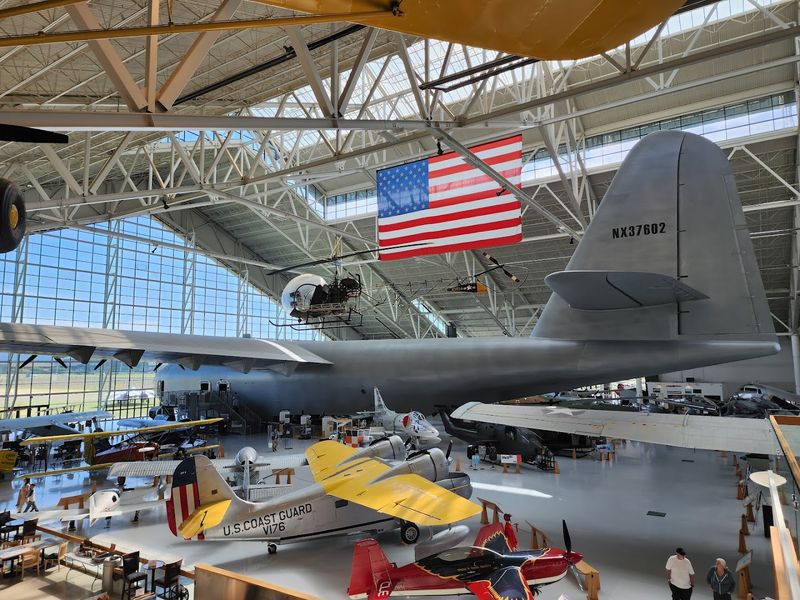
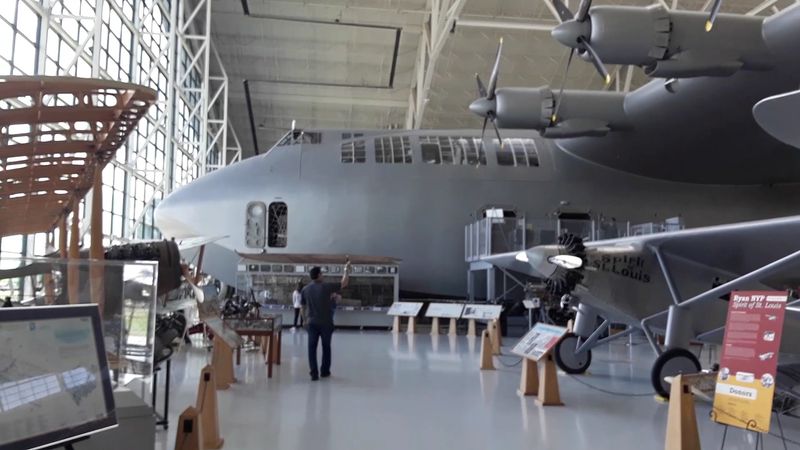
Nothing quite prepares you for the first time you look up at the Hughes H-4 Hercules. The sheer scale of this airplane is almost hard to process.
It fills an entire building, and your brain takes a second to catch up.
Built almost entirely from birch wood, this aircraft was designed during World War II as a heavy transport flying boat. Howard Hughes flew it only once, in 1947, for less than a mile over Long Beach Harbor.
That single flight made history.
The wingspan stretches 320 feet, longer than an entire city block. Standing beneath it feels like standing under a low storm cloud.
The museum does a brilliant job of placing you close enough to truly feel its size.
A guided cockpit tour takes you up to the actual flight deck, which is a bucket-list experience all on its own. Volunteers share stories that no textbook ever could.
This is the kind of exhibit that stays with you for years.
Two Incredible Buildings, One Unforgettable Campus
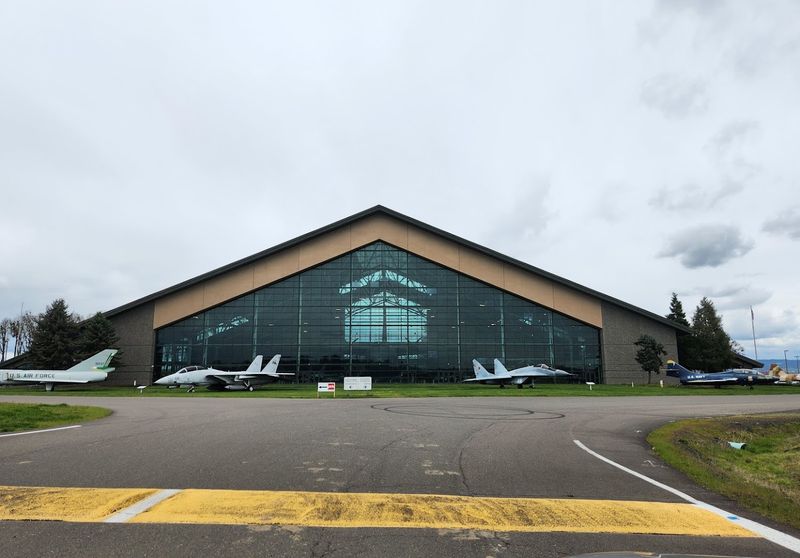
Most people arrive expecting one museum and leave stunned to discover there are actually two full buildings packed with exhibits. The Aviation Museum and the Space Museum sit side by side.
Each one could easily fill an entire afternoon on its own.
The Aviation building houses the Spruce Goose along with dozens of historic aircraft. The Space building shifts gears completely, covering rockets, satellites, and human spaceflight.
Walking between the two feels like crossing from one era into another.
Plan your visit with enough time for both. Visitors who rush through in an hour often come back the next day to finish what they missed.
The campus is large, and the walk between buildings is a good stretch of the legs.
Each building maintains its own personality and focus. There is no overlap, no repetition, just a steady flow of new things to discover.
The campus layout makes it easy to explore at your own pace without feeling lost or overwhelmed.
World War II Aircraft Up Close and Personal
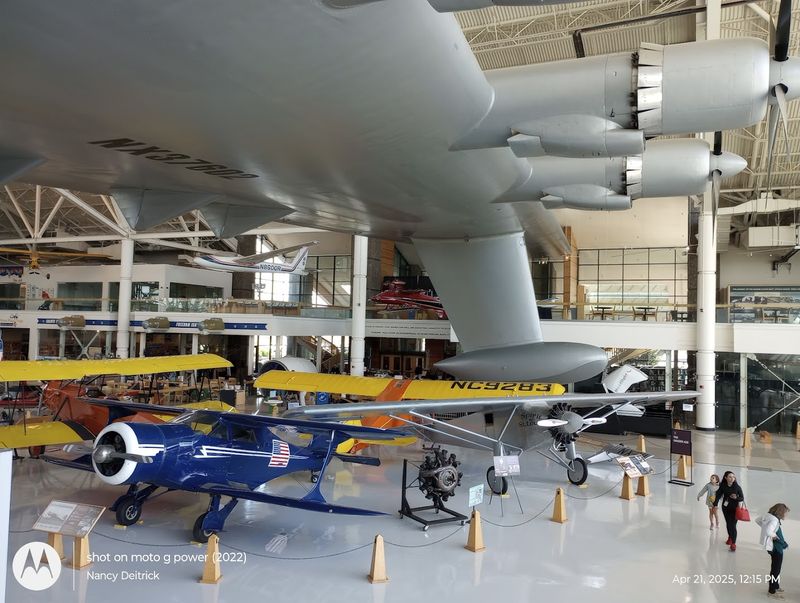
Walking through the WWII section of the aviation building feels oddly personal. These are not replicas or models.
These are the actual aircraft that flew through history, now resting quietly under bright museum lights.
The collection includes a remarkable range of wartime planes. Fighters, bombers, and trainers from multiple nations line the floor and hang overhead.
Reading the story behind each one adds real weight to what you are looking at.
One thing that stood out to me was how the museum connects the machines to the people who flew them. Short biographies, photographs, and mission details bring real humanity to what could otherwise feel like a mechanical display.
Kids seem especially drawn to this section, often running ahead to find the next airplane. Adults tend to slow down and read every single panel.
Both reactions make complete sense.
The SR-71 Blackbird and Other Cold War Legends
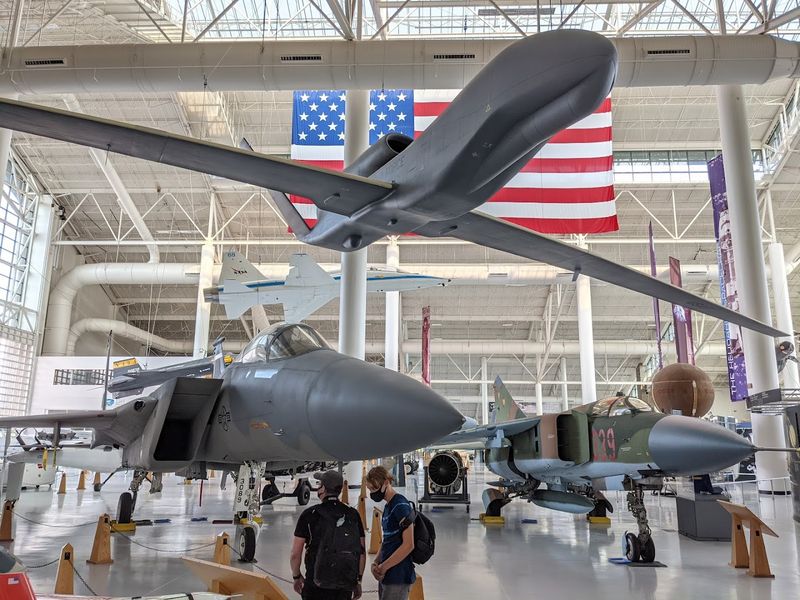
The SR-71 Blackbird is the kind of airplane that looks like it was designed on another planet. Seeing it in person for the first time is a quietly thrilling moment.
The glossy black skin and needle-sharp nose make it look like it is already moving at Mach 3.
This reconnaissance aircraft holds the record as the fastest air-breathing manned aircraft ever built. It flew so high and so fast that enemy missiles simply could not catch it.
The engineering behind it still feels ahead of its time, even decades after its retirement.
Nearby, the F-117 Nighthawk stealth aircraft adds another layer of Cold War intrigue. Its angular, faceted shape looks almost aggressive just sitting still.
These two aircraft together tell a fascinating story about secrecy, speed, and technological ambition.
Volunteer guides near this section are often retired military or aerospace professionals. Their firsthand perspective adds context that no exhibit panel can fully replicate.
Spending time talking with them is genuinely one of the best parts of the visit.
The Space Museum: Rockets, Satellites, and Beyond
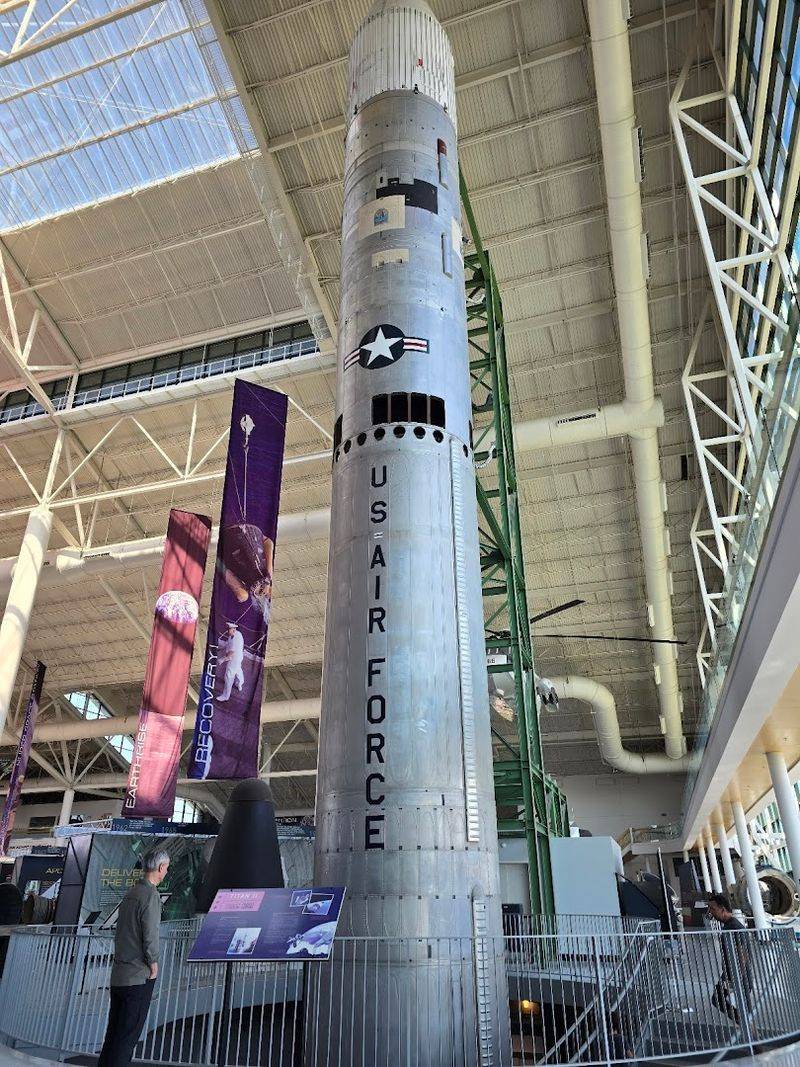
Crossing into the Space Museum building feels like flipping a completely different switch. The vibe shifts from propellers and wartime grit to the quiet, almost eerie scale of space exploration.
Rockets tower above you almost immediately.
Exhibits cover the full arc of human spaceflight, from early satellite launches to the Space Shuttle era. Interactive displays let visitors engage with concepts that would otherwise feel abstract.
The museum makes space science genuinely approachable for all ages.
A dedicated vertical flight section covers the history of helicopters in impressive detail. It is one of the more underrated parts of the entire campus.
The display quality and storytelling here match anything you would find at a major national museum.
The Space Museum also features a 3D theater that shows films related to aviation and space. It is a great way to rest your feet while still staying fully engaged with the subject matter.
Families with younger children especially appreciate this option mid-visit when energy levels start to dip.
The Flight Simulator Experience
There is a moment in the flight simulator when the ground drops away and your stomach genuinely disagrees with your brain. It is brief, unexpected, and completely worth it.
The simulator at Evergreen is one of those extras that turns a great visit into a memorable one.
You can go upside down. Family members can watch your reactions on a screen nearby, which tends to produce a lot of laughter.
It is the kind of shared experience that sticks around as a story long after the drive home.
The simulator is available for an additional fee and fills up quickly on busy days. Booking or arriving early gives you the best shot at getting a turn.
It is popular with adults just as much as with kids, maybe even more so.
Beyond the simulator, interactive stations throughout both buildings let visitors engage with flight principles, space physics, and engineering concepts. The hands-on elements keep the energy moving.
Standing and reading is great, but actually doing something makes the science feel real and alive.
The Passionate Volunteers Who Make It All Come Alive
Honestly, the volunteers here might be the best part of the entire museum. That is saying a lot, given that the Spruce Goose is also there.
Many of them are retired veterans, pilots, or aerospace engineers with decades of real experience behind them.
They do not just recite facts. They tell stories.
Personal ones, specific ones, the kind that make a piece of machinery feel like a character in a much bigger narrative. One volunteer near the WWII section kept a small crowd completely absorbed for nearly twenty minutes.
The staff across both buildings share the same warmth and genuine enthusiasm. Nobody feels like they are going through the motions.
The energy is infectious, and it raises the quality of the entire visit in a way that is hard to quantify but very easy to feel.
Families with kids benefit the most from these interactions. Volunteers have a natural gift for adjusting their storytelling to younger audiences without dumbing anything down.
It is educational without ever feeling like a lecture.
Seasonal Events and Christmas Lights Tradition
Visiting during the holiday season adds a completely unexpected layer to the experience. The museum decorates many of its aircraft with Christmas lights, and the effect inside those enormous hangars is genuinely magical.
It is one of those things you do not expect and then immediately want to tell everyone about.
Seeing a WWII bomber wrapped in twinkling lights is a strange and wonderful combination of history and festivity. The scale of the buildings makes the light displays feel even more dramatic.
Several visitors specifically return each December just for this tradition.
The museum also benefits from its location near the McMinnville Airport, where air shows occasionally take place across the street. Timing a visit around an air show adds a live aviation layer to the day.
Watching modern aircraft perform overhead while surrounded by historic ones inside creates a genuinely full-circle feeling.
Check the museum’s event calendar before visiting. Special tours, themed nights, and community events rotate throughout the year.
Aircraft Restoration in Progress: History Being Saved
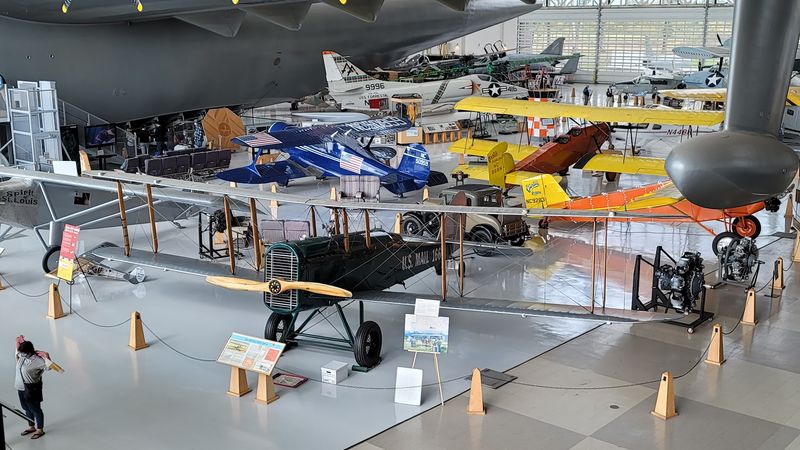
Most museums show you finished products. Evergreen lets you watch history being actively saved.
Active restoration projects are visible throughout the facility, and seeing the work in progress adds a completely different dimension to the visit.
Technicians and skilled volunteers work on vintage aircraft that are still in various stages of preservation. You can see the bare metal, the careful detailing, and the slow process of returning something extraordinary back to its original form.
It is absorbing to watch even if you know nothing about aircraft mechanics.
Cut-away aircraft models are tucked into a conference room area upstairs, giving visitors a rare look at the internal anatomy of historic planes. These are genuinely uncommon finds in the aviation museum world.
They reward the curious visitor who takes the time to explore beyond the main floor.
The restoration commitment signals something important about this museum. It is not just preserving the past as a static display.
Planning Your Visit to McMinnville
McMinnville is a genuinely lovely small town, and the museum fits naturally into a full day trip from Portland or the Oregon Coast. The drive is easy and the surrounding wine country makes for a scenic approach.
Arriving early gives you the best chance of a relaxed, unhurried experience.
The museum opens at 9 AM every day of the week. Plan for at least four hours if you want to cover both buildings properly.
Rushing through is possible but you will leave with a nagging feeling that you missed something good.
Parking is plentiful and free. A restaurant and gift shop are on site, making it easy to refuel without leaving the property.
The gift shop carries a solid selection of aviation books, models, and souvenirs that are worth browsing even if you are not a dedicated collector.
A water park sits adjacent to the museum property and is open seasonally.
Address: 500 NE Captain Michael King Smith Way, McMinnville, OR 97128
Dear Reader: This page may contain affiliate links which may earn a commission if you click through and make a purchase. Our independent journalism is not influenced by any advertiser or commercial initiative unless it is clearly marked as sponsored content. As travel products change, please be sure to reconfirm all details and stay up to date with current events to ensure a safe and successful trip.
