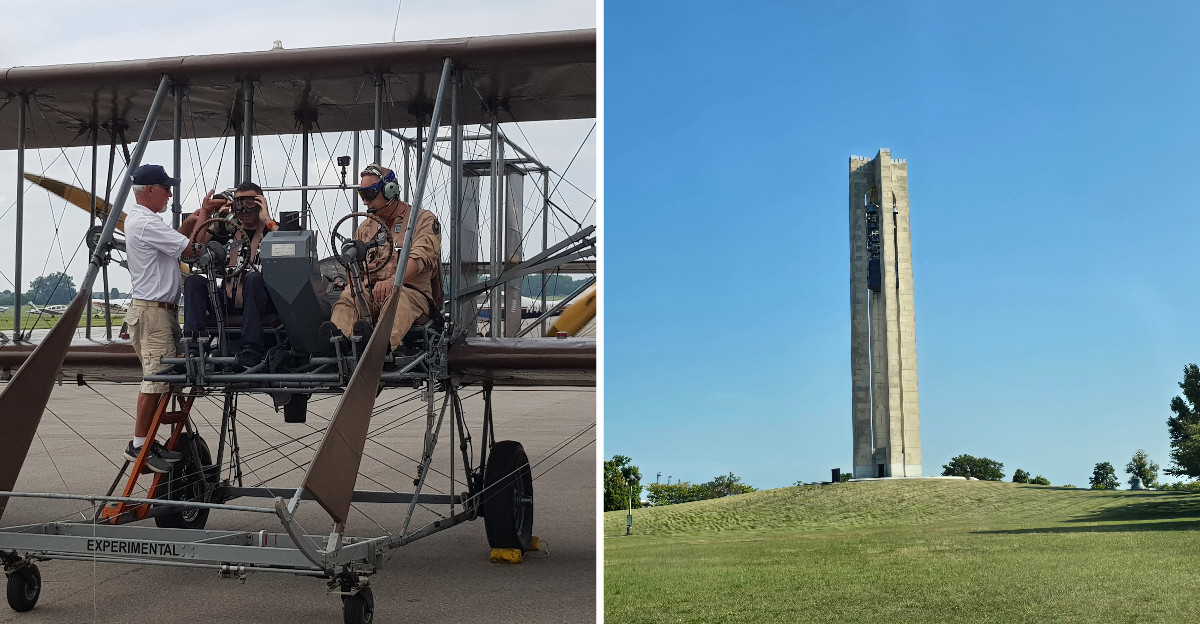
Ohio aviation history hits differently when the machine in front of you is not a replica or a clever reconstruction. I walked into this place thinking I already understood the famous story, two brothers, a windy beach, and a few seconds in the air.
Then I looked down at a fragile-looking airplane of wood, wire, and fabric and realized the bigger breakthrough came afterward. Getting off the ground was only the beginning.
The real challenge was learning how to stay there, turn reliably, and control an aircraft long enough for flying to become genuinely practical. That is what makes this particular machine so fascinating.
Even the room surrounding it carries a personal connection to the man who helped create it, adding another layer that photographs cannot quite capture. With historic buildings, trains, inventions, and a towering landmark waiting outside, this Ohio stop could easily fill hours.
Still, I kept coming back to those pale cloth wings.
Meeting the World’s First Practical Airplane
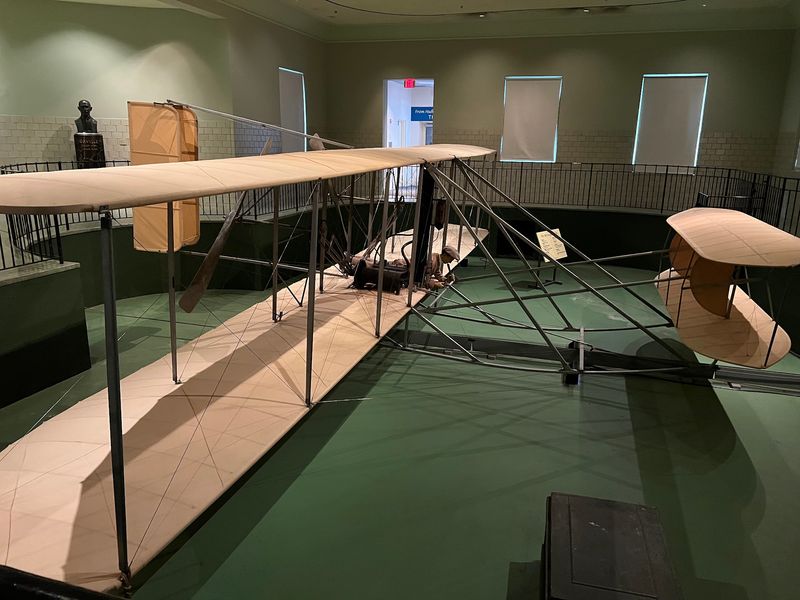
My first look at the Flyer came from a railing above it, and honestly, it took my breath away for a second. The wings stretched wide, the fabric looked soft and pale, and the wooden frame seemed almost too delicate to have ever left the ground.
Here is the big deal: historians call the Wright Flyer III the world’s first practical airplane, which means it did more than hop into the air for a few seconds. It could climb, turn, circle, land safely, and then get ready to fly again.
That was the real breakthrough, because a plane you can control is a plane people can actually use.
The famous 1903 Flyer gets a lot of attention, and it deserves some. Still, the Wright brothers themselves thought of this 1905 machine as their most important creation.
When you look closely, you notice how simple the parts are, from the wires to the chain drives to the spot where the pilot lay flat on the lower wing.
Give yourself time here. I circled the display twice, once for the big picture and once for the tiny details, like the hand-shaped wooden propellers.
Both views were worth it.
Figure-Eights Over an Ohio Pasture
Forty minutes sounds like nothing today, since that is about how long a school lunch period lasts. In 1905, though, it was astonishing.
On October 5 of that year, Wilbur Wright kept the Flyer III in the air for nearly 40 minutes, circling again and again.
I kept thinking about that number while looking at the plane. Earlier flights by the brothers had lasted seconds or a few minutes at most.
This machine proved an airplane could stay up, keep turning, and come back down in one piece, which changed everything.
The Flyer III also flew figure-eights. That might not sound flashy, but a figure-eight requires banking left, leveling out, and banking right with steady control.
A pilot has to trust the machine completely to pull that off, lap after lap.
Here is a fun way to appreciate it. Grab a paper airplane sometime and try making it fly a figure-eight on purpose.
You will quickly see why people watching those 1905 flights were so amazed.
Knowing these facts before your visit makes the display more exciting. Instead of seeing old wood and fabric, you start seeing a record-breaker that once looped over an Ohio field.
Taken Apart, Then Back in the Sky
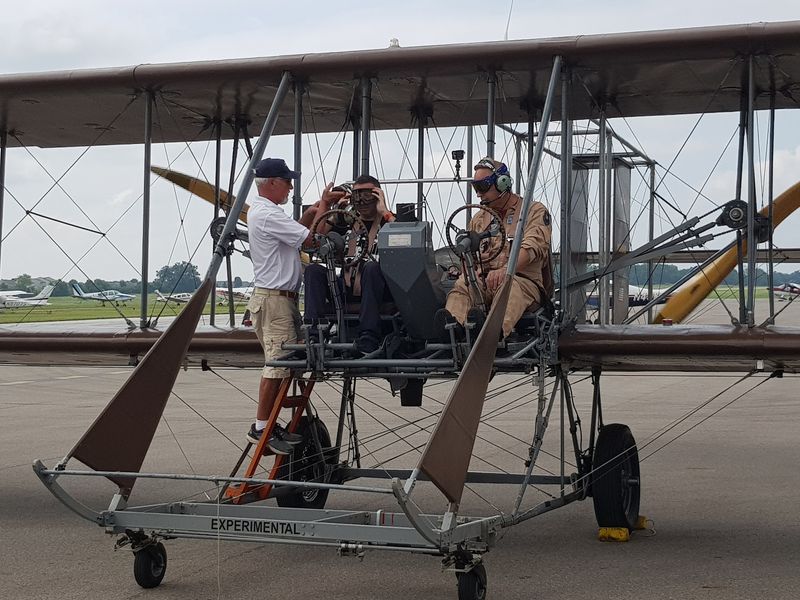
Secrets were a big deal for the Wright brothers. After their successful 1905 flights, they took the Flyer III apart in November of that year, mainly to protect their ideas from competitors who wanted to copy them.
That surprised me the first time I read it. You would think inventors would want to show off, but Wilbur and Orville were careful businessmen too.
They had worked hard on their control system, and they were not about to hand it over for free.
The story did not end in a storage shed, though. In 1908 the plane was rebuilt and taken to Kitty Hawk, North Carolina, for more flights.
There it earned another major first, becoming the first aircraft to carry a passenger.
Think about how brave that first passenger must have been, sitting on an open wing with no walls, no seatbelt, and nothing but air below. Modern airline seats suddenly seem pretty luxurious.
Keep this chapter in mind when you visit Carillon Historical Park. The plane on display is not just a one-season wonder from 1905.
It carries the marks of a machine that was used, updated, and trusted enough to take another person into the sky.
Orville’s Final Labor of Love
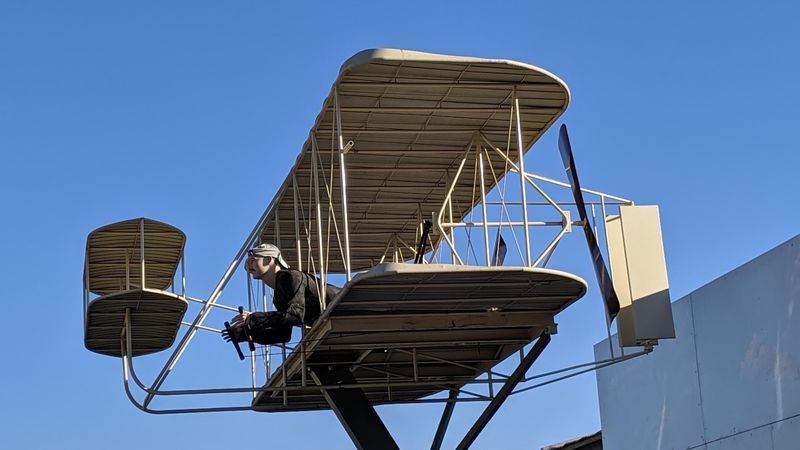
Of all the facts I learned at the park, one stuck with me the most. Restoring the Wright Flyer III was Orville Wright’s last major project before he passed way in 1948.
Wilbur had passed away decades earlier, in 1912, so Orville carried this job on his own shoulders. He personally oversaw the preservation work, making sure the plane was put back together the right way.
Since he was one of the two people who built it, nobody on Earth knew it better.
The restored Flyer was unveiled to the public in 1950. Craftsmen who worked on it estimated that somewhere between 60 and 85 percent of the original materials were kept.
That means much of the wood and metal you see came straight from the brothers’ own hands.
For me, that detail changed how the whole room felt. A replica can look great, but it cannot hold the same history.
Here, the actual pieces that flew over Ohio more than a century ago are right in front of you.
If you visit with kids, share this story before you go in. Knowing that an inventor spent his final years saving the plane he valued most makes the display feel personal, almost like a family keepsake.
A Room Designed for Looking Down
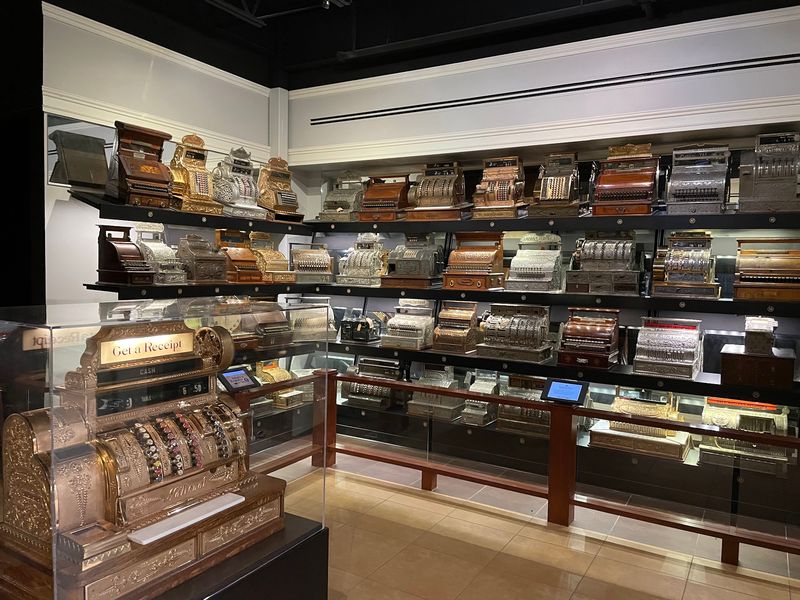
Most museums make you look up at airplanes hanging from the ceiling. Wright Hall does the opposite, and that twist is one of my favorite things about the whole visit.
Orville Wright helped plan the building himself. He wanted visitors to see the Flyer from above, so they could understand how its controls actually worked.
From a raised viewpoint, you can trace the wires and see how the pieces connect.
The Wrights controlled their plane by twisting the wings slightly, a method called wing warping, along with a movable rudder and a front elevator. Reading about that in a book can be confusing.
Seeing it from above makes it click, because the layout of cables and surfaces is spread out like a map.
My tip is simple. Walk the full viewing area slowly and pause at different angles.
The front view shows off the elevator, while a side view helps you notice how thin and light the wings really are.
Bring a phone or camera, since the overhead angle makes for photos you will not get at most aviation museums. Just be patient if a crowd gathers, because everyone seems to linger here, and honestly, who could blame them?
More Wright History Inside the Museum
Honestly, I expected one airplane and a few signs. The John W.
Berry Sr. Wright Brothers National Museum turned out to be much bigger than I pictured, with plenty of space dedicated to the brothers and the path that led to their famous flights.
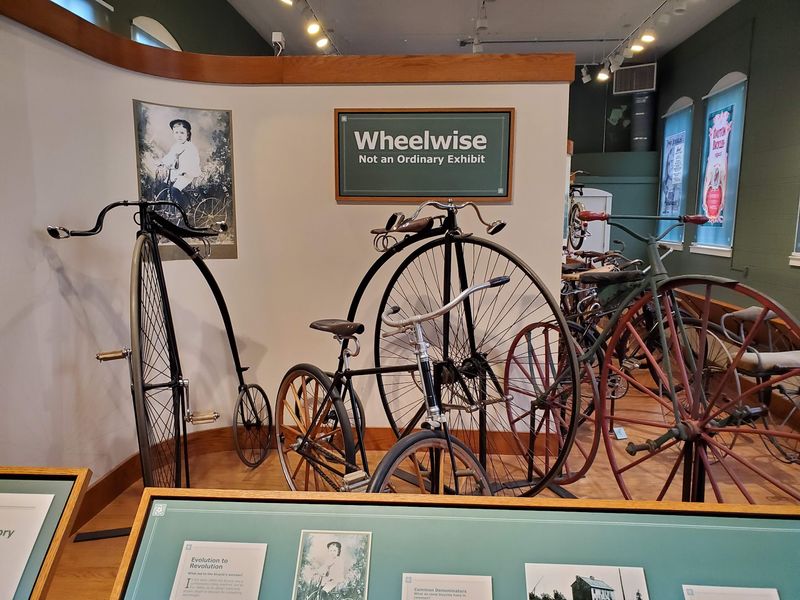
The Flyer III is the star, of course, but the surrounding displays help you understand the people behind it. Wilbur and Orville started out running a bicycle business in Dayton, and that hands-on background with chains, spokes, and balance shows up in their airplane design.
Once you notice the connection, you cannot unsee it.
The information is laid out clearly, so families can move at their own speed. Younger visitors might enjoy spotting familiar bike parts in the machinery, while adults can soak up the timeline of tests, failures, and fixes.
A smart plan is to visit the museum early in your day, when your energy is highest. Aviation history has a lot of details, and it is easier to enjoy them before your feet get tired from exploring the rest of the grounds.
Also, keep an eye out for the park’s films and theater experiences. I found them creatively made, and they add another fun layer to the Wright story.
Wandering the Rest of Carillon Historical Park
After the Flyer, I needed fresh air, and luckily the park has 65 acres of it. Carillon Historical Park is an open-air museum, so the adventure keeps going long after you leave Wright Hall.
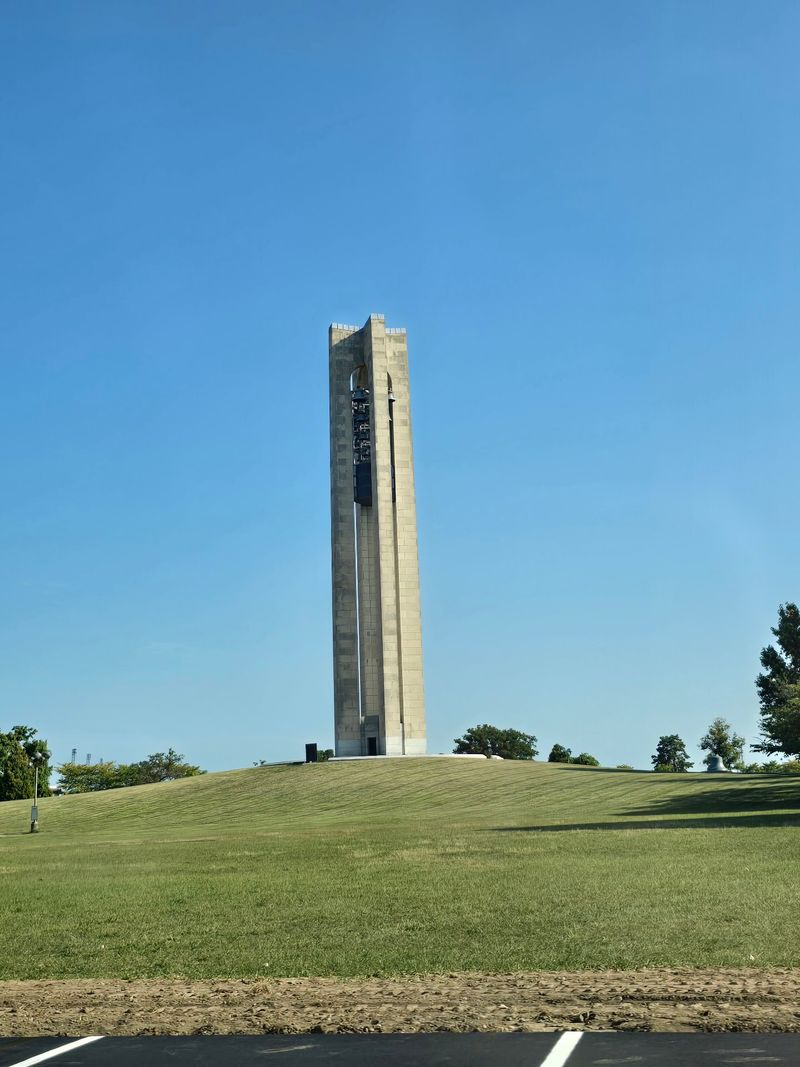
The huge bell tower is hard to miss, and hearing it ring across the lawns is a treat. Kids tend to beeline for the carousel and the little train that loops around the grounds.
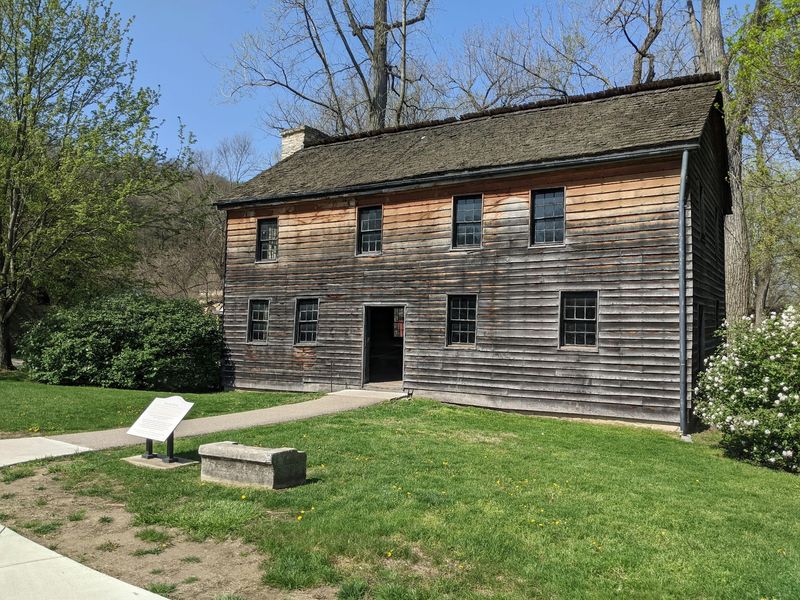
Historic buildings dot the paths, including a working print shop and early 1800s homes, where costumed interpreters help bring early Dayton to life.
Don’t skip the exhibit on the 1913 flood, a disaster that reshaped the city. On a nice day, look for the bald eagles nesting nearby, or wander toward the Great Miami River Trail for views of the water and the Dayton skyline.
Each spot adds a new piece to the story of a city that loved to invent things.
Wear comfy shoes, since you will cover a lot of ground. The park opens at 9:30 AM Monday through Saturday and at noon on Sunday, closing at 5 PM, so arrive early to see the Flyer and still enjoy the rest.
Address: 1000 Carillon Blvd, Dayton, OH 45409
