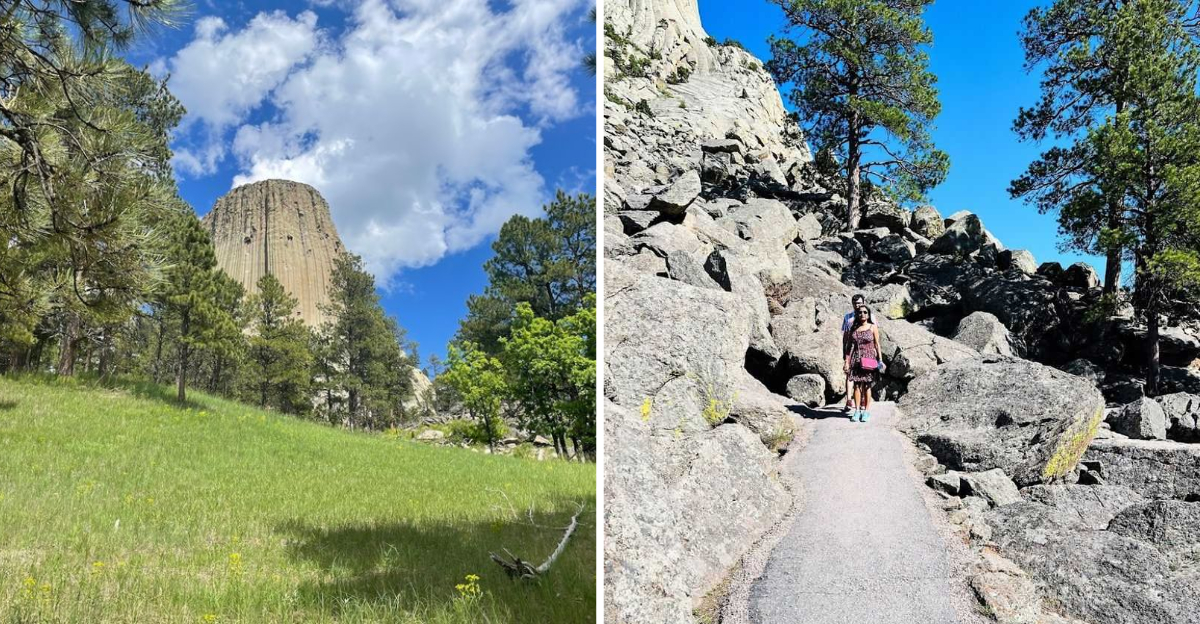
You need a little patience to reach this spot in Wyoming. A drive up a mountain, then a walk of about a mile and a half.
Nothing too crazy. But when you get there, you understand why people have been coming for thousands of years.
A circle of stones sits on the mountain top, with lines radiating outward like spokes on a wheel. No one knows exactly who built it. The tribes who live here now say it was already old when they arrived.
You cannot go inside the circle unless you are invited for ceremony. Even from the outside, you feel the weight of all those years pressing down on you.
The Sacred Indigenous History Behind Devils Tower
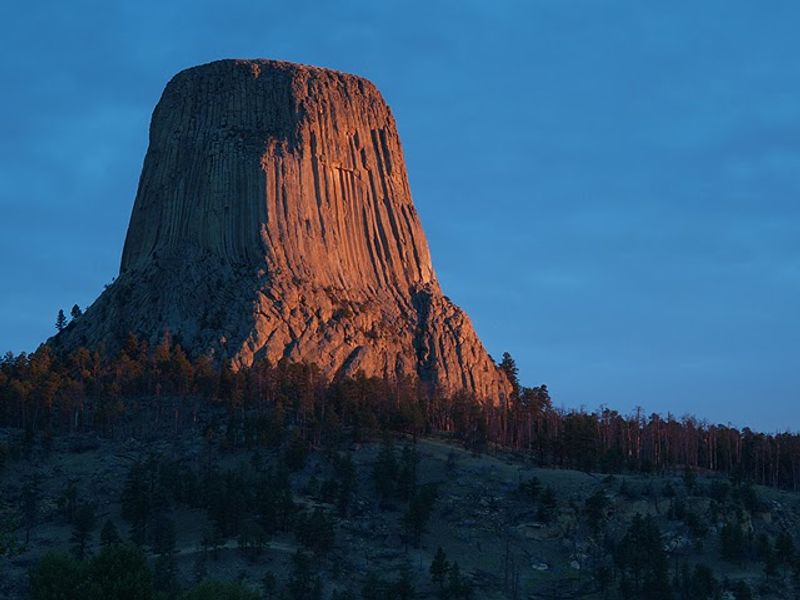
Long before it had a name on any government map, this striking rock formation was already woven deeply into the spiritual lives of Indigenous peoples across the northern plains. More than two dozen tribes, including the Lakota, Cheyenne, Kiowa, Crow, and Arapaho, share a profound and ongoing connection to the Tower that stretches back roughly 10,000 years.
Many tribes call it Bear Lodge, Bear’s Tipi, or Bear’s House, names that reflect how central the formation is to their oral traditions and creation stories. The name “Devils Tower” itself came from a reported misinterpretation of a native name in 1875, and many Native Americans today consider the official name disrespectful and inaccurate.
Walking the loop trail, you will notice prayer bundles tied carefully to the surrounding trees. These are active offerings left by tribal members during ceremonies and should never be touched or photographed.
The Tower is a traditional cultural property listed on the National Register of Historic Places, recognizing its deep Indigenous significance. Visiting with that awareness changes how you experience every single moment here.
The Fascinating Geology That Shaped the Tower
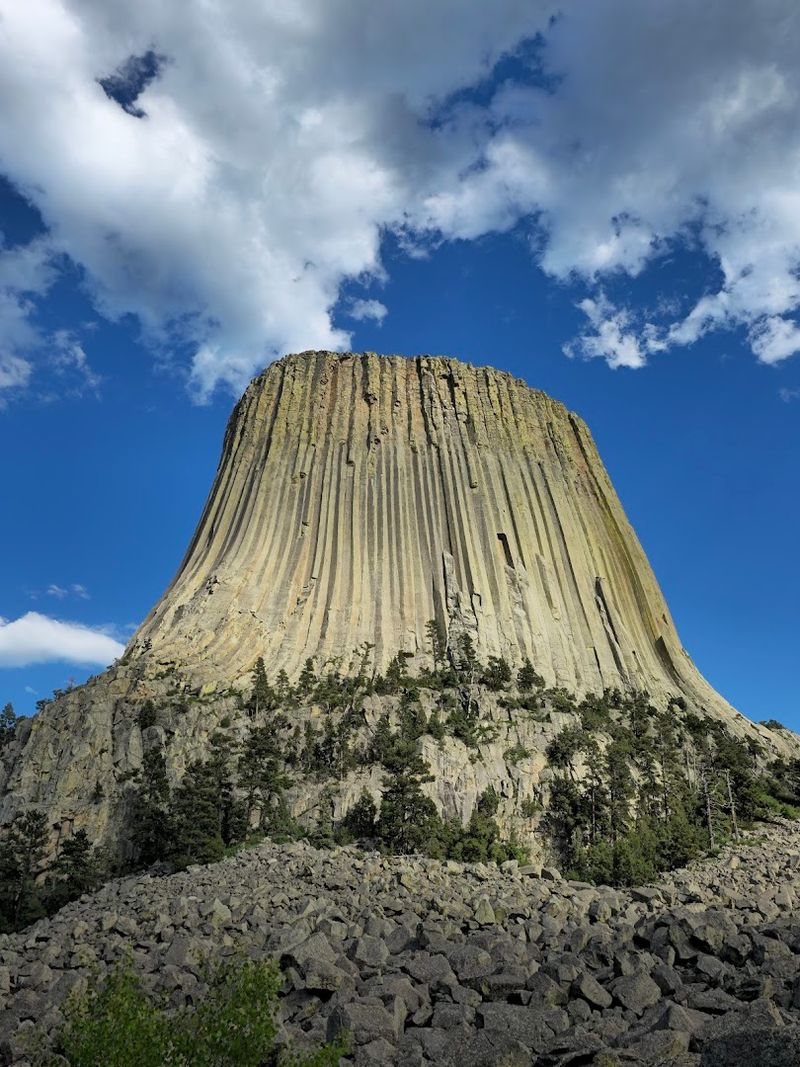
There is something almost unreal about the way Devils Tower looks up close. Those perfectly formed vertical columns covering the entire surface are not random cracks but the result of an incredible geological process that happened millions of years ago, deep underground.
Most geologists believe the Tower formed when magma intruded into surrounding sedimentary rock and slowly cooled. As it cooled and contracted, it cracked into the hexagonal and pentagonal column shapes you see today.
The softer surrounding rock eventually eroded away, leaving the harder igneous core standing alone above the valley floor at about 867 feet above the surrounding terrain.
The columns are genuinely massive up close. Seeing a tiny rock climber inching up one of those vertical faces gives you the clearest possible sense of the Tower’s true scale.
Informational plaques along the trail explain the geology in accessible, interesting ways that even younger visitors find engaging. Whether you are a geology fan or not, the sheer physical presence of the formation is enough to leave a lasting impression on anyone who makes the trip out here.
The Tribal Oral Traditions and Bear Legends
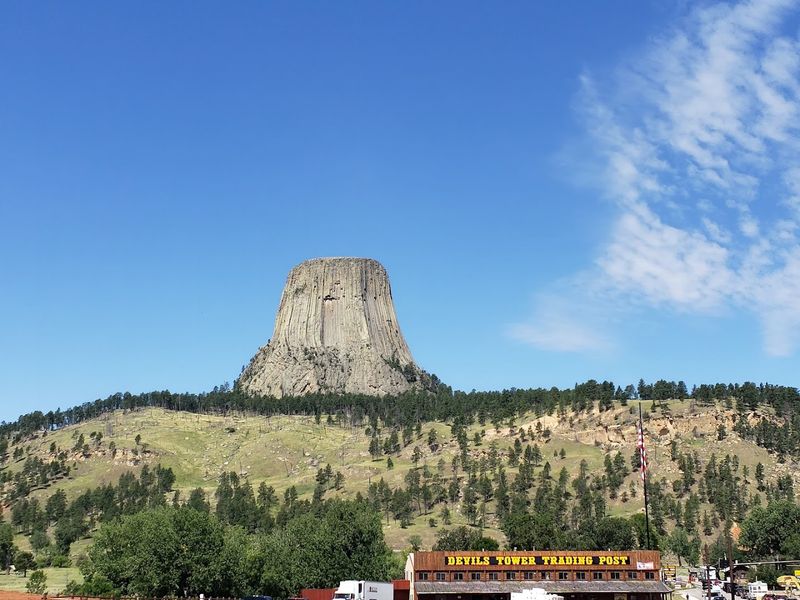
Across multiple tribal traditions, the Tower’s dramatic columns are explained through stories involving bears, and these stories are genuinely fascinating to hear. In many versions, a group of children, sometimes girls and sometimes boys depending on the tribe, were being chased by one or more giant bears.
The rock beneath them began to rise, lifting them out of reach, while the bear’s desperate claws scraped long grooves into the sides of the stone.
Those vertical columns you see today? In these traditions, they are the claw marks.
It is a beautiful way to explain a natural wonder, and it connects the physical landscape directly to living cultural memory. Different tribes have their own distinct versions of the story, each with unique details that reflect their individual histories and relationships with the land.
The visitor center does a thoughtful job of presenting several of these oral traditions with respect and context. Reading them before you hike the loop trail gives the entire experience a richer, more layered feeling.
The Tower stops being just a rock formation and starts feeling like a character in a story that has been told and retold for generations across this wide-open Wyoming landscape.
Hiking the Tower Trail Loop
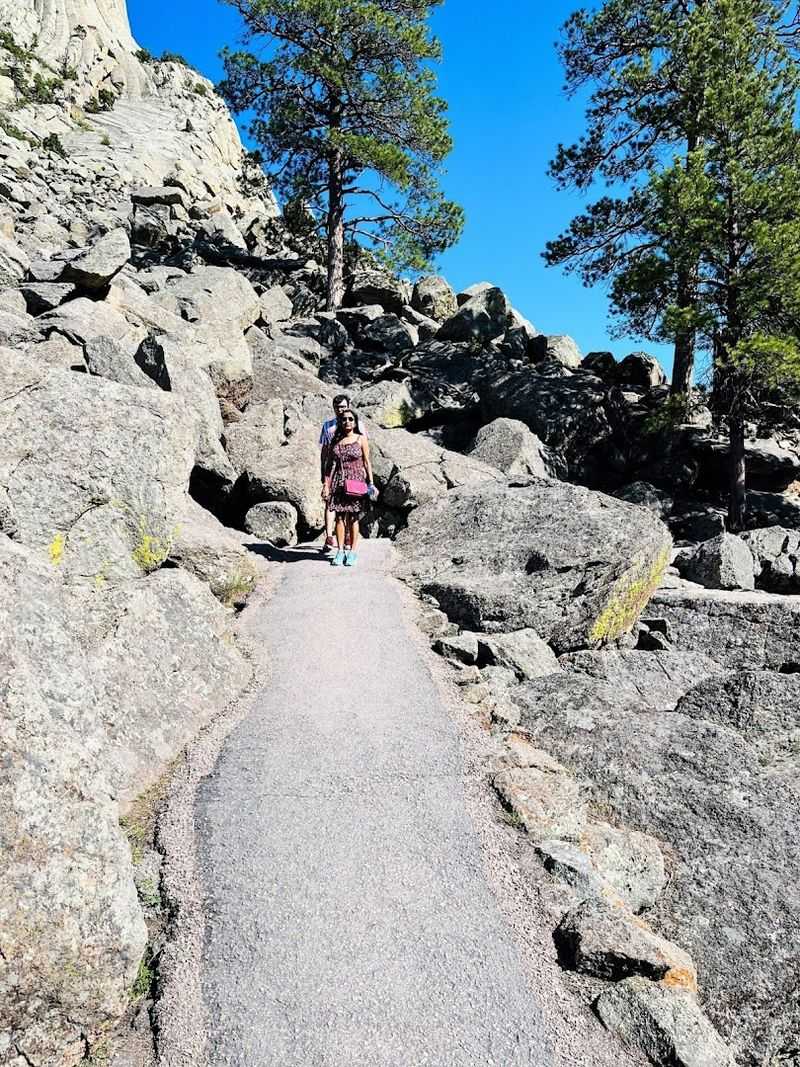
The Tower Trail is a 1.3-mile paved loop that circles the base of the formation, and it genuinely earns every step. The path winds through boulder fields, pine trees, and open viewpoints that show the Tower from completely different angles as you move around it.
Every bend offers a new perspective, and the light shifts constantly throughout the day.
Most people finish the loop in about 45 minutes to an hour, though stopping to read the interpretive signs, watch climbers, or photograph prairie dogs along the way can easily stretch that to two or three hours. Comfortable walking shoes are all you really need since the paved surface stays manageable for most fitness levels.
Families with young children have completed it successfully, and the short distance makes it accessible for a wide range of visitors.
The Red Beds Trail is a longer, less crowded option that rewards hikers with sweeping valley views and a quieter atmosphere. Pets are not allowed on either trail, which is worth knowing before you arrive.
Restrooms are available near the visitor center but not along the trails themselves. Plan accordingly and bring water, especially during warmer months when the sun hits the open sections with full force.
The Voluntary Climbing Ban in June
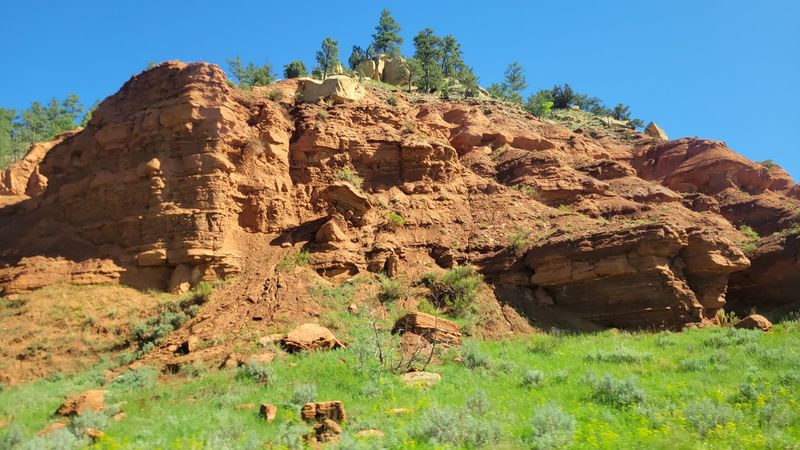
Devils Tower is one of the most recognizable climbing destinations in the United States, drawing experienced climbers from around the world who want to test themselves on those extraordinary vertical columns. Hundreds of crack routes exist across the formation, ranging from beginner-friendly lines to serious technical challenges that require real expertise and preparation.
There is an important cultural layer to climbing here that every visitor should understand. Each June, a voluntary climbing closure is observed out of respect for Native American ceremonies taking place at the Tower during that month.
Many tribal leaders view climbing the formation as a desecration of sacred ground, and the National Park Service encourages all visitors and climbers to honor the voluntary ban.
The response from the climbing community has been largely respectful, and participation in the voluntary closure has been meaningful over the years. If you are planning a climbing trip, checking the NPS website in advance for current guidance is a smart move.
Even if you are not a climber, watching someone ascend those columns from the trail below is genuinely thrilling. The scale only becomes fully clear when you spot a helmeted figure working slowly up a crack that looks impossibly thin from the ground.
Wildlife and the Prairie Dog Towns Nearby
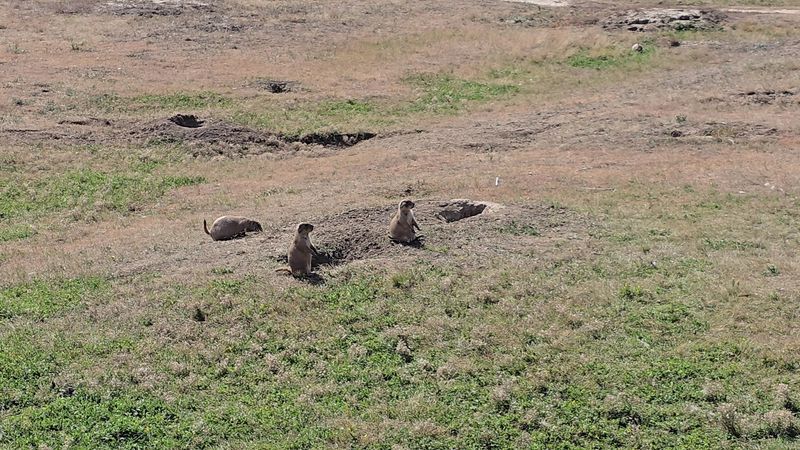
One of the unexpected highlights of a Devils Tower visit is the wildlife. Prairie dogs are everywhere around the monument, and their little towns along the road in are genuinely entertaining to slow down for.
They pop up, bark at each other, and go about their business with total confidence, completely unbothered by passing cars.
Bison, deer, chipmunks, and a wide variety of birds also call this area home. Spotting a bison grazing in the valley with the Tower rising behind it is the kind of image that stays with you long after the drive home.
The landscape feels alive in a way that is hard to fully describe until you are standing in the middle of it.
Because porcupines live in the area and the nearest veterinary care is over an hour away, pets are not permitted on the trails for their own safety. That is not a rule designed to frustrate dog owners but a genuine safety measure worth respecting.
Arriving early in the morning gives you the best chance of seeing wildlife active before the heat of the day sets in. Sunrise visits, in particular, come with a peaceful, almost meditative quality that afternoon crowds simply cannot replicate.
Planning Your Visit to Devils Tower National Monument
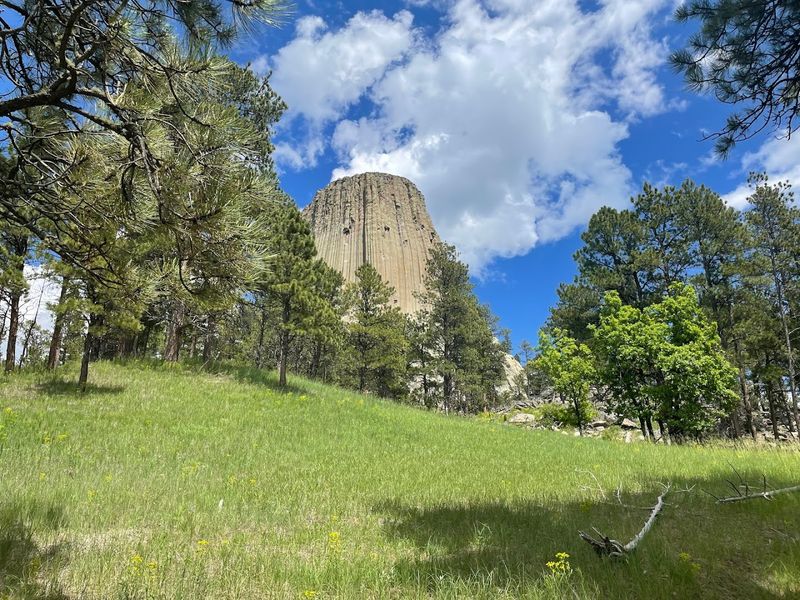
Devils Tower National Monument is open 24 hours a day, every day of the year, which means sunrise and stargazing visits are both completely possible. The monument sits in Crook County in the far northeastern corner of Wyoming, about an hour and a half from Rapid City, South Dakota.
If you are already visiting Mount Rushmore, skipping Devils Tower would honestly be a mistake worth regretting.
Entry requires a fee unless you carry an America the Beautiful Annual Pass, which covers the cost entirely. The visitor center offers exhibits, a bookstore, passport stamp stations, water bottle refill stations, and clean restrooms.
Informational plaques along the trails add real depth to the experience beyond what you can absorb just by looking up at the Tower.
Camping is available inside and near the park, making an overnight stay a genuinely rewarding option, especially for stargazing. The skies above northeastern Wyoming are dark and spectacular on clear nights.
Traffic can back up during peak summer months, so arriving early helps avoid long waits at the entrance. The gift shop carries a solid range of souvenirs and memorabilia for anyone who likes to bring something tangible home from a bucket-list destination like this one.
Address: Devils Tower, WY 82714
