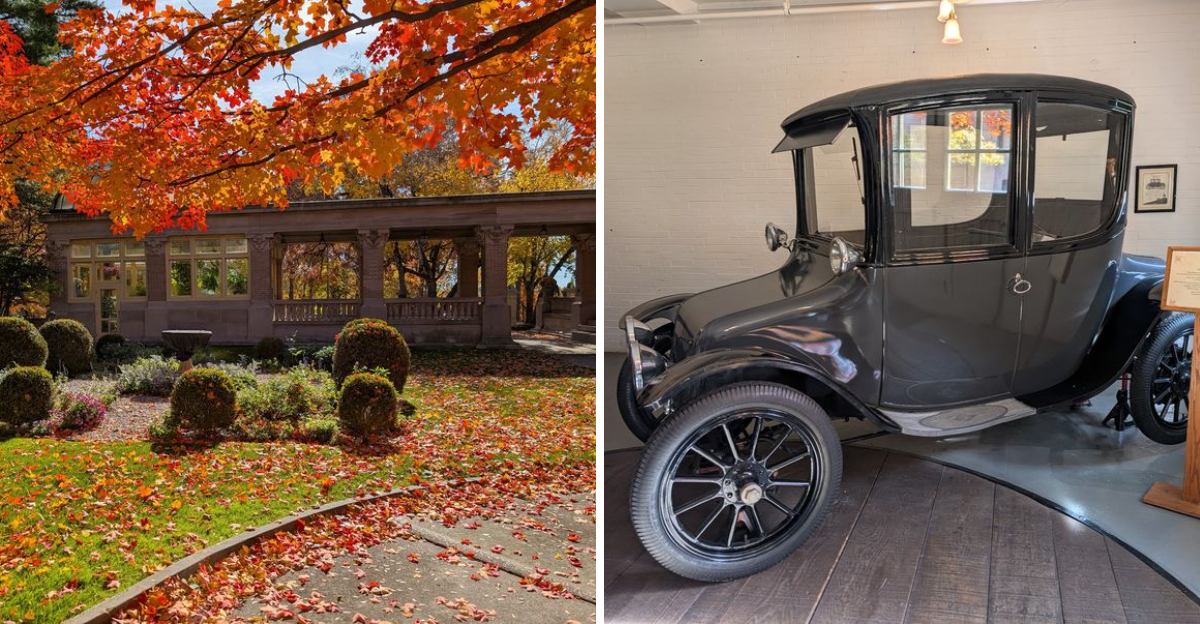
The shower shoots water from every direction. That is not a sentence expected to come up during a tour of a 1908 mansion.
Neither is “there is a tunnel under the greenhouse.”
Then someone points out the wooden contraption built to spin cars around, and the whole house starts feeling less like a mansion and more like an invention laboratory belonging to very wealthy people with excellent imaginations.
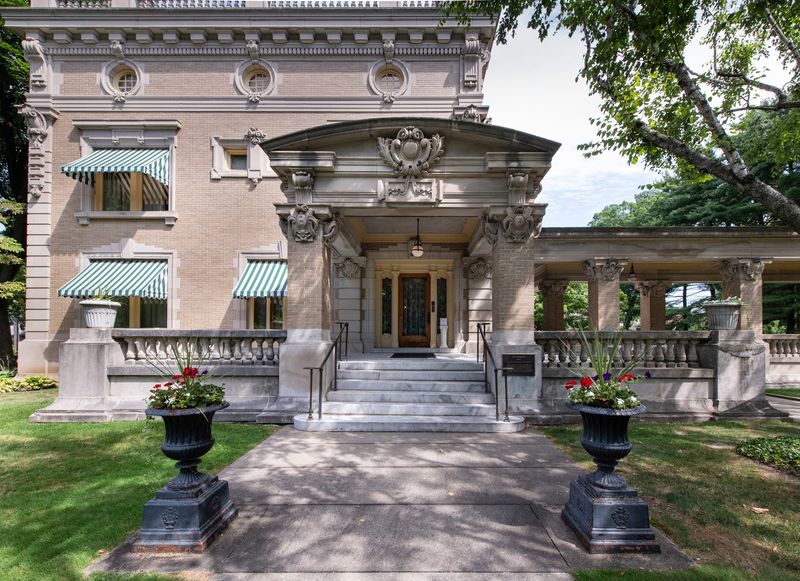
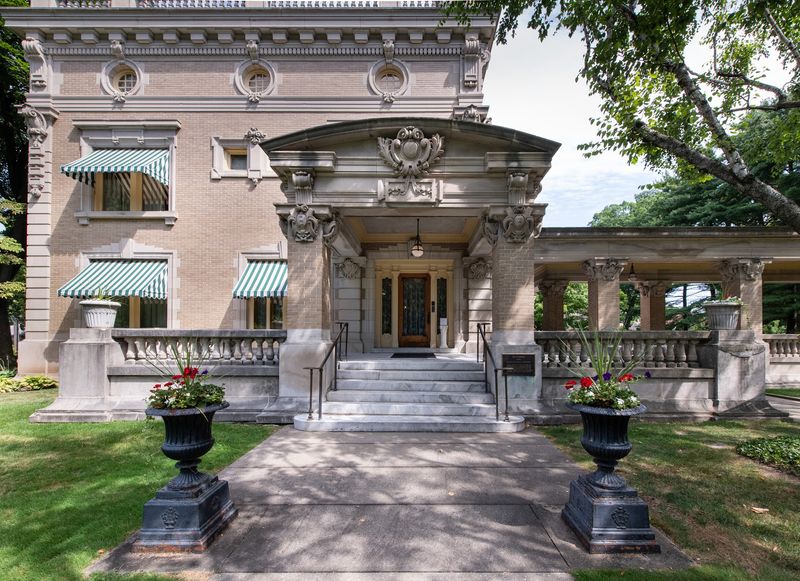
The outside is all buff brick, carved stone, and enormous shade trees.
Inside, things get even stranger. Silk covers the walls.
Italian scenes surround the windows. Pomegranates appear so often that someone actually counted them.
A musical instrument is connected to pipes beneath the library floor, and stories of restless spirits add yet another layer to the puzzle. Indiana has plenty of grand old houses.
Very few seem this determined to keep secrets.
The Pomegranate Hunt That Turns A Tour Into A Game
Somewhere between the entry hall and the second floor, most visitors stop listening to the guide and start scanning ceilings. Blame the pomegranates.
The fruit appears throughout Ruthmere as a symbol of wealth and prosperity, carved into plaster, shaped in wood, and stenciled across ceilings in patterns that are easy to miss on a first pass. Count them all and the total climbs past 280.
Nobody expects a guest to find every single one, but the hunt changes how a person looks at a room.
Suddenly the eye slows down. Details that would blur into general fanciness start separating into deliberate choices, and the mansion stops feeling like a showroom of expensive things.
Kids tend to take the challenge seriously, which makes Ruthmere a surprisingly good stop for families who worry historic homes will bore younger travelers. Adults get pulled in too, usually about ten minutes after claiming they will not.
Guides know the best hiding spots and will point out a few of the trickier ones, though they rarely give away everything. Part of the fun is spotting a pomegranate tucked into a corner nobody else noticed.
Wear comfortable shoes and plan on looking up more than usual. Neck strain is a real possibility, and honestly, worth it.
A Tunnel Under The House Leading Straight To A Greenhouse
Basements in old houses usually mean storage and cobwebs. Ruthmere went a different direction.
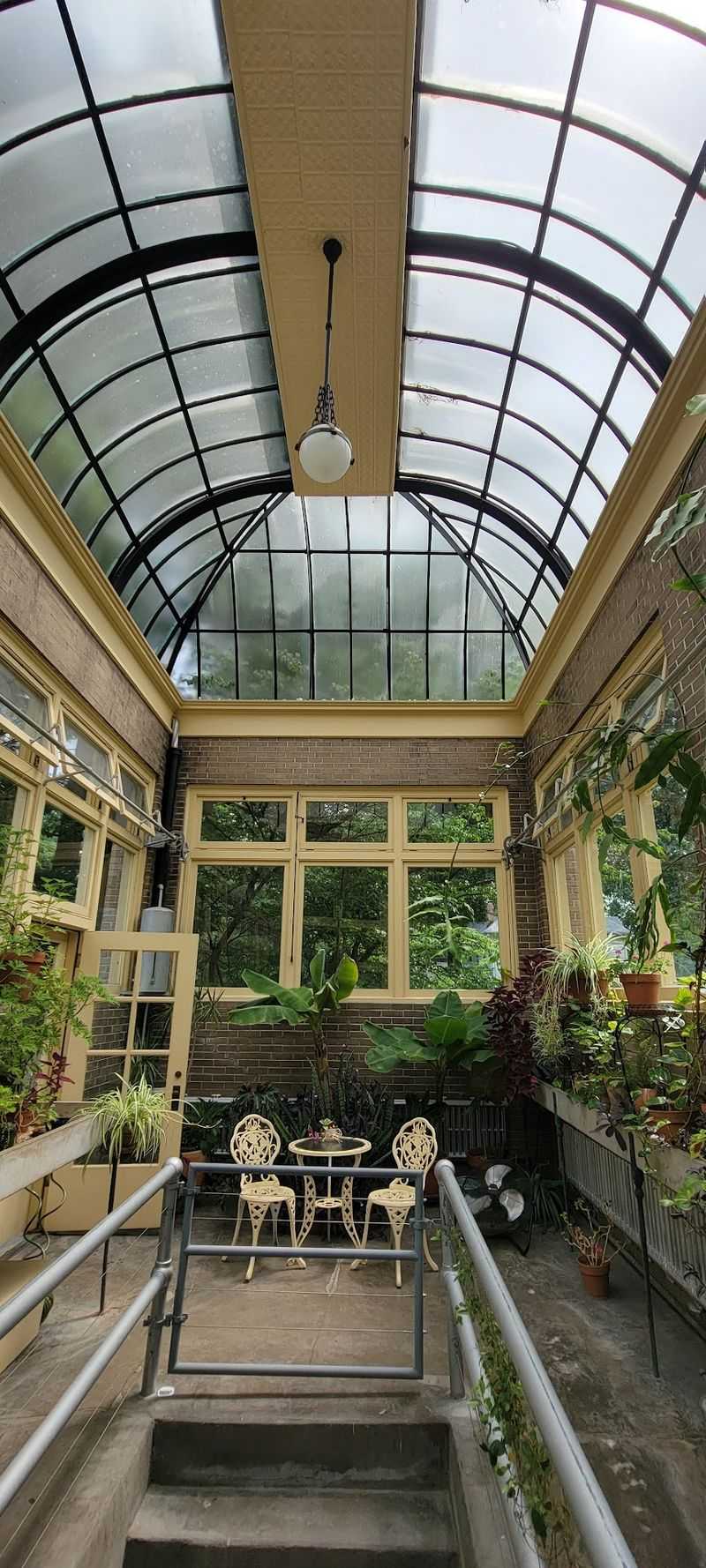
A hidden tunnel runs from the basement game room out to a conservatory greenhouse, letting the household move between recreation and greenery without ever stepping outside into an Indiana winter.
Elizabeth Beardsley used that greenhouse to grow exotic plants year-round, which explains why the structure became such a noticeable feature of the estate from the outside.
Think about what that meant in 1910. Snow piling up on Beardsley Avenue, wind coming off the river, and inside there is a warm glass room full of things that had no business surviving a northern winter.
The tunnel itself is narrow and functional rather than grand, and that contrast is part of the charm. A house filled with Tiffany glass and marble also had this plain little passage built purely because someone wanted convenience.
Later residents used the hallway leading toward the greenhouse for something entirely unexpected. The Deputy family, who raised six boys in the mansion, reportedly set up bowling pins in that narrow stretch.
Ask about it during a tour. Guides enjoy the story, and it reframes the whole property as a place where real families actually lived rather than a frozen display case.
Albert’s Library, Complete With The Only Fireplace He Trusted
Fire terrified Albert Beardsley. Out of every hearth in the house, exactly one burns actual wood, and it sits in his private library.
The room pulls together nearly everything Ruthmere does well. Georgia marble frames the fireplace, Cuban mahogany wraps the walls, and stained glass filters daylight into colors that shift as the afternoon moves along.
Tiffany lamps sit on the tables. Sculptures by Auguste Rodin share space with Albert’s original book collection, still shelved where he left it.
Two objects steal attention from the art. A soldier’s chair sits among the furnishings, and a working stereopticon viewer waits nearby, the kind of device that turned flat photographs into three-dimensional scenes long before anyone imagined a headset.
Spend a minute in the doorway before walking in. The proportions feel private rather than showy, built for one person reading rather than a crowd admiring.
Fire safety shaped more of this mansion than the fireplace count suggests, and the library becomes the clearest window into how a cautious industrialist thought. He wanted comfort without risk.
Photography rules vary, so check at the front desk. Either way, the room rewards slow looking far more than quick snapshots.
Silk Walls, Aurora Overhead, And A Pink Room Borrowed From Versailles
Wallpaper never made it past the front door here. Silk did.
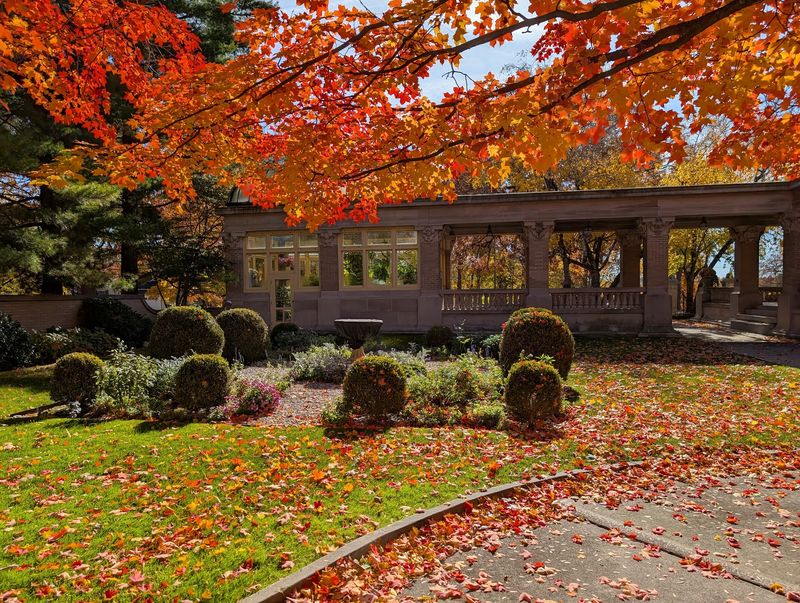
Rooms throughout Ruthmere are lined with silk wall coverings, a choice that catches light differently than paper and gives each space a soft, shifting glow depending on the hour.
Hand-painted stencils decorate ceilings above, and murals showing scenes of Italy appear on walls and around windows, turning ordinary corners into small landscapes.
The French Drawing Room holds the showstopper. A ceiling mural titled Aurora, Goddess of Dawn spreads overhead, while below the fireplace displays book-matched wood grain, meaning the panels mirror each other like an open butterfly.
Across the house, Elizabeth Beardsley’s sitting room takes a quieter approach. Pink silk covers the walls, inspired by the Palace of Versailles, and windows frame the spot where the rivers come together outside.
Morning light suits that room best. The pink warms up and the river view does the rest.
First-floor woodwork is largely Cuban mahogany, a deep reddish timber that anchors all the lighter fabrics and painted surfaces above it. The combination could easily feel heavy, yet somehow it balances.
Guides explain restoration details along the way, including how much care went into preserving fragile silk over the decades.
The Car Turntable Built Because Reverse Gear Did Not Exist Yet
Here is a problem nobody has anymore. Early automobiles could not back up.
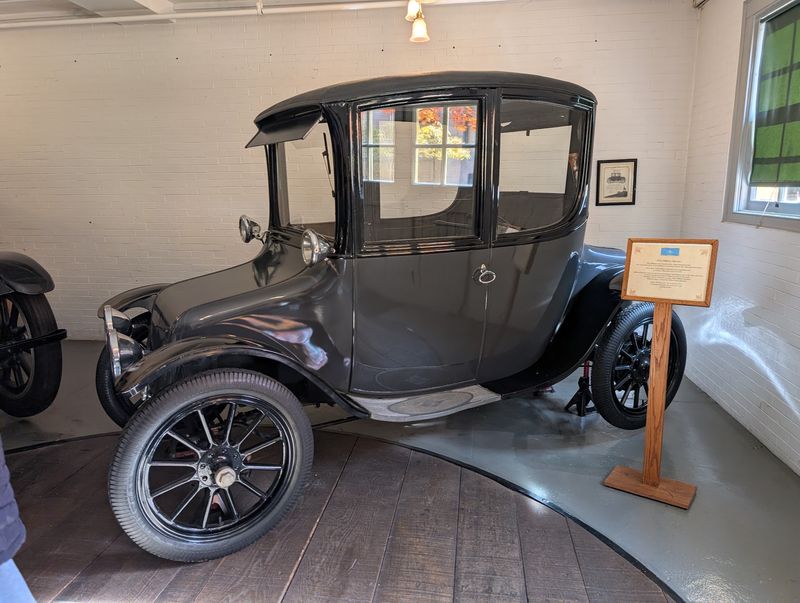
Albert Beardsley solved it with a wooden turntable installed in the garage, a rotating platform that spun a car a full 180 degrees so the driver could pull straight out. His 1918 Cadillac once parked on it.
The engineering is simple, almost silly by modern standards, and completely brilliant for its moment.
Today the garage functions as a small automotive gallery. A 1912 Pratt Forty sits alongside a 1914 Milburn Electric and a 1917 Cadillac, three machines that show just how unsettled car design still was in those years.
The Milburn deserves special attention. Electric cars are treated as a modern invention, yet there one sits, more than a century old.
Above the garage, the chauffeur’s quarters found a second life as the Robert B. Beardsley Arts Reference Library, dedicated in 1980.
Researchers and curious visitors can use it, which makes the building useful rather than decorative.
Car enthusiasts often arrive expecting the mansion to be the main event and leave talking about the garage instead. Budget extra time out here.
Ask whether the turntable is visible during the visit, since access can depend on the tour.
Gadgets From 1910 That Still Sound Futuristic
Central vacuum. Automatic closet lights.
A sprinkler system.
All of it existed at Ruthmere when most American homes were still figuring out electricity, and the list keeps going. The master bedroom held a shower surrounded by a cage of pipes that shot water from multiple directions at once, essentially a multi-jet walk-in shower decades ahead of schedule.
Then there is the Choralcelo in the foyer, which might be the strangest object in the building. Part piano, part player mechanism, part organ, it connected to 17 pipes installed beneath the library floor.
Play it and the sound rose up through the house from underneath, producing something close to surround sound long before that phrase existed. Guests must have had no idea where the music was coming from.
The automatic closet lighting is a smaller touch, but it says a lot. Someone thought carefully about the annoyance of fumbling in a dark closet and simply fixed it.
Later residents kept updating things. Arthur and Stella Beardsley, who moved in after 1924, added an elevator and a new kitchen pantry.
Technology fans will find plenty here that beats the art collection for pure surprise value. Ask guides to point out the pipe locations under the library.
Ghost Stories, A Broken Marble Arm, And The Rest Of The Campus
Every grand old house collects rumors. Ruthmere collected more than most.
Accounts mention over ten spirits, along with poltergeist reports of objects moved or tossed in empty rooms and lights and alarms switching on and off without help. Some stories describe phantom gunshots heard when nobody was inside, and activity supposedly picks up as Halloween approaches.
Skip the ghosts and there is still a statue on a staircase missing part of an arm. The break reportedly came from a stray football during the years the Deputy family and their six boys filled the place with noise.
That detail says something honest about the house. Grand as it looks, real kids ran through these halls.
The Beardsley Foundation bought the property in 1967, restored it between 1969 and 1973, and opened it as a museum, with National Register listing following in 1978.
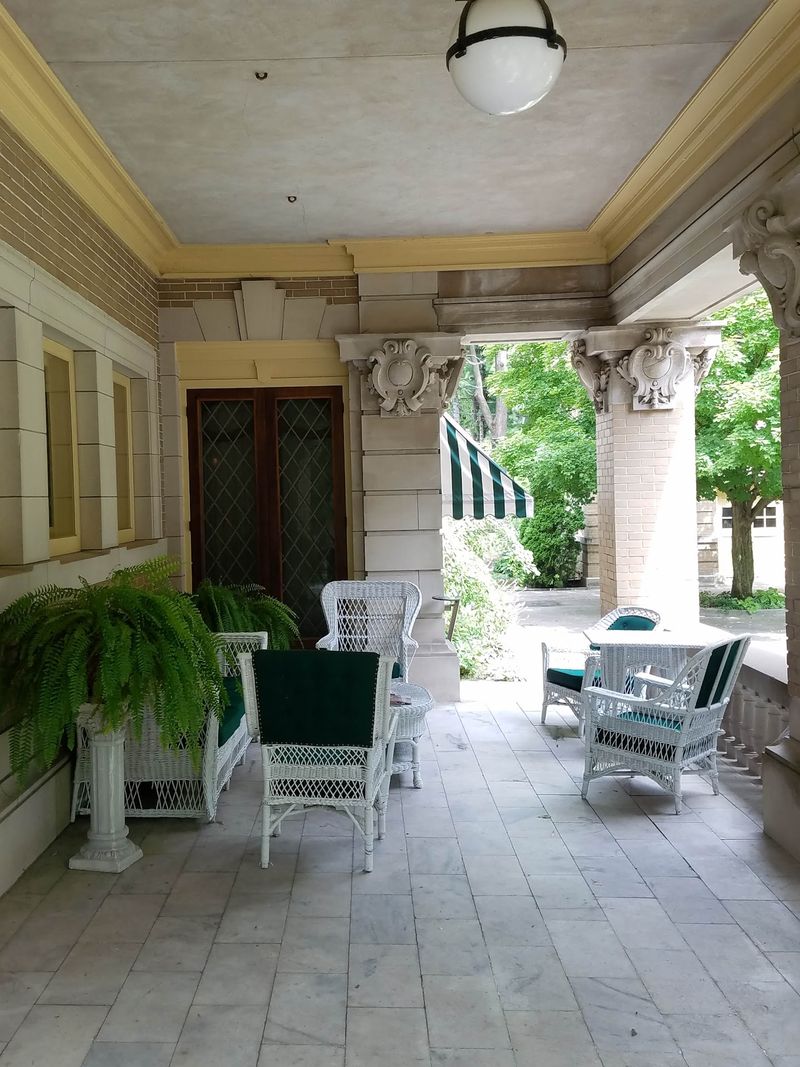
The exterior alone rewards a slow walk, from carved limestone quoins and cartouches to the balustraded marble piazza stretching along the south side toward the porte-cochere.
Visitors should also allow time for the wider Ruthmere Campus, located at 102 W Beardsley Ave, Elkhart, IN 46514, which includes the Havilah Beardsley House and the Beardsley Discovery Center. Together they sketch out Elkhart’s history far beyond one family.
