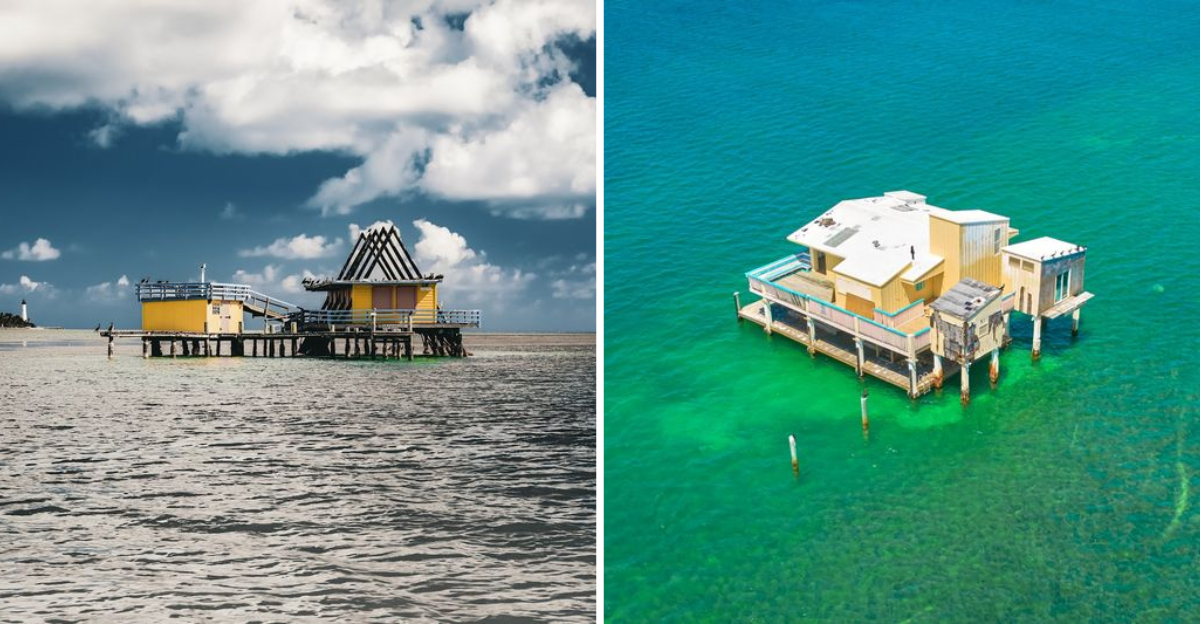
Out in the shallow waters of Biscayne Bay, a cluster of old wooden buildings sits on tall stilts, looking nothing like the rest of Florida. These are the abandoned remains of a former party spot that once attracted gamblers and celebrities seeking a place to hide. Getting out there requires a boat, and the entire place feels eerie and forgotten even during the day.
But locals say you should not go at night. The houses are empty now, officially owned by the National Park Service and strictly off limits for overnight stays. Yet people who have motored past after dark claim to have seen lights flickering inside the abandoned shacks.
Others report hearing old music drifting across the water, followed by a strange, unnerving silence.
The Mysterious Origins of Stiltsville
Back in the 1930s, a man nicknamed “Crawfish” Eddie Walker built the very first shack out over the shallow flats of Biscayne Bay, and from that single quirky structure, an entire community-at-sea was eventually born. It sounds like something out of a tall tale, but it really happened.
The location was chosen carefully, sitting just outside the legal mile limit from shore, which made it a convenient spot for activities that were not exactly welcomed on land during the Prohibition era.
Bait sales, alleged gambling, and other gray-area businesses quietly thrived out on the water, away from the reach of city law enforcement. The bay itself is only one to three feet deep at low tide in many spots near the houses, which made it easy to wade out but also meant you needed to know exactly where you were going.
By 1960, Stiltsville had grown to 27 separate structures, ranging from simple fishing shacks to full-on social clubs that attracted Miami’s wealthiest residents.
Each building had its own personality and purpose. Some were serious party destinations, while others were modest retreats for fishing and relaxing on the water.
That colorful, rule-bending origin story is a big part of why Stiltsville still captures so much imagination today, nearly a century after that first shack was hammered together over the bay.
Why Only Seven Houses Remain
At its peak, Stiltsville had 27 buildings, and that number tells you something important about how fragile life on the water really is. Florida hurricanes are not gentle, and Stiltsville has been in the direct path of some of the most powerful storms in recorded history.
Hurricane Betsy tore through in 1965, wiping out a significant number of the structures in a single night.
Then came Hurricane Andrew in 1992, one of the most destructive storms ever to hit South Florida, and it reduced what remained to just a handful of battered survivors. After Andrew, only seven houses were left standing, and those seven have become the ones worth saving.
The Stiltsville Trust, a non-profit organization, now works alongside the National Park Service to preserve and maintain these structures for future generations.
The area was incorporated into Biscayne National Park back in 1985, which changed the ownership situation dramatically. Private owners eventually lost their rights to occupy the homes, a fact that still stirs strong feelings among people who remember the old days.
What remains now is a kind of open-air museum, fragile and exposed, where every passing storm season is a reminder that these last seven houses are not guaranteed to be there forever. Seeing them while they still stand feels genuinely urgent.
The Notorious Past: Gambling, Raids, and the Bikini Club
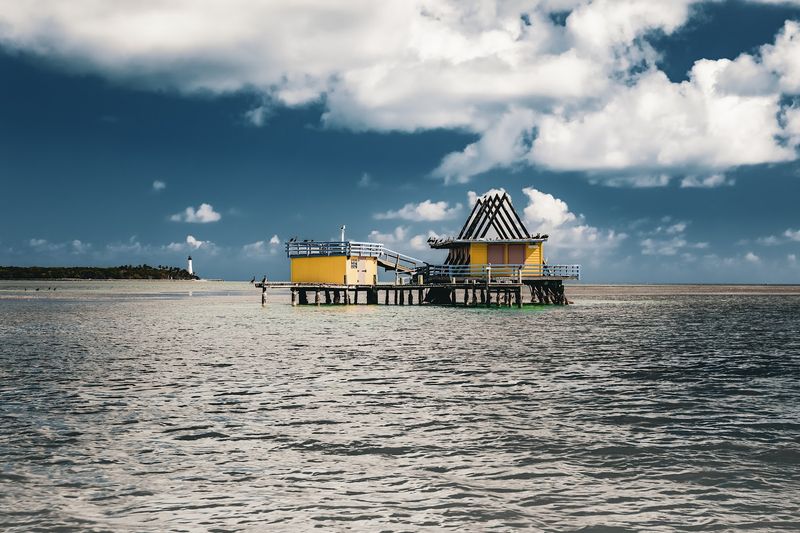
Few places in Miami have a wilder backstory than Stiltsville, and the Bikini Club might be the most colorful chapter of all. Operating during an era when Miami’s social scene was booming, the Bikini Club became a notorious gathering spot perched out over the bay, attracting partygoers who appreciated its very deliberate distance from shore.
Police raids were not uncommon, and the club’s reputation for bending the rules gave Stiltsville a renegade identity that stuck for decades.
The gambling operations that once ran out there were an open secret, and law enforcement made periodic attempts to shut things down, but the remote location made enforcement genuinely tricky. Getting out to the structures required a boat, which gave the whole scene a built-in layer of exclusivity and deniability.
Miami’s elite loved it for exactly that reason.
By the 1950s and into the 1960s, Stiltsville had evolved into something more upscale, with private clubs and social organizations hosting events for the city’s most prominent families. The lawless early days gave way to a kind of glamorous, sun-drenched playground reputation.
That combination of outlaw history and high-society charm is genuinely rare, and it is a big reason why Stiltsville still gets talked about with such obvious affection by longtime Miami residents who remember when the bay felt like a place where anything could happen.
Why You Really Should Not Go at Night
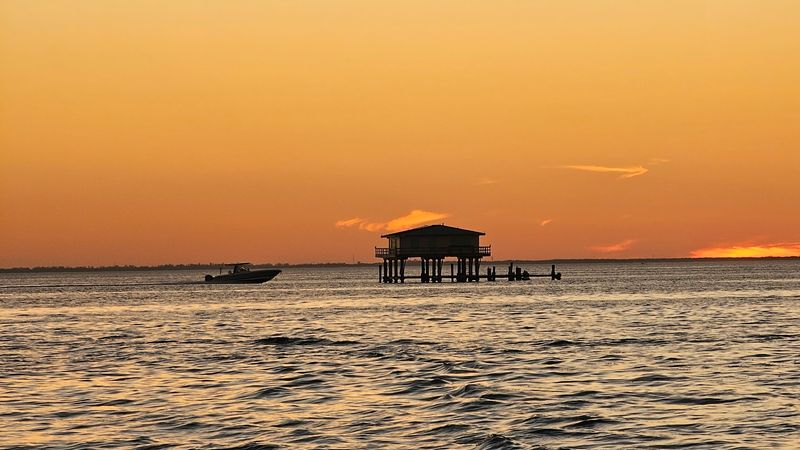
The daytime version of Stiltsville is beautiful, sun-lit, and surprisingly accessible by boat. The nighttime version is a completely different story, and not in a fun, spooky way.
The waters surrounding the houses are shallow, poorly marked, and subject to strong, unpredictable tidal currents that can catch even experienced boaters completely off guard.
There are no lights out on the structures themselves, and the bay offers very little in the way of navigational landmarks once the sun goes down. Sandbars shift, channels are narrow, and a wrong turn in the dark can leave a boat hard aground in water that is barely knee-deep.
Getting unstuck in the middle of the night, miles from shore, with currents pushing against you, is a genuinely dangerous situation that rescue teams in the area have responded to more than once.
Beyond the physical hazards, landing on or docking at the Stiltsville structures without a permit is strictly prohibited, and “no trespassing” signs are clearly posted. The National Park Service takes these rules seriously, and violating them can result in real legal consequences.
The allure of seeing the houses under a full moon is understandable, but the combination of treacherous water conditions and trespassing risk makes nighttime visits a genuinely bad idea. Appreciating them from a safe distance, in daylight, is the move here.
What the Houses Actually Look Like Up Close
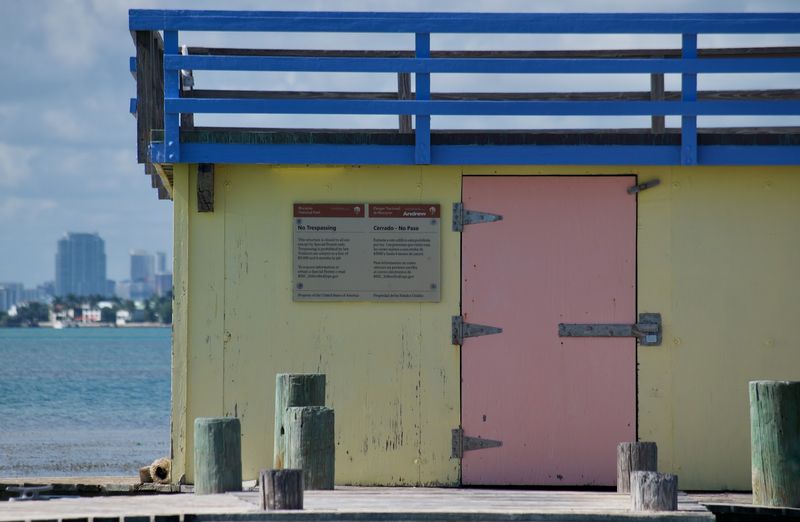
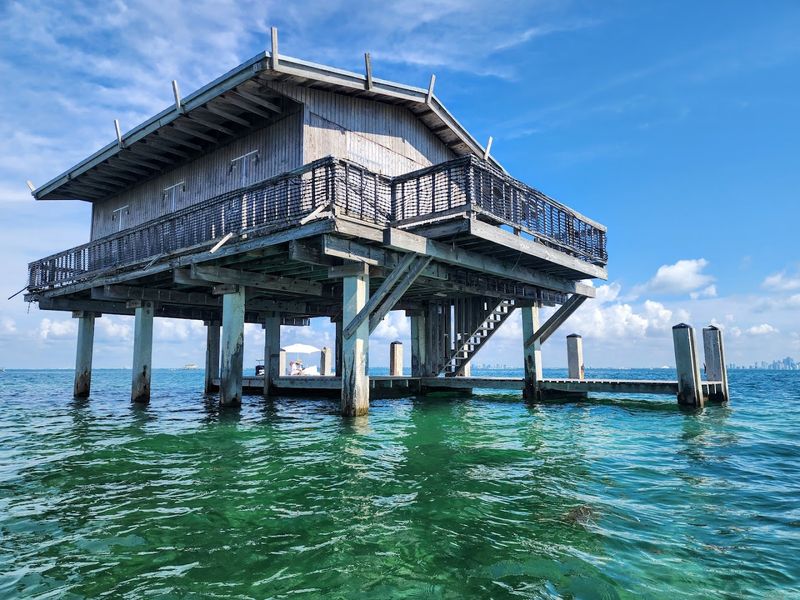
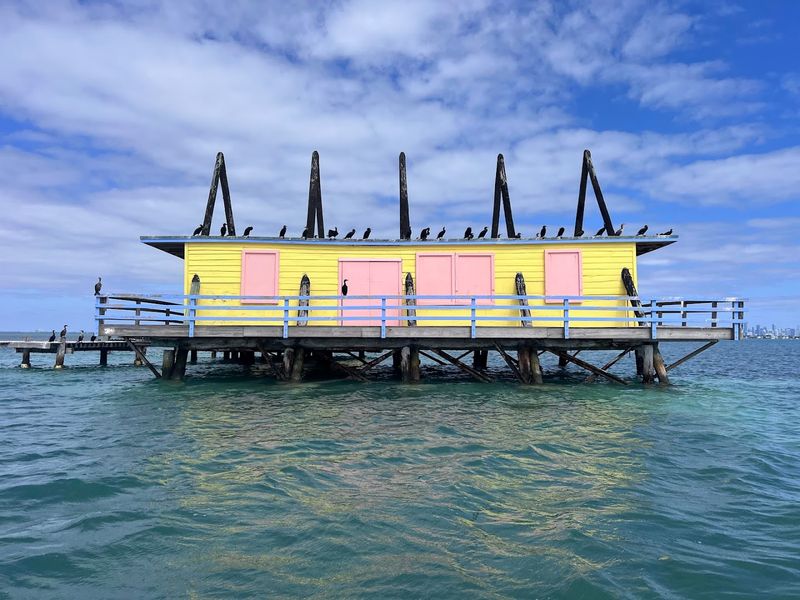
Pulling up alongside one of the Stiltsville houses for the first time is a genuinely strange experience. The structures sit roughly ten feet above the water on thick wooden pilings, and up close, you can see just how much wear and weather they have absorbed over the decades.
Peeling paint, barnacle-covered stilts, and sun-bleached wood give each house a rugged, lived-in look that no amount of restoration could fully replicate.
Each house has its own layout and character. Some have wide open decks that wrap around the outside, while others are more enclosed, with small windows facing out over the bay in every direction.
The views from the decks, on the tours where access is permitted, are extraordinary. You are surrounded by open water, with the Miami skyline faintly visible in one direction and the open Atlantic horizon in another.
The shallow water beneath the houses is surprisingly clear in good conditions, and you can often see sea grass, small fish, and the sandy bottom just a foot or two below the surface. It is a reminder that Stiltsville sits inside a national park, and the marine environment around it is protected and surprisingly healthy.
The whole scene has a quiet, almost surreal quality to it, like stumbling onto a film set that was built in the middle of the ocean and then simply never taken down.
Why Stiltsville Deserves to Be Remembered
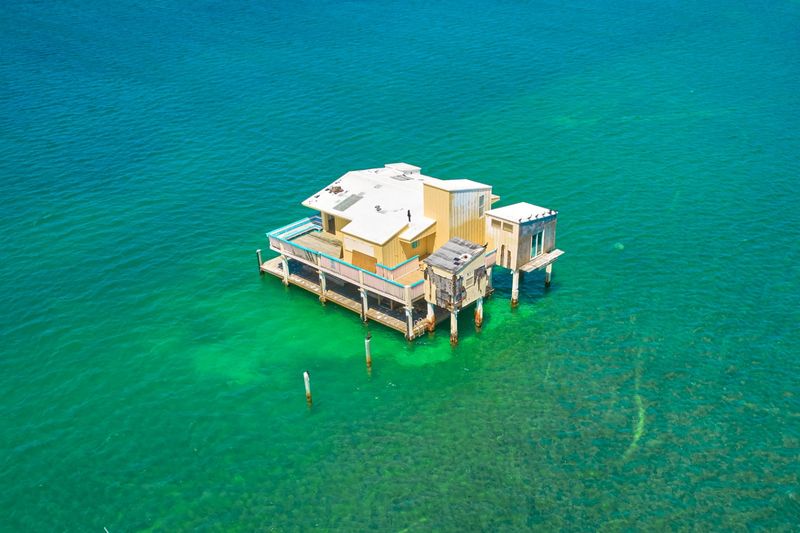
There is something genuinely moving about the fact that these seven houses are still standing. They have survived hurricanes, legal battles, government takeovers, and nearly a century of relentless South Florida weather.
The Stiltsville Trust has worked hard to keep them from disappearing entirely, and the National Park Service has backed those efforts with resources and oversight that the structures desperately need.
Stiltsville represents a version of Miami that most people never get to see, one that is scrappy, inventive, and deeply tied to the water. Long before Miami became famous for its skyline and nightlife, people were building their own version of paradise out on the bay, making up the rules as they went.
That spirit feels worth honoring.
Visiting Stiltsville, even just seeing it from the shore at Bill Baggs Cape Florida State Park, connects you to a story that is entirely unique to this place. No other city in America has anything quite like it.
The houses are fragile, and another major hurricane could change everything in a matter of hours. That urgency is real, and it is part of what makes a trip out to the bay feel less like a tourist activity and more like a genuine encounter with living history.
Go while you still can, go during the day, go with a permit, and go with a real appreciation for what you are looking at.
