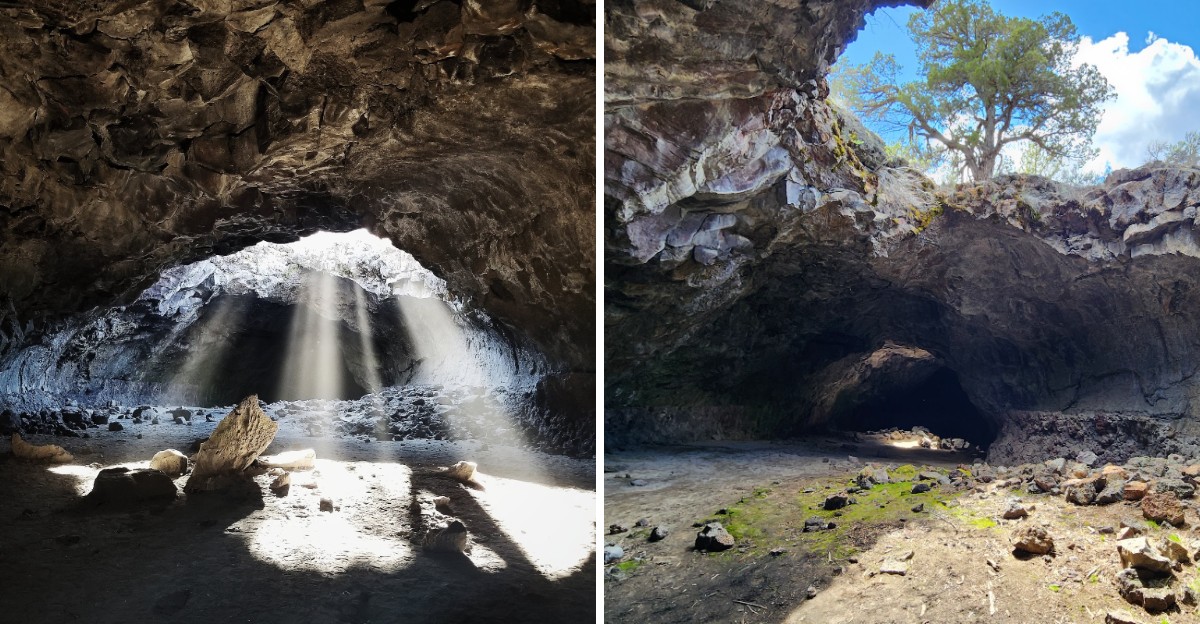
Nothing says Cold War paranoia quite like stocking a lava tube with supplies and calling it safe. Rock walls curve overhead here, cool and dark enough that temperatures stay consistent regardless of whatever chaos happens outside aboveground.
Old fallout shelter supplies apparently once sat tucked inside too, a strange leftover from an era genuinely worried this cave might actually get used for its intended emergency purpose.
Repurposing volcanic rock into doomsday prep takes a very specific kind of 1960s thinking most people today find slightly amusing in hindsight. Nobody ever needed the shelter for its original reason, leaving behind a cave with history stranger than its geology alone.
Hiking through here means touching both volcanic and nuclear history at once. This lava tube in Oregon holds onto a Cold War secret most visitors never expect to find underground.
A Pine Tree Guarding the Front Door
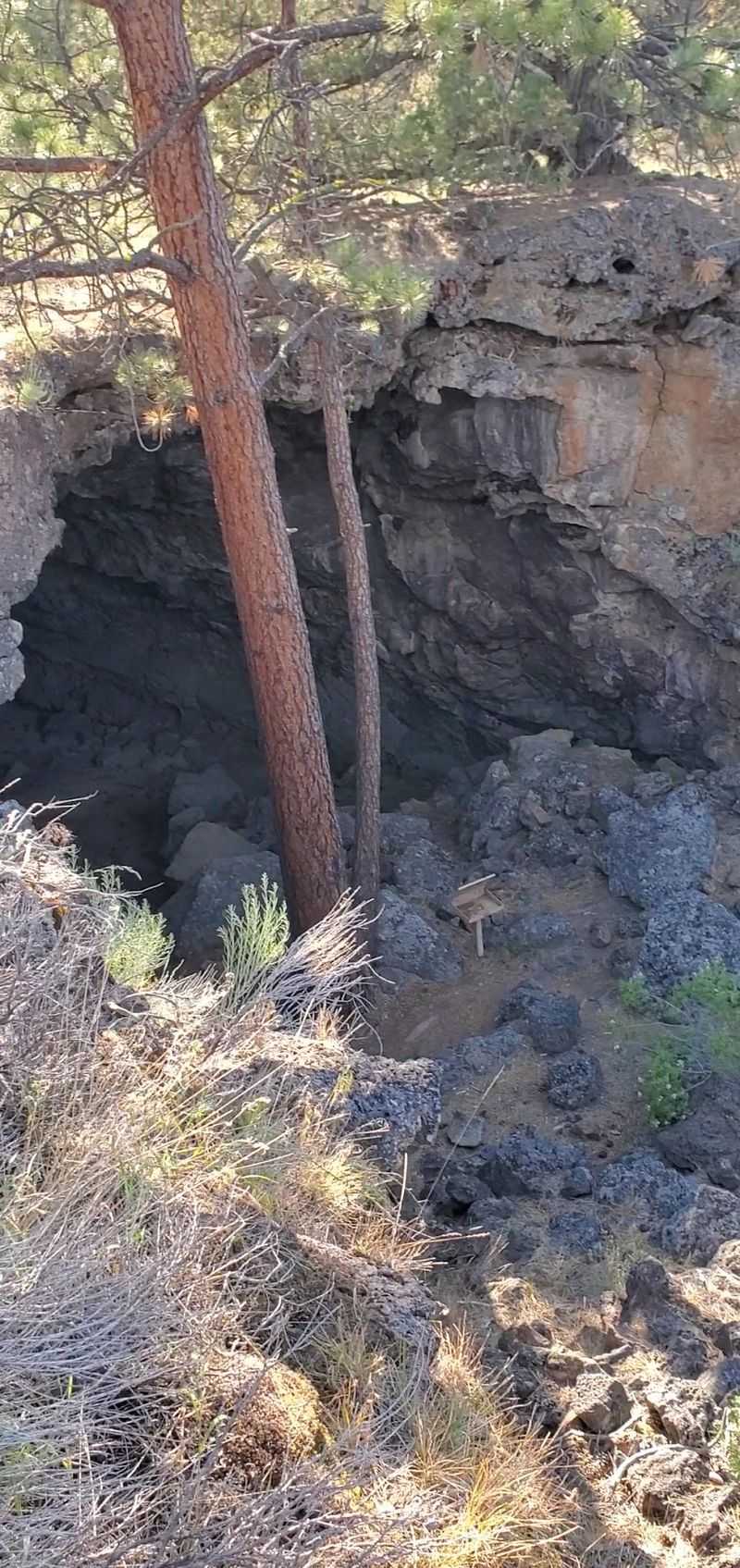
Honestly, I did not expect a cave entrance to have a mascot. At Derrick Cave, a big ponderosa pine rises straight out of the opening, its roots gripping dark volcanic rock. It makes the spot easy to recognize once you finally reach it.
The entrance formed when part of the lava tube roof collapsed long ago. That collapse left a wide pit full of broken basalt, and seeds found just enough soil to grow. Over many years, one stubborn tree claimed the space. Nature can be patient like that.
Take a minute here before heading underground. Look up at the bark, notice how the trunk leans toward the light, and listen to the quiet. The high desert around you is dry and open, while the pit holds cooler, shadier air.
That change in temperature is your first hint of what waits below.
Photographers love this view, especially when the sun is high and lights up the needles. Snap a picture from the rim, then carefully pick your way down the rocks. Good shoes matter from the very first step.
Cold War Secrets Behind a Steel Door
Back in 1963, people across America worried about nuclear war. Families built bomb shelters, schools ran drills, and the government searched for safe places to hide in an emergency. Derrick Cave made the list.
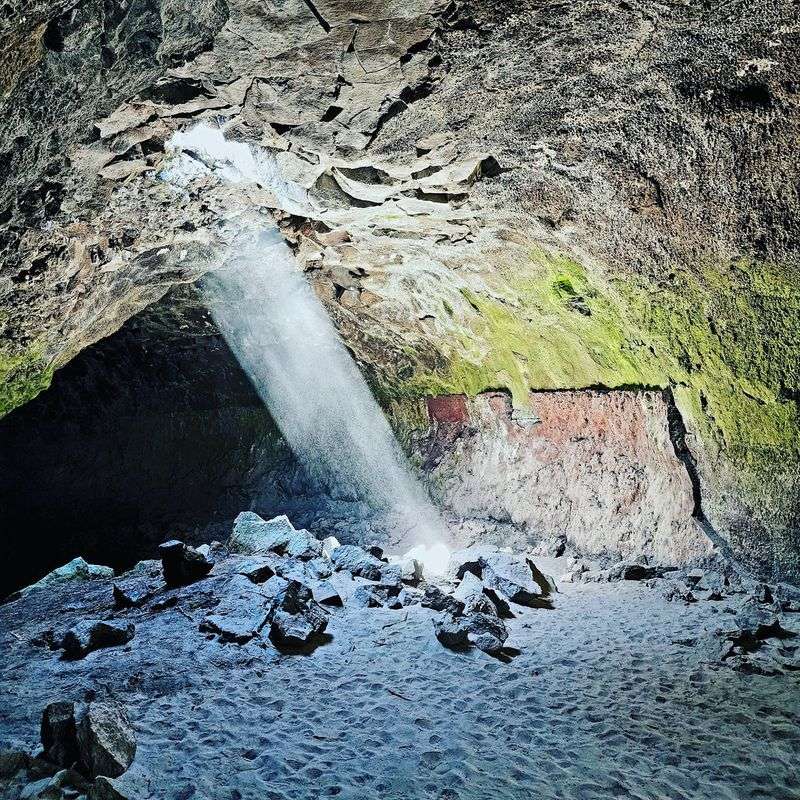
The cave was chosen as an official fallout shelter. Supplies of food and water were stored behind a door made of concrete and steel, tucked inside the lower part of the tube. The thick rock overhead was meant to block dangerous radiation.
Those supplies are long gone now. The door itself has vanished too. What remains is the metal door frame, still fixed in place, quietly telling its story to anyone who shines a light on it.
I found myself imagining what it might have felt like to wait out a crisis down here, cold and dark, far from any town. Bring that thought with you as you explore. It turns a fun cave trip into a real history lesson about a tense time in the country.
How Lava Built a Hidden Tunnel
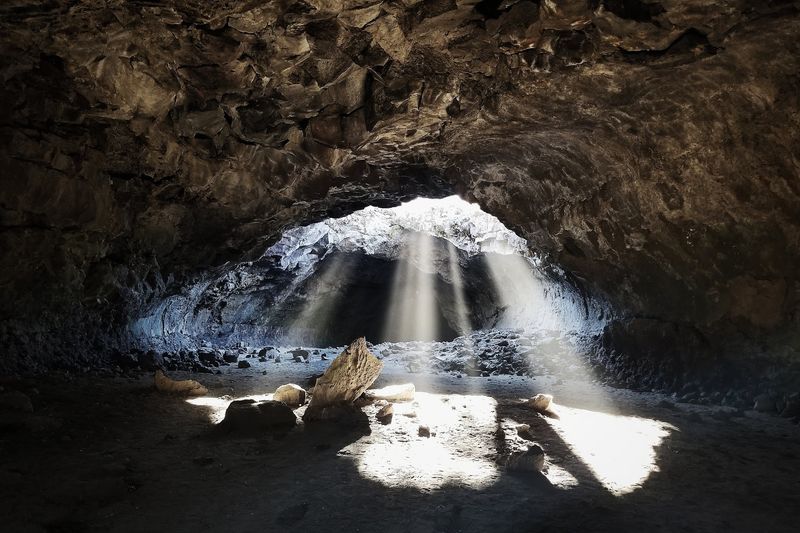
Picture a river of melted rock flowing across the land thousands of years ago. The top layer cooled and hardened into a crust, while hot lava kept moving underneath. When the flow drained away, it left behind a hollow tube.
That is exactly how Derrick Cave came to be. It sits in a volcanic area north of Fort Rock, part of a landscape shaped by ancient eruptions. You can still see clues on the walls, like smooth curves and ledges where lava levels once dropped.
It is basically a giant pipe made by a volcano. Pretty wild.
Kids and adults both tend to get curious once they understand this. Run your eyes along the ceiling and look for drip marks, where melted rock once hung like frosting. Notice how the floor changes from flat sections to piles of broken stone.
A quick tip makes the visit richer. Read the information board near the parking area before you go in. It explains the geology and history in simple terms, and it gives you a better sense of what you are about to explore.
The Mystery of the Hidden Steel Rails
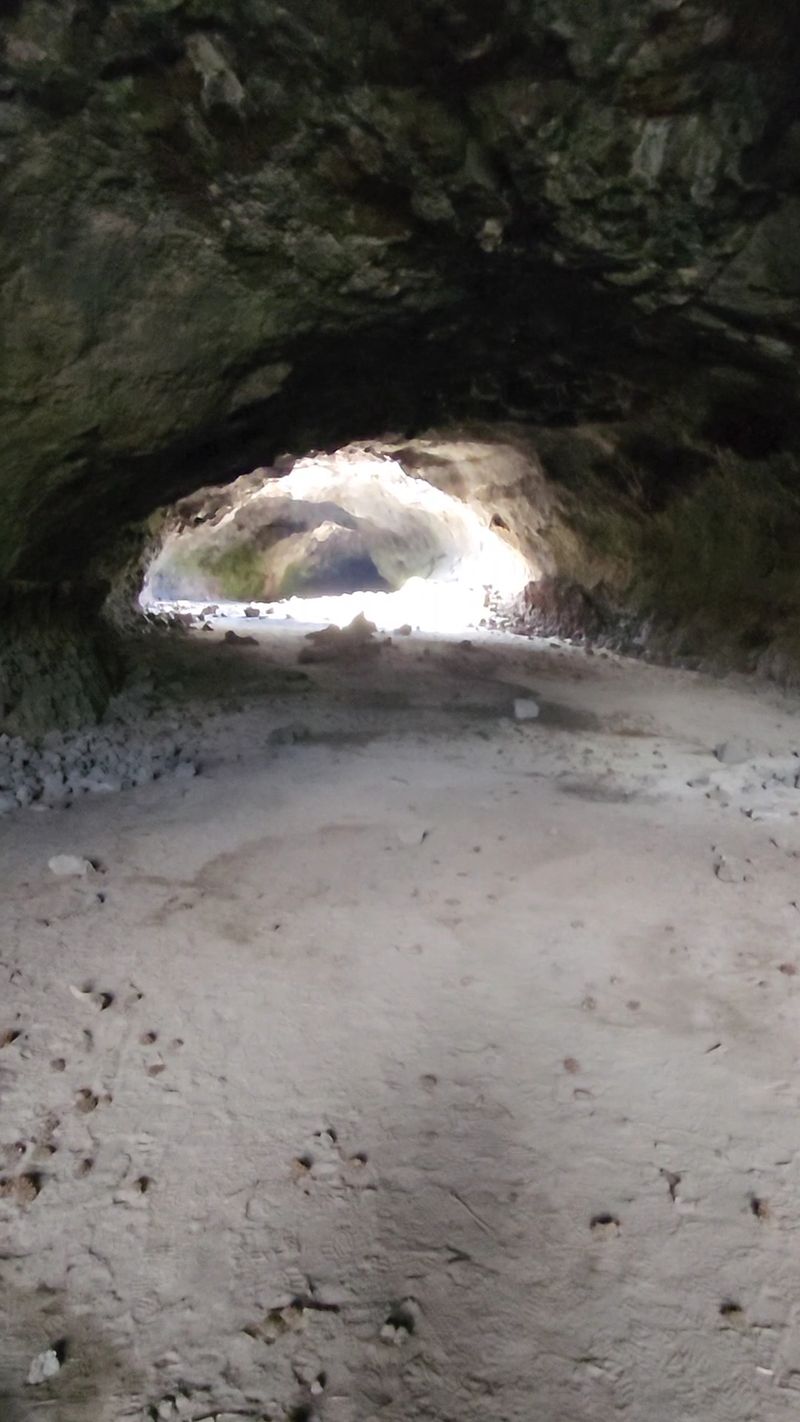
Here is a fun fact that surprised me. At one point, several thousand pounds of steel rails were stashed in one of the passageways at Derrick Cave. Nobody was planning a tiny underground railroad, though.
The rails were part of a test. Scientists wanted to know if hidden metal could be detected from above using remote sensing, which means gathering information from a distance with special instruments. A lava tube in the middle of nowhere made a perfect testing spot.
Like the shelter supplies, the rails have disappeared. You will not find them today, no matter how carefully you search. Still, knowing they were once here adds a layer of curiosity to every dark corner.
Use this story as a conversation starter if you visit with friends or family. Ask each other what other experiments might have happened in remote places like this one. It makes the walk through the tube feel a bit like a detective mission.
Just remember that the cave is protected, so leave everything exactly as you find it.
Skylights That Glow Like Spotlights
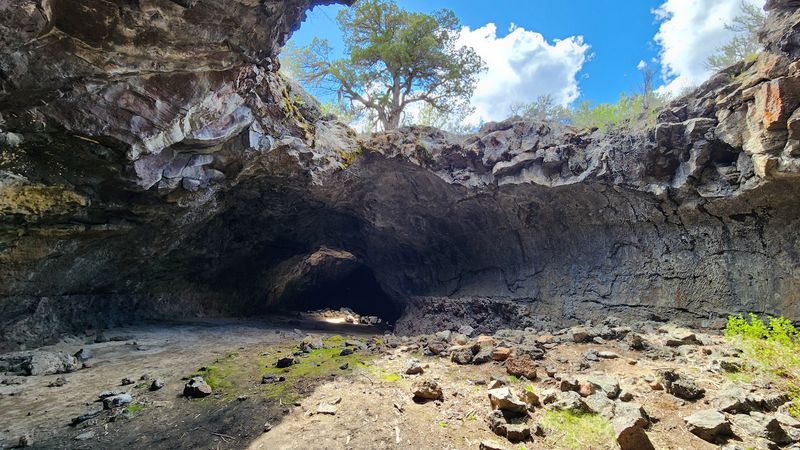
Sunbeams pouring into a cave look like something from a fantasy film. On the right side of Derrick Cave, several openings in the ceiling, called skylights, let daylight stream down onto the rocky floor.
These holes formed where parts of the roof caved in. They create bright pools of light surrounded by deep shadow. On a clear day, you can sometimes see dust drifting through the beams, which is oddly calming to watch.
The right branch splits into several levels and stretches roughly 600 feet. The upper level feels open and roomy, with plenty of spots to stop and look around. The lowest level on this side is where the old fallout shelter was located, so you can explore history and scenery in the same trip.
For photos, try visiting around midday, when the sun sits high and shines more directly through the openings. Keep your camera steady, since the contrast between light and dark can be tricky. A small tripod helps.
And yes, it is totally fine to just stand there and enjoy the glow for a while.
Into the Deep Dark Left Branch
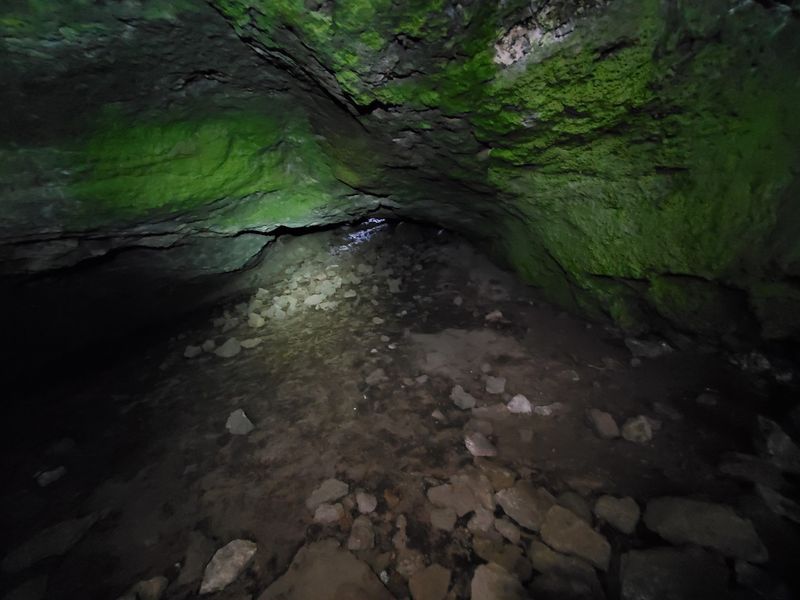
Turn left inside the entrance and things get serious fast. The ceiling rises higher, but the skylights stop after the first section. Beyond that, roughly 1,200 feet of total darkness waits.
The silence down there is something else. No wind, no birds, no traffic. Only your footsteps and breathing. Some people find it peaceful, while others feel a little spooked. Both reactions make sense.
About partway in, a large rubble pile crosses the floor where chunks of the ceiling fell long ago. Climbing over it takes care and patience. Not everyone continues past this spot, and that is perfectly okay. Turning back when you feel unsure is smart, not weak.
If you do push on, move slowly and test each step. The rocks can shift, and the floor gets wetter the deeper you go. Bring at least two light sources per person, because losing your only light in a place this dark would be a real problem.
Let someone outside the trip know your plans too, since help is far away and phones will not work here.
Ice on the Floor in the Desert
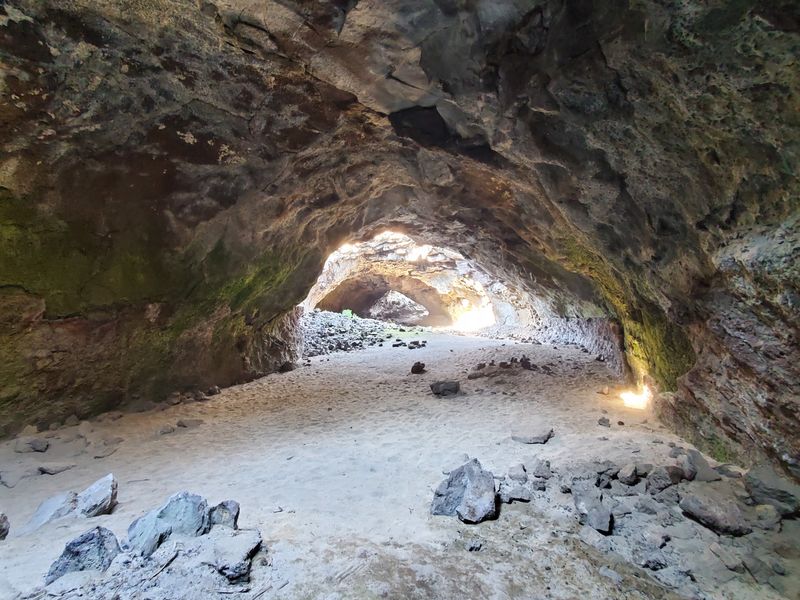
Ice in a desert cave? It sounds backward, but it is real. Deeper inside Derrick Cave, patches of ice can cover the rocky floor, even when the sun outside feels warm.
Cold air sinks and gets trapped in low spots underground. Since sunlight never reaches these deeper sections, the ice can stay for a long time. The result is a natural refrigerator hidden beneath the sagebrush.
On a hot summer day, the cave cools you off almost instantly. That feels amazing at first. After a while, though, you may start shivering, so pack a light jacket even if the weather seems perfect up top.
Footing is the bigger concern. Icy volcanic rubble can be very slippery, and those rocks are sharp. Wear sturdy shoes or boots with good grip.
Hiking poles help a lot when climbing over uneven ground, and gloves protect your hands when you need to steady yourself. A headlamp keeps both hands free, which makes a huge difference. Slow and careful wins every time down here.
The Bumpy Road Is Part of the Story
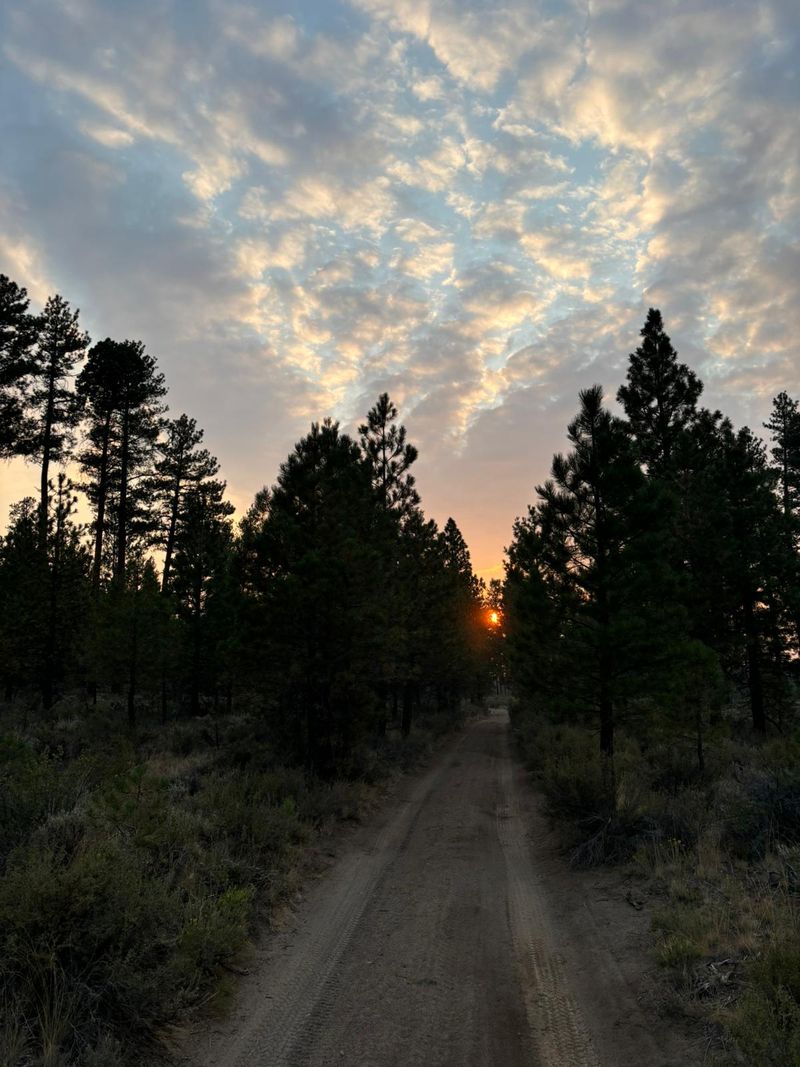
Getting to Derrick Cave is an adventure all by itself. The final stretch follows long gravel and dirt roads through forest and high desert, with rocks, ruts, and the occasional washout.
A high clearance vehicle with four wheel drive or all wheel drive is the smart choice. Some sections are steep and uneven, and a regular car can struggle. Check your spare tire before leaving, because sharp gravel can cause a flat.
Directions can be confusing too. Roads branch in many directions, signs are few, and some routes cross private property that is closed to the public. Online maps have been known to lead people to blocked roads.
Access from the north on national forest road 2325 is a good route to look into.
Packing Smart for a Remote Day Out
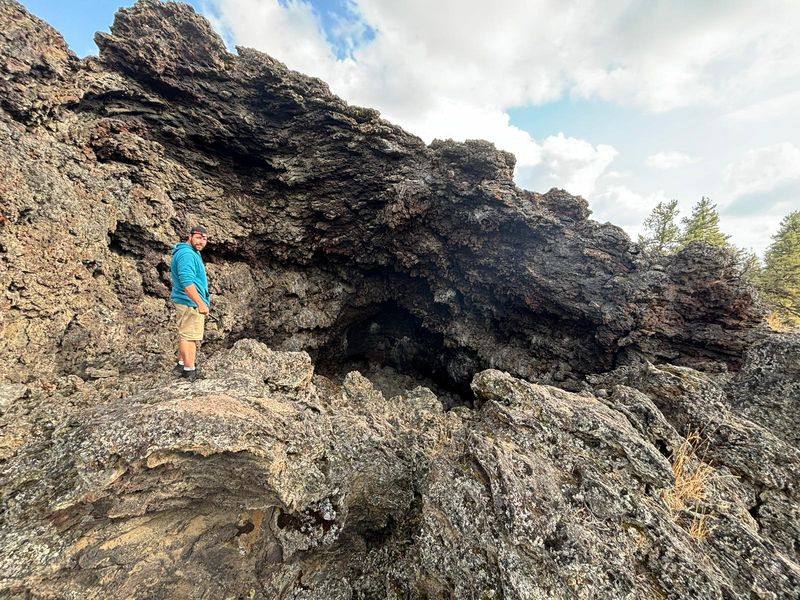
My favorite part of planning this trip was building the gear pile. When a place is this far from towns, you really want to bring everything you need.
Start with light. Headlamps are best, plus a spare flashlight and extra batteries for each person. Add a warm layer, gloves, sturdy shoes with grip, and hiking poles for the rubble.
Pack plenty of water, snacks, a first aid kit, and a full tank of fuel. There are no stores nearby. None.
Remember that the site is open all day, every day, but daylight hours make the drive much safer. Arrive early, give yourself time to explore both branches, and head out before dark. The gravel parking area is a handy spot to gear up and read the information board.
Plan your route ahead, check conditions with the Bureau of Land Management, and enjoy the wide sky on the way. More details are on the official page at blm.gov. You will find this underground piece of history at Derrick Cave, Fort Rock, OR 97735.
