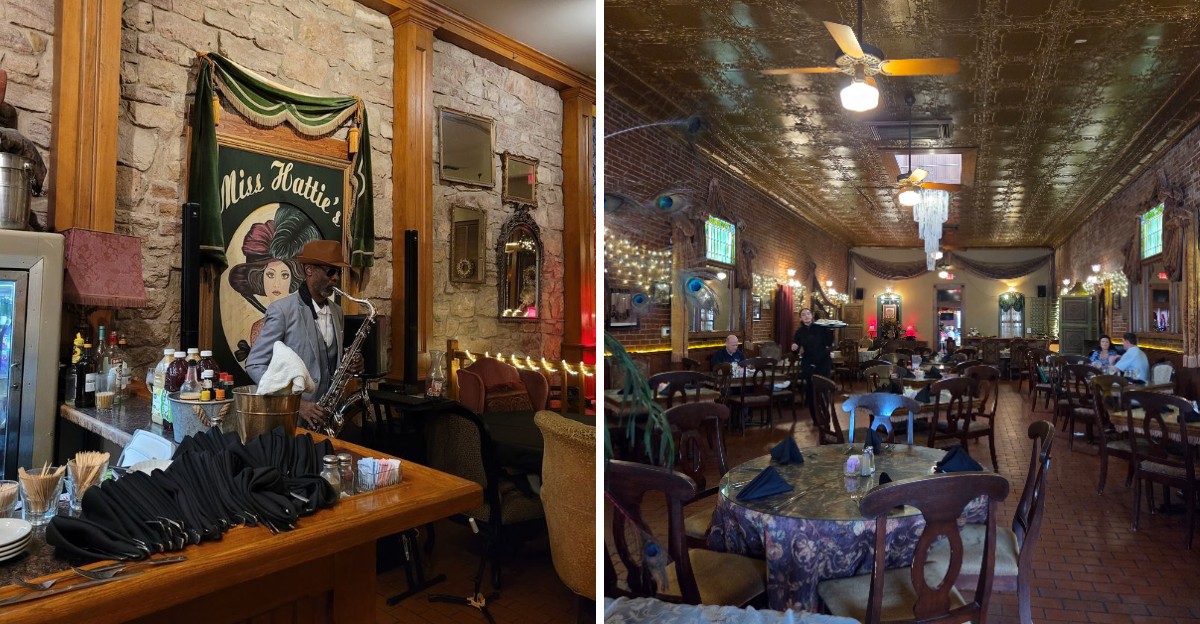
A restaurant inside an old bank. That is not something you see every day.
This Texas spot has taken a historic building and turned it into a dining experience that is as impressive as the food. The interior is unreal, with marble columns, towering ceilings, and original vaults that have been preserved and incorporated into the design.
You can dine beneath chandeliers that once lit up a banking hall, surrounded by architecture that belongs in a museum. The menu holds its own too, with dishes that match the grandeur of the setting.
It is the kind of place where you walk in and immediately pull out your phone to take a photo. But the food is just as memorable as the decor.
Worth a visit for the atmosphere alone. The meal is a bonus.
And the history is the cherry on top. A truly unique Texas dining destination.
A Bank Built In 1884 That Never Lost Its Bones
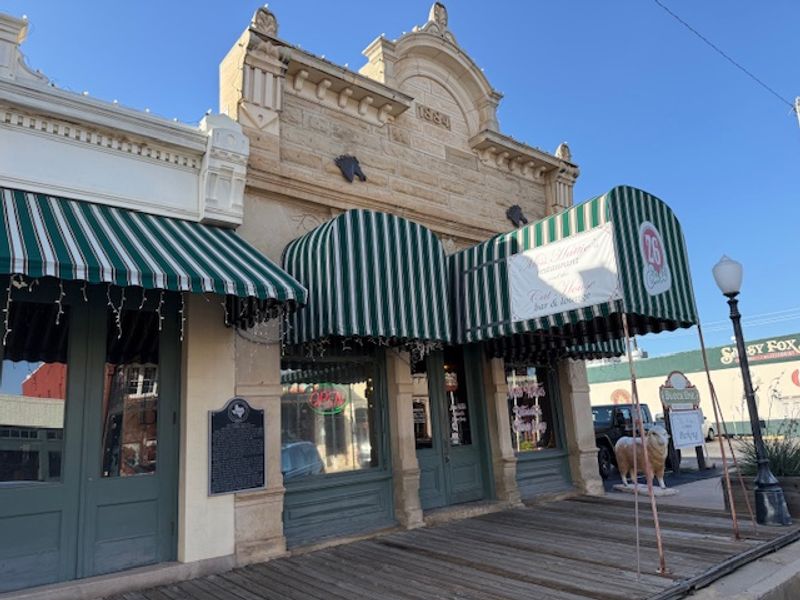
Picture cattle drives, wool money, and a frontier town trying to look permanent. That was San Angelo in 1884, the year this building went up as the San Angelo National Bank.
Architect Oscar Ruffini designed it, and his fingerprints are all over the proportions, the arched openings, and the quiet confidence of the facade. Ruffini worked across West Texas, and his courthouse and commercial designs still shape how several small towns look today.
What makes the structure genuinely rare is its paperwork. It stands as the only local landmark listed on both the State and National Registers of Historic Places, which is a serious distinction for a building that now serves burgers.
The facade has been carefully restored rather than modernized, so the exterior reads honestly. Nothing about it screams restaurant, which is part of the fun for people who stumble onto it while wandering downtown.
Preservation credit goes to Ken Gunter, a San Angelo native who started restoring aging structures along East Concho Avenue back in 1975. His goal was reviving the 1880s spirit of the block rather than scrubbing it away.
Photographers tend to linger outside before heading in. Morning light hits the stonework from one angle, evening light from another, and both flatter it.
Worth knowing: the bank function ended long ago, but the vault-era feel never quite left the building. Guests still sense it in the thickness of the walls and the weight of the doorways, which is a strange and pleasant thing to notice while reading a menu.
Original Tin Ceilings Overhead In The Main Dining Room
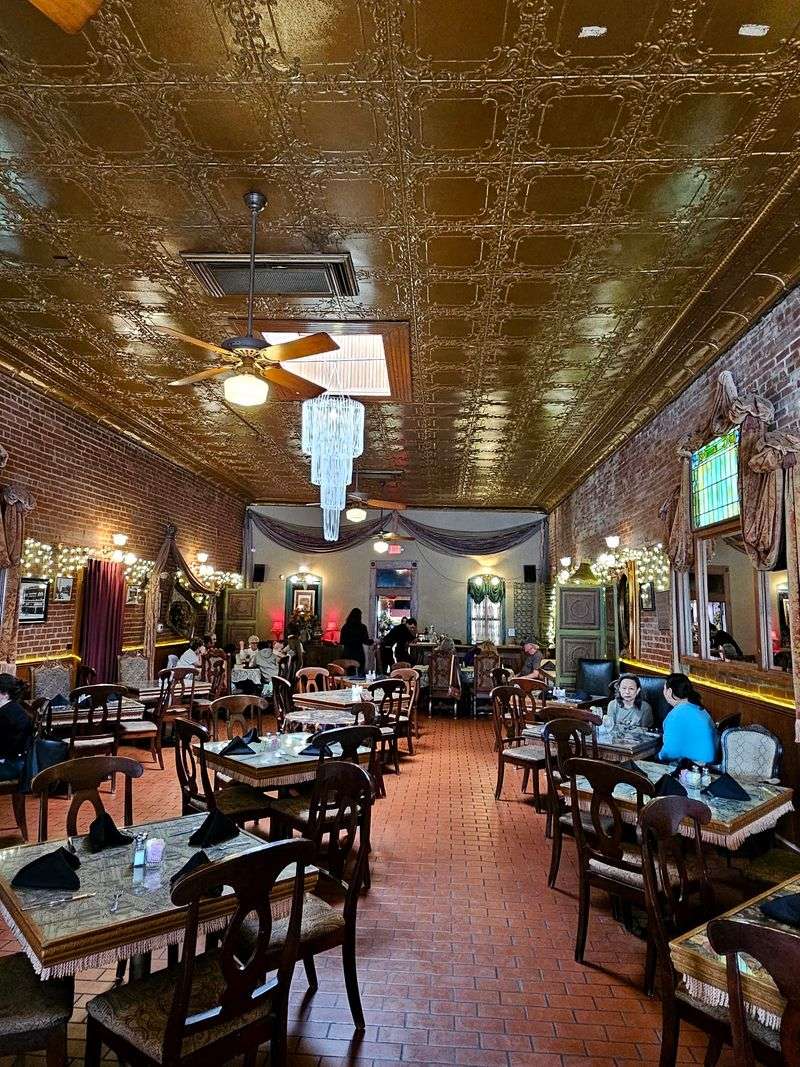
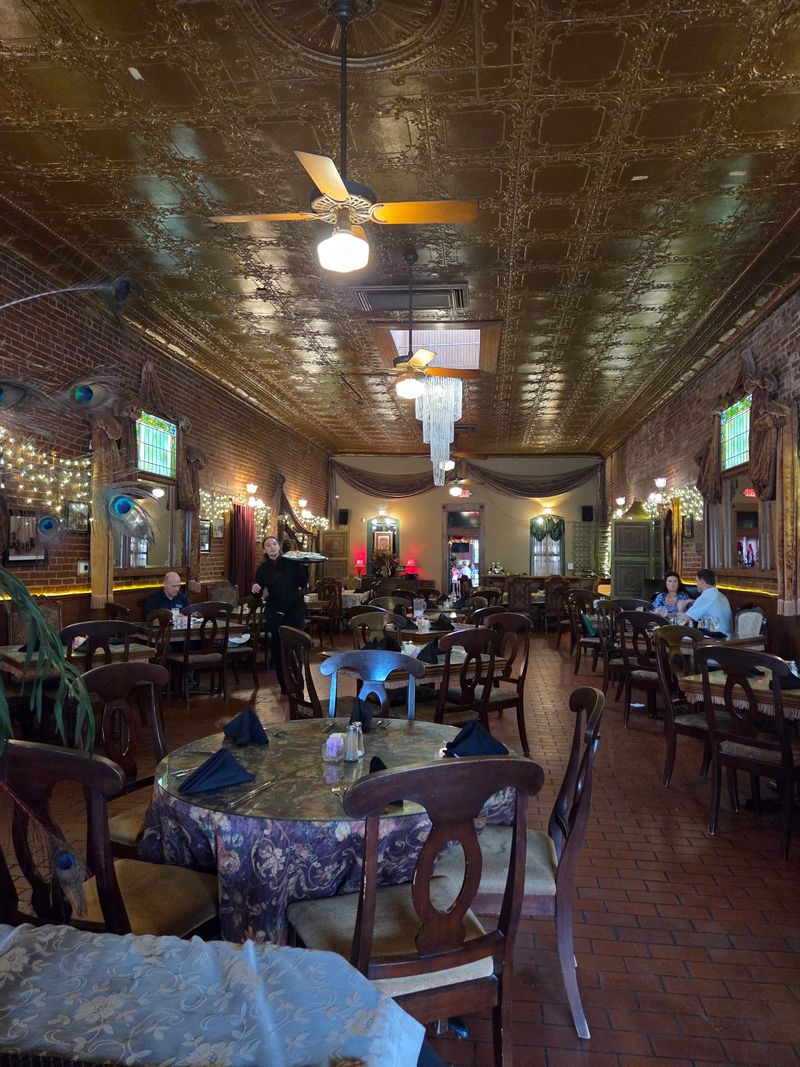
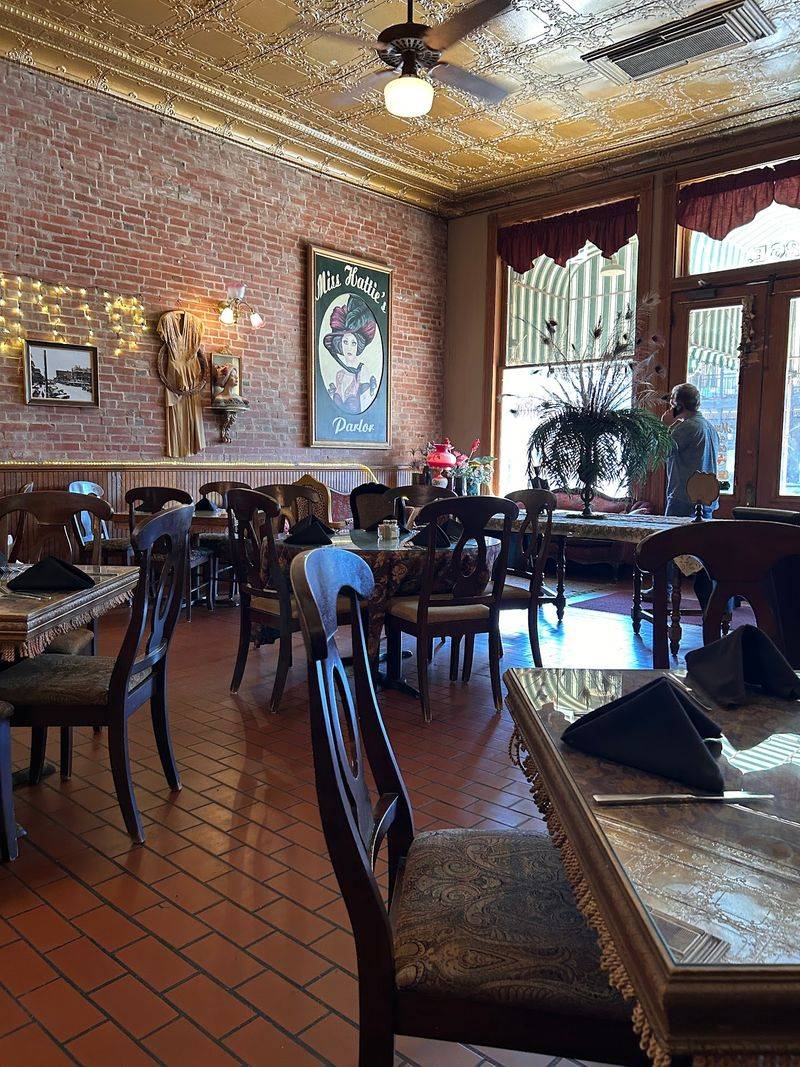
Look up. That instruction should honestly be printed on the menu, because the ceiling in the main dining room is one of the best details in the whole place.
Pressed tin panels stretch overhead in repeating patterns, original to the building rather than reproduction sheets bought to fake the look. The metal catches lamplight in a soft, slightly uneven way that modern materials never manage.
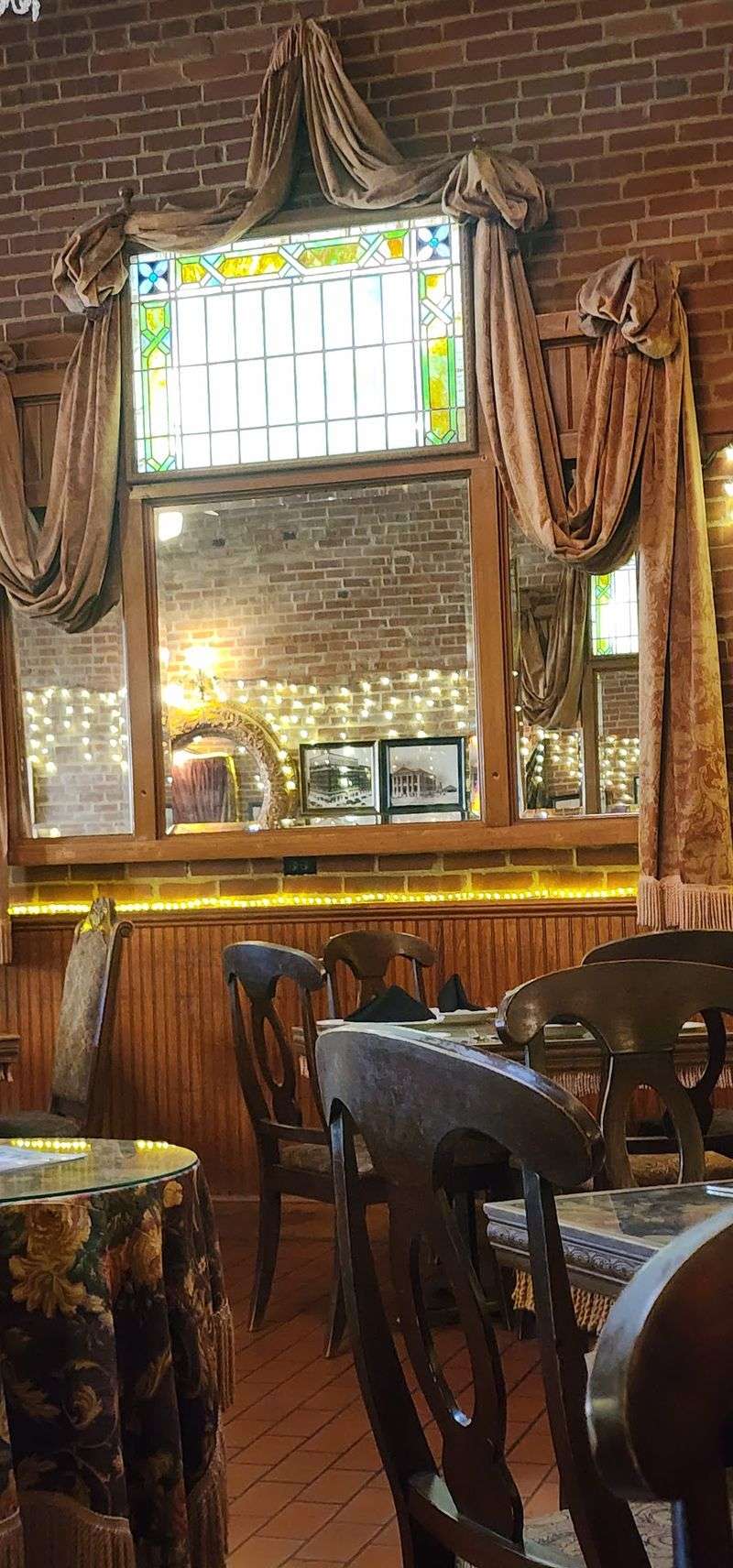
Paired with brick walls that have been left exposed, the room feels layered instead of decorated. There is texture everywhere, from mortar lines to old wood trim, and none of it matches perfectly, which is exactly why it works.
Small rooms branch off the main space, giving the floor plan a wandering quality. Some tables sit in cozy corners, others near windows that frame the street outside.
Decor leans Victorian and a little quirky. Lamps, framed pieces, heavy fabrics, and dark wood create a mood that suits a slow dinner far better than a rushed lunch.
One practical tip for anyone who cares about atmosphere: ask about seating preferences when arriving, since the rooms have noticeably different personalities. The lounge area reads more relaxed, while the main dining room feels more formal and historic.
Fun detail for design nerds. Tin ceilings became popular in the late 1800s because they were affordable, fireproof, and imitated fancy European plasterwork, meaning a frontier bank could look sophisticated without the sophisticated budget.
Over a century later, the gamble still pays off beautifully. Few restaurants in Texas offer a ceiling worth studying between courses.
Hand-Carved Rock Walls Around The Lounge
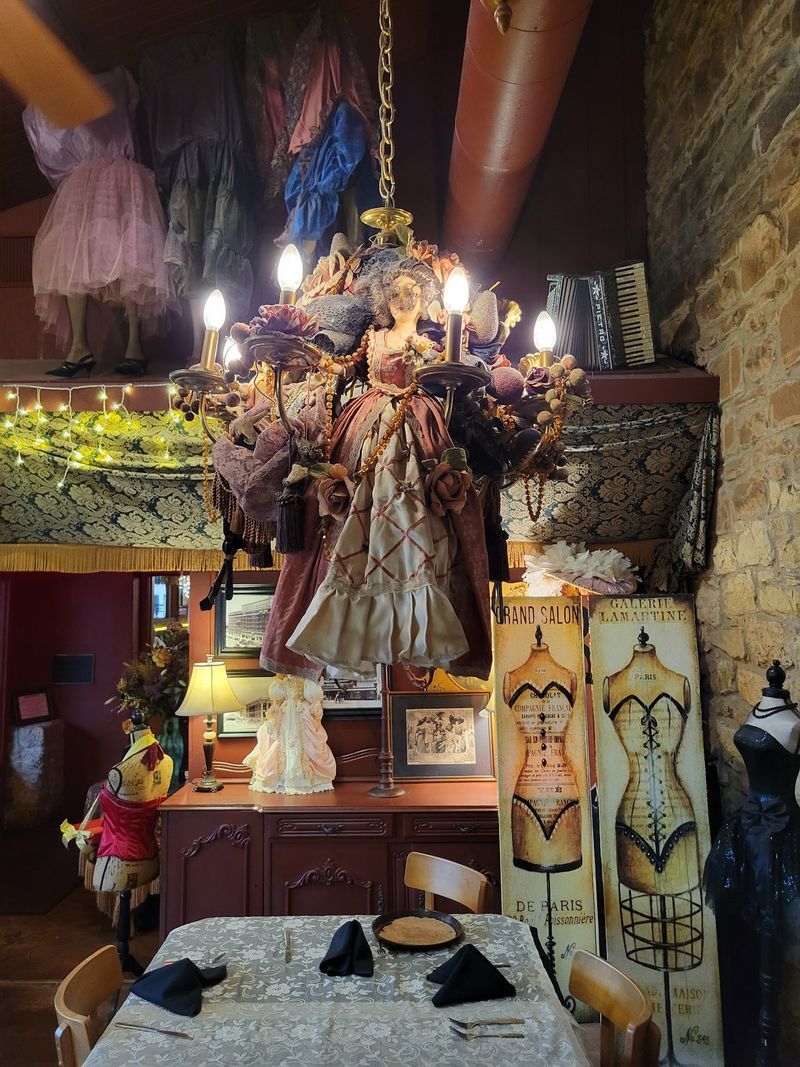
Some walls get painted. Others get carved by hand and left alone for 140 years.
The lounge and the areas beside it feature rock walls that were shaped by hand, and running fingers along them reveals tool marks that machines simply cannot copy. Stone in that condition tells the story of labor as much as design.
Lighting in the lounge stays low and amber, which makes the rough surfaces cast tiny shadows across themselves. The whole area feels like the oldest part of the building, and in spirit it probably is.
Seating here tends to be a favorite for smaller groups. Couples, pairs of travelers, and anyone who prefers conversation over ceremony usually gravitate toward these tables.
The contrast between rooms is part of what makes exploring the interior enjoyable. Brick and tin in one space, carved rock in another, all connected by doorways that were never meant to serve a restaurant.
Guests with mobility concerns should know there is a side entrance that makes access easier, a helpful detail in a building this old.
Stone like this also does something acoustic. Sound softens rather than bounces, so the lounge rarely gets that sharp clatter common in newer dining rooms with hard modern surfaces everywhere.
The restaurant sits at 26 E Concho Ave, San Angelo, TX 76903, right in the middle of the restored downtown stretch. Arriving a few minutes early leaves time to look around the different rooms before being seated, which is genuinely worth doing here.
The Rediscovered Tunnel Beneath The Floor
Here is the detail that makes people put down their forks. During renovations, an underground tunnel was rediscovered beneath the property.
Local legend explains it colorfully. The story goes that early ranchers, having finished their banking business, would slip discreetly through a passage rather than walk down the public street, with the bank president reportedly allowing gentlemen to pass behind the tellers.
Whether every version of the tale holds up perfectly is beside the point. The tunnel exists, and that alone makes the floor plan more interesting than any themed restaurant could ever fake.
Curious diners have a trick. Tapping on the floor near the center of the main dining room reportedly produces a hollow sound, which is a small, slightly mischievous thing to test while waiting on food.
Servers hear the question often, so asking about the history rarely feels out of place. Staff familiar with the building tend to share what they know about the restoration.
Something about eating above a hidden passage changes the mood of a meal. Conversation drifts toward guessing games, and even people who normally ignore history get pulled into it.
The tunnel also serves as a physical link between the bank building and the broader story of this block, which had a very different reputation in the early 1900s.
No tours run through it, so expectations should stay realistic. The value here is atmospheric rather than interactive, and honestly, a legend under the floorboards beats a plaque on the wall every single time.
Sorting Out The Restaurant Versus The Bordello Museum
Confusion happens constantly, so clearing it up early saves a wasted walk. The restaurant and the famous museum share a name and a street but are two separate places.
The historical bordello, now operating as a museum, sat a few doors down at 18.5 E. Concho, in the spot where Legend Jewelers stands today.
That establishment operated from roughly 1902 to 1952.
The restaurant, meanwhile, occupies the former bank building. Different address, different original purpose, same block of restored storefronts.
The tunnel is what ties the two stories together in local lore, which explains why so many visitors assume they are one attraction. Naming the restaurant after the same legend certainly did not reduce the mix-up.
Travelers interested in both should plan accordingly. Museum visits run on their own schedule, and the walk between the two takes about a minute.
Doing the museum first and dinner second works nicely, since the history makes the dining room feel richer afterward. Reversing the order also works, just with more walking on a full stomach.
East Concho Avenue rewards slow exploration either way. Restored facades, murals painted on side walls, and the painted sheep sculptures scattered around downtown give the area an unhurried, small-city charm.
The restaurant opened in 1998 under Ken and Brenda Gunter, decades after the original bordello closed. That gap matters for anyone trying to keep the timeline straight, because the restaurant is the newer chapter in a much older neighborhood story.
West Texas Comfort Food With A Menu Built On Classics
Nobody comes to West Texas hunting for foam or deconstructed anything. The kitchen here understands that completely.
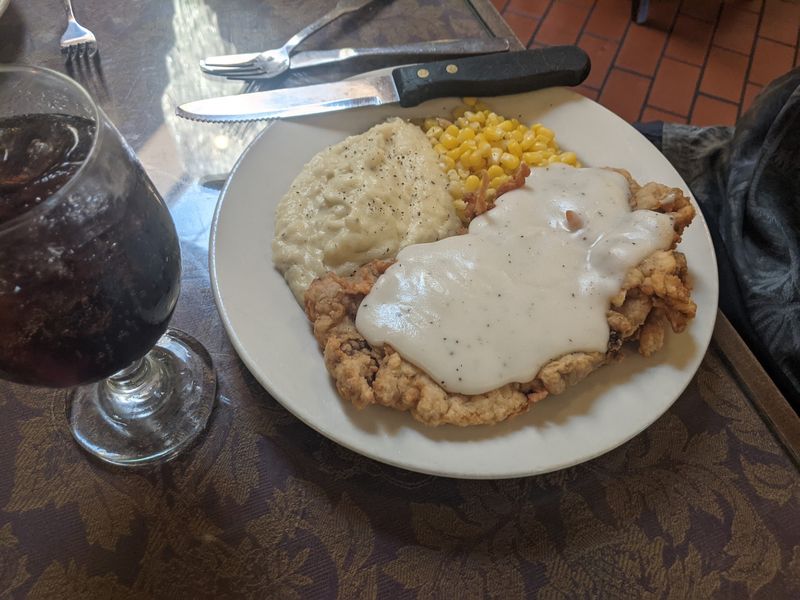
Classic American plates and regional favorites anchor the menu, with steaks, chicken, pasta, burgers, and chicken fried steak doing most of the heavy lifting. The chicken fried steak and burgers have earned recognition, which in this part of the state is not a small claim.
Diners talk often about the scalloped potatoes, meatloaf, crab cakes, tomato basil soup, and chicken and dumplings. Smoked ribeye shows up in conversation too.
Side choices matter more than people expect. Swapping a standard starch for scalloped potatoes seems to be the move most repeat guests recommend.
Salads get ordered frequently as well, particularly the house salad with chicken added. Dressing options include a raspberry vinaigrette that turns up in plenty of reviews.
Bread pudding closes things out for those with room left, and it has a loyal following among dessert orderers.
Like any long-running restaurant, experiences vary depending on the night and how busy the dining rooms get. Large parties should reserve ahead and confirm the headcount clearly, since coordinating big groups in a building with separate small rooms takes planning.
Lunch tends to move faster than weekend dinner service. Arriving earlier in the evening, closer to opening, generally means a calmer pace.
The comfort food angle fits the building perfectly. Heavy plates, warm gravy, and old brick walls belong together, and skipping the chicken fried steak here feels like missing the point entirely.
Live Saxophone On Friday And Saturday Nights
Live music inside a 1884 bank building sounds like something a movie set designer would invent. Except it actually happens here on weekends.
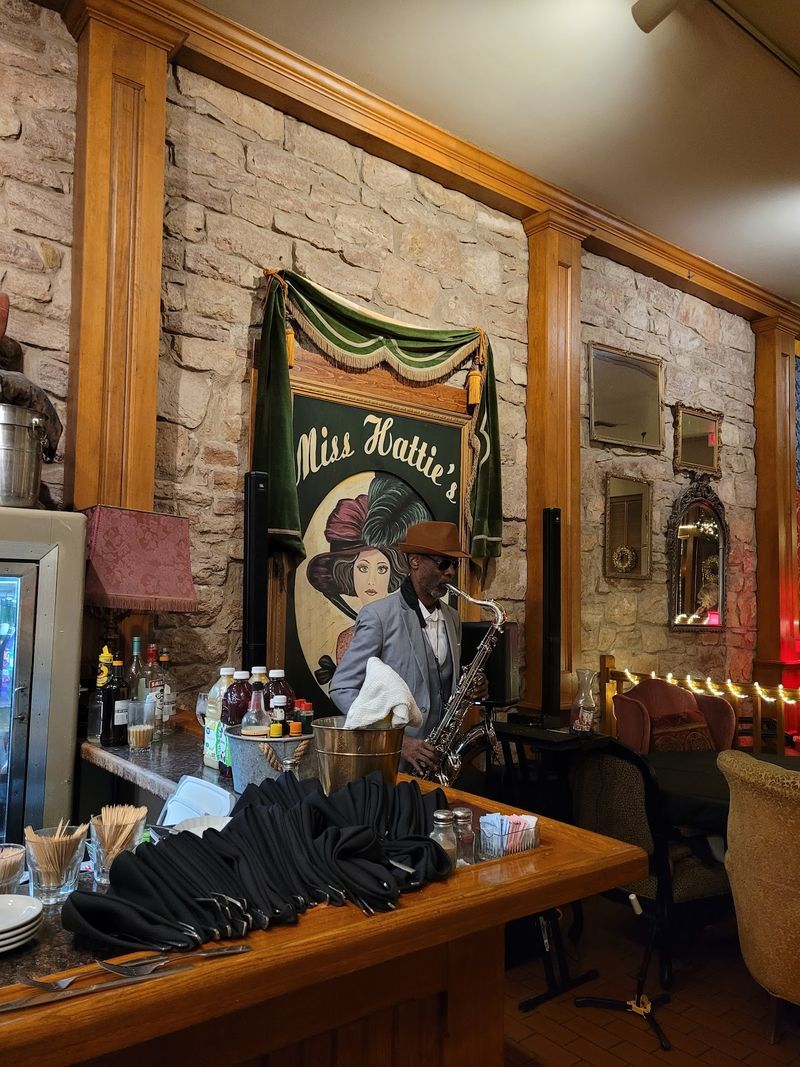
A saxophonist performs on Friday and Saturday nights, drifting through the rooms while dinner service runs. Guests mention it constantly, and for good reason.
Solo sax suits this interior remarkably well. Brick and stone soften the notes, and the sound carries between the connected rooms without overwhelming conversation at any one table.
Timing helps. Arriving during the later dinner window on a weekend increases the odds of catching a full set rather than the tail end of one.
The combination turns a straightforward meal into something closer to an evening out. Anniversaries, birthdays, and visiting relatives all get an easy upgrade with no extra planning required.
Weekend hours run until 10 pm on Friday and Saturday, which leaves room for a relaxed, unhurried dinner. Weeknights close at 9 pm, and the restaurant stays closed on Sundays.
Anyone sensitive to noise should keep in mind that music plus a full house makes the rooms livelier than a quiet weeknight visit. Those seeking calm should aim for Monday through Thursday instead.
Small touch worth appreciating: live music in a room this old creates an odd sense of time collapsing. The same walls that once heard ranchers discussing wool prices now catch saxophone notes over scalloped potatoes.
That kind of overlap is hard to manufacture. It only happens in buildings that were allowed to keep living instead of being torn down.
Planning A Visit Around Downtown San Angelo
A meal here deserves company, and downtown San Angelo provides plenty. The surrounding blocks were restored with the same stubborn care that saved the bank building.
Painted sheep sculptures stand around the area, a nod to the wool and mohair industry that built much of this city’s early wealth. Murals cover several side walls, making a post-dinner stroll worth the detour.
The Concho River runs nearby with walking paths, so an afternoon can easily stretch into evening without much planning. Parking downtown is generally manageable, especially outside peak dinner hours.
Hours are simple enough to remember. Doors open at 11 am Monday through Saturday, closing at 9 pm on weeknights and 10 pm on Friday and Saturday, with Sunday off entirely.
Reservations make sense for weekends, holidays, and any group larger than a handful of people. Confirming the party size directly and in writing, if possible, helps avoid seating mix-ups in a building with multiple small rooms.
Travelers passing through on a road trip should treat this as a destination stop rather than a quick bite. Rushing through a historic interior defeats the purpose.
The address to plug into a map is 26 E Concho Ave, San Angelo, TX 76903. Finding it on foot is easy once the block comes into view.
What sticks with visitors is rarely one single thing. The tin ceiling, the carved stone, the hollow floor, the saxophone on a Friday, and a plate of comfort food add up to a genuinely unusual Texas evening.
