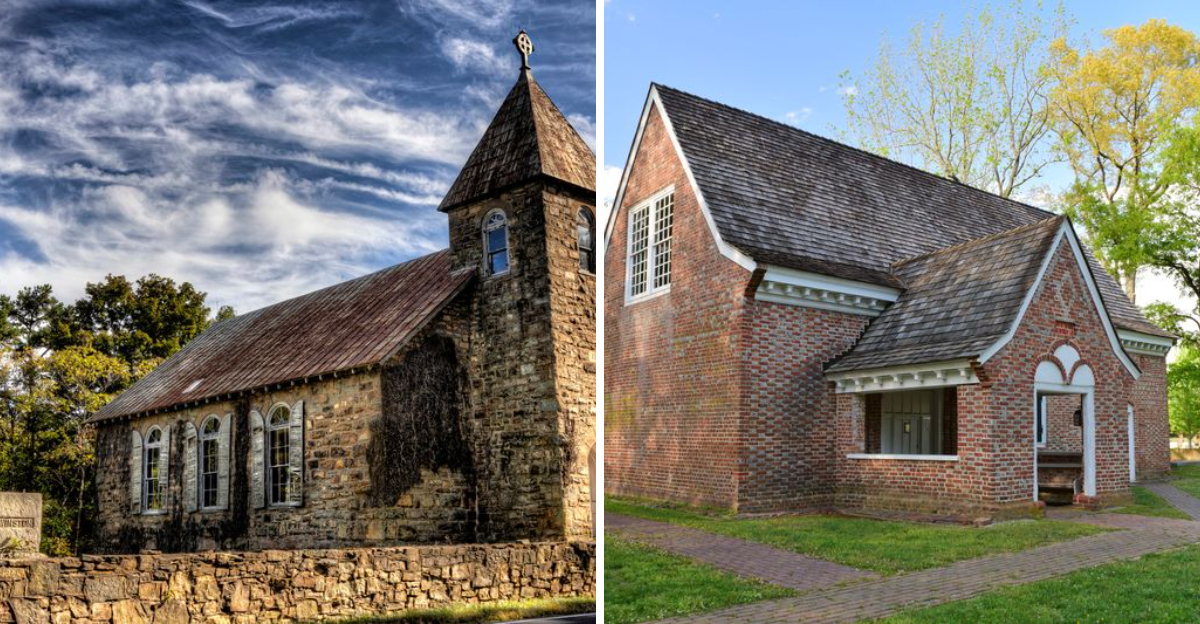
Virginia holds countless stories within its borders, and some of the most captivating ones are told through the silent walls of abandoned churches. These structures, once vibrant centers of worship and community, now stand as hauntingly beautiful reminders of the past.
Their weathered stones, crumbling bricks, and overgrown grounds speak to a time when faith and architecture intertwined to create spaces of profound meaning.
What makes these abandoned churches so special is their remarkable architecture. From Colonial-era brickwork to Celtic-inspired stone chapels, each building showcases unique design elements that have withstood decades, sometimes centuries, of neglect.
Walking among these ruins or viewing them from afar offers a rare glimpse into Virginia’s rich religious and architectural heritage, making them fascinating destinations for history lovers and architecture enthusiasts alike.
1. Winston Memorial Chapel
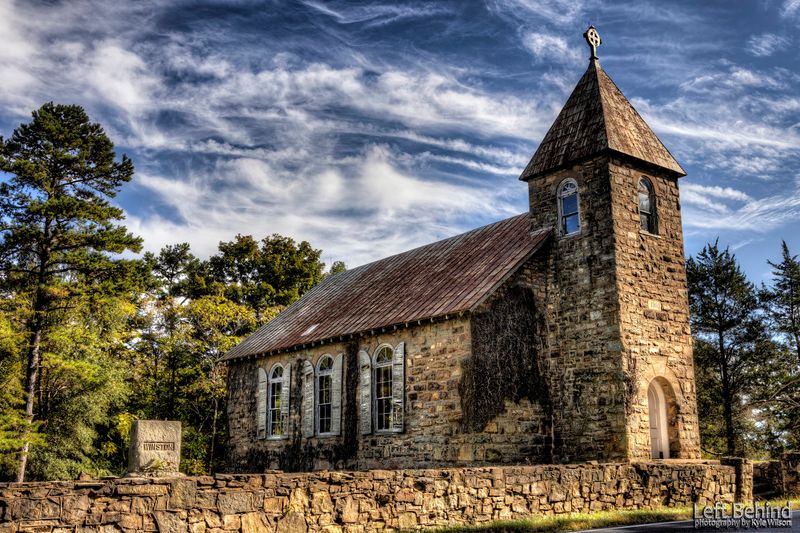
A striking stone structure rises unexpectedly along Zachary Taylor Highway, catching the eye of every traveler who passes by. Winston Memorial Chapel, built with Celtic-inspired design elements, feels almost out of place in its modern roadside setting.
The chapel’s weathered stone walls and intricate details transport visitors to another era, even though it sits beside a busy thoroughfare in Virginia.
The building’s construction showcases remarkable craftsmanship that has endured for over a century. Each stone was carefully placed to create arched doorways, decorative windows, and a silhouette that echoes ancient European sanctuaries.
The Celtic influence is evident in every corner, from the proportions of the structure to the way light would have once filtered through its windows.
Unfortunately, the property is privately owned, which means visitors can only admire the chapel from the road. Despite this limitation, the view is still breathtaking.
The stone exterior has weathered beautifully, with moss and lichen adding natural character to the aged surface.
Many of the architectural details remain intact, a testament to the quality of the original construction. The chapel stands as a reminder of early twentieth-century religious architecture and the communities that once gathered within its walls.
Its preservation, even in abandonment, speaks to its cultural significance.
For anyone interested in historic architecture or roadside discoveries, this chapel is worth a stop. The address is 21329 Zachary Taylor Highway, making it easy to locate.
Just remember to respect the private property boundaries while taking in this remarkable piece of Virginia’s architectural past from a distance.
2. Old Brick Church at Bacon’s Castle
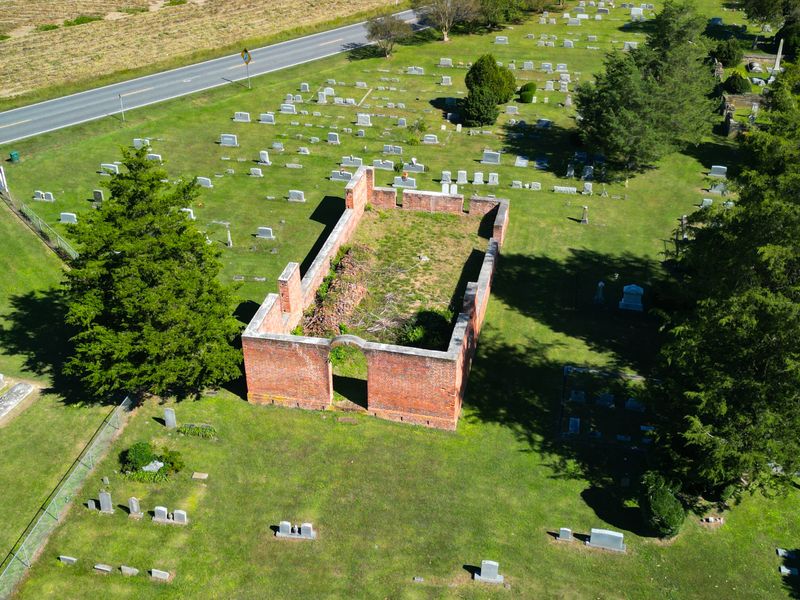
Flames consumed much of the Southwark Parish church back in the nineteenth century, leaving behind only skeletal brick walls. What remains today in Surry, Virginia, tells a powerful story of resilience and historical significance.
The ruins showcase fascinating brickwork patterns that mix irregular Flemish and English bond techniques, creating a textured surface that architects and historians find endlessly intriguing.
Construction of this church took place during the Colonial period, and the building served its community for over a century before disaster struck. The fire wasn’t the only challenge these walls would face.
A powerful hurricane swept through the area much later, causing additional damage to the already fragile structure.
Preservation efforts have stabilized the remaining walls, ensuring they continue to stand for future generations. The brick patterns are particularly noteworthy because they represent construction methods common in Colonial Virginia.
Each brick was handmade and carefully laid, creating bonds that have held together through fire, storms, and centuries of weather.
Walking among these ruins feels like stepping into a history book. The walls rise dramatically against the Virginia sky, their irregular patterns creating shadows and textures that change throughout the day.
You can almost imagine the congregation that once gathered here, the hymns that echoed off these brick surfaces, and the community life that centered around this building.
The site is located in Surry, Virginia, and remains accessible to visitors who want to experience this piece of architectural history. The stabilized ruins offer a rare opportunity to study Colonial brickwork up close while contemplating the passage of time and the enduring nature of well-crafted construction.
3. Historic Polegreen Church Foundation
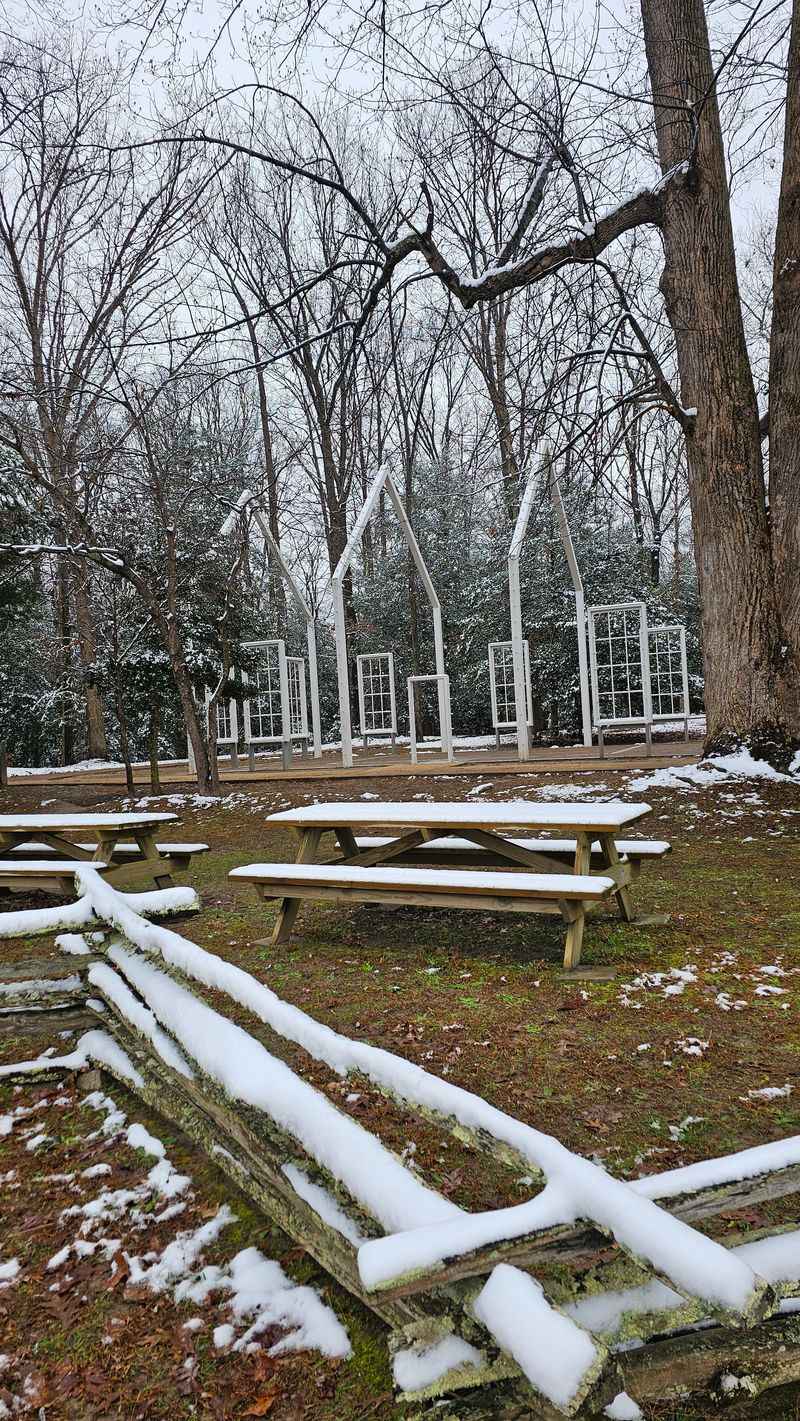
White skeletal beams rise dramatically from the ground at 6411 Heatherwood Drive, creating a striking modern monument to religious freedom. Unlike traditional ruins, this site features a contemporary architectural interpretation that honors the original church’s legacy.
The structure consists of white steel beams arranged to suggest the outline of the historic building that once stood here.
Religious dissent played a crucial role in Virginia’s history, and this location became a focal point for those seeking freedom of worship. The original church served as a meeting place for people who challenged established religious norms during the Colonial era.
Their courage and conviction left a lasting impact on the region’s spiritual landscape.
The modern installation creates a powerful visual statement. Against blue skies or gray clouds, the white beams stand out boldly, inviting contemplation and photography.
The design allows visitors to walk through the space, imagining where pews once sat and where worshippers once gathered.
What makes this site particularly interesting is how it blends history with contemporary design. Rather than attempting to recreate the original building, the architects chose to suggest its presence through minimalist structural elements.
This approach creates a haunting beauty that speaks to both past and present.
The foundation operates as a non-profit organization dedicated to preserving this important piece of Virginia’s religious heritage. Visitors are welcome to explore the grounds and learn about the site’s historical significance.
The skeletal structure has become an iconic landmark, representing both architectural innovation and respect for historical memory in equal measure.
4. Hungars Church Ruins
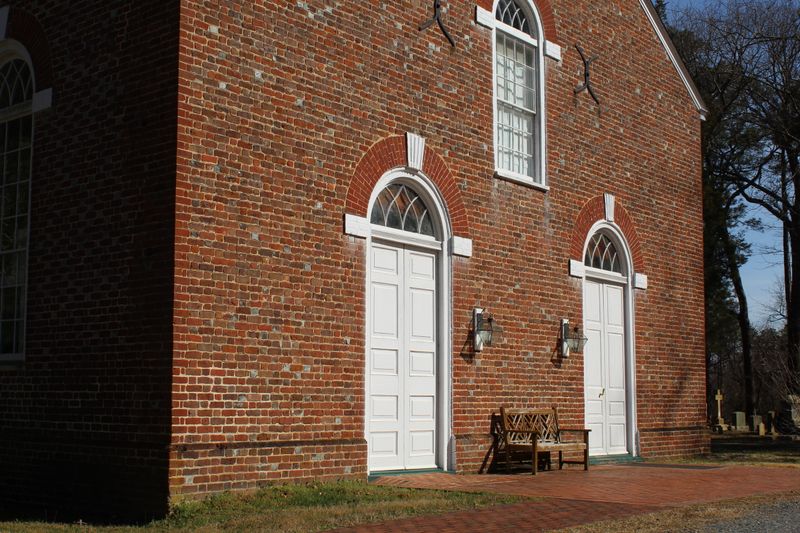
Down in the lower Eastern Shore of Virginia stands a remarkable example of Colonial religious architecture. Hungars Church, dating back to the eighteenth century, has survived in relatively good condition considering its age and abandonment.
The brick walls still rise substantially, and many architectural features remain visible, offering a window into Colonial construction techniques and design sensibilities.
The Eastern Shore possesses a unique character, somewhat isolated from mainland Virginia by the Chesapeake Bay. This geographic separation helped preserve many historic structures, including these church ruins.
The building’s proportions reflect the Georgian architectural style popular during the Colonial period, with symmetrical design and carefully proportioned windows and doors.
Brick was the material of choice for permanent structures in Colonial Virginia, and Hungars Church showcases the quality of eighteenth-century masonry. The walls demonstrate excellent craftsmanship, with tight mortar joints and carefully selected bricks.
Even after centuries of exposure to coastal weather, the structure maintains much of its integrity.
Visitors to the site can observe details like window openings, doorways, and the overall floor plan of the original building. These elements reveal how Colonial congregations organized their worship spaces and the importance they placed on creating substantial, lasting structures.
The picturesque setting adds to the experience, with the ruins surrounded by the natural beauty of the Eastern Shore.
For anyone exploring Virginia’s Eastern Shore, these ruins offer a worthwhile stop. They represent an important chapter in the region’s religious and architectural history.
The site’s relative preservation makes it particularly valuable for understanding Colonial church design and construction methods that have largely disappeared from the modern landscape.
5. Ware Neck Meeting House
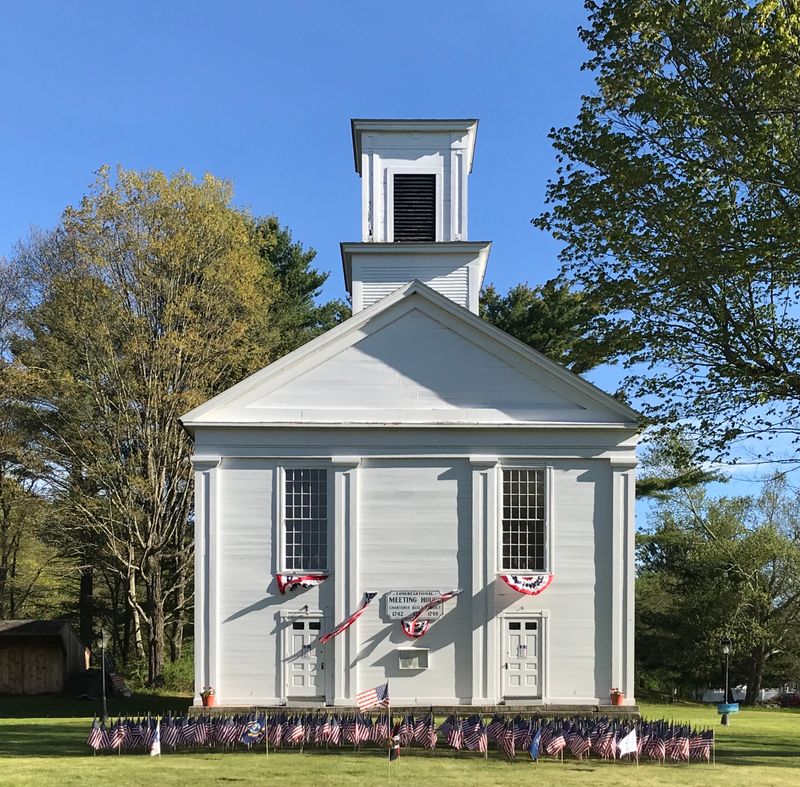
Simplicity defines the architectural character of this early American building, where unadorned walls and straightforward design speak to a different approach to worship spaces. Ware Neck Meeting House represents a tradition of plain, functional architecture that prioritized gathering over grandeur.
The structure’s honest construction and lack of decorative elements make it a fascinating study in contrast to more ornate religious buildings.
Some debate surrounds the building’s current status, as preservation groups have shown interest in restoration efforts. Regardless of its exact classification, the meeting house stands as an important example of vernacular architecture from early American history.
Its simple rectangular form and basic construction methods reflect the practical needs and values of the communities that built it.
The building’s unadorned style connects to religious movements that emphasized spiritual simplicity over material display. This philosophy extended to architecture, resulting in meeting houses that focused on function rather than decoration.
Plain walls, simple windows, and straightforward roof lines characterize this architectural approach.
Walking around the structure, you notice the quality of the basic carpentry and the thoughtful proportions despite the lack of ornamentation. The builders understood how to create a space that felt appropriate for gathering without relying on decorative elements.
This restraint creates its own aesthetic appeal, one that values honesty and directness.
The meeting house’s rich history adds layers of meaning to its simple appearance. Generations of worshippers gathered here, finding community and spiritual connection within these plain walls.
Today, the building stands as a reminder that architectural significance doesn’t always require elaborate decoration, and that sometimes the most powerful spaces are the simplest ones.
6. Pohick Church
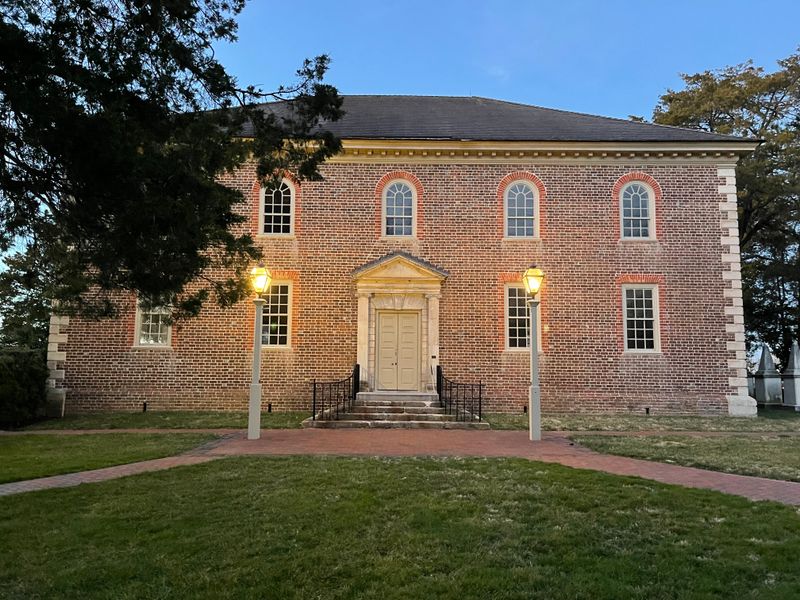
War leaves scars on buildings just as it does on people, and Pohick Church at 9301 Richmond Highway bears witness to the destruction wrought during the Civil War. The original structure suffered extensive damage when conflict swept through Virginia, leaving behind ruins that speak to both loss and survival.
While restoration eventually returned the main church building to use, the site retains significant architectural and historical interest.
The church’s Colonial origins give it particular importance in Virginia’s architectural heritage. Built during a period when craftsmanship and permanence were highly valued, the structure showcased the best construction techniques of its era.
The Civil War damage revealed the building’s solid construction even as it destroyed much of the interior and damaged the exterior walls.
Restoration efforts faced the challenge of honoring the original design while addressing extensive war damage. The work preserved key architectural elements and returned the building to functionality, but traces of its tumultuous history remain visible.
Some surrounding structures were never fully restored, leaving ruins that complement the rebuilt main church.
Walking the grounds, you can sense the layers of history embedded in this location. The restored sections demonstrate Colonial architectural principles, while the remaining ruins remind visitors of the violent conflict that nearly destroyed everything.
This combination creates a powerful historical experience that goes beyond simple preservation.
The church’s connection to significant historical figures adds another dimension to its story. The building witnessed major events in Virginia’s development and played a role in the lives of people who shaped American history.
Today, it stands as both a functioning religious space and a monument to resilience, architectural heritage, and the complex history of the Commonwealth.
7. Yeocomico Church
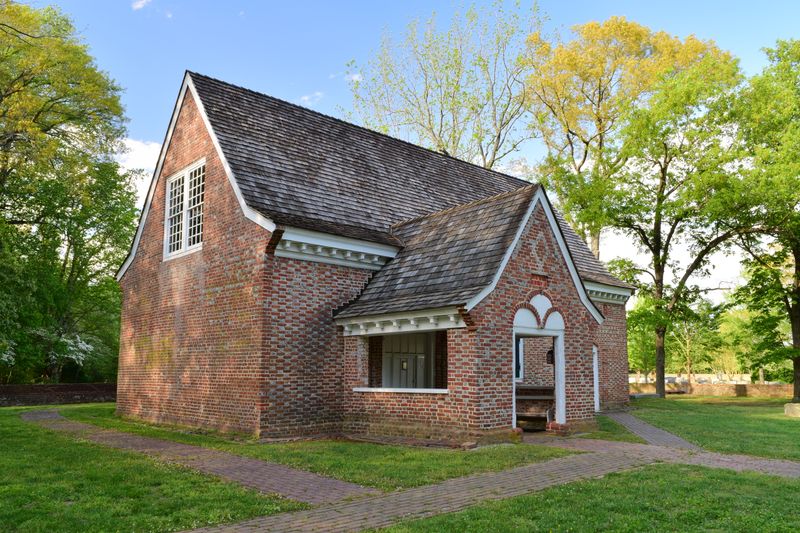
Architectural historians get excited about this particular church because of its distinctive floor plan. Yeocomico Church features a T-shaped or cross-shaped design that sets it apart from typical Colonial religious buildings.
This unique layout created interesting interior spaces and gave the building a distinctive appearance that still draws attention today.
The main church building remains active, serving its congregation as it has for generations. However, the site’s overall atmosphere and the presence of surrounding ruins or older structural elements give it the feeling of a place suspended between past and present.
The well-preserved Colonial architecture makes it one of Virginia’s most significant religious structures.
The cross-shaped plan served both symbolic and practical purposes. Symbolically, it reinforced the Christian message central to the building’s purpose.
Practically, it created additional space for congregation members while maintaining good sightlines to the pulpit. This design required sophisticated construction techniques to support the intersecting roof lines and walls.
Examining the building’s exterior reveals the careful craftsmanship that went into its construction. The brick work demonstrates high-quality masonry, and the proportions of the various sections show thoughtful architectural planning.
The distinctive shape creates interesting shadows and visual perspectives from different angles.
For visitors interested in Colonial church architecture, this site offers exceptional examples of period construction and design. The active status of the main building means it has been maintained, allowing people to see how these structures looked when first completed.
The combination of preservation, unique design, and historical significance makes Yeocomico Church a standout among Virginia’s religious architecture, offering insights into both the spiritual and practical considerations that shaped Colonial building practices.
8. St. Paul’s Episcopal Church
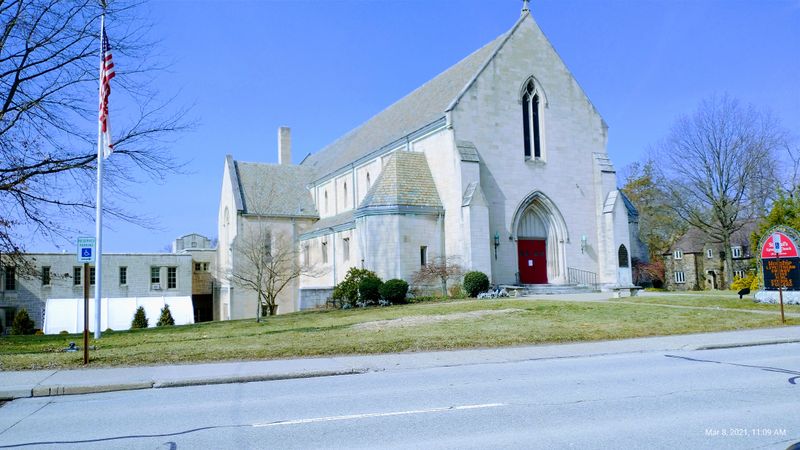
A cannonball lodged in the wall tells an extraordinary story at 201 St Pauls Boulevard. This active Episcopal church carries physical evidence of Revolutionary War violence, creating a tangible connection to one of the most significant periods in American history.
The embedded projectile serves as a permanent reminder of the conflict that shaped the nation and the resilience of structures that survived it.
The church building itself represents important architectural heritage from Colonial and early American periods. Its design follows traditional Episcopal church layouts, with careful attention to proportion and detail.
The structure has been maintained over centuries, preserving both its architectural integrity and its historical significance.
What makes this church particularly compelling is how it embodies survival and continuity. While many buildings were destroyed during the Revolutionary War, this one endured.
The cannonball in the wall isn’t just a curiosity but a testament to the building’s strength and the determination of the community to preserve their place of worship despite surrounding chaos.
The interior and exterior both showcase elements typical of Episcopal church architecture from this period. High ceilings, symmetrical design, and quality materials characterize the construction.
These features have been carefully maintained, allowing modern visitors to experience the space much as congregations did centuries ago.
Though the church remains active rather than abandoned, its historical architecture and the dramatic evidence of Revolutionary War conflict make it an essential part of Virginia’s architectural story. The building bridges past and present, serving both as a functioning religious space and a living museum of American history.
The famous cannonball draws visitors from around the world, all wanting to see this remarkable piece of history embedded in sacred walls.
9. Fleetwood Church
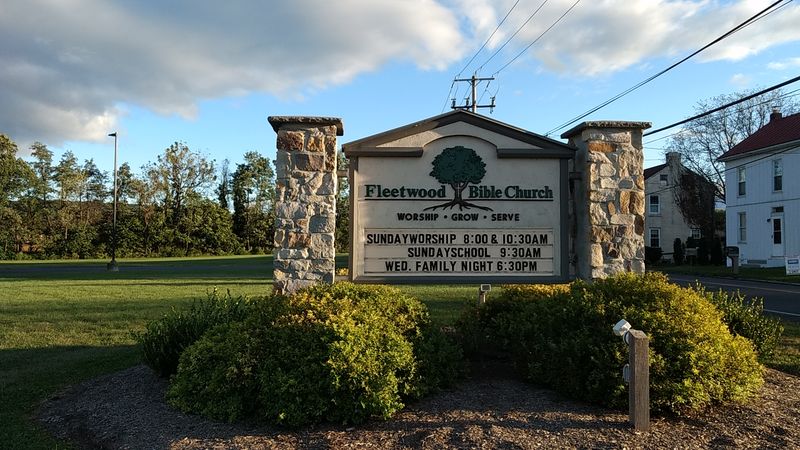
Decades of neglect had taken their toll on this structure along Brandy Road before one person decided to make a difference. Fleetwood Church sat abandoned and deteriorating, its architectural significance fading along with its physical presence.
Then a passionate individual saw potential where others saw only ruin, launching a preservation effort that would become a personal mission.
The church’s original construction reflected the architectural styles and building techniques of its era. Simple but solid, the building served its community faithfully before circumstances led to its abandonment.
Weather, vandalism, and time worked together to damage the structure, threatening to erase it completely from the landscape.
What transforms this from just another abandoned church into a compelling story is the human element of preservation. One person’s dedication demonstrates how individual action can save important pieces of architectural heritage.
The preservation work involves careful research into original construction methods, sourcing appropriate materials, and learning specialized skills to properly restore historic structures.
The building’s location along Brandy Road places it in an area rich with Virginia history. The surrounding region has witnessed significant events, and structures like Fleetwood Church serve as physical links to past communities and ways of life.
Each architectural detail tells part of the larger story of rural Virginia and the role churches played in community life.
Preservation efforts continue to unfold, with progress depending on available resources and the ongoing commitment of those involved. The project represents more than just saving a building.
It’s about honoring the people who built it, the communities that gathered there, and the architectural traditions they represented. Fleetwood Church stands as proof that abandoned doesn’t have to mean forgotten.
10. Ruins of St. John’s Episcopal Church
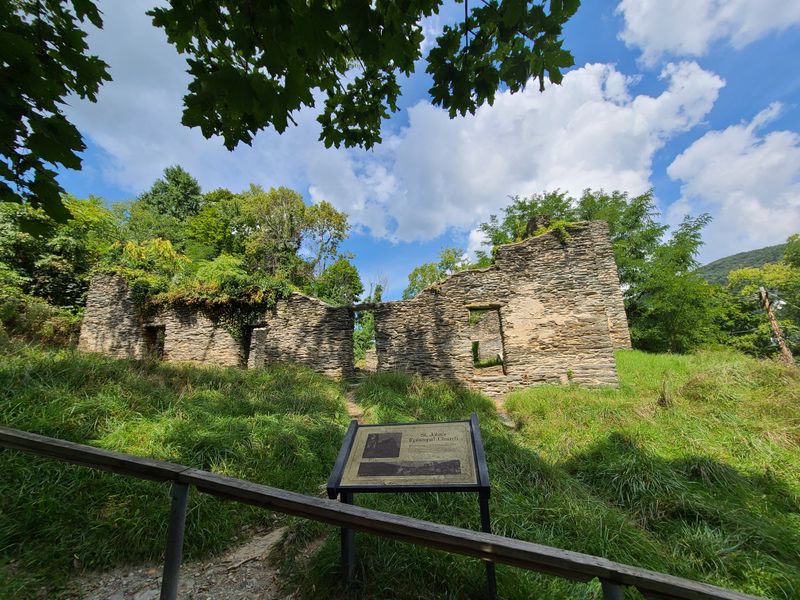
Hikers along the Appalachian Scenic Trail encounter an unexpected sight when they come upon these striking church ruins. St. John’s Episcopal Church stands as a picturesque reminder of the past, its weathered walls rising among the natural beauty of the trail corridor.
Though technically located just over the Virginia border, the ruins connect closely to Virginia’s architectural and religious heritage.
The location adds dramatic atmosphere to the ruins. Surrounded by mountains and forests, the remains of the church create a powerful contrast between human construction and natural surroundings.
The setting enhances the sense of stepping back in time, as if the modern world has fallen away to reveal a scene from a different era.
Architectural elements still visible in the ruins reveal the building’s original character. Stone walls, window openings, and fragments of the roof structure show how the church once appeared.
The construction quality is evident even in decay, with stonework that has withstood decades of exposure to mountain weather.
For trail hikers, the ruins provide a welcome break and a chance to reflect on the communities that once thrived in these now-remote areas. Churches like this served as vital centers for scattered rural populations, bringing people together for worship and social connection.
The building’s substantial construction reflects the importance these communities placed on their religious institutions.
The ruins’ accessibility via the Appalachian Trail makes them a popular stop for hikers interested in history and architecture. The combination of natural beauty, historical significance, and architectural interest creates a memorable experience.
Standing among these walls, with views of mountains and forests stretching in all directions, visitors gain perspective on both the permanence and impermanence of human endeavors in the landscape.
Dear Reader: This page may contain affiliate links which may earn a commission if you click through and make a purchase. Our independent journalism is not influenced by any advertiser or commercial initiative unless it is clearly marked as sponsored content. As travel products change, please be sure to reconfirm all details and stay up to date with current events to ensure a safe and successful trip.
