If you are up for a slow, satisfying wander through Illinois, let me map a route that mixes skyline drama with quiet, brainy design. You can hop from Chicago’s steel and glass to prairie calm and small town grandeur without rushing the moments in between.
The contrast is the point, that shift from vertical to wide open that resets how you see space. I want to plan the kind of day where you park, look up, and actually feel the ideas baked into brick, stone, and concrete.
It is less about checking sites off a list and more about letting places explain themselves. If that sounds good, grab the playlist and let’s point the car toward a few places that genuinely live up to the hype.
1. Willis Tower
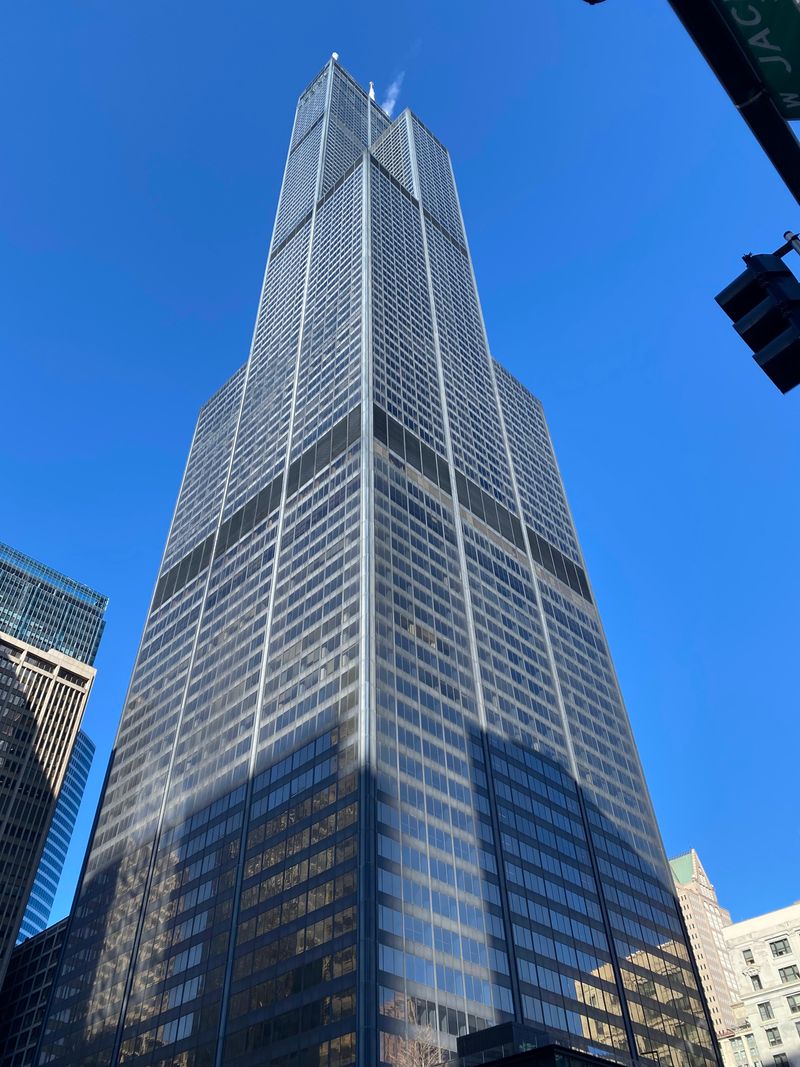
How about starting by craning your neck at Willis Tower, right at 233 S Wacker Dr, Chicago, Illinois? You feel the height before you even think about it, like your body knows you are small and the city is huge.
The black ribs and stacked setbacks make a clean, no-nonsense silhouette that still owns the skyline.
Even after all this time, the tower looks like a decision.
Step inside and the lobby tones everything down to calm materials and steady light, which is exactly what your nerves want before you ride up. The elevators feel like they accelerate your heartbeat on purpose.
Up top, the Skydeck turns the city into a grid of rivers, roofs, and threads of traffic. Do you step onto the glass or watch from a safe distance?
I like standing back first, just to get my bearings against the horizon. Then the glass ledge becomes less scary and more curious.
From that edge, you see Chicago flex in every direction and it makes Illinois feel impossibly broad.
You spot the lake, the rail yards, the neat blocks that stack their own stories.
Architecturally, it is a lesson in how structure can be sculptural without showing off. The bundled tubes read like music bars, steady and rhythmic.
When you come back down, the plaza’s wind wakes you up again. That blast of air sends us walking with a little swagger toward whatever comes next.
2. Robie House
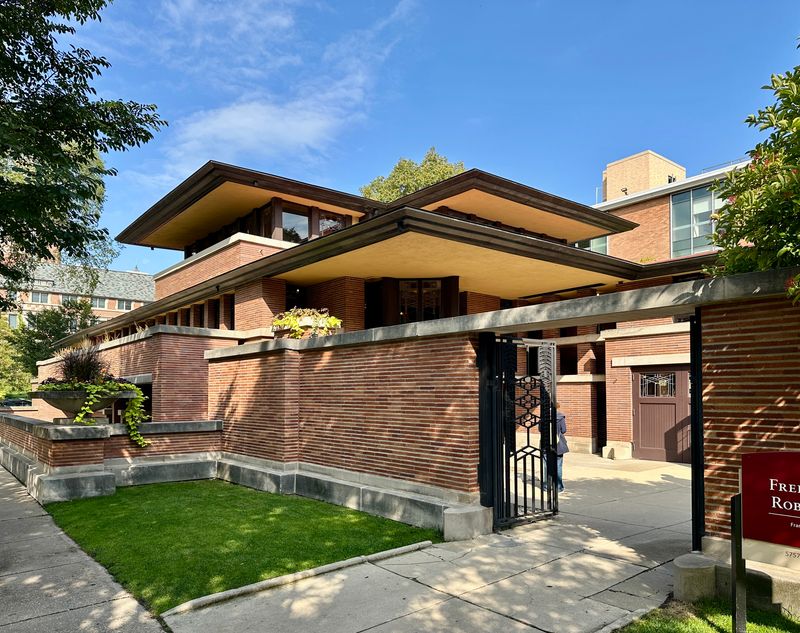
Swing over to Robie House at 5757 S Woodlawn Ave, Chicago, Illinois, because those horizontal lines will reset your eyes. The place sits low, confident, and stubbornly calm on the block.
Wright pushes the roof planes way out like they are reaching for a horizon you cannot see.
The brick bands feel almost musical, steady beats across the facade.
Inside, the rooms nudge you to move in slow arcs instead of straight lines. Light sneaks in sideways and turns wood into honey.
You notice how every chair, window, and mantle seems to conspire toward one idea. Nothing shouts, but everything insists.
The windows are not just decoration, they’re choreography for the sun. Patterns land softly on floors and drift as the day turns.
Walking along the terrace, you can feel the neighborhood hum without losing the house’s hush.
It is private and open at the same time, which is a neat trick.
From the street, those big eaves read like a protective brim on a hat. They shade the walls and flatten the whole profile into one gesture.
Every time I visit, I notice new alignments in the brick joints or a sly reveal at a corner. You could spend an hour and still miss something small but important.
When you leave, you will want to measure your next porch against it. That is the Robie effect, quietly persuasive and hard to shake.
3. Bahá?í House Of Worship
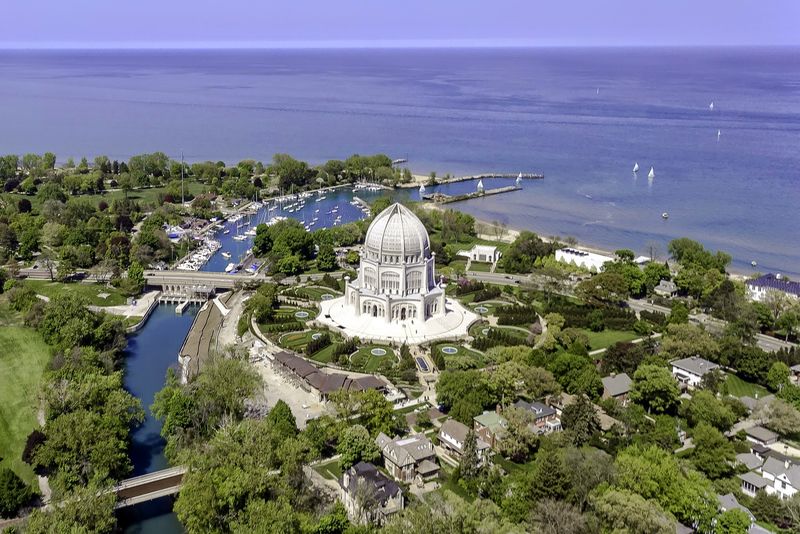
You up for a little serenity by the lake at the Bahá?í House of Worship, 100 Linden Ave, Wilmette, Illinois? The dome looks like lace turned into stone, and the closer you get, the more the patterns pull you in.
The white surface catches light in a way that feels almost weightless.
It makes the sky look like part of the building.
Walk the paths first and let the gardens drop your shoulders. The sound here gets soft without trying too hard.
Inside, the quiet is generous and not at all fussy. You can sit in the glow and feel the volume float above you.
Those carvings along the exterior move like a slow current around the drum of the dome. Details, but not decoration for decoration’s sake.
I like circling the base and watching patterns repeat with tiny shifts. You realize the design builds meaning by echo.
Architecturally, it is monumental without the usual heaviness.
The structure reads like it was grown rather than stacked.
Even the entry sequence is gentle, more invitation than threshold. You cross in and it feels like air is doing the work.
Back outside, the lake wind reminds you where you are on the map of Illinois. You get a last look at the tracery and suddenly the car seems too loud.
Keep that calm in your pockets as you roll on. Next stop can be a little noisier, but not yet.
4. Rookery Building
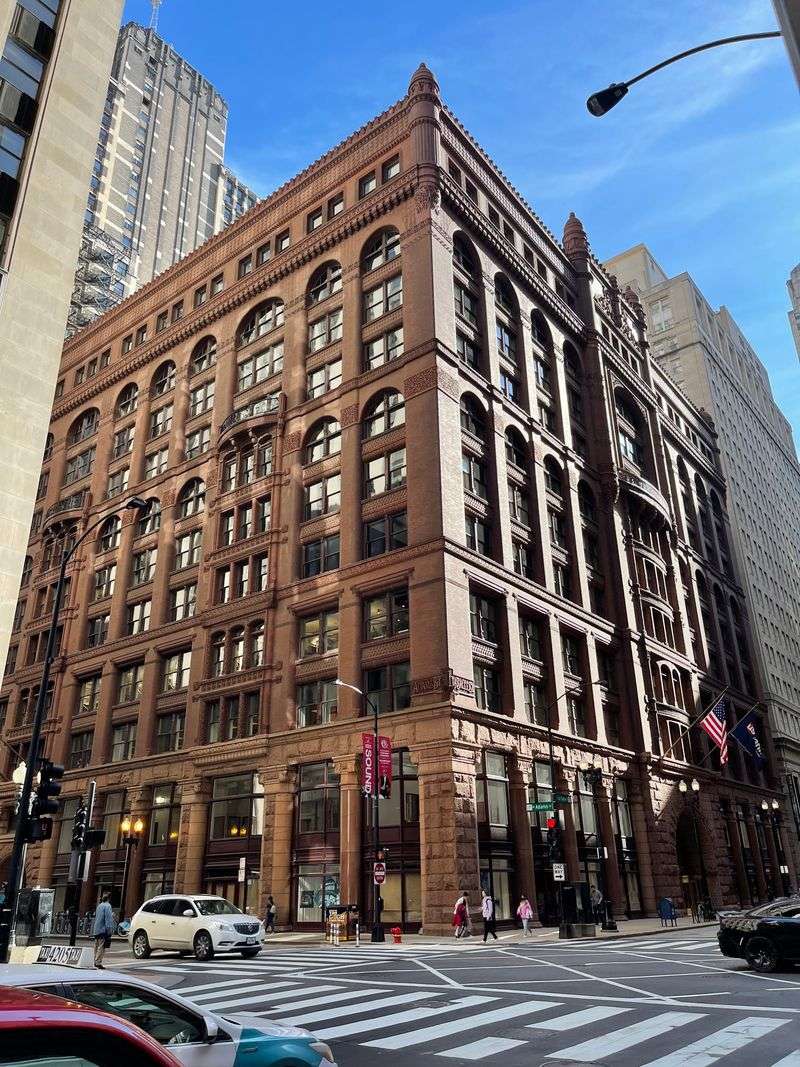
How about some old school meets new at The Rookery Building, 209 S La Salle St, Chicago, Illinois? Step into the light court and you feel like the city opened a jewelry box.
The skylight pours brightness onto white surfaces like a stage cue.
Ironwork curls and straight lines trade compliments.
Frank Lloyd Wright’s redesign keeps the historical bones and turns the glow up. It is respectful and gutsy at the same time.
Walk the stairs and the geometry starts to hum around you. Each landing frames another little performance of light.
Those glass blocks overhead act like a soft-focus filter for the sun. The floor catches it and quietly shines back.
At street level, the lobby’s polished stone feels cool against the workday rush.
You can imagine the click of shoes and murmurs bouncing around.
From La Salle Street, the facade plays straight man to the luminous interior. Brick and ornament keep their poker face.
It is the contrast that sells it, really. Outside whispers history, inside answers with sparkle.
Standing there, you get why architects come to study the moves. The building feels like a survival story told with style.
Grab a last glance at the stair rail curves before you go. Next, something with fewer frills and more glass.
5. Farnsworth House
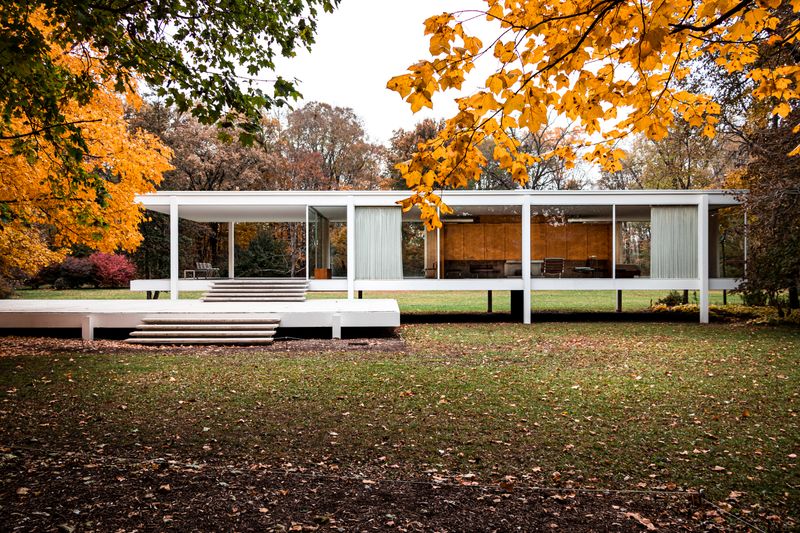
Ready to drive out to the Farnsworth House, 14520 River Rd, Plano, Illinois? It sits like a quiet thought above the grass, all glass and white lines and not much else.
The whole point is restraint, which you feel as soon as you see through it.
Nature becomes the wallpaper and the furniture all at once.
From a little distance, the proportions read like a calm breath. Step closer and the joints get almost meditative.
There is nowhere to hide mess here, and that honesty feels bracing. Every reflection is part of the composition.
Walk around the platform and the river breeze edits your thoughts. You start noticing small things like leaf color shifts and cloud tempo.
Inside, it is basically one long room with screens of cabinetry doing the zoning.
Privacy becomes an attitude instead of a wall.
The steel is slim but not shy. It draws crisp lines that make the trees look even softer.
I always leave with a weird urge to declutter the trunk of the car. Minimalism is contagious out here.
Architecturally, it is a masterclass in less being enough. The house proves that clarity can feel generous rather than cold.
Head back toward the city while that quiet lingers. The next stop plays with curves instead of straight edges.
6. Cloud Gate
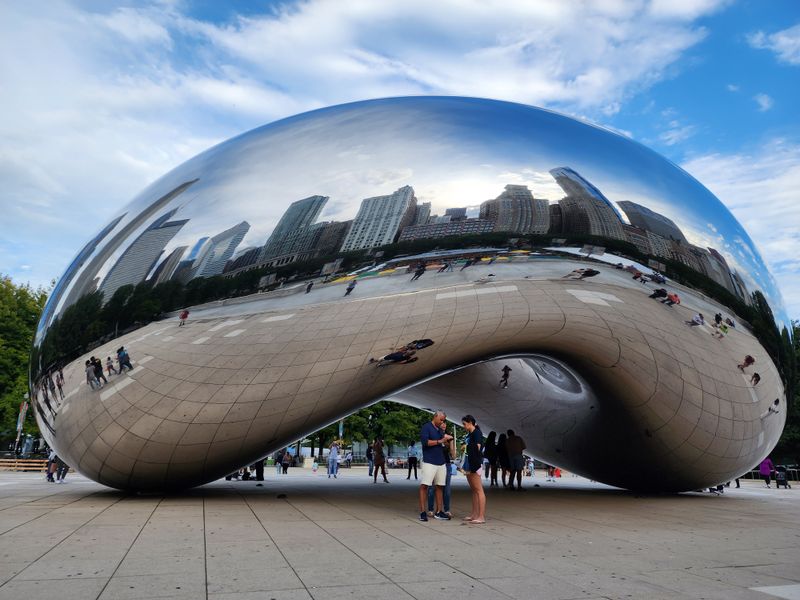
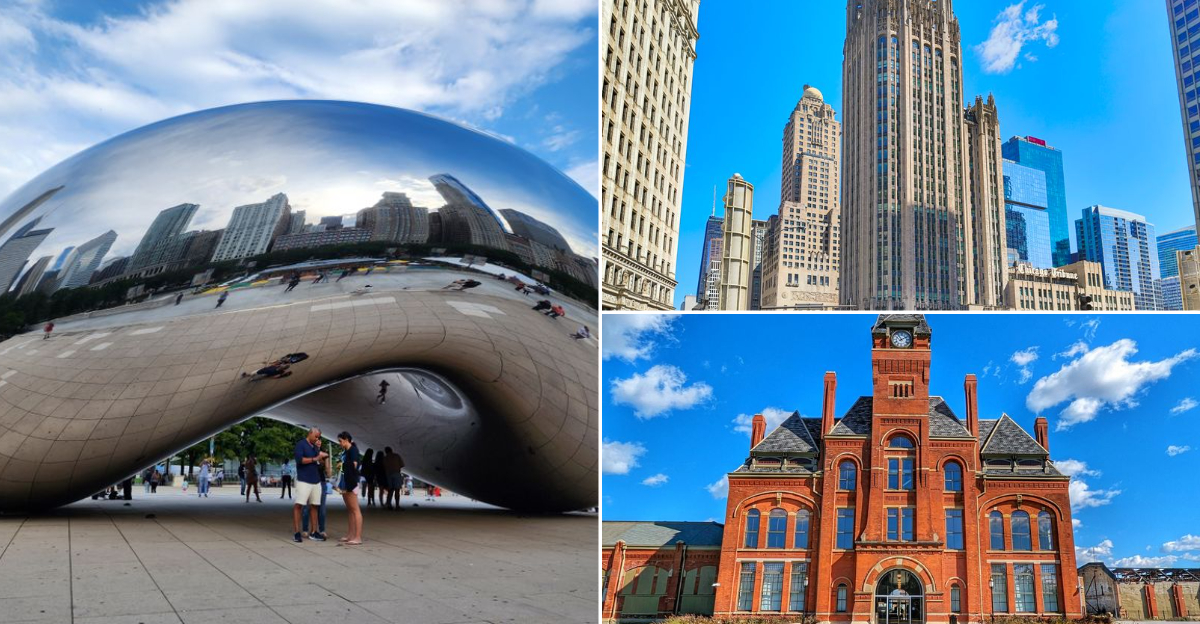
You want the quick grin moment, right, so hit Cloud Gate at 201 E Randolph St, Chicago, Illinois. Walk up and your face becomes part of the skyline, which never gets old.
The mirrored curve pulls buildings into a swirl that feels like a magic trick. Even the pavement bends into a ripple.
Duck under the arch and the reflections get wild.
Sounds bounce around like a friendly echo chamber.
From a few steps back, the bean shape turns into a tidy lens on the city. It edits out the clutter and keeps the drama.
On a cloudy day, it blurs into the sky and you lose the edges. On a bright day, it wakes you up fast.
Architecturally, it is less about volume and more about surface doing the storytelling. The polish is the point and the craft behind it is serious.
I like catching a quick panorama in that curved skin and then just watching.
The city keeps changing the picture without asking.
Millennium Park around it gives the sculpture room to breathe. Concrete, trees, and sky play supporting roles here.
You will not overthink this one because it does its job in seconds. It is public, playful, and impossible to miss.
Okay, back to buildings with walls and doors. The next stop goes heavy on concrete and ideas.
7. Tribune Tower
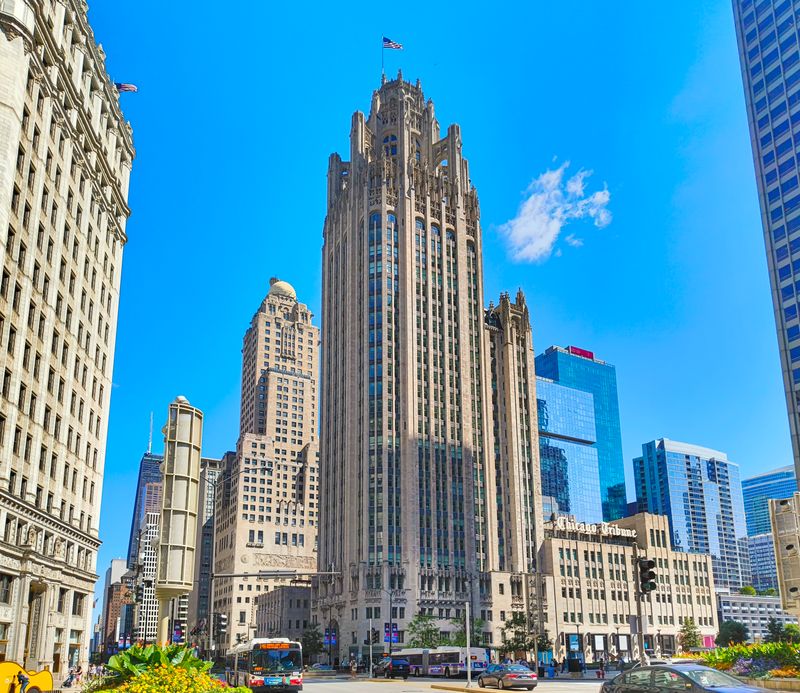
Okay, story time carved in limestone at Tribune Tower, 435 N Michigan Ave, Chicago, Illinois. Look close at the base and you will spot stones from everywhere tucked into the walls.
The vertical lines climb like a chorus, and the crown does a little Gothic flourish. It never feels cheesy, just proud.
Walk around the corner and the facade keeps changing outfits.
Shadows do half the ornament’s work for free.
The lobby, when you catch a peek, leans into the drama with rich finishes. You feel the city’s media heartbeat under the marble.
From across the river, the tower plays nice with the modern neighbors. Old and new take turns posing in the reflections.
That mix is peak Chicago and honestly peak Illinois living. Tradition sits next to experimentation without a fuss.
I love finding the little plaques that explain the embedded fragments. It turns the exterior into a global scrapbook.
Look up once more and you can almost hear typewriters and deadline chatter.
Architecture makes a surprisingly good time machine.
When you head out, Michigan Avenue moves like a steady river. Ride that current a few blocks to something rounder.
You are making a good loop today, and the skyline keeps giving you breadcrumbs. Onward to curves and parking spirals.
8. Pullman National Monument
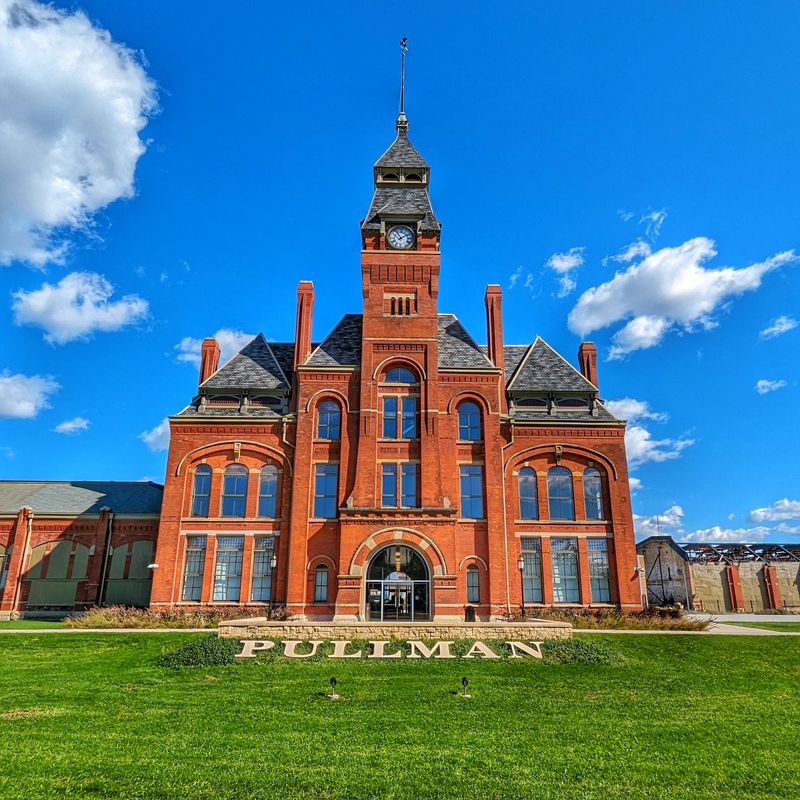
Now slow down at Pullman National Monument, 11141 S Cottage Grove Ave, Chicago, Illinois. This is architecture as a plan for living, not just a set of pretty facades.
Walk the streets and the rhythm of the brick rows turns steady.
You can feel the logic of work and home stitched together.
The former administration building anchors the scene with measured dignity. Towers and gables set the tone without shouting.
What gets me is how the town layout tells a story about industry and control. Streets flow on purpose, and the purpose shows.
The materials are honest and tough, which fits the origin of the place. Nothing flimsy here, just brick that means it.
Stand by the green spaces and you sense the social experiment behind the plan. You see the calculus of community in the grid.
From a distance, the skyline is low but assertive. It is a different kind of monument, horizontal instead of vertical.
As you move, details crop up like lintels and patterned brickwork.
Careful, measured choices give the town a steady heartbeat.
This is a good reminder that Illinois history lives in layouts and street widths, not only in landmarks. The ground plan itself is the artifact.
Alright, back in the car, and head for the capital’s dome. Different vibe, same sense of intention.
9. Illinois State Capitol
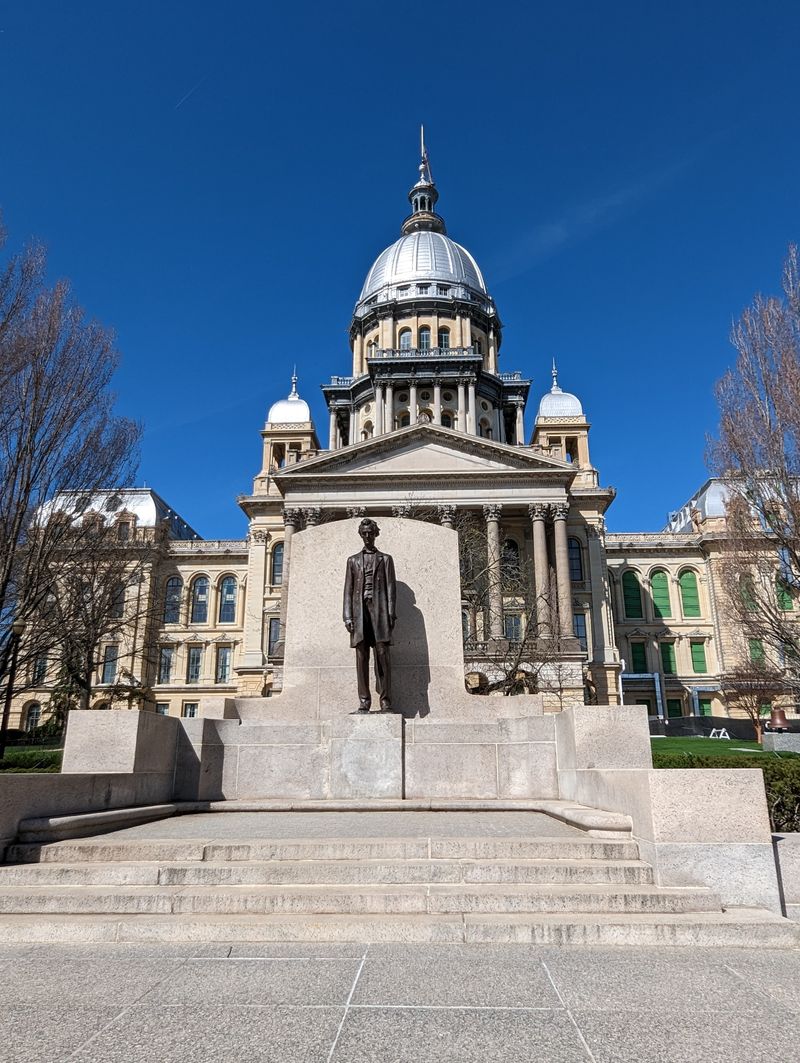
Time to say hi to the dome at the Illinois State Capitol, 401 S 2nd St, Springfield, Illinois. The approach lines up the symmetry so cleanly that your stride evens out.
Stone stacks into columns and pediments like a well rehearsed chorus.
The dome rises with that easy authority you feel more than analyze.
On the steps, the carvings read like polite announcements. Inside, murals and chambers dial the volume up a notch.
Walk a slow circle on the grounds to watch the light pick at the details. Trees frame the building like a postcard that forgot to be cheesy.
I like catching the dome from a side street where it peeks above rooftops. It makes the whole city feel oriented and sure.
Architecture wise, this is symmetry doing its steadying trick.
You sense order before you think the word.
From the base, the drum of the dome feels surprisingly close. It is a reminder that big gestures start low.
Springfield carries the weight well and keeps the streets easygoing. The capitol sits as both anchor and compass.
Take one last look at the statue and the patterned stone. Then point north again for an older classroom with a serious stare.
Illinois keeps showing different faces, and that variety is the fun of this drive. Ready for one more chapter?
10. Old Main At Knox College

Let’s ease into Galesburg for Old Main at Knox College, 2 E South St, Galesburg, Illinois. The brick has that sturdy, quietly confident feel that makes you slow your walk.
The tower lifts just enough to gather the campus around it.
Windows march in measured lines that settle the facade.
On the lawn, the trees set a soft frame that works in every season. You can picture footsteps wearing paths over a century of days.
Inside views are usually glimpses, but the exterior tells plenty. This building speaks fluent Midwestern resolve.
I like standing off to one side so the tower overlaps the roofline. That angle makes the proportions click into place.
You can feel the history without being pushed by plaques. The brickwork and trim do the talking.
As campus architecture goes, this one proves straightforward can be inspiring. No gimmicks, no fuss, just a clear voice.
From the street, the address feels folded into the town’s grid. Galesburg gives it a neighborly backdrop.
It rounds out our Illinois loop with a calm, dignified note.
You started big and shiny, and ended steady and grounded.
Take a final photo and call it a day. The road home will feel shorter with these shapes still in your heads.
