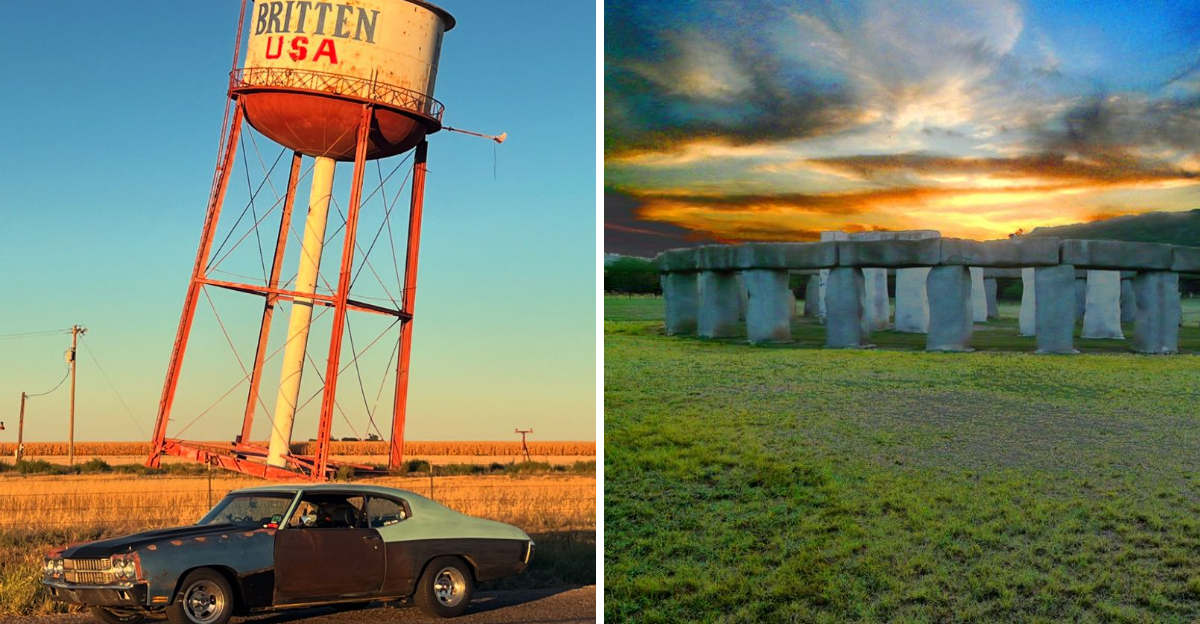
Texas stretches across nearly 270,000 square miles of dramatic terrain, from windswept deserts to rolling prairies, and along its highways you will encounter some of the most bizarre and unforgettable roadside attractions in America.
The Lone Star State has always embraced the eccentric, the oversized, and the downright peculiar, creating a landscape where art installations rise from wheat fields, mysterious lights dance across desert horizons, and vintage architecture stands frozen in time along historic routes.
Road trippers flock to Texas not just for its famous barbecue and sprawling cities, but for the unexpected treasures that appear around every bend, each one telling a story about creativity, history, and the independent spirit that defines this massive state.
Whether you are cruising along Route 66 or exploring the remote corners of West Texas, these strange sights will make your journey through the state an adventure you will never forget.
1. Marfa Lights
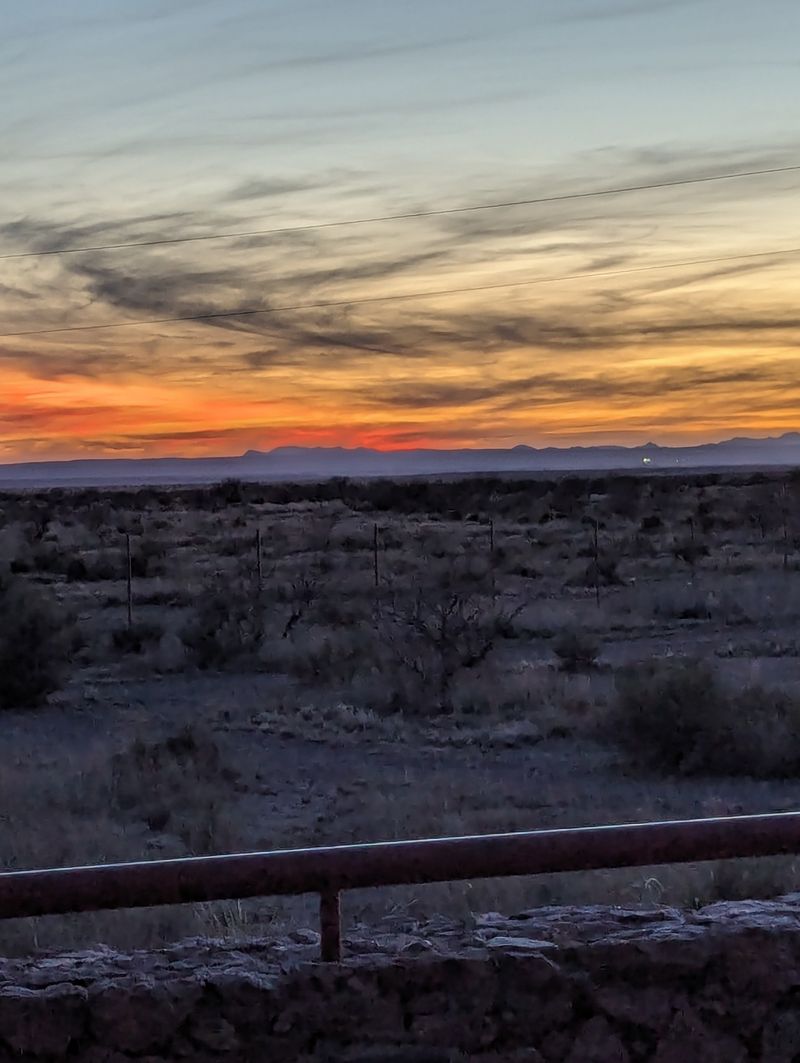
East of the small art town of Marfa, strange lights appear in the night sky with no clear explanation, bobbing and weaving across the horizon in patterns that have puzzled observers for more than a century.
These glowing orbs vary in color from white to yellow to red, sometimes appearing as single points and other times splitting into multiple lights that dance independently.
The phenomenon has been documented since the 1880s, when settlers first reported seeing the mysterious illuminations moving across the Mitchell Flat.
Scientists have proposed numerous theories to explain the lights, including atmospheric reflections, swamp gas, ball lightning, and the headlights of distant vehicles refracting through layers of air at different temperatures.
Despite these rational explanations, the Marfa Lights continue to captivate visitors who gather at the official viewing area nine miles east of town, hoping to witness something that defies easy categorization.
The viewing platform includes informational plaques describing the history of the lights and the various theories about their origin, along with benches and restrooms for comfortable observation.
Local folklore offers more colorful explanations, including tales of lost Spanish conquistadors carrying lanterns, ghostly Apache warriors, or even extraterrestrial visitors surveying the remote West Texas landscape.
The best viewing conditions occur on clear, dark nights when there is no moon, typically in spring and fall when the air is crisp and atmospheric conditions are ideal.
Whether the lights are a natural phenomenon or something more mysterious, they have become an integral part of Marfa’s identity, drawing curious travelers to this remote corner of the Chihuahuan Desert.
Address: Highway 90, Marfa, Texas
2. U-Drop Inn
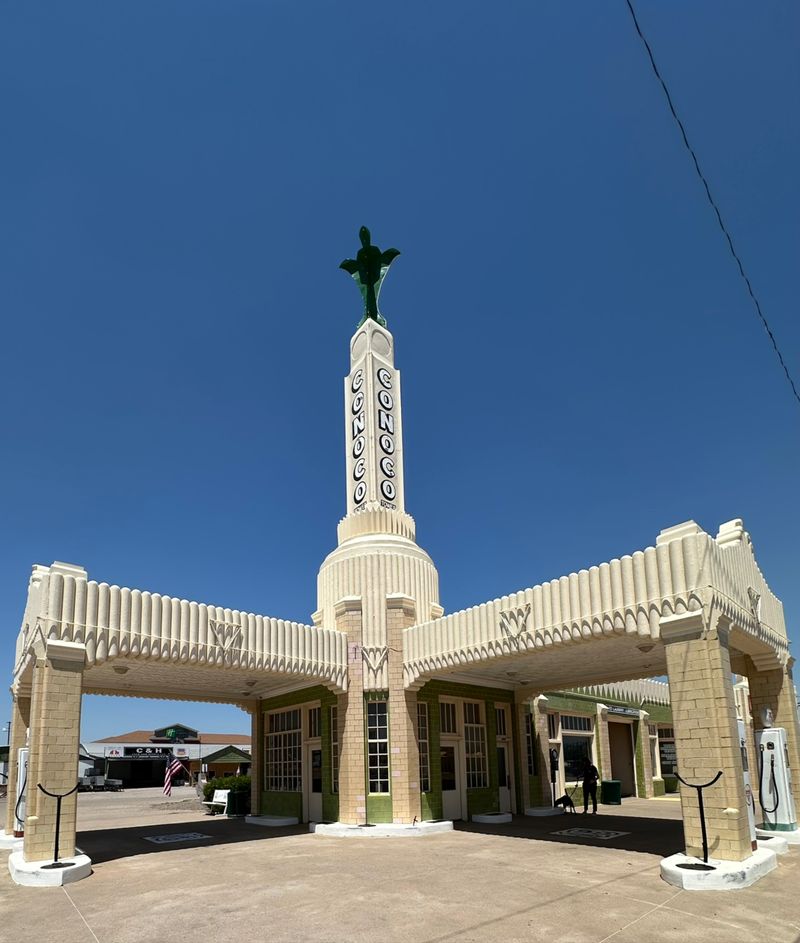
In the town of Shamrock, an extraordinary Art Deco structure rises from the flat Texas Panhandle like something transported from a 1930s science fiction magazine.
The U-Drop Inn, also known as Tower Station, features a distinctive tower with geometric patterns and neon accents that once beckoned weary travelers along Route 66.
Built in 1936 by J.M. Tindall, the building served dual purposes as both a gas station and a cafe, providing fuel for vehicles and sustenance for drivers making the long journey across the Southwest.
The design incorporates elements of Art Deco and Streamline Moderne architecture, with curved walls, horizontal speed lines, and a tower that seems to reach toward the sky with optimistic energy.
During its heyday, the U-Drop Inn was a thriving stop where families would pull in for a meal, fill their tanks, and perhaps spend the night before continuing their westward journey.
As Interstate 40 replaced Route 66 in the 1970s, the building fell into disrepair, its neon lights darkened and its once-gleaming facade weathered by decades of neglect.
A major restoration project in the late 1990s brought the structure back to its original glory, with careful attention paid to historical accuracy and period-appropriate materials.
Today the building houses the Shamrock Chamber of Commerce and a visitor center, where travelers can learn about Route 66 history and the golden age of American road travel.
The restored neon signs glow once again at night, creating a beacon visible for miles across the prairie and reminding visitors of an era when the journey mattered as much as the destination.
Address: Shamrock, Texas
3. Leaning Tower of Britten
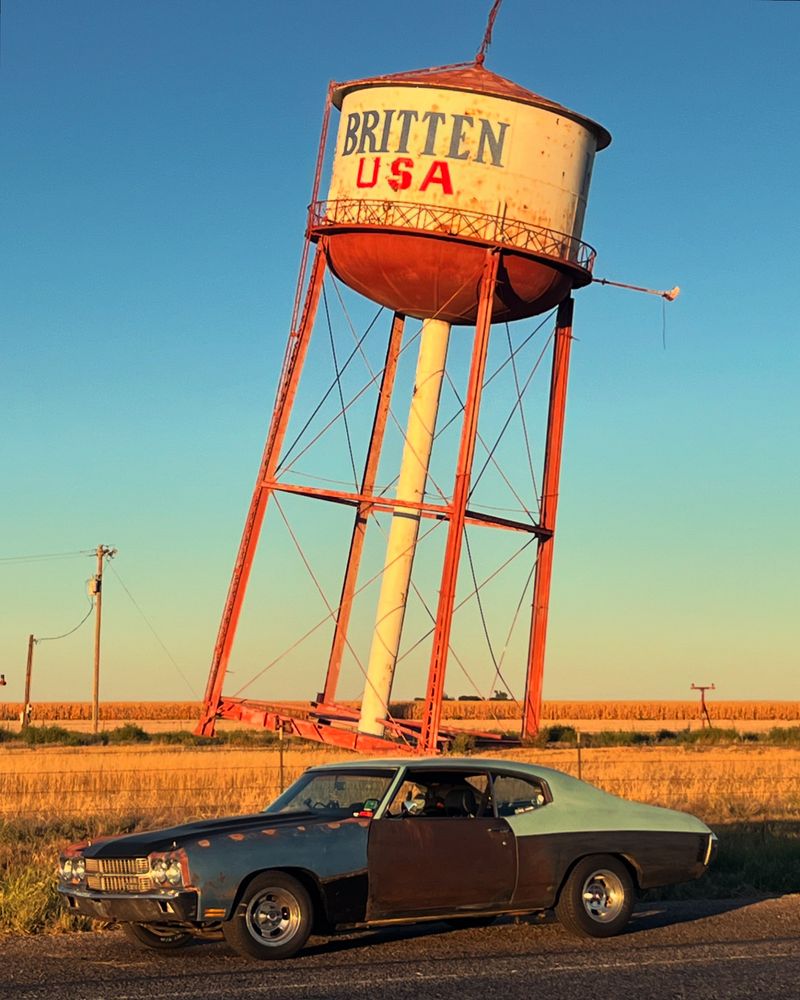
Along the historic stretch of Route 66 in the tiny town of Groom, a water tower tilts at a dramatic ten-degree angle, deliberately mimicking its famous Italian counterpart.
Originally constructed as a functional water tower in the neighboring town of Lefors, this structure served the community for decades before being decommissioned and facing demolition.
Rather than letting it disappear, enterprising locals moved the tower to Groom in 1999 and intentionally installed it at an angle to create a quirky attraction for travelers passing through on the Mother Road.
The tower stands as a testament to small-town ingenuity and the American tradition of turning the ordinary into the extraordinary through sheer creativity and humor.
Painted bright white against the endless blue Texas sky, the leaning structure creates an optical illusion that makes travelers do a double-take as they speed past on Interstate 40.
Groom itself is a community of fewer than 600 residents, and the tower has become its most recognizable landmark, drawing curious visitors who want to capture a photo of this playful piece of roadside Americana.
The installation sits near a souvenir shop where travelers can stop to stretch their legs and purchase Route 66 memorabilia.
Unlike the Tower of Pisa, which leans due to unstable foundation soil, this Texas version was engineered to tilt safely and permanently, requiring no ongoing stabilization efforts.
The tower represents the golden age of American road travel, when families would pile into station wagons and seek out unusual sights along the highway.
Address: Interstate 40, Groom, Texas
4. World’s Largest Fire Hydrant
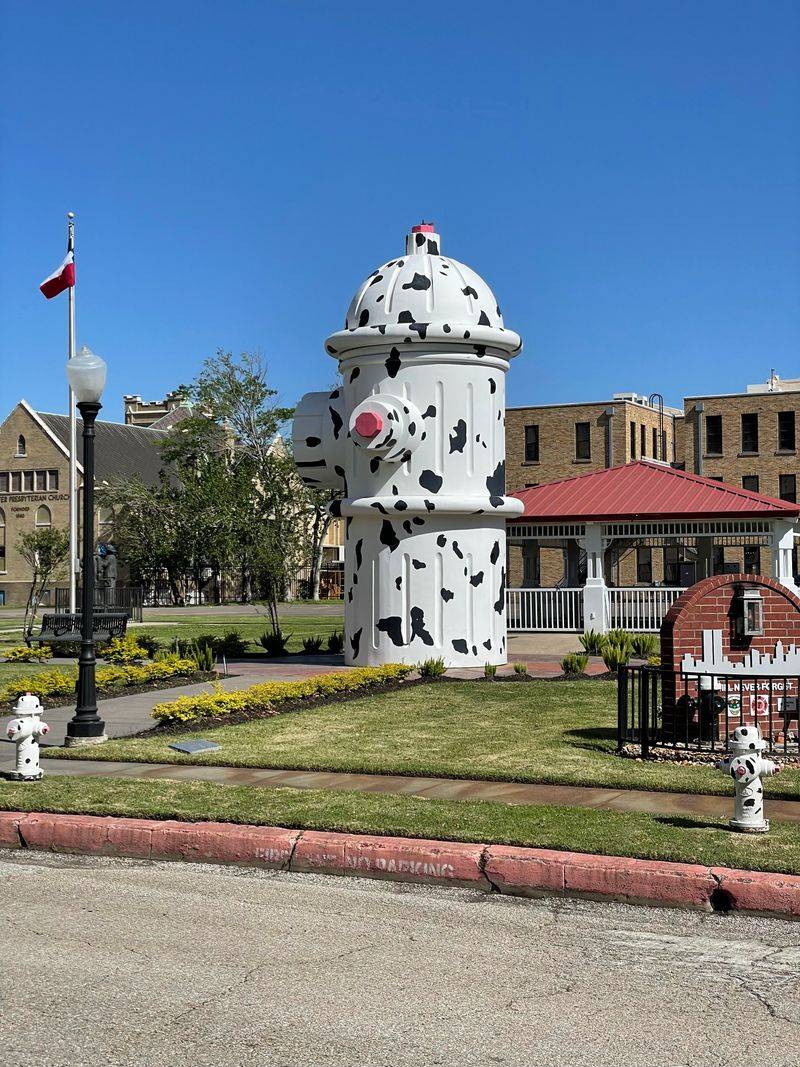
Towering 24 feet above the streets of Beaumont, a massive fire hydrant painted with black spots on a white background pays tribute to firefighters and their loyal Dalmatian companions.
Walt Disney Studios donated this oversized monument to the city in 1999 as part of the promotional campaign for the live-action remake of “101 Dalmatians.”
The hydrant is recognized as one of the largest of its kind in the world, dwarfing the standard fire hydrants that typically stand only a few feet tall.
Beaumont has a rich firefighting history, and the city embraced this quirky gift as a way to honor the brave men and women who serve in the fire department.
The Dalmatian-spotted design creates an instant visual connection to the traditional mascots of firehouses, dogs that historically ran alongside fire wagons and served as companions and guardians at fire stations.
Constructed from steel and fiberglass, the hydrant is built to withstand the Texas weather, from scorching summer heat to the occasional tropical storm that sweeps inland from the Gulf of Mexico.
Families often stop to take photos with the giant hydrant, especially children who are delighted by its enormous size and playful spotted pattern.
The monument sits near the Fire Museum of Texas, creating a cluster of firefighting-related attractions that celebrate the profession and its history.
Local events sometimes incorporate the hydrant into festivities, with decorations added during holidays or special occasions to further engage the community.
The hydrant has become an unexpected symbol of Beaumont, appearing on postcards and social media posts as visitors share their encounters with this whimsical roadside giant.
Address: 219 Main St, Beaumont, Texas
5. Giant Roadrunner Statue
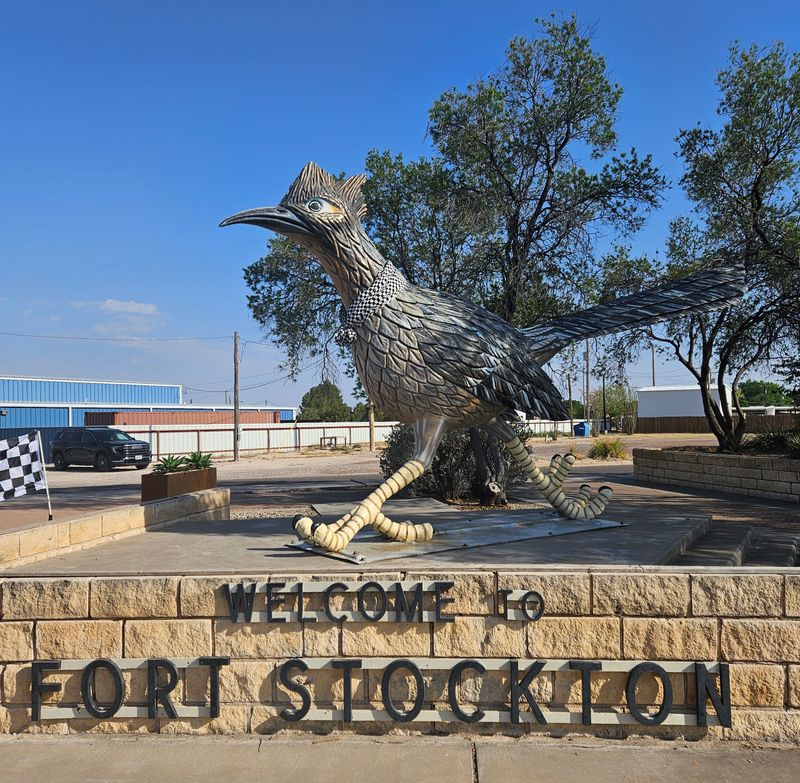
Fort Stockton proudly displays Paisano Pete, an 11-foot-tall roadrunner statue that claims the title of the world’s largest representation of this quick-footed desert bird.
Built in 1979 to attract travelers along Interstate 10, the statue celebrates the roadrunner as the unofficial mascot of West Texas and a symbol of the arid landscape that stretches for hundreds of miles in every direction.
The sculpture captures the distinctive features of the greater roadrunner, including its long tail, crested head, and powerful legs built for sprinting across the desert in pursuit of lizards and insects.
Painted in naturalistic colors with touches of blue and brown, Paisano Pete stands on a pedestal near the Visitor Information Center, greeting travelers with a permanent expression that seems both welcoming and slightly mischievous.
The name “Paisano” comes from the Spanish word for fellow traveler or countryman, a fitting designation for a bird that often runs alongside vehicles on desert roads.
Fort Stockton embraces its roadrunner identity throughout the town, with roadrunner imagery appearing on signs, murals, and promotional materials celebrating this unique avian resident.
Real roadrunners are actually quite common in the area, and visitors who spend time exploring the surrounding desert often spot these fascinating birds darting between creosote bushes and mesquite trees.
The statue has become a mandatory photo stop for families traveling across West Texas, with children climbing on the pedestal and parents snapping pictures to document their journey through this remote region.
Unlike the cartoon version made famous by Warner Brothers, real roadrunners rarely say “beep beep” but do make a variety of cooing and clacking sounds that echo across the desert landscape.
Address: East Dickinson Boulevard & North Main Street, Fort Stockton, Texas
6. Beer Can House
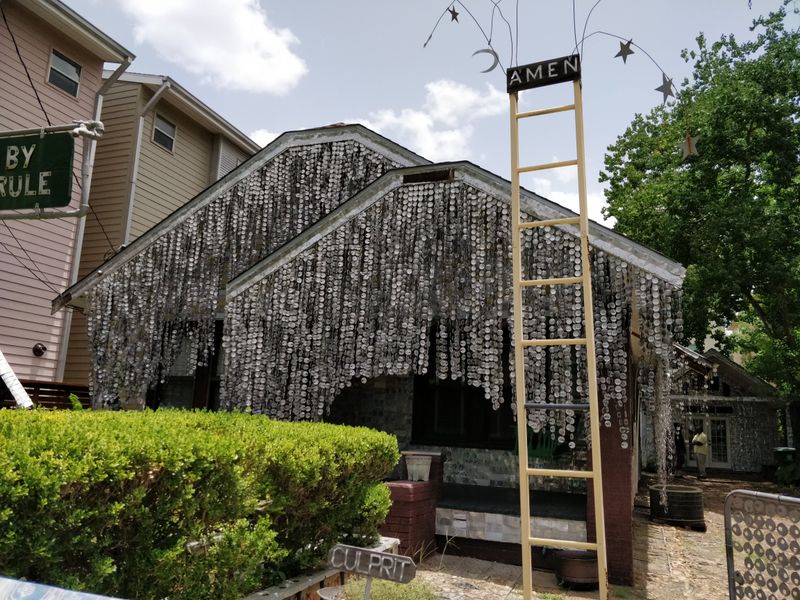
In a quiet Houston neighborhood, a modest bungalow transformed into a glittering monument to recycling and obsessive creativity catches the eye of anyone passing by.
John Milkovisch, a retired upholsterer for the Southern Pacific Railroad, began decorating his home with beer cans in 1968 after he grew tired of mowing his lawn and decided to cover the yard with concrete embedded with rocks, marbles, and metal pieces.
Not content with just the yard, Milkovisch started flattening aluminum cans and attaching them to the exterior walls of his house, eventually covering nearly every surface with shimmering metal siding.
He cut the tops and bottoms from cans to create long curtains that hang from the eaves, clinking and chiming in the breeze like wind chimes made from Budweiser, Schlitz, and Pearl beer containers.
Over the course of nearly two decades, Milkovisch used an estimated 50,000 beer cans to complete his project, drinking the contents himself with help from family and neighbors who contributed their empties to the cause.
The house has become a beloved example of American folk art, demonstrating how one person’s dedication and imagination can transform the ordinary into the extraordinary.
After Milkovisch’s death in 1988, the Orange Show Center for Visionary Art acquired the property and opened it to the public, preserving this unique creation for future generations.
Guided tours allow visitors to explore the property and learn about Milkovisch’s techniques, motivations, and the years of patient work required to complete his metallic masterpiece.
The house shimmers in the Texas sun, reflecting light in thousands of directions and creating a spectacle that defies conventional notions of home decoration and suburban conformity.
Address: 222 Malone Street, Houston, Texas
7. Stonehenge II
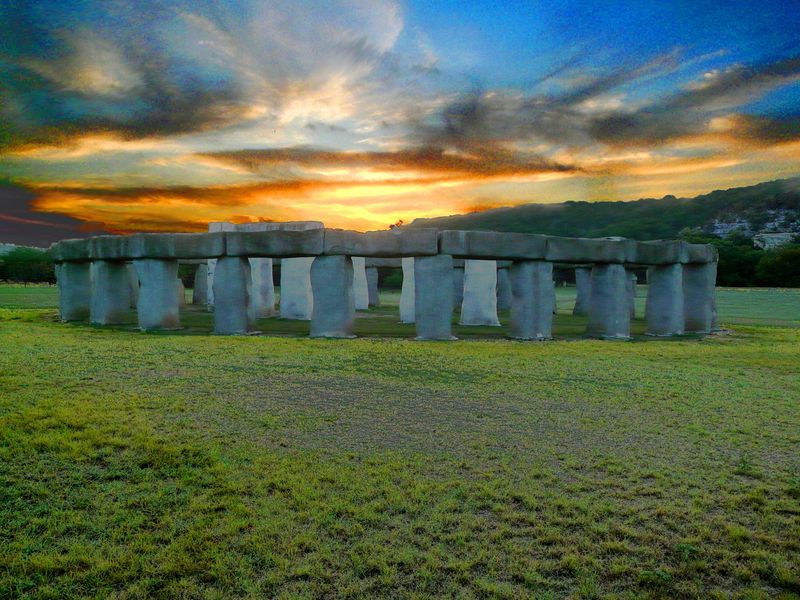
Near the small community of Hunt in the Texas Hill Country, a full-scale replica of England’s mysterious Stonehenge rises from a hilltop, complete with three Easter Island moai statues standing nearby for good measure.
Al Shepperd and Doug Hill constructed this limestone version in the early 1990s as a retirement project and artistic statement, using materials quarried from the surrounding Hill Country.
The replica stands 90 percent the size of the original Stonehenge, with carefully positioned stones that align with the summer solstice, just like the ancient monument on Salisbury Plain.
The addition of Easter Island heads seems random at first, but the builders wanted to create a collection of world mysteries in one convenient location, bringing together prehistoric wonders from different continents.
After standing on private property for years, the installation was dismantled and stored when the land was sold, leaving many to think this quirky attraction had vanished forever.
In 2010, the stones were relocated to a new site at the Hill Country Arts Foundation, where they were reassembled and opened to the public once again.
The current location offers sweeping views of the surrounding hills, creating a dramatic setting that enhances the mysterious atmosphere of these reconstructed ancient monuments.
Unlike the original Stonehenge, which is roped off and protected from public contact, visitors to the Texas version can walk among the stones, touch them, and even pose for photos while standing in the center of the circle.
The site has become a popular spot for weddings, photo shoots, and quirky day trips, offering a taste of ancient mystery without the transatlantic flight to England.
Address: 120 Point Theatre Road South, Ingram, Texas
Dear Reader: This page may contain affiliate links which may earn a commission if you click through and make a purchase. Our independent journalism is not influenced by any advertiser or commercial initiative unless it is clearly marked as sponsored content. As travel products change, please be sure to reconfirm all details and stay up to date with current events to ensure a safe and successful trip.
