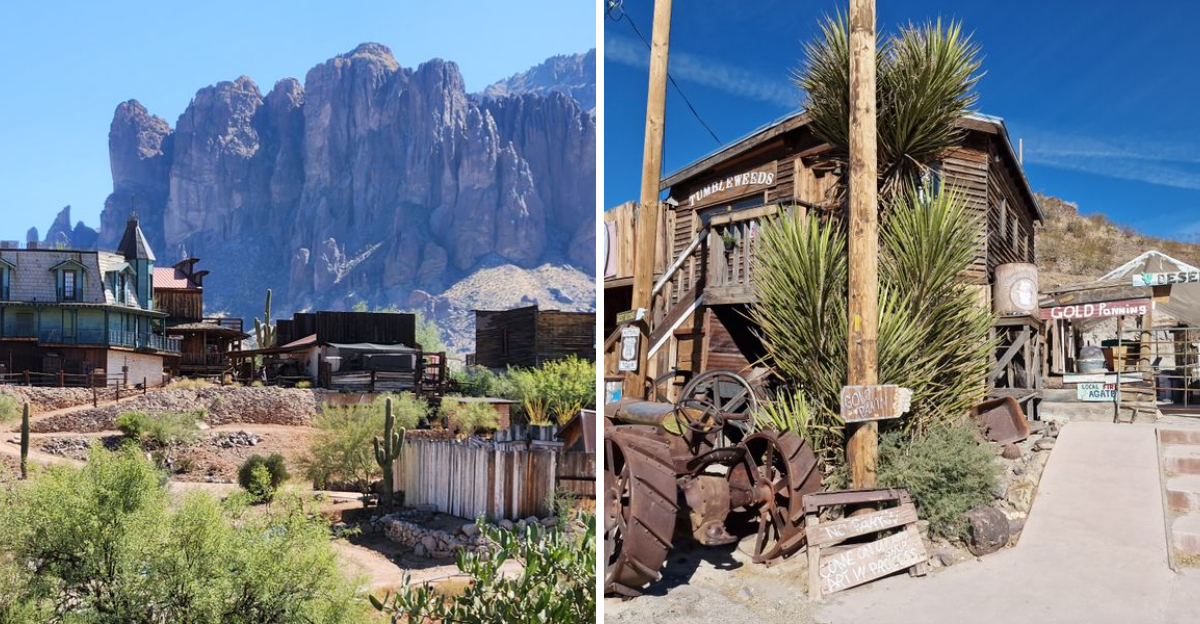
Arizona’s landscape stretches far beyond the Grand Canyon and sprawling desert vistas most people imagine.
Scattered across this sun-soaked state are small towns that don’t make flashy tourist brochures or top travel lists, yet they hold stories, character, and beauty that surprise anyone willing to stop.
Many travelers pass through without a second glance, dismissing these places as sleepy or uninteresting, only to discover later what they missed.
Once you arrive and spend time wandering their streets, tasting their history, and soaking in their atmosphere, these towns reveal layers of charm that no highway sign could ever advertise.
1. Tortilla Flat
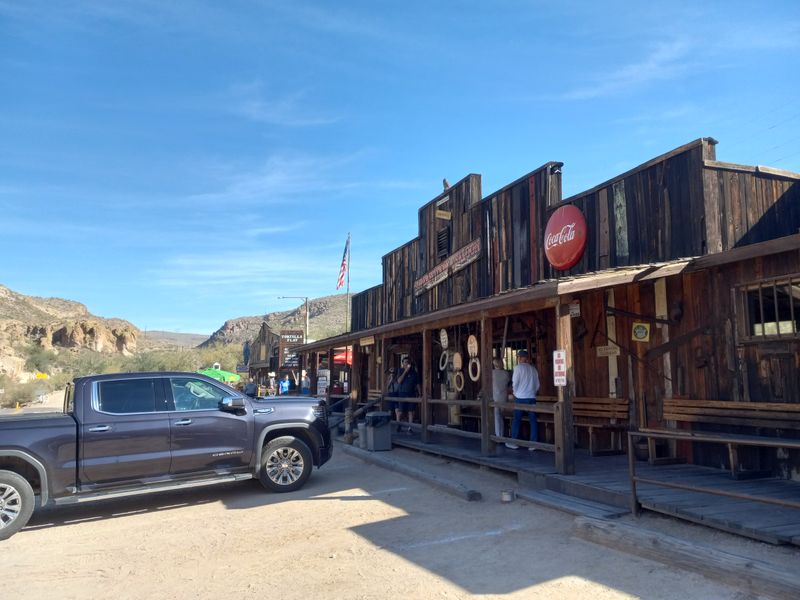
With a population hovering around six residents, Tortilla Flat holds the title of Arizona’s smallest official community, yet its personality towers far beyond its census numbers.
Nestled along the legendary Apache Trail, this former stagecoach stop feels like stepping onto a movie set where the Old West never quite ended.
Weathered wooden buildings line the dusty roadside, their sun-bleached facades telling stories of miners, travelers, and adventurers who passed through generations ago.
The town’s country store doubles as a museum, its walls plastered with thousands of dollar bills signed by visitors from around the world.
Next door, the saloon serves up cold drinks and hearty meals while maintaining an authentic frontier atmosphere that modern theme parks can only imitate.
Outside, the Superstition Mountains rise dramatically against the Arizona sky, their jagged peaks casting shadows across the desert floor.
Most people drive past Tortilla Flat without stopping, assuming there’s nothing worth their time in such a tiny place.
Those who pause discover a living piece of Arizona history, a gateway to spectacular mountain scenery, and a reminder that sometimes the smallest communities hold the biggest surprises.
The town serves as a perfect launching point for exploring the surrounding wilderness, with hiking trails and scenic overlooks just minutes away.
What looks like a dusty roadside curiosity turns into an unforgettable glimpse of authentic Arizona character.
2. Jerome
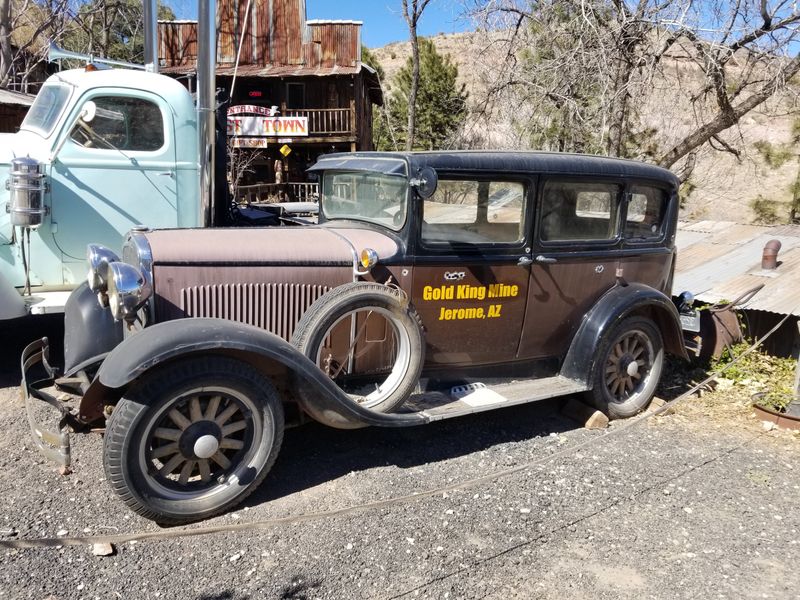
Clinging to the side of Cleopatra Hill like a colorful patchwork quilt, Jerome defies gravity and expectations in equal measure.
This former copper mining town earned the nickname ‘Wickedest Town in America’ during its rough-and-tumble heyday, when saloons outnumbered churches and lawlessness ruled the streets.
Today, the wickedness has transformed into artistic expression, with galleries, studios, and quirky shops occupying buildings that once housed brothels and gambling halls.
Walking Jerome’s steep, winding streets feels like exploring a living museum where every building has a story etched into its weathered walls.
Artists from across the country have claimed this mountain town as their creative sanctuary, filling it with paintings, sculptures, and handcrafted treasures that reflect the town’s rebellious spirit.
The views alone justify the winding drive up the mountain, with panoramic vistas stretching across the Verde Valley to distant peaks.
Many visitors expect Jerome to be just another abandoned mining town slowly crumbling into history.
Instead, they find a vibrant community that has reinvented itself while honoring its colorful past.
Historic buildings lean at odd angles, victims of underground mining that hollowed out the mountain beneath them, adding to the town’s quirky character.
Restaurants serve creative cuisine with million-dollar views, while wine-tasting rooms offer locally produced vintages.
What appears to be a ghost town from the highway below reveals itself as a thriving artistic community with personality to spare.
3. Oatman
Wild burros wander freely down the main street, stopping traffic and demanding snacks from delighted tourists who can’t believe what they’re seeing.
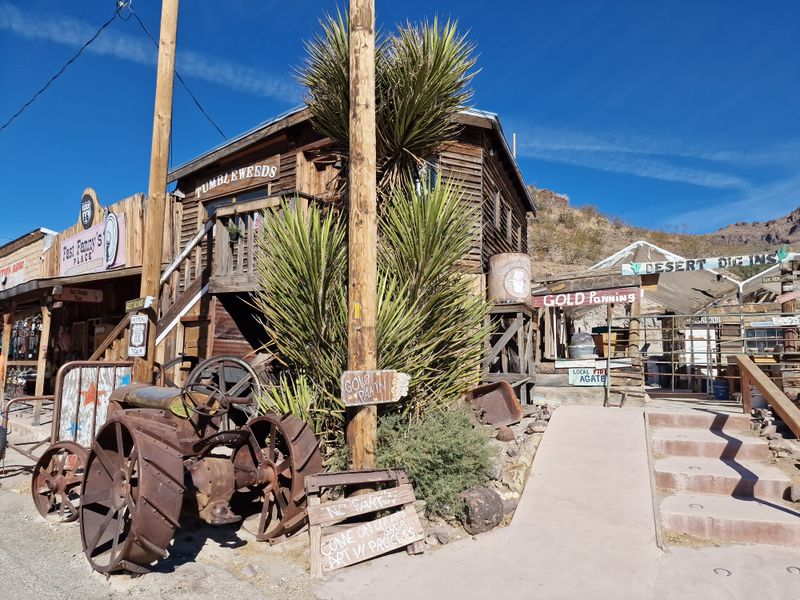
Oatman sits along a particularly scenic stretch of Route 66, preserving a slice of Western theater that feels more authentic than any theme park could manufacture.
The descendants of miners’ pack animals, these friendly burros have become the town’s unofficial mascots, posing for photos and accepting treats with practiced ease.
Daily mock shootouts erupt in the street at high noon, with costumed performers reenacting the kind of Wild West drama that once played out for real in mining towns across Arizona.
Wooden sidewalks creak underfoot as you explore shops selling everything from turquoise jewelry to vintage Route 66 memorabilia.
The town’s history as a gold mining community shows in its architecture, with buildings that have weathered decades of desert sun and mountain winds.
From the highway, Oatman looks like a forgettable stop, just another faded town clinging to Route 66 nostalgia.
Visitors who take the time to park and wander discover something far more engaging than expected.
The surrounding landscape of rugged mountains and desert valleys provides a stunning backdrop to the town’s Old West atmosphere.
Local establishments serve cold drinks and hot meals in settings that transport you back to frontier days.
Between the curious burros, entertaining street performances, and genuine historical character, Oatman delivers an experience that stays with you long after you’ve driven away.
4. Tombstone
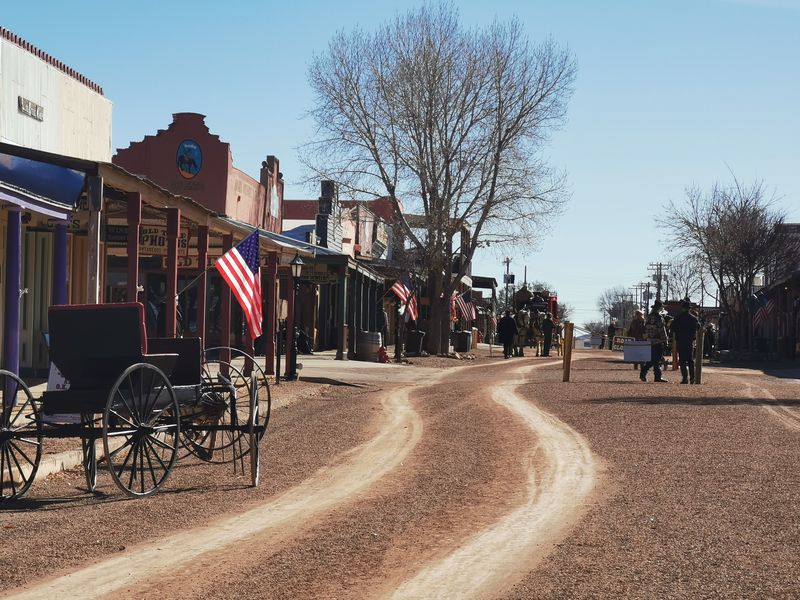
Known worldwide as ‘The Town Too Tough to Die,’ Tombstone refuses to fade into history despite numerous attempts by fire, flood, and economic hardship to erase it from the map.
The Gunfight at the O.K. Corral made this town legendary, but that famous thirty-second shootout represents just one chapter in a much richer story.
Walking down Allen Street today, you can almost hear the echoes of silver miners, gamblers, lawmen, and outlaws who made Tombstone the most notorious town in the Arizona Territory.
Beyond the staged gunfights that entertain tourists multiple times daily, Tombstone preserves genuine historical sites with remarkable authenticity.
The Bird Cage Theatre, once called the wildest saloon between Basin Street and the Barbary Coast, still displays bullet holes in its walls and ceiling.
Boot Hill Graveyard tells stories of those who died with their boots on, their weathered headstones bearing darkly humorous epitaphs.
Many people dismiss Tombstone as a tourist trap, assuming it’s all staged entertainment and souvenir shops.
Those who look deeper discover layers of authentic history preserved in museums, buildings, and archives that document life on the frontier.
The town’s newspapers, courthouses, and theaters offer windows into 1880s Arizona that history books can only describe.
Modern restaurants operate in buildings where legendary figures once dined, drank, and sometimes drew their guns.
What seems like a one-dimensional Wild West caricature reveals itself as a complex, fascinating piece of American history that continues to captivate serious historians and casual visitors alike.
5. Bisbee
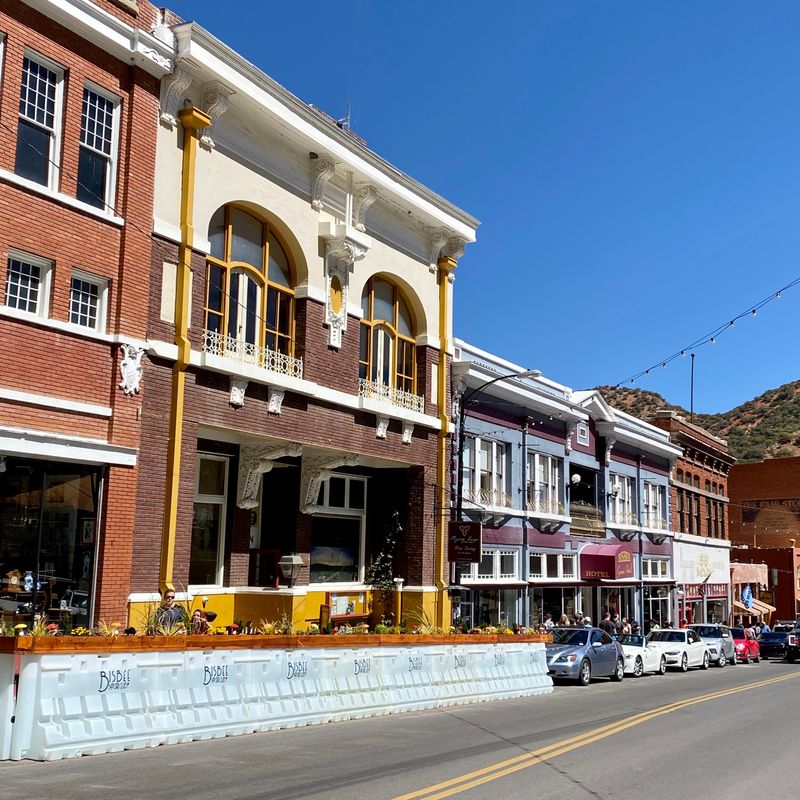
Painted houses stack up the hillsides like a box of crayons tipped over, their bright colors defying the muted desert palette that dominates most Arizona towns.
Bisbee began as a copper mining powerhouse, producing billions of pounds of ore and creating fortunes that built elegant Victorian architecture throughout the steep canyons.
When the mines closed, artists and free spirits discovered the town’s affordable real estate and quirky character, transforming it into one of Arizona’s most creative communities.
Narrow streets wind through neighborhoods where staircases serve as shortcuts between levels, and houses perch on slopes that seem too steep for construction.
Art galleries occupy former saloons, while coffee shops thrive in buildings that once served miners heading underground for ten-hour shifts.
The town’s historic district preserves the grandeur of its mining heyday, with the Copper Queen Hotel standing as an elegant reminder of when Bisbee rivaled San Francisco in sophistication.
First-time visitors often arrive expecting a dusty mining ghost town slowly deteriorating under the desert sun.
Instead, they find a vibrant community with outstanding restaurants, thriving galleries, and a laid-back atmosphere that encourages lingering.
Underground mine tours take you deep into the earth where miners once worked by candlelight, extracting the copper that built modern America.
The surrounding Mule Mountains provide hiking trails with spectacular views across the desert to Mexico, just a few miles south.
What appears to be just another former mining town turns out to be a cultural gem with personality, history, and beauty that surprises everyone who gives it a chance.
6. Ajo
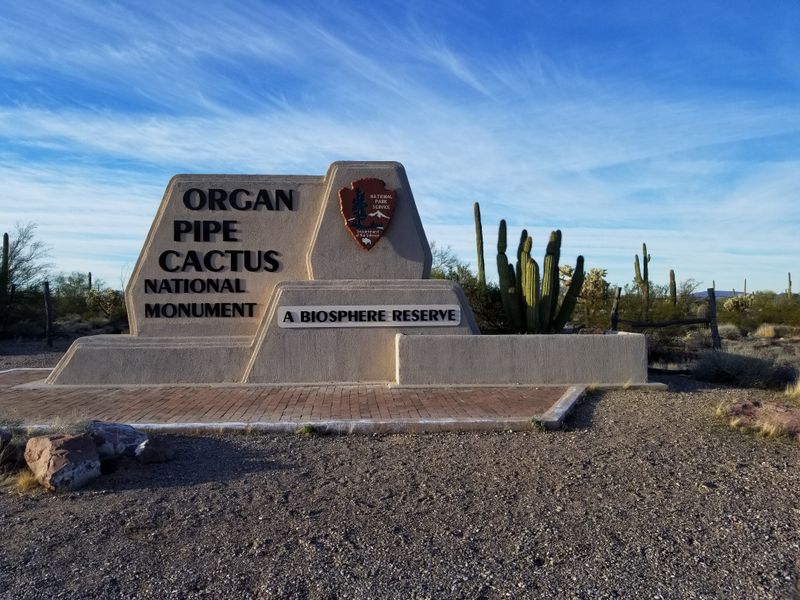
A perfectly manicured plaza spreads out in Spanish colonial elegance, its palm trees and white archways seeming wildly out of place in the Sonoran Desert.
Ajo grew around copper mining operations, and the company that ran those mines built a town square that wouldn’t look out of place in old Mexico or southern Spain.
The plaza remains the heart of this small community, surrounded by historic buildings that tell the story of a company town designed with unusual care and architectural ambition.
When the mine closed in the 1980s, Ajo faced the same fate as countless other mining towns, but instead of dying, it quietly reinvented itself.
Artists discovered the affordable housing and stunning desert landscape, bringing new energy to empty storefronts around the plaza.
Today, galleries and studios showcase works inspired by the surrounding wilderness, while the massive open-pit mine just outside town serves as a dramatic reminder of Ajo’s industrial past.
Most travelers heading to the nearby Organ Pipe Cactus National Monument speed through Ajo without stopping, seeing only a small desert town with little obvious appeal.
Those who pause to explore the plaza and surrounding streets discover architectural charm, artistic energy, and access to some of Arizona’s most spectacular desert scenery.
The nearby Sonoran Desert National Monument protects wilderness areas where giant saguaros march across volcanic hills.
Local restaurants serve authentic Mexican cuisine that reflects the town’s proximity to the border and its cultural heritage.
What looks like a forgotten mining town reveals layers of beauty, culture, and natural wonders that reward curious visitors willing to venture off the main tourist routes.
7. Patagonia
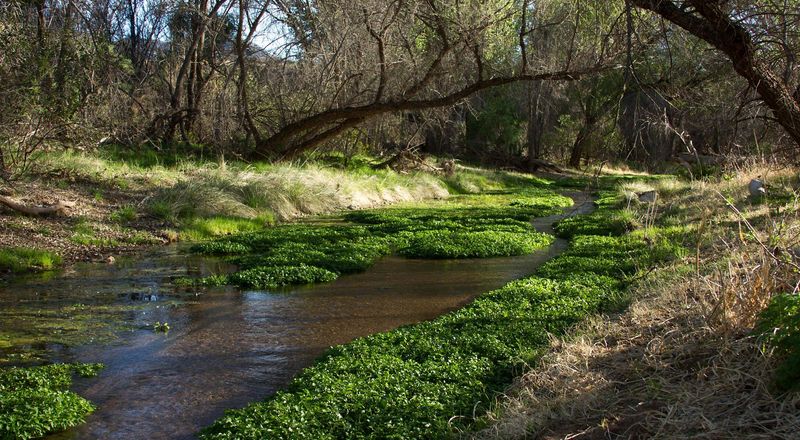
Rolling grasslands dotted with ancient oak trees create scenery that surprises people who think Arizona is nothing but saguaro cacti and red rocks.
Patagonia sits in the high country of southern Arizona, where elevation and geography create an environment more reminiscent of California wine country than typical desert landscapes.
This small town has become a haven for birders, nature lovers, and those seeking a slower pace of life in one of Arizona’s most beautiful and least-known regions.
The nearby Patagonia-Sonoita Creek Preserve protects a rare riparian habitat that attracts bird species found nowhere else in the United States.
Serious birders travel from around the world to spot elegant trogons, gray hawks, and other species that make this area their northern breeding ground.
Beyond the birding, local vineyards produce award-winning wines from grapes that thrive in the area’s unique climate and soil conditions.
Highway travelers often bypass Patagonia entirely, seeing no reason to exit the main road for what appears to be just another small Arizona town.
Visitors who follow the signs into town discover a charming main street with galleries, cafes, and shops that reflect a community proud of its artistic and environmental character.
The surrounding landscape offers hiking trails through oak woodlands and grasslands that look nothing like the stereotypical Arizona desert.
Historic buildings house businesses that serve both locals and the steady stream of nature enthusiasts who have discovered this hidden gem.
What seems like an unremarkable rural town transforms into a gateway for natural beauty, wildlife viewing, and peaceful scenery that challenges everything you thought you knew about Arizona.
8. Clifton
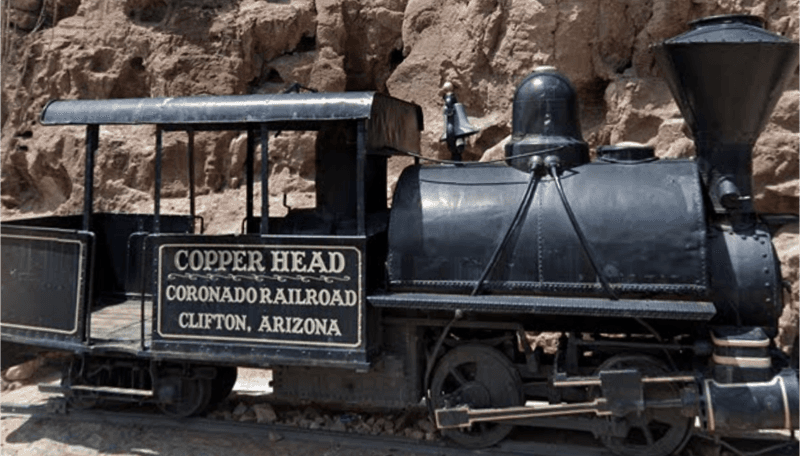
Buildings cling to canyon walls like barnacles on a ship, their foundations carved into solid rock where flat land was too precious to waste.
Clifton grew in one of Arizona’s most dramatic settings, squeezed into a narrow gorge where the San Francisco River carved through ancient stone.
The town’s vertical geography forced creative construction, with houses, churches, and businesses stacked up the canyon walls in ways that defy conventional town planning.
Copper mining brought Clifton to life in the late 1800s, and unlike many mining towns, the industry here never completely died.
The massive Morenci Mine, just up the canyon, remains one of the largest copper producers in North America, ensuring Clifton’s survival when other mining towns became ghosts.
Historic buildings line the narrow main street, their architecture reflecting the town’s multicultural heritage of Mexican, Italian, and Anglo miners who worked the surrounding hills.
Few tourists ever find Clifton, tucked away in eastern Arizona’s rugged copper corridor, far from major highways and popular destinations.
Those who make the journey discover a town that feels frozen in time, where history isn’t preserved in museums but lives in everyday buildings and streetscapes.
The surrounding landscape of steep canyons, pine-covered mountains, and desert valleys offers scenery as dramatic as any in Arizona.
Small cafes and local businesses serve a community that has learned to thrive in one of the state’s most challenging and beautiful settings.
What appears to be a remote, forgotten mining town reveals itself as a living piece of Arizona history with geography and character that make it utterly unique.
9. Willcox
Vast plains stretch to distant mountains in every direction, creating horizons so wide they make the sky feel even bigger.
Willcox sits in the Sulphur Springs Valley, a landscape of working ranches, agricultural fields, and open spaces that represent the Arizona many people never see.
This is cowboy country, where cattle outnumber people and the Western way of life continues not as tourist entertainment but as daily reality.
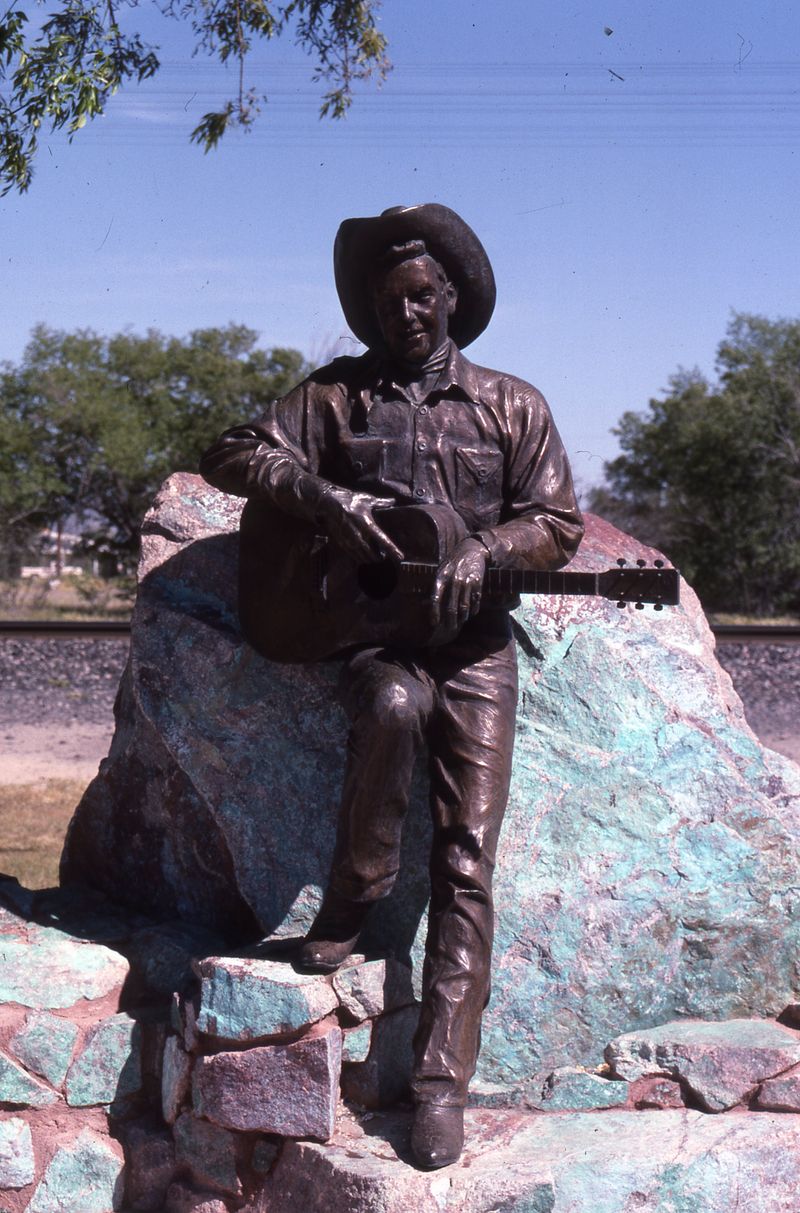
The town celebrates its most famous resident, Rex Allen, the last of the singing cowboys who starred in Western films and rodeos throughout the mid-twentieth century.
A museum dedicated to Allen’s life and the cowboy culture he represented occupies a place of pride downtown, preserving artifacts from Arizona’s ranching heritage.
Beyond the cowboy history, Willcox has become known for its wine industry, with vineyards producing excellent wines from grapes that thrive in the valley’s high-desert climate.
Interstate travelers see Willcox as a place to refuel and grab a quick meal before continuing to more famous destinations.
Those who spend time here discover a town with genuine Western character, outstanding bird watching at nearby Willcox Playa, and access to the stunning Chiricahua Mountains.
The playa, a seasonal lake bed, attracts thousands of sandhill cranes each winter, creating one of Arizona’s most spectacular wildlife viewing opportunities.
Local restaurants serve steaks from cattle raised in the surrounding valley, offering a true taste of Arizona ranch country.
What looks like a dusty agricultural town on the interstate turns out to be a gateway to natural wonders, authentic Western culture, and landscapes that stretch forever under impossibly blue skies.
10. Superior
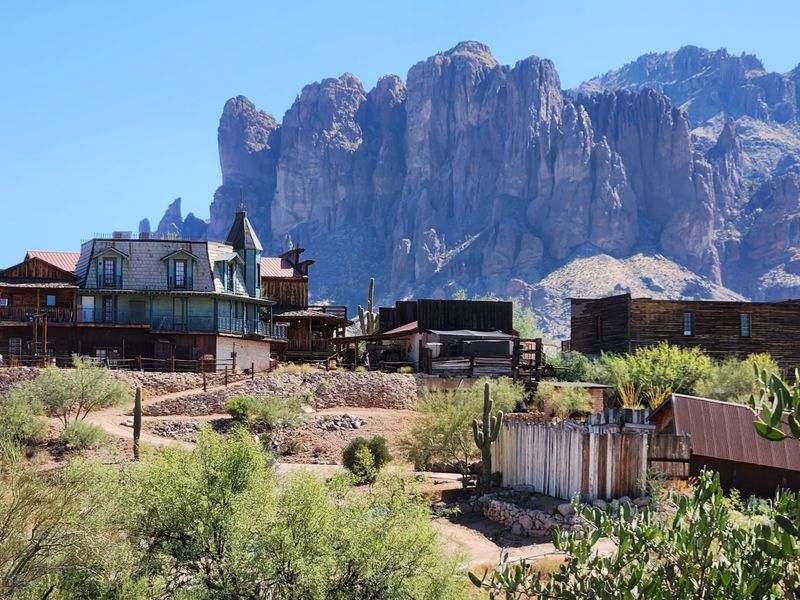
Dramatic cliffs and rugged peaks surround this small mining town like the walls of a natural fortress, creating scenery that stops travelers in their tracks.
Superior clings to life in one of Arizona’s most photogenic settings, where the highway winds through mountains that look like they belong in a Western film.
The town’s main street preserves buildings from its mining heyday, their weathered facades telling stories of boom times and the struggles that followed when the ore ran out.
Copper mining built Superior, and the nearby Resolution Copper Mine promises to become one of the largest underground mines in the world, potentially bringing new prosperity to this struggling community.
Old mining structures and equipment rust picturesquely against the desert landscape, creating the kind of scenery that photographers and Instagram enthusiasts dream about finding.
The town serves as a gateway to the Apache Leap, a massive cliff face with stunning views and tragic history involving Apache warriors who chose to jump rather than surrender to the U.S. Cavalry.
Most people drive through Superior on their way between Phoenix and other destinations, maybe slowing down for the dramatic scenery but rarely stopping.
Visitors who pause to explore find a town with character shaped by decades of mining history, spectacular natural beauty, and a community working to preserve its heritage while looking toward the future.
The Boyce Thompson Arboretum, just outside town, protects desert plants from around the world in a beautiful canyon setting.
Local establishments offer glimpses into small-town Arizona life, where everyone knows everyone and newcomers are greeted with genuine friendliness.
What appears to be just another struggling mining town transforms into a place of remarkable beauty, fascinating history, and landscapes that deserve far more attention than they receive.
Dear Reader: This page may contain affiliate links which may earn a commission if you click through and make a purchase. Our independent journalism is not influenced by any advertiser or commercial initiative unless it is clearly marked as sponsored content. As travel products change, please be sure to reconfirm all details and stay up to date with current events to ensure a safe and successful trip.
