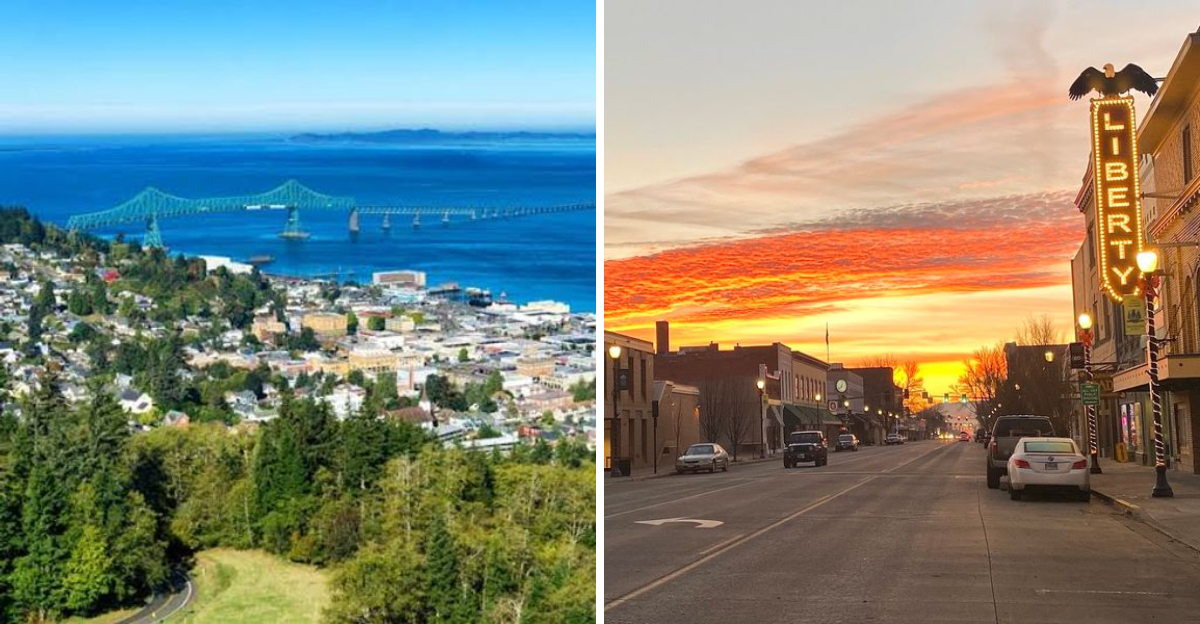
Time travel might not exist, but these 10 charming Oregon towns come pretty close. I wandered cobblestone streets, peeked into historic shops, and felt like I’d stepped straight into a storybook.
Every corner has old-school charm, from vintage diners to centuries-old buildings that somehow still feel alive. Locals move at a leisurely pace, clearly in on a secret that makes these towns feel magical.
Even a short stroll turns into an adventure, full of hidden details and delightful surprises. Each town has its own personality, quirks, and history that make it impossible not to fall in love.
By the end of my tour, I was half in awe, half ready to set up a permanent residence in one of these time-warped gems.
1. La Grande, Eastern Oregon
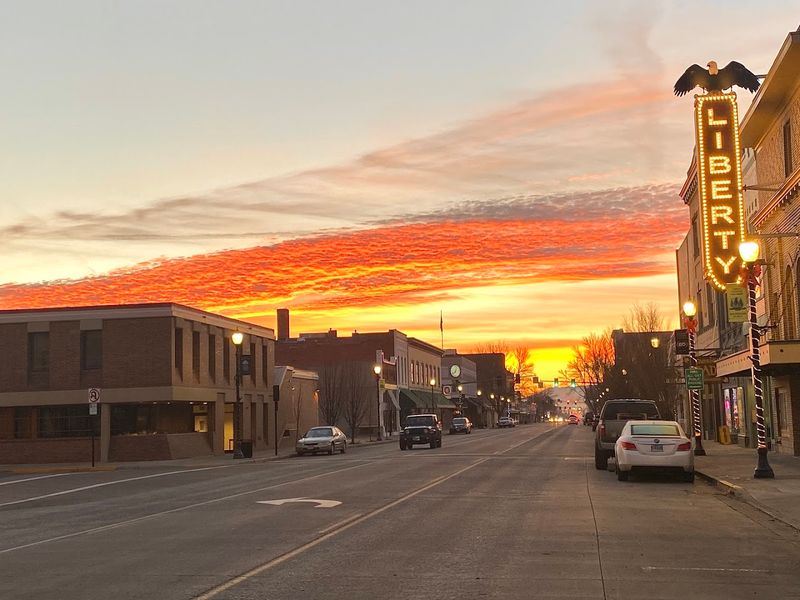
The Grande Ronde Valley cradles this Eastern Oregon town like it has something worth protecting. La Grande sits quietly between rolling hills, and its downtown feels like a postcard from a hundred years ago.
Brick buildings from the early 1900s line the main streets. You will spot old theaters and classic diners that have kept their original character remarkably well.
The pace here is slower, and that is honestly the whole point. Locals move without rushing, and visitors tend to pick up the same unhurried rhythm pretty quickly.
La Grande also serves as a gateway to the Wallowa-Whitman National Forest. Hiking trails, rivers, and mountain scenery are just a short drive away from those vintage storefronts.
Eastern Oregon gets far less tourist traffic than the coast or Portland. That means you get the charm without the crowds, which feels like a genuine reward for making the drive.
The Oregon Trail passed through this valley, and that history is very much alive here. Museums and local landmarks remind you that this land carries stories worth knowing.
Grab a coffee at one of the old-school diners and just sit for a while. La Grande rewards the kind of traveler who is in no particular hurry to be anywhere else.
2. John Day, Eastern Oregon
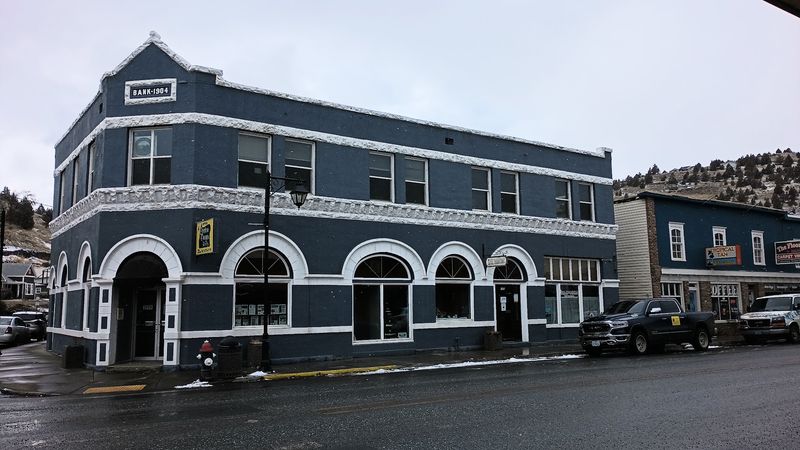
Gold rush history runs deep in the veins of this small Eastern Oregon town. John Day sits along the John Day River, surrounded by painted hills and wide open sky that feels almost cinematic.
The main street is lined with historic buildings that date back to the mining boom. Painted brick facades and weathered wooden signs give the whole place an authentic, unpolished feel that no amount of renovation could replicate.
One of the most fascinating stops here is the Kam Wah Chung State Heritage Site. It preserves the story of Chinese immigrants who played a huge role in the region during the gold rush era.
The John Day Fossil Beds National Monument is just a short drive away. This makes the town a perfect base for anyone curious about prehistoric Oregon and its remarkable geological past.
Local shops and small restaurants keep the community feel very much alive. You are not going to find chain restaurants dominating every corner here, which is genuinely refreshing.
The surrounding landscape shifts from pine forests to dramatic rock formations depending on which direction you drive. Every road out of town seems to lead somewhere worth stopping.
John Day rewards curious travelers who like their history served with a side of wide open space and absolutely zero pretense.
3. Baker City, Eastern Oregon
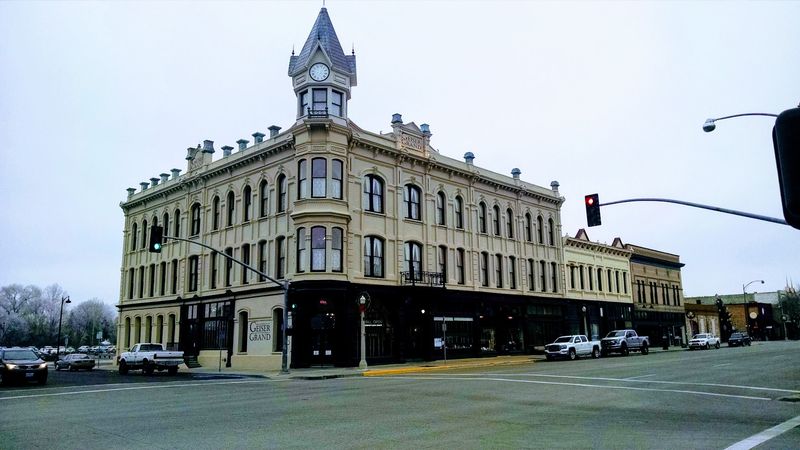
Baker City earned the nickname Queen City of the Mines during the height of Oregon’s gold rush, and it has never quite let go of that royal attitude. The downtown still carries a grandeur that feels genuinely earned rather than performed.
Victorian-era architecture dominates the main streets here. The Geiser Grand Hotel stands as the crown jewel, a beautifully restored building that opened in 1889 and still welcomes guests today.
Wide streets were designed to accommodate wagon trains and mining equipment. Walking them now feels like moving through a living museum, except with better coffee options available.
Baker City sits along the original Oregon Trail route. The National Historic Oregon Trail Interpretive Center nearby does an excellent job of bringing that history to life without being dry or dull about it.
The Elkhorn Mountains frame the town to the west, providing a dramatic backdrop that photographers absolutely love. Sunsets here are the kind that make you put your phone away and just watch.
Local galleries, antique shops, and independently owned restaurants fill those historic storefronts with genuine community energy. The town feels lived-in and proud of it.
Baker City is proof that small towns in Oregon can carry a big personality. Every corner has a story, and most of the locals are happy to tell it to you.
4. Pendleton, Eastern Oregon
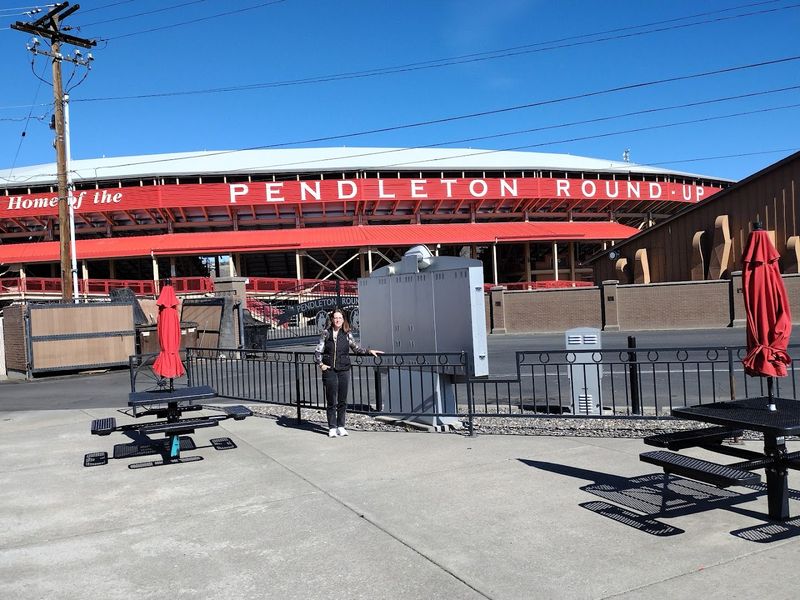
Pendleton is the kind of town that takes its identity seriously and backs it up with real history. Famous for its iconic wool blankets and its legendary annual rodeo, this Eastern Oregon city wears its Western heritage without apology.
The Pendleton Round-Up has been running since 1910. Every September, the town fills with rodeo fans, cowboys, and visitors who come specifically to experience one of the oldest and most celebrated rodeos in the United States.
Downtown Pendleton features historic brick buildings with Western-style facades that have stayed remarkably true to their original character. Walking the main street feels like flipping through a well-preserved photo album of the American West.
The Pendleton Woolen Mills has operated here since 1909. You can actually tour the mill and watch blankets being made using traditional methods, which is a surprisingly fascinating way to spend an afternoon.
Underground Pendleton offers tours of the tunnels beneath the city. These tunnels were used in the early 1900s and carry stories that are both colorful and genuinely captivating.
The Blue Mountains rise just outside of town, offering hiking and scenic drives that balance out all that history with some serious natural beauty.
Pendleton does not try to be something it is not. That honesty is exactly what makes it so easy to fall for on your first visit.
5. Coos Bay, Southern Oregon Coast
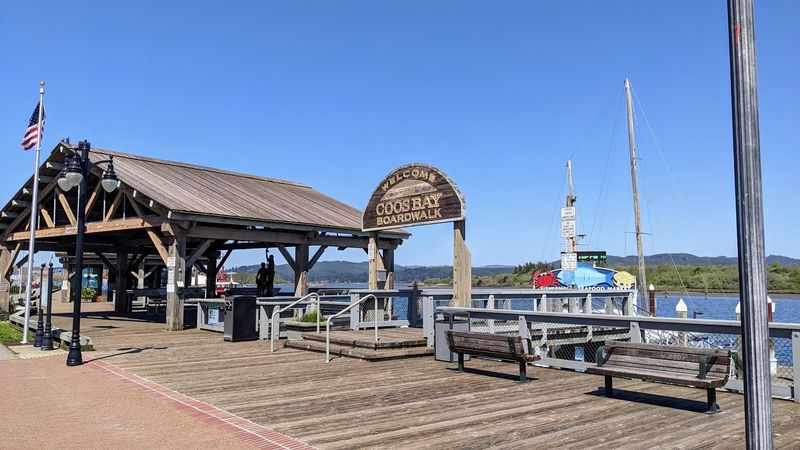
Oregon’s largest coastal city carries the salt-worn character of a place that has worked hard for a very long time. Coos Bay’s downtown still holds the bones of the era when sailors, loggers, and fishermen made this port one of the busiest on the Pacific Coast.
Historic buildings along the waterfront tell that story quietly but clearly. Old facades and preserved storefronts give the city center a texture that newer coastal towns simply cannot manufacture.
The Coos History Museum does a wonderful job of connecting visitors to the region’s layered past. Indigenous history, maritime trade, and the logging industry all get the attention they deserve here.
Shore Acres State Park sits just a short drive south of town. The formal gardens perched above dramatic ocean cliffs make for one of the most unexpected and beautiful stops on the entire Oregon coast.
The local food scene leans heavily on fresh seafood, which makes perfect sense given the working harbor right in town. Crab, clams, and fresh fish show up on menus in ways that feel honest and local rather than touristy.
Cape Arago State Park and Sunset Bay are also nearby, giving outdoor lovers plenty to explore between downtown visits.
Coos Bay is a coastal town with real grit and real beauty, and it offers both without asking you to choose between them.
6. Jacksonville, Southern Oregon
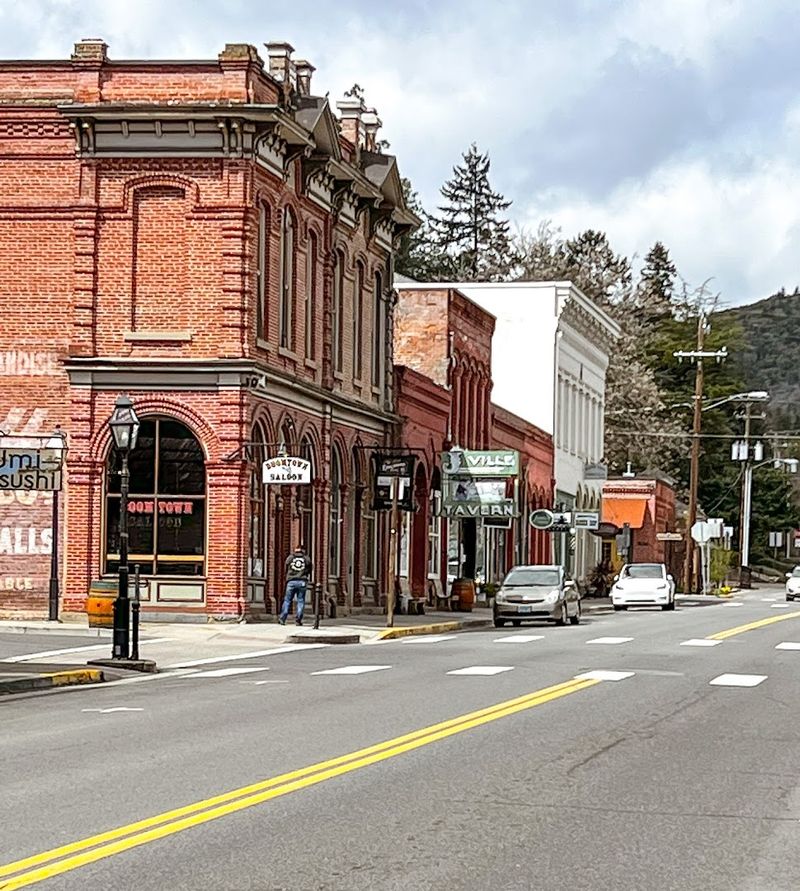
Jacksonville might be the most perfectly preserved gold rush town in the entire Pacific Northwest. Every building on its main street seems to have been frozen in the 1880s and simply maintained with great care ever since.
The entire town is a National Historic Landmark, which tells you something about just how intact its 19th-century character really is. Over eighty original brick and wooden structures still stand and are actively used today.
Founded in 1851 after gold was discovered nearby, Jacksonville grew fast and then slowed down when the railroad bypassed it in favor of Medford. That detour, frustrating at the time, accidentally saved the town from modernization.
The Jacksonville Museum of Southern Oregon History occupies the original 1883 courthouse. Inside, exhibits cover everything from Indigenous culture to pioneer life with impressive depth and care.
Britt Festivals hosts outdoor music concerts every summer in a natural amphitheater just outside town. The combination of live music, warm evenings, and historic surroundings is genuinely hard to beat.
Wine country surrounds Jacksonville on all sides, with the Applegate Valley and Rogue Valley wine regions both within easy reach for day trips.
Walking Jacksonville’s streets on a quiet morning, before the day-trippers arrive, is one of those travel experiences that stays with you long after you have driven home.
7. Ashland, Southern Oregon
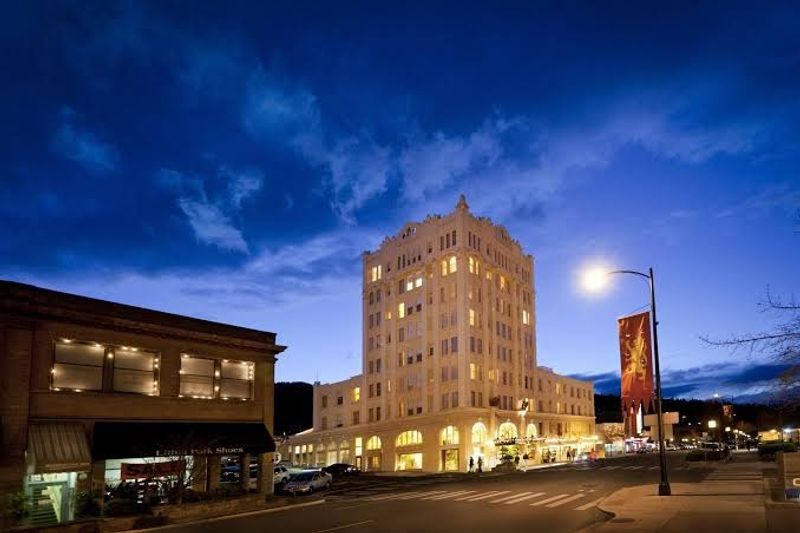
A town that has built its entire identity around Shakespeare is either very confident or very interesting, and Ashland turns out to be both. This Southern Oregon city has hosted the Oregon Shakespeare Festival since 1935, making it one of the longest-running theater festivals in the United States.
The festival runs from February through October each year. It draws theater lovers from across the country to a town that takes performance seriously while still managing to feel relaxed and approachable.
Downtown Ashland is compact and walkable, with Victorian-era buildings housing bookshops, restaurants, and boutiques that cater to a community with genuinely good taste. The whole area around the theaters has a lively, cultured energy that is hard to find in towns this size.
Lithia Park runs right through the heart of town along Ashland Creek. The park is beautiful in every season, with Japanese gardens, duck ponds, and shaded walking paths that feel like a reward for simply showing up.
Mount Ashland offers skiing in winter and hiking in summer, which means the town earns its keep year-round rather than relying on a single season.
The food scene here punches well above its weight for a city of roughly 21,000 people. Farm-to-table restaurants and creative menus reflect a community that cares about what it puts on the plate.
Ashland is the rare small town that manages to be sophisticated without ever feeling smug about it.
8. Astoria, Northwestern Oregon
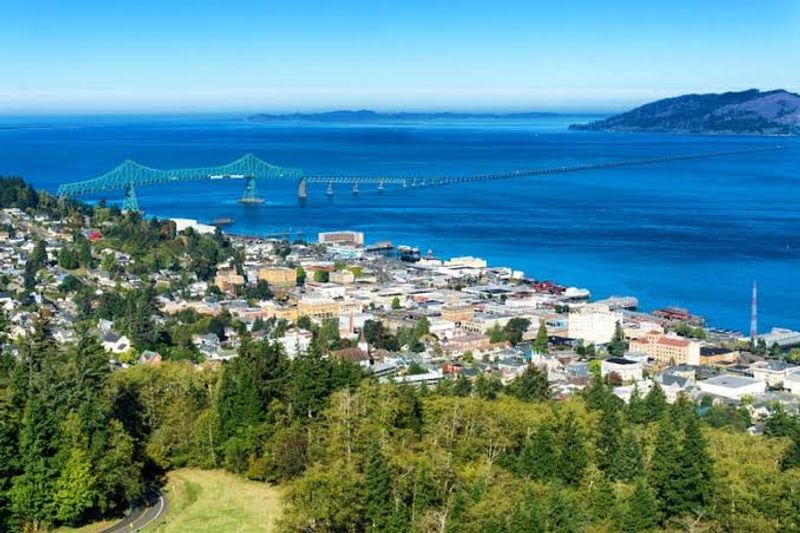
Perched at the mouth of the Columbia River where it meets the Pacific Ocean, Astoria wears its history on every hillside. This is the oldest American settlement west of the Rocky Mountains, founded in 1811, and it has the architecture to prove it.
Victorian homes climb the hills above downtown in colorful rows that look almost Scandinavian from a distance. The city’s strong Finnish and Scandinavian immigrant heritage actually explains a lot about its personality and its aesthetic.
The Astoria Column rises 125 feet above Coxcomb Hill and offers a panoramic view that covers the river, the ocean, the bridge, and miles of forested hills. Climbing it is a right of passage for first-time visitors.
Downtown Astoria has experienced a genuine creative revival. Independent restaurants, art galleries, and a thriving film culture, the movie Goonies was filmed here in 1985, give the historic streets a lively modern energy layered over very old bones.
The Columbia River Maritime Museum is one of the best regional museums in the entire Pacific Northwest. Its exhibits on maritime history, shipwrecks, and the Columbia River Bar are both beautifully designed and genuinely gripping.
The Astoria-Megler Bridge stretches over four miles across the river into Washington State. Seeing it from the waterfront at dusk is the kind of view that makes you grateful you made the drive.
Astoria is Oregon history at its most layered, most dramatic, and most worth your time.
9. Cottage Grove, Western Oregon
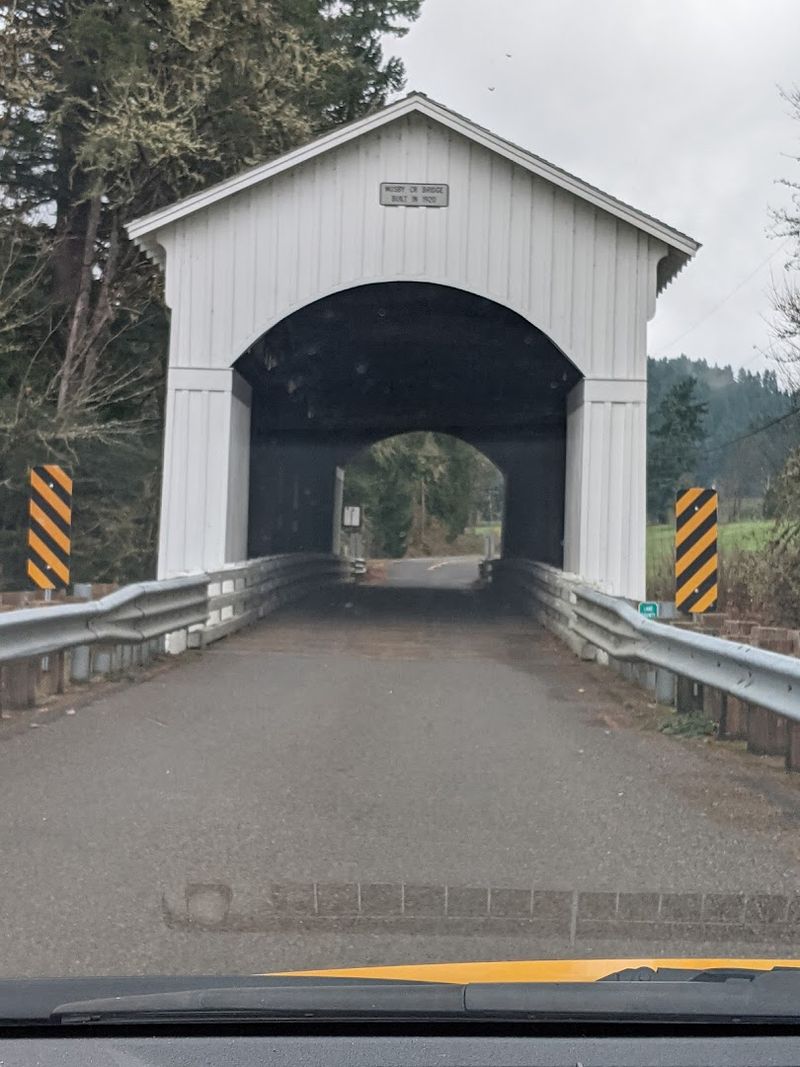
Cottage Grove calls itself the Covered Bridge Capital of Oregon, and it backs that claim up with six covered wooden bridges within a short drive of town. Each one feels like a discovery, even if you drove there on purpose to find it.
The town sits at the southern end of the Willamette Valley, where the valley floor meets the forested hills of the Coast Range. That geography gives Cottage Grove a lush, green quality that makes even a quick stop feel restorative.
Downtown Cottage Grove is compact and walkable, with historic brick storefronts that have held up well over the decades. A few of those buildings date back to the late 1800s, and the main street still has the proportions of a classic small American town.
The Dorena Lake area just outside town offers boating, fishing, and camping in a setting that feels genuinely tucked away from the busier parts of Oregon. It is the kind of spot that locals tend to guard with quiet loyalty.
Film history buffs might recognize Cottage Grove from the 1978 movie Animal House, which was filmed here. The town leans into that connection with good humor and a certain amount of civic pride.
The Row River Trail follows an old railroad grade for nearly 16 miles through the hills, passing covered bridges and forest scenery that reward every kind of pace.
Cottage Grove is small-town Oregon at its most genuinely unhurried and unexpectedly beautiful.
10. Silverton, Willamette Valley, Oregon
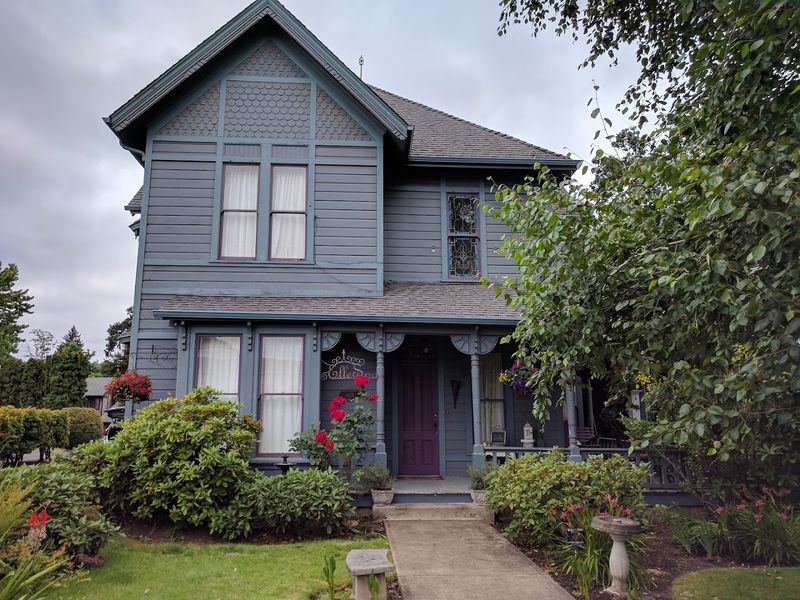
Silverton sits in the foothills east of Salem, and it carries the quiet confidence of a town that knows exactly what it is. Small, historic, and genuinely pretty, this Willamette Valley gem draws visitors who want substance over spectacle.
The downtown features early 20th-century brick buildings that house local shops, cafes, and small restaurants. Nothing here feels manufactured for tourists, which is exactly why it works so well for them.
Silver Falls State Park is the town’s most famous neighbor, and for very good reason. The park contains the Trail of Ten Falls, a hiking loop that passes ten separate waterfalls, including the stunning South Falls which drops 177 feet into a canyon you can walk behind.
The Oregon Garden is a 80-acre botanical garden just outside of town. It includes a Gordon House designed by Frank Lloyd Wright, which is the only Wright-designed home in the Pacific Northwest open to the public.
Silverton also hosts a remarkable annual event called the Homer Davenport Days Festival. It celebrates the town’s most famous son, a political cartoonist who became nationally influential in the late 1800s and early 1900s.
The surrounding farmland produces berries, hops, and wine grapes, and the agricultural landscape around town shifts beautifully with every season.
Silverton is the kind of town that keeps revealing new layers the longer you stay, and it always makes leaving feel a little harder than it should.
Dear Reader: This page may contain affiliate links which may earn a commission if you click through and make a purchase. Our independent journalism is not influenced by any advertiser or commercial initiative unless it is clearly marked as sponsored content. As travel products change, please be sure to reconfirm all details and stay up to date with current events to ensure a safe and successful trip.
