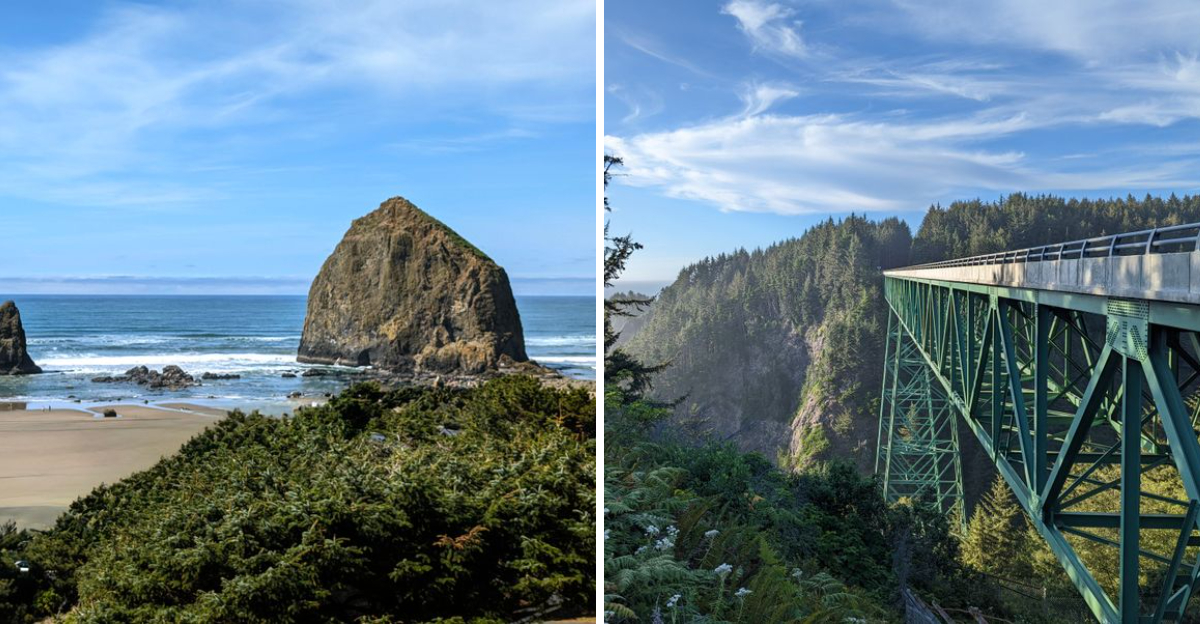
Oregon’s coastline stretches for 363 miles of pure, untamed beauty, and every single inch belongs to the public. From towering sea stacks and hidden tide pools to roaring waves crashing into ancient rock formations, this rugged shoreline offers adventures that stick with you long after the sand shakes out of your shoes.
Whether you’re chasing migrating whales, racing across massive sand dunes, or watching the ocean swallow itself at Thor’s Well, the Oregon Coast in 2026 is calling your name.
Pack your rain jacket, charge your camera, and get ready for some serious coastal magic. Forget boring beach vacations where you just sit and tan.
This is where you explore sea caves filled with barking sea lions, hike trails that cling to cliffsides, and stand in awe of lighthouses that have guided sailors for over a century. Ready to trade your couch for some salty air and jaw-dropping views?
Trust us, your Instagram feed has never looked this good.
1. Explore Haystack Rock at Cannon Beach
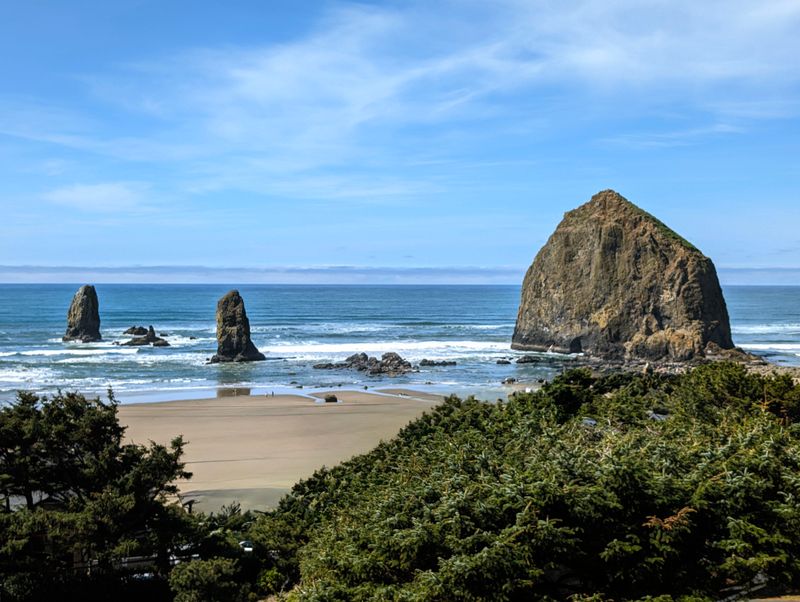
Standing 235 feet tall and rising from the surf like a giant’s chess piece, Haystack Rock commands attention from every angle. This massive sea stack isn’t just a pretty backdrop for your vacation photos.
It’s a protected marine habitat teeming with colorful sea stars, anemones, and tufted puffins that nest in its craggy nooks from April through August.
Low tide transforms the area into an outdoor classroom where tide pools reveal an entire universe of marine creatures. Volunteers from the Haystack Rock Awareness Program are often on hand to answer questions and help you spot critters you might otherwise miss.
Bring sturdy water shoes because the rocks can be slippery, and always keep an eye on the waves since sneaker waves are a real danger along the Oregon coast.
The beach itself stretches for miles in both directions, offering plenty of space for kite flying, sandcastle building, or simply strolling with the ocean breeze in your hair. Sunrise here is absolutely magical, with soft light painting the rock in shades of gold and pink.
If you’re visiting in winter, storm watching from the nearby town adds a thrilling dimension to your trip.
Cannon Beach has a charming downtown area just a short walk from the shore, filled with galleries, cafes, and shops selling everything from saltwater taffy to handmade jewelry. This isn’t just a quick photo stop.
Plan to spend at least a few hours soaking in the scenery, exploring the tide pools, and letting the rhythm of the waves slow you down to true vacation mode.
2. Navigate the Samuel H. Boardman State Scenic Corridor
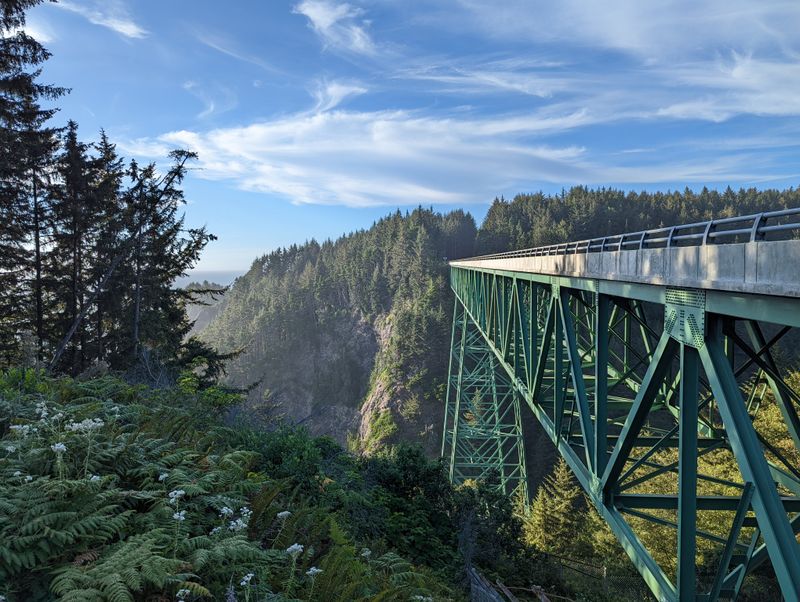
Twelve miles of pure coastal drama await you along this stunning stretch between Brookings and Gold Beach. Samuel H.
Boardman State Scenic Corridor packs more natural arches, secret coves, and clifftop viewpoints into one drive than seems physically possible. Each pullout reveals a new perspective, whether it’s the Natural Bridges formation or the windswept beauty of Whaleshead Beach.
Hikers will find themselves spoiled for choice with trails that wind through old-growth Sitka spruce forests before bursting onto headlands with views that make your heart skip. The Oregon Coast Trail runs through here, offering everything from easy quarter-mile walks to more challenging treks that require sure footing and a sense of adventure.
Arch Rock, Thunder Rock Cove, and Indian Sands are just a few of the jaw-dropping stops that deserve a spot on your itinerary.
Photographers go absolutely wild here, especially during golden hour when the light turns everything into a postcard. Bring layers because coastal weather can shift from sunny to foggy in minutes, and that marine layer adds an ethereal quality to your photos.
Spring wildflowers blanket the headlands in purple and yellow, while winter storms create dramatic wave action that’s mesmerizing to watch from a safe distance.
This isn’t a place to rush through with your windows up and air conditioning on. Stop at every viewpoint, take the short trails, and let yourself be awed by the raw power of the Pacific meeting ancient volcanic rock.
The southern Oregon coast doesn’t get as much attention as its northern neighbors, but this corridor proves it absolutely should.
3. Adventure Through the Oregon Dunes National Recreation Area
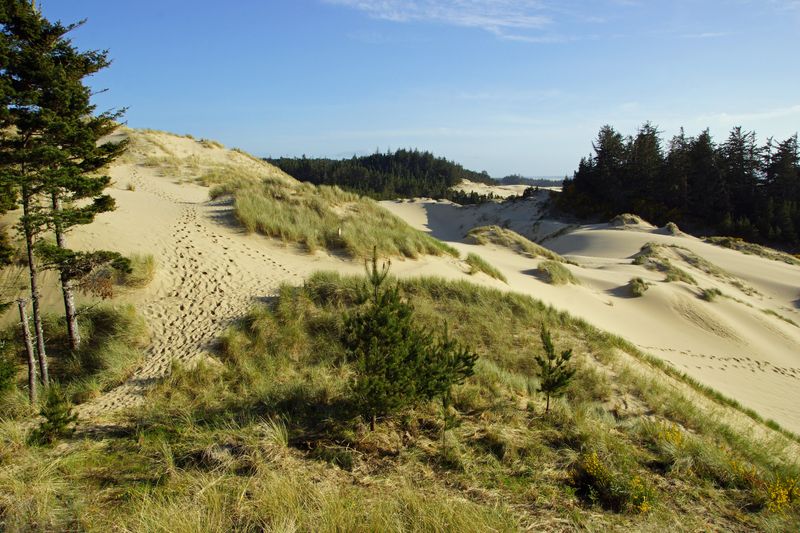
Picture the Sahara Desert, but with the Pacific Ocean as your backdrop and Douglas firs framing the edges. The Oregon Dunes National Recreation Area stretches for 40 miles between Florence and Coos Bay, creating the largest expanse of coastal sand dunes in North America.
Some of these sandy giants tower up to 500 feet high, offering landscapes that feel more like another planet than the Pacific Northwest.
Thrill-seekers can rent dune buggies and ATVs to tear across the sand at exhilarating speeds, carving tracks and catching air on the rolling terrain. If motorized mayhem isn’t your style, hiking and sandboarding provide equally exciting ways to explore.
The John Dellenback Dunes Trail takes you through a 2.5-mile loop where you’ll feel like a desert explorer, minus the scorching heat.
Families love this spot because kids can run wild, roll down dunes, and burn off energy in an environment where getting sandy is not just acceptable but inevitable. Early morning visits offer the best light for photography and a chance to see animal tracks before human footprints erase them.
Watch for shorebirds and the occasional deer wandering between the dunes and forest.
The nearby town of Florence serves as your base camp, offering equipment rentals and tour operators who know every peak and valley. Spring through fall provides the most comfortable weather, though the dunes maintain their otherworldly beauty year-round.
Just remember to bring plenty of water, sunscreen, and a sense of adventure because once you crest that first dune, you’ll want to explore for hours.
4. Whale Watching at Depoe Bay
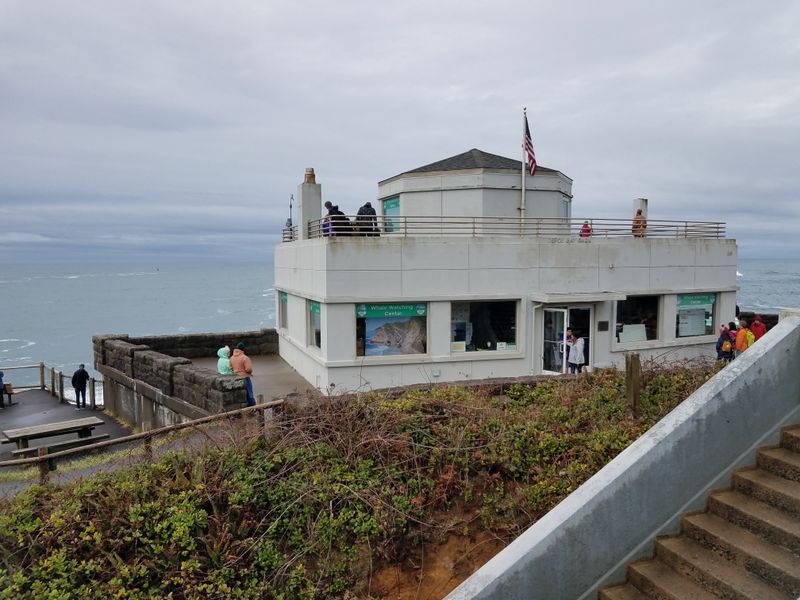
Depoe Bay proudly calls itself the whale watching capital of the Oregon coast, and with good reason. This tiny town with the world’s smallest navigable harbor sits right along the migration route of gray whales, making sightings remarkably common throughout much of the year.
Between mid-December and January, and again from late March through June, these gentle giants pass close to shore in numbers that can reach into the thousands.
You don’t even need to leave dry land to spot whales here. The Whale Watching Center, operated by Oregon State Parks, provides free viewing opportunities from trained volunteers who help you identify spouts, tail flukes, and breaching behavior.
Binoculars and spotting scopes are available, and the volunteers’ enthusiasm is absolutely contagious as they share facts about whale behavior and migration patterns.
For a closer encounter, charter boats depart regularly from Depoe Bay’s picturesque harbor, taking you just offshore where whales often surface alongside the vessel. These tours also offer chances to see dolphins, sea lions, and seabirds, creating a full marine wildlife experience.
The harbor itself is fascinating to watch as boats navigate the narrow channel through churning waters that locals call the Spouting Horn.
Beyond whales, Depoe Bay offers charming shops, seafood restaurants with harbor views, and easy access to other coastal attractions. Plan your visit during peak migration times for the best odds of sightings, but know that resident whales stick around year-round, so you’re never completely out of luck.
Bring warm layers and rain gear because ocean breezes can be chilly even on sunny days.
5. Tour Heceta Head Lighthouse
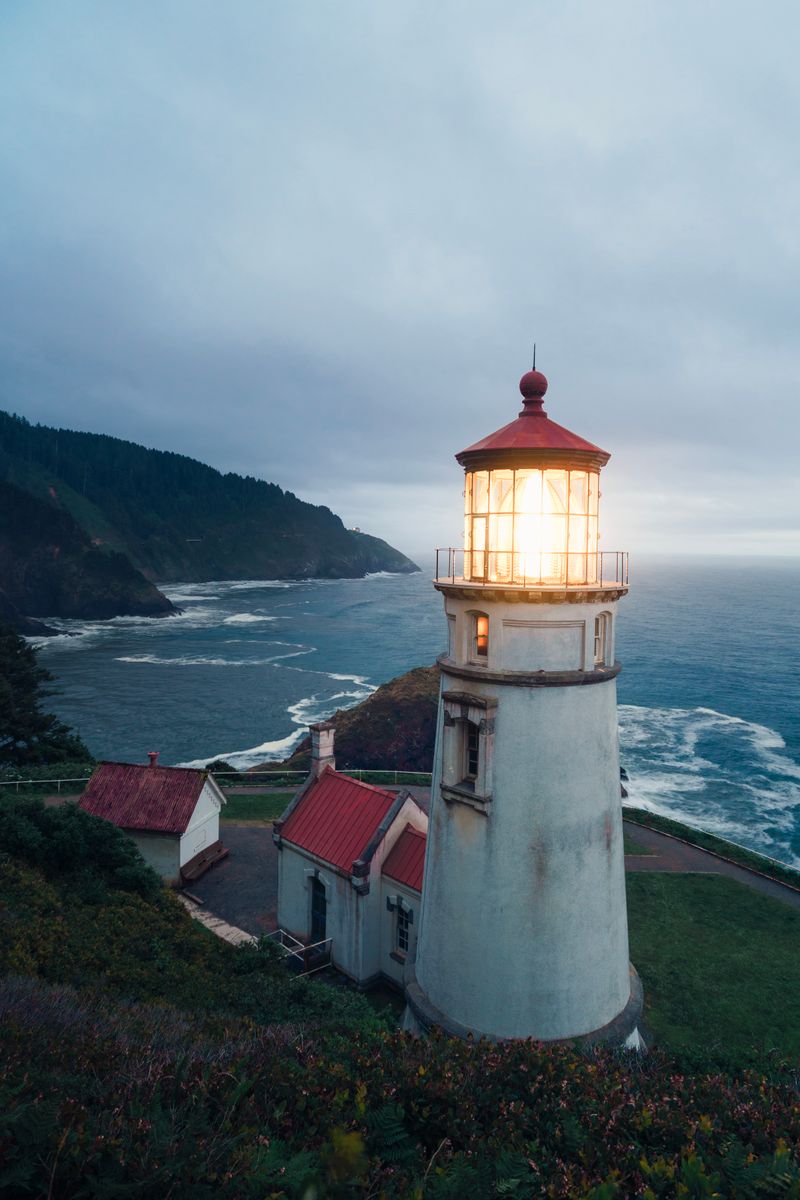
Perched 205 feet above the crashing Pacific waves, Heceta Head Lighthouse has been guiding mariners since 1894 and remains one of the most photographed lighthouses in America. The gleaming white tower and adjacent keeper’s house create a postcard-perfect scene against the rugged coastline, especially when fog rolls in and the light pierces through like a beacon of hope.
This isn’t just a pretty face, though. The lighthouse still operates, sending its beam 21 miles out to sea.
A half-mile trail winds from the parking area up to the lighthouse, offering spectacular views at every turn. Interpretive signs along the path share maritime history and ecological information about the headland’s plant and animal life.
During summer months, tours of the lighthouse interior let you climb the spiral staircase and peek into the workings of this historic structure.
The former assistant lightkeeper’s house now operates as a bed and breakfast, offering one of the most unique overnight experiences on the coast. Even if you’re not staying over, the house serves as an interpretive center where you can learn about the keepers who lived in this isolated spot and maintained the light through storms and fog.
Local legends claim a friendly ghost named Rue still wanders the premises, adding a touch of mystery to your visit.
Located at 92072 Highway 101 South, Yachats, OR 97498, Heceta Head sits within Heceta Head Lighthouse State Scenic Viewpoint. Plan your visit for late afternoon when the light begins its nightly work, or come at sunrise when the tower catches the first rays of dawn and the ocean glows with possibility.
6. Visit Thor’s Well and Devil’s Churn at Cape Perpetua
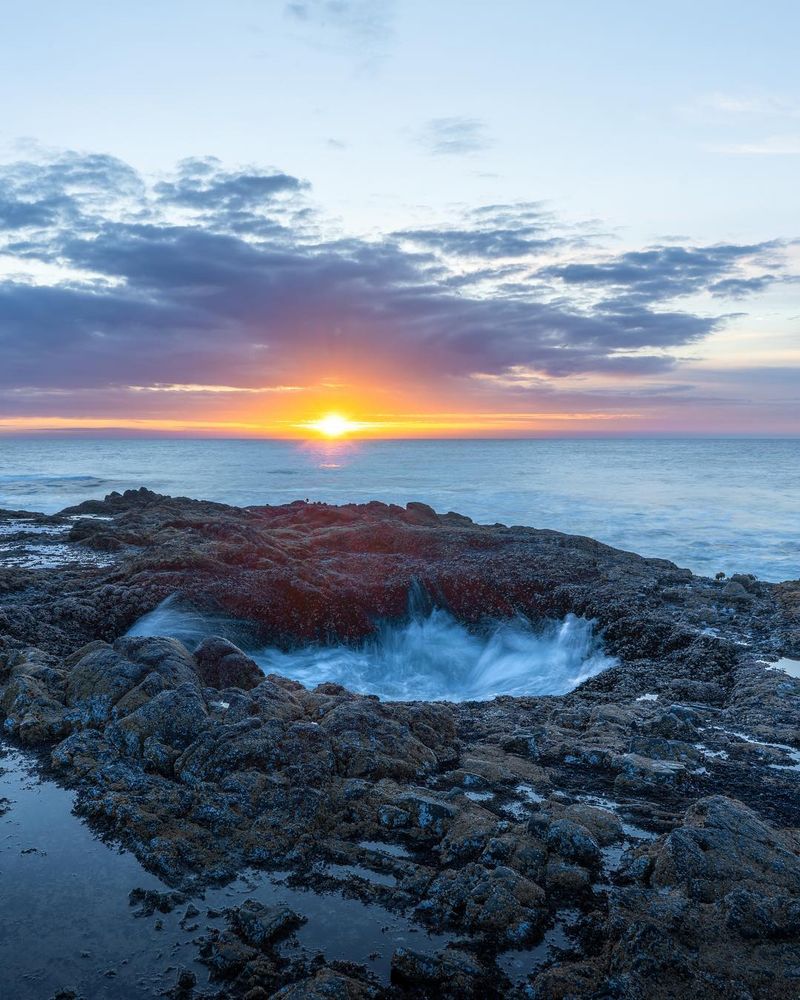
Mother Nature shows off her dramatic side at Cape Perpetua, where Thor’s Well seems to drain the entire Pacific Ocean into an endless void. This natural sinkhole in the rocky shore creates an optical illusion that has captivated photographers and adventurers for generations.
During high tide and rough seas, waves crash over the surrounding rock and pour into the well with hypnotic force, only to surge back out in explosive fountains of white water.
Just a short walk away, Devil’s Churn lives up to its ominous name as waves funnel into a narrow fissure in the basalt, creating violent churning and booming sounds that echo off the rock walls. The power of the ocean concentrating into this tight space is both terrifying and mesmerizing.
Safety barriers keep visitors at a respectful distance, which is absolutely necessary because sneaker waves have swept people off these rocks in the past.
The Cape Perpetua Scenic Area offers much more than these two famous features. Hiking trails wind through old-growth forests to tide pools, viewpoints, and even a World War II bunker.
The Cape Perpetua Visitor Center provides context about the area’s ecology, geology, and history, making your visit more meaningful than just snapping photos and leaving.
Timing is everything here. Check tide tables and aim for high tide, preferably during stormy weather when the ocean puts on its most impressive show.
Winter storms create the most dramatic conditions, but they also bring the highest risks, so always stay behind barriers and watch the water constantly. Located along Highway 101 near Yachats in the Siuslaw National Forest, this spot earns its reputation as one of Oregon’s most powerful natural spectacles.
7. Hike at Ecola State Park
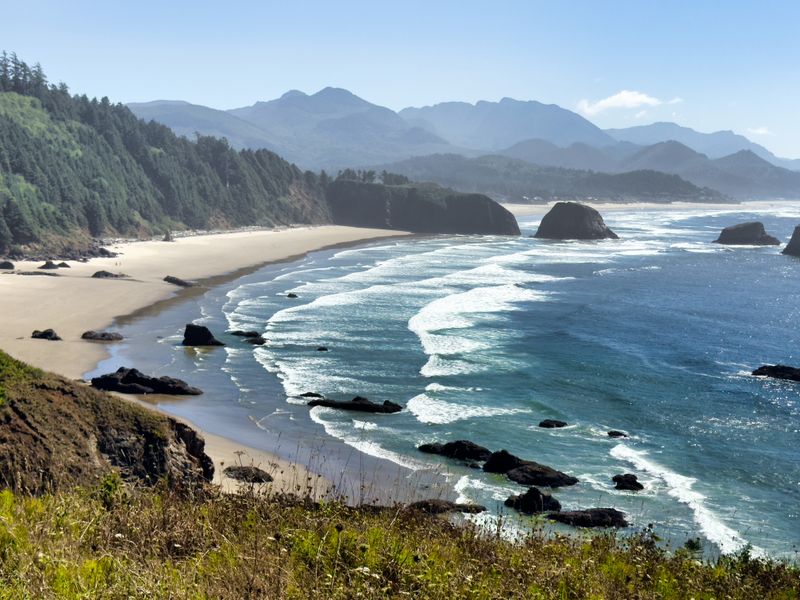
Ecola State Park wraps around a series of headlands just north of Cannon Beach, offering some of the most stunning coastal hiking in all of Oregon. The name comes from the Chinook word for whale, which seems fitting given the excellent whale watching opportunities from these clifftop trails.
Lewis and Clark expedition members explored this area in 1806 while searching for a beached whale, making it a spot with genuine historical significance beyond just natural beauty.
The Clatsop Loop Trail serves as the park’s crown jewel, winding 2.5 miles through Sitka spruce forests draped in moss before emerging onto viewpoints that will make you stop and stare. On clear days, you can see Tillamook Rock Lighthouse perched on its lonely offshore rock, Haystack Rock rising from Cannon Beach, and miles of coastline stretching in both directions.
The trail includes some elevation gain, but the payoff is absolutely worth every uphill step.
Indian Beach, accessible via a short spur trail, offers excellent tide pooling and surfing opportunities for those brave enough to handle the cold Pacific waters. The beach’s relative seclusion compared to nearby Cannon Beach means you can often find stretches of sand to yourself, especially on weekday mornings.
Picnic areas near the parking lots provide perfect spots for lunch with a view.
Wildlife sightings are common throughout the park, with Roosevelt elk, black-tailed deer, and countless seabirds calling this area home. Spring brings wildflowers to the headlands, while fall offers crisp air and dramatic storm watching.
Winter can be muddy, so proper footwear is essential year-round. This park proves that Oregon’s northern coast has just as much to offer as its more famous southern sections.
8. Walk the Bandon Beach Rock Formations
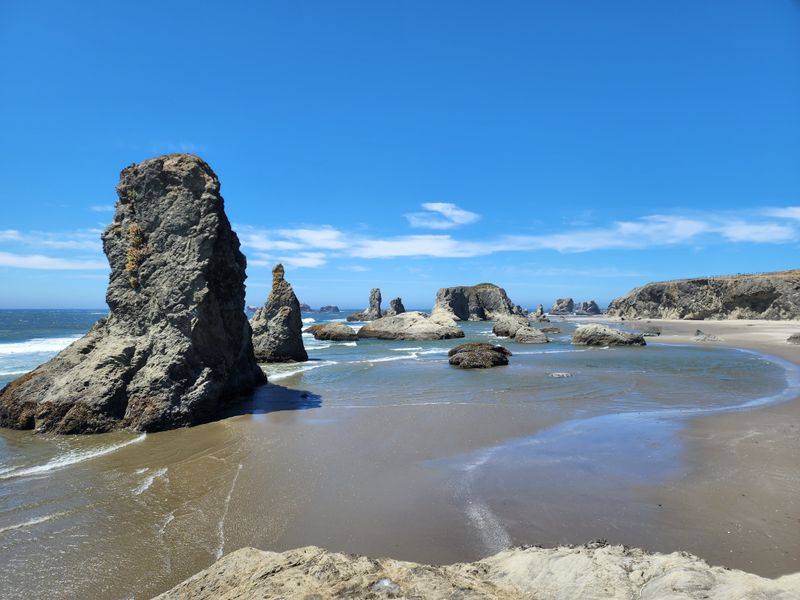
Bandon’s beaches look like a sculptor went wild with giant rocks, scattering monoliths and sea stacks in dramatic arrangements along miles of sandy shore. Face Rock State Scenic Viewpoint anchors the southern end of this stunning stretch, where the namesake rock formation resembles a woman’s profile gazing skyward.
Local Coquille Indian legend tells the story of a princess turned to stone, adding mythic weight to the already impressive geology.
Low tide transforms these beaches into an explorer’s paradise, with tide pools nestled among the rocks revealing sea stars, anemones, crabs, and tiny fish. The formations create natural frames for photography, and sunset here ranks among the best on the entire Oregon coast.
Golden light bounces off wet sand and illuminates the rocks in warm tones that photographers dream about.
Each rock formation has its own character and often its own name. Cat and Kittens Rock, Wizard Hat, and Garden of the Gods are just a few of the whimsical monikers locals have given these natural sculptures.
Walking from one formation to the next can easily consume an entire afternoon, especially if you stop to examine tide pools, collect agates, or simply sit and watch waves crash against ancient stone.
The nearby town of Bandon offers excellent dining, particularly for fresh seafood, and a charming old town district worth exploring. Cranberry bogs surrounding the area add agricultural interest, and fall harvest season brings festivals celebrating this tart berry.
Beach access points are numerous along the stretch, so you can choose busy areas near parking or walk to more secluded spots where you might have entire rock gardens to yourself.
9. Ride the Dunes or Hike at Cape Lookout
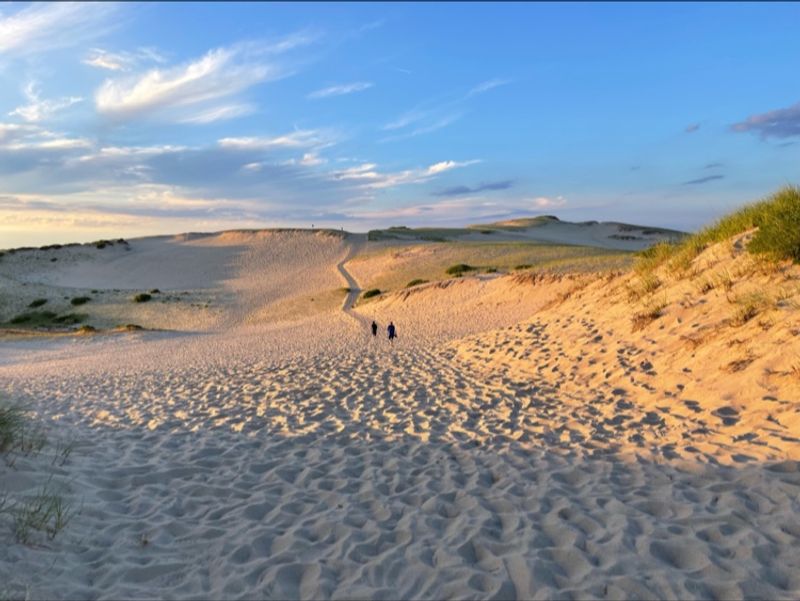
Cape Lookout juts nearly a mile into the Pacific Ocean like a giant finger pointing westward, creating one of the most distinctive headlands on the Oregon coast. The cape sits within Cape Lookout State Park, which offers a perfect blend of forest hiking, ocean views, and beach access that appeals to adventurers of all types.
Old-growth forests of Sitka spruce and western hemlock create cathedral-like groves along the trails, with some trees reaching ages of 300 years or more.
The Cape Trail stretches 2.5 miles from the trailhead to the cape’s tip, gaining and losing elevation as it winds through forest before emerging onto the exposed headland. Views from the end are absolutely spectacular, with ocean stretching to the horizon in three directions and the coastline visible for miles north and south.
This is prime whale watching territory during migration seasons, with the elevated vantage point letting you spot spouts and breaches from above.
South Beach Trail and North Trail offer alternatives for hikers wanting different experiences, with the South Beach route descending through forest to a quiet beach perfect for solitude and beachcombing. Campsites within the park provide overnight options, letting you wake to the sound of waves and bird songs.
The campground includes yurts for those wanting a roof without the hassle of tent camping.
Mountain bikers enjoy the park’s trails, though some sections can be challenging with roots and elevation changes. Beach access from the park leads to miles of sand where kite flying, tide pooling, and simply walking become meditative activities.
Located between Tillamook and Pacific City on the Three Capes Scenic Route, Cape Lookout deserves a full day of exploration, not just a quick stop.
Dear Reader: This page may contain affiliate links which may earn a commission if you click through and make a purchase. Our independent journalism is not influenced by any advertiser or commercial initiative unless it is clearly marked as sponsored content. As travel products change, please be sure to reconfirm all details and stay up to date with current events to ensure a safe and successful trip.
