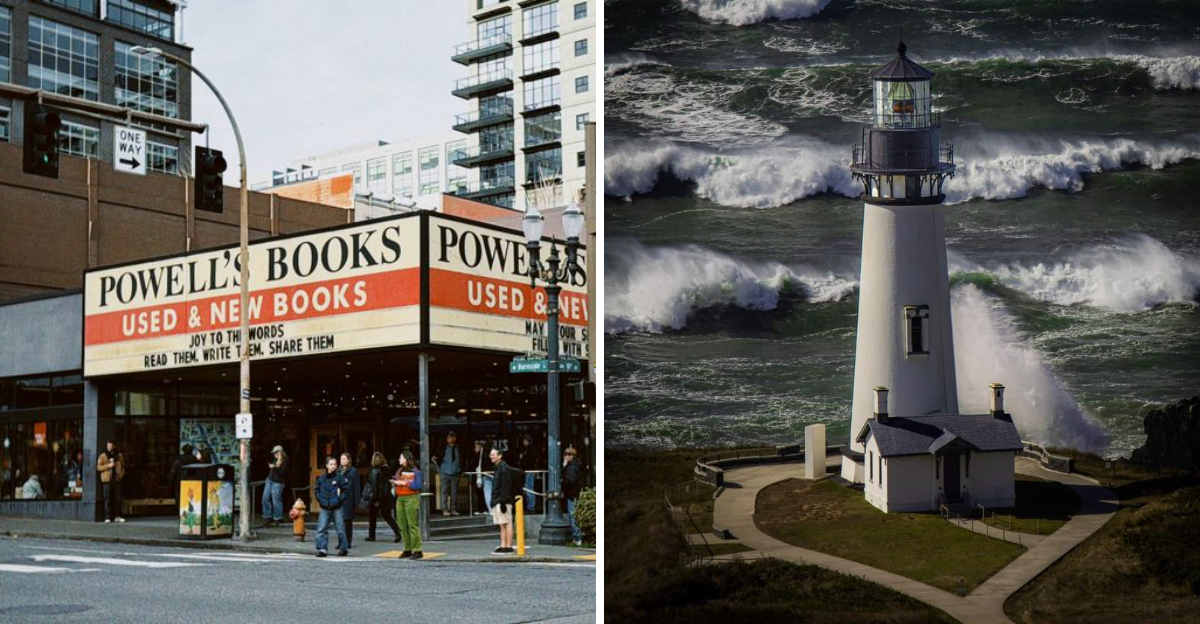
Oregon rewards curiosity, especially when you look past the headliners and listen to the heartbeat in ordinary corners that locals love.
Everyday places hold layered histories, civic pride, and a sense of play that threads through neighborhoods from the coast to the Cascades.
Walk into a familiar storefront or a quiet park, and you feel how art, science, land, and community are woven together with care.
These stops are easy to reach, yet they whisper about bigger shifts shaping the state today.
You will find culture beside coastline, and innovation tucked inside vintage brick.
The people here treat daily rituals like small festivals of connection, which makes simple errands feel like a tour.
Follow along, and you will see how Oregon’s identity shows up in the places you pass every week.
1. Powell’s City of Books
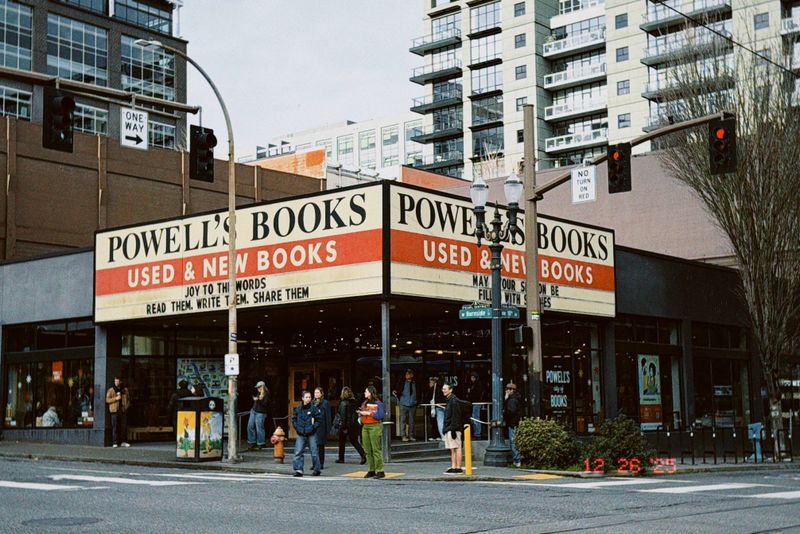
Step inside the flagship at 1005 W Burnside St, and the city’s literary soul greets you aisle by aisle.
Color coded rooms turn browsing into a map of curiosity, guiding you from rare editions to zines that capture Oregon’s edge.
You feel a hush of shared focus, a quiet agreement that ideas travel farther when neighbors read together.
The store feeds local writers with events that favor questions over mic drops, and you watch strangers become a crowd with purpose.
Staff picks read like love letters to the region, mixing trail memoirs, immigrant stories, and incisive journalism.
There is no velvet rope, just stacks that invite you to linger, compare, and carry something home that shifts your view.
Secondhand shelves sit beside new releases, a practical reminder that culture thrives when budgets meet access.
Parents point to maps while kids follow scavenger cards, and learning becomes a game inside a serious cathedral of pages.
Local presses stand shoulder to shoulder with big houses, proving small teams can move statewide conversations.
In a world of feeds, the tactile search slows you down, and that rhythm feels like Oregon choosing depth over noise.
Powell’s is commerce and commons, a bookstore that behaves like a civic square under warm lights.
You leave with a paper bag, a plan to return, and the feeling that knowledge is still a shared public good.
2. McMenamins Kennedy School
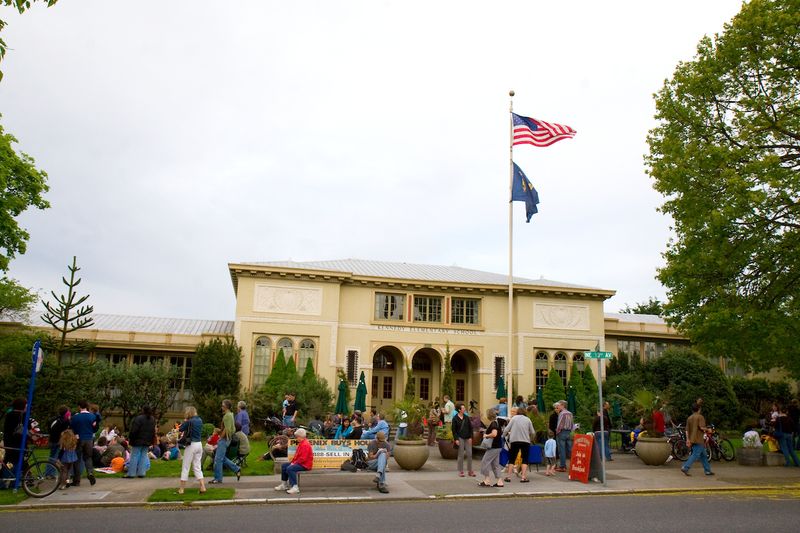
The former elementary school at 5736 NE 33rd Ave now welcomes you with chalkboard corridors and cozy lounges.
Classrooms turned into gathering spaces keep the bones of the building, preserving neighborhood memory without freezing it in time.
You wander tiled halls where local art retells Portland stories, and restoration becomes a quiet civics lesson.
Courtyards host community events that feel casual, yet they stitch friendships across generations and blocks.
Ceilings carry murals that tip their cap to teachers and students who shaped this corner of Oregon.
Theaters and nooks invite conversation, showing how reuse can be generous, not merely efficient.
Warm lamps glow against old lockers, proving history does not have to feel brittle or fenced off.
Visiting here is a reminder that architecture influences behavior, because comfortable spaces soften guarded moods.
Local musicians find audiences who show up for stories as much as sound, and that balance strengthens creative scenes.
You see guests reading in former classrooms, the past reimagined as today’s third place.
This is a model many Oregon towns have tried, saving buildings through careful stewardship and neighborly intent.
Leaving, you carry a simple thought, that heritage breathes best when people are invited to linger and feel welcome.
3. Salt & Straw

At 3345 SE Division St, the line moves with neighborly chatter, a small ritual that turns waiting into community theater.
Menus change with the seasons, and you notice how Oregon farms quietly shape choices through herbs, fruits, and flowers.
The scoop counter works like a tasting lab, where curiosity is rewarded and preference feels personal, not performative.
Walls display playful art, and the compact space hums with a balance of intention and fun.
What you taste becomes a story about place, because ingredients track directly to the soil and sea nearby.
The staff talks about texture and temperature with a craftsperson’s pride, and you lean in without feeling sold to.
This brand started local, then carried Oregon’s ingredient ethos to other cities without losing its neighborhood manners.
Seasonal collaborations spotlight makers from around the state, supporting a network that feels resilient and kind.
Families gather after walks on Division, and students compare picks like critics with gentle stakes.
Windows frame a street that has evolved, yet the shop remains a friendly anchor for casual celebration.
You leave thinking about supply chains, because transparency tastes better than mystery.
The bigger story is simple, that culinary creativity can be joyful, civic, and grounded enough to reflect the state honestly.
4. Voodoo Doughnut
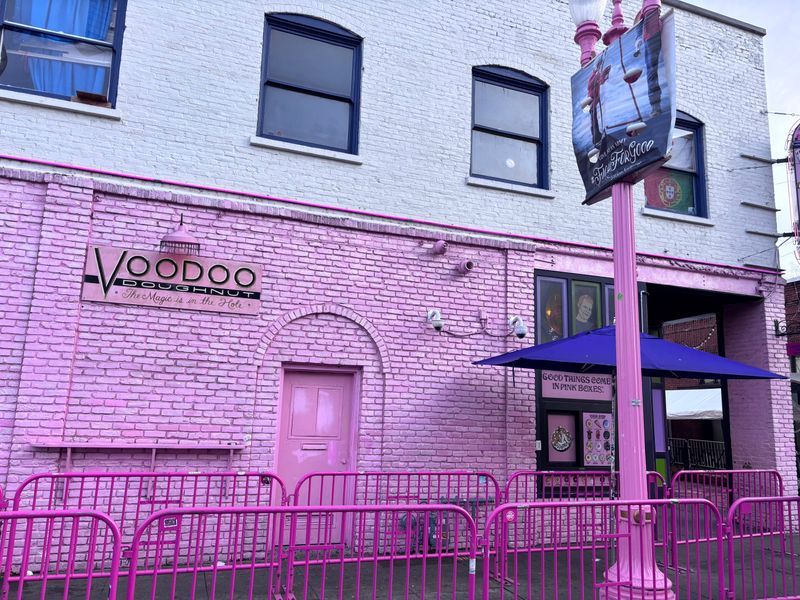
The pink storefront at 22 SW 3rd Ave sparkles with a carnival vibe that still feels proudly Portland.
Neon and playful decor set an irreverent stage, a reminder that Oregon culture leaves space for whimsy and delight.
Lines bend around the block, and the queue behaves like a street party where strangers swap tips.
Inside, the atmosphere is theatrical but welcoming, and employees move with practiced rhythm that keeps it friendly.
Tourists arrive with cameras, yet locals slip in with a knowing smile, treating spectacle like a daily errand.
The brand’s visual language has become part of the city’s iconography, as recognizable as bridges and bikes.
This small shop shows how bold aesthetics can turn a corner into a landmark without losing accessibility.
Late hours meet real needs, serving shift workers and night wanderers who rely on dependable light in the dark.
Decor nods to Portland’s oddball humor, but the operation is disciplined, clean, and surprisingly efficient.
Nearby blocks reflect the city’s constant change, and this spot adapts while guarding its playful core.
You walk out with a box that announces its origin, a portable souvenir that carries neighborhood energy.
The larger lesson is that identity thrives when a city says yes to color, surprise, and everyday joy.
5. Haystack Rock Tide Pools
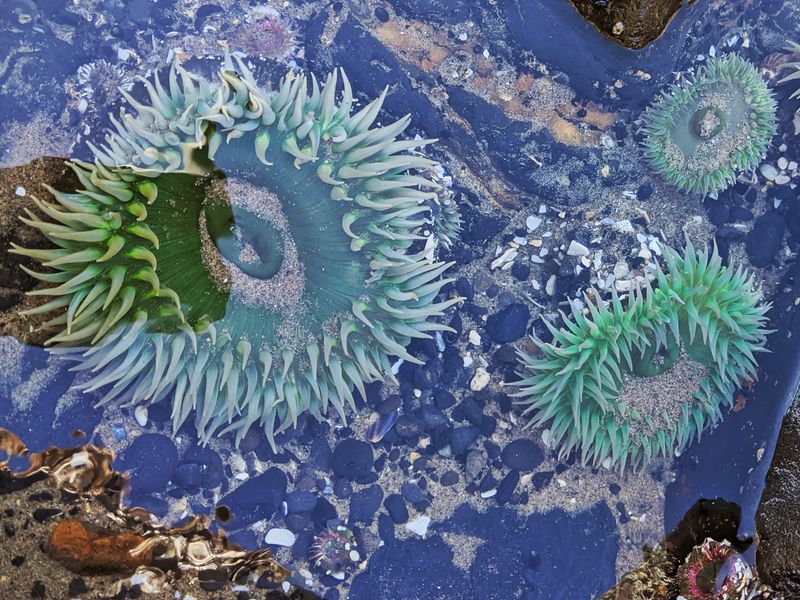
At the foot of Haystack Rock off 3285 S Hemlock St, tide pools flicker with life that rewards patient eyes.
Volunteers from the local stewardship program answer questions, keeping fragile habitats safe through gentle guidance.
You kneel to watch anemones pulse, then lift your gaze to seabirds that nest on cliffs like tiny guardians.
The Oregon Coast reveals its push and pull here, where tourism meets conservation in daily choreography.
Signs remind you to step on bare rock, and you feel how small choices protect ecosystems underfoot.
Families time visits to low tide, turning science into memory as kids spot stars and shells.
Weather changes quickly, so layers and respect for surf are part of the ritual.
Photographers chase reflections at golden hour, yet the scene belongs to the creatures first.
Nearby paths carry you back to town, and small shops echo the marine palette in window displays.
Local guides share history of rescues and storms, anchoring the view in real coastal lives.
You leave with salty shoes and a mental checklist to tread lighter across Oregon’s shore.
The bigger story is resilience, a coastline teaching visitors to be partners, not just admirers, of the wild.
6. Willamette Valley Wine Country
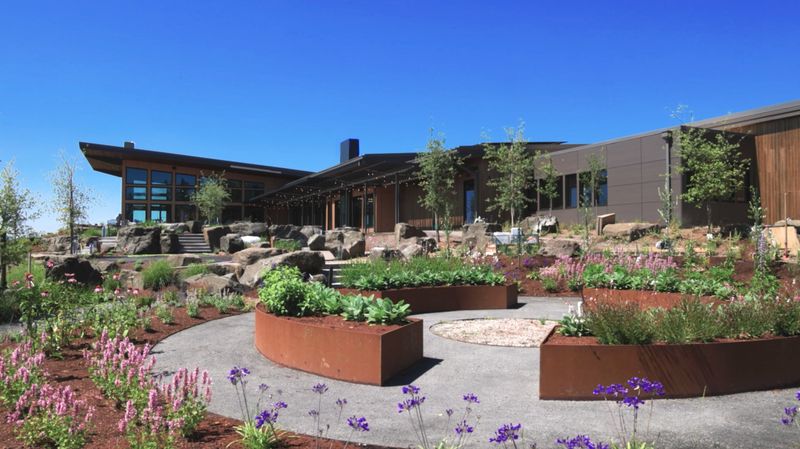
Rolling hills near 21000 NE Hwy 240 shift colors with the season, and vineyard rows draw calm lines across the view.
Tasting rooms open like living rooms, framed by weathered wood and picture windows that face the Coast Range.
Hosts talk about soil and elevation with a teacher’s patience, connecting flavor to geology and care.
Small producers share equipment through cooperative spaces, building a culture of collaboration that feels very Oregon.
Picnic lawns encourage unhurried afternoons, and conversations drift from farming practices to wildlife corridors nearby.
Local cheeses and breads often appear as simple pairings, handled with restraint and gratitude for neighbors.
You sense an ethic of stewardship, because healthy land keeps families rooted and communities steady.
Country roads thread through farmstands and art studios, adding texture to a day that moves gently.
Harvest season buzzes, yet hospitality remains warm, with thoughtful guidance instead of scripted pitches.
The valley balances rural calm with innovation, welcoming travelers while protecting what makes it rare.
When mist lifts, the landscape feels like a canvas painted by patience and steady hands.
You carry home respect for craft that grows slowly, a lesson Oregon repeats across its creative fields.
7. Springfield Museum and Downtown
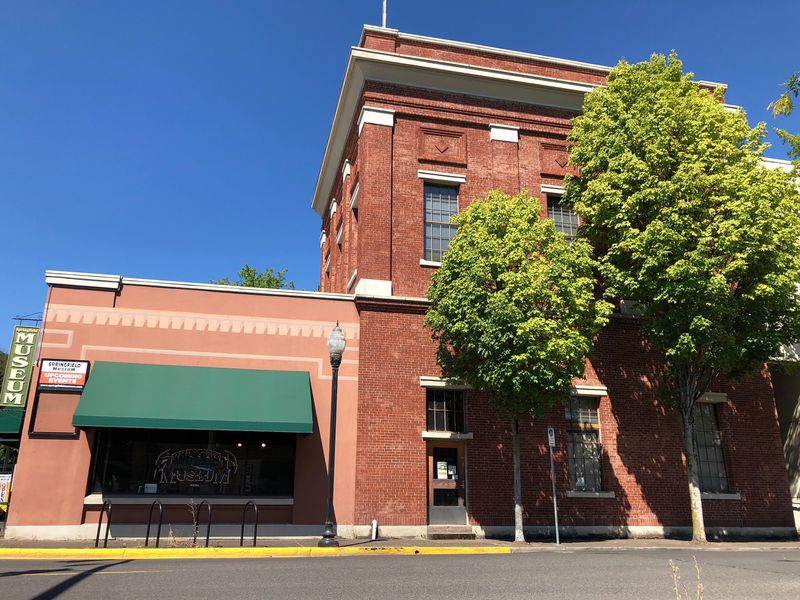
Downtown Springfield around 590 Main St wears murals and restored storefronts that signal a town proud of its voice.
The museum nearby curates local history with care, connecting mills, migration, and neighborhood stories to the present day.
Fans stop for a photo with familiar cartoon tributes, then discover independent shops that keep talent local.
Walking the blocks feels easy, with planters, crosswalk art, and benches that invite you to pause.
Community centers host workshops where newcomers learn skills alongside longtime residents.
The result is a main street that avoids polish for polish’s sake, choosing function that feels human.
Pop into galleries where regional artists show work that reflects rivers, forests, and daily humor.
Cafes serve as living rooms, supporting conversations that give small cities in Oregon their connective tissue.
Seasonal events draw volunteers who treat logistics like a neighborly sport.
Rail history lingers in sightlines and brick, reminding you that growth here has always depended on movement.
The Simpsons lore adds a wink without overshadowing the town’s own identity.
You leave with a sense that pop culture can open a door, but community keeps you walking inside.
8. OMSI
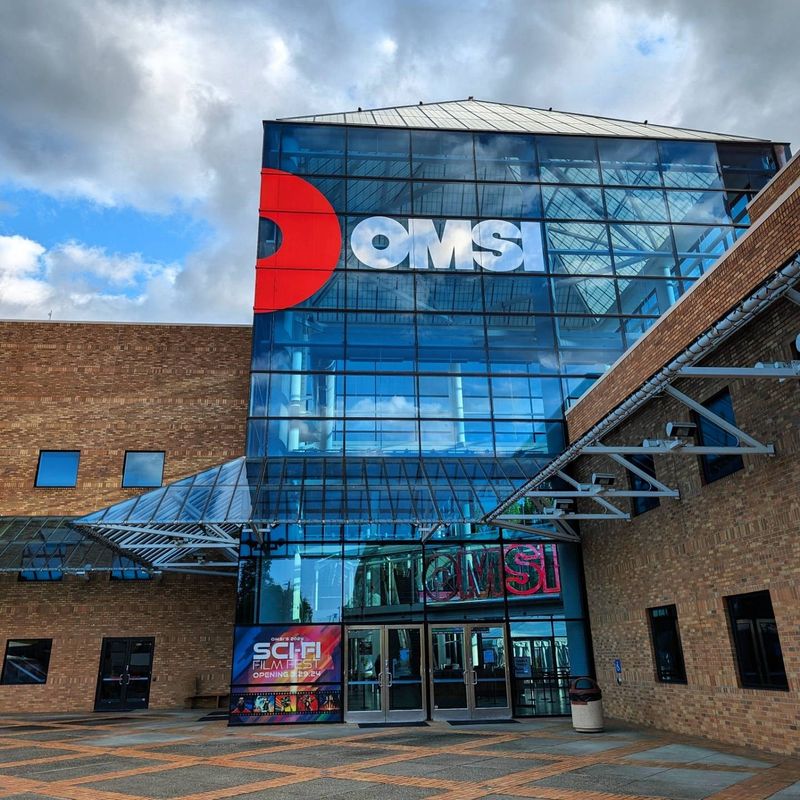
On the east bank at 1945 SE Water Ave, the museum’s glass and steel frame signals a hands on invitation.
Exhibits turn abstract concepts into puzzles you can touch, and curiosity spreads quickly among families and friends.
Lab spaces host demonstrations that favor discovery, not lecture, so learning feels active and contagious.
Riverside views ground the science in place, reminding you that Oregon’s environment is a daily classroom.
Temporary shows rotate often, pulling in topics that mirror current questions from energy to climate.
Staff and volunteers encourage tinkering, and setbacks become part of the fun rather than a barrier.
School groups move through with guided purpose, but you can wander and build your own route.
The planetarium and theater deepen context, turning wonder into a framework you can use later.
Neighbors treat the campus like a shared resource, returning for new angles on familiar themes.
Interactive zones remain clean and well maintained, proving high touch spaces can be orderly and safe.
Leaving, you notice the skyline and bridges, and you carry questions into the walk back.
The larger story is a city that invests in curiosity, because informed residents make Oregon stronger.
9. Portland Farmers Market at PSU
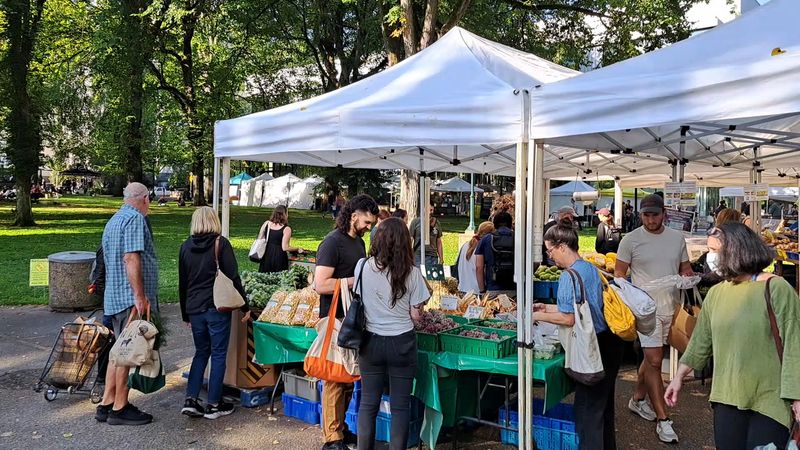
Beneath tall trees at 1803 SW Park Ave, the market wraps around campus paths with a lively, neighborly rhythm.
Stalls brim with produce, but the scene focuses on people meeting growers and makers face to face.
Music drifts from a corner, encouraging a pace that lets you notice colors, scents, and small smiles.
Labels highlight farms by town, threading rural Oregon directly into the city’s everyday pantry.
Shoppers bring bags that last, and volunteers help with compost and recycling so the loop stays tight.
Cooks trade tips on storage and prep, turning Saturday morning into a shared classroom.
Students pass between lectures and baskets, folding academic life into neighborhood ritual.
Chefs sniff herbs with intent, quietly planning menus while keeping the vibe friendly and light.
The park blocks give shade and continuity, a green spine that holds the gathering together.
Public restrooms and water stations keep the space accessible, practical, and respectful of families.
You head out with less waste and more context, knowing the faces behind your staples.
The broader lesson is that markets are civic theaters where Oregon rehearses community every week.
10. Forest Park
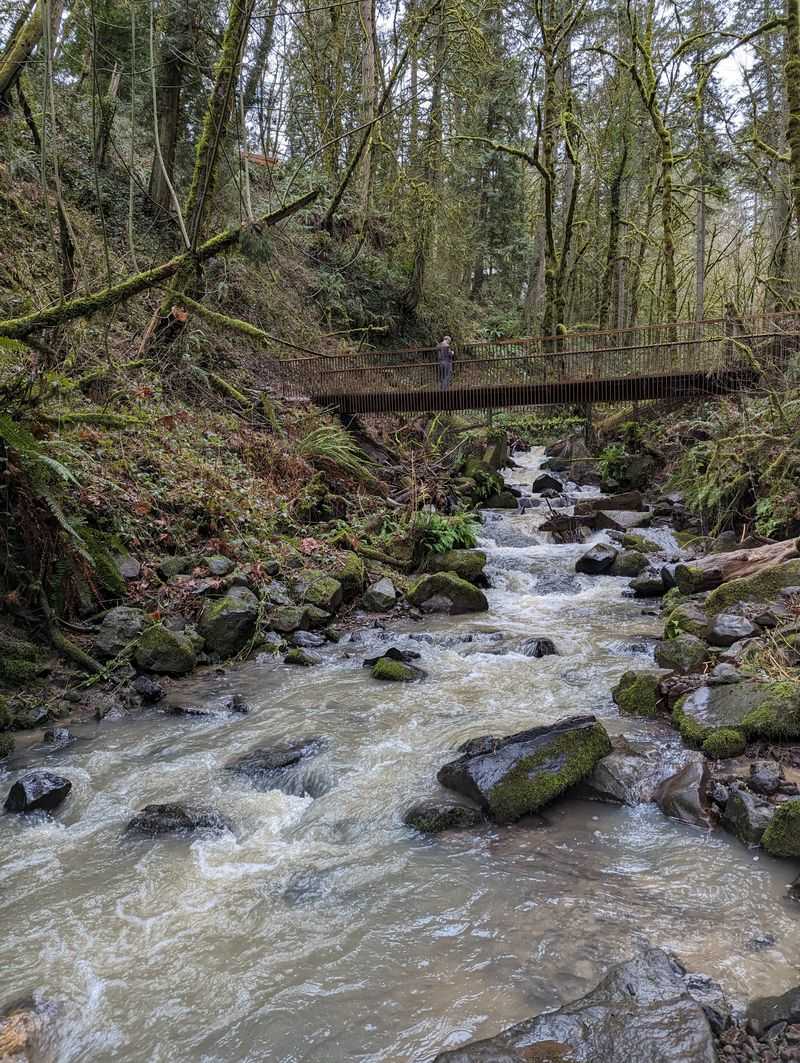
The NW 29th Ave trailhead opens into a green tunnel where city noise fades to woodpecker taps.
Switchbacks climb gently, and ferns crowd the path like friendly ushers guiding your stride.
Signs mark intersections with clear names, making exploration relaxed even for first timers.
Runners, dog walkers, and birders share space with easy courtesy, a social contract that feels distinctly Oregon.
Footbridges cross creeks that change with rain, reminding you to step steady and look twice.
Moss paints every surface in soft focus, and even on cloudy days the forest seems to glow.
Historic structures appear unexpectedly, proof that cities and wildlands can braid together gracefully.
You can craft a short loop or an ambitious traverse, and both feel equally legitimate.
Trail stewards trim back brush and repair tread, turning maintenance into quiet hospitality.
Wayfinding maps at junctions reduce guesswork, and your confidence broadens with each bend.
When you emerge, the skyline returns like a friend, close yet pleasantly distant.
The bigger story is urban nature as everyday therapy, a value Oregon protects with long patience.
11. Yaquina Head Lighthouse
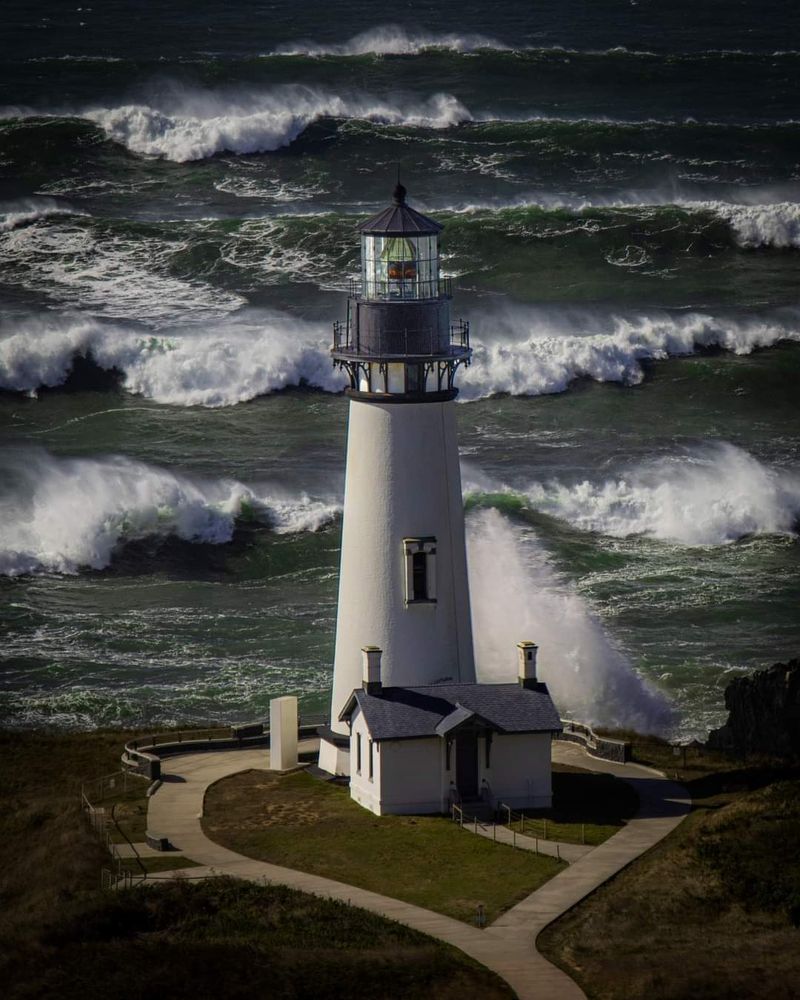
At 750 NW Lighthouse Dr, a tall white tower stands against wind and gull cries with steady grace.
The visitor center frames maritime history with artifacts that connect keepers’ routines to the present day.
Paths lead to viewpoints where waves fracture into white patterns that hypnotize and warn.
Black basalt cliffs hold tide pools and nesting spots, so patience rewards you with subtle movement.
Volunteers answer questions about wildlife and safety, and their calm presence sets the tone.
On clear days you can see miles, yet the lighthouse feels intimate, like a reliable neighbor.
Stairs and railings encourage respect, because weather shifts quickly across this headland.
Newport’s harbor sits nearby, tying navigation history to working boats and community schedules.
The grounds are tidy without being manicured, letting the coastal ecosystem remain honest.
Interpretive signs keep jargon light, so families learn without losing momentum on the walk.
You leave with pockets full of wind and a timeline in your head that stretches across storms.
The larger story is guardianship, a coastal promise that Oregon keeps by caring for light and shore.
Dear Reader: This page may contain affiliate links which may earn a commission if you click through and make a purchase. Our independent journalism is not influenced by any advertiser or commercial initiative unless it is clearly marked as sponsored content. As travel products change, please be sure to reconfirm all details and stay up to date with current events to ensure a safe and successful trip.
