Oregon holds stories that slip between trees, settle in river fog, and linger in empty doorways you might pass without noticing.
Locals whisper about places where gravity seems confused, where hotel corridors feel colder than the air, and where tunnels breathe with the city’s older memory.
These spots are quiet yet persistent, stitched into the state’s character like secret threads.
Come along and explore the corners people still mention when the map feels too tidy, and the night feels a little alive.
1. The Oregon Vortex

The Oregon Vortex sits in a forested pocket near Gold Hill, where perception goes sideways and the ground feels untrustworthy.
You watch a friend look taller in one corner, then shorter a few steps away, and your balance argues with your eyes.
Guides share experiments, you try them yourself, and suddenly the slope seems to pull and push with a personality.
Locals tell stories about compasses that drift and brooms that stand, and you catch yourself checking your stance.
The tilted House of Mystery creaks, paint faded by seasons, and the setting feels older than the boards underfoot.
Sunlight sneaks through fir branches, drawing stripes across the path that look too straight for such a bent place.
You read posted notes about geology, magnetism, and illusions, then decide the mystery is more fun than the answers.
The site keeps its charm by letting you test, squint, and laugh, never demanding belief, only curiosity.
Nearby trails bring the Rogue Valley scent of warmed pine, and the small gift shop hums with road trip energy.
It is not polished, but it is stubbornly Oregon, a little odd and very memorable.
2. Shaniko Ghost Town
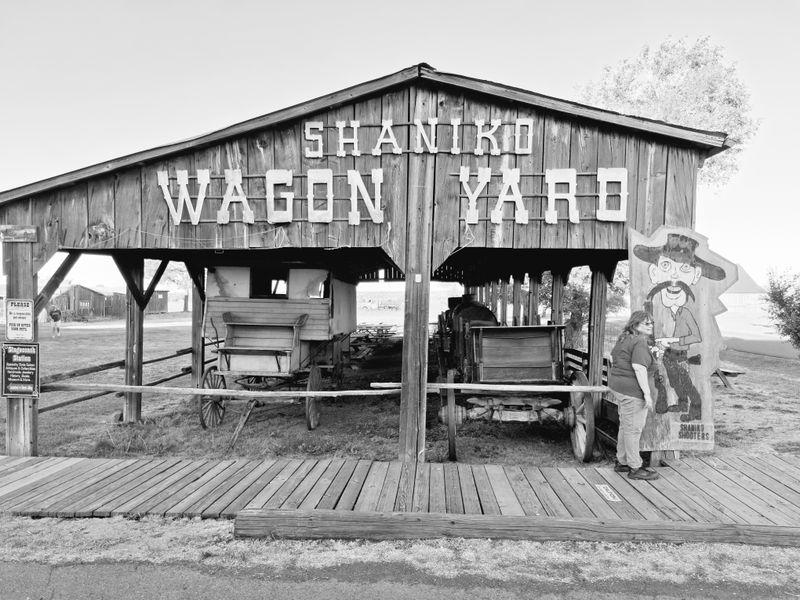
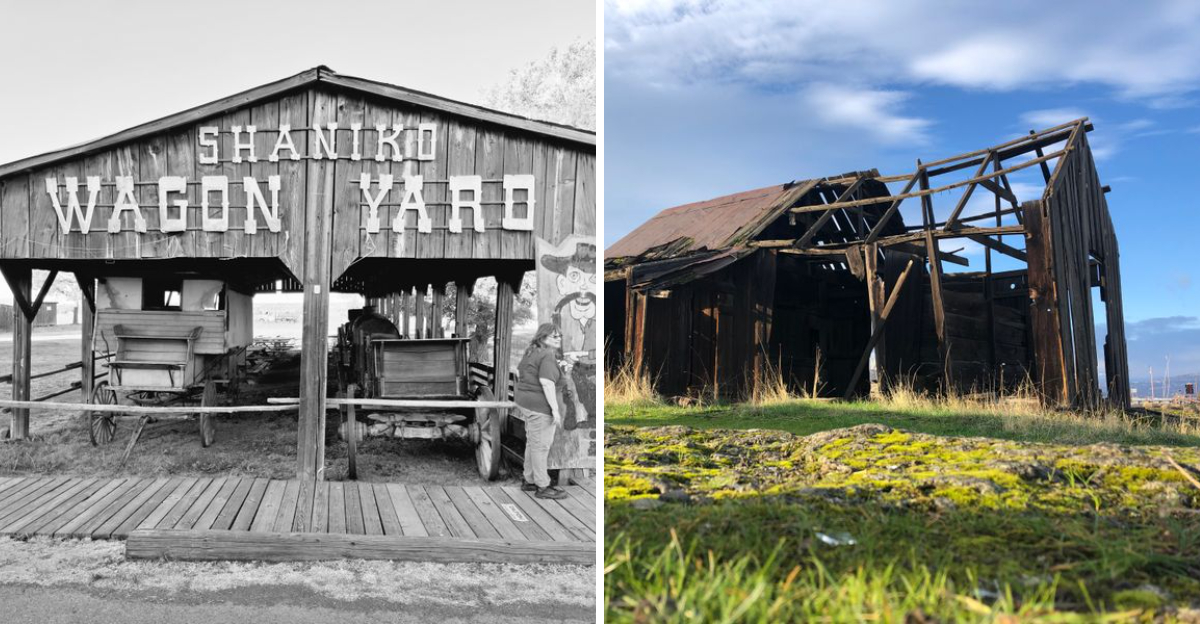
Shaniko waits on the high desert, its weathered storefronts facing wind that never seems to stop.
Boardwalks creak under cautious steps, and the hotel facade offers a still photograph of past bustle.
You feel Oregon’s wide sky pressing down in a friendly way, opening space for quiet thoughts and careful looks.
Historic signs explain the wool trade history and the routes that once braided through this small hub.
Windows reflect sagebrush and clouds, and every doorway seems to remember footsteps that left long ago.
Photographers love the angles, the peeling paint, and the shadows that stretch like old stories.
On calm afternoons, you might hear little more than a truck on the highway and a far train.
This place is not a theme park, it is a lesson in patience, drought, and grit.
Respect the buildings, watch for loose boards, and give each artifact the distance it deserves.
Shaniko feels honest, a resilient landmark that keeps the state’s frontier memory breathing in the wind.
Sumpter rests in Eastern Oregon, a mining town frozen in its own golden era, where rail trestles and dredge ponds tell stories of work and water.
The Sumpter Valley Railroad at 211 Austin St carries visitors slowly past pine flats, giving time to imagine sluices, steam, and daily rhythms of the past.
Main Street at 160 Mill St holds weathered storefronts and wooden sidewalks, each corner a quiet prompt to pause.
Old machinery rests like sculpture, and interpretive signs keep the history grounded in fact and place.
Evening light warms the dredge hull, turning water into amber glass and dusting the town with a gentle glow.
Visitors walk lightly, take photographs without disturbance, and leave knowing Oregon’s mining legacy still speaks in wood, steel, and water.
3. Shanghai Tunnels
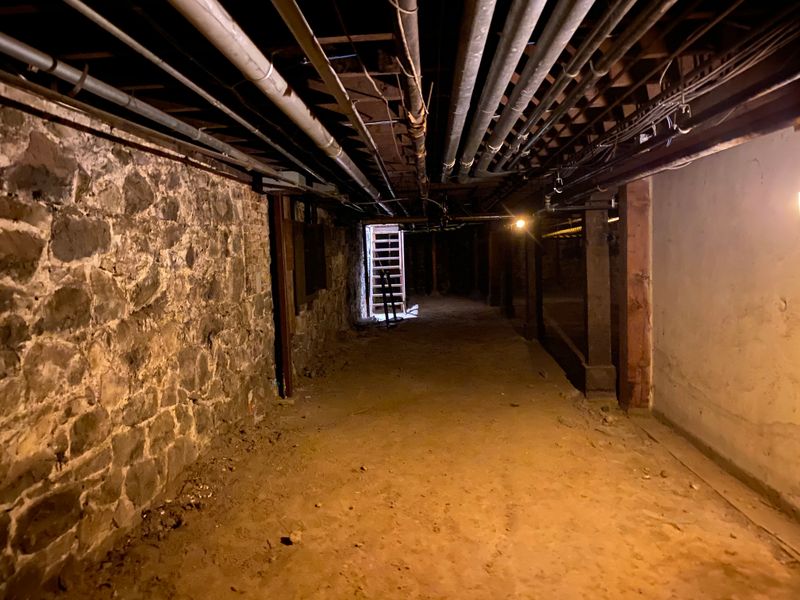
Under Old Town, the Shanghai Tunnels trail beneath brick storefronts, quiet corridors with dust that glows in flashlight beams.
Guided tours explain legends and verified records, teasing apart rumor from the city’s more complicated truths.
You hear how basements connected to the waterfront, and how underground rooms stored cargo and stories alike.
Timbers show tool marks, and the air holds that cool river smell that never quite leaves Portland.
Displays offer context about labor, shipping, and the hard edges of a growing port town.
You walk slowly, noticing doors that lead to sloping passages and iron hardware dark with age.
The tunnels are part history lesson, part myth, and the balance makes them unforgettable.
Take care on the steps, listen closely to the guide, and let the details settle in your mind.
Back at street level, the neighborhood feels brighter, like you borrowed new eyes for familiar blocks.
Portland carries its past beneath your feet, and the tunnels help you hear it more clearly.
Lan Su Chinese Garden sits tucked in Portland’s Old Town, a serene counterpoint to city streets above, where paths curve around ponds and pavilions.
Stone bridges arch over koi-filled pools, and the scent of pine and incense lingers with each step.
Teahouses and gates frame views, giving pauses that feel intentional, almost meditative.
Winter light softens every corner, reflecting off water and latticework, turning ordinary angles into quiet compositions.
Address, 239 NW Everett St, Portland, OR 97209.
Walk slowly, notice the reflections and plant textures, and let the garden’s rhythm reshape your pace before returning to the street.
4. Hot Lake Hotel
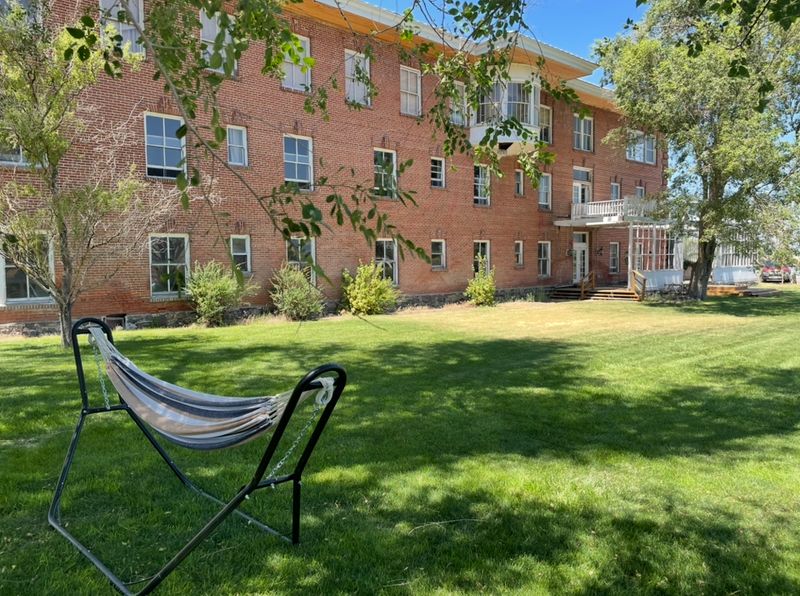
Hot Lake Hotel sits near La Grande with graceful bones and a long memory, facing steaming pools and open hills.
The architecture hints at spa days and medical treatments, a grand setting shaped by mineral water and optimism.
You walk the grounds with careful steps, reading placards and reading the landscape at the same time.
Windows catch changing clouds, and the air smells faintly of earth and water meeting under stone.
Local lore mentions night sounds and lingering impressions, but daylight brings out the hotel’s resilient dignity.
The lake edges reflect reeds and migrating birds, lending the scene patient movement and seasonal rhythm.
Preservation efforts ebb and flow, and each visit shows a new layer of progress or pause.
Stand along the drive and imagine carriages, then shift forward to road trippers and curious families.
The building teaches that time is not just loss, it is also texture that deepens interest.
Eastern Oregon holds many quiet landmarks, and this one feels like a chapter you can still turn.
Hot Lake Hotel’s spa rooms and pool areas hint at routines of leisure long past, giving glimpses of how visitors once moved through the space.
Trails along the grounds lead to mineral springs where steam rises gently, a reminder that nature and architecture shared a stage.
Address, Hot Lake Hotel, 20620 Hot Lake Rd, La Grande, OR 97850.
Pause at the porches, lean into the scent of warm water, and notice how light shifts across weathered brick and glass.
Step lightly, take in textures, and let the hotel’s layered history settle into your own pace.
5. Indian Shaker Church Ruins
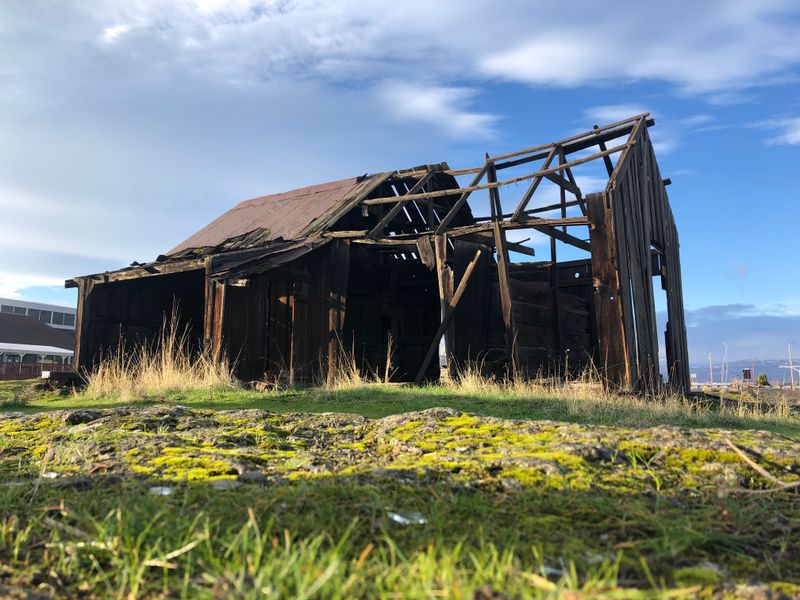
Near The Dalles, the Indian Shaker Church ruins rest among grasses and wind that combs the Gorge slopes.
Wooden beams lean with quiet resolve, and the outlines of walls frame sky like a simple cathedral.
You walk lightly, noticing nails, milled edges, and the way moss makes a gentle claim on history.
Interpretive notes help place the movement in context, honoring complex spiritual traditions and regional change.
The setting brings river light and hawk shadows, a natural chorus that keeps the site contemplative.
Respect is not optional here, it is the way to visit, photograph, and leave no trace.
Step back and see how the structure relates to the slope and the distant water.
The story is not about ruins alone, it is about continuity, memory, and careful listening.
Oregon protects many sacred places, and this one asks for gentle voices and unhurried time.
You depart more aware of wind, wood, and the weight carried by simple frames.
Markers along the path note dates, ceremonies, and community resilience, giving context without crowding the scene.
Wild grasses sway like a quiet audience, emphasizing the contrast between human effort and natural persistence.
From the nearby pullout, you can pause to see the Gorge unfold, reminding visitors that sacred sites exist within broader landscapes.
Address, Indian Shaker Church Site, near 1975 W 1st St, The Dalles, OR 97058.
Walk gently, honor boundaries, and let the silence carry the history with you.
6. South Beach Cemetery
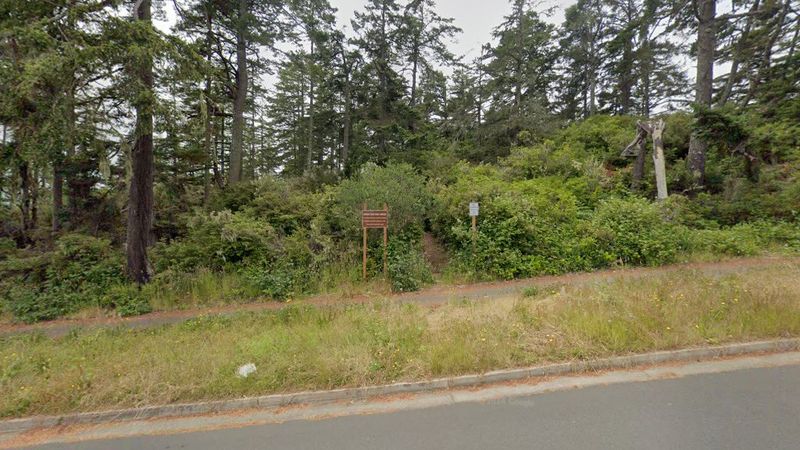
South Beach Cemetery hides beside coastal traffic, a small hillside plot where names soften under moss.
Stone markers tilt a little, and tall grass makes a respectful curtain around quiet corners.
You hear gulls from the harbor and the hush of wind moving through salal and shore pine.
Paths thread between family plots, and every step asks for slow feet and attentive eyes.
Local history lives in dates and inscriptions, a neighborhood archive kept by rain and roots.
This is not a spectacle, it is a place to acknowledge time and community memory.
Bring a careful lens, frame the fence lines and the sky, then put the camera away.
Listen for the freeway hum blending into ocean breath, a strange duet that fits Oregon.
Leave gates as you found them, and keep footprints to the cleared paths.
The cemetery offers a tender reminder that quieter places still matter and still speak.
Small benches tucked along the edge invite a pause, letting visitors absorb the layered history.
Wildflowers and ferns reclaim corners, softening stone edges and adding seasonal color to the slopes.
Evening light tilts across markers, casting long shadows that stretch toward the sea and accentuate the sense of time resting gently here.
Address, South Beach Cemetery, 700 NW Highway 101, Newport, Oregon 97365.
Walk quietly, take note of local inscriptions, and let the site settle into memory before moving on.
7. Carson Homestead
The Carson Homestead sits beyond John Day, a cluster of aging structures tucked into a valley of grasses.
Wood barns and a simple house lean with grace, boards silvered by seasons and careful neglect.
You can almost hear chores humming, gates closing, and a windmill tracing circles against blue.
Fragments of fencing show how the land was managed, stitched by hands that knew every ridge.
Eastern Oregon light washes the scene in soft gold, turning wear into beauty.
Photographers pause for textures, but the place rewards patience over quick snapshots.
Respect boundaries, watch for wildlife, and keep the landscape as you found it.
The homestead reflects persistence, adaptation, and the labor that shaped this dry country.
From the road, each building lines up like a memory, separate but connected.
You leave with dust on your boots and a better sense of how work becomes history.
The orchard remnants hint at past harvests, trees pruned and spaced with quiet care.
Morning light drifts through open windows, catching dust motes that float like tiny stories.
Even a short walk among the barns offers a sense of rhythm, the pulse of daily life now paused but never erased.
Stone steps and worn thresholds mark entrances that once saw constant movement, grounding the homestead in time.
Listen closely, and the wind carries a faint echo of hammers, hooves, and voices that once filled the valley.
8. Kinton Schoolhouse
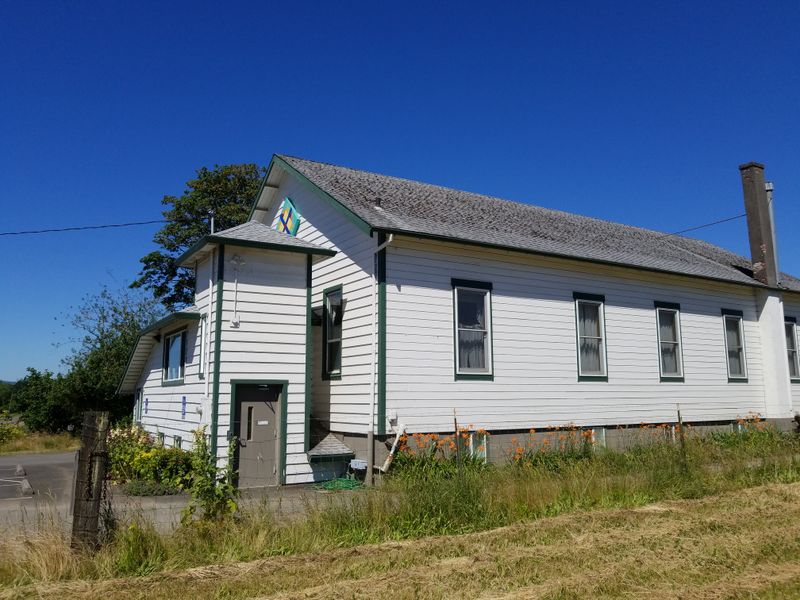
The Kinton Schoolhouse stands near fields and new neighborhoods, a compact reminder of earlier classrooms.
Its façade is simple and sturdy, with windows that once threw daylight across chalk and wood.
You walk the perimeter and imagine bells, recess, and lessons that drifted out to orchards.
Historic records place the school within a network of local farms and evolving roads.
Today the building rests quietly, framed by trees that hold afternoon shade like a promise.
Bring a respectful eye for details, trim, hinges, and the grain that keeps holding on.
Traffic hums past, but the corner still feels like a pause in the present.
Washington County keeps many small landmarks in view, and this one is an easy stop.
Look for safe pullouts, mind private property, and take only photographs.
The schoolhouse keeps teaching, showing how a modest space can anchor a community’s memory.
Windows catch the low sun, throwing long rectangles of light across grass and gravel.
The bell tower, though silent, still marks the imagination’s rhythm for the day.
Walk slowly along the fence line and notice how the old boards settle into each other, a quiet echo of the school’s careful construction.
Shadows of nearby trees trace patterns that shift with every cloud, giving the building a gentle dynamism.
Even a brief stop offers a sense of continuity, a link between generations that learned here and those who pause now to remember.
9. Wilhoit Springs Park
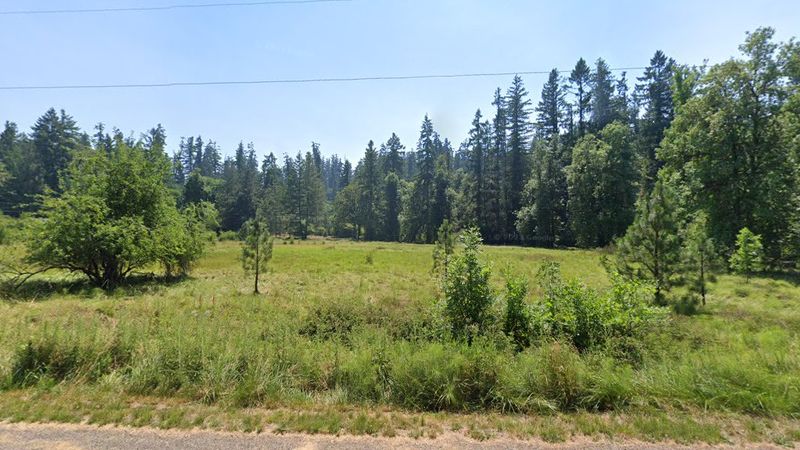
Wilhoit Springs Park hides in forest outside Molalla, where a resort once promised mineral cures and renewal.
Now you find stone foundations, gentle trails, and the soft sound of water moving through ferns.
The springhouse remains a focal point, a sturdy relic with moss trimming its edges.
Interpretive signs describe the heyday and the retreat of grand ambitions to simpler uses.
Families stroll under cedar and maple, and picnic tables settle into the hush.
The air feels clean and damp, carrying the mineral scent that made this place famous.
Photographs work best wide, showing the creek, stones, and filtered light together.
Clackamas County maintains the site, encouraging easy visits and careful stewardship.
It is a peaceful stop that shows how Oregon reclaims and softens what people leave behind.
You depart calmer, hearing water you did not notice when you arrived.
Paths wind gently along the old resort grounds, letting visitors pause without feeling hurried.
Small bridges over the creek frame reflections that shift with clouds and sun, making every step slightly different.
Birdsong threads through the trees, reinforcing the sense that the place moves at its own quiet rhythm.
Benches tucked into shaded nooks invite reading or reflection, carrying forward the idea of renewal without spectacle.
Even brief visits leave a lingering calm, as if the forest and water conspire to slow both mind and pace.
Dear Reader: This page may contain affiliate links which may earn a commission if you click through and make a purchase. Our independent journalism is not influenced by any advertiser or commercial initiative unless it is clearly marked as sponsored content. As travel products change, please be sure to reconfirm all details and stay up to date with current events to ensure a safe and successful trip.
