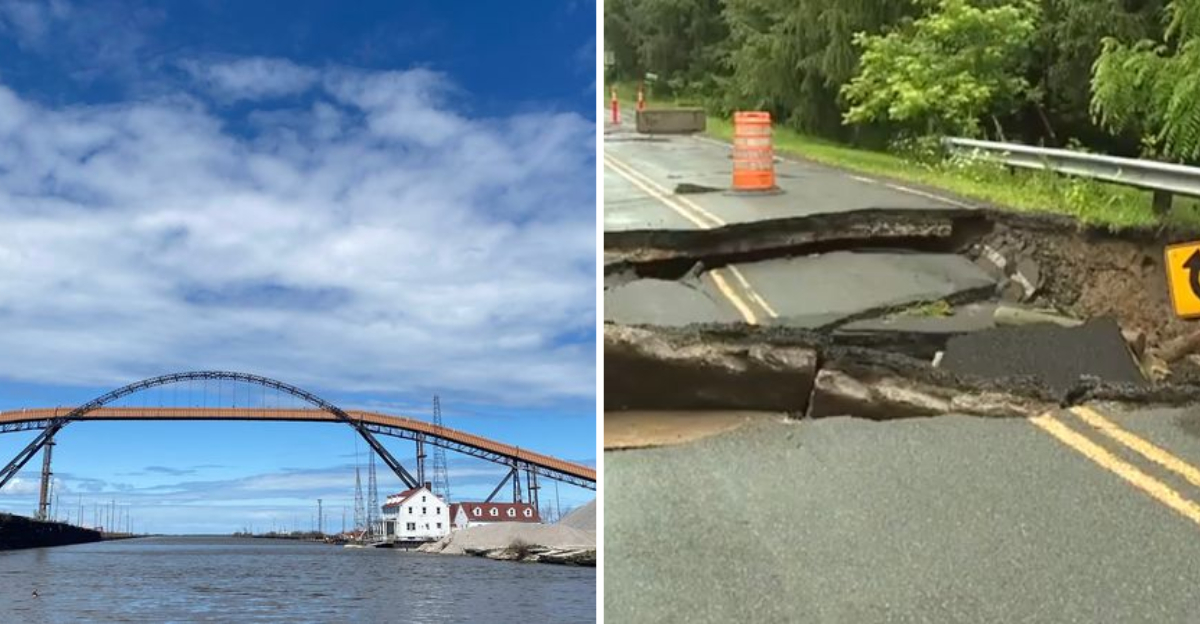
Ohio makes its bridges feel like landmarks, not just crossings. A well built bridge carries thousands of lives over rushing water without anyone giving it a second thought.
I have always found old bridge photographs oddly haunting, especially when you know what came after. Certain admired spans were engineering showpieces in their time.
Structures locals felt genuinely proud of once stood tall across rivers and valleys. People posed for pictures in front of them.
Towns printed postcards featuring their favorite bridge. Then without much warning, each one disappeared.
Crumbling under its own weight or failing at the worst possible moment. A single loud crack.
A groan of twisting metal. Then water swallowing everything in seconds.
Four bridges each carried a story worth telling. Each collapse left a mark Ohio has never quite forgotten.
Families lost loved ones. Communities lost landmarks.
Engineers lost confidence in old designs. A bridge seems permanent until suddenly it is not.
Those five taught everyone a hard lesson about trust.
Ashtabula Bridge (Ashtabula, 1876)
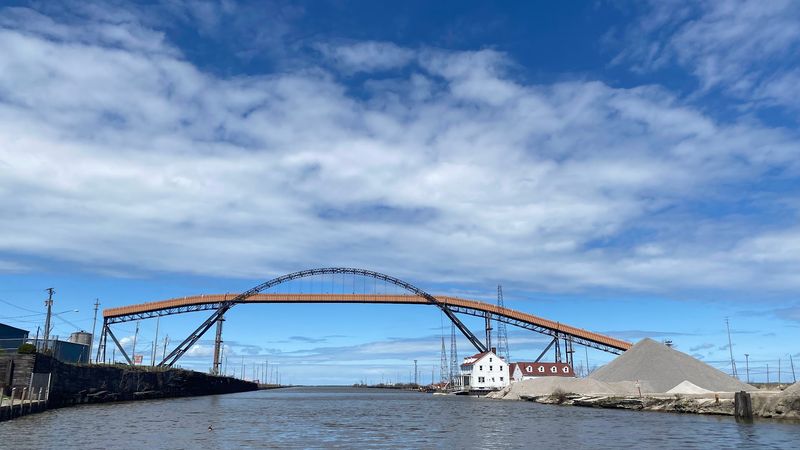
On a freezing December night in 1876, a passenger train loaded with holiday travelers began crossing a 150-foot iron bridge over the Ashtabula River, and within seconds, the whole structure gave way. The bridge had been considered a point of local pride since its construction in 1865, a symbol of industrial confidence in a growing railroad era.
Nobody expected it to fall.
Ninety-two people passed in what became one of the most fatal railroad disasters in American history. The wreckage caught fire almost immediately, making rescue efforts nearly impossible for the community that rushed to help.
Investigators later pointed to a flawed cast iron design in the bridge’s support structure, a flaw that had gone unnoticed for over a decade.
The disaster shook the entire country and pushed lawmakers to take bridge safety far more seriously than they ever had before. New inspection standards were introduced, and the railroad industry faced intense public scrutiny for years afterward.
The Ashtabula bridge disaster is still studied in engineering programs today, not as a curiosity, but as a genuine turning point in how Americans think about infrastructure and the lives that depend on it every single day.
Grant Street Bridge (Akron, 1979)
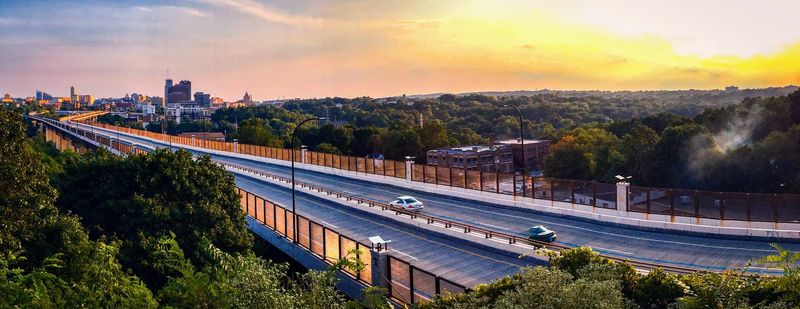
Akron in the late 1970s was a city in transition, its rubber industry fading and its neighborhoods adjusting to economic shifts that nobody had fully prepared for. The Grant Street Bridge stood in the middle of all that change, a utilitarian steel structure that had served the city through decades of industrial boom and quiet decline.
By 1979, it had reached the end of what it could reasonably offer.
The bridge’s failure was a reflection of something larger happening across industrial Ohio at the time. Infrastructure that had been built during peak manufacturing years was aging faster than city budgets could address.
Grant Street was not unique in that sense, but its collapse made the problem impossible to dismiss.
There is something melancholy about a bridge that outlives the era it was built for. The Grant Street Bridge had carried factory workers, delivery trucks, and everyday Akron residents for years without complaint.
When it finally gave out, the city had to reckon not just with the physical loss but with the question of how many other aging spans were quietly approaching the same point. Akron’s response helped shape how the region approached infrastructure planning going into the 1980s, a decade that demanded hard choices.
Kungle Road Bridge (Norton, 2019)
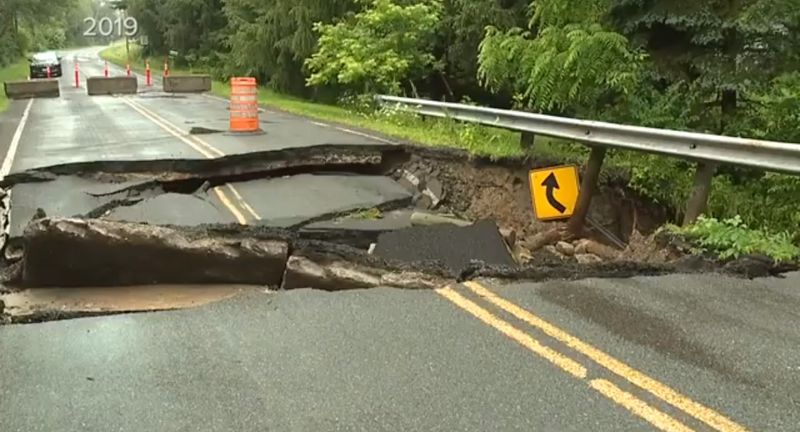
Most people assume that bridge collapses are things that happened in the past, problems that modern engineering and regular inspections have made nearly impossible. Then 2019 came along, and the Kungle Road Bridge in Norton reminded everyone that the threat is not historical at all.
It is ongoing, and it can happen in quiet suburban communities just as easily as anywhere else.
The bridge over the West Branch of the Tuscarawas River was not a towering landmark or a celebrated piece of architecture. It was a functional road crossing that Norton residents used to get from one part of their community to another.
Its sudden failure caught people off guard in the way that only a genuinely modern disaster can, because nobody expects infrastructure to fail in an era of advanced monitoring and engineering.
The collapse forced detours and disrupted daily routines for months. It also sparked a serious local conversation about how Ohio’s smaller bridges, the ones that serve neighborhoods rather than highways, are inspected and maintained.
Smaller crossings often receive less attention than major spans, even though they carry real community traffic every day. The Kungle Road Bridge collapse was a sharp reminder that bridge safety is not just a big-city concern.
It belongs to every community.
Miamitown Bridge (Miamitown, 1989)
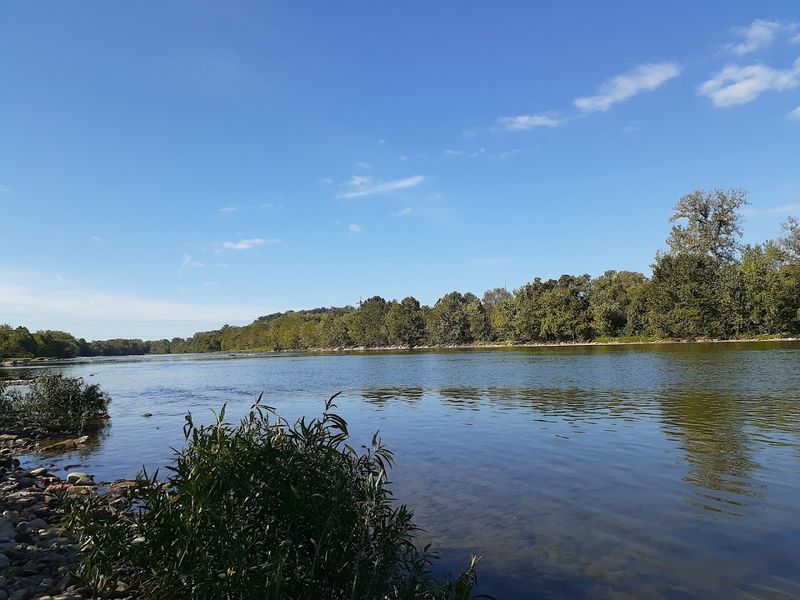
Miamitown sits in Hamilton County with the kind of low-key charm that small Ohio river communities tend to carry naturally. The bridge that served this community across the Great Miami River was not famous by any stretch, but it was genuinely important to the people who crossed it regularly.
When it failed in 1989, the loss was felt in a very immediate, practical way.
Nineteen eighty-nine was an interesting moment for Ohio infrastructure. The state was still processing lessons from earlier bridge failures and trying to build more systematic inspection routines.
The Miamitown Bridge collapse added urgency to those efforts, even if it never made national news the way some disasters do. Local failures have a way of cutting deeper for the communities directly affected.
What I find most striking about the Miamitown Bridge is how it represents the invisible network of smaller crossings that hold rural and semi-rural Ohio together. People drove over it on their way to work, to school, to visit family.
It was background infrastructure, the kind you only notice when it disappears. Its collapse is a quiet but persistent reminder that every bridge, no matter how modest, is someone’s daily lifeline.
Losing one is never just an inconvenience. It reshapes how a community moves through its own landscape.
