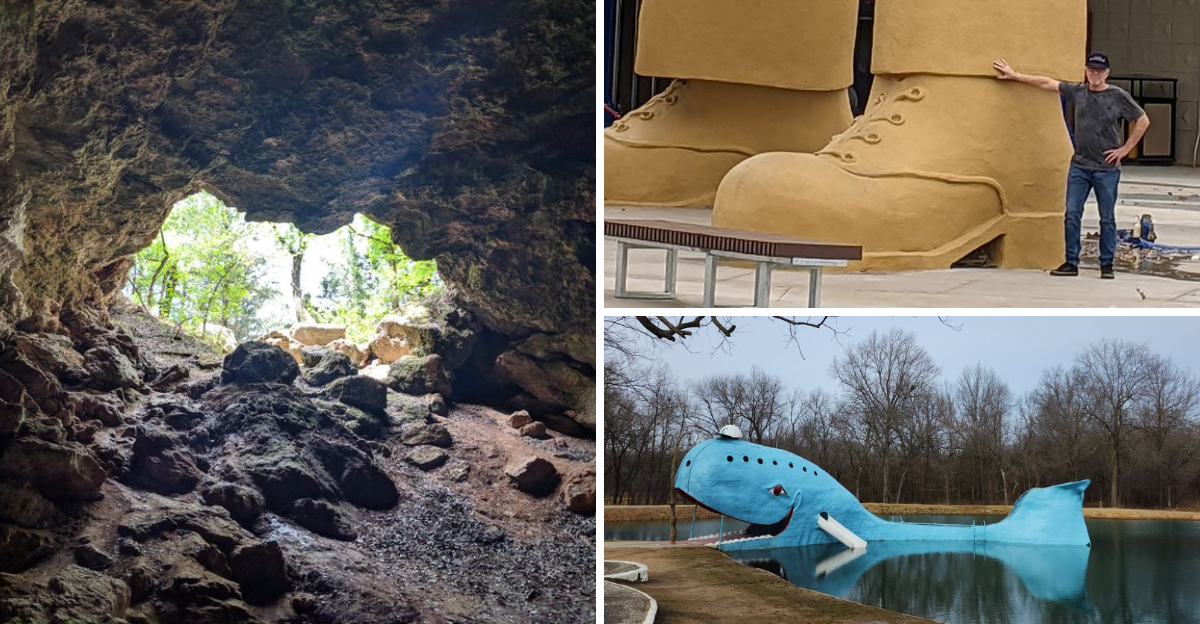
Oklahoma has a quiet habit of surprising people who think they already know it well.
Past the familiar stretch of prairies and oil fields, the landscape occasionally breaks its own rules, revealing landmarks that seem to appear without explanation or warning.
These places feel less like planned attractions and more like ideas that refused to stay small.
Across the state, imagination has left permanent marks in the form of towering symbols, eccentric collections, and spaces devoted to curiosities that defy easy categories.
They invite curiosity rather than clarity, rewarding travelers who are willing to slow down and look twice.
Together, these hidden sites reveal an Oklahoma shaped not only by history and land, but by bold creativity and a willingness to embrace the unexpected.
1. The Center of the Universe
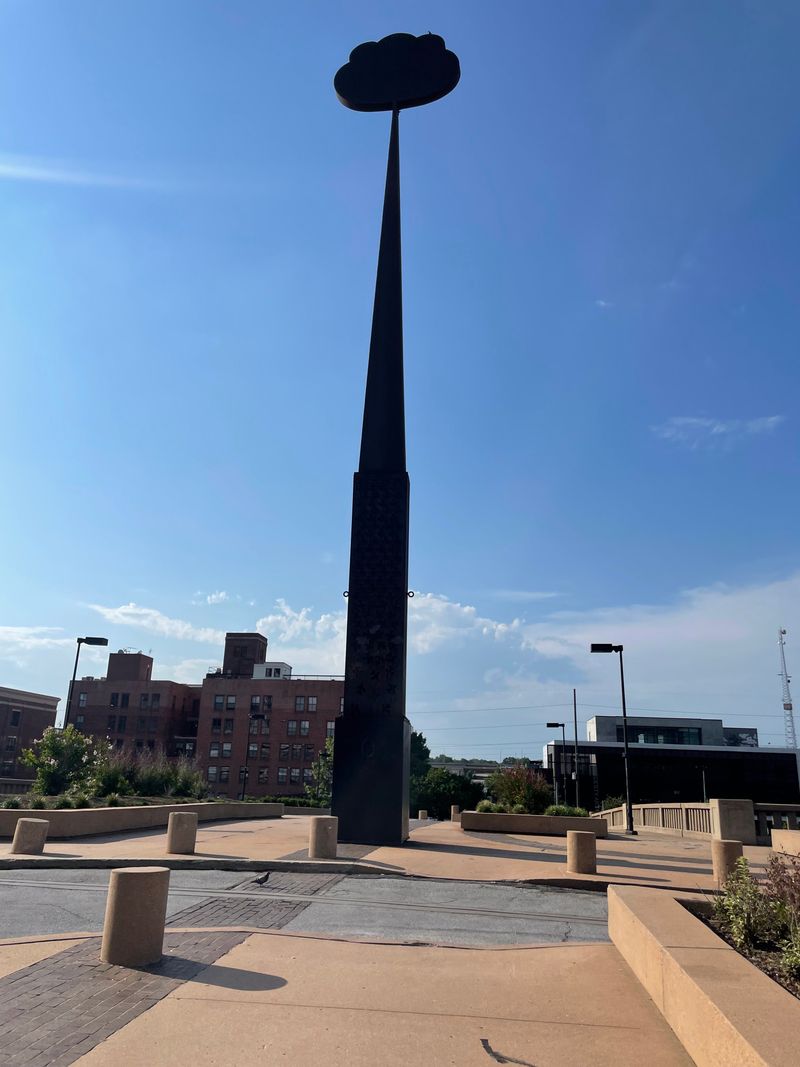
A small concrete circle in downtown Tulsa creates an acoustic phenomenon that scientists struggle to fully explain.
Stand in the center and speak normally, and your voice echoes back amplified while people just feet away hear nothing unusual.
The circle measures only about eight feet across, marked by worn concrete in a parking lot near the Boston Avenue pedestrian overpass.
Locals discovered the acoustic oddity years ago, and it has since become an essential stop for curious visitors.
Sound waves bounce off surrounding walls in ways that create this isolated amplification effect.
Friends take turns standing inside and outside the circle, amazed by the dramatic difference in what they hear.
No signs or official markers identify the spot, adding to its underground appeal.
The phenomenon works best during quieter times when traffic noise diminishes.
Tulsa residents bring out-of-town guests here to witness the acoustic mystery firsthand.
Urban legends have grown around the circle, with some claiming mystical properties beyond simple physics.
Photography enthusiasts capture images of friends shouting into empty air, faces animated with surprise.
The location sits within walking distance of Tulsa’s Arts District, making it easy to include in downtown explorations.
Despite its humble appearance, this unremarkable circle represents one of Oklahoma’s most interactive oddities.
Visitors leave with stories of an experience that sounds impossible until you stand in that exact spot.
Address: E Archer St & N Boston Ave, Tulsa, Oklahoma
2. Arcadia Round Barn
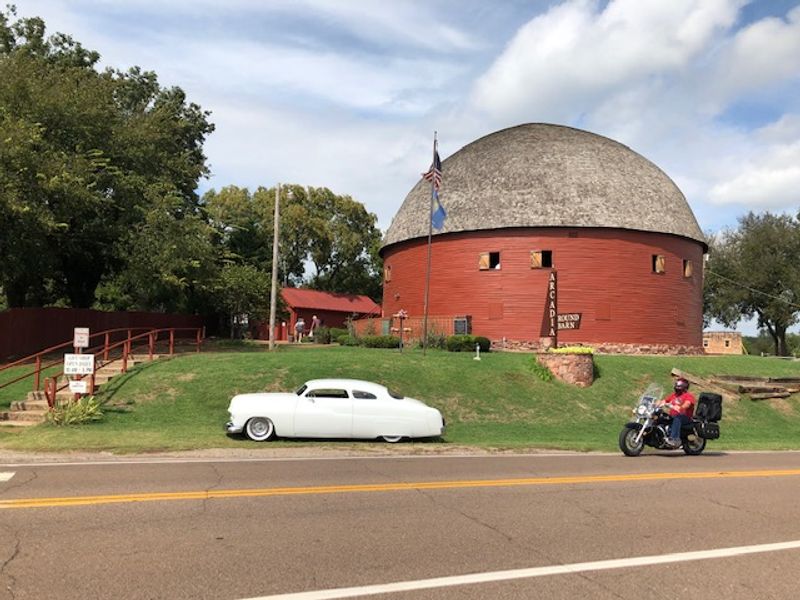
Built in 1898, this perfectly circular barn defies conventional agricultural architecture with its innovative design.
William Odor constructed the sixty-foot-diameter structure using burr oak wood and ingenious engineering.
The round shape allowed for efficient hay storage and easier livestock management compared to traditional rectangular barns.
By the 1980s, the building had fallen into severe disrepair, its roof collapsed and walls crumbling.
A dedicated group of volunteers spent years restoring the barn to its original glory.
Today it operates as a museum and gift shop celebrating rural Oklahoma heritage and Route 66 history.
The interior reveals the complex wooden framework that supports the structure without a central support beam.
Sunlight filters through windows near the top, illuminating the craftsmanship of century-old construction techniques.
Informational displays explain the barn’s history and the painstaking restoration process.
Local artisans sell handmade goods in the gift shop, from pottery to quilts reflecting Oklahoma traditions.
The barn’s location along Route 66 makes it a natural stopping point for road trippers exploring the Mother Road.
Architectural students visit to study the unique structural elements and engineering solutions.
The surrounding grounds include picnic areas and interpretive signs about early Oklahoma farming life.
This humble barn represents the ingenuity of early settlers who adapted traditional designs to prairie conditions.
Its survival against decades of neglect testifies to both quality construction and community dedication.
Address: 107 OK-66, Arcadia, Oklahoma
3. Gilcrease Museum’s Totem Pole Collection
Tulsa’s Gilcrease Museum houses an unexpected collection of Pacific Northwest totem poles in the heart of Oklahoma.
These towering carved cedar poles seem geographically misplaced until you learn about Thomas Gilcrease’s passion for preserving Indigenous art.
The oilman and collector acquired pieces from tribes thousands of miles away, bringing them to his Oklahoma estate.
Each pole tells stories through animal figures and symbolic carvings representing clan histories and spiritual beliefs.
Ravens, bears, and thunderbirds emerge from the wood in dramatic expressions of artistic tradition.
The museum’s grounds feature several poles displayed outdoors where weather slowly adds character to the wood.
Indoor galleries protect more delicate examples while providing context about their cultural significance.
Visitors accustomed to Oklahoma’s Plains Indian heritage find this Northwest Coast art particularly striking.
The juxtaposition creates educational opportunities about the diversity of Indigenous cultures across North America.
Museum docents explain how different tribes used totem poles for purposes ranging from memorials to family crests.
The collection includes both historic poles and contemporary pieces by living artists.
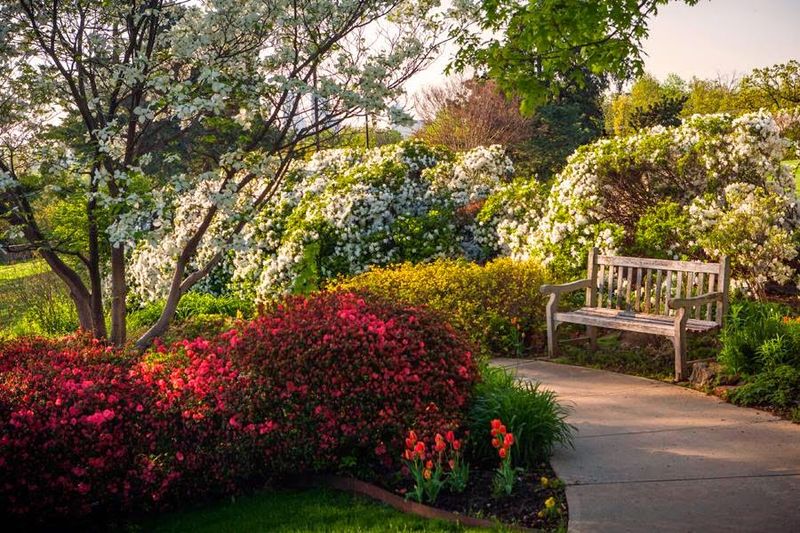
Gardens surrounding the museum showcase native Oklahoma plants, creating interesting cultural contrasts.
This unexpected assembly of Pacific art in Oklahoma challenges assumptions about regional museum collections.
The Gilcrease commitment to preserving diverse Indigenous art forms makes this one of the nation’s most comprehensive collections.
Address: 1400 N Gilcrease Museum Rd, Tulsa, Oklahoma
4. Stafford Air and Space Museum’s Lunar Module

Weatherford hosts a full-scale lunar module trainer that astronauts actually used to prepare for moon landings.
The museum honors hometown hero Thomas Stafford, who flew on four space missions including Apollo 10.
Walking beneath the spindly legs and gold foil exterior of the lunar module creates an otherworldly experience in rural Oklahoma.
This genuine NASA training equipment represents a tangible connection to humanity’s greatest exploration achievement.
Interactive exhibits let visitors experience simulated rocket launches and practice docking procedures.
The museum’s collection includes spacesuits, moon rocks, and personal items from Stafford’s missions.
Children press buttons and pull levers in hands-on displays that make aerospace engineering accessible.
A planetarium offers shows about current space exploration and celestial phenomena.
The facility occupies a modern building that contrasts dramatically with Weatherford’s small-town character.
Few people expect to find such an extensive space collection in a community of fewer than twelve thousand residents.
The lunar module dominates the main gallery, its angular form suspended as if preparing to land.
Photographs show Stafford and other astronauts training in this exact vehicle decades ago.
The museum successfully balances local pride with broader stories of American space achievement.
Oklahoma’s aerospace industry contributions often surprise visitors unfamiliar with the state’s aviation heritage.
This hidden gem proves that world-class museums exist far beyond major metropolitan areas.
Address: 3000 E Logan Rd, Weatherford, Oklahoma
5. Alabaster Caverns State Park
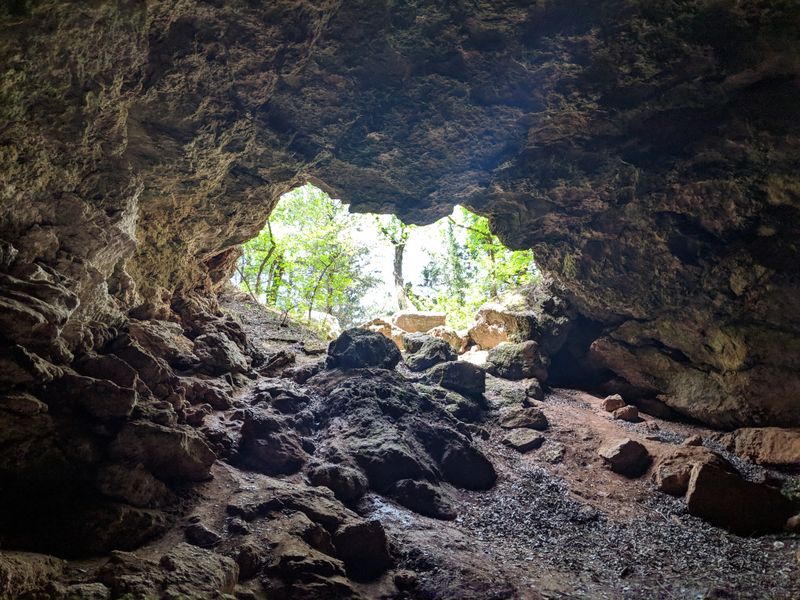
Oklahoma’s largest natural gypsum cave system offers guided tours through chambers filled with pink alabaster formations.
The caverns maintain a constant cool temperature year-round, providing natural air conditioning during Oklahoma summers.
Visitors descend into passages where light reflects off alabaster walls in soft rose and cream tones.
Unlike limestone caves, these gypsum formations create smooth, flowing shapes rather than dramatic stalactites.
The main chamber stretches large enough to hold several tour groups simultaneously without feeling crowded.
Rangers lead tours that explain the geology while pointing out resident bat colonies.
Five bat species call these caverns home, including the rare Mexican free-tailed bat.
The cave’s ecosystem remains delicate, with strict rules protecting both formations and wildlife.
Above ground, the park offers hiking trails through gypsum hills covered in unique plant communities.
These unusual landscapes support species found nowhere else in Oklahoma.
The pink and white rock outcroppings create otherworldly scenery that photographers treasure.
Most visitors never expect to find such extensive cave systems in Oklahoma.
The caverns represent millions of years of geological processes unique to this region.
Educational programs teach children about cave ecology and responsible exploration.
This underground wonder proves that Oklahoma’s natural diversity extends well beyond prairie landscapes.
Address: 50 OK-50A, Freedom, Oklahoma
6. The Golden Driller
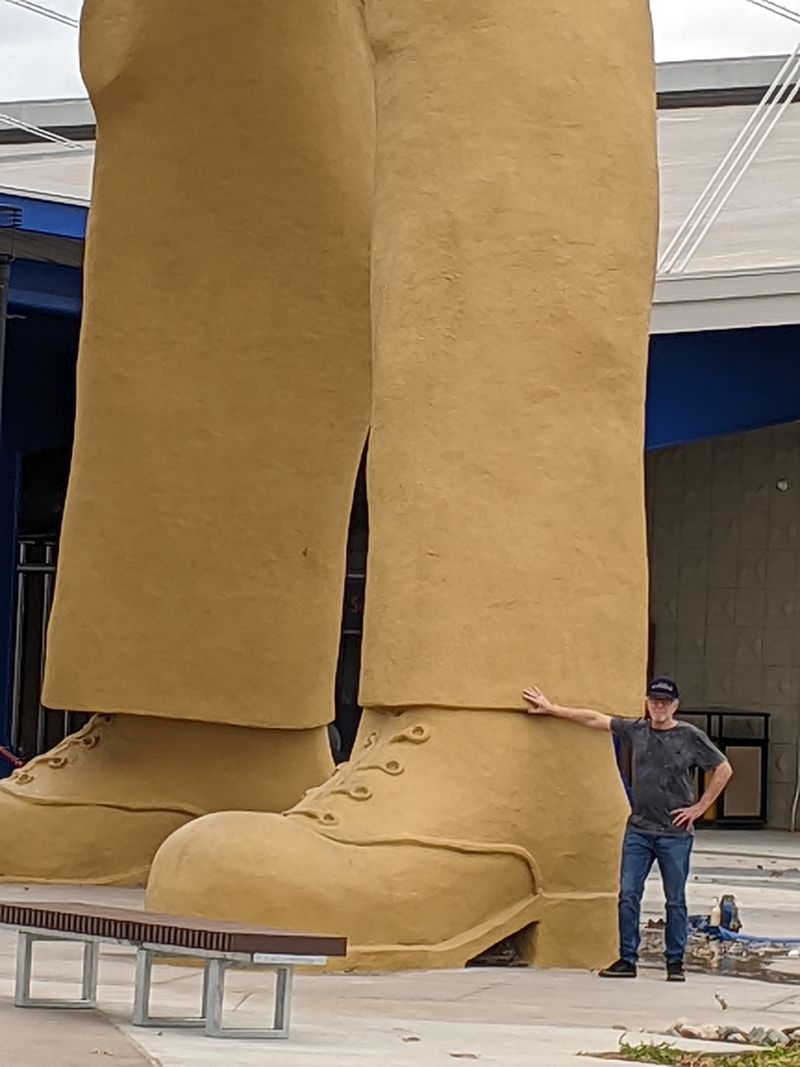
Standing seventy-five feet tall, this golden giant has watched over the Tulsa fairgrounds since 1966.
The statue weighs over 43,000 pounds and represents Oklahoma’s oil industry heritage in gleaming fiberglass.
His right hand rests on an actual oil derrick that extends even higher into the sky.
Workers originally built the Driller for the International Petroleum Exposition, intending it as a temporary display.
Public affection saved the statue from demolition, and it became a permanent Tulsa landmark.
The figure wears period-appropriate work clothes and a hardhat, frozen in perpetual readiness to drill.
His skin shines bright gold, visible from nearby highways and serving as a navigation landmark.
Over the years, the Driller has received various costumes for special events and holidays.
He’s worn jerseys for sports teams, superhero capes, and seasonal decorations that delight locals.
The statue’s scale becomes apparent only when standing at his feet, where visitors feel miniature by comparison.
Photographers capture creative forced perspective shots that make people appear to shake hands with the giant.
The surrounding Expo Center hosts events year-round, keeping the Driller in constant public view.
This roadside colossus represents an era when cities competed to build the biggest and boldest attractions.
His friendly expression and working-class appeal make him beloved rather than intimidating despite his size.
The Golden Driller embodies Oklahoma’s industrial pride transformed into accessible public art.
Address: 4145 E 21st St, Tulsa, Oklahoma
7. Toy and Action Figure Museum
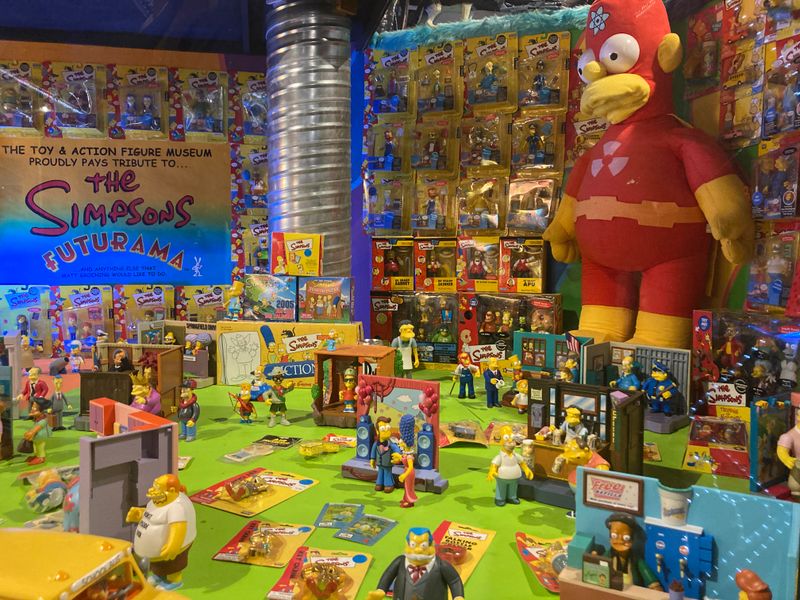
Pauls Valley houses the world’s only museum dedicated exclusively to action figures and toy collecting.
Kevin Stark transformed his personal collection of over 13,000 figures into a public museum celebrating childhood nostalgia.
Glass cases display everything from vintage G.I. Joes to modern superhero figures still in original packaging.
The collection spans decades of toy manufacturing, documenting changing trends in children’s entertainment.
Visitors rediscover forgotten favorites from their own childhoods while kids marvel at toys their parents played with.
Rare prototypes and limited editions occupy special displays with detailed provenance information.
The museum’s organization follows themes ranging from science fiction to westerns to military figures.
Lighting and presentation rival major museums, treating these mass-produced toys as legitimate cultural artifacts.
Adults spend surprising amounts of time reminiscing about Saturday morning cartoons and toy commercials.
The collection includes female action figures, challenging the traditional boy-focused toy narrative.
Special exhibits rotate seasonally, highlighting specific franchises or manufacturing companies.
This unexpected museum proves that Oklahoma embraces unconventional cultural preservation.
The small admission fee supports ongoing collection expansion and building maintenance.
Local schools bring students for lessons about marketing, nostalgia, and material culture.
What might seem frivolous actually documents important aspects of American childhood across generations.
The museum’s existence in a small Oklahoma town rather than a major city adds to its quirky appeal.
Address: 111 W Ash Ave, Pauls Valley, Oklahoma
8. Cain’s Ballroom
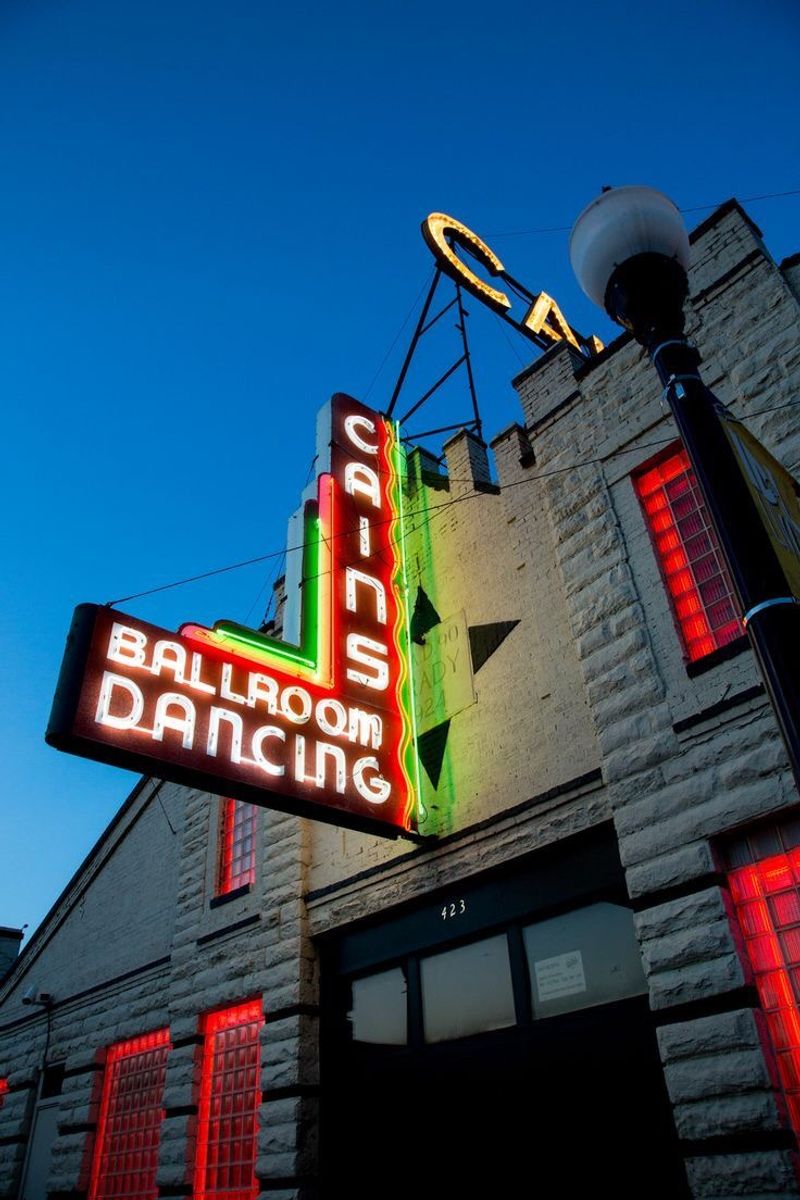
This unassuming brick building in downtown Tulsa helped birth western swing music and continues hosting legendary performers.
Bob Wills and His Texas Playboys broadcast live radio shows from Cain’s stage throughout the 1930s and 1940s.
The spring-loaded maple dance floor still bounces beneath dancers’ feet just as it did during the swing era.
Original neon signs and vintage decor preserve the atmosphere of a golden age music venue.
Modern bands from every genre consider playing Cain’s a career milestone worth celebrating.
The intimate space holds fewer than two thousand people, creating up-close concert experiences.
Exposed brick walls bear decades of poster adhesive and paint, each layer representing different musical eras.
The ballroom’s acoustics, shaped by wooden construction and thoughtful design, enhance live performances naturally.
Music historians study Cain’s role in developing distinctly American musical styles.
The venue narrowly escaped demolition multiple times before receiving historic landmark protection.
Today’s calendar mixes touring national acts with local bands keeping Tulsa’s music scene vibrant.
Long-time staff members share stories of famous musicians who played here before achieving stardom.
The building’s exterior gives no hint of the musical history contained within its walls.
Visitors stepping inside travel backward in time while experiencing cutting-edge contemporary performances.
This living music venue proves that Oklahoma’s cultural contributions extend far beyond oil and agriculture.
Address: 423 N Main St, Tulsa, Oklahoma
9. Pops 66 Soda Ranch
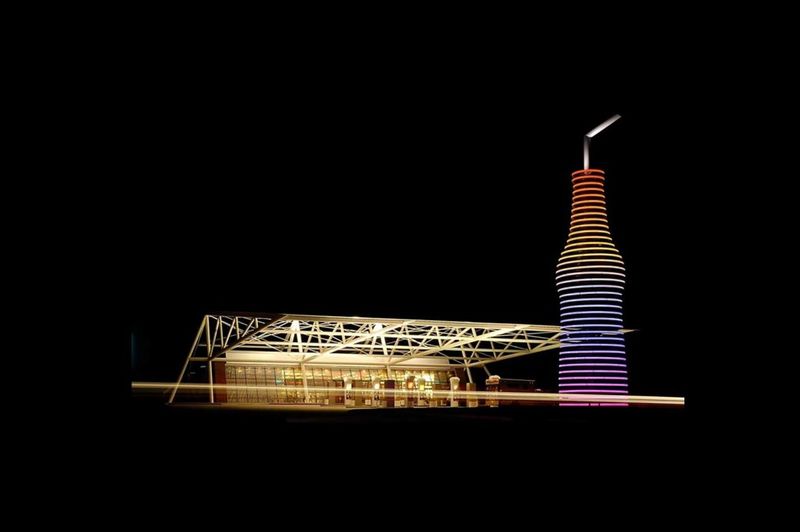
A sixty-six-foot-tall soda bottle glows with LED lights visible for miles along Interstate 44 near Arcadia.
This modern roadside attraction opened in 2007, celebrating Route 66 heritage with contemporary flair.
Inside the attached restaurant and store, over 700 different soda varieties line the walls from floor to ceiling.
Flavors range from classic colas to bizarre concoctions like bacon soda and pickle juice.
The architectural design blends retro diner aesthetics with sleek modern materials and dramatic lighting effects.
At night, the bottle cycles through rainbow colors, creating a beacon for travelers seeking refreshment and novelty.
Families spend hours browsing the extensive soda selection, sampling flavors they never knew existed.
The restaurant serves burgers, sandwiches, and comfort food that pairs perfectly with unusual beverage choices.
Floor-to-ceiling windows provide views of passing traffic and the surrounding Oklahoma countryside.
Photographers time visits for dusk when the bottle illumination creates the most dramatic images.
The location has become a social media sensation, with countless visitors sharing photos of the glowing landmark.
Staff members offer recommendations for adventurous soda seekers willing to try something completely unexpected.
The building’s modern design sparked some controversy among Route 66 purists who prefer vintage aesthetics.
Yet the attraction successfully draws new generations to appreciate historic highway culture.
This fusion of old and new captures the evolving spirit of Oklahoma’s roadside attraction legacy.
Address: 660 OK-66, Arcadia, Oklahoma
10. The Blue Whale of Catoosa
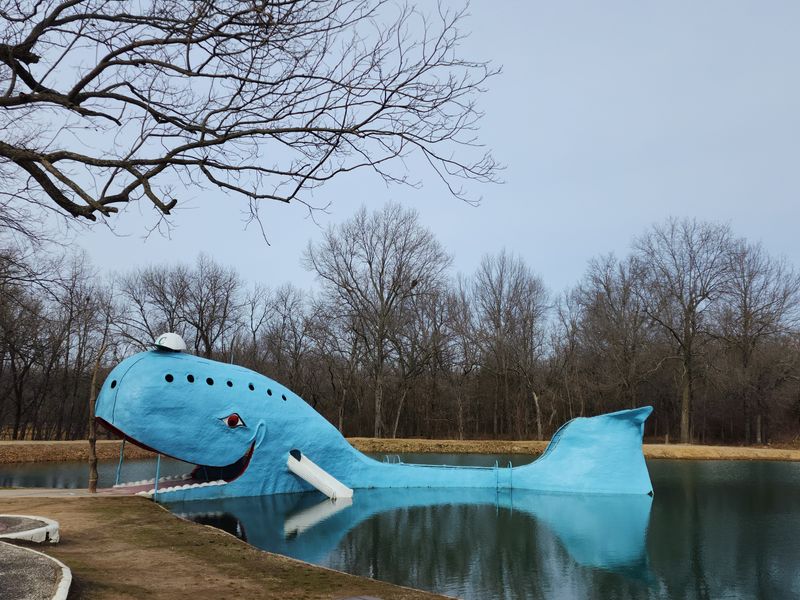
Hugh Davis built this eighty-foot-long blue whale as an anniversary gift for his wife Zelta in the early 1970s.
What began as a private swimming hole quickly became a beloved Route 66 landmark that attracted families traveling cross-country.
The smiling whale sits at the edge of a spring-fed pond, its mouth open wide enough for children to climb inside.
Faded blue paint and decades of weathering give the structure a nostalgic charm that perfectly captures roadside Americana.
During its heyday, the pond welcomed swimmers who dove from the whale’s back and tail.
Though swimming ended years ago, visitors still explore the whale and photograph its cheerful expression.
Picnic tables dot the shaded grounds where oak trees provide relief from summer heat.
The site underwent restoration in the 2000s, bringing new life to this quirky monument.
Local historians credit the Blue Whale with helping preserve interest in Route 66 culture throughout Oklahoma.
Travelers stop here to stretch their legs and marvel at the dedication behind this unusual tribute to marital love.
The surrounding area remains quiet and undeveloped, maintaining the vintage roadside atmosphere.
Sunset casts golden light across the water, creating magical photo opportunities.
Gift shops in nearby Catoosa sell whale-themed souvenirs celebrating this iconic attraction.
The gentle absurdity of a massive whale in landlocked Oklahoma never fails to delight first-time visitors.
Address: 2600 OK-66, Catoosa, Oklahoma
11. Ed Galloway’s Totem Pole Park
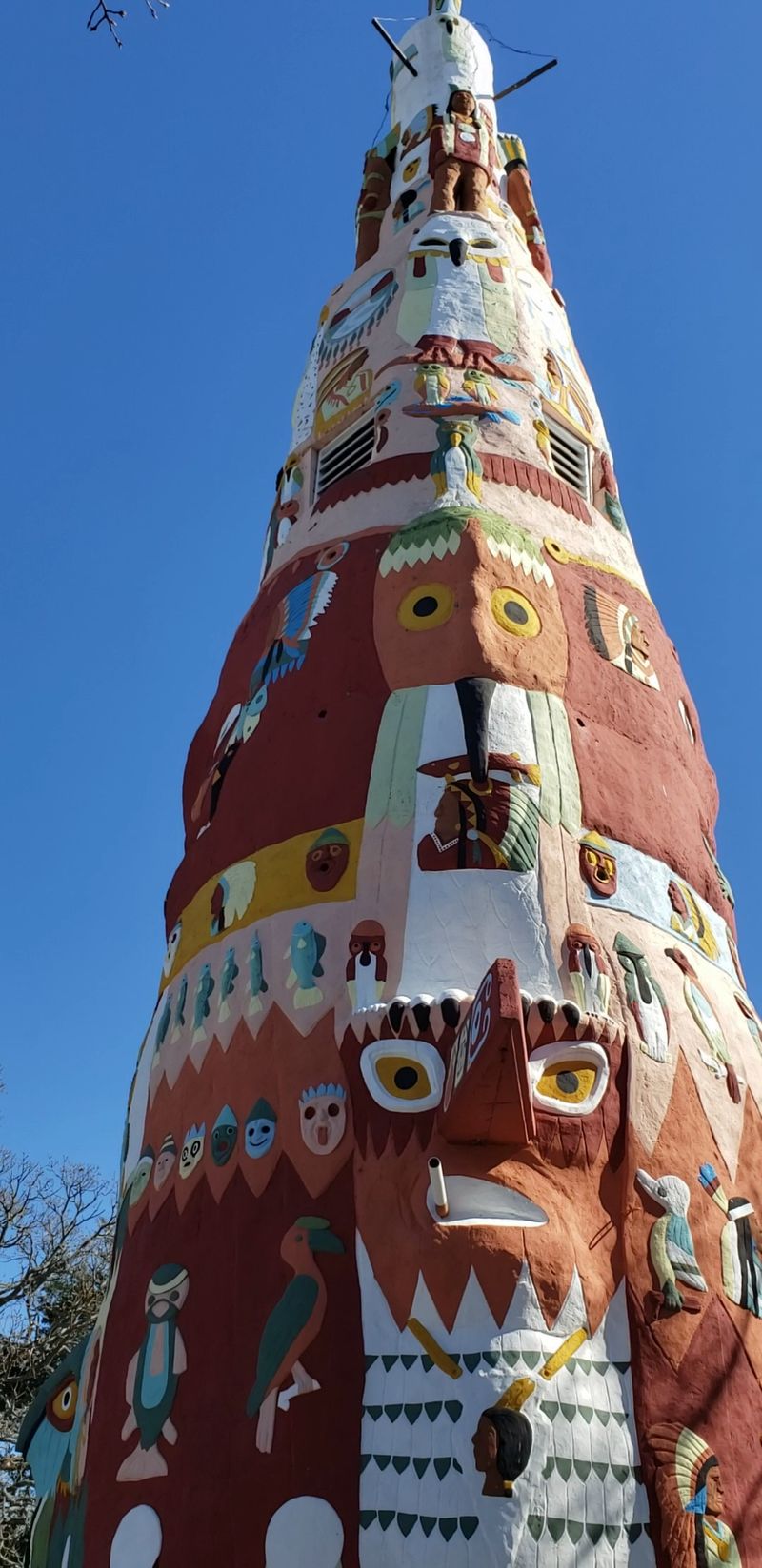
A retired fiddle maker named Ed Galloway spent eleven years creating what stands today as one of Oklahoma’s most bewildering artistic achievements.
The main totem pole stretches ninety feet into the sky, covered in brightly colored carvings that blend Native American imagery with Galloway’s own imagination.
Concrete and sandstone form the base of this towering creation, while smaller totems and sculptures populate the surrounding park grounds.
Galloway built everything by hand between 1937 and 1948, working alone in the rural countryside near Foyil.
Visitors wander freely through the park, discovering new details with each viewing angle.
The Folk Art Gallery nearby houses additional sculptures and tells Galloway’s remarkable story.
Weathered paint peels in places, adding to the authentic folk art character that makes this site so compelling.
Families spread picnic blankets beneath the shade of surrounding trees while kids marvel at the intricate turtle and arrow designs.
Spring brings wildflowers that frame the totems perfectly for photographers.
Local volunteers maintain the grounds and keep Galloway’s legacy alive through preservation efforts.
The park receives no admission fees, operating purely through donations and community support.
Few roadside attractions in Oklahoma match the sheer ambition and artistic vision displayed here.
This monument to one man’s creative obsession continues drawing curious travelers from across the country.
The journey to this remote location rewards visitors with an experience unlike any museum or conventional tourist stop.
Address: 21300 OK-28A, Foyil, Oklahoma
Dear Reader: This page may contain affiliate links which may earn a commission if you click through and make a purchase. Our independent journalism is not influenced by any advertiser or commercial initiative unless it is clearly marked as sponsored content. As travel products change, please be sure to reconfirm all details and stay up to date with current events to ensure a safe and successful trip.
