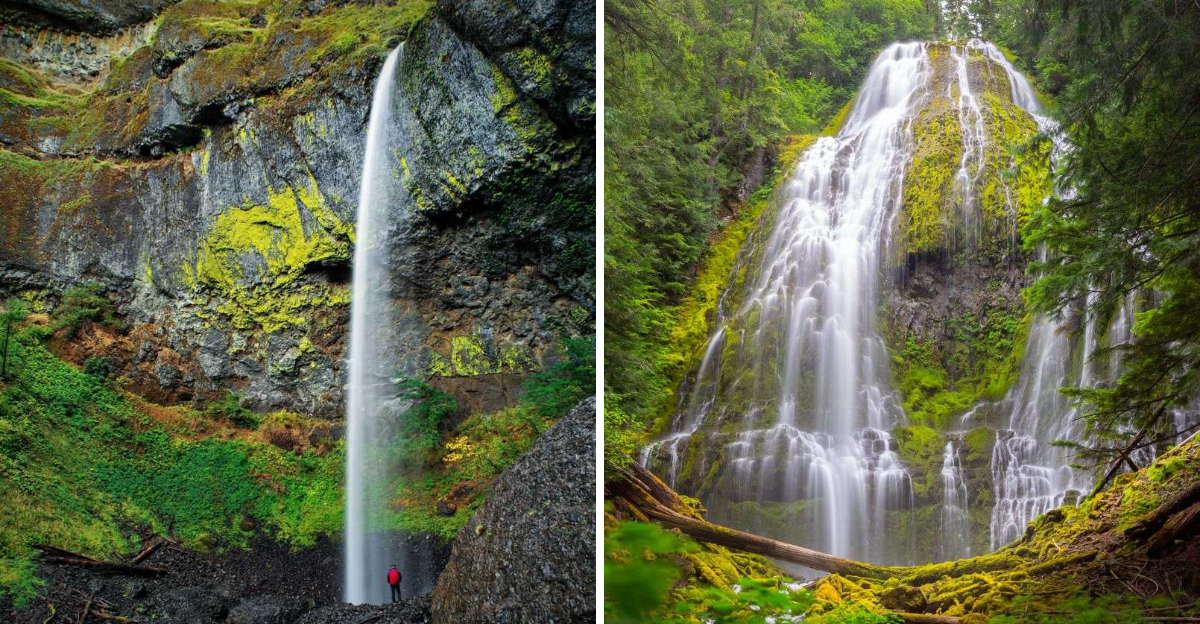
Oregon hides some of the most breathtaking waterfalls in the Pacific Northwest, and while tourists flock to the famous ones, there’s a secret collection that only locals seem to know about.
These hidden gems offer something special: fewer crowds, untouched natural beauty, and the kind of peaceful experience that makes you feel like you’ve discovered something truly magical.
From the moss-covered rocks of the Coast Range to the volcanic landscapes of the Cascades, Oregon’s lesser-known waterfalls tell stories that guidebooks often miss.
Many of these spots require a bit of adventure to reach, whether it’s a short hike through old-growth forests or a drive down a gravel road that most people pass by without a second thought.
The reward, however, is always worth it: crystal-clear pools, dramatic basalt formations, and the soothing sound of water cascading over ancient rock.
If you’re ready to explore beyond the beaten path and experience Oregon’s waterfalls the way locals do, this list will take you to places where nature still feels wild and wonderfully undiscovered.
1. Punch Bowl Falls
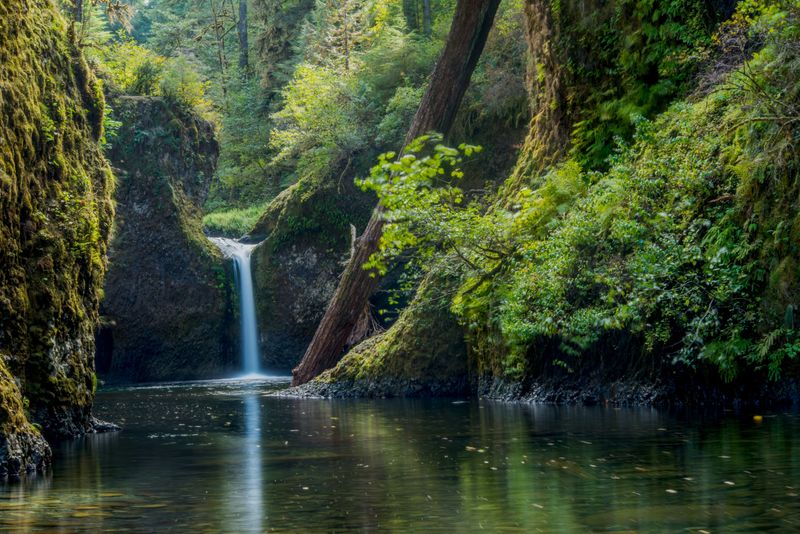
Nestled within the Columbia River Gorge, this waterfall pours into a perfectly circular basin that looks like nature carved it with intention.
The bowl-shaped amphitheater creates an almost surreal setting where water collects in a turquoise pool surrounded by steep rock walls covered in ferns and moss.
Getting here requires a moderate hike starting from Horsetail Falls, which means you’ll pass other beautiful cascades along the way, making the journey just as rewarding as the destination.
The trail winds through dense forest where sunlight filters through towering Douglas firs and western red cedars.
You’ll cross wooden bridges over rushing streams and navigate sections where the path hugs cliff edges, offering glimpses of the gorge below.
Spring brings wildflowers that dot the trail with color, while autumn transforms the canopy into shades of gold and amber.
What makes Punch Bowl Falls truly special is how the water seems to glow in certain light conditions.
When the sun hits the pool at just the right angle, the entire basin illuminates with an ethereal blue-green hue that photographers dream about.
The surrounding rock walls amplify the sound of falling water, creating a natural amphitheater effect that makes the experience feel almost sacred.
Swimming is technically not allowed, but many locals still take a quick dip during hot summer days when the water level is safe.
The pool depth varies throughout the year, so always exercise caution.
Early morning visits offer the best chance of having the place to yourself, as most hikers arrive later in the day.
Address: Horsetail Falls Trailhead, Columbia River Highway, Cascade Locks, OR 97014
2. Elowah Falls
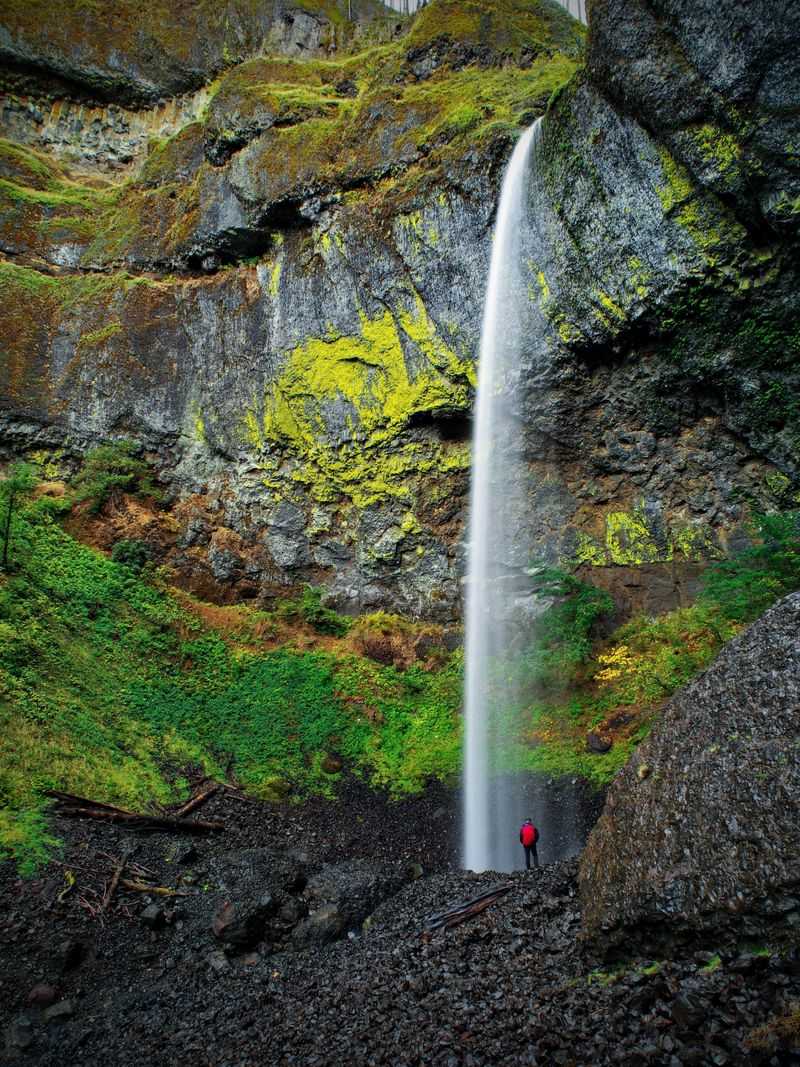
Standing at over 200 feet tall, this waterfall crashes down through a dramatic lava amphitheater that showcases Oregon’s volcanic past in spectacular fashion.
The falls split into ribbons as they descend, creating a veil effect that changes with the season and water flow.
Unlike some of the more crowded spots in the Columbia River Gorge, Elowah maintains a quieter atmosphere where you can actually hear yourself think over the roar of cascading water.
The hike to reach Elowah is relatively short but incredibly rewarding, taking you through old-growth forest where massive trees create a canopy overhead.
The trail is well-maintained and suitable for most fitness levels, though there are some uphill sections that might challenge beginners.
Along the way, you’ll notice how the forest changes as you gain elevation, with different plant species appearing at various points.
Many visitors combine their trip to Elowah with a visit to Upper McCord Creek Falls, which sits just a bit further up the trail.
This pairing creates a perfect half-day adventure that showcases two very different waterfall personalities.
Upper McCord Creek Falls has a more intimate feel, tucked into a narrow gorge where you can get surprisingly close to the action.
The viewing platform for Elowah offers an unobstructed perspective of the entire falls, making it a favorite among photographers who want to capture the full height and power.
Mist often creates rainbows on sunny afternoons, adding an extra layer of magic to the scene.
Winter visits can be particularly stunning when ice formations cling to the surrounding rocks.
Address: Elowah Falls Trailhead, Historic Columbia River Highway, Dodson, OR 97014
3. Wahclella Falls
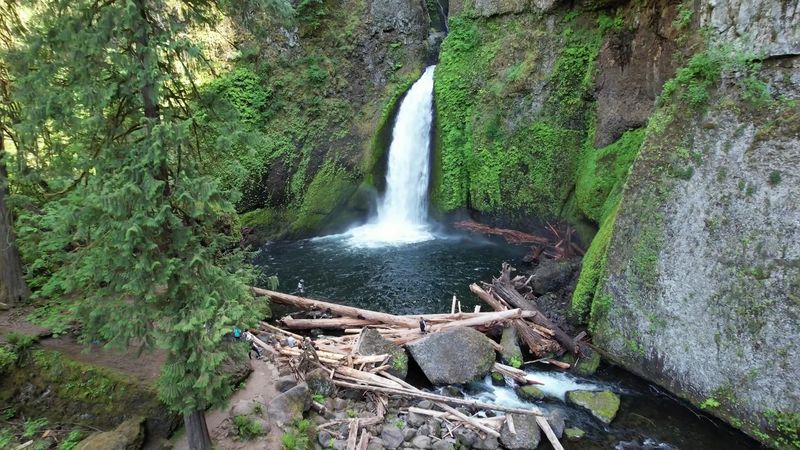
Tucked along Tanner Creek, this two-tiered waterfall creates a scene that feels straight out of a fantasy novel.
Water tumbles over unique rock formations that have been carved and sculpted by thousands of years of erosion, creating shapes and textures that fascinate geology enthusiasts and casual hikers alike.
The narrow canyon walls amplify the sound of rushing water, making the experience feel more immersive than many larger, more famous waterfalls.
The trail to Wahclella is family-friendly and accessible, making it perfect for introducing kids to Oregon’s natural wonders.
You’ll follow Tanner Creek upstream through a lush corridor where ferns grow so thick they sometimes obscure the trail edges.
Wooden footbridges cross the creek multiple times, offering different vantage points and photo opportunities that capture the creek’s personality as it rushes toward the Columbia River.
What sets Wahclella apart from other gorge waterfalls is the interesting rock formations surrounding the falls themselves.
Columnar basalt creates natural pillars and alcoves that frame the falling water in ways that seem almost architectural.
Moss and lichens add splashes of green and orange to the gray rock, creating a color palette that changes with the seasons and weather conditions.
The falls are particularly impressive during spring runoff when snowmelt swells Tanner Creek to its maximum flow.
During these high-water periods, mist fills the entire canyon, creating an otherworldly atmosphere that makes you feel like you’ve stepped into a cloud.
Summer brings lower water levels but also more sunshine, which illuminates the canyon in beautiful ways.
Address: Wahclella Falls Trailhead, Historic Columbia River Highway, Bonneville, OR 97014
4. Toketee Falls
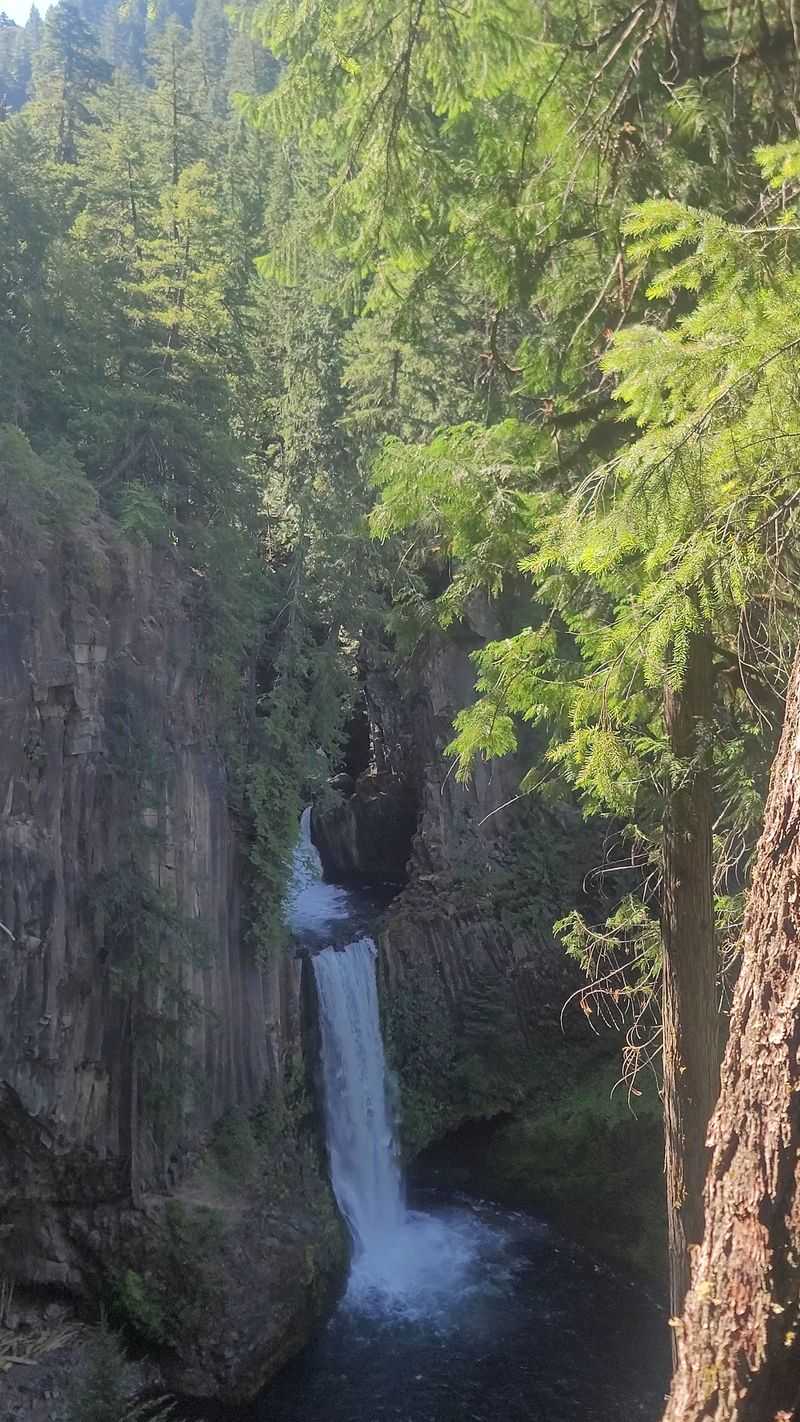
Deep in the Umpqua National Forest, this waterfall plunges into a pool so turquoise it almost doesn’t look real.
The basalt columns surrounding the falls create a natural frame that photographers spend hours trying to capture perfectly, and the vibrant color of the water contrasts dramatically with the dark volcanic rock.
Despite its stunning beauty, Toketee remains relatively unknown outside of southern Oregon, making it a true local secret.
The hike to reach Toketee is mercifully short, just over half a mile, but the trail packs incredible scenery into that brief distance.
You’ll walk through dense forest where Douglas firs tower overhead and the forest floor is carpeted with moss and fallen needles.
The trail ends at a viewing platform that offers a perfect perspective of both the upper and lower sections of the falls.
Toketee’s name comes from a Chinook word meaning beautiful, and locals will tell you it’s one of the most accurately named places in the state.
The way water interacts with the columnar basalt creates a curtain effect that seems to change depending on where you’re standing and what time of day you visit.
Morning light is particularly magical, as it illuminates the mist rising from the plunge pool.
The surrounding area offers additional hiking opportunities for those who want to extend their adventure.
Nearby Watson Falls is actually taller and worth visiting if you have extra time.
The North Umpqua River runs through this region, creating a corridor of waterfalls that could fill an entire weekend of exploration.
Address: Toketee Falls Trailhead, Forest Road 34, Glide, OR 97443
5. Proxy Falls
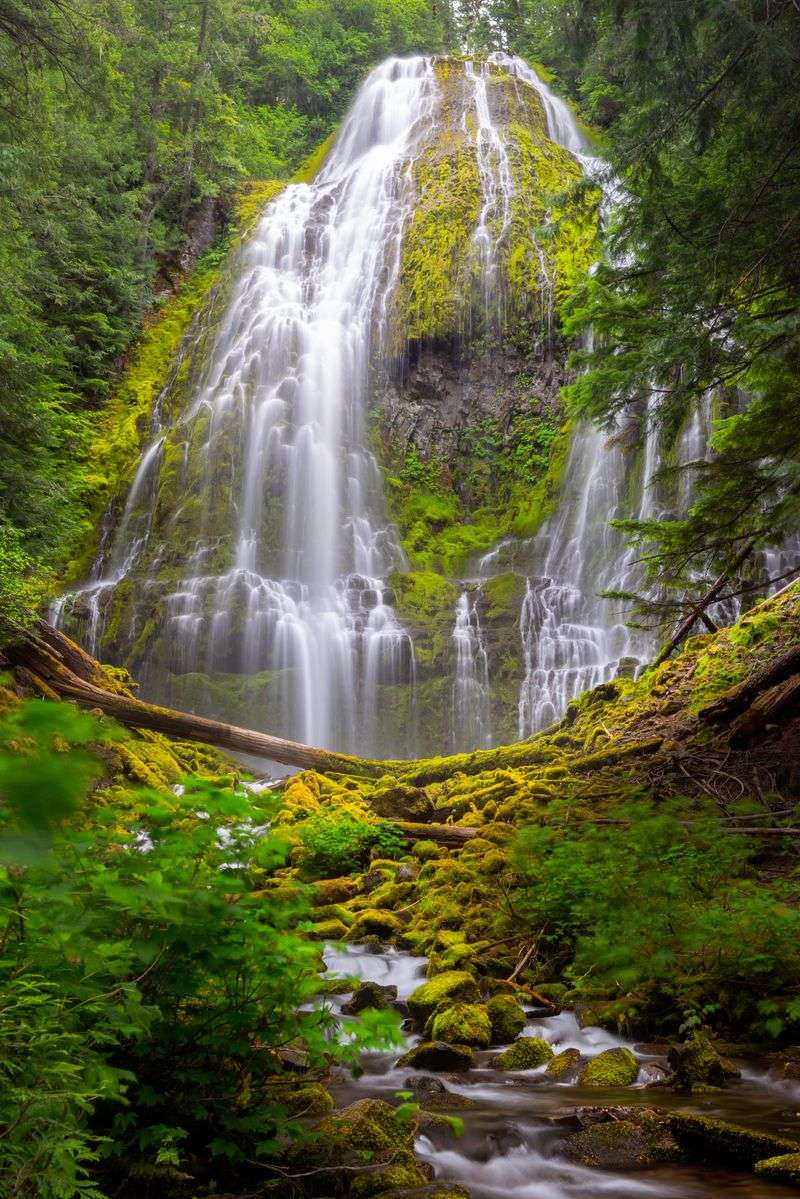
In the volcanic landscape near McKenzie Pass, you’ll find not one but two stunning waterfalls that flow over ancient lava rock in ways that seem to defy gravity.
The upper and lower falls each have distinct personalities, with water cascading over and through porous volcanic rock that creates multiple channels and rivulets.
This otherworldly setting makes Proxy Falls one of the most unique waterfall experiences in Oregon, where the geology is just as impressive as the water itself.
The loop trail that visits both falls is relatively easy and takes you through a landscape that feels more like Iceland than the Pacific Northwest.
Lava rock formations covered in bright green moss create contrast that’s almost shocking in its intensity.
The forest here is different too, with mountain hemlock and Pacific silver fir replacing the Douglas fir common at lower elevations.
Lower Proxy Falls is the more dramatic of the two, with water fanning out over a wide expanse of volcanic rock before seemingly disappearing into the porous stone below.
There’s no visible stream leaving the base of the falls, which creates a mysterious quality that fascinates visitors.
Upper Proxy Falls is taller and more traditional in appearance, but still flows over the same fascinating lava rock formations.
The best time to visit is late spring through early fall, as snow can block the access road well into summer some years.
The McKenzie Pass Highway typically closes in winter, making this a seasonal destination.
Wildflowers bloom throughout the summer, adding splashes of color to the already dramatic landscape.
Address: Proxy Falls Trailhead, Highway 242, McKenzie Bridge, OR 97413
6. Tumalo Falls
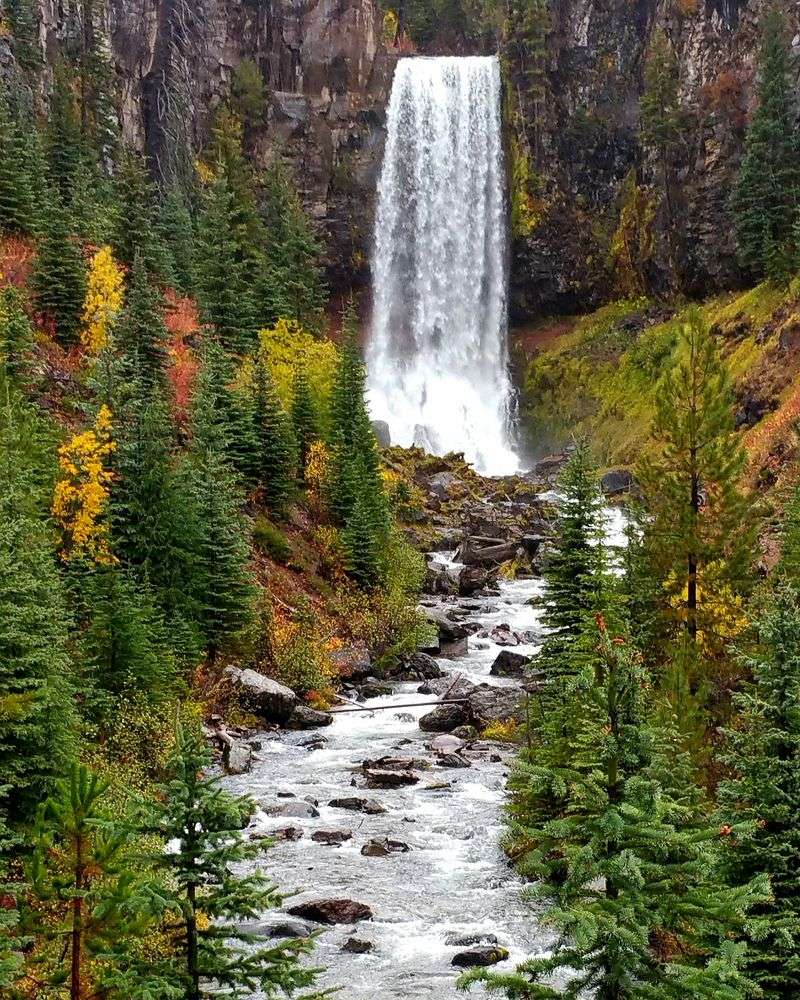
Just a short drive from Bend, this picturesque cascade tumbles nearly 100 feet over a rocky cliff into a pool below, creating one of Central Oregon’s most accessible natural attractions.
The falls sit in a transition zone where the wet Cascade forests meet the drier high desert, creating a unique ecosystem that supports an interesting mix of plant and animal life.
Despite being relatively close to a major city, Tumalo maintains a wild character that makes it feel remote and special.
The main viewpoint is easily accessible via a short paved path from the parking area, making it perfect for visitors of all ages and abilities.
For those wanting more adventure, trails extend beyond the viewpoint, climbing alongside Tumalo Creek to reveal smaller cascades and pools upstream.
These upper trails offer solitude and different perspectives on the creek as it carves through volcanic rock on its way down the mountain.
Summer afternoons bring crowds of locals who know this spot as a perfect escape from Bend’s heat.
The surrounding ponderosa pine forest provides shade, and the mist from the falls creates a natural cooling system that drops temperatures noticeably near the water.
Picnic areas near the parking lot make it easy to spend several hours enjoying the setting.
Winter transforms Tumalo into a completely different experience, with ice formations creating sculptures that cling to the cliff face.
The falls never completely freeze, but the combination of flowing water and ice creates dramatic visual effects.
Snow-covered trails require proper footwear and preparation, but the winter beauty is worth the extra effort.
Address: Tumalo Falls Road, Bend, OR 97701
7. Sweet Creek Falls
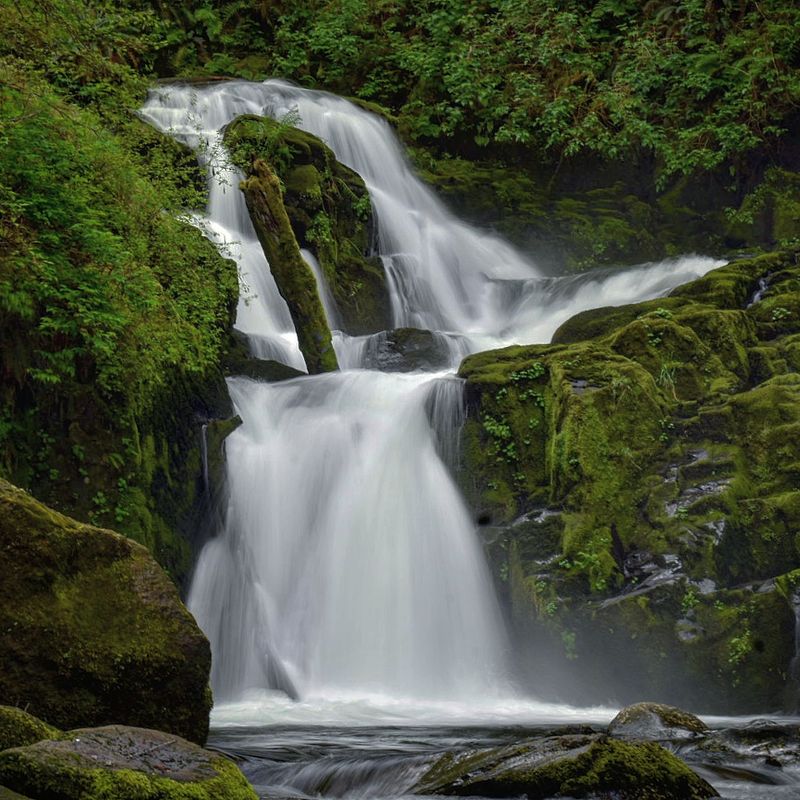
Along the Oregon Coast Range, Sweet Creek creates a magical corridor of cascades and pools that feels like stepping into an enchanted forest.
Multiple waterfalls appear along the creek, each with its own character and charm, connected by a trail that might be one of the most beautiful short hikes in the state.
Moss covers everything here, from rocks to fallen logs to tree trunks, creating a green wonderland that thrives in the coastal moisture.
The trail follows Sweet Creek upstream, crossing wooden bridges and passing through tunnels of vegetation where ferns grow so dense they create natural archways.
Each waterfall along the route deserves its own moment of appreciation, from small cascades that tumble over rock ledges to larger falls that create deep pools perfect for reflection.
The sound of moving water is constant, creating a soundtrack that helps you forget about everything else.
Local families have been coming to Sweet Creek for generations, and you’ll often see people who clearly know every twist and turn of the trail.
Swimming holes appear at various points, though the water stays cold year-round thanks to the creek’s mountain origins.
Some pools are deep enough for a quick dip, while others are better suited for wading and splashing.
The lush environment supports incredible biodiversity, with salamanders, frogs, and countless bird species calling this creek home.
Banana slugs, those iconic Pacific Northwest invertebrates, are everywhere, slowly making their way across the trail in their bright yellow glory.
The whole ecosystem feels delicate and precious, a reminder of why Oregon works so hard to protect its natural spaces.
Address: Sweet Creek Falls Trailhead, Sweet Creek Road, Mapleton, OR 97453
8. Moon Falls
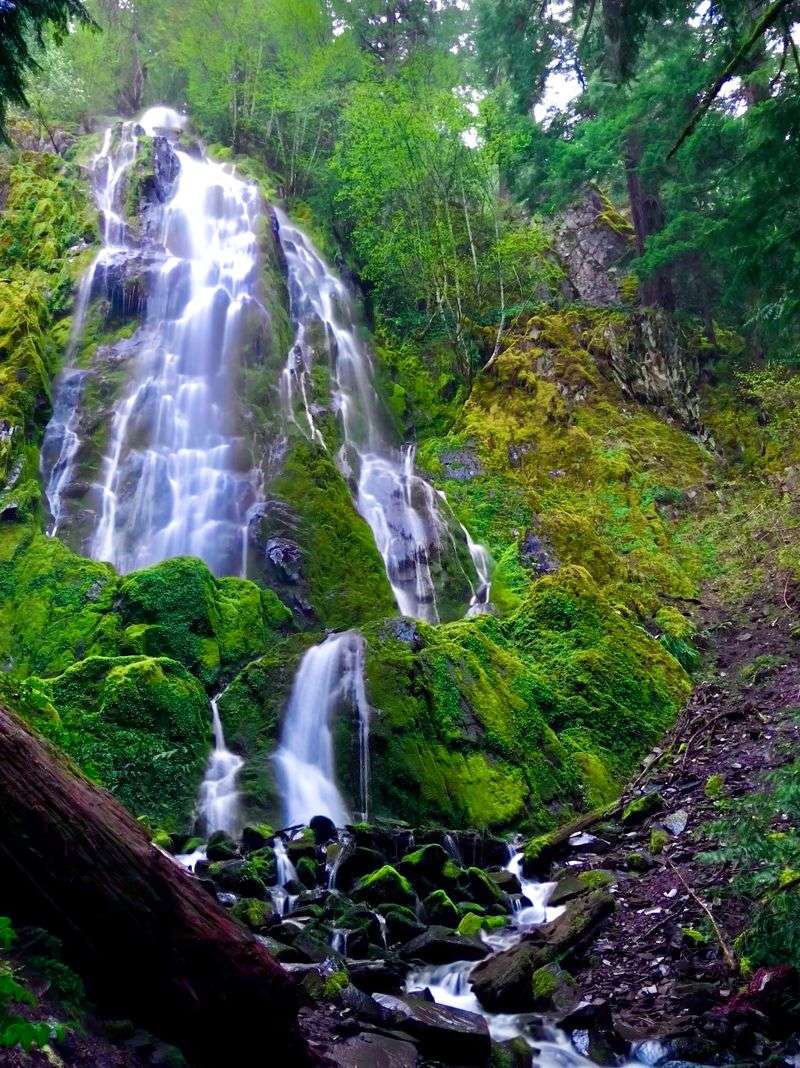
Hidden in the Umpqua National Forest, this tall, slender waterfall drops through a narrow slot in the rock, creating a ribbon of white water against dark stone.
Moon Creek feeds the falls, and the surrounding forest creates a cathedral-like setting where the sound echoes off the rocks and trees.
This is one of those places that feels sacred somehow, where the natural beauty demands a moment of quiet appreciation before you even think about pulling out a camera.
Finding Moon Falls requires a bit of determination, as the access road can be rough and the trailhead isn’t always clearly marked.
This difficulty keeps crowds away, ensuring that those who make the effort are often rewarded with solitude.
The hike itself is moderate, following Moon Creek through old-growth forest where massive trees create shade and the understory is relatively open.
The falls are most impressive during spring and early summer when snowmelt keeps the flow strong.
By late summer, the volume decreases significantly, though the falls never completely dry up.
Even at lower flows, the way water interacts with the rock creates interesting patterns and textures that change constantly.
The pool at the base is small but deep, with water so clear you can see every rock and piece of wood on the bottom.
Wildlife sightings are common in this area, with black-tailed deer, elk, and even black bears calling the surrounding forest home.
Birds are abundant, with species ranging from tiny wrens to impressive pileated woodpeckers that drum on dead snags throughout the forest.
The remoteness of Moon Falls means you’re more likely to have authentic wildlife encounters here than at more popular destinations.
Address: Forest Road 2414, Umpqua National Forest, Oakridge, OR 97463
9. Abiqua Falls
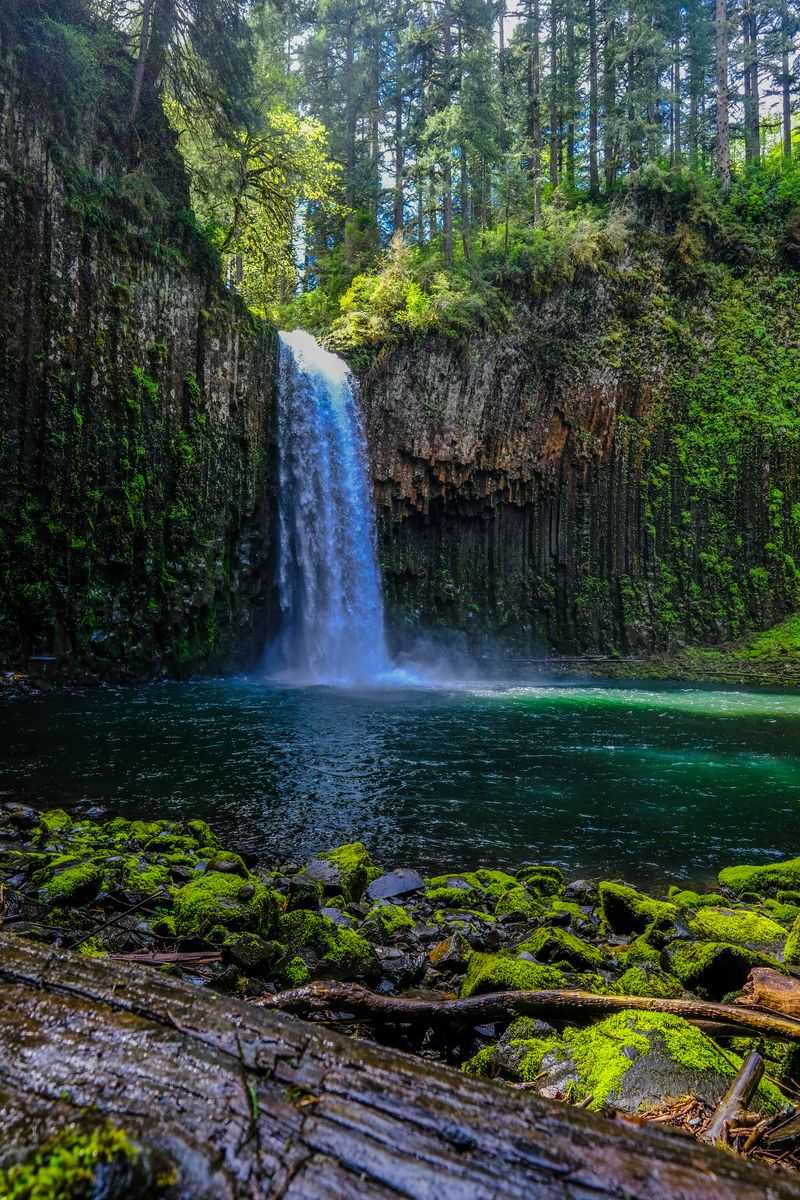
Photographers obsess over this waterfall, and once you see it in person, you’ll understand why.
Water plunges into a horseshoe-shaped amphitheater of columnar basalt that creates one of the most dramatic natural settings imaginable.
The geometric patterns of the rock columns contrast beautifully with the organic flow of water, and the enclosed space creates lighting conditions that change throughout the day in fascinating ways.
Getting to Abiqua requires navigating rough gravel roads that can be challenging for low-clearance vehicles, and the final approach involves a steep scramble down into the canyon.
This access difficulty means Abiqua remains relatively unknown despite its stunning beauty.
The effort is absolutely worth it, but come prepared with proper footwear and be honest about your scrambling abilities.
The amphitheater shape creates amazing acoustics where the sound of falling water seems to come from everywhere at once.
Moss and ferns grow from cracks in the basalt, adding organic elements to the geometric rock formations.
The pool at the base is deep and inviting, though the water stays cold year-round and swimming is technically not recommended due to the remote location and potential hazards.
Spring brings the highest water flow, creating a thunderous cascade that fills the amphitheater with mist and sound.
Summer offers lower flows but better lighting for photography, as the sun can actually reach into the canyon during certain hours.
Each season offers something different, and local photographers return repeatedly to capture the falls under various conditions.
The Santiam River area where Abiqua is located contains numerous other waterfalls and natural features worth exploring if you’re already making the journey.
The whole region feels like a secret corner of Oregon that hasn’t been fully discovered yet.
Address: Abiqua Falls Road, Scotts Mills, OR 97375
10. Silver Falls State Park Hidden Gems
While Silver Falls State Park is hardly a secret, most visitors stick to the popular highlights and miss some of the most magical spots on the Trail of Ten Falls.
Middle North Falls, North Falls, and Winter Falls offer experiences that many tourists rush past in their hurry to check off the famous falls.
These lesser-visited cascades provide opportunities to walk behind falling water, explore unique geological features, and find moments of solitude even on busy days.
The full loop trail covers about eight miles, and many casual visitors turn back after seeing just the first few falls.
Those who continue are rewarded with increasingly dramatic scenery and fewer people sharing the trail.
Each waterfall has been carved into ancient basalt flows, creating different shapes and characters that tell the story of volcanic activity that shaped this landscape millions of years ago.
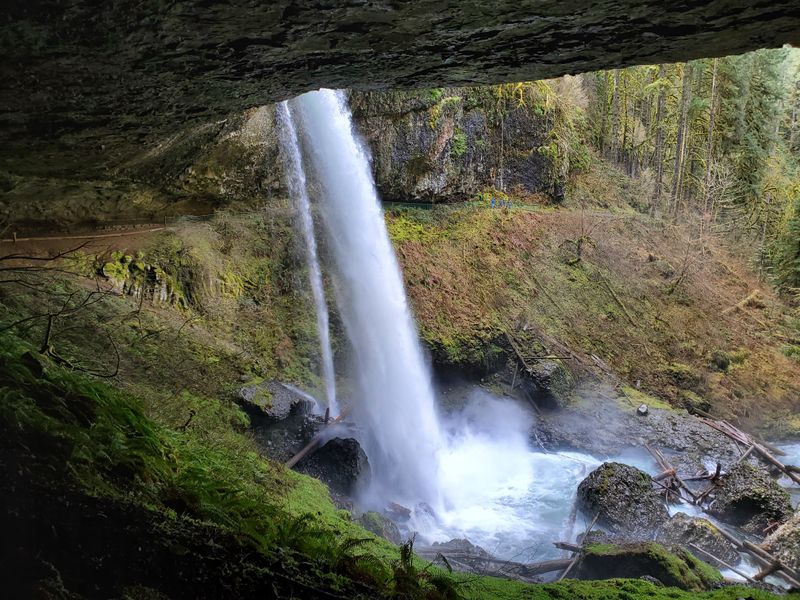
Walking behind North Falls is an experience that never gets old, no matter how many times you’ve done it.
The trail literally passes through the space between the falling water and the rock wall, creating a perspective that feels both thrilling and humbling.
Water crashes down just feet away while you walk on solid ground, protected by the overhang of volcanic rock above.
Winter Falls is often overlooked because it requires a short spur trail off the main loop, but locals know it’s worth the extra steps.
The intimate setting and beautiful proportions make it a favorite for those who appreciate subtlety over spectacle.
The surrounding forest here is particularly lush, with old-growth trees creating a canopy that filters light into soft, diffused beams.
Each season transforms the park completely, from spring wildflowers to autumn color to winter ice formations that turn the falls into frozen sculptures.
The park is large enough that you can find quiet corners even on the busiest summer weekends.
Address: Silver Falls State Park, 20024 Silver Falls Highway SE, Sublimity, OR 97385
Dear Reader: This page may contain affiliate links which may earn a commission if you click through and make a purchase. Our independent journalism is not influenced by any advertiser or commercial initiative unless it is clearly marked as sponsored content. As travel products change, please be sure to reconfirm all details and stay up to date with current events to ensure a safe and successful trip.
