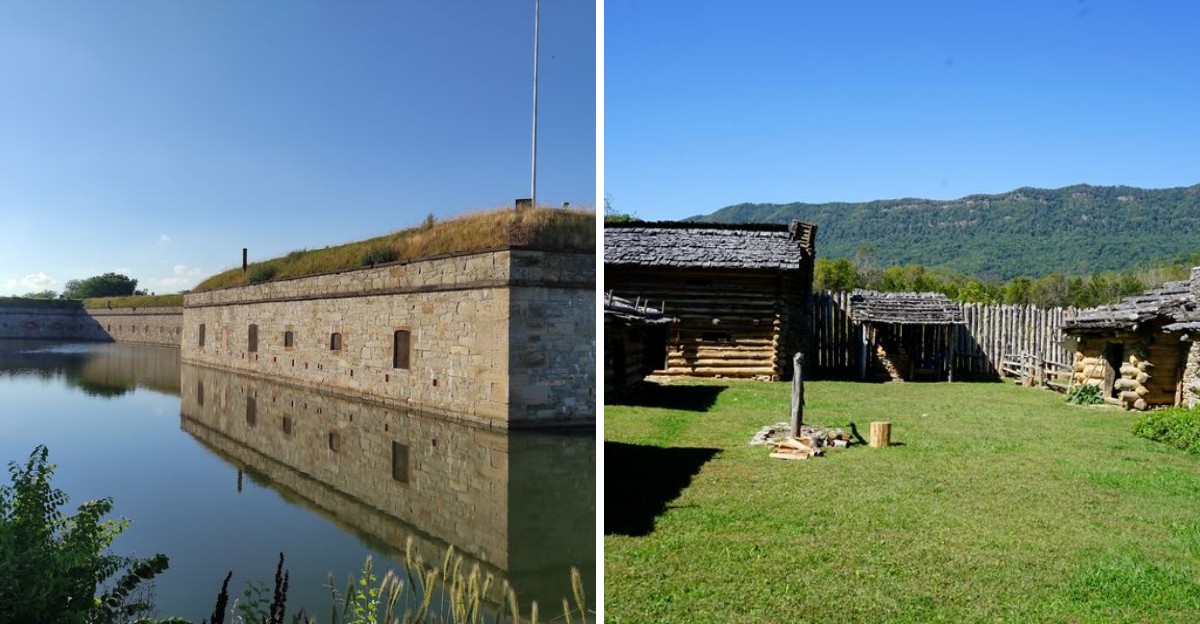
History is usually something you read about or see behind glass. But these historic Virginia parks make the past feel much closer than expected.
They are places where you can walk the same ground that soldiers marched, stand in the rooms where decisions were made, and see the tools and belongings of people who lived centuries ago. Some are battlefields, preserved with earthworks and monuments.
Others are plantations or homesteads, with restored buildings and interpretive trails. A few are smaller sites, quiet and overlooked, where the history is personal rather than grand.
What they share is a sense of immediacy, the feeling that the past is not as far away as it seems. Virginia has plenty of historic sites, but these parks offer something more.
They let you step into the story.
1. First Landing State Park, Virginia Beach
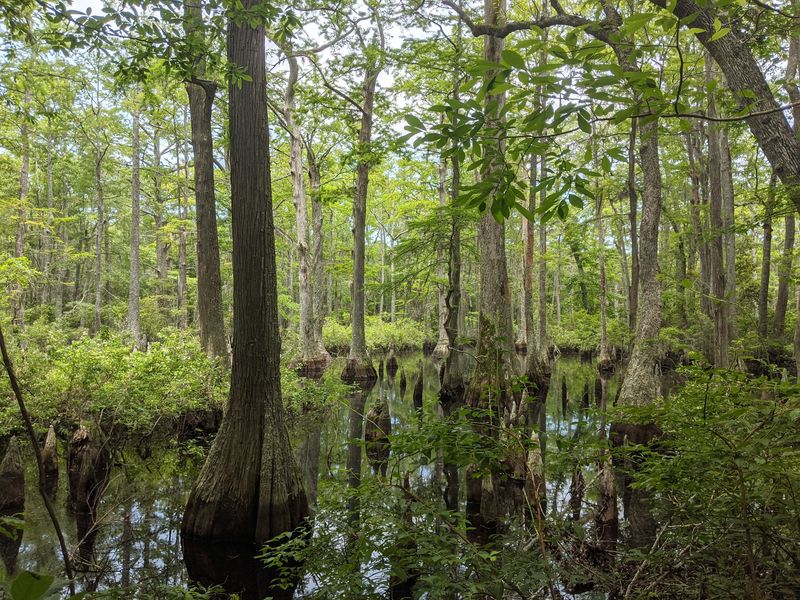
Blackbeard, allegedly, stashed loot somewhere around the Narrows. Whether that tale holds water or not, the swampy corridors here feel exactly like the kind of place a pirate would choose.
English colonists stepped ashore in this area in 1607, and the coastline has been collecting stories ever since. Native canoes slipped through these waterways long before that.
Civil War patrols later worked the same interior creeks.
What surprises most first timers is the scenery. Roughly nineteen miles of trails thread through cypress swamps, lagoons and old maritime forest, with Spanish moss hanging like theater curtains overhead.
Those forested dunes and semi tropical plants earned the place National Natural Landmark status. Walk the Bald Cypress Trail early and the quiet does something strange to your sense of time.
About a mile and a half of Chesapeake Bay beachfront rounds out the experience, so you can trade boardwalk planks for sand without leaving the park.
Stop at the Chesapeake Bay Center before you hike. Exhibits there unpack the 1607 landing alongside the ecology of the bay, which gives your walk context instead of just pretty views.
Bring bug spray in summer. The swamp sections earn their reputation, and no amount of historical wonder distracts from mosquitoes.
Bikes handle the Cape Henry Trail nicely if walking is not your speed. Either way, this stands as the first planned state park in the Commonwealth, a fitting opening chapter.
Address: 2500 Shore Dr, Virginia Beach, VA 23451
2. Colonial National Historical Park, Jamestown and Yorktown
Two enormous bookends of American history sit at either end of one gorgeous parkway. That is the deal here, and it is a very good deal.
Start at Historic Jamestowne, the actual site where English settlers planted their first permanent North American colony in May of 1607. Archaeologists still work the ground, which means discoveries keep rolling in.
European, Powhatan and African lives collided on this riverbank, and the interpretation does not shy away from the harder parts of that collision.
Then comes the drive. The Colonial Parkway links Jamestown to Yorktown through woods and marsh with no billboards, no strip malls, nothing but road and trees.
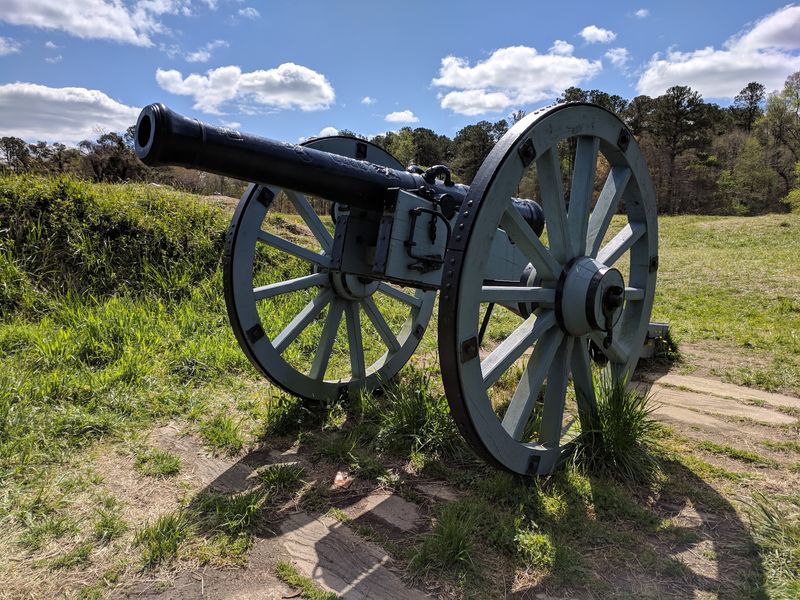
Yorktown Battlefield waits at the other end, where American and French forces forced a British surrender in October of 1781. Earthworks still ripple across the fields.
Walking the siege lines gives you a real feel for how close the armies were. Maps flatten distance.
Grass and dirt do not.
Both locations run visitor centers with films and museum galleries, and both reward a slow pace. Give yourself a full day, ideally two, or you will be rushing the best parts.
Pro move: drive the parkway toward Yorktown in late afternoon when the light turns the York River silver.
Few corners of Virginia pack colonial beginnings and revolutionary endings into such a tidy loop.
Jamestown address: 1368 Colonial Parkway, Jamestown, VA 23081. Yorktown address: 1000 Colonial Parkway, Yorktown, VA 23690
3. George Washington Birthplace National Monument, Westmoreland County
Every schoolkid learns about the cherry tree. Almost nobody learns where the guy was actually born, and the answer is a peaceful stretch of farmland along Popes Creek.
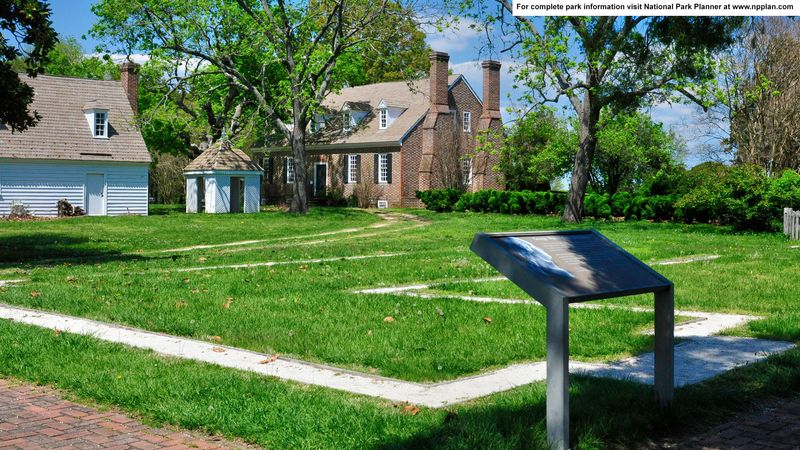
George Washington arrived in the world here in February of 1732. Fire destroyed the original house decades later, so what stands today is a memorial dwelling built in the 1930s.
Think of it as an interpretation rather than a replica. Furnished in period style, it shows how a middling planter family lived in the eighteenth century.
The real goosebumps come from the outline nearby. Crushed oyster shells mark the foundations of the house where he was actually born, a simple gesture that lands hard.
Wander over to the Colonial Living Farm and the place shifts from quiet to lively. Heritage breed animals, tobacco fields and costumed interpreters demonstrating daily chores fill the scene.
Kids tend to love the livestock far more than the furniture, which is a useful thing for parents to know in advance.
Trails run down toward the Potomac shoreline, and the water views alone justify the drive out into Westmoreland County.
Pack a picnic. Dining options nearby are thin, and the grounds have shaded spots built for exactly this.
Come in spring when the gardens fill out and the farm animals have their young. The whole property feels less like a monument and more like a working landscape.
Address: 1732 Popes Creek Road, Colonial Beach, VA 22443
4. Manassas National Battlefield Park, Manassas
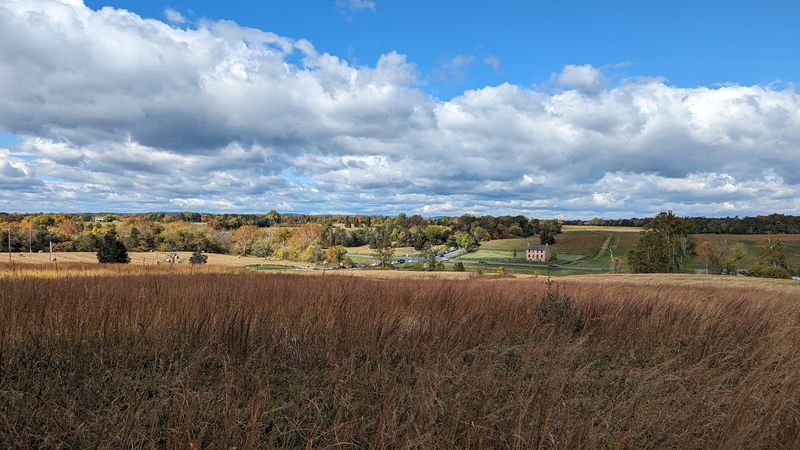
A nickname was born on this ground. Stonewall.
One battlefield handed American history a piece of vocabulary it never gave back.
Roughly five thousand acres of open field and woodline stretch across this park, and two major Civil War battles played out on the same terrain.
July of 1861 brought the first clash, which erased any notion that the conflict would wrap up quickly. Crowds had come out expecting a show and got something far uglier.
Thirteen months later, three days of fighting in August of 1862 delivered a major Confederate victory on the identical fields.
Henry Hill is the classic starting point. The visitor center sits right there, with a film, exhibits and a walking loop that makes the confusing first battle click into place.
Down the hill stands the Stone House, which served as a field hospital during both engagements. Its plain walls saw more than most buildings ever do.
The Stone Bridge and Henry House round out the highlights, and a driving tour covers the sprawling second battle sites.
Wear real shoes. Grass trails get soggy, and the sun on Henry Hill shows no mercy in July.
Horseback riders and trail runners use the park regularly, so the atmosphere balances solemn history with everyday recreation. That mix is part of its charm.
Address: 6511 Sudley Rd, Manassas, VA 20109
5. Appomattox Court House National Historical Park, Appomattox
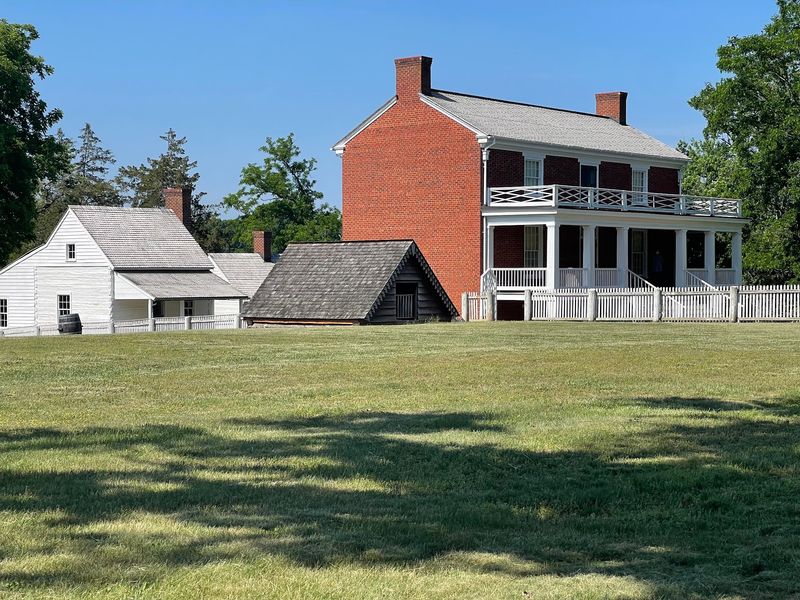
Some places carry a hush you can feel the moment you step out of the car. This village is one of them.
April of 1865 turned an ordinary crossroads settlement into the site of a national turning point. Robert E.
Lee surrendered his Army of Northern Virginia to Ulysses S. Grant inside a private home here.
That home belonged to the McLean family, and the parlor where the terms were signed has been reconstructed with care.
The surrender did more than stop the shooting. Terms discussed in those rooms shaped how a fractured country would attempt to stitch itself back together.
Restored buildings line the old stage road, including the courthouse, a tavern, a law office and modest homes. Walking between them takes minutes, but rushing defeats the purpose.
Rangers offer talks throughout the day, and they are worth timing your visit around. The storytelling here is genuinely excellent.
Exhibits in the reconstructed courthouse dig into emancipation, reunification and the tangled aftermath that followed the surrender.
Fields roll away in every direction, and benches invite you to simply sit for a while. That contemplative pace fits the subject matter.
Visit on a weekday morning if quiet matters to you. The village reads very differently when the lane is empty.
Nowhere else in the Commonwealth compresses so much national consequence into such a small, tidy patch of ground.
Address: 111 National Park Drive, Appomattox, VA 24522
6. Sailor’s Creek Battlefield State Park, Rice
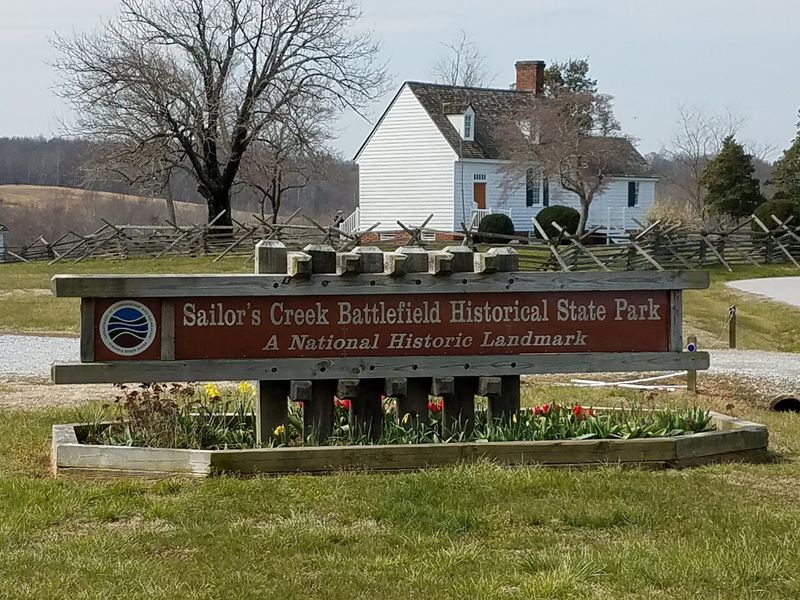
Three days. That is all the time that separated the fighting here from the surrender at Appomattox.
On April 6, 1865, Union forces caught Lee’s retreating army along these creek bottoms and delivered a devastating blow. Thousands of soldiers and eight generals were captured.
The scale of that loss essentially finished the war in this part of the country, yet the site remains far quieter than its famous neighbor.
Seven interpretive trails cross the fields and woods, following the actual paths troops took. Reading a marker while standing on the exact slope described changes how the information lands.
Perched above it all sits the Overton Hillsman farmhouse, built around 1780. Union surgeons turned it into a field hospital, treating wounded men from both armies.
Its interior has been restored to reflect those grim 1865 conditions, and the effect is sobering rather than theatrical.
The visitor center holds artifacts and research covering a battle that historians rank as nationally significant, even though it rarely makes travel lists.
Cell service gets patchy out near Rice, so download directions before you leave the highway.
Pair this stop with Appomattox for a genuinely powerful day. Driving the short distance between them mirrors the final retreat almost exactly, which is a quietly unforgettable way to travel.
Address: 6541 Saylers Creek Road, Rice, VA 23966
7. Ball’s Bluff Battlefield Regional Park, Leesburg
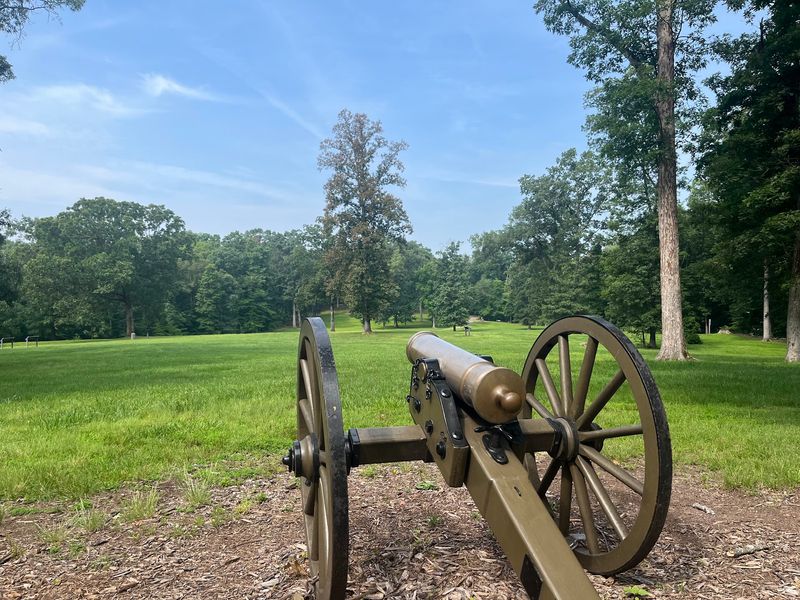
A row of trees. That is what a scout mistook for an enemy camp, and the error set an entire disastrous operation in motion.
October of 1861 brought Union troops up the bluffs above the Potomac near Leesburg, where they walked straight into a punishing defeat.
Retreat turned catastrophic because the ground behind them dropped away sharply toward a river crossing with nowhere near enough boats.
Standing at the overlook explains the tragedy faster than any book. The bluff is steep, the water is wide, and the tactical trap becomes instantly obvious.
Shaded trails loop through the woods with interpretive signs marking key positions. The whole circuit is manageable for most fitness levels.
Tucked among the trees sits one of the smallest national cemeteries in the country, a walled enclosure holding Union dead from the fight. Its size makes it more affecting, not less.
This ranks as the largest Civil War engagement fought in Loudoun County, and it carries National Historic Landmark status.
Autumn is the standout season. Leaves along the Potomac turn gold and the river views open up as the canopy thins.
Parking is limited, so arrive early on pleasant weekends. Leesburg sits minutes away with plenty of spots for a post hike bite.
Few places show the cost of bad intelligence quite so plainly.
Address: Balls Bluff Rd NE, Leesburg, VA 20176
8. Fort Monroe National Monument, Hampton
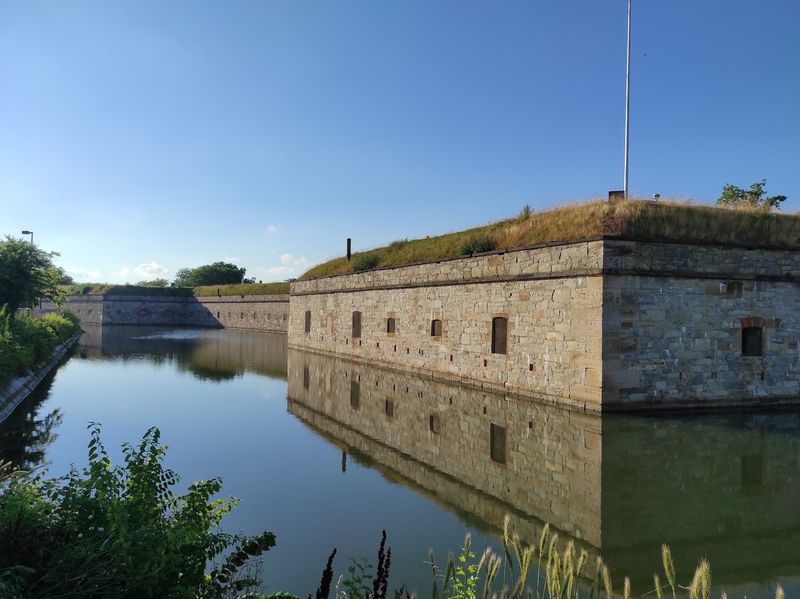
Freedom’s Fortress. The nickname alone should tell you this is not a standard stone pile with cannons.
Guarding the entrance to Hampton Roads, this is the largest stone fort ever built in the United States, ringed by a moat and still fully walkable.
Kecoughtan people lived on Old Point Comfort long before any European ship appeared on the horizon.
In 1619, the first enslaved Africans in English North America arrived near this very point, a moment that altered the trajectory of the entire continent.
Centuries later, during the Civil War, enslaved people fleeing to Union lines here were not returned. That decision cracked open a path toward emancipation and earned the fort its enduring nickname.
Inside the walls, the Casemate Museum occupies vaulted brick chambers and covers the fort’s military and social history.
Outside, the Algernourne Oak spreads its branches after standing sentinel for close to five hundred years. Touch the trunk and the timeline collapses.
Walking the ramparts delivers wide water views, passing ships and sea breeze, which makes the history lesson feel like a shoreline stroll.
A lighthouse, a beach and blocks of historic officers’ housing fill out the grounds, so plan for a long, unhurried visit.
Of all the historic sites across Virginia, this one layers the most eras into a single stop.
Address: 41 Bernard Rd, Fort Monroe, VA 23651
9. Wilderness Road State Park, Ewing
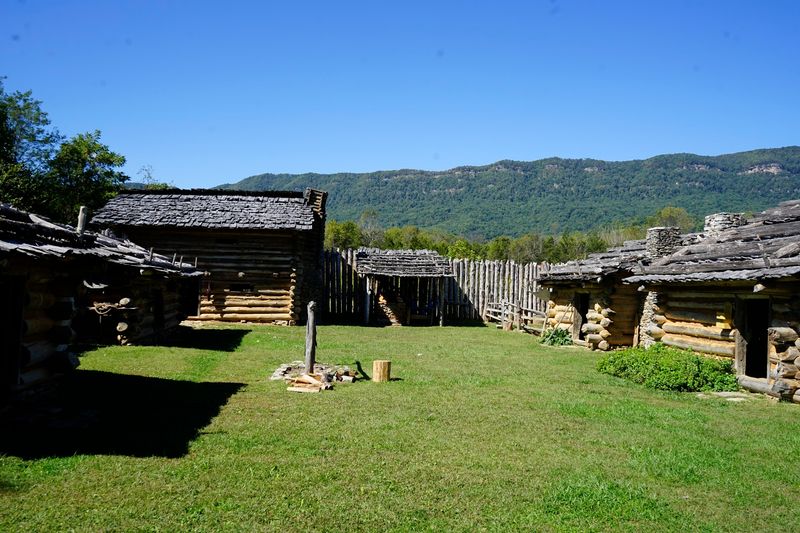
Daniel Boone hacked a path through this valley in 1775, and hundreds of thousands of settlers followed his blaze marks west.
By 1800, more than three hundred thousand people had squeezed through the Cumberland Gap toward Kentucky using this route. America’s first western gateway ran right past where you will park your car.
Martin’s Station anchors the park, a fully reconstructed frontier fort operating as an outdoor living history museum.
Log cabins, a blockhouse and palisade walls surround a dirt yard where costumed interpreters demonstrate blacksmithing, cooking and other frontier skills.
Special event weekends crank the authenticity up further, with militia drills and craft demonstrations filling the compound.
Outside the walls, the Wilderness Road Trail runs about six and a half miles, welcoming hikers, cyclists and horseback riders alike.
Powell Valley scenery flanks the whole route, and those mountain ridges look much the way pioneers would have seen them.
Inside the visitor center, a docudrama titled Wilderness Road, Spirit of a Nation lays out the stories of Boone and Joseph Martin before you head outdoors.
The elegant Karlan Mansion, dating to the 1870s, also sits on the property, adding a Victorian chapter to a decidedly frontier setting.
Way out here in far southwestern Virginia, near Ewing, the drive itself becomes part of the adventure. Bring a full tank and a loose schedule.
Now grab the keys, pick a century, and go meet the past face to face.
Address: 8051 Wilderness Rd, Ewing, VA 24248
