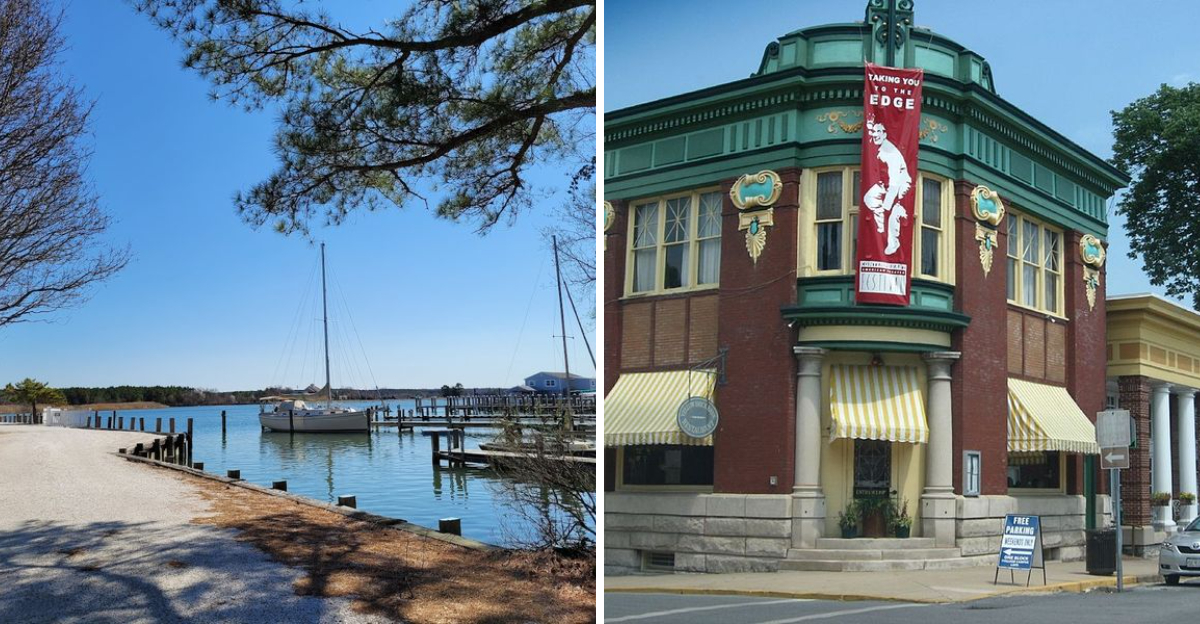
Beauty has a way of getting discovered. It might take a while, but eventually people notice.
These Maryland towns are gorgeous, peaceful, and packed with charm. Historic streets, waterfront views, and the kind of scenery that makes you stop and stare.
Right now they are still under the radar, but it probably will not last. The word is spreading.
Locals love them just the way they are, quiet and uncrowded. But the secret is slipping.
Visitors who find them fall hard and tell everyone they know. The shops are local, the food is good, and the views are unforgettable.
That is the thing about Maryland towns this beautiful. They cannot stay hidden forever.
Go soon before the crowds catch on.
1. Cumberland
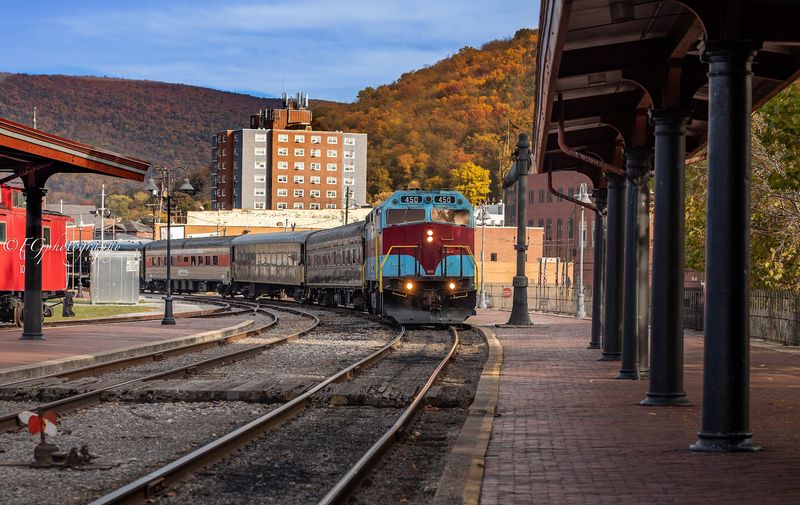
There is something almost cinematic about the way Cumberland sits inside a bowl of mountains, as if the Allegheny ridges reached down to cradle the city on every side. The Potomac River bends nearby, and the whole scene feels like something out of an old painting.
It is the kind of place where geography does half the storytelling for you.
Cumberland was once one of the most important transportation hubs in early America, serving as a gateway to the western frontier along the National Road.
That history is still visible everywhere, from the grand old facades along Baltimore Street to the Western Maryland Railway Station, which now houses the C and O Canal National Historical Park visitor center.
You get the sense that this town has lived several full lives already.
The Canal Place Heritage Area stretches along the waterfront and gives visitors a grounded sense of the industrial past without feeling like a museum exhibit. Trails follow the old towpath, and the surrounding mountains beg to be explored on foot or by bike.
The Allegheny Highlands Trail connects Cumberland to the wider region, making it a natural base for outdoor adventure.
What makes Cumberland linger in the memory is how honestly it presents itself. There is no performance here, no attempt to be something it is not.
The architecture is genuine, the landscape is dramatic, and the pace of daily life feels refreshingly human. I left Cumberland feeling like I had found a place that most people drive past without ever stopping, and that felt like my quiet good fortune.
2. Leonardtown
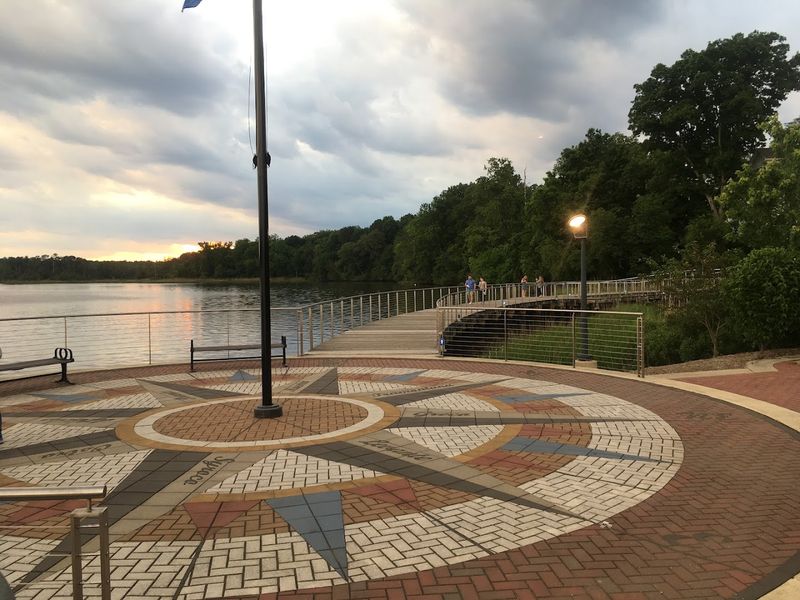
The first thing you notice about Leonardtown is how the town square actually functions like a town square. People gather there, kids run across the grass, and the surrounding storefronts look like they have been lovingly maintained rather than hastily renovated.
It has the easy rhythm of a community that genuinely likes where it lives.
As the county seat of St. Mary’s County, Leonardtown carries a quiet sense of civic pride. The historic district features well-preserved buildings that tell the story of Southern Maryland’s colonial and agricultural past without needing any dramatic signage to explain it.
History here is just part of the background, woven into the brick and mortar of everyday life.
The Leonardtown Wharf is where the town really opens up. Situated along Breton Bay, it is a gentle waterfront spot perfect for kayaking, watching herons drift past, or simply sitting while the light changes over the water at dusk.
The surrounding marshes have a stillness that feels almost meditative.
There is also a surprisingly lively arts presence here. The Alice in Leonardtown mural trail winds through the town center, turning an ordinary walk into something a little more playful and unexpected.
Local painting studios and galleries add creative energy to what might otherwise feel like a sleepy county seat. I found myself wandering longer than planned, which is usually the sign of a place doing something right.
Leonardtown rewards the kind of traveler who slows down enough to actually notice things.
3. Oxford
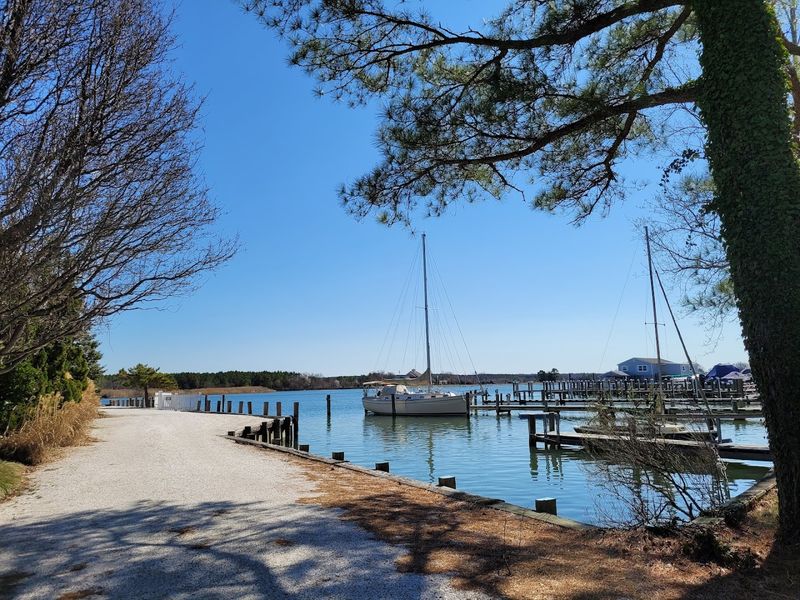
Oxford feels like a village that time politely agreed to leave alone. Almost entirely surrounded by water, this tiny community on the Eastern Shore has preserved its colonial character with a sincerity that is rare and genuinely moving.
The streets are quiet, the lawns are tidy, and the water is never far from view.
The Strand, Oxford’s famous waterfront lane, is lined with white picket fences and 18th-century homes that look out over the Tred Avon River. It is one of those streets where you slow your pace naturally, not because you are tired, but because something about the atmosphere asks you to.
The Robert Morris Inn anchors the waterfront with deep colonial roots and a presence that feels anchored to the land itself.
The Oxford-Bellevue Ferry has been running since 1683, making it one of the oldest privately operated ferries in the country. Taking it across the river is a small but genuinely memorable experience, especially on a clear morning when the water is still and the opposite shore shimmers in the early light.
It is the kind of moment you do not forget.
Oxford is small enough to explore entirely on foot or by bicycle, and that intimacy is part of what makes it so appealing. There are no crowds here, no lines, and no rush.
What you get instead is a rare and unhurried connection to a place that has managed to stay exactly itself across several centuries. That kind of authenticity is increasingly hard to find anywhere.
4. Snow Hill
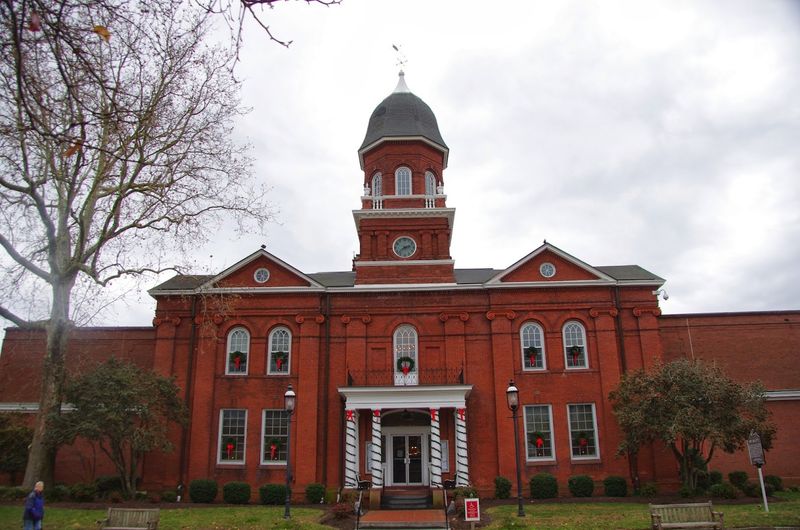
Snow Hill sits along the Pocomoke River like it has always known it belongs there. The river runs dark and slow through a canopy of cypress trees, and the town itself feels like an extension of that calm, unhurried energy.
It is a place that does not try to impress you and somehow impresses you anyway.
The historic district here is genuinely well-preserved, with 18th and 19th century architecture lining the main streets in a way that feels organic rather than curated.
All Hallows Episcopal Church, dating to 1748, stands as one of the oldest houses of worship on the Eastern Shore and anchors the town’s deep historical roots.
Walking past it, you get a real sense of how long people have been building lives here.
The Pocomoke River is the town’s greatest natural asset and arguably its most underappreciated one. Kayakers and canoeists paddle through the cypress swamp downstream, where the tree roots rise dramatically from the black water and the birdlife is extraordinary.
Pocomoke River State Park nearby extends that wilderness experience considerably.
Snow Hill also serves as a quiet gateway to Assateague Island, which is close enough for a day trip but far enough that the town itself retains its own distinct identity. The Julia A.
Purnell Museum offers a charming look at local folk history and community life across generations. I found Snow Hill to be one of those places where the more time you give it, the more it gives back.
It rewards patience in the best possible way.
5. Crisfield
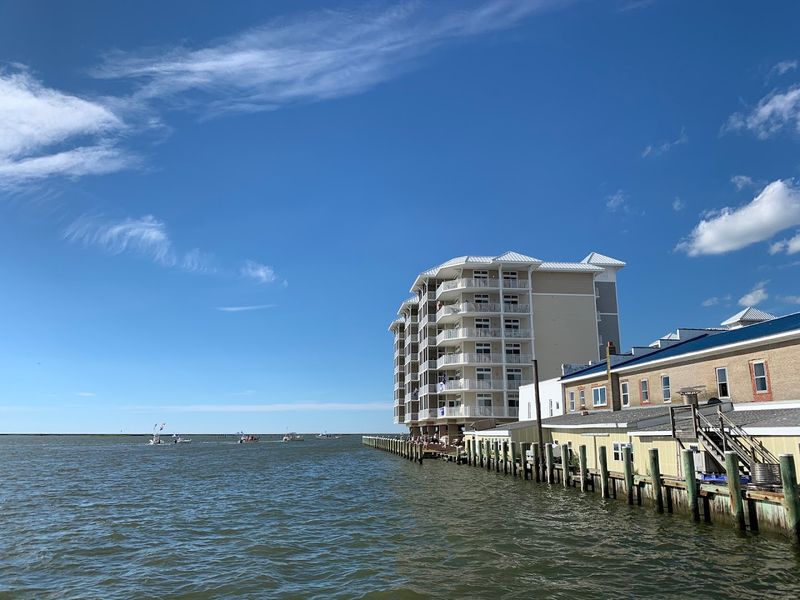
Crisfield is the kind of waterfront town that does not dress itself up for visitors, and that honesty is exactly what makes it worth visiting.
Sitting at the very tip of the Delmarva Peninsula, it is one of the most remote towns in Maryland, and that remoteness has kept it real in ways that more accessible places rarely manage.
Once known as the seafood capital of the world, Crisfield built its identity on the blue crab and oyster industries that defined Chesapeake Bay life for generations. The working waterfront still hums with that tradition.
Skipjacks and crab boats bob at the docks, and the smell of salt air and fresh catch is as much a part of the atmosphere as the wide, flat sky overhead.
From Crisfield, ferries depart for Smith Island and Tangier Island, two of the most isolated communities on the East Coast. Smith Island, Maryland’s only inhabited offshore island, is accessible only by boat and carries a way of life that feels genuinely distinct from the mainland.
Taking that ferry ride is an experience that puts the rest of the trip in perspective.
The J. Millard Tawes Historical Museum in town does a thoughtful job of telling Crisfield’s story through artifacts and local memory.
There is also a small but dedicated community of artists and watermen who give the town a layered, lived-in character. Crisfield is not polished, and it never pretends to be.
That is precisely why it stays with you long after you have left the dock behind.
6. Frostburg
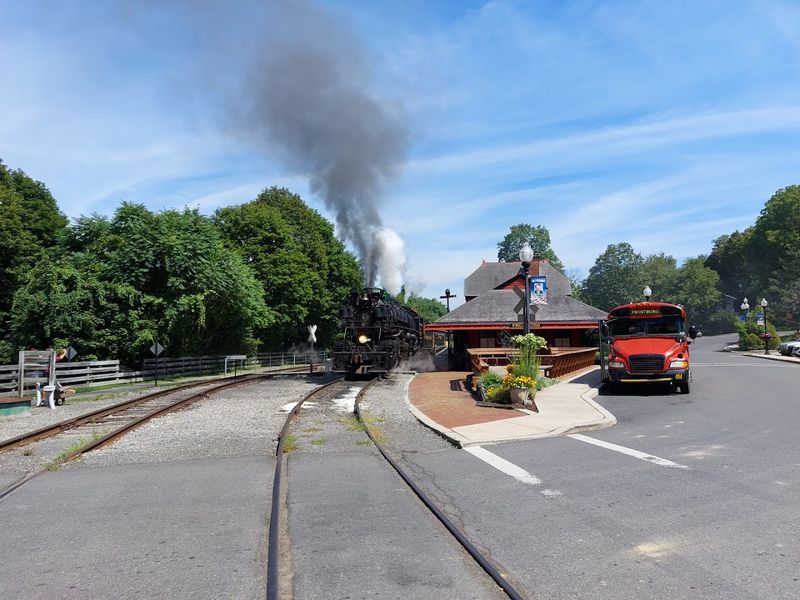
Perched high in the Allegheny Mountains at nearly 2,000 feet above sea level, Frostburg has a brisk, clear-aired energy that hits you the moment you step out of the car.
The elevation gives the town a noticeably different feel from the rest of Maryland, and in autumn especially, the surrounding forest turns into something genuinely spectacular.
The color up here tends to peak earlier and burn brighter than in the lowlands.
Frostburg State University gives the town a lively, youthful undercurrent without overwhelming its historic character. Main Street still carries the architectural bones of a 19th-century mountain community, with brick facades and old storefronts that have been adapted rather than replaced.
There is a creative energy here that feels earned rather than manufactured.
The Western Maryland Scenic Railroad connects Frostburg to Cumberland through a dramatic mountain route, passing through the Narrows and climbing through some of the most striking terrain in the state.
Riding it is one of those travel experiences that reminds you why slower modes of transportation sometimes reveal more than faster ones ever could.
The views from the train windows are genuinely hard to replicate any other way.
Frostburg also serves as a trailhead for sections of the Great Allegheny Passage, a long-distance rail trail that extends all the way to Pittsburgh. Cyclists and hikers use it as a natural base camp for multi-day adventures.
Even if you never lace up a hiking boot, the mountain air and the quiet confidence of this small city make it a place worth pausing at for longer than a quick stop.
7. Lonaconing
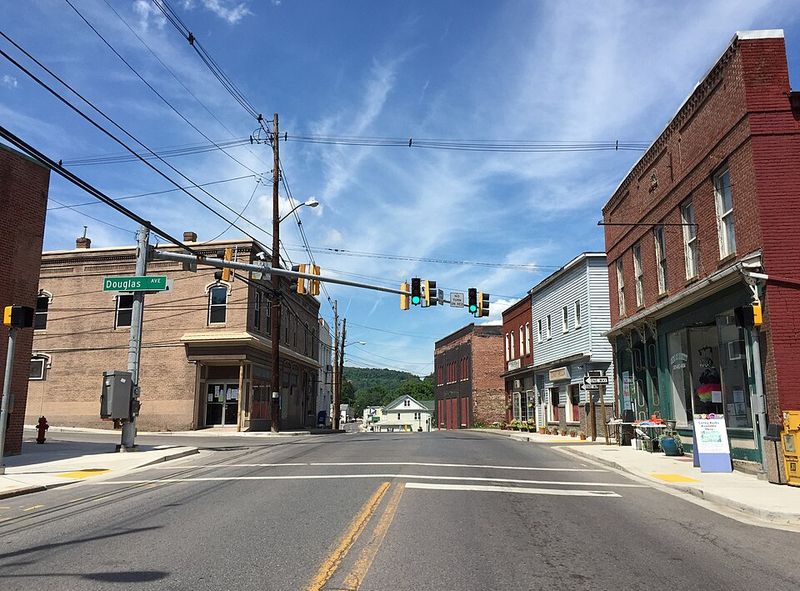
Lonaconing is a name that rolls off the tongue with a rhythm that matches the place itself, unhurried, layered, and a little unexpected.
Hidden into the George’s Creek Valley in Allegany County, this small Appalachian community carries the weight of its industrial past with a quiet dignity that is hard to articulate but easy to feel.
Coal mining shaped everything here, from the architecture to the community identity.
The town grew up around the iron and coal industries of the mid-1800s, and remnants of that era are visible in the old storefronts along Main Street and the hillside row houses that climb the valley walls. It is not a prettified version of industrial history.
It is the real thing, and that authenticity gives Lonaconing a texture that more polished destinations simply cannot replicate.
George’s Creek itself runs through the valley, and the surrounding hills are covered in second-growth forest that softens the landscape considerably. In spring and summer, the greenery is almost overwhelming in the best possible sense.
The contrast between the rugged built environment and the lush natural setting is one of the things that makes this valley so visually distinctive.
Lonaconing is not a place with a long list of attractions to check off. What it offers instead is a sense of place, a feeling that you are somewhere with a real story behind it, somewhere that has not been smoothed over or repackaged for easy consumption.
I found it quietly compelling, the kind of town that stays in the back of your mind long after the drive home. Some places earn that without even trying.
8. Hancock
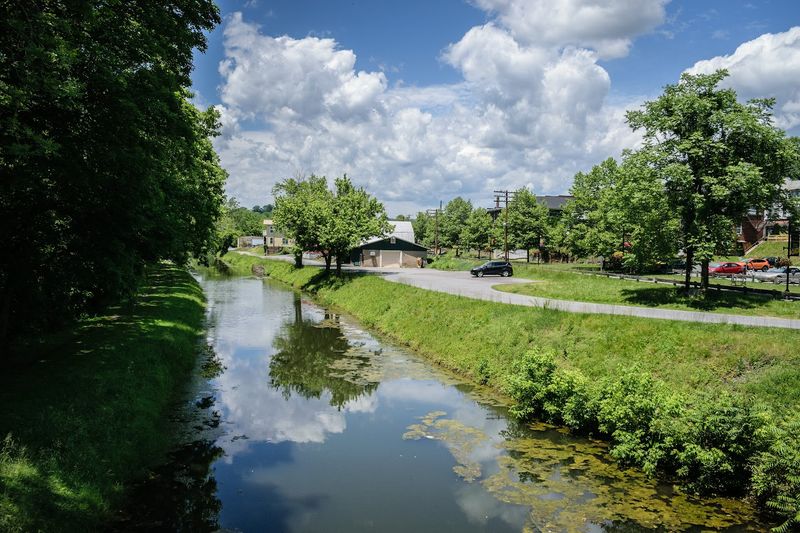
Hancock holds a geographical distinction that is genuinely striking once you see it on a map. It sits in the narrowest part of Maryland, where the state is only about two miles wide from the Potomac River to the Pennsylvania border.
That quirk of geography gives the town a compressed, intimate quality, as if everything essential has been packed into the smallest possible space.
The C and O Canal runs directly through Hancock, and the old towpath here is one of the most accessible and scenic stretches along the entire 184-mile route. Cyclists and hikers move through at a pace that feels perfectly matched to the landscape.
The canal itself is still water-filled in sections, reflecting the tree canopy in a way that makes even a short walk feel like something worth doing slowly.
The Potomac River is wide and calm near Hancock, and the surrounding Appalachian ridges frame the valley so completely that the whole scene feels almost theatrical.
Big Pool, a few miles east along the canal, is a natural lake formed by the canal’s construction and draws herons, osprey, and waterfowl in impressive numbers.
Birdwatchers tend to love this stretch of the corridor.
The town itself is modest and unpretentious, with a main street that serves the community rather than performing for tourists. That quality is refreshing.
There are local diners, a handful of small shops, and a general sense that life here moves at its own speed. Hancock rewards the traveler who is willing to simply be somewhere, rather than constantly moving on to the next thing.
9. Princess Anne
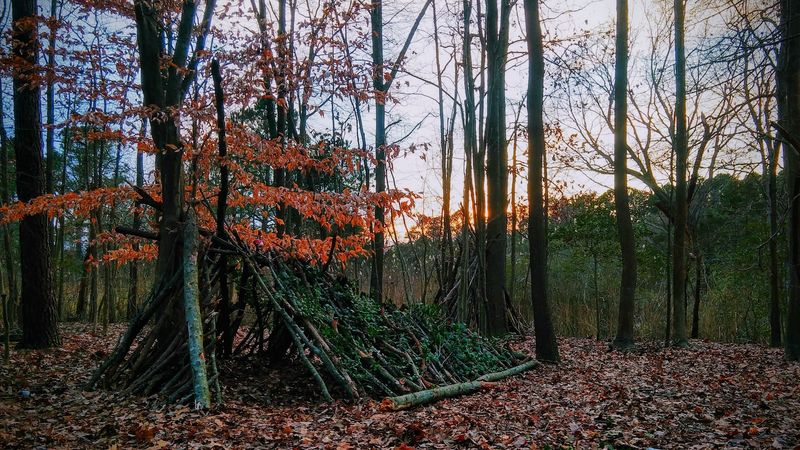
Princess Anne is one of those Eastern Shore towns where the architecture does most of the talking.
Founded in 1733 and named after the daughter of King George II, the town grew into a prosperous colonial center, and the evidence of that prosperity is still standing along its shaded streets in the form of Federal and Georgian brick mansions that have been remarkably well preserved.
It feels like a place where history decided to stick around.
The historic district here is genuinely dense with significant buildings. The Teackle Mansion, built between 1801 and 1819, is one of the most striking examples of Federal architecture on the Eastern Shore and gives a vivid sense of the wealth and ambition that characterized this region in the early 19th century.
Walking past it on a quiet afternoon, you can almost feel the distance of time collapsing.
The University of Maryland Eastern Shore brings an academic energy to the community and has deep roots here going back to 1886. That institutional presence adds a layer of activity and intellectual life that might surprise visitors expecting a purely sleepy historic town.
Princess Anne is quieter than many places, but it is not static.
The Manokin River edges the town and offers a softer, more contemplative side to the visit. Kayaking along its tidal banks reveals the marshland beauty that defines so much of the lower Eastern Shore.
Princess Anne is the kind of place where a short visit rarely feels like enough. The more you look, the more there is to find hidden into its unhurried streets and riverside edges.
10. New Market
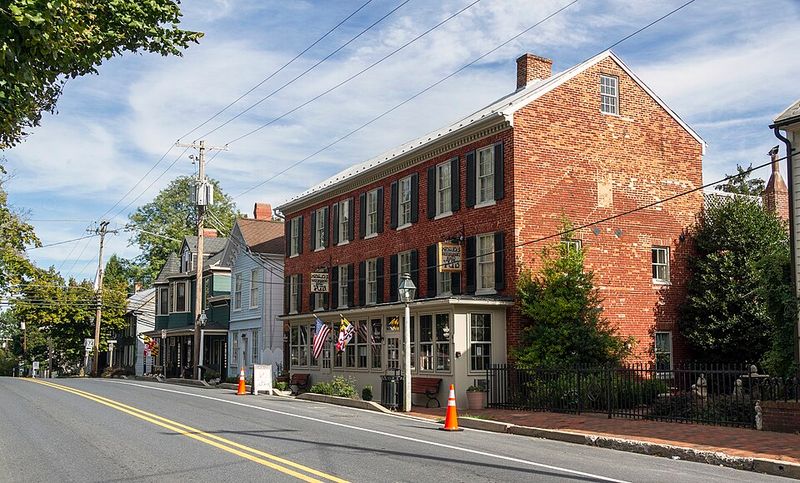
New Market calls itself the antiques capital of Maryland, and after spending an afternoon wandering its single main street, it is hard to argue with that claim.
The village is essentially one long, beautifully preserved stretch of 18th and 19th century Federal-style architecture, and nearly every building along it houses some kind of antique dealer or specialty shop.
It is a remarkably focused place, and that focus gives it a clarity that more sprawling towns often lack.
Founded in 1793 as a stopping point along the National Road, New Market grew up serving travelers moving west. That origin as a waypoint is still legible in the town’s layout and scale.
Everything here was built for people passing through, which means the buildings are accessible, the storefronts are welcoming, and the whole street feels designed for exploration on foot.
The quality of what you find inside those shops varies, as it always does with antiques, but the browsing itself is the point. Old maps, vintage furniture, Civil War artifacts, hand-painted porcelain, and stacks of out-of-print books all coexist in spaces that feel genuinely curated rather than merely cluttered.
I spent more time in one shop than I had planned for the entire stop.
New Market is only a few miles east of Frederick, making it an easy addition to a broader itinerary in that part of the state. But it deserves to be treated as a destination in its own right rather than an afterthought.
The village has a coherence and charm that rewards unhurried attention. Some of the best travel moments happen in places this small, this specific, and this quietly sure of what they are.
11. Sharpsburg
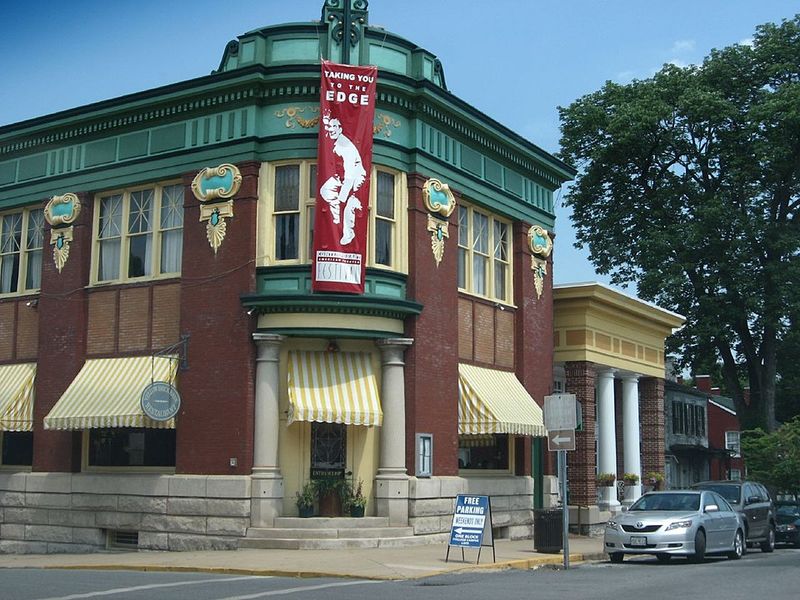
Sharpsburg is a village that carries more history than its modest size would suggest. On September 17, 1862, the fields surrounding this quiet community became the site of the Battle of Antietam, the bloodiest single day in American military history.
That weight is present here in a way that is not morbid but genuinely sobering, and it gives every visit a layer of meaning that is difficult to shake.
Antietam National Battlefield wraps around the village and is one of the best-preserved Civil War battlefields in the country.
The landscape looks remarkably similar to how it appeared in 1862, with rolling farmland, split-rail fences, and the Dunker Church still standing near the edge of the cornfield that witnessed some of the most intense fighting of the day.
Walking those fields is a quiet and powerful experience.
The village itself is small and residential, with a handful of historic buildings clustered near the main intersection. It has the feel of a place where people actually live, not a tourist set piece, and that grounded quality makes the surrounding history feel more immediate rather than more distant.
The Antietam Creek, which flows nearby, adds a gentle natural element to the otherwise weighty atmosphere.
Sharpsburg sits in the heart of the Chesapeake and Ohio Canal corridor, with the canal towpath easily accessible just a short distance from the village center.
The combination of Civil War history, canal heritage, and rural Maryland landscape makes this area one of the most layered and rewarding corners of the state.
It is a place that asks something of you, and gives something lasting in return.
